
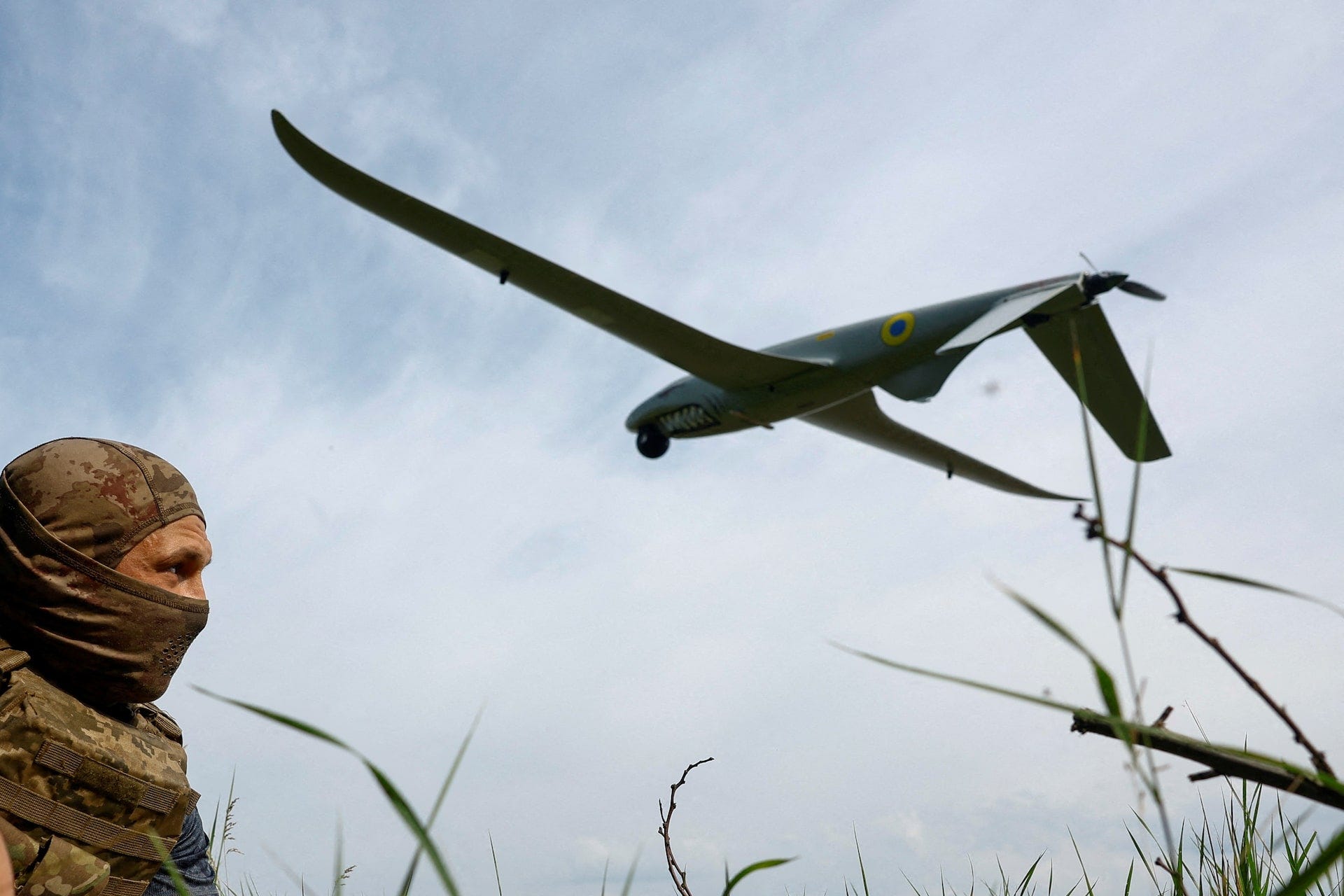
Within hours yesterday, Lithuania and the U.S. put out warnings that Russia may be preparing to test NATO with a limited attack on one of its members. Lithuania’s Defense Minister Robertas Kaunas said they had intelligence that Russia could carry out attacks against critical infrastructure in the Baltic region and could use Ukrainian-made drones for these attacks. “We are talking about a potential false-flag operation where a fake Ukrainian drone could be used,” he warned. “That’s the most realistic current scenario.”
Hours later, the Wall Street Journal reported that new U.S. intelligence assessments concluded that Putin could attempt to test NATO, with scenarios ranging from a cyberattack to a limited military incursion, with Poland and the Baltics the most likely targets.
None of this should surprise anyone who has watched Russia escalate across Europe while facing barely any consequences.
For decades, Russia operated below the threshold of conventional war, using sabotage, cyberattacks, espionage, information warfare, arson, GPS jamming, election interference, assassinations, and deniable military operations carried out via intelligence operatives, mercenaries, and Kremlin proxies, creating confusion that delayed a meaningful response while maintaining plausible deniability. But the latest intelligence suggests Russia may be preparing to go further, potentially crossing from its shadow war into a kinetic attack.
The alarm bells started going off in late June, when Latvian intelligence saw indications that Russia was preparing military provocations against the Baltics or Poland, potentially using missiles, drones, or other attacks to pressure its members to stop supporting Ukraine. Around the same time, another NATO country separately reported that it was “picking up intelligence” that Putin was “planning something against the Baltic states.” Since then, the warnings have only become more frequent.
By early July, the intel was becoming much more detailed. The U.S. reportedly warned Poland that Russia could launch an attack on Polish territory within a matter of months, with scenarios ranging from drone attacks on critical infrastructure and simulated massive air attacks to a limited ground incursion from Belarus or Kaliningrad. The intelligence also raised the possibility that Russia could blame the operation on Ukraine.
Until earlier this year, the assumption was that Putin would avoid a military confrontation with NATO while Russia was carrying out its genocidal war against Ukraine. Now U.S. and NATO officials believe the opposite could happen, with Putin potentially escalating precisely because he is struggling to achieve his military goals. And that closely mirrors the Lithuanian Defense Minister’s recent warning that the Kremlin may need “a new escalation, some kind of new victory.”
In other words, Russia’s failure in Ukraine could become a reason for Putin to manufacture a crisis with NATO, giving the Kremlin a new confrontation to exploit domestically while testing whether the alliance will respond.
Given Russia’s long history of manufacturing pretexts and blaming its own aggression on its victims, a false-flag operation, whether inside or outside Russia, should be taken seriously.
And a false-flag attack in which Russia uses a Ukrainian drone would play right into Moscow’s hands. Russia could strike critical infrastructure in Lithuania or Poland, blame Ukraine, and flood the information space with mass disinformation. While NATO scrambles to determine what actually happened, the resulting confusion and uncertainty would delay its response.
Meanwhile, Trump has given Putin even more reasons to question whether NATO will actually respond. Last August, Trump literally rolled out the red carpet in Alaska for Putin, a wanted war criminal, while has treated NATO allies like adversaries. He has spent decades attacking the alliance and openly questioning whether the U.S. would come to the defense of NATO allies if Russia attacked. Since returning to office, Trump has pulled troops and military resources out of Europe, repeatedly cast doubt on collective defense, and threatened to invade Greenland and annex Canada, a founding member of the alliance.
So it’s hardly surprising that Russia became even more brazen toward NATO after the Alaska summit. The following month, a few dozen Russian drones crossed deep into Poland, and Moscow has continued escalating since. Just last weekend, Romania spent three consecutive nights scrambling fighter jets as Russian drones crossed into its territory during attacks on Ukraine, while days later a Russian missile crashed inside Poland. Across Europe, suspicious drones have also repeatedly appeared around military installations, airports, ports, critical infrastructure, and logistics routes supporting Ukraine.
But the activity across Europe is not limited to suspicious drones flying near sensitive sites or crossing into NATO airspace. This week in Germany, an explosives-laden drone was discovered inside a secure cargo area at Leipzig/Halle Airport near a Ukrainian cargo aircraft. Authorities were also investigating a second unidentified object that collided with a cargo plane after it aborted its landing. U.S. intelligence linked the drone to Russia, while Germany’s interior minister called the incident “a new level of danger.”
What makes the incident in Leipzig frustrating is that Germany had an almost identical threat. In 2024, incendiary devices ignited at DHL facilities in Leipzig, at the same airport, and in Birmingham as part of a suspected Russian sabotage operation that Western intelligence believed was a test for eventually placing similar devices aboard aircraft bound for the U.S. and Canada.
At the time, the device ignited on the ground because its flight was delayed; German intelligence later warned that had it detonated in the air, it could have brought down the plane. Yet two years later, a drone carrying military-grade explosives somehow made it into a secure cargo area of the same airport.
Now Putin has another reason to believe he can go further.
The U.S. has spent decades serving as the backbone of NATO deterrence, but Trump has made it clear that Europe should not rely on the U.S. if Russia attacks. Even before returning to office, he described an imaginary conversation with a president of a NATO country who supposedly asked whether the U.S. would defend them from Russia if they didn’t meet their full spending obligation. Trump said his answer was: “No, I would not protect you. In fact, I would encourage them [Russia] to do whatever the hell they want.”
I warned at the time that Trump’s rhetoric was a gift to Putin and that his return to power would weaken NATO and leave Europe questioning whether the U.S. would actually come to its defense. Two years later, Putin may be preparing to find out.
A Russian Missile Landed in Poland in the Latest Escalation Against NATO
·
Jul 31

Yesterday, Russia launched yet another massive missile and drone attack as cruise missiles, ballistic missiles, and drones tore through homes and residential buildings across Ukraine. By Thursday morning, rescue workers were digging through the rubble in search of survivors while family members waited desperately for news of those trapped beneath collapsed buildings.
Japan’s Defense Report Deserves Far More Attention
·
Aug 4

As with so many important developments these days, Japan’s newly released defense report barely got any attention. What makes the report significant is not that it revealed some new intelligence about Russia, China, or North Korea, but that it acknowledges something Ukraine has been warning about since the beginning of Russia’s genocidal full-scale invasion. While much of the international community viewed Russia’s war as a European security crisis, Kyiv warned that Moscow’s invasion would reach far beyond Ukraine, embolden authoritarian regimes, deepen military cooperation among America’s adversaries, and reshape the global security landscape. Those warnings were repeatedly dismiss…
Comments
Nothing yet. Say the first thing.
Sign in to join the conversation.