
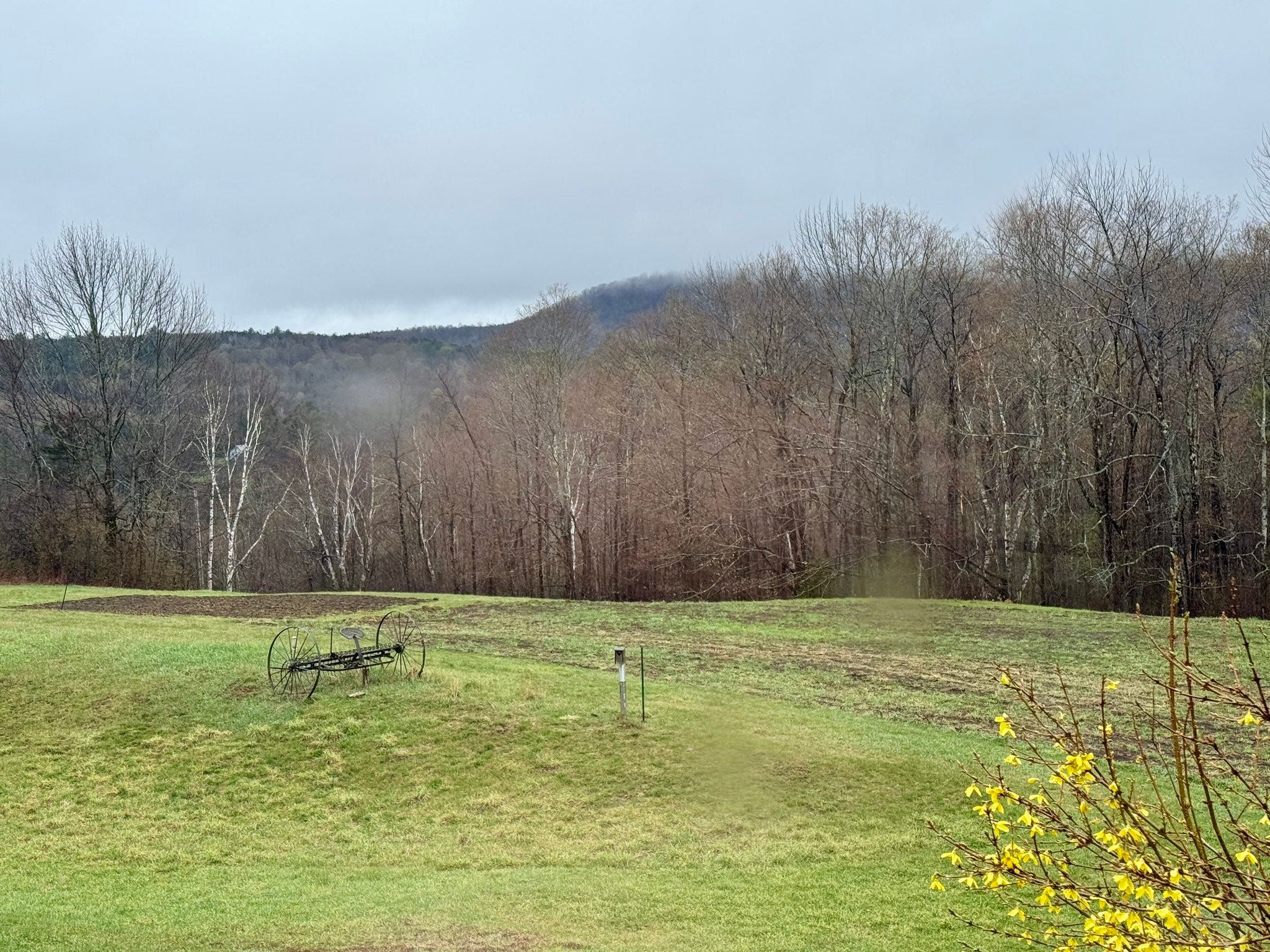
You are on the light side of that old wheel now here in the merry month of May. All of winter’s monotonous aches are a distant memory with the first of November on the other side of the year. The calendar turns and here in the frigid hills of old Vermont, we are all suddenly out and about. The birds fly revels among the meadow, packages of bees have arrived to the new beekeepers’ apiaries, and the anglers are well stationed on the bridge in the village. My favorite nature writer, Hal Borland, wrote “May is a consequence of many things, many forces, and it never comes overnight, no matter what the calendar says.” You would be forgiven for disagreeing with him if you lived here in the village tucked into the green, blossoming hills; the calendar turned and, despite whatever perceptions we’ve had of spring in the previous months, we have turned with it.
The goldfinches have established themselves in the meadows in their full warm-weather dress, bright against the green, bopping through the short grass with the tufted titmice and the robins who move in their cautious and alert little way. They are all out and restless and glad. The barn swallows too made a brief appearance but have hidden away with the rain and the cold; the air is not warm enough to bring the insects up in numbers, not warm enough to make it worth their while, and so the meadow still belongs to the small ones, the ground-level foragers, the ones who do not require abundance to begin. They will do with what there simply is.
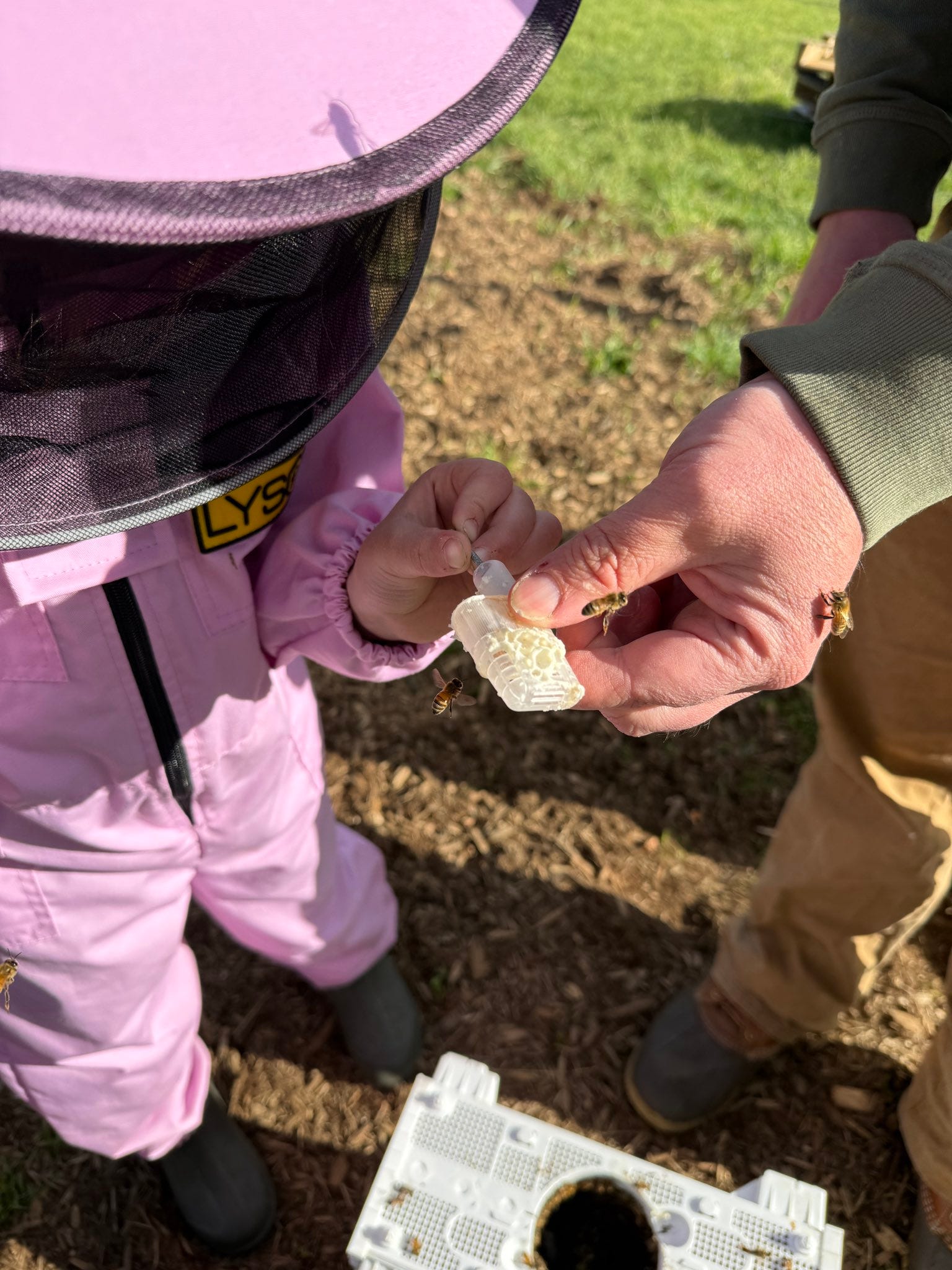
We installed our bees in the golden hour of May Day, the whole family gathered at the hives at the edge of the property. My father held our youngest back from the work and potential stings while my eldest stood close and watched with the serious attention she reserves for the good little things that matter while she and I installed the queens between the frames. My wife and mother lifted the small packages and poured the bees gently into the waiting hives, tens of thousands of them spilling dark and humming into their new home. We worked the smoker and the white smoke lifted and drifted slow down the road toward the village in the last of the afternoon light. It was two hours of work but represented a year of promise, a year of early mornings checking brood and capped honey, of July dearths and August abundance, of everything we do not yet know waiting inside those painted boxes at the meadow’s edge. The bees rose in slow arcs over the yard today, learning the sun’s relation to the field, fixing their coordinates, finding within minutes the dandelions at the field’s edge.
Down in the village the pub has come alive with outdoor voices carrying across the green in the evening. The tourists have arrived with their cameras and their wonder at the Floating Bridge, which deserves the wonder. The cormorants glide low across the lake with that prehistoric ease of theirs, unhurried, certain. The peepers still sing from the low wet places but their chorus has thinned; they know the season is moving past them now. In another week they will fall quiet and something else will take their place, some other voice rising to mark the turn. The village receives the little changes, one after another, the way it always has, tucked into its green hills at the edge of the cold lake, full of light and noise and life returning.
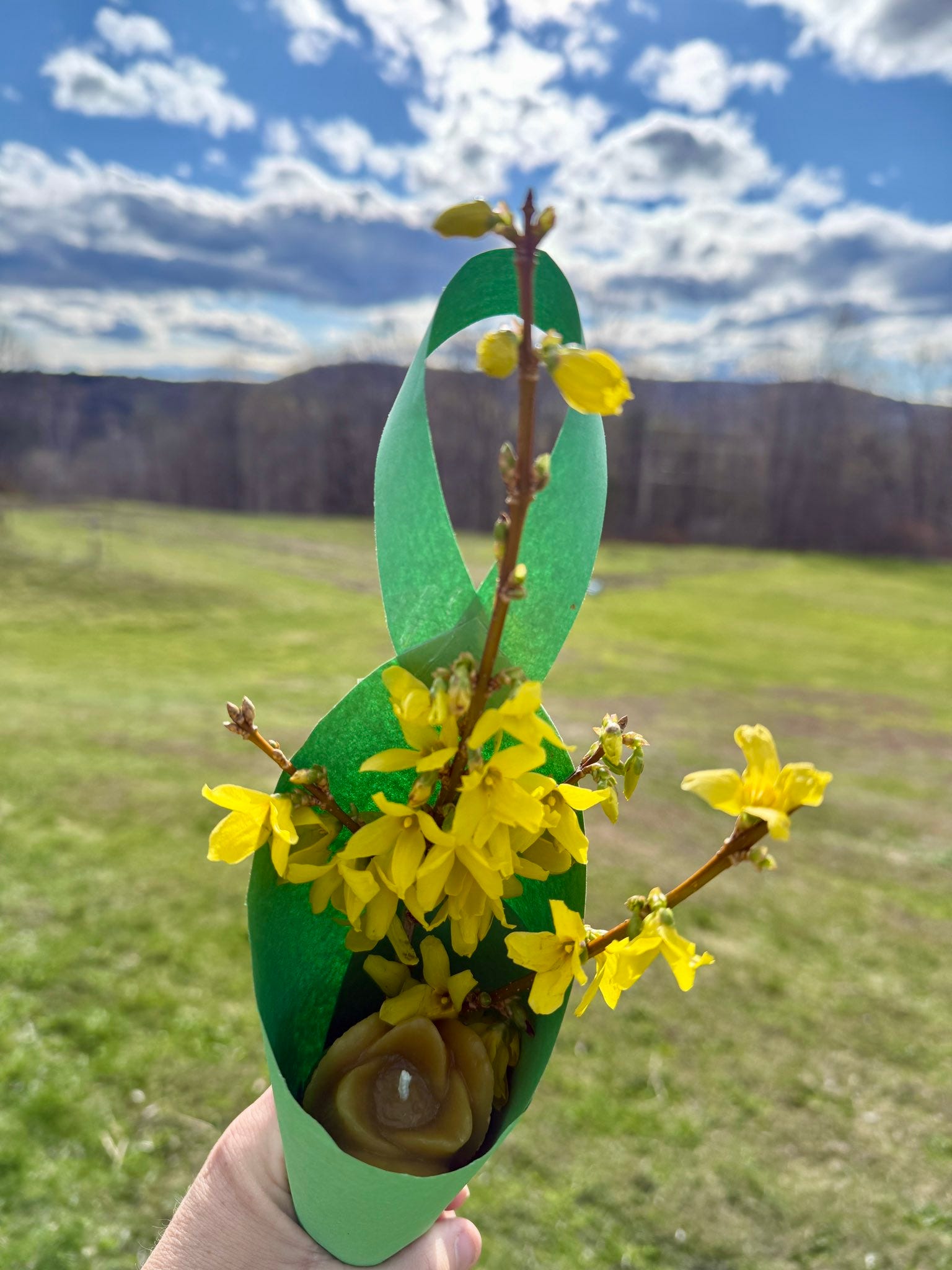
We made our may baskets on the eve of May Day, my wife guiding our eldest in folding the paper cones at the kitchen table and filling them with forsythia cut from the bush out front, bright and yellow and smelling of the season. My wife had the generous impulse to slip one of her hand-poured tulip candles in while my little girl took the work seriously in the way children take all good secret things seriously.
The children do love a good plot, don’t they?
She then slinked down to the village slipping from door to door along the burgeoning green. She would hang the basket on the knob with great ceremony and then look back at me with eyes full of delighted conspiracy and we would run, quiet as we could manage, back to the road before the door could open. She remained uncaught and found this deeply satisfying. There is something in the old tradition that a child understands immediately and instinctively, before anyone explains it to her, the knock and the running, the gift left without a name, the joy that costs nothing and asks nothing in return. She carried it out like she had always known in the good little marrow of her bones. Maybe she had. The forsythia hung bright on the dark doors of the village and we returned home, that old wheel turning good and true again marking the return of all good green things.
Comments
Nothing yet. Say the first thing.
Sign in to join the conversation.