
If you enjoy my Silent Sundays pieces and wish to support my writing consider signing up for a paid subscription or making a one-time donation.
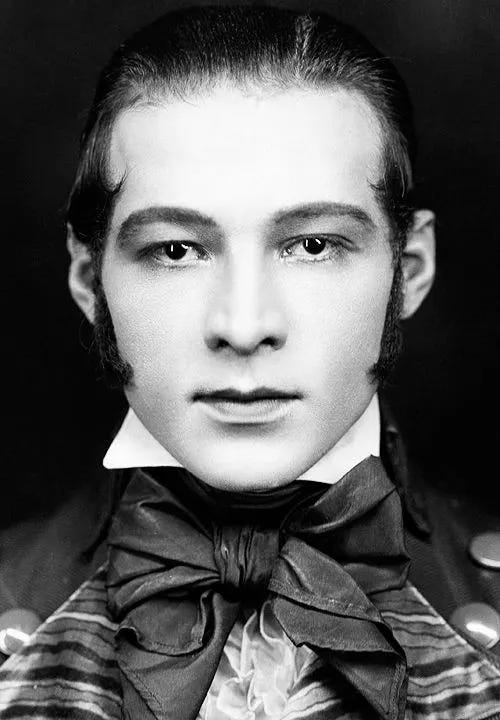
Today marks the 100th anniversary since the sudden death of Rudolph Valentino (born Rodolfo Pietro Filiberto Raffaello Guglielmi di Valentina d’Antonguolla in Castellaneta, Italy) on August 23, 1926. At the time of his death Valentino was at the height of his career, coming off of a series of hit films in which he portrayed exotic, often dangerous lovers. I wrote a bit about his rise in Hollywood and the way his sudden death at the age of just 31 shattered the movie colony (and the hearts of millions of women around the world) over at RogerEbert.com a few months ago as part of an overview of what the film industry was like 100 years ago.
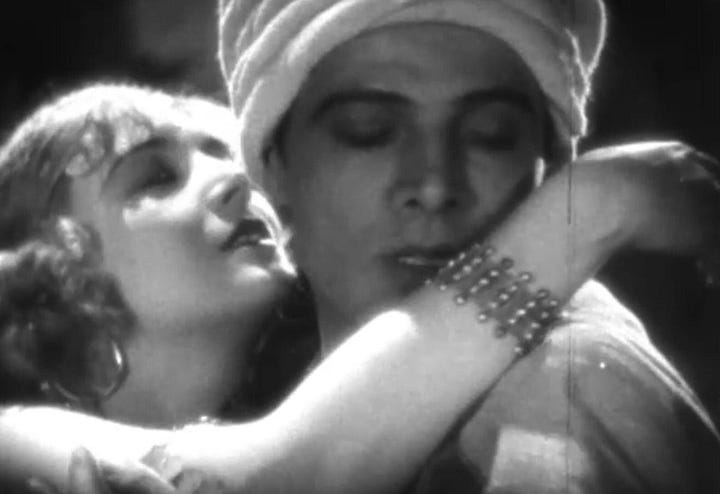
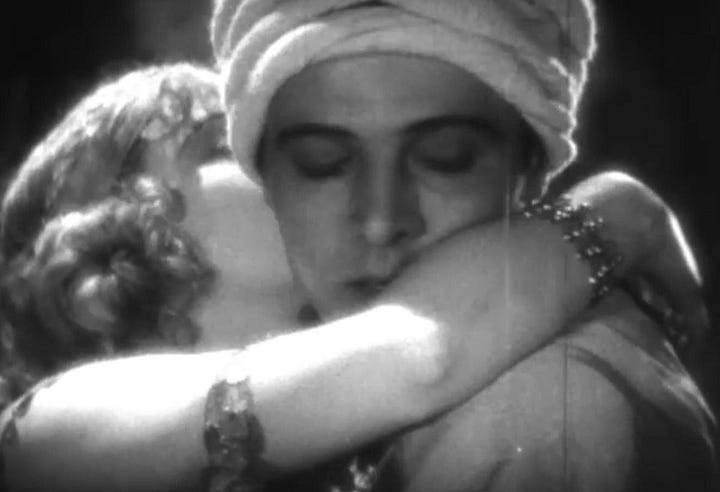
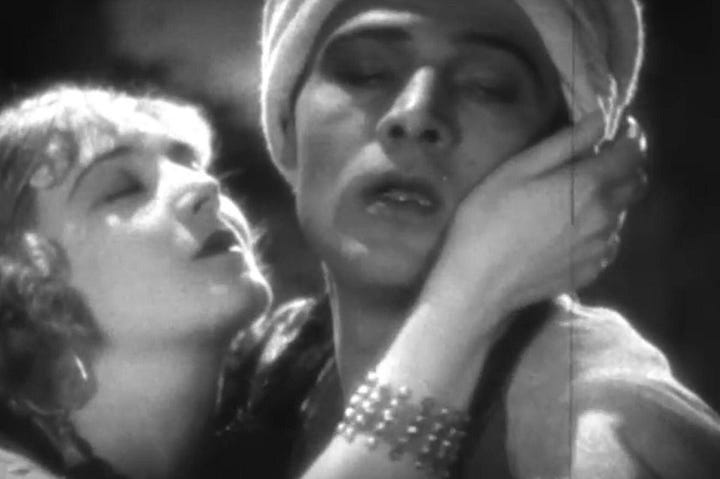
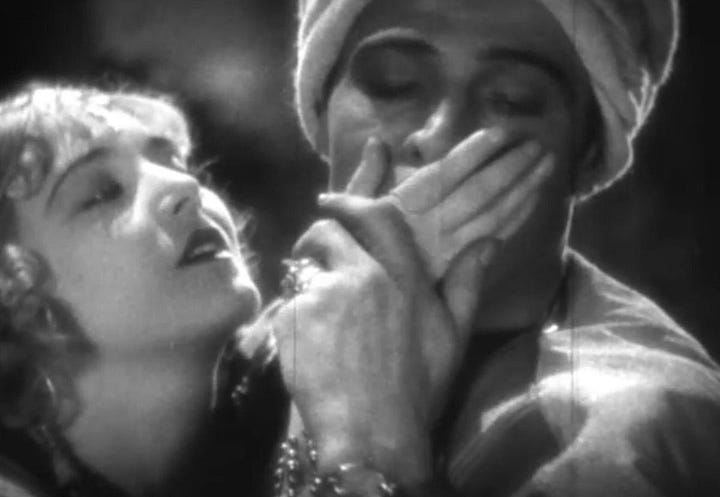
While today we consider Valentino unquestionably one of the most iconic stars of the silent era, at the time his stardom became a lightning rod for modernity. His overt sexuality proved irresistible for women across the globe, yet here in America his Italian roots struck a nerve within the rising post-WWII xenophobia that was overtaking the country. In researching that piece one quote about Valentino in this vein really stuck out to me. In his book Hollywood: The Pioneers, historian Kevin Brownlow quotes a conversation with journalist Adela Rogers St. Johns (one of the inspirations behind Jean Smart’s character Elinor St. John in Babylon) in which she says of Valentino:
“The American men were not very understanding about Valentino. He came along as the first of the great foreign lovers. You see, that was the interesting thing about Gable, a decade later. Every American man was perfectly willing that his wife should be in love with Gable, because Gable was what he’d have liked to have been. But they were not willing that their wives should be in love with a foreigner.”
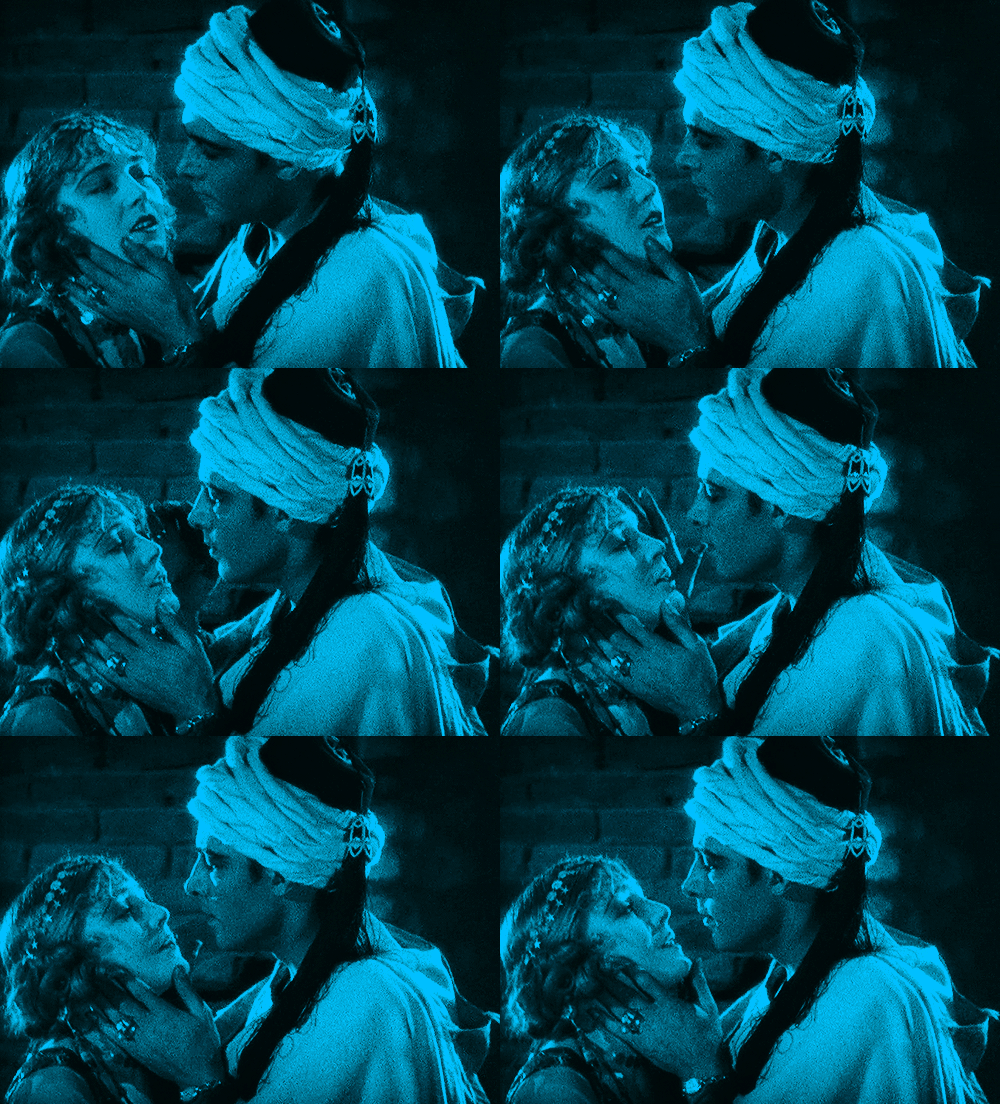
Watching his films today, they still feel bold primarily because of Valentino’s erotic on-screen persona. He had a magnetism that spilled over with eros that never crossed the line into exploitation or even predation (despite playing characters as problematic as The Sheik in The Sheik (1921) and its 1926 sequel The Son of the Sheik). Along with his overt sexuality, the sensitive vulnerability he brought to his characters coupled with his muscular build is a unique combination that is unfortunately all-too rare in today’s leading men. In her book Silent Stars, historian Jeanine Basinger writes about how, despite creating an cinematic archetype, Valentino’s legacy had been flattened to a stereotype:
What a fate for a man who moved with a panther’s ease, whose tiny flick of a cigarette was an inimitable come-hither gesture. Immobilized, Valentino is robbed of his essence: a dancer’s grace. Valentino has to be moving to be appreciated: a photo robs him of his amazing ability to draw the eye and hold it. Almost any good-looking man can put on a sheik’s costume and become a Valentino, but not once the camera is turned on. What is missing in a still portrait is Valentino’s energy, his sass, his slightly mocking self-humor. When Valentino walks into a movie, he isn’t just handsome, he’s hot. . .He swaggers in with his little ironic smile, his mysterious androgyny, and his strong cinematic presence — and it all begins to work. He carries a modern viewer past the dated nonsense of his movies, and deserves credit for making so much out of the trash he was given, No major star ever had less to work with than Valentino, and he not only got through it but also defined a type that is still with us today. We still have our Valentinos, but they aren’t as original, or as effective.
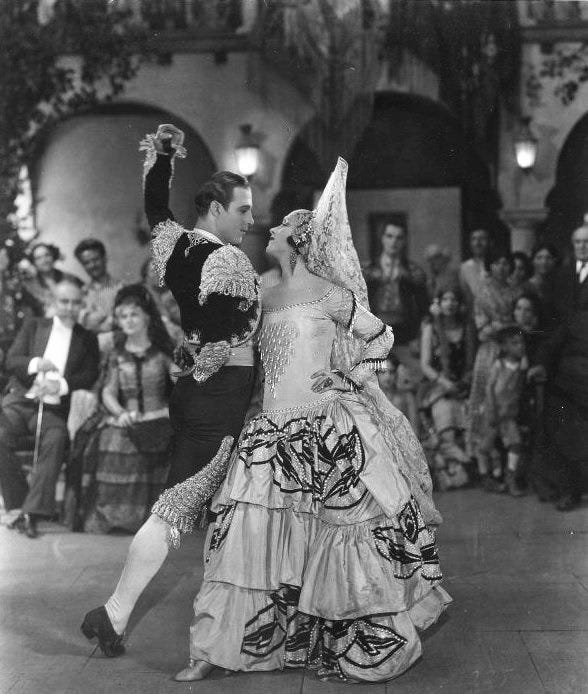
When I asked London-based graphic designer Angelo Trofa, whose clothing line Gilded Stars launched last month with a collected dedicated to Valentino, why people are still beguiled by Valentino today, he answered:
With Rudy, there is also the element of mystery. His speaking voice, for instance, was never recorded, and there are many stories and myths surrounding his personal life that people still debate today. I think people are still drawn to him for the same reason they were then, thanks to his incredible magnetism and his iconic screen presence.
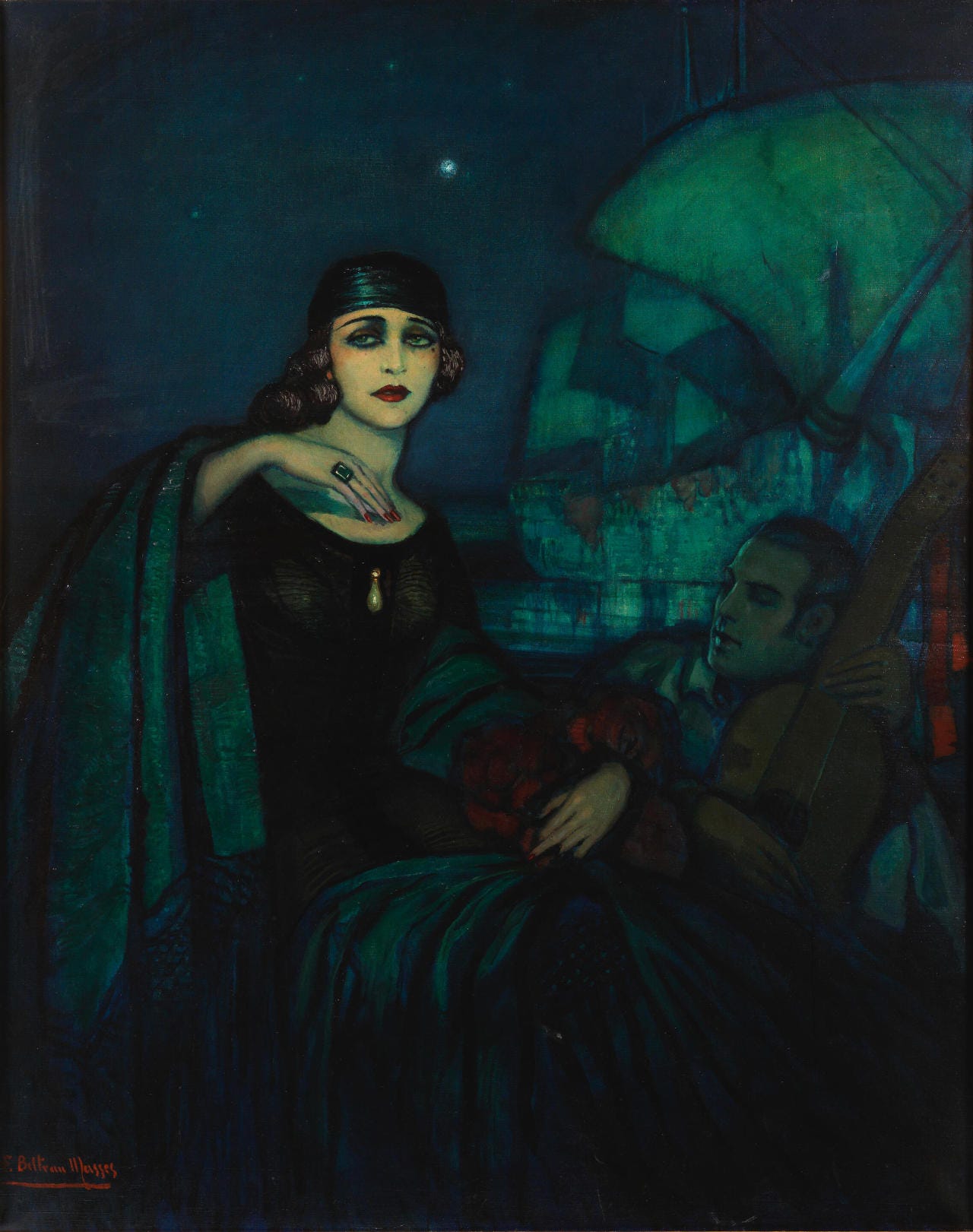
One of those enduring myths is that of the identity of the “lady in black,” a woman who visited his grave for decades after his death. At Valentino’s funeral in Manhattan it is estimated that nearly 100,000 people lined up to pay their respects. The crowd got so despondent that the day allegedly ended in a riot. Pola Negri, with whom Valentino had just begun a new relationship, claimed to be his fiancée and collapsed while standing over his coffin. Because he had died so suddenly, Valentino had made no arrangements for his remains. Luckily, his friend and trailblazing screenwriter June Mathis1 had an extra space in her crypt in Los Angeles’ Hollywood Forever Cemetery, bought for a husband she had since divorced. Mathis died just a year later and the two remain interred side-by-side.
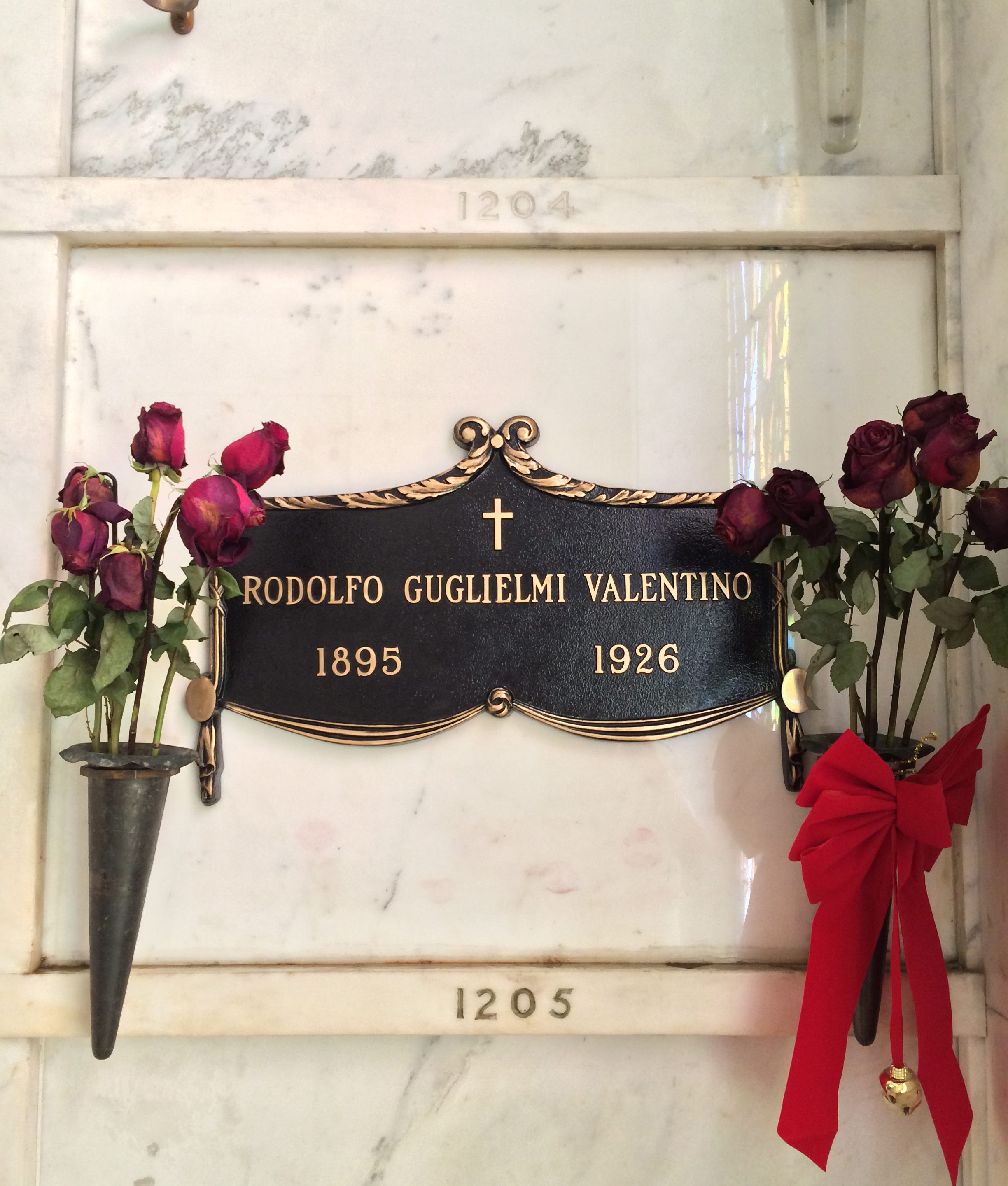
For decades afterwards a mysterious “woman in black” would visit his crypt on the anniversary of his death, leaving a single red rose, later inspiring the country standard “Long Black Veil.” Even today many women in black, including Hollywood Forever tour guide Karie Bible, gather at Valentino’s tomb on the anniversary of his death.
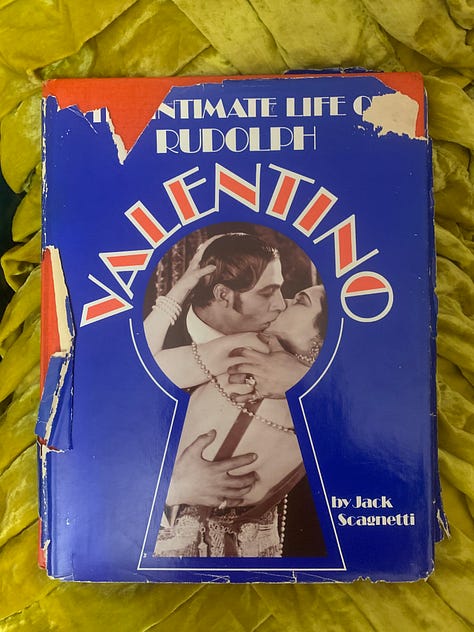
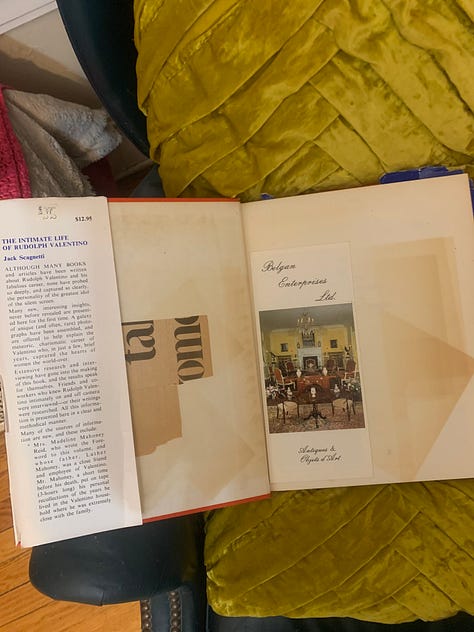
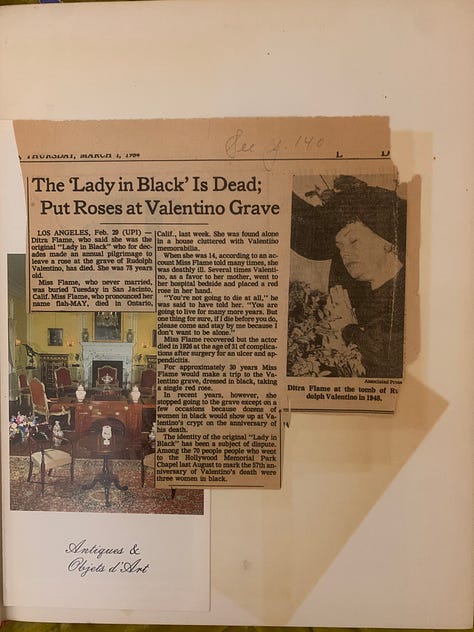
Last year when I was in New York City for the New York Film Festival I found a tattered copy of an out of print coffee table book, The Intimate Life of Rudolph Valentino by Jack Scagnetti, from 1975 at the Strand. I was going to leave it behind despite it being a cheap $9 because I had already picked up too many silent film books, but then when I opened the cover to take a look at the photos I noticed a newspaper clipping peeking out of the dust jacket inside the front cover. I pulled it out and flipped it over and it turned out to be the 1984 New York Times obit for Ditra Flame, who claimed to be the very first lady in black. Of course then I had to buy the book!
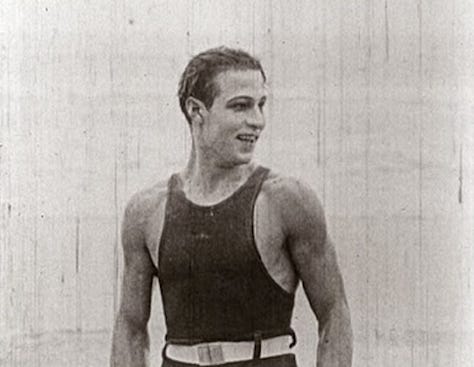
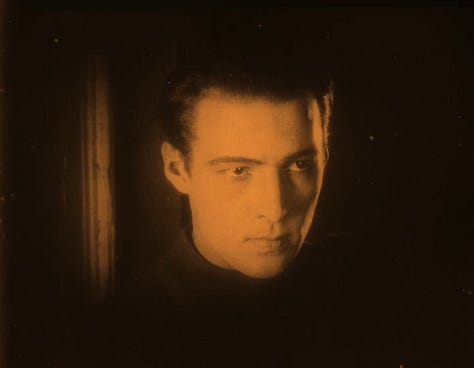
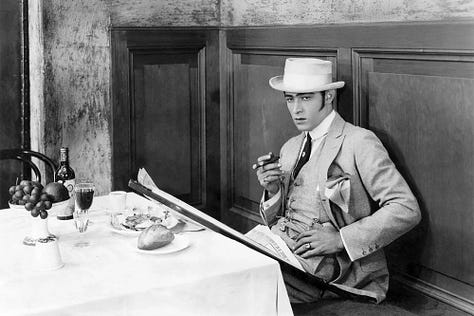
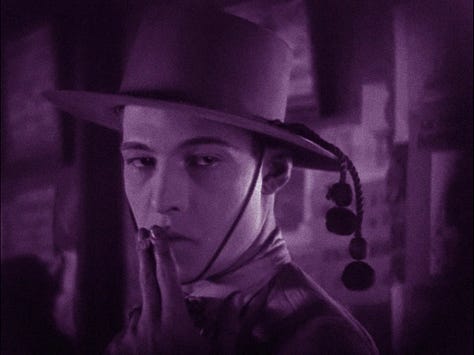
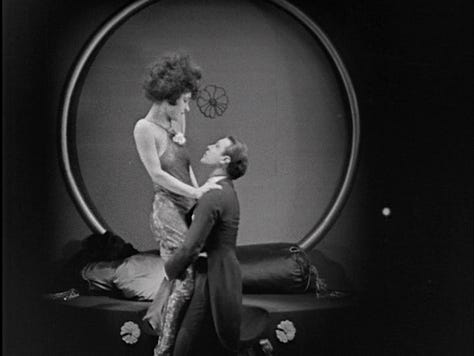
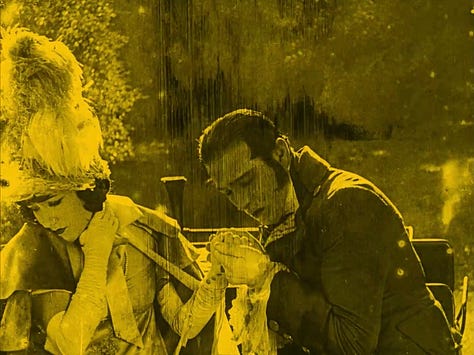
Valentino’s mystique continues to transfix audiences on the big screen and small; whether it’s at a film screening in a movie palace or at a film festival, a late-night cable viewing during TCM’s Silent Sunday Nights, a terrible rip on YouTube, or even a clip shared by the many Instagram pages and Tumblrs that are still dedicated to Rudy’s life and work, nary a day goes by without his visage crossing my path.
I’ve been on the classic film internet for close to twenty years now and it’s always a pleasant surprise when I see a whole new crop of young people become just obsessed with a classic film star or silent era icon all over again. It’s a real testament to the enduring power of cinema, and especially of the larger-than-life stars and artisans who gave birth to the art form over a hundred years ago. In this way, as Norma Desmond once said, the stars are ageless.
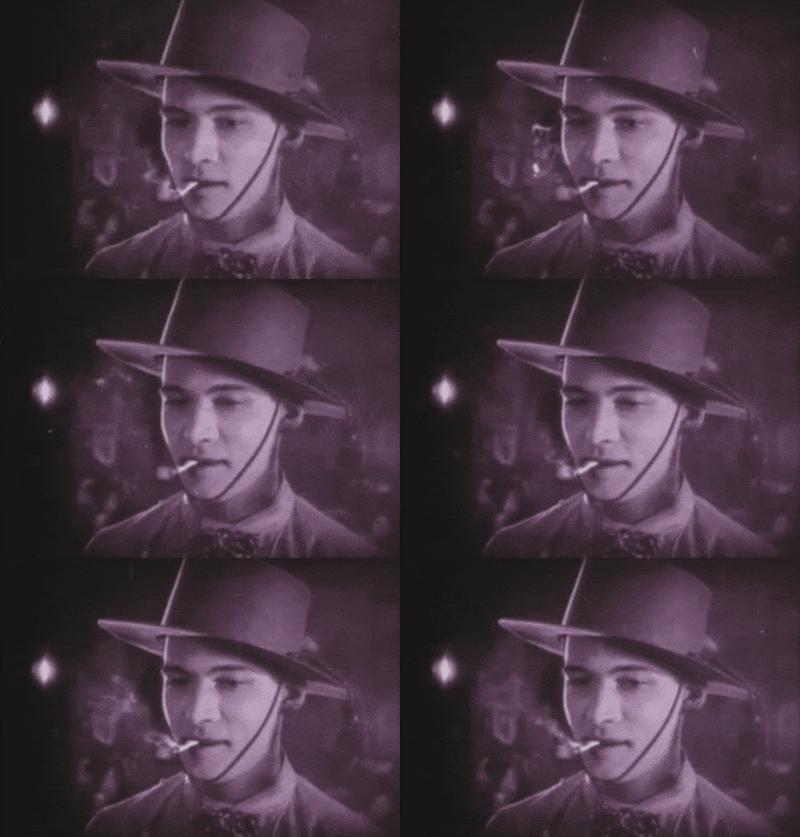

I started an Instagram account for my love of the silent era, so if you’d like more micro-doses of silent film daily, give ✨ Nitrate Dreamland ✨ a follow.
Mathis, then one of the highest paid screenwriters in Hollywood, saw Valentino in Eyes of Youth (1919) and, legend has it, insisted he star in The Four Horsemen of the Apocalypse (1921), the film that helped catapult him into stardom.
Comments
Nothing yet. Say the first thing.
Sign in to join the conversation.