
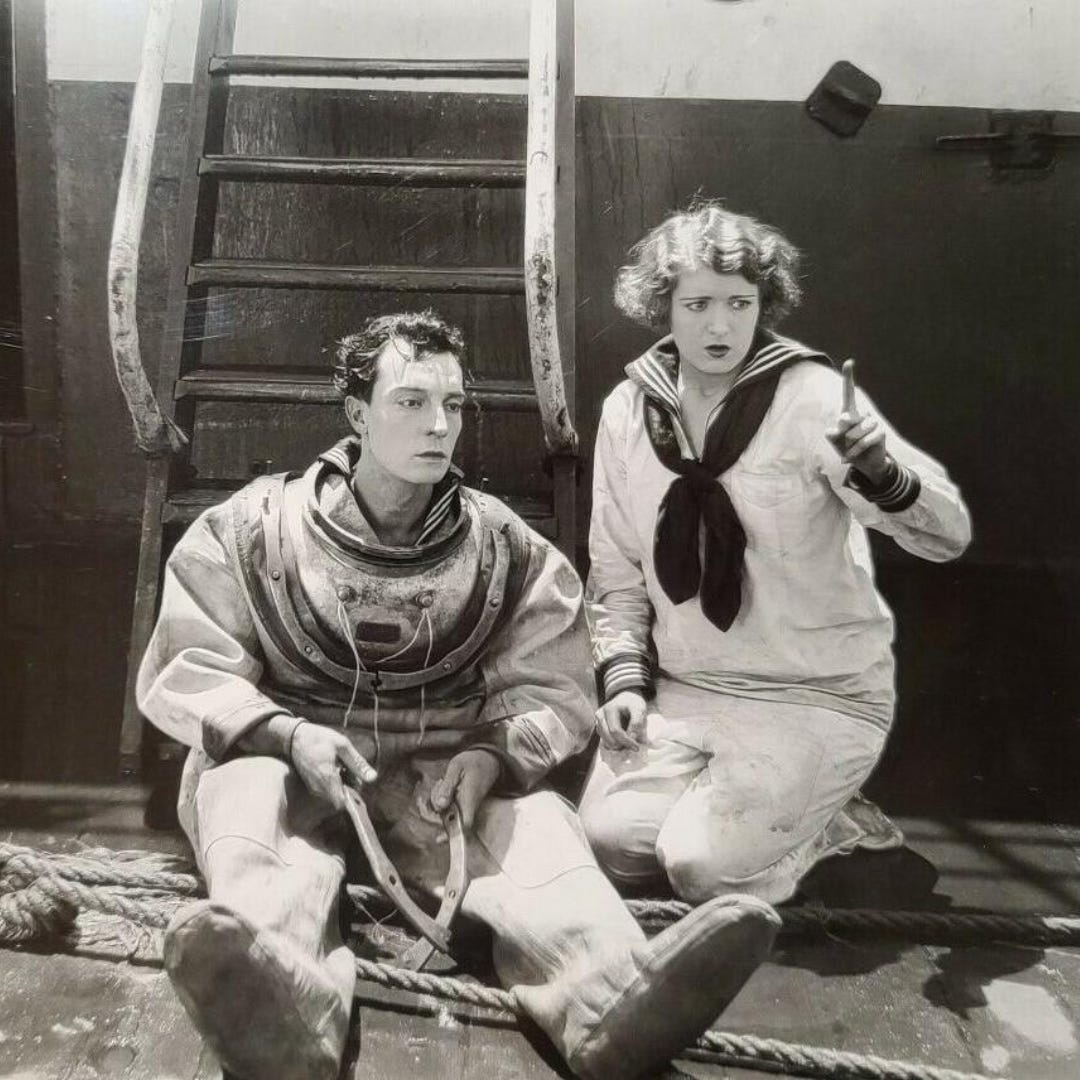
This week marks the fourth annual Silent Movie Week over at the Museum of Modern Art in New York City as programmed by esteemed film writer and historian Dave Kehr. I have yet to make it out to this week of silent glory, but if you are anywhere in the area you should absolutely make the trek! In celebration of the series, which runs July 29th through August 4th, here is an overview of the films in the series, plus some fun factoids.
But first, some real talk. As many of you know, I am a freelance writer. That means my income ebbs and flows. Last year when my Dad go sick and then passed away, I had to step away from a lot of gigs and in the year since my finances have not leveled back out. I love writing these Silent Sundays pieces and want to keep them free, but I am feeling the heat in more ways than one. So, I will be keeping them free, but if you have enjoyed the 25+ editions of this series over the last few months and would like to support my work I have set up a Silent Summer Sale where all paid subscriptions are 30% off. That means you get a year for less than $50. If you can spare it and find my writing worth your time it would really help me out. Either way, thank you for reading!
Silent Summer Sale! 30% off forever!
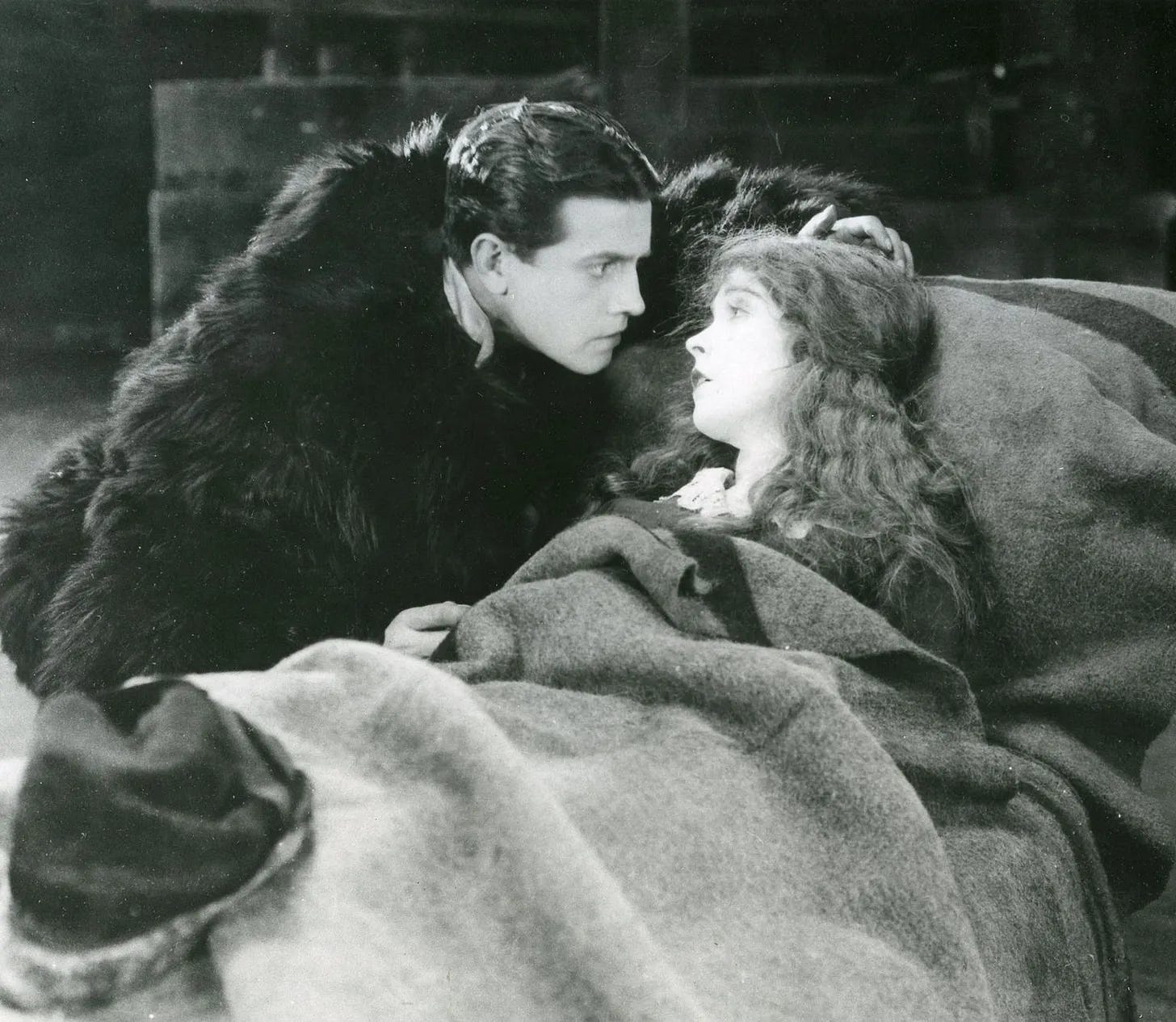
Over on the Silent-ology website Lea linked to a great article from the May 1920 issue of Picture-Play Magazine in which director D.W. Griffith explained why he spent $175,000 of his own money to secure the rights to Lottie Blair Parker’s 1898 melodrama Way Down East. The article begins “Art and money have little in common; but, unfortunately money has become a kind of standard these days.” Now, I am not ever going to be out in these streets defending the legacy of D.W. Griffith, but that is a bar. The article then ends with “Rural life in America is a sacred memory. It should never be forgotten.” As someone who grew up in rural America, I am keen to agree with this statement, although given Griffith’s history there are likely aspects to “rural” America that he would have wanted preserved that I think can go by the wayside (read: racism). I haven’t yet seen Way Down East, which stars Griffith’s longtime collaborator Lillian Gish as a country girl scammed into marriage with a rich man (Lowell Sherman), goes through the ringer, and then falls in love with another rich man’s son (Richard Barthelmess). The screening will be the world premiere of MoMA’s new digitization of its own photochemical restoration from 1986. The film will also be presented with a recreation of the film’s original score and performed by a 10-piece orchestra and screens Wednesday, Jul 29th at 7:00 p.m.
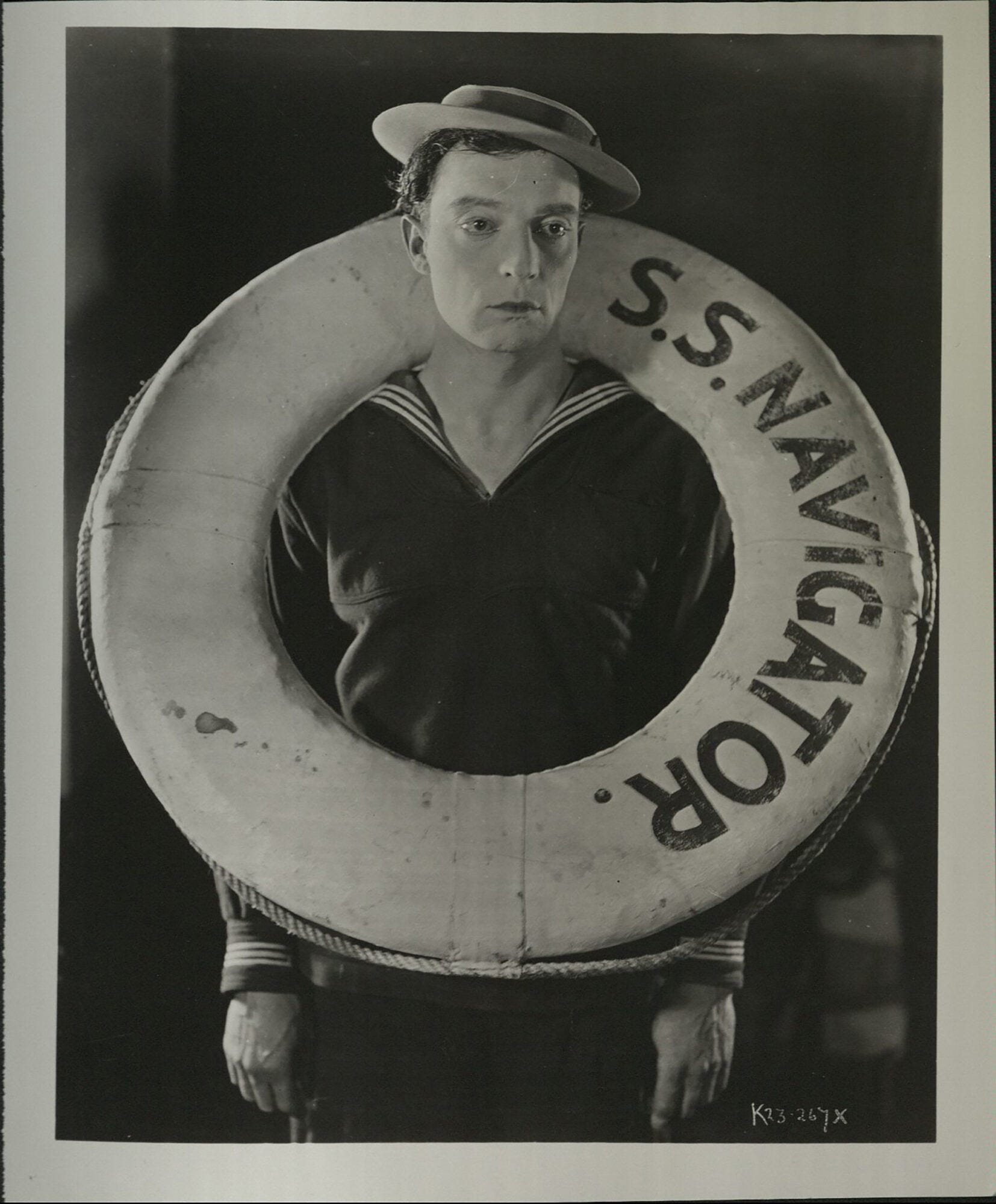
I recently found an article in an old issue of Motion Picture Classic from 1924 in which the writer said that Buster Keaton is “a Man’s Comedian.” Obviously, this is ludicrous for many reasons, but if you have yet to fall under the erotic spell of the the Great Stone Face, then MoMa’s presentation of this classic romantic comedy is a great place to start. Written by Clyde Bruckman (who I wrote about a few weeks ago in connection to The X-Files), Buster stars as a hapless young millionaire whose advances are rebuffed by the young woman he loves (Kathryn McGuire), only for the two of them to find themselves alone on a boat drifting off to sea. Along with its wonder gags and air of romance, the film also features an amazing underwater underwater sequence shot off the coast of Catalina Island in which Buster actually dons a genuine deep-sea diving suit. MoMA will be screening an archival print, from a restoration they carried out along with Lobster Films from the only known nitrate print, with live organ accompaniment by Ben Model. The film screens Thursday, July 30th at 7:00 p.m.
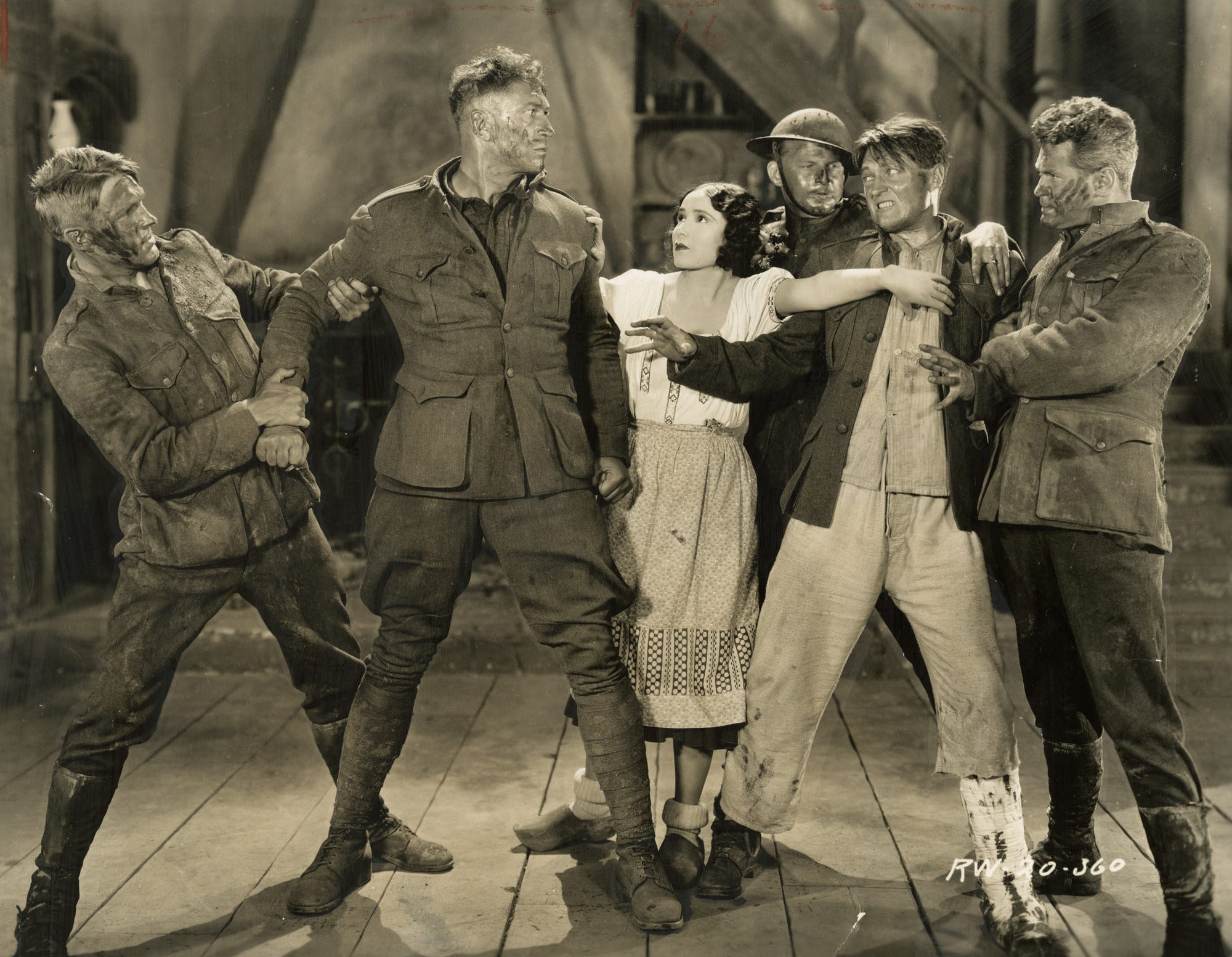
Another blindspot for me, Raoul Walsh’s dramedy What Price Glory? is an adaptation of stage play by Maxwell Anderson and Laurence Stallings. Released a year after King Vidor’s The Big Parade, this is another cold, hard look at the horror of trench warfare during WWI. I wrote a bit about this film’s impact on the rapidly changing movie industry for RogerEbert.com a few months back:
At the same time over at the Fox Film Corporation, Raoul Walsh was working on an adaptation of the stage play “What Price Glory?,” a war dramedy that centers on two US Marine sergeants, Quirt (Edmund Lowe) and Flagg (Victor McLaglen), whose playful rivalry ramps up when the onset of WWI takes them to France, where they both fall in love with Charmaine (Dolores del Río), an innkeeper’s daughter. Although made as a silent film, after its premiere on November 23rd, 1926, in New York City, before it went into general release, Fox reworked the film to incorporate sound effects using the Movietone sound-on-film process as a way to compete with “Don Juan.”
Developed by Theodore Case, the patents for the Movietone technology were bought out by William Fox on July 23, 1926. “What Price Glory?” would go on to break box office records in theaters across the country.
The U.S. premiere of a new restoration, this film will be screening on July 31st at 7:00 p.m. with piano accompaniment from Makia Matsumura.
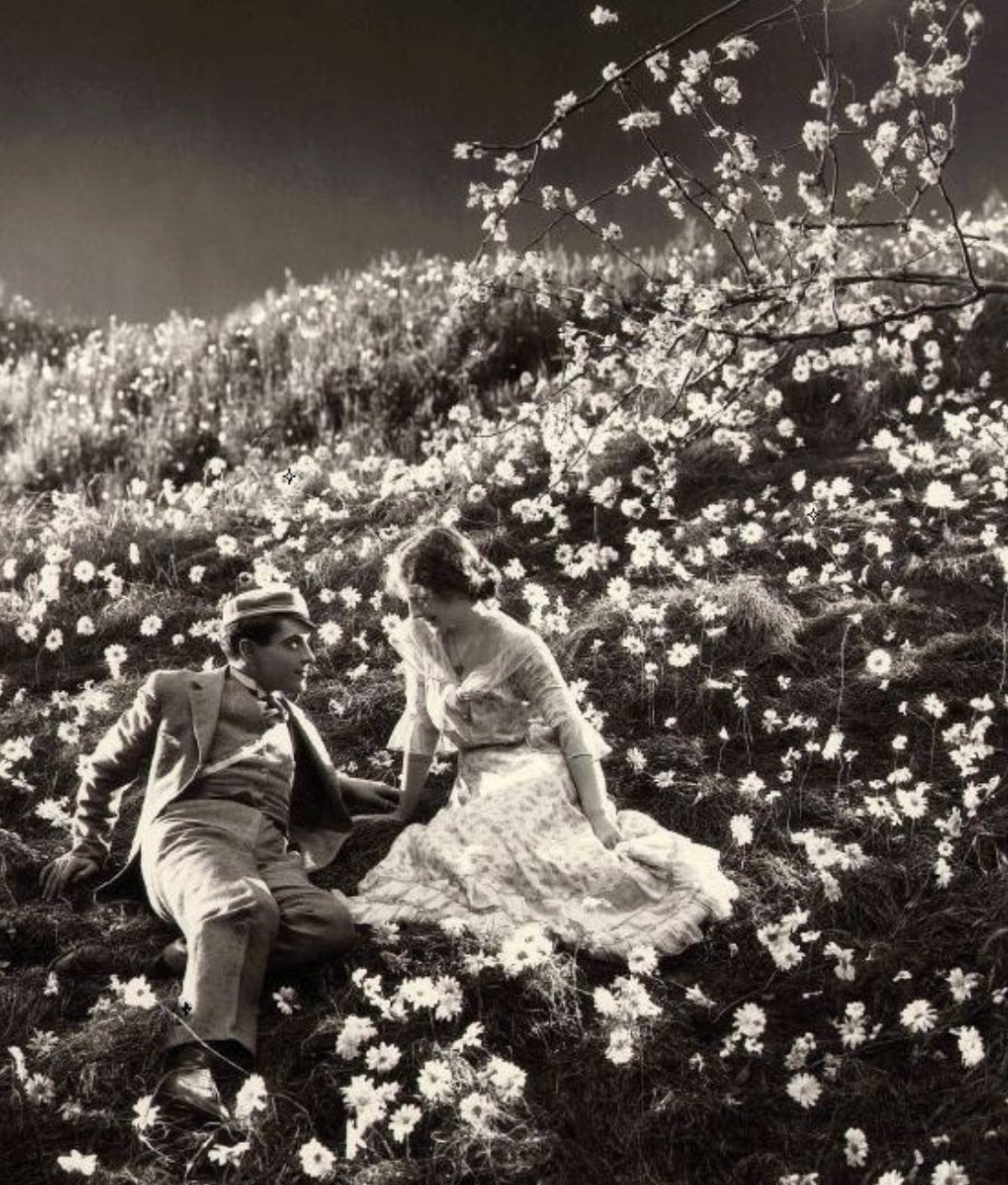
I first saw Ernst Lubitch’s The Student Prince in Old Heidelberg (1927) at the Pordenone Silent Film Festival about a decade ago and I think I am still crying about it. This is one of my all-time favorite movie romances, one with a star-crossed love that will lift you to the highest heights of euphoria and then crash you back down to Earth, smashing your heart into a million little pieces. Adapted from a 1901 German stage play by Wilhelm Meyer-Förster, the film follows the titular prince (Ramon Novarro), who is sent to Heidelberg for schooling along with his tutor (Jean Hersholt), only to fall in love with the niece of the owner of the inn where he finds lodging. This was MGM’s second-most expensive silent production, after their 1925 production of Ben-Hur, which also starred Novarro. For some reason this perfect film does not have a Blu-ray release in the United States and screenings of it are very rare, so of all the films screening during this year’s fest, this is the one I think should absolutely not be missed. This will be the world premiere of a new digitization from a nitrate print acquired by MoMA from MGM in the 1930s, which is apparently the first time the full domestic release version of the film has been restored. The film will be screening Saturday, August 1st at 7:00 p.m. with piano accompaniment from Makia Matsumura.
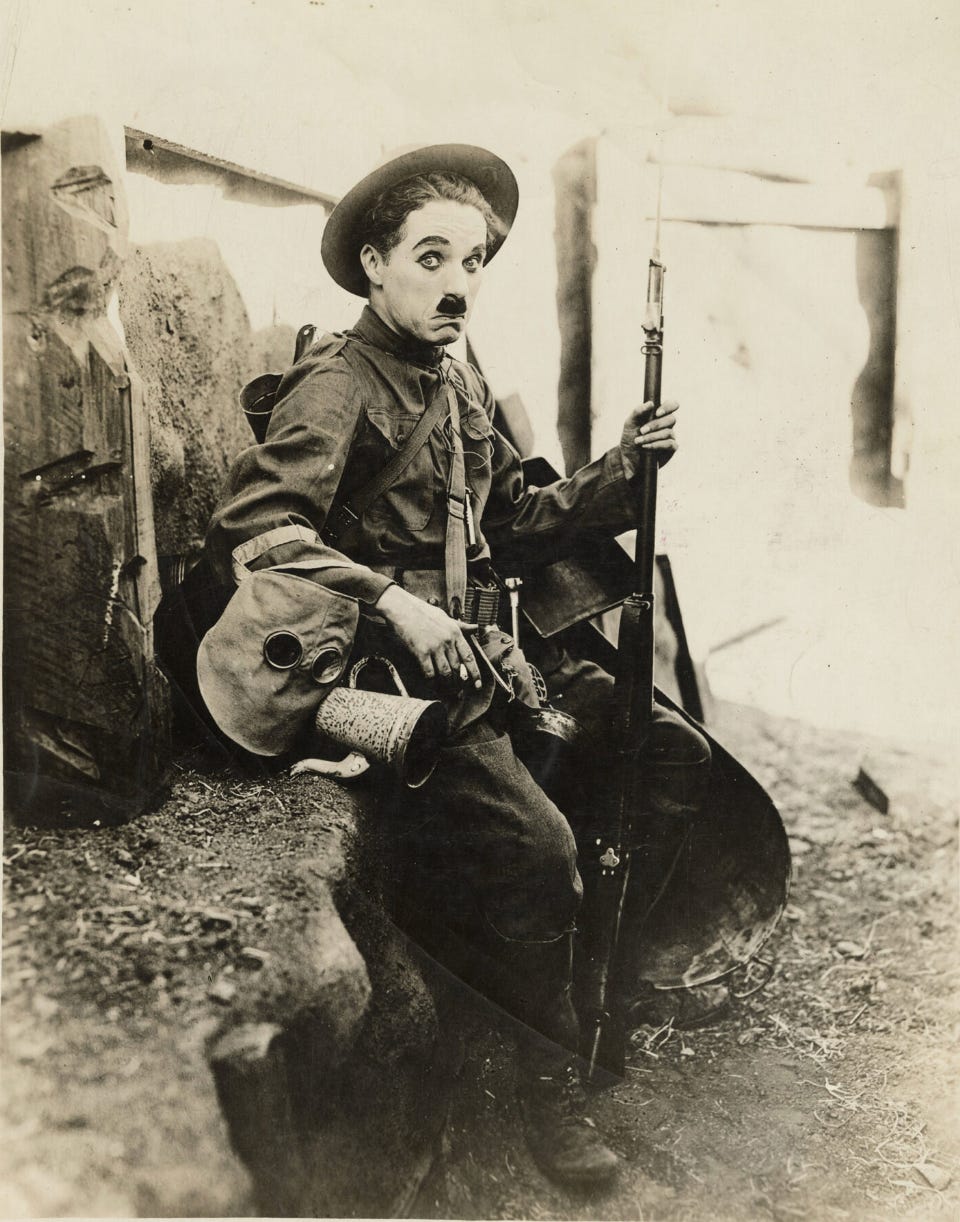
The oldest films screening during Silent Film Week, Chaplin’s Shoulder Arms, A Dog’s Life, and The Bond were all made as part of his deal First National Exhibitors’ Circuit, which he signed in 1917. Part of the deal was that he owned the negatives and copyrights to his films. The deal was signed in June of 1917 and over the next six months Chaplin built his own studio on five acres of land just off of Sunset Boulevard in Los Angeles. Dubbed Charlie Chaplin Studios, the complex was complete in January 1918. If you’ve been to Hollywood any time in the last 110 years, you may have seen the complex. Chaplin sold the studio in 1953, after which it changed hands several times, including Kling Studios where the Adventures of Superman (1952--1958) was filmed. It also served as the original studio of Hanna-Barbera Productions, and Red Skelton Studios, where many episodes of the original Perry Mason TV series was filmed. From 1966 to 1999, it was the headquarters for A&M Records. The Jim Henson Company then owned the building from 2000 to 2024. In November of 1924 the lot was purchased by musician John Mayer and film/TV producer McG who in earlier this year changed its name back to Chaplin Studios. All three films are newly restored in collaboration with the Chaplin estate and through funding provided by the Lillian Gish Fund for Preservation. The films screen Sunday, August 2nd at 4:00 p.m. with piano accompaniment from Ben Model.
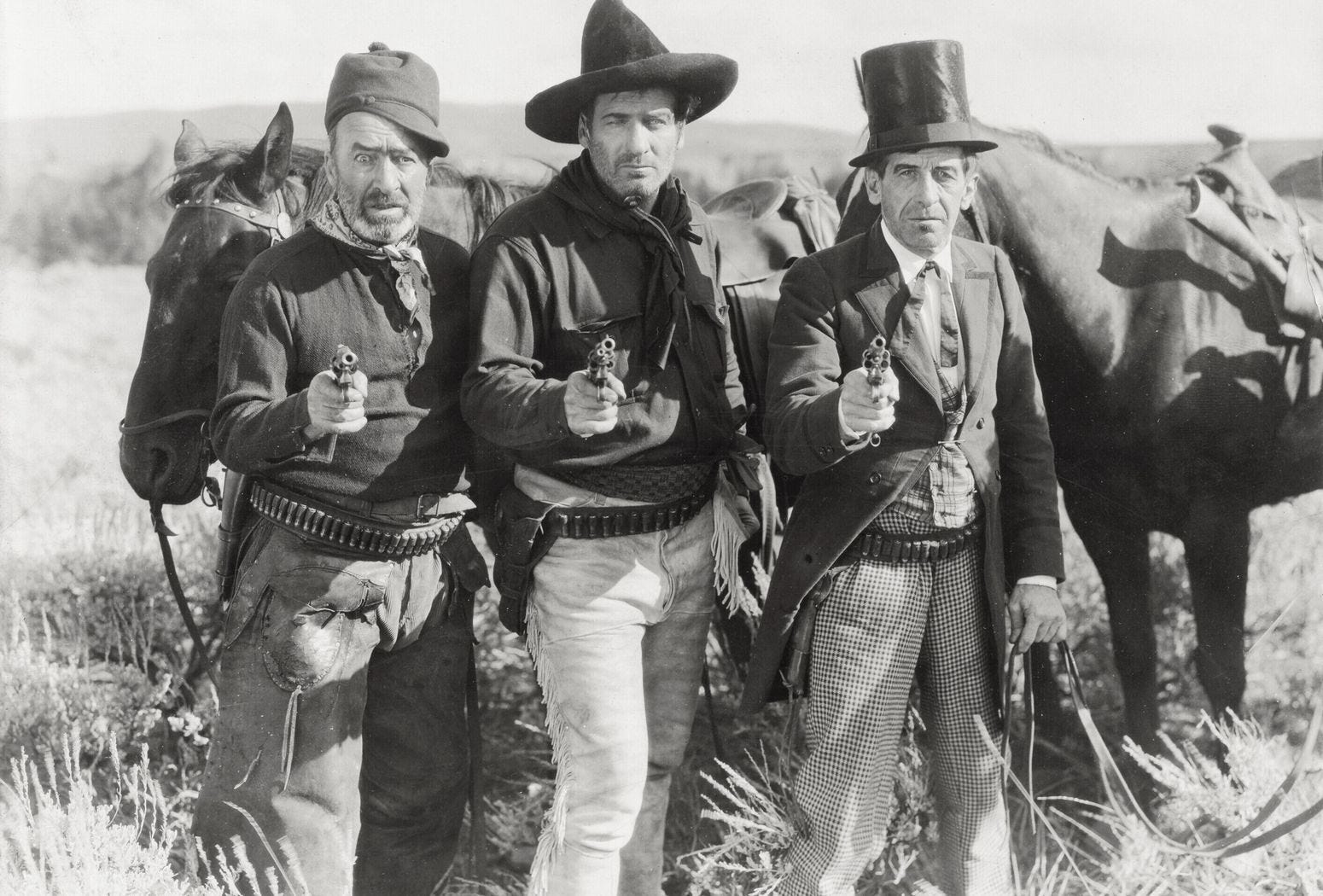
The last western made by John Ford until he returned to the genre with 1939’s Stagecoach, 3 Bad Men is not only one of the great westerns of the silent era, in my book it’s one of the great westerns period. The film centers on three eccentric outlaws (Tom Santschi, J. Farrell MacDonald, and Frank Campeau) who decide to come to the aid of a young homesteader (Olive Borden) after he father is violently murdered by another set of bandits. The impossibly handsome George O’Brien also co-stars as Borden’s love interest. Epic in scope and theme, this is Ford at his best. The film has been preserved and restored by MoMA and this screening will include the world premiere of a new recorded orchestral score, composed and conducted by Timothy Brock. The film screens on Monday, August 3rd at 7:00 p.m.
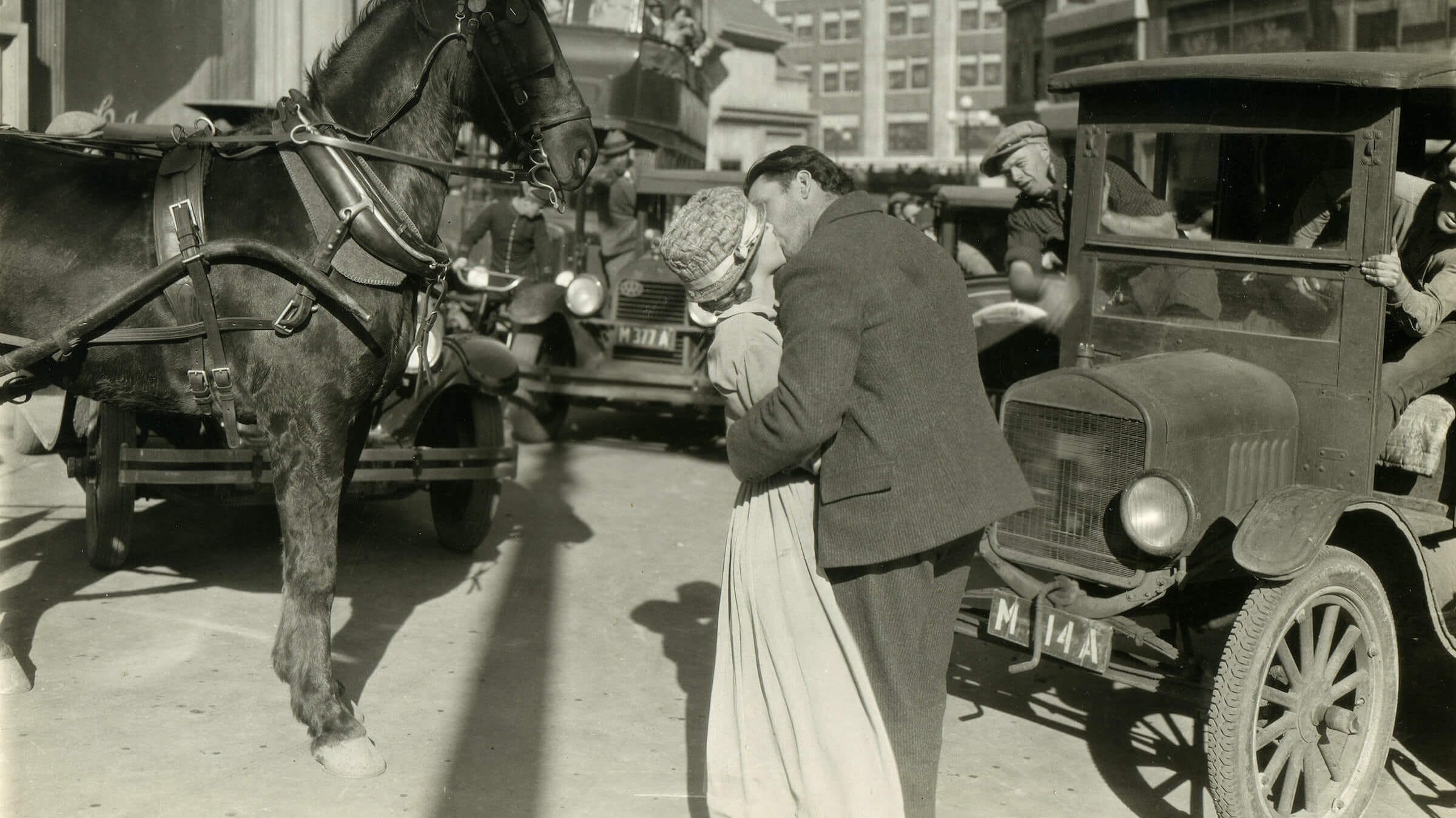
Obviously, I have written a lot about both Sunrise: A Song of Two Humans and its director F.W. Murnau lately, so of course I think you ought to make time out of your Tuesday to go see this masterpiece, which is the only film to win the Oscar for Best Unique and Artistic Picture. Like What Price Glory?, this film was made just as Hollywood was beginning to explore the transition to sound, so while this is a silent film through and through, Murnau was one of the first directors to use the new Movietone technology to sync both sound effects and a musical score to his film. This screening is the American premiere of the new restoration that took the Il Cinema Ritrovato festival in Bologna by storm earlier this summer. The film was restored by the great San Francisco Film Preserve using archival footage from MoMA, the British Film Institute, and other archives. The film will screen Tuesday, August 4th at 7:00 p.m. with piano accompaniment from Makia Matsumura.

I started an Instagram account for my love of the silent era, so if you’d like more micro-doses of silent film daily, give ✨ Nitrate Dreamland ✨ a follow.
Comments
Nothing yet. Say the first thing.
Sign in to join the conversation.