
Blessed Jerome is one of the greatest hidden treasures of the Church! His impact on Christianity itself can hardly be overstated, as the author of the Latin Vulgate.
For Old Believers also, Jerome is read and put forth authoritatively in apologies and polemics, with a frequency that far exceeds that of Nikonians, who largely ignore him. In such works, one gets the impression that he is a commentator, for Old Believers, of historical importance nearing Chrysostom’s, which is not the case. But so compatible was Jerome’s exegetical style to that employed by the great Old Believer apologists, that his authority has been leaned upon heavily.
He eventually turned on his teacher - Jerome was very much a student of Origen, evidenced by his style of exegesis (emphasizing the spiritual, hidden meanings), which not only reflects Origen’s but at times outright plagiarizes.
This lovely collection of prologues shows Jerome to have been ahead of his time - he is cutting-edge modern - for in these chapters, Jerome must defend himself, (in the 4th Century!), from his detractors for daring to translate directly from contemporary Hebrew texts instead of the Septuagint.
Jerome also seems to be an advocate of what we call today “functional equivalence”, which is to say, translating the meaning, rather than being bound by a literal, word-for-word translation - “formal equivalence”. For my part - I cannot decide, as both seem to be utterly compelling.
Also addressed is an argument for the separation between the canonical books of the OT from the “Apocrypha”.
The controversies that surrounded Jerome’s work mirror much that is still popularly argued today. For example, the Nikonians are still very much inebriated from the snobby ignorance of Septuagint-only “source monogamy”. Their publications and academic work are largely assumed by Old Believers as well - who seem largely to be unaware that the very arguments against the Masoretic texts were compelingly addressed even in the early centuries of Christianity by the great Christian scholars, like Jerome and Origen.
Today, the approach planted by Jerome over 1,600 years ago has not only borne its fruit, but completely usurped Biblical translation philosophy.
The insults Jerome endured in the 4th Century today are replaced by the lazy epithet “Protestant”.
These chapters will appeal more to those interested in textual analysis and Scriptural translation than those looking for more straightforward contextual prologues and summaries offered by the great fathers like Athanasios of Alexandria.
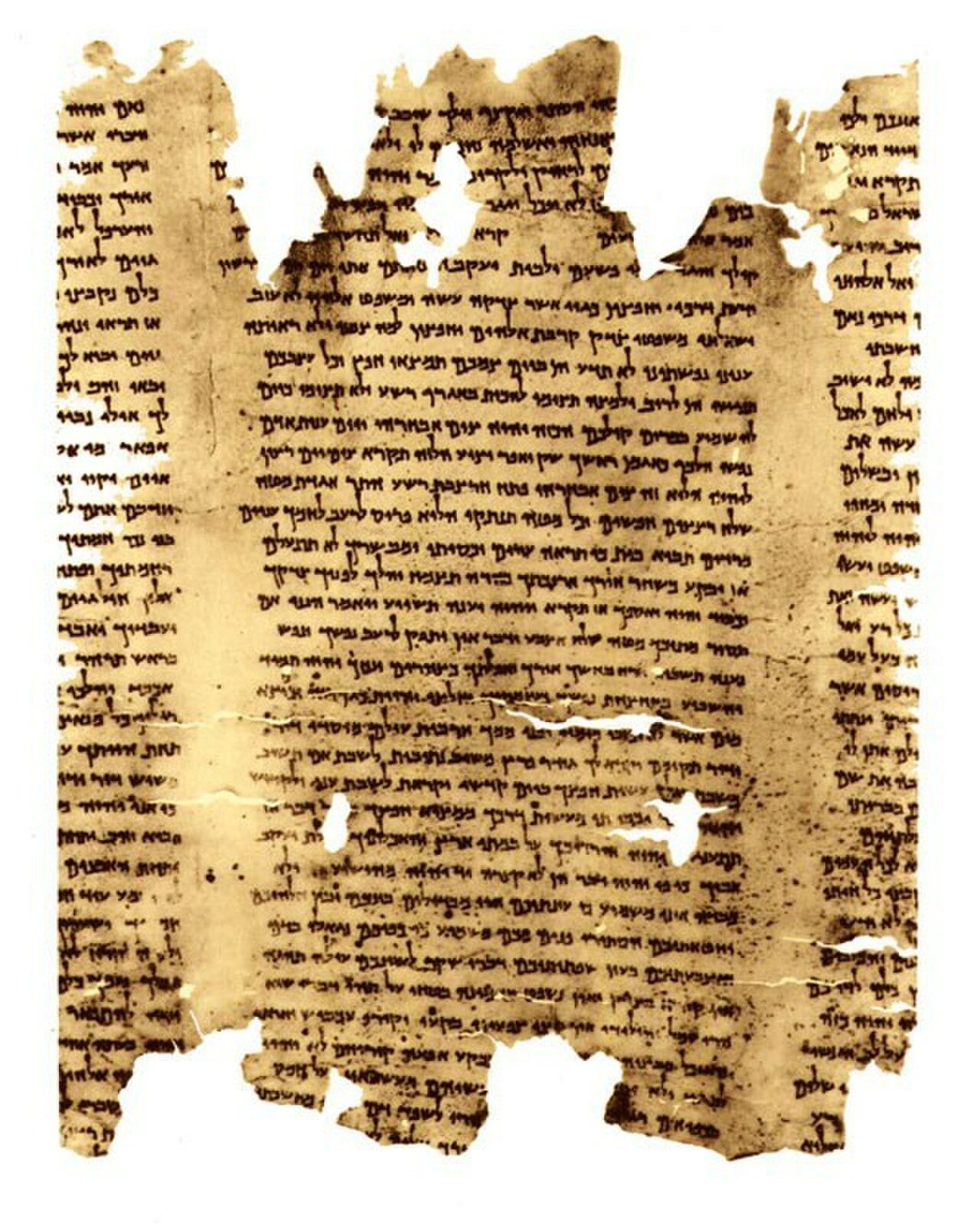
I have received the longed-for letters of my Desiderius, who by some foreknowledge of the future came to share a single name with Daniel, and who entreats me to translate the Pentateuch from the Hebrew tongue into the Latin native to our ears. This undertaking is exceedingly perilous on account of open ill-wishers, who loudly accuse me of striving, in disparagement of the Seventy translators, to eclipse the old with the new — as though treating the works of the mind like wine — though I have repeatedly affirmed that, according to my own strength, I bring to the tabernacle of God what I am able, without binding the labor of some to the poverty of others. But even had I dared to do such a thing, my example would be the learned Origen, who mingled into the ancient edition the translation of Theodotion, using the signs asterisk and obelus — that is, the little star and the dash — everywhere, either to mark what had previously been too brief, or to delete and excise what was superfluous; and especially the authority of the Evangelists and Apostles, in whom we read much from the Old Testament that is not found in our books, such as: “Out of Egypt I called My Son,” and “For he shall be called a Nazarene,” and “They shall look on Him whom they pierced,” and “Rivers of living water shall flow from his belly,” and “Eye has not seen, nor ear heard, neither has it entered into the heart of man what God has prepared for those who love Him” — and many other such things not found in the syntagma itself.
Let us therefore ask them where this is written, and when they cannot answer, let us open the Hebrew books. The first testimony is in Hosea, the second in Isaiah, the third in Zechariah, the fourth in Proverbs, the fifth also in Isaiah; and not knowing this, many follow the ravings of the apocrypha and prefer Iberian nonsense to the genuine books. It is not my task to explain the causes of this error.
It is said that the wise among the Jews decided not to give Ptolemy, who worshipped one God, any occasion to suspect the Jews of believing in two gods — especially since in his eyes they seemed inclined toward the teaching of Plato. Therefore everything that Holy Scripture says in testimony concerning the Father, the Son, and the Holy Spirit, they either interpreted otherwise or passed over in silence altogether, so as both to please the king and not betray the mystery of the faith. And I do not know who first invented the falsehood of the seventy cells in which they supposedly labored at Alexandria, whereas Aristeas — ὑπερασπίζω [bodyguard] of that same Ptolemy — and, much later, Josephus, report nothing of the kind, but write rather that they were gathered together in a single hall, where they did not prophesy.
For a prophet is one thing, and a translator another: there the spirit foretells what is to come; here erudition and an abundant vocabulary render what has been learned — unless one supposes that Tully likewise translated Xenophon’s Oeconomicus, Plato’s Protagoras, and Demosthenes’ On the Crown by inspiration of the spirit; or that the Holy Spirit gave one thing through the Seventy and another through the Apostles, so that the latter, then, would have lied in writing what the former passed over in silence.
What then? Shall we condemn the old? By no means — but, following after the first, let us labor with whatever diligence we can muster in the house of the Lord. Those translators lived before the coming of Christ, and what they did not know they rendered in ambiguous terms; but we, after His Passion and Resurrection, write not so much prophecy as history — and what is heard is set forth differently from what is seen, and what we understand better, we also explain better.
Therefore hear me, secret ill-wisher: I do not condemn, I do not reject the Seventy, but I sincerely prefer the Apostles above them all. Through their mouths Christ speaks to me; in them I read that the prophets possess a spiritual gift, while translators they place in the last rank. Why then do you torment yourself with envy? Why do you stir up the souls of the unlearned against me? If it seems to you that I am mistaken, ask the Jews, consult the teachers in the various cities — what they possess concerning Christ is not in your copies. It would be another matter if they could prove that the Apostles’ testimonies cited against them are spurious, and that the Latin copies are better than the Greek, and the Greek better than the Hebrew. So much against the envious.
And now I beg you, beloved Desiderius — since you have urged me to take up so great a labor and to begin upon the Book of Genesis — help me with your prayers, that I may be able to render these books into Latin by the same Spirit by which they were written. The end.
Having finished the Pentateuch of Moses, as though freed from a heavy burden, we now set our hand to Joshua — whom the Jews call Joshua ben Nun, that is, son of Nun — and to the Book of Judges, called among them Shoftim, and to Ruth and Esther, books that bear their names as titles. We remind the reader that the forest of Hebrew names and distinctions, kept apart by special divisions, is preserved with care in Scripture, lest either our labor or our diligence be lost.
And first, let the reader know that I, as I have repeatedly testified, do not seek to deride the old, as my friends accuse me of doing, but boldly offer from my own lips, to those who value our work, our edition — so that instead of the Greek Hexapla, which demand both great expense and great labor, they might have our version; so that, growing doubtful while reading the old copies, they might turn to ours in search of an answer — all the more since among the Latins there are now as many editions as there are copies, and each one adds or removes as he pleases, wherever he pleases; and what disagrees with itself cannot be true.
Therefore let the scorpion cease its writhing as it aims to wound us, and let the venomous tongue cease to revile this holy work — accepting it when it pleases, rejecting it when it does not — remembering the verse of Scripture: “Your mouth has been full of cunning, and your tongue has devised deceit; sitting against your brother you spoke, and against the son of your mother you laid a snare; this you have done, and I kept silence; you thought that I would be altogether like you; I will rebuke you and set them before your face.”
“What benefit is it to me to labor, sweating, while listening to others revile me — while the Jews grieve that the occasion for slandering and mocking Christians has been taken from them, yet people belonging to the Church despise this very thing, and even revile that over which their adversaries are so tormented? For if they prefer the old translation, which I myself do not disparage, and suppose that nothing more ought to be received, then why is it that what I mark with the asterisk and obelus as added or omitted, they both read and do not read at the same time? Why has the Church received Theodotion’s translation of Daniel? Why do they admire Origen and Eusebius Pamphili, circulating all the editions together? Or what folly is it, having spoken the truth, to repeat the falsehood once again? How can they even confirm the testimonies of the New Testament, which are not found in the old copies?”
We say this lest we seem to be silent in answer to our slanderers.
Moreover, after the falling-asleep of holy Paula, whose life is an example of virtue, and having finished those books of the Prophets which I could not refuse to Eustochium, the virgin of Christ, we resolved — “while the Spirit still governs this craft” — to begin expounding, and to bring home, as it were, a long-deferred labor; all the more since the wondrous and holy Pammachius likewise presses for the same in his letters, and we, hastening homeward, must sail on without heeding the deadly song of the sirens. End.
If you enjoy our articles - please share them with others who also might!
The Hebrews count twenty-two letters, which is confirmed also by the languages of the Syrians and Chaldeans, very close to Hebrew; for in these too there are twenty-two elementary signs with the same sounds, though differently shaped. The Samaritans write the Pentateuch of Moses in these same letters, adding certain figures and marks for distinction. It is known that Ezra, the scribe and teacher of the Law, after the Babylonian captivity and the restoration of the Temple under Zerubbabel, invented other letters, which are used to this day; before that time the letters of the Samaritans and the Hebrews were the same. And the four-letter Name of God, written in the ancient script, we still find to this day in certain Greek copies. Moreover, Psalms 36, 110, 111, 118, and 144, though composed in different meters, agree in the number of their verses with the number of letters in this alphabet. So too the Lamentations of Jeremiah, his Prayer, and the words of Solomon in Proverbs from the place where it says, “Who shall find a virtuous woman” — at the beginning of each verse these follow the same alphabetic order. Furthermore, certain letters among them are doubled: kaph, mem, nun, pe, tsade; they are written one way at the beginning or middle of a word, another way at the end. For this reason five books are also commonly counted as double: Samuel, Malachim, Dabre Yamim, Ezra, and Jeremiah together with Kinoth, that is, Lamentations (of Jeremiah).
Therefore, just as with twenty-two letters we write down everything we say in Hebrew, and every human utterance is embraced by these elements, so likewise twenty-two volumes are counted, as it were certain letters and first principles, by which the still tender age that needs milk is instructed and nourished in the doctrine of God.
The first book among them is called Bresith, which we call Genesis; the second, Hellesmoth, called Exodus; the third, Vaiecra, that is, Leviticus; the fourth, Vaiedabber, which we call Numbers; the fifth, Elle Addabarim, entitled Deuteronomy. These are the five books of Moses, properly called the Torah, that is, the Law.
Next follows the order of the Prophets, beginning with Joshua, called among them Joshua ben Nun. To this is joined Shoftim, that is, the Book of Judges; and with it is numbered Ruth, since the history it recounts took place in the days of the Judges. Third comes the Book of Samuel, which we call the First and Second Books of Kingdoms. Fourth, Malachim, that is, “of Kings,” containing the Third and Fourth Books of Kingdoms. Malachim, that is, “Kings,” is a far better title than Malachoth, “Kingdoms,” for these books describe not the deeds of many separate kingdoms but of the one people of Israel, comprised of twelve tribes. Fifth is Isaiah, sixth Jeremiah, seventh Ezekiel, and the eighth book — that of the twelve Prophets — is called among them Tare Asra.
The third order is the Hagiographa, which begins with the Book of Job; second is the book of David, in five divisions together with one psalm, forming on its own the Book of Psalms. Third is Solomon, who has three books: Proverbs, which they call Mishlot, and Ecclesiastes, that is, Coheleth, and the Song of Songs, which they entitle in their language Shir Hashirim. Sixth is Daniel, seventh the book of Dabre Yamim, that is, “Words of Days,” which we may most precisely call the chronicle of the whole of sacred history, and which among us is entitled the First and Second Books of Chronicles; eighth is Ezra, which among the Greeks and Latins is divided into two books; ninth is Esther.
In this way the twenty-two books of the Old Law are distributed: five of Moses, eight of the Prophets, nine of the Hagiographa. Although some commonly list Ruth and Kinoth separately among the Hagiographa, supposing that the total number of books ought to be increased by two — for in the Apocalypse John shows us elders who worshiped the Lamb and received crowns upon their foreheads, standing before the four living creatures full of eyes before and behind, that is, looking upon past and future, and crying without ceasing, “Holy, holy, holy, Lord God Almighty, who was and is and is to come,” numbering twenty-four.
Let this prologue serve as a sort of helmeted preface to all the books that we translate from Hebrew into Latin, so that we may know that whatever falls outside of this number is to be reckoned among the Apocrypha. Thus Wisdom, which is commonly attributed to Solomon, and the Book of Jesus son of Sirach, and Tobit, and the Shepherd of Hermas are not in the canon. The First Book of Maccabees I found in Hebrew; the second was written in Greek, as can be demonstrated from its very style.
And since this is how matters stand, I beg you, reader, not to take my labor as a condemnation of the ancients. Into the tabernacle of God each man brings what he can: some bring gold and silver, others fine linen and purple, scarlet, and precious stones; for us it will be well if we bring goats’ skins and hides. And yet the Apostle counts our despised offering as the more necessary one. This is also why the whole beauty of the various parts of the Church, present and future, is covered over with skins and hairshirts — that is, the things of least value protect it from the heat of the sun and from harmful damp. And when you come to understand what you did not know before, count me as your interpreter, if you are grateful — or, if not, as a mere paraphraser; though my conscience tells me firmly that I have in no way diminished the Hebrew truth. If indeed you do not believe this, read the Greek and Latin copies and compare them with these little books of mine, and wherever you see a disagreement, ask one of the Hebrews — one of those you trust most — and if he confirms that I am right, I think you will not consider him a fortune-teller who merely happened to guess the same as I did.
But I also ask you, handmaids of Christ, who anoint the head of the reclining Lord with the most precious ointment of faith, who never seek the Savior in the tomb, for whom Christ has already ascended to the Father: set up the shield of your prayers as a rampart against the barking dogs who have fiercely opened their jaws against me, who go about the city considering themselves the most learned in it whenever they revile others. Knowing my own littleness, I always remember His saying: “I kept my ways, that I might not fall by my tongue; I set a guard upon my mouth, when the sinner rose up against me; I was dumb, and humbled myself, and kept silence from good things.”
If the translation made by the Seventy interpreters had remained pure, it would be needless, my Chromatius, holiest and most learned of bishops, for you to ask me to translate the Hebrew books into Latin. For what once filled the ears of mankind and strengthened the faith of the newborn Church would rightly be left undisturbed by our silence. But now, when a great many variant copies wander through different regions, and that genuine translation has been corrupted and spoiled, you entrust to our judgment either to choose out of the many what is true, or to undertake a new labor to replace the old — and, as the saying goes, to “put out the eyes” of the mocking Jewish crows.
Alexandria and Egypt praise Hesychius as the author of their copies of the Seventy; Constantinople and Antioch accept the copies of the martyr Lucian; while in the provinces of Palestine people read those copies revised by Origen and circulated by Eusebius and Pamphilus — and thus a threefold variance divides the whole world among itself. And indeed Origen did not merely set the four editions side by side, commenting in the margins on every word, so that any one that disagreed would at once be exposed by the agreement of all the others; but, venturing further still, he mixed into the edition of the Seventy the edition of Theodotion, marking with asterisks what was missing and with obeli what seemed superfluously added.
If, then, others are pleased not to hold to what was once received, and after the seventy cells — about which the common crowd babbles for no reason — to read in the churches what the Seventy translators did not know, why am I not received by my fellow Latins, when I have made anew an uncorrupted edition of the old, so that I can support my work by the testimony of the Hebrews and, more than that, of the Apostles?
I recently wrote a book on the best method of translation, pointing out these passages from the Gospel: “Out of Egypt I called my Son,” and “they shall look on him whom they pierced,” and “for he shall be called a Nazarene”; and in the Apostle: “eye has not seen, nor ear heard, neither has it entered into the heart of man, what God has prepared for those who love him” — and other such passages, which are found in the Hebrew books. Surely the Apostles and Evangelists knew the translation of the Seventy — why then do they say things not found in the Seventy? Christ our God, the Maker of both Testaments, says in the Gospel of John: “He who believes in me, as the Scripture has said, out of his belly shall flow rivers of living water.” Surely it is written, since the Savior himself affirms it. Where is it written? Not in the Seventy; the Church does not accept the apocrypha; therefore one must turn to the Hebrews, with whom both the words of the Lord and the examples cited by the Apostles agree.
By this I make my “peace” with the ancients, and I answer my detractors, who gnaw at me as with the teeth of dogs, reviling me publicly while whispering in corners, at once accusing and defending — approving in others what they reject in me, as though virtue and vice lay not in the things themselves but depended on who had produced them. Moreover, I recall that I once handed over to our people an edition of the Seventy translated from the Greek, and I ought not to be counted an enemy of those whom I am always correcting in the assembly of the brethren.
And now, as for my having translated Dabre Yamim, that is, “Words of Days” — I did this in order to render clearer, by uncovering their meaning, the names that scribal errors had turned into an impenetrable forest, setting them out in versified form, so that, as Ismenias says, I might “sing them to myself and to my friends,” if the ears of the rest are deaf to them.
I have not yet decided which is harder: to do what you ask, or to refuse you; for there is no point in refusing your urgent request, and yet the enormity of the labor laid upon me is such that it is easier to collapse beneath this burden than to lift it. At once the malice of the envious will rise up, who think it necessary to revile everything we write; condemned by their own conscience, they tear apart in public what they read in secret, forcing me to cry out: “Lord, deliver my soul from lying lips and from a deceitful tongue.”
For three years now you have written and written, asking me to translate for you from Hebrew the Book of Ezra — as though you did not already have its Greek and Latin translations, or as though everything we translate from these books were not immediately subjected to public spitting. “It is fruitless to labor,” as someone has said, “for the sake of earning universal hatred — that is a mark of the height of folly.” I beg you therefore, my Domnio and Rogatianus, content yourselves with reading this at home; do not bring this book out into public, and do not offer wearisome food to those who can neither judge it nor produce anything of their own. If there is any brother who is not repelled by our writings, give him a copy, urging him to copy out clearly and carefully the Hebrew names, of which this volume has a great abundance. For there is no point in correcting a book if the correction is not preserved by the diligence of the copyists.
Let no one be troubled that we have translated only a single book; for among the Hebrews too the words of Ezra and Nehemiah are gathered into one book; those portions which they do not have, and which are not numbered among the twenty-four — corresponding to the number of the elders — ought to be set aside. And if anyone sets the Seventy against you, whose most torn and scattered multitude of copies speaks for itself — since what differs from itself cannot be a confirmation of truth — send them to the Gospel, in which there is much taken from the Old Testament that is not found in the Seventy, such as: “for he shall be called a Nazarene,” and “out of Egypt I called my Son,” and “they shall look on him whom they pierced,” and many other such things, which we are keeping for a more extensive work; and ask such people where this is written, and when they cannot answer, read to them from those copies which we have recently translated and by which the tongue of the accursed is daily put to shame.
But, drawing to a close, I will say that what I offer is without question the most reliable. I have published what either does not exist in Greek, or exists there in a form different from my translation. Why then revile the translator? Let them ask the Hebrews, and on the testimony of the writers themselves either give credence to my translation or not. For it is one thing to curse me, as they say, with closed eyes, and quite another not to follow the zeal and goodwill of the Greeks, who, after the Seventy, even now in the light of Christ’s Gospel, eagerly read the Hebrew and Ebionite interpreters of the old Law — Aquila, that is, Symmachus, and Theodotion — and have admitted their work, arranged by Origen in the Hexapla, into the churches. How much more grateful ought the Latins to be, seeing that Greece itself rejoices to borrow something from them.
First, all the copies can be acquired only at great expense and with endless difficulty; then, even those who possess them are unskilled in Hebrew, and will wander all the more, not knowing which among this multitude speaks the greater truth. This very thing recently happened to the most learned of the Greeks, who, abandoning the sense of Scripture, followed the error of one of the translators. We, however, possess some knowledge of Hebrew, and our knowledge of Latin has not been taken from us, and we can judge much in others, and can express what we understand. And so, although the viper hisses, and “Sinon the victor hurls his firebrand,” never, with the help of Christ, will my voice fall silent, and even a clipped tongue will still babble. Let those who wish, read; let those who do not, throw it away. Let them pick apart the punctuation, slander the very letters — your love spurs my zeal more strongly than their hatred and slander can oppress me.
To Chromatius and Heliodorus, bishops, greeting in the Lord!
I do not cease to marvel at the persistence of your demands. You demand that I translate into Latin a book written in Chaldean — namely, the Book of Tobit — which the Hebrews, separating it from the list of the divine Scriptures, count among the Hagiographa. I have done as you wished, though unwillingly. For learned Hebrews reproach us, accusing us of conveying to the ears of the Latins what is not in their canon. But having judged it better to disregard the judgment of the Pharisees and to satisfy the request of bishops, I resolved to labor as best I could; and since the Chaldean language is close to Hebrew, I found a man very skilled in both tongues, devoted a single day to this work, and what he rendered to me in Hebrew, I, with a scribe at hand, expressed in Latin.
Let your prayers be my reward for this labor, which you were pleased to require of me and which I now gratefully offer to you.
Among the Hebrews the Book of Judith is read among the Hagiographa; its authority for settling disputed questions is rather slight. Nevertheless, being written in the Chaldean language, this book is counted among the historical writings. But since it is reported that the Council of Nicaea reckoned this book among the Holy Scriptures, I agreed to fulfill your request — or rather your torment — and, setting aside the studies under which I was heavily burdened, devoted one sleepless night to it, translating more according to sense than word for word. I cast aside a great many badly corrupted copies and rendered into Latin only what I could find to contain coherent meaning.
Receive the widow Judith, a model of chastity, and proclaim her with everlasting and solemn praises. He who, as a reward for her chastity, granted her such strength that she overcame him whom no man had ever overcome, and conquered him who was unconquerable, has made her an example to be imitated not only by women, but by men as well.
The Book of Esther has clearly been corrupted by various translators. Taking it from the Hebrew archives, I have translated it as literally as possible. Its commonly circulated edition betrays traces of numerous additions, of the sort that schoolboys usually invent when expounding an assigned theme — such as what words might have been spoken by the one who gave the offense, or by the one who suffered it.
You, O Paula and Eustochium, since you eagerly strive to penetrate the Hebrew archives and support the contests of translators, hold the Hebrew book of Esther and examine every word in our translation, so that you may see that I have added nothing of my own invention, but have rendered the Hebrew history into Latin just as it is recorded in Hebrew. We do not seek the praise of men, nor do we fear their censure. Striving to please God, we have not the slightest fear of human threats, “for God will scatter the bones of those who seek to please men,” and, in the Apostle’s words, such people “cannot be servants of Christ.”
For every book of the divine Scripture I am compelled to answer my opponents, who charge my translations with showing contempt for the Seventy — as though among the Greeks Aquila, Symmachus, and Theodotion did not at times translate literally, at times according to sense, and at times combining both methods; and as though Origen had not divided the whole body of the Old Testament with the obelus and the asterisk, adding either from himself or from Theodotion to the old text, marking what had not been there before. Let my persecutors, then, learn either to accept entirely what they have accepted in part, or else let them scratch out my translation with their own asterisks. For it cannot be that, having accepted many insertions, they should fail to acknowledge that in some places these insertions are mistaken — especially in the Book of Job, from which the greater part would vanish if everything marked with an asterisk were removed. So it stands among the Greeks. Moreover, among the Latins there had already been seventy or eighty verses published before we recently issued our translation marked with asterisk and obelus, and this book, cut up, torn apart, mangled, displays its disfigurement to those who read it in public.
In this translation I follow none of the ancient interpreters, but rather the Hebrew, sometimes the Arabic, and at times the Syriac, rendering now literally, now according to sense, now combining the two. For among the Hebrews this book is considered obscure and ambiguous — what Greek rhetoricians call eschematismenos, that is, when one thing is said and another is meant — as when one tries to grasp an eel or a small lamprey with the hands: the harder you squeeze, the more swiftly it slips away. I recall that, in order to understand this book, I hired at my own expense a teacher from among the Jews, reckoned among them as one of the foremost; and I do not know how much I gained from his teaching, but I do know one thing — I could not translate what I had not myself understood.
From the beginning of the volume up to the words of Job, the Hebrew narrative is set out in prose. But from the words of Job onward to the very end of the book, where it is said, “Therefore I reproach myself, and do penance in ashes and dust” — there is hexameter verse, combined with dactyl and spondee, and with other meters as well, owing to the peculiarities of the language, distinguished by the number of syllables rather than by their length. This gives a particular sweetness and resonance of rhythm, more intelligible to those skilled in the laws of versification than to the ordinary reader. The small remainder, from the verse mentioned above to the very end of the book, is set out in prose. And if this seems incredible to anyone — namely, that among the Hebrews, after the manner of our own Horace or of the Greek Pindar, Alcaeus, and Sappho, the Psalms and the Lamentations of Jeremiah and indeed all the Songs of Scripture are composed in poetic meter — let him read Philo, Josephus, Origen, and Eusebius of Caesarea, and on the strength of their testimony be convinced that I speak the truth.
Let my dogs hear this: I have labored over this volume not in reproach of the ancient version, but in order to make clearer in our tongue what in the old translators is obscure, or omitted, or corrupted — since we have studied the Hebrew language, and have examined Latin speech from our very swaddling clothes, conversing with grammarians, rhetoricians, and philosophers. If among the Greeks, even after the publication of the Seventy, even now in the light of Christ’s Gospel, the Jew Aquila and the Judaizing heretics Symmachus and Theodotion — who veiled many of the Savior’s mysteries through cunning interpretation — have nevertheless been accepted, and moreover the Hexapla are kept in the churches and explained by the clergy; how much more should I, a Christian, son of Christian parents, bearing the sign of the cross upon my brow, zealous for the restoration of what was lost, the correction of what was corrupted, and the setting forth of the Church’s mysteries in pure and faithful language, not be condemned by proud and crafty readers. Let whoever wishes keep for himself the old books, written on purple parchment in gold and silver letters — what are commonly called uncial letters — valuing the burden of the thing rather than the books themselves; but as for me and those who are with me, let us be permitted to have poor little pages of books, not so much beautiful as faithfully corrected. Both editions — that of the Seventy according to the Greeks, and mine according to the Hebrews — have, by my labors, been rendered into Latin. Let each one choose what he wishes, thereby showing more his own diligence than ill will.
The Psalter long known in Rome I have improved and, following the Seventy translators, corrected — though hastily — in many places. If you, O Paula and Eustochium, should again see that what has been corrupted by copyists and by the errors of the ancients is valued more highly than what has been newly corrected, consider that I have labored over ground already plowed, and have torn out the thorns that had grown up in its uneven furrows — for you yourselves rightly say that bad plants must be uprooted all the more often, the faster they grow. Therefore, in this customary preface, I urge both you, if this work should prove difficult for you, and all who wish to have copies of it, to copy out diligently and carefully what I have diligently corrected. Let each one mark the horizontal line and the little star, that is, the asterisk and the obelus; and wherever he sees a dash placed before a word, let him know that from that point to the colon we have placed, there is less here than at this point in the Seventy; and wherever he sees the sign of a star, let him know that here something has been added from the Hebrew books, likewise up to the colon, in accordance with the edition of Theodotion, which does not differ in simplicity of language from the Seventy. Knowing all that I have done diligently, as do you, for whom I did it, I have no doubt that there will be many who, out of envy or pride, “prefer to despise what is excellent rather than to learn it,” and would rather drink from a muddied stream than from a clear spring.
Eusebius Hieronymus to his Sophronius — greetings!
I know that many think the Psalter is divided into five books, so that wherever in the Seventy there stands genoito, genoito — that is, “so be it, so be it” — a book ends, for which reason in the Hebrew one reads “Amen, amen.” We, however, follow the authority of the Hebrews, and especially of the Apostles, who in the New Testament always speak of “the Book of Psalms” and affirm that this book is a single one. The authors of all the psalms are named in their titles — that is, David, Asaph, Jeduthun, the sons of Korah, Heman the Israelite, Moses, Solomon, and others — and we attest that Ezra gathered all of these into one scroll. And if “Amen” — which Aquila translated as pepistomenos — is placed at the end of books, and not only at the beginning or in the middle of a sentence, does not the Savior say, “Amen, amen, I say to you”? And in the letters of Paul this occurs in the middle of the text, and in many books of Moses and Jeremiah “amen” is often inserted in the middle of the scroll, and yet these books are still counted among the mystical number of the twenty-two Hebrew books. Even the very title in Hebrew, Sepher Tehillim, which is translated “Book of Hymns,” in keeping with apostolic authority, shows not several books, but a single one.
Recently, while disputing with a certain Jew about the Lord and Savior, you cited a testimony from the Psalms; and he, wishing to mock you, claimed of every word that the Hebrew said something quite different from what you cited according to the Seventy — and so you most earnestly ask me, after Aquila, Symmachus, and Theodotion, to translate everything anew into Latin. You say that the abundance of translations rather troubles you, and, moved by affection, you are well pleased with my translations and judgments. Therefore, compelled by you, to whom I can refuse nothing, I again hand myself over to my persecutors, resolving rather to seek strength from you than self-will in friendship. I will say confidently and sincerely, calling many to witness it, that I know for certain I have changed nothing in the true Hebrew text. And if my edition differs from the old ones, ask any of the Hebrews, and you will see that I am being tormented in vain by zealots — “who prefer to despise what is excellent rather than to learn it,” the most corrupt of men. For if they are always seeking new pleasures, and not even the sea could satisfy their greed, why are they content with one and the same stale pleasure derived from the study of the Scriptures? I say this not in order to bite at my predecessors, nor because I consider anything worthy of reproach in those whose translation I once corrected with all diligence and made accessible to people of my own tongue — but because in the churches that believe in Christ, the Psalms are one thing, while the Jews, slandering us, cite every word quite differently.
And if you translate this little book of mine into Greek, as you promise, antiphiloneikon tois diasypousin [in rivalry with those who deride], and wish to make very learned men witnesses of my ignorance, I will say to you in the words of Horace: “Do not carry wood into the forest.” Unless it should be some comfort to me to know that we will share a common labor and a common reproach. I wish you health in the Lord, and ask that you remember me.
To Chromatius and Heliodorus, bishops — Jerome.
A letter unites those already united in the priesthood, and paper does not separate those whom Christ’s love has joined. You ask for commentaries on Hosea, Amos, Zechariah, and Malachi; if I am granted the ability, I will write them. You have sent financial assistance for scribes and booksellers, so that our mind might labor especially for you. And now I am surrounded by a crowd of importunate petitioners, as though it were just for me to labor for others while you go thirsty, or as though I were obliged to anyone besides you. Therefore, after a long illness, so as not to prolong my silence for a whole year, I have dedicated to you the fruit of three days’ labor — namely, the translation of the three books of Solomon: Mishlot, which among the Hebrews is called Proverbs, and which in our commonly used edition is called Parables; Coheleth, which in Greek we may call Ecclesiastes, and in our tongue, the Public Orator; and Shir Hashirim, which in our language is rendered Song of Songs.
To these are also added the panaretos [all-virtuous] Book of Jesus son of Sirach, and the pseudepigraphos [falsely-titled] Book of the so-called Wisdom of Solomon. The first of these I found in Hebrew under the title Proverbs, not Ecclesiasticus as among the Latins; to it were attached Ecclesiastes and the Song of Songs, so that the appearance of Solomonic authorship was preserved not only in the number of the books, but in the very subject matter of their content. The second book, however, does not exist at all among the Hebrews, and its very style smacks of Greek eloquence; some of the ancient writers name the Jew Philo as its author. Therefore, just as the Church reads the books of Judith, Tobit, and the Maccabees, which are not found among the canonical books, so let it also read these two for the edification of the people, but not for the confirmation of ecclesiastical doctrines.
And if anyone prefers the edition of the Seventy, that too is available, recently corrected by us; for we create something new not in order to destroy the old. Still, let him who reads with particular care understand our version as best he can, for we do not pour the wine three times from vessel to vessel, but offer it still retaining the freshness of its taste, fresh from the press.
Let no one be surprised to see the Prophets set out in verses, and let no one think that the Hebrews observed poetic meters here as they did in the Books of Psalms and of Solomon; but what is customarily observed in Demosthenes and Cicero, who spoke in prose yet are written out in lines and by cola, we have applied here for the first time, for the convenience of readers. Concerning Isaiah, it must first be known that he is exceedingly skilled in speech, like a man of noble birth, refined and elegant, mixing nothing common into his discourse. Hence the impossibility of preserving in translation many of the flowers of his eloquence. It must also be added that he ought to be called not so much a prophet as an evangelist. He explored the mysteries of Christ and His Church so subtly that one might think he was not foreseeing the future but composing a history of the past. For this reason I suppose that the Seventy translators, in their own time, were unwilling to reveal openly to the pagans the mysteries of their faith, lest they give what is holy to dogs and pearls to swine, and so left them veiled — as I have noted while reading their edition.
I know well what labor it costs to understand the Prophets, and how difficult it is for anyone to judge a translation if he has not first understood what he has read, and also how much we must endure the bites of many whom envy drives to despise what they themselves cannot do. Therefore, knowing that I am, as it were, putting my hand cautiously into the fire, I nevertheless ask those who trouble me: just as the Greeks read the work of the Seventy together with the translations of Aquila, Symmachus, and Theodotion — either out of zeal for learning, or in order to understand the Seventy better by means of these additions — so let them also be so good as to read yet another translation, in addition to the many that came before. Let them read first, and despise afterward, lest they be found condemning, not by reason, but out of prejudice and hatred, something they do not know.
Isaiah prophesied in Jerusalem and Judea, at a time when the ten tribes had not yet been carried into captivity, composing his narrative now concerning both kingdoms together, now concerning each separately. And in recounting events of his own time, and in foretelling the people’s return from the Babylonian captivity to Judea, his foremost concern is the calling of the Gentiles and the coming of Christ. As for you, O Paula and Eustochium — the more you love Him, the more earnestly ask of Him that, in return for the reproaches with which the zealots ceaselessly torment me at present, He grant me a greater reward in the life to come; for He knows that I have labored, studying a foreign tongue, so that the Jews might no longer insult His Church by accusing the Scriptures it preserves of falsehood.
The prophet Jeremiah, to whom this prologue is addressed, is considered among the Hebrews to be simpler in style than Isaiah, Hosea, and certain other prophets, but equal to them in substance, for he prophesied by the same Spirit. His simplicity of expression he owes to his native region. He was from Anathoth, now a small village three miles from Jerusalem, a priest of priestly lineage, and, having been sanctified in his mother’s womb, he dedicated his virginity, like an evangelical man, to the Church of Christ. As a boy he began to prophesy, and saw the captivity of the people and of Judea not only with spiritual but also with bodily eyes. Already the ten tribes of Israel had been resettled in Media, and their lands already belonged to colonies of pagans. The same fate he foretold for Judah and Benjamin, and he lamented the destruction of his city, four times repeating the alphabetic order in the first letters of the lines — which we have rendered in poetic meter. Moreover, we have restored to their original order the visions, which in the Greek and Latin texts are presented in extremely confused fashion. The Book of Baruch, his scribe, which is neither read nor preserved among the Hebrews, we have omitted, readily awaiting for this the curses of the zealots, to whom answer must be given in separate works. And this I endure, since you compel me. Though indeed, it would be more fitting to answer their malicious rage with silence than to provoke further the senselessness of the envious, who daily and abundantly seek out something new to attack.
The prophet Ezekiel was led into captivity in Babylon together with Jehoiachin, king of Judah, and there prophesied to his companions in captivity, who regretted having trusted the opponents of Jeremiah’s prophecy, and who looked upon the city of Jerusalem — which was destined to fall — as though it stood unshaken. In the thirtieth year of his life, and the fifth of the captivity, he began to prophesy to his countrymen. Though younger than Jeremiah, he prophesied in Chaldea at the very same time that Jeremiah prophesied in Judea. His speech is not very refined, but neither is it crude; rather, it is moderate in both respects. He, like Jeremiah, was a priest; the beginning and the end of his writings are rather obscure and difficult. The commonly received editions of his book are not very far from the Hebrew original — which surprises me, since, if all the books were translated by the same translators, how is it that in some places we read one thing, and in others, something different? Read also this translation of ours, which, being set out in poetic lines and meter, makes the meaning more accessible to readers. And if my friends should mock even this, tell them that no one compelled them to write. But I fear lest they prove to be what in Greek is more precisely called phagoloidoroi [slanderous gluttons].
In the churches of the Lord Jesus, the prophet Daniel is not read according to the Seventy, but the edition of Theodotion is used instead — and why this came about, I do not know. Either because the Seventy were unwilling to preserve in translation what was written in the Chaldean language and differs by the peculiarities of that tongue, or because this book is only attributed to their work in title, while the translation itself belongs to someone unknown, unskilled in Chaldean, or for some other reason — but I can say only this: that it is very far from the true text, and has been quite justly rejected. It should be known that Daniel especially, like Ezra, and also one section of Jeremiah, are written in Hebrew letters but in the Chaldean language; while the language of Job has much in common with Arabic.
In my early youth, after studying Quintilian and Cicero and the beauties of rhetoric, I finally shut myself up in the quarry of this language, and with much sweat and over a long time began to master the pronunciation of words with their aspirations and hissing sounds; and, as though wandering through an underground passage by a faint light overhead, I took up Daniel last of all, and such despair seized me that I was ready to abandon the labor altogether. But thanks to the encouragement of a certain Jew, who often urged upon me in his own tongue, “Unwearied labor conquers all,” and who seemed to me the most learned of all, I returned once more to the study of Chaldean. And I confess in truth that to this day I can read and understand Chaldean more easily than I can speak it.
This has been related in order to show you the difficulty of Daniel, which among the Hebrews contains neither the story of Susanna, nor the song of the three youths, nor the tales of Bel and the Dragon — which we, since they are widely circulated throughout the world, have included, marking them off beforehand with a sign, lest the unlearned should think we had cut away the greater part of the book. I have heard one of the Jewish teachers mock the story of Susanna, saying that it was composed by some unknown Greek, repeating against Origen the objection of a certain African: an etymological play on the words for “mastic tree” and “to split,” and “holm oak” and “to saw.” In just the same way, he said, one might invent such explanations as: from the name of the oak (ilex), “therefore you shall perish on the spot” (ilico pereas); or from the mastic tree (lentiscum), “the angel shall turn you into oil,” or “you shall perish without delay (non lente),” or “soft (lentus) — that is, you shall be led obediently to your death” — or some other such play on the names of trees. He also mocked the scene of the youths in the furnace, who, as though they had nothing better to do, rejoice and summon, one after another, all the elements of the world to praise God; and likewise the supposed miracle of divine inspiration in the killing of the dragon by a lump of pitch, or in the exposure of the trickery of the priests of Bel — which, he said, showed far more practical cunning than divine revelation. And when he came to Habakkuk and read aloud about the dish carried from Judea to Chaldea, he searched through all the books of the Old Testament for an example of any saint who had been borne bodily through so great a distance in a moment of time. And when one of our own quickly offered him the example of Ezekiel, saying that he had been carried from Chaldea to Judea, the man laughed at him and showed at once from the text that Ezekiel saw himself transported only in spirit. Finally, even our own Apostle — though a man learned and trained in the Law among the Hebrews, by his own account — did not dare to assert that he had been caught up bodily, but said only: “Whether in the body or out of the body, God knows.” By these and similar arguments he sought to demonstrate the apocryphal character of the church’s edition.
Leaving this to the judgment of the reader, I will note that among the Hebrews Daniel is counted not among the Prophets but among the writers of the Hagiographa. For among them Scripture is divided into three parts — the Law, the Prophets, and the Hagiographa, that is, five, eight, and eleven books — a matter we shall not discuss now. As for what Porphyry alleged against this prophet, the witnesses are Methodius, Eusebius, and Apollinaris, who refuted his ravings in thousands of verses — though I do not know whether they satisfied the curious reader. I therefore beg you, O Paula and Eustochium, pour out prayers to the Lord on my behalf, that while I am still in this body I may be granted to write something useful for the Church, worthy of being remembered by posterity. For I am little drawn to the judgments of my contemporaries, who leap from the extreme of love to the extreme of hatred.
The order of the Twelve Prophets among us does not match that of the Hebrews. For this reason, here too they are arranged according to the order in which they are read among the Hebrews. Hosea is brief and concise, and sets forth his words almost as maxims. Joel is clear at the beginning, but grows darker toward the end. And each of them has his own particular character, down to Malachi — all of them together, for the Hebrews, foretelling the scribe and teacher of the Law, Ezra. And since it would take long to speak of each one now, I wish you to know, O Paula and Eustochium, that the book of the Twelve Prophets is a single book, that Hosea was contemporary with Isaiah, and that Malachi lived in the time of Haggai and Zechariah. For this reason their time is not specially noted in the titles, since they prophesied under the same kings as those prophets whose dates are given.
Comments
Nothing yet. Say the first thing.
Sign in to join the conversation.