
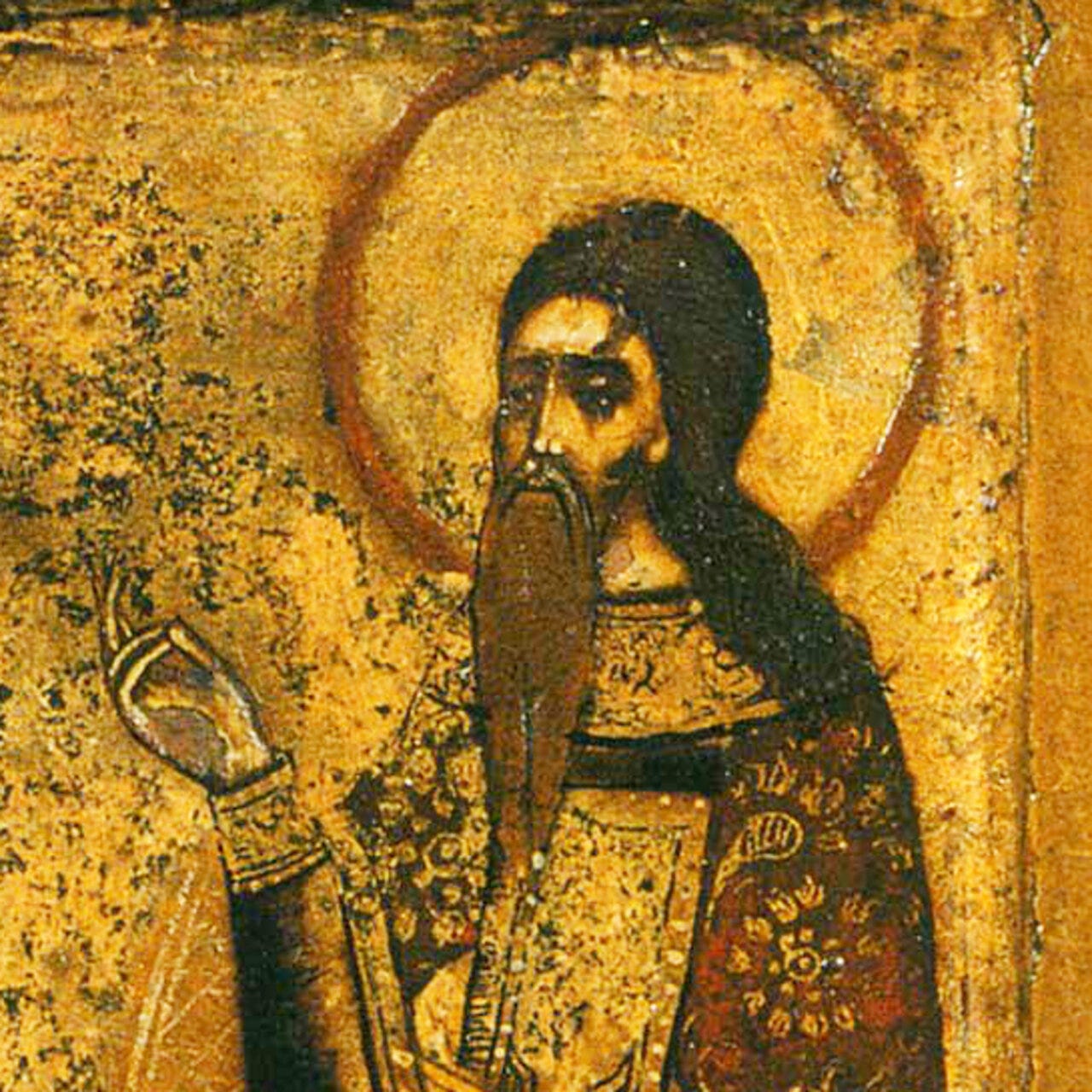
Reading 80 (Matt. 20:1–2). The Lord spoke this parable: The kingdom of heaven is like unto a man that is an householder, which went out early in the morning to hire labourers into his vineyard. And when he had agreed with the labourers for a penny a day, he sent them into his vineyard.
Commentary. The householder is Christ, the Son of God, who became man out of love for mankind. His house is eternal blessedness. We men are the laborers. The vineyard is the law and commandments of the Lord. The penny is the Holy Spirit: to each is given the gift of the Spirit according to measure, so that he may labor diligently in the vineyard, keeping Christ’s commandments in every place — in church, at home, and on the road — right up to death, learning from the Holy Spirit the way to the kingdom of heaven.
Gospel (Matt. 20:3–4): And he went out about the third hour, and saw others standing idle in the marketplace, and said unto them: Go ye also into the vineyard, and whatsoever is right I will give you. And they went.
Commentary. The Master is calling us to the work of the vineyard without ceasing — at the first hour, the third, the sixth, the ninth, the eleventh — from birth right up to death, seeking our salvation, calling every hour, tirelessly, through holy scripture. Here is how we should understand the hours. The first hour is said to be from the mother’s womb — a man is already at work for the Lord there, just as Sergius of Radonezh confessed the Holy Trinity while still in the womb, and would not take the breast on Wednesdays and Fridays until the ninth hour, and likewise John the Forerunner, and other saints besides. The third hour: at nine years old a man turns from evil deeds toward repentance and diligently keeps the Lord’s commandments until death. The sixth hour: at twenty a man comes to repentance and diligently does the Lord’s work. The ninth hour: at thirty, or forty, he turns from evil deeds and diligently keeps the commandments. The eleventh hour we take to mean extreme old age itself, when a man flees to repentance only right at the end — he can no longer perform any act of virtue, no fasting, no prostrations, only weeping, sitting or lying down, because he has spent his days on nothing.
But there’s another way to understand the hours. At the first hour, Abel was called — the first righteous man on earth, Adam’s son — and after him Seth, Enos, Enoch son of Jared, and the rest who lived before the Flood, 2242 years. At the third hour, Noah was called, the savior of the whole world from the Flood, and after him those who lived through the 1100 years up to Abraham. At the sixth hour, Abraham was called, and Isaac, and Jacob, Melchizedek, and Job, and the rest up to Moses’s exodus. At the ninth hour, Moses and Aaron were called, and Joshua and Samuel, and the rest of the prophets, the righteous under the Law who pleased God, right up to the Baptist and Forerunner of the Lord, John. And at the very last, the eleventh hour, our Redeemer came down to earth, the Lord Jesus Christ, the Son of God, in the year 5500, suffered for our sake, and rose again, and led us out of darkness and the shadow of death, and tore our bonds apart. As it is written, let us say: the sun coming to its setting, we have seen the evening light — that is, Christ came in the evening, meaning in the last years. Then the Apostles, and the martyrs, and the venerable ones, and the hierarchs, and the choir of God-loving women, right up to the end of the age — all following Christ, let us run the race set before us, looking to Jesus, the author and finisher of the faith. Let us hurry and make haste while the sun has not yet gone down — that is, while death has not yet caught us. For the Master calls without delay: repent, even at the very end.
Gospel (Matt. 20:6–7): And about the eleventh hour he went out, and found others standing idle, and said unto them: Why stand ye here all the day idle? They said unto him: Because no man hath hired us. He said unto them: Go ye also into the vineyard, and whatsoever shall be right, that shall ye receive.
Commentary. Oh, the mercy of God! Oh, the loving-kindness of the Master! He takes in youth, He doesn’t turn away old age, He is looking for everyone’s salvation, saying: Go ye also into my vineyard! Have you given your youth to the devil? Then give me, your Creator and Master, at least your old age! Why stand ye here all the day idle? Come to me, your Master, and fall down before me! Can’t manage labor, fasting, prostrations? Then give me sighing and tears. Why stand ye here all the day idle? Can’t serve the stranger and the poor? Then give me a staff and a cross, standing at prayer. Why stand ye here all the day idle? Can’t even stand? Then even lying down, just turn your eyes toward my icon and offer that to your Master. Why stand ye here all the day idle? And they said unto him: Because no man hath hired us. That is: a poor old man, all sallow and worn out, hobbles into church, weeping and sighing, understanding nothing of the church service, propped up on his staff, can’t even fold his fingers the way tradition says, long since unable to bow down to the ground — and he curses himself, saying, because no man hath hired us. “I’ve spent my days,” he says, “from my youth on, living carelessly, and now I can’t work — old age has caught up with me. I don’t know how to cross myself properly, my fingers won’t move, my hand won’t do what I tell it, I can’t get my knees down to the ground, my bones are numb, my back aches! Woe is me, because no man hath hired us!” — meaning: “I never heard the Scriptures, I don’t understand any of it, I’ve wandered off like a lost sheep; but all I can say is: God, be merciful to me, a sinner — crying out like the publican, beating my breast with tears — O God, cleanse me, a sinner, and have mercy! I have no good works to justify me: Thou who madest me, O Lord, have mercy on me! Like the harlot I fall down before Thee, and like the thief who confessed I cry unto Thee: Remember me, O Lord, when Thou comest into Thy kingdom. Master, remember me; Holy One, remember me, when Thou comest into Thy kingdom! For I have no boldness before Thee, O Christ God! Without number have I sinned, O Lord, forgive me! Son of David, have mercy; Son of God, show mercy — Thou who didst suffer for our sake and art risen from the dead, raise up my dead soul, give life to me who am slain, half-alive; make me as one of Thy hired servants; give me life for the sake of her who bore Thee, our Lady the Mother of God and Ever-Virgin Mary, and for the sake of Thy immaterial servants, the powers of heaven, and the prophets, and the apostles, and the martyrs, and all the saints who have pleased Thee since the ages began — for Thou art blessed forever, amen.” And he said unto them: Go ye also into my vineyard, and whatsoever is right ye shall receive. So the Master filled his vineyard with old and young, with those who labored and those who repented.
Gospel (Matt. 20:8): So when even was come, the lord of the vineyard saith unto his steward: Call the labourers, and give them their hire, beginning from the last unto the first.
Commentary. Evening means death — the parting of soul from body, and the end of the age. Whatever state a man dies in, in that state he’ll stand at judgment, and each will carry his own burden, whatever he did in this life. Let’s hurry, my brothers, let’s hurry! Missed the first hour? Then let’s run to catch the third. Lost the third too? Then let’s fall down at the sixth. Missed the sixth as well? Then let’s not be lazy about the ninth. And if the ninth has gone by too — wake up, you wretch, at least by the very last, the eleventh hour; give your old age, at least, to your merciful Master, your Creator and God. You’ve given your youth to the devil — bring God your shaking, worn-out old bones; fall down, sigh, weep! The Master is merciful — He takes the last the same as the first. Don’t give up on your salvation while evening hasn’t caught you yet. Run hard and without laziness, sighing, like someone who’s shown up late to the Lord’s work. So when even was come, the lord of the vineyard saith unto his steward: Call the labourers, and give them their hire. Call Abel, the first righteous man; call Enoch; call Noah; call Abraham, and Isaac, and Jacob, and the twelve patriarchs; call Moses, and Aaron, and all the prophets; call the apostles and the martyrs; call the hierarchs and the patriarchs, and the venerable ones, and the righteous, and all the saints who’ve pleased God since the ages began — and give them their hire, beginning from the last to the first. Cheer up the last ones first, the ones who came running in the very last hour, and then pay the first their reward for their labor — my own gifts.
Gospel (Matt. 20:9–12): And when they which were hired about the eleventh hour came, they received every man a penny. But when the first came, they supposed that they should have received more; and they likewise received every man a penny. And when they had received it, they murmured against the goodman of the house, saying: These last have wrought but one hour, and thou hast made them equal unto us, which have borne the burden and heat of the day.
Commentary. That’s why the Master arranged to cheer up the last ones first — so they wouldn’t lose heart over the delay in their reward, or say to themselves that He’d show them no mercy on account of being late. The first ones, meanwhile, wait, with the hope of their own labor and effort ahead of them. And the saints don’t envy the honor given their brothers — they’re glad for one another’s salvation instead. And though the Lord says the first ones grumbled at getting equal honor, this shows His own mercy — that He’d put envy even into people who have no envy in them — that’s how precious and dear the rewards will be, even for those who came running at the very end. And they took the pearl and turned it over and over in their fingers, saying: if we hadn’t believed, how would we ever have gotten this? We thank God for letting us take shelter under His roof! And when the first also had received every man a penny, they murmured against the goodman of the house. Is it really fitting for John the Forerunner of the Lord to grumble — or Nicholas the Wonderworker, or the rest — against the last ones? In their life here they took care of people, ate little bread, prayed to God for their conversion — and are they going to grumble at the Master there, saying: these last worked one hour and you made them equal to us, who bore the burden and heat of the day?
Gospel (Matt. 20:13–14): But he answered one of them, and said: Friend, I do thee no wrong. Didst not thou agree with me for a penny? Take that thine is, and go thy way.
Commentary. Oh, Master, light that never sets! Oh, sun that never goes down, radiance of the Father! Oh, only-begotten Son and Word, Christ God! You look after us here, and in the world to come You’ll settle accounts with us there too! All of us Christians have fled to You in these last years, all of us have reached the end of the ages — through Your coming down to us on earth, Master, we’ve come to know You, the true God. We thank You, Lord our God, for all Your kindness to us! Go on, then, our hope — say a word yet to the old-timers, the first ones: Friend, I do thee no wrong! Didst not thou agree with me for a penny? Take that thine is, and go thy way.
Gospel (Matt. 20:14–15): I will give unto this last, even as unto thee. Is it not lawful for me to do what I will with mine own?
Commentary. Who’s going to tell me what to do with my own wealth? I give to whoever I want! Where were you when I made heaven and earth, and planted paradise in the east? Did you measure out the sky with me, or stretch the line across the earth, or work out how to set the boundaries — like David says, He set a bound which they shall not pass? Friend, I do thee no wrong: take that thine is, and go thy way.
Gospel (Matt. 20:15): Is thine eye evil, because I am good?
Commentary. Every man is a liar, as it’s written, next to God’s goodness; and no one is good but God alone, as the Lord himself says in the Gospel. When a certain lawyer asked Him: Good Master, what shall I do to inherit eternal life? — He answered: None is good, save one, that is, God. If you take me to be good, then take me to be God; if you don’t take me to be God, then don’t take me to be good either. That’s how Chrysostom reasons it. See — human nature, set next to God’s goodness, is crooked. Even the saints are sons of God by grace, not by nature; by nature the Lord alone is good and holy. That’s why He says: Is thine eye evil, because I am good?
Gospel (Matt. 20:16): So the last shall be first, and the first last: for many be called, but few chosen.
Commentary. You’ve heard how the last will be first — that’s in the honor of the gifts; so the last don’t lose heart over the delay, they’re given it first. But in nearness to God, the first will really be first — meaning those who worked for Him all the days of their life; their earlier claim to first place holds up according to their faith and understanding. It would be unfair of God to rank someone above those who’ve struggled without any struggle of his own. But God cannot lie. There’s no unfairness in Him. The Lord is righteous and loves what’s right. A man can become great in a short time, if he suffers in fire and torment for Christ’s sake. But many are called, and few chosen. Everyone is called by grace, but few actually follow Christ into discipleship. That’s how we should understand what the Lord said: If any man hate not his father and mother, wife and children, brethren and sisters, and lands and possessions, yea, and his own soul also, he cannot be my disciple. Just think how many thousands of Christian people live on the earth. All are called, all believe in Christ, and have come to the font of baptism — but how many of them are actually chosen, the kind who’d lay down their own soul for Christ? No, no — never mind their soul, they won’t even part from wife and children for the Lord’s sake; never mind wife and children, they won’t give up house and property for righteousness’ sake; never mind all their property, they grudge giving so much as a single garment to a naked man; never mind a garment, they grudge giving even a single copper to a beggar for Christ’s sake — they even ask for change back! And another man’s got a hundred rubles, and says to the beggar: God will provide! How are we not ashamed of ourselves? And then he comes into church, stands in his usual spot, and says, like he’s some real Christian: God, be merciful to me a sinner! or Remember me, O Lord, in Thy kingdom! And what for — why should God be merciful to you, sinner? For giving nothing to the beggar? Hypocrite! You’re the offspring of that rich man clothed in purple and fine linen, living it up in splendor every single day!
In Luke, Reading 83 (Luke 16:20–31): And there was a certain beggar named Lazarus, which was laid at his gate, full of sores, and desiring to be fed with the crumbs which fell from the rich man’s table: moreover the dogs came and licked his sores. And it came to pass that the beggar died, and was carried by the angels into Abraham’s bosom: the rich man also died, and was buried; and in hell he lifted up his eyes, being in torments, and seeth Abraham afar off, and Lazarus in his bosom. And he cried and said: Father Abraham, have mercy on me, and send Lazarus, that he may dip the tip of his finger in water, and cool my tongue; for I am tormented in this flame. But Abraham said: Son, remember that thou in thy lifetime receivedst thy good things, and likewise Lazarus evil things: but now he is comforted, and thou art tormented. And besides all this, between us and you there is a great gulf fixed: so that they which would pass from hence to you cannot; neither can they pass to us, that would come from thence. Then he said: I pray thee therefore, father, that thou wouldest send him to my father’s house: for I have five brethren; that he may testify unto them, lest they also come into this place of torment. Abraham saith unto him: They have Moses and the prophets; let them hear them. And he said: Nay, father Abraham: but if one went unto them from the dead, they will repent. And he said unto him: If they hear not Moses and the prophets, neither will they be persuaded, though one rose from the dead.
Commentary. Do you see, brothers, how torment humbled him? Before, he wouldn’t even look at Lazarus lying there covered in sores; but now he sees him from far off, and starts sweet-talking Abraham — while he’s too ashamed to even speak to Lazarus, since he never did him a bit of good. Well, take that — Lazarus is coming to you in the fire, carrying water! Look how merciful you were: here’s the payoff for all your feasting! You loved to drink wine and mead, and roast swan, and goose, and fancy hens: well, here’s fire down your throat instead, you destroyer of your own wretched soul! I’m no Abraham — I won’t call you “son”: you’re a dog! Why didn’t you listen to Christ, why didn’t you have mercy on beggars? Enough of that soft-hearted Abraham, calling him “son,” chatting away like he’s talking to a decent man! I’d spit in his ugly face and kick him in his fat belly! But what am I even saying — I know it from my own experience: no matter how much a Nikonian irritates me, when one of them comes up all sweet and says, “I know how pure and blameless your life is, how Christlike — pray for me, and my wife, and my children, and bless us!” — well, then I soften up, and I weep before God for him. Even now I feel sorry for him — I don’t know why. That dog Nikon led him off the path — otherwise he was a decent man. I know him. Enough of that.
Now then, good people: have mercy on beggars, and Christ God will show you mercy too, since it’s written: Blessed are the merciful, for they shall obtain mercy. Please, for the Lord’s sake, look after your own souls — each of you, in whatever way you know how to do good: let one bring fasting and prayer to the Lord; another, alms given with love from a clean conscience; another, sighing and tears; another, work, handiwork, and as many prostrations as he can manage — three hundred a day on the knee, or six hundred, or as much as you’re able and willing. But let it all be done with love, for God’s sake, not to show off in front of people. Get moving before old age catches you. You’ve heard already: an old man can’t manage any real work. That’s how Chrysostom reasons through this parable of the Lord, in the Margarit, homily one. So I beg you, and I’m on my knees before you: let the old weep all the more for their poor souls, and let the young stick to work and mercy, in Christ Jesus our Lord, to whom be glory with the Father and the Holy Spirit, now and ever, and unto the ages of ages. Amen.
Comments
Nothing yet. Say the first thing.
Sign in to join the conversation.