
Greetings,
In her paper Slow Design (Into Eyilwe Ngokwendeleyo): The Potential for a Decolonized Space Through Graphic Design, Margot Muir writes, “A definition of Slow Design involves a conscious focus on ‘local’ design (expressing African values and African strengths rather than a mimicry of the West), integrating local communities in a ‘sustainable’ use of resources, striving towards ‘fair’ labour relations and approaching design with a ‘human-centred’ integrity (Clark 2008, p. 427; Fuad-Luke 2005, para. 14)”
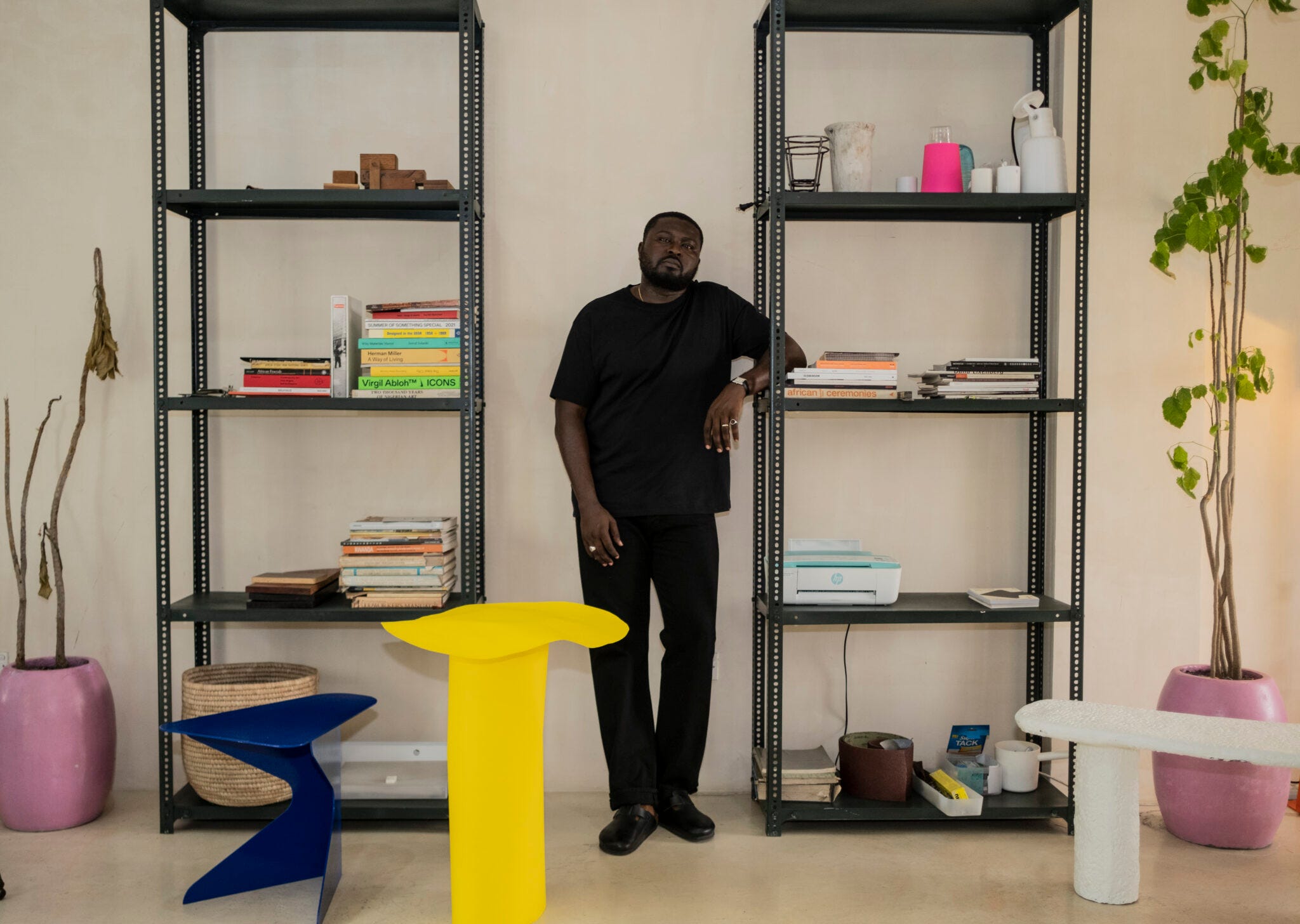
A designer who epitomises this is Nigerian Nifemi Marcus-Bello through his nmbello studio. In this interview with Tunde Wey, Africa — A Designer’s Utopia Builds a New Design Archive, he says, “for me, African design is heavily contextual—it’s what a place means to a material or even to a people.”
In a conversation with Chris Force and Anna Warnick, Nifemi Marcus-Bello Creates Art that Speaks, Marcus-Bello says, “There are conversations I want to spark through the work I’m doing. That’s the most important part for me. I want to tell the right narratives around material, production, my people, and myself.”
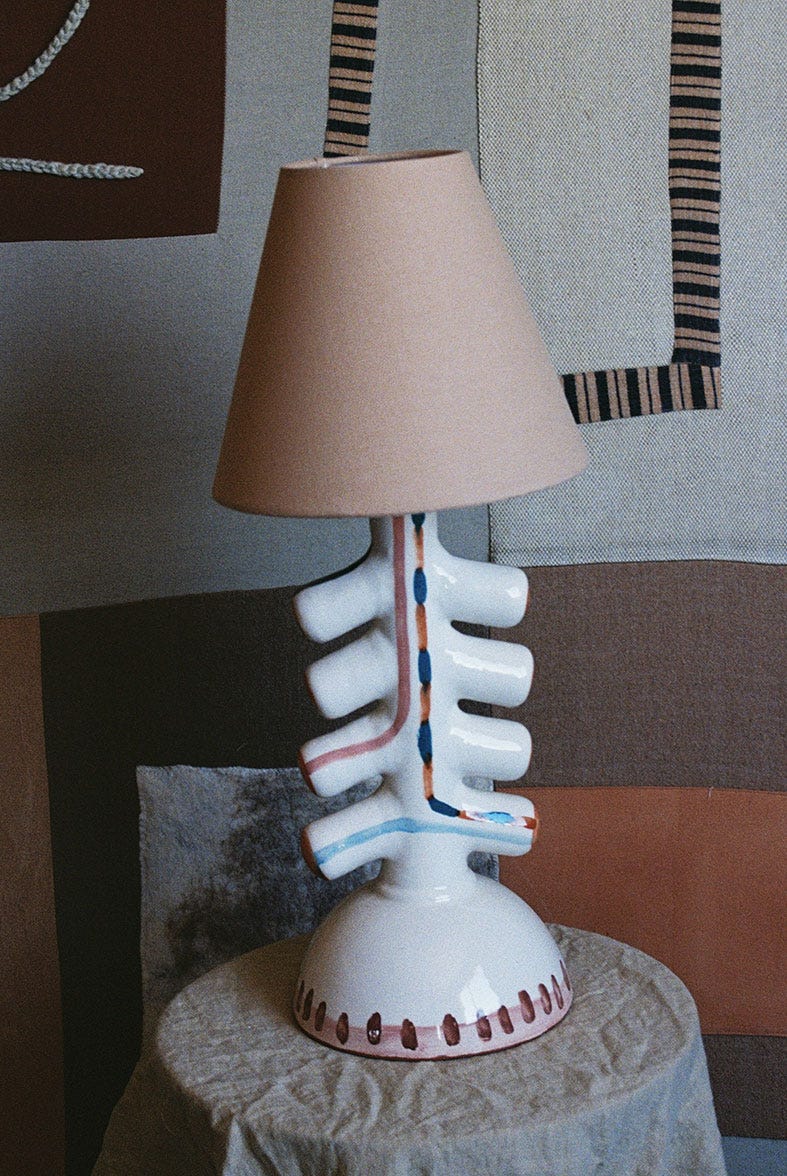
Ghanaian textile, fabric designer and Tewobaabihene (chief of Tewobaabi), Nana Kwaku Duah II, has been reimagining the Kente cloth, incorporating Adinkra symbols and exploring new production techniques and stylistic departures from the traditional Kente fabric designs.
In Breaking the Academic Silence on Anonymity of Indigenous Textiles: Textile Art of Nana Kwaku Duah II in Focus, authors O.Q. Essel and G.D. Asare write, “Drawing inspiration from Ghanaian indigenous textiles decorative techniques, Baffour Gyimah (Nana Kwaku Duah II) creates contemporary uniqueness in his novel conflation of adinkra printing technology, kente weaving techniques and embroidery art in making fabrics. Combining more than one technique in creating fabrics, demonstrates his technical finesse and creative impetus.”
Marrakech-based LRNCE, a multidisciplinary design studio founded in 2013 by Laurence Leenaert, which she runs with her husband, Ayoub Boualam, takes an extremely organic approach to design. Their philosophy, design and development approach and aesthetic is a relationship between LRNCE and Moroccan artisans. As Leenaert says in LRNCE and the politics of making slowly, “It was not a moment but rather a slow process and realisation… Spending time with the craftsmen and learning the techniques they inherited and translating this with my drawings.”
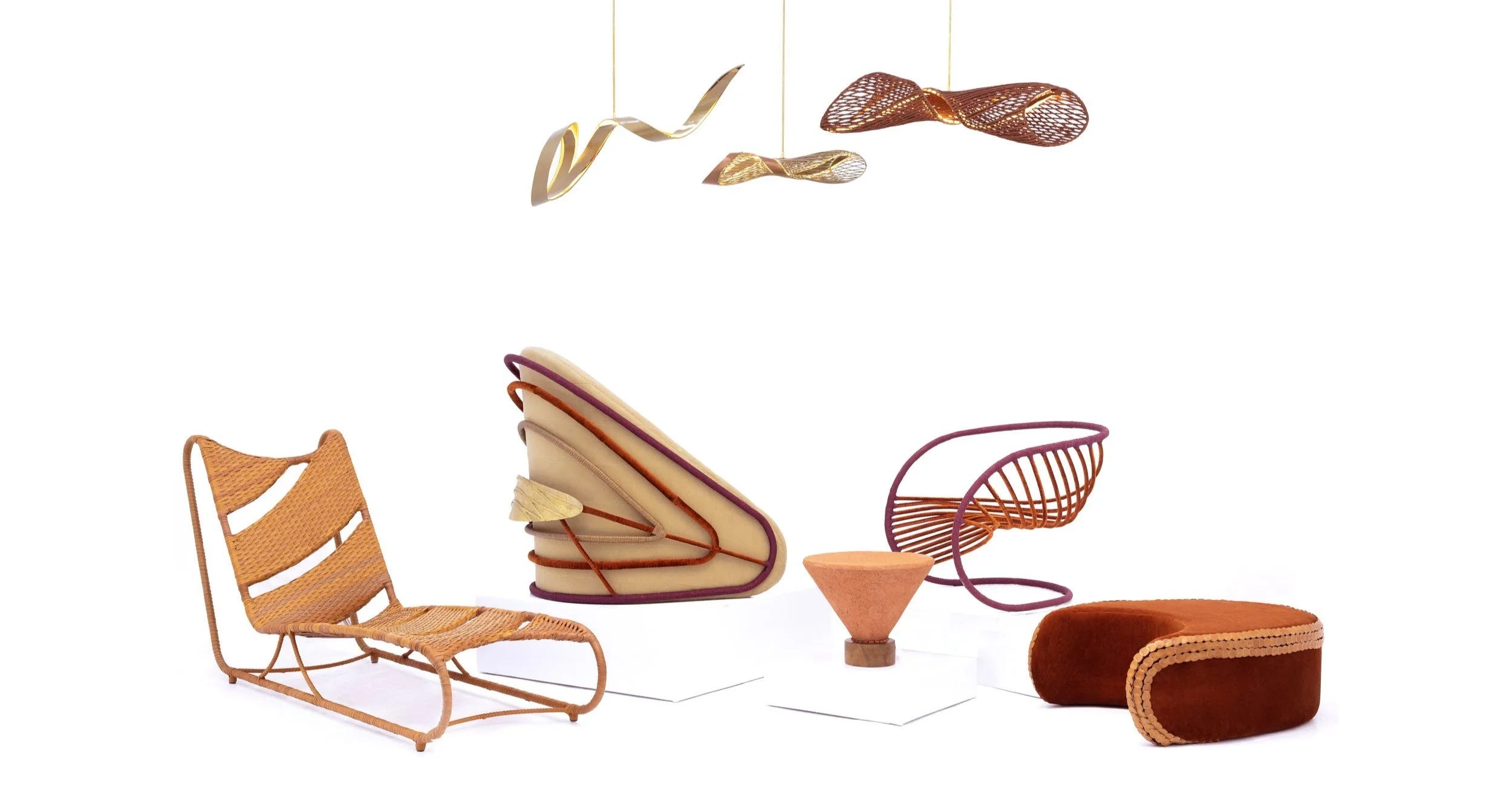
For Lani Adeoye who, through Studio Lani, works in sculpture, lighting, and furniture, the design process is influenced by a spectrum of people.
She says, in The Vanguard: Lani Adeoye, “When I make furniture, I don’t necessarily look for carpenters, because the furniture I make isn’t traditional. I’ll reach out to people who are good with their hands – like shoemakers and hairdressers – because they often have a different approach to style and design that is extraordinary, technical and artistic.”
I like the way Slow Fashion on the Edge of the Atlantic brings together the work of various South African designers in a way that both showcases their designs but also taps into the philosophy behind each.
I was particularly struck by how fashion designer and creative, Lukhanyo Mdingi, works with craftspeople and artisans in, and beyond South Africa, with the preservation of craftsmanship being integral to the brand’s approach to design.
If you enjoyed this edition of the Ogojiii newsletter, please do share with others who you feel would enjoy it as well. We look forward to your comments, input and contributions. You can send me links to interesting articles for possible inclusion in the Ogojiii newsletter and on our Medium page on kojo@ogojiii.com.
Kojo
Thanks for reading Ogojiii! This post is public so feel free to share it.
No posts
Comments
Nothing yet. Say the first thing.
Sign in to join the conversation.