
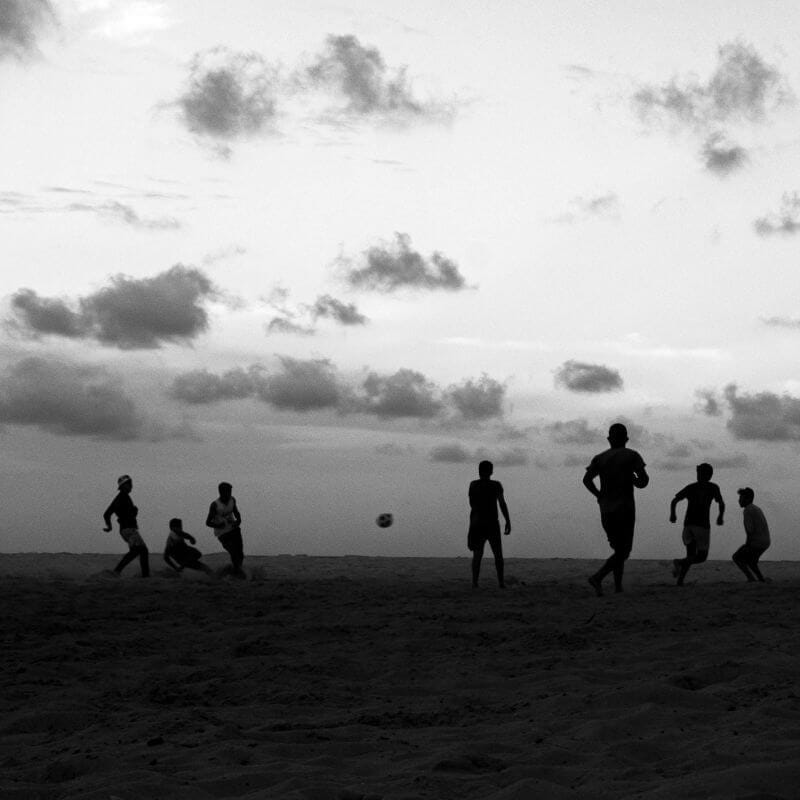
One week before the 2026 World Cup, young players from one of Rio’s poorest and most violent favelas have already lived their own dream. Representing Brazil at the Street Child World Cup in Mexico, they won the tournament undefeated. The project gives children safety, community and a break from daily violence, where training sessions are sometimes interrupted by shootings and police raids. Coaches say every child steered away from drug gangs is a victory. Residents add that the initiative helps change Penha’s image. The boys joke that now it’s the senior Seleção’s turn to bring home a trophy.
Prime Minister Nikol Pashinyan secured 49.8% of the vote, keeping his parliamentary majority — a sign of support for his peace‑first agenda, normalization with Azerbaijan and Turkey, and gradual distancing from Russia. Many Armenians are tired of conflict and less receptive to nationalist rhetoric. Nagorno‑Karabakh has been removed from key strategic documents, with reforms and development within Armenia’s recognized borders now the priority. Pro‑Russian forces retain influence, and the peace process still hinges on constitutional disputes with Azerbaijan. Analysts say the election opens the door to regional normalization but does not guarantee lasting peace.
PRIO reports that 2025 saw 65 state‑based conflicts — the highest number since 1946 — and eight direct interstate clashes, including India–Pakistan, Afghanistan–Pakistan, Cambodia–Thailand, and ongoing wars in Ukraine and Syria. It was also the third deadliest year since the Cold War: around 245,000 deaths, including 76,500 civilians, largely due to massacres in Sudan’s Darfur region. Africa remains the most affected continent, followed by Asia and the Middle East. Researchers warn that overlapping crises and weakening global institutions risk pushing the world into a prolonged era of violence and humanitarian emergencies.
Long dependent on imported oil and gas, Hawaii aims to reach 100% renewable electricity by 2045 — later expanded to cover the entire economy. The transition relies on solar, wind, hydro, biomass and especially geothermal energy from volcanic activity, though some Native Hawaiians oppose using sacred volcanoes. High costs, limited land and the challenge of decarbonizing aviation and shipping remain major obstacles. LNG is being considered as a temporary bridge fuel, but experts warn it may become uneconomical as renewables and storage expand. Achieving climate goals will require rapid grid upgrades and transport electrification.
Thanks for reading Off the World! This post is public so feel free to share it.
A surge of xenophobic attacks in Durban is forcing hundreds of Malawian migrants to flee. Malawi plans to repatriate around 3,000 citizens, many of whom lost homes and livelihoods. Armed groups go door‑to‑door threatening foreigners and demanding they leave by June 30 — a deadline with no legal basis but treated as real by migrants. Many lack documents and were forcibly evicted from houses and shops. Local communities are providing emergency aid. President Ramaphosa’s call for calm has not eased tensions, and more countries are now working to evacuate their nationals.
Hong Kong’s government has proposed new rules allowing the city’s chief executive to decide whether specific criminal acts should be classified as national‑security offenses. Officials say the change merely clarifies existing law and streamlines procedures, without creating new crimes. Critics warn it grants sweeping, opaque power to the administration, enabling decisions based on undisclosed intelligence and limiting defendants’ ability to challenge charges. The proposal follows years of tightening security measures after the 2019 protests and Beijing’s National Security Law, which led to mass arrests and expanded offenses such as espionage and leaking state secrets.
Tiny pauses, filler words like “um,” and difficulty retrieving words may signal early cognitive decline. Researchers from Baycrest, the University of Toronto and York University found that natural speech patterns strongly correlate with executive function — memory, planning, focus and flexible thinking. Using AI to analyze descriptions of images, the system detected hundreds of subtle features and accurately predicted cognitive‑test performance regardless of age or education. Because executive function often weakens early in dementia, speech analysis could become a simple, repeatable tool for early detection. Long‑term studies are still needed to confirm its diagnostic value.
Despite rising demand for skilled workers, vocational education remains undervalued in many countries. Academic pathways and exam rankings dominate public perception of success, reinforcing the stereotype that trades are less prestigious. In Australia, 26% of students choose vocational training in their final school years, and 95% of graduates quickly find jobs — yet their achievements rarely receive attention. Researchers note that vocational teachers perform demanding work but are often overlooked, sending students the message that this path is second‑tier. Experts call for greater recognition, integrated learning pathways and broader measures of school performance.
More than 25 years after confirming the existence of the uncontacted Kawahiva people, Brazil has begun physically demarcating their territory — a process activists call a race against time. The Kawahiva live on the run from loggers and ranchers, and now face two urgent threats: a road upgrade that could accelerate deforestation and the 2026 election, where candidate Flávio Bolsonaro vows to block new Indigenous reserves. Invasions already intensify during campaign season. FUNAI and NGOs stress that demarcation must be completed before January 2027. For defenders, it is a breakthrough — but only one battle in a long fight for the survival of this nomadic group.
New research suggests the asteroid that wiped out the dinosaurs 66 million years ago may also have created conditions favorable for life. Scientists found that the Chicxulub crater hosted a hydrothermal system lasting up to 8 million years — far longer than previously believed. Rock samples show sustained heat‑driven chemical activity, forming environments where microbes could thrive without sunlight. Porous, fractured rock provided shelter from radiation and extreme temperatures. The findings reshape understanding of early life on Earth and support the idea that similar impact craters on Mars or other planets could once have hosted microbial ecosystems.
Comments
Nothing yet. Say the first thing.
Sign in to join the conversation.