
A new leak known as “Hondurasgate” alleges a coordinated effort by the US, Israel and regional right‑wing allies to destabilize the governments of Mexico, Brazil and Colombia through disinformation campaigns. Audio recordings suggest former Honduran president Juan Orlando Hernández — pardoned by Donald Trump after a drug‑trafficking conviction — worked with Argentina’s Javier Milei and Republican operatives to build a media network targeting Claudia Sheinbaum, Lula da Silva and Gustavo Petro. The tapes point to funding from Honduran public institutions, Milei’s financial backing and alleged involvement of Israeli circles in Hernández’s pardon. The scandal erupts amid tense US–Mexico relations and Washington’s accusations against Mexican officials over cartel ties, while Sheinbaum insists such campaigns will not derail her agenda.
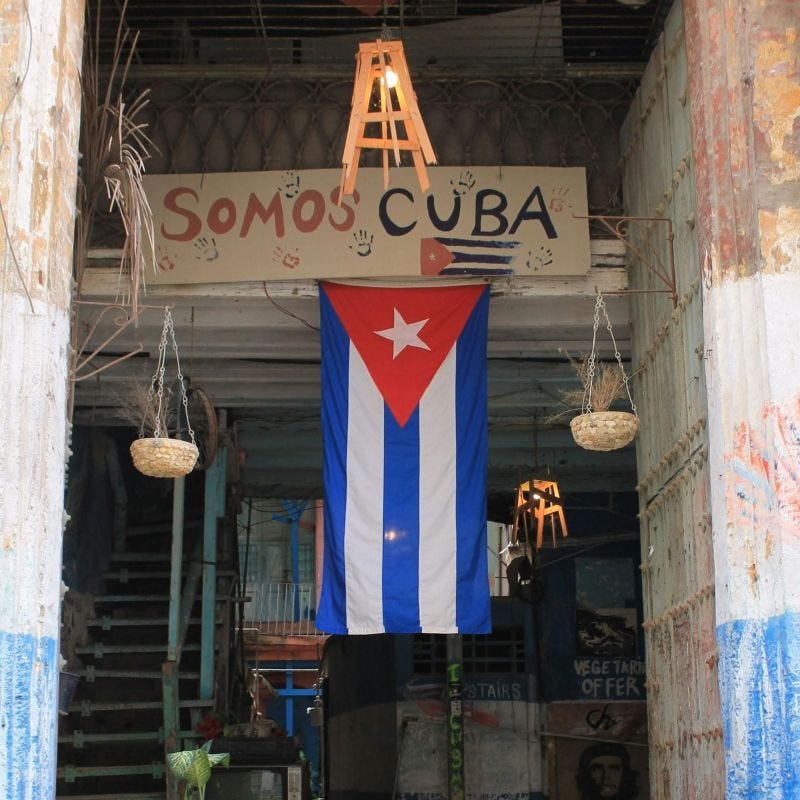
For more than a century, US–Cuba relations have been shaped by Washington’s attempts to control the island. Trump’s current pressure campaign — sanctions, threats and intelligence activity — fits a long pattern dating back to the 1898 Spanish‑American War, after which the US occupied Cuba and secured the right to intervene. For decades, Cuba’s economy and politics were heavily influenced by American interests until Fidel Castro’s 1959 revolution, which reframed sovereignty as a rejection of US dominance. While Cubans see independence as non‑negotiable, US policymakers long viewed Cuba as a natural sphere of influence. Even Obama’s 2014 normalization efforts were later reversed. Today’s tensions reflect a clash between Cuba’s pursuit of self‑determination and the enduring US belief that the island falls within its strategic domain.
Human Rights Watch warns that the EU is failing to enforce its own 2021 rules on dual‑use surveillance technologies, allowing companies — including in Bulgaria and Poland — to export spyware to authoritarian governments. At least six EU states issued licenses for tools later used against journalists and opposition figures in more than 20 countries. HRW criticizes weak oversight, limited transparency and new European Commission guidelines that obscure data by citing trade‑secrecy concerns. Several major EU members, including France, Germany, Greece, Italy and Spain, refused to disclose export details. HRW urges stricter controls, clearer reporting and blocking sales where human‑rights risks are evident, warning that Europe remains a key supplier in a growing global market for digital repression.
At the Africa Forward Summit in Kenya, President Emmanuel Macron announced €23 billion in joint French‑African investments focused on energy transition, agriculture and AI. He framed the initiative as a shift toward “partnership among equals,” distancing France from its post‑colonial legacy. After withdrawing troops from the Sahel and losing influence in Mali, Burkina Faso and Niger, Paris is seeking new strategic footholds. Kenya aims to position itself as a regional hub and gateway to East Africa, while France hopes to rebuild economic ties amid competition from China, India and Gulf states. Analysts say the reset reflects both France’s declining sway in francophone Africa and broader geopolitical tensions reshaping global alliances.
Thanks for reading Off the World! This post is public so feel free to share it.
Winemakers in South Africa’s Western Cape are increasingly feeling the effects of a warming climate, even in cooler regions like the Hemel‑en‑Aarde valley known for pinot noir and chardonnay. Jean‑Claude Martin notes that the ocean still buffers extreme shifts, but new data from Stellenbosch University shows this year’s harvest was the earliest on record — and could move to November by 2035. Earlier ripening affects wine style, labor planning and yields. Producers are adopting precision viticulture, microclimate analysis, new rootstocks, revised pruning systems and moisture‑retaining cover crops. Although Hemel‑en‑Aarde remains a cool micro‑region, winemakers are racing to stay ahead of rising temperatures to preserve the character of their wines.
Soaring LPG prices across Asia are triggering a public‑health setback as households in India and the Philippines abandon clean cooking gas for wood and charcoal. In India, where LPG is the main cooking fuel, prices have surged several times over and supply disruptions are worsening access, forcing families to spend hours collecting firewood. The Philippines faces a similar shift toward cheaper but far more polluting charcoal. Temporary tax breaks have done little to ease costs. Experts warn that the return to “dirty fuels” is accelerating indoor and urban air pollution, raising respiratory and cardiovascular risks and exposing how fragile the region’s clean‑energy transition remains.
Aggression toward Britain’s school‑crossing wardens is surging, with drivers speeding past at 50 mph, shouting abuse and ignoring stop signs. Many counties now equip lollipop workers with body‑worn cameras after road‑rage incidents rose 34% in three years and motoring offences hit a record 3.5 million in 2024. A widespread misunderstanding of their legal authority to stop traffic for adults fuels much of the hostility. Despite the danger, many wardens remain committed to the job’s community mission. Footage from cameras is already leading to fines and police action, and more councils are considering similar measures as violence against those protecting children becomes a national concern.
Researchers at UMBC have uncovered a critical replication switch used by enteroviruses responsible for polio, myocarditis and common colds. They found that viral RNA forms a clover‑shaped structure that recruits the 3CD protein, whose 3C segment binds RNA to assemble the replication complex while 3D acts as the copying enzyme. When 3CD is attached, the virus replicates; when it detaches, the RNA shifts to producing viral proteins. Because this mechanism appears in all tested enteroviruses, it offers a promising universal drug target. The discovery opens the door to therapies that disrupt RNA‑protein interactions rather than only blocking viral enzymes.
Stablecoin use in Latin America jumped 89% in 2025 to $324B, driven by inflation, currency devaluation, limited banking access and booming remittances. Stablecoins — digital dollars pegged 1:1 to USD — cut transfer fees from the traditional 6.2% average to under 1%. Brazil leads with over 90% of crypto flows tied to stablecoins, followed by Argentina above 60%. Bitso, the region’s largest crypto‑fintech, now handles $6.5B annually in the US–Mexico corridor. Local stablecoins like MXNB, BRL1 and COPW are expanding market access without full banking licenses. With 3,000+ fintechs integrating digital dollars into payments and payroll, analysts expect stablecoins to become the region’s default financial account once regulation catches up.
Scientists have proposed a new way to search for extraterrestrial life by analyzing statistical “patterns of order” in molecular mixtures rather than hunting for specific biomarkers. Inspired by ecological metrics, the method evaluates diversity and distribution of molecules such as amino acids and fatty acids. Tests comparing biological samples with meteorites and fossils show that living matter exhibits distinct organizational signatures, even in degraded materials like fossilized dinosaur eggshells. While not proof of life on its own, the technique could significantly strengthen future detections and works with data from existing space instruments, offering a powerful complement to traditional biosignature searches.
Comments
Nothing yet. Say the first thing.
Sign in to join the conversation.