
As an American with significant German heritage—although I actually have more Irish ancestry—it bothered me as a kid that the Hollywood Germans were such ridiculously cartoonish ethnic stereotypes. Equating “German” with “evil” seemed as bigoted as equating “Jewish” or “Black” with “evil.” Turnabout might seem like fair play, but shouldn't all people be judged on their actions (or failures to act), not on their ethnic identities?
That said, with the recent rise in xenophobia and Christian nationalism in the United States, I do find myself a bit nostalgic for a time when Nazis (and Nazi-inspired authoritarian regimes like Star Wars’ evil Empire) were universally understood to be Very Bad Guys Indeed.
Check out John Oliver’s coverage of the disturbingly proud self-identification of Trump's DHS with Darth Vader and Stormtroopers—again, pretty hard to miss the Nazi allusion there!—in sickening videos released on Star Wars Day (May the 4th), 2025.
I gasped in 1983 when Luke Skywalker asked “Is Darth Vader my father?” in an in-theater preview for The Return of the Jedi.
Still struggling to process the unthinkable, I gasped again when several young audience members around me immediately shouted, “YES!”
Almost everyone else my age had seen the previous Star Wars installment, The Empire Strikes Back, in 1980 (and perhaps more recently as well, in the still-new Betamax or VHS video formats). But in 1983, when the long-awaited third Star Wars film was being teased, my religiously conservative Catholic parents were still not allowing me to see any movies not rated G for General Audiences.
Since 1977, when I was eight, I had known the main characters of the first Star Wars film from my classmates’ lunchboxes and action figures. Yoda’s garbled syntax had been imitated by my teachers as well as my fellow students since the 1980 release of The Empire Strikes Back. But somehow the major plot twist of that second film hadn't percolated through my sheltered childhood until that trailer for the third, when I was nearly fifteen.
Glaring obviousness is sort of the point of the following poem. Still, it might spoil a few surprises for some readers. Fair warning!
Text within this block will maintain its original spacing when published
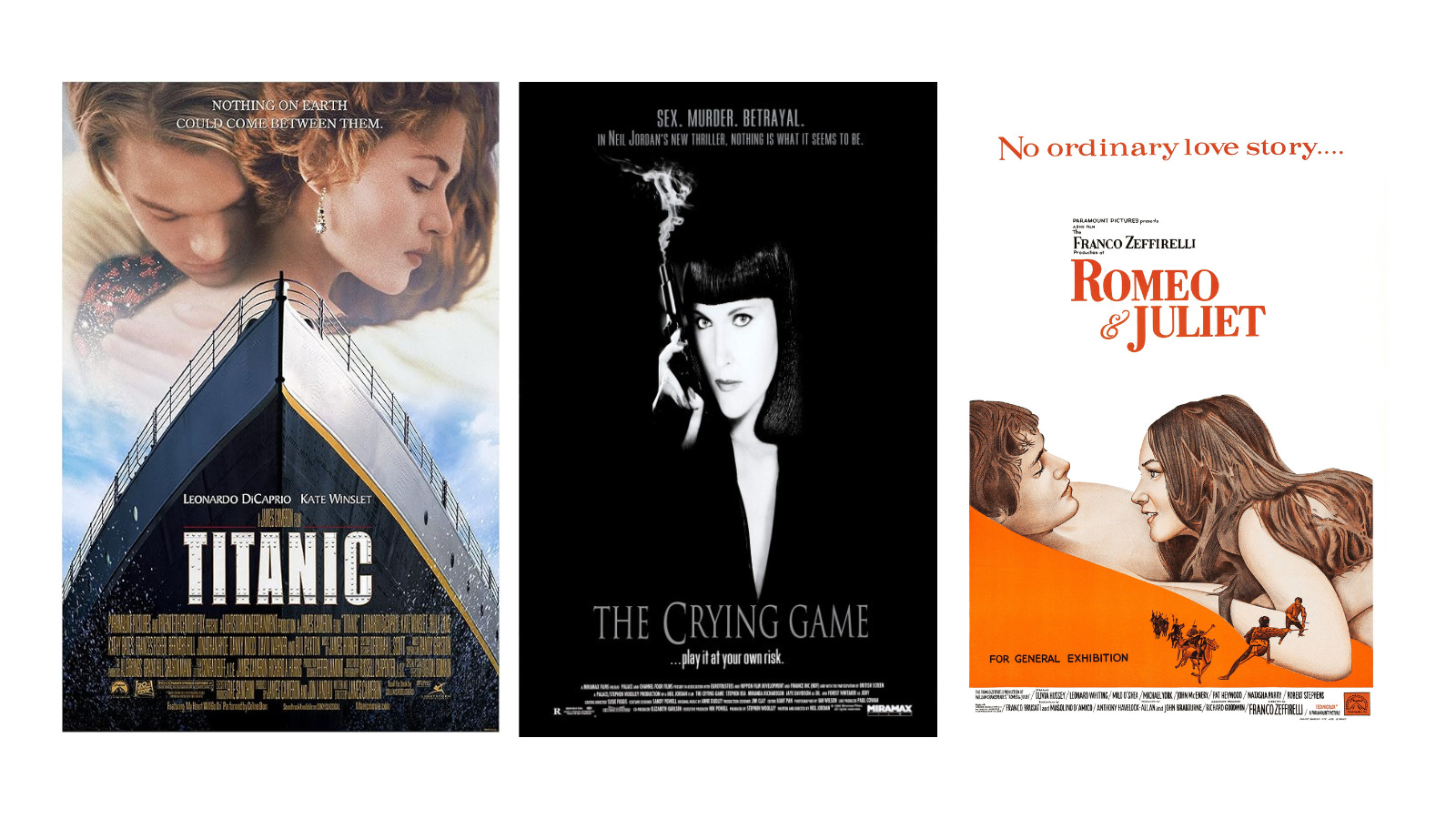
Titanic sinks. His gal was born a guy.
Romeo and Juliet both die.
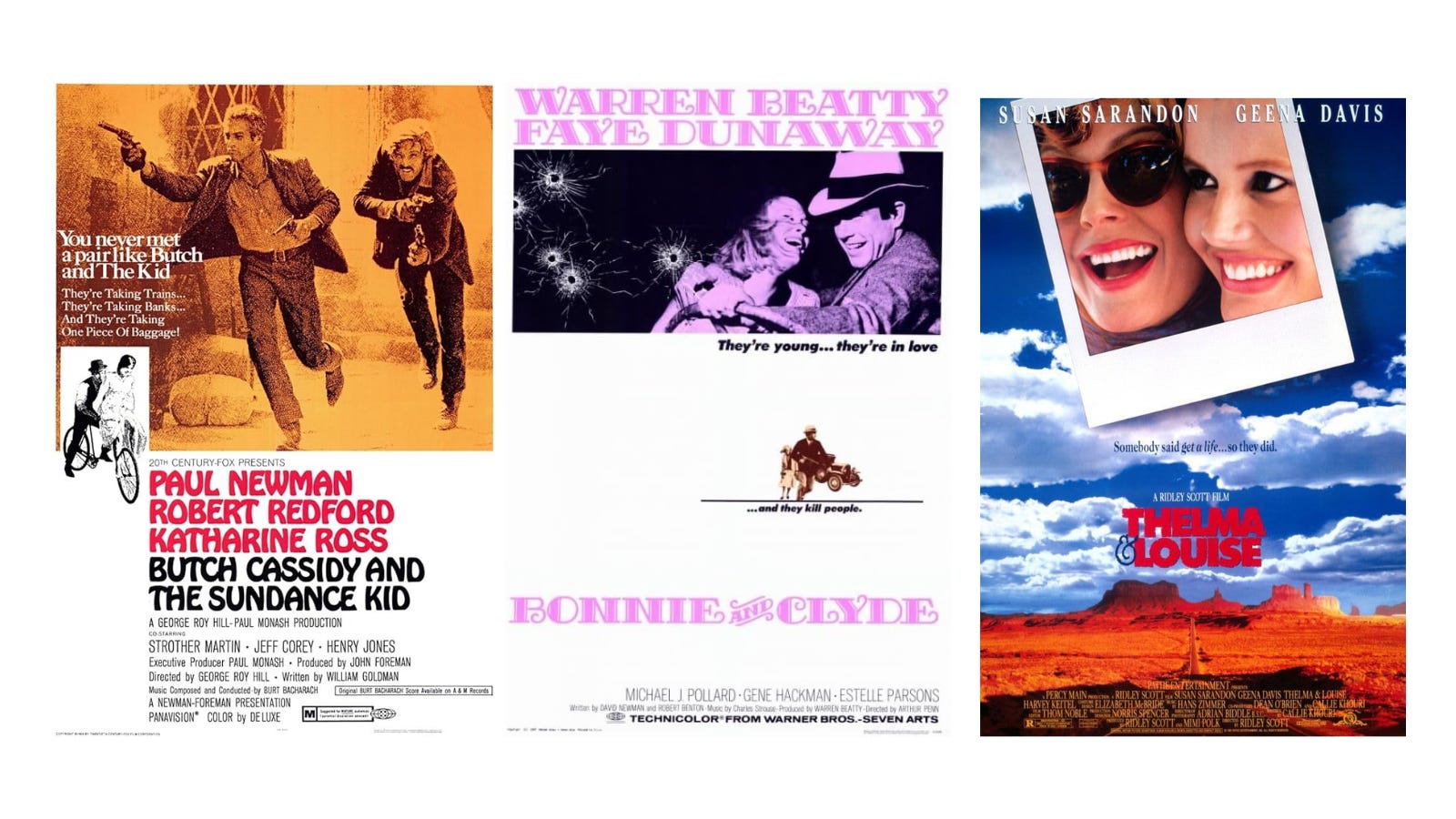
So do Butch and Sundance, Bonnie and Clyde,
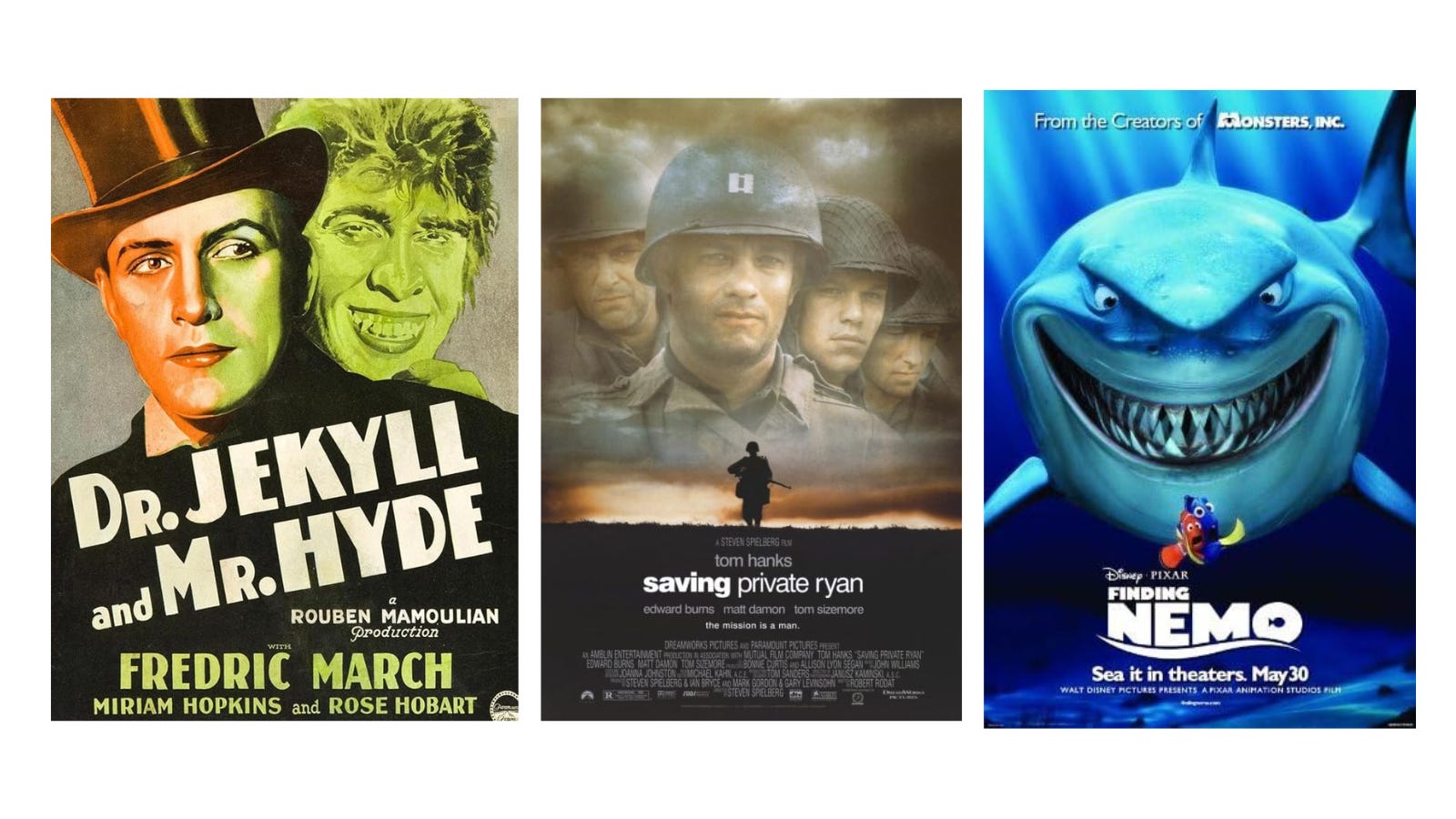
Thelma and Louise, and Jekyll and Hyde.
Private Ryan’s saved, and Nemo’s found.
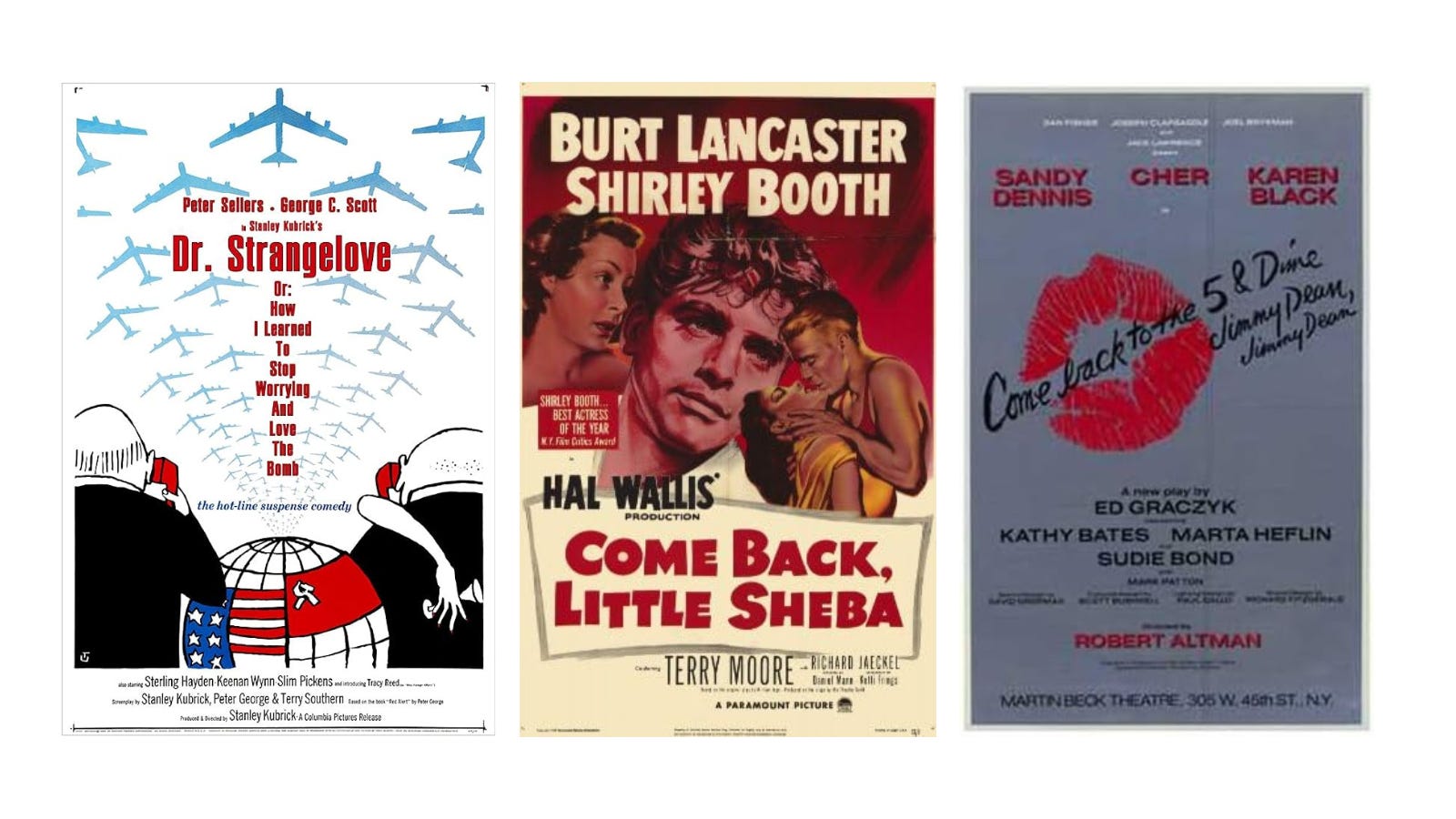
The cowboy rides the A-bomb to the ground.
Little Sheba, Jimmy Dean, and Shane
do not come back. The narrator’s insane.
The girl’s her sister. And her daughter, too.
He’s his murderous mother. Scout meets Boo.
In everything but Triumph of the Will,
the Nazis lose. Tomorrow comes, for Phil.
He’s Vader’s son. He’s Santa Claus. He’s dead.
She just keeps walking. Rosebud is a sled.
Romeo and Juliet both die.
And someday, so do you. And so do I.
July 2016, Light
(I've since tinkered with Lines 1, 9, and 12.)
• • •
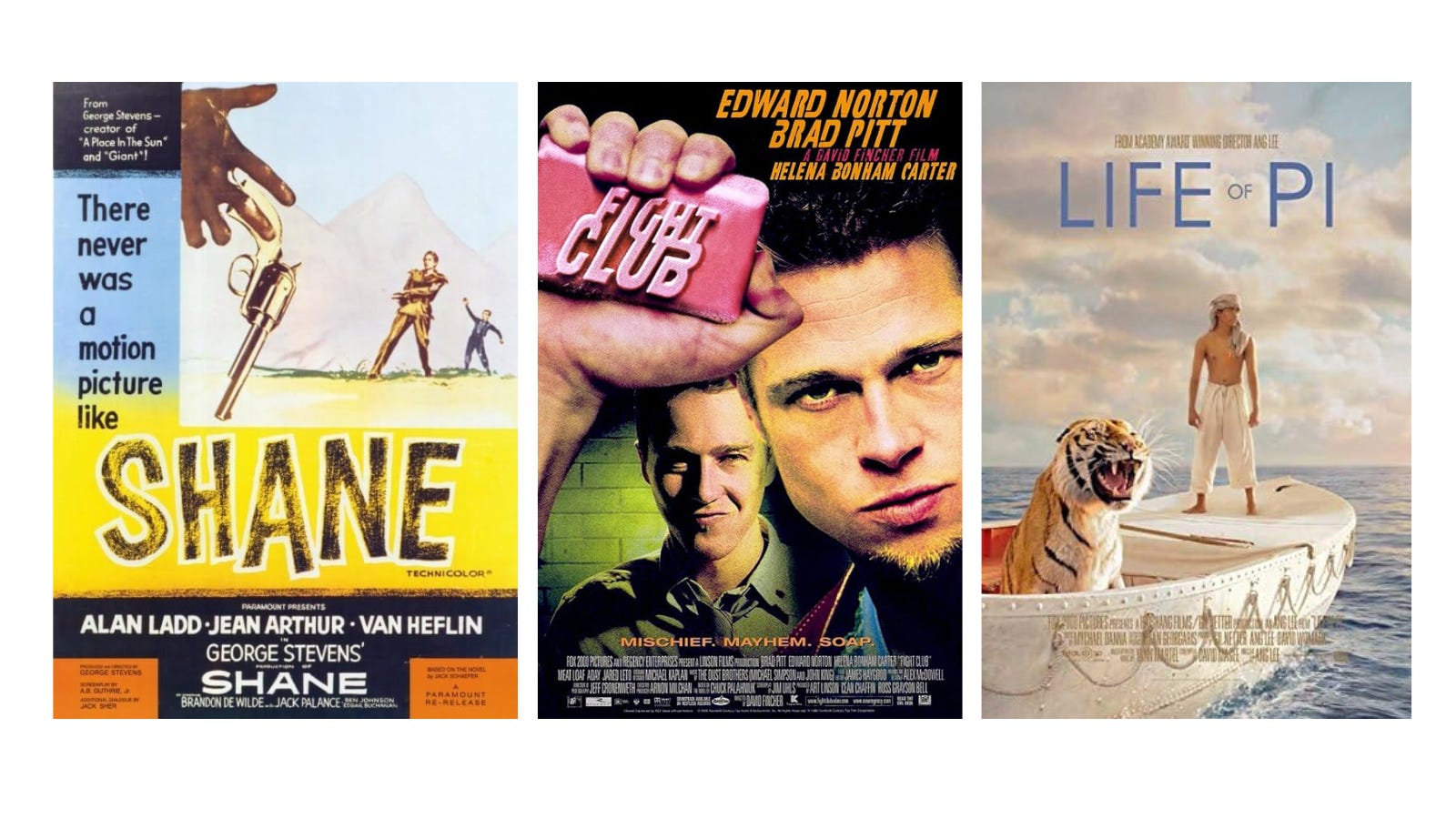
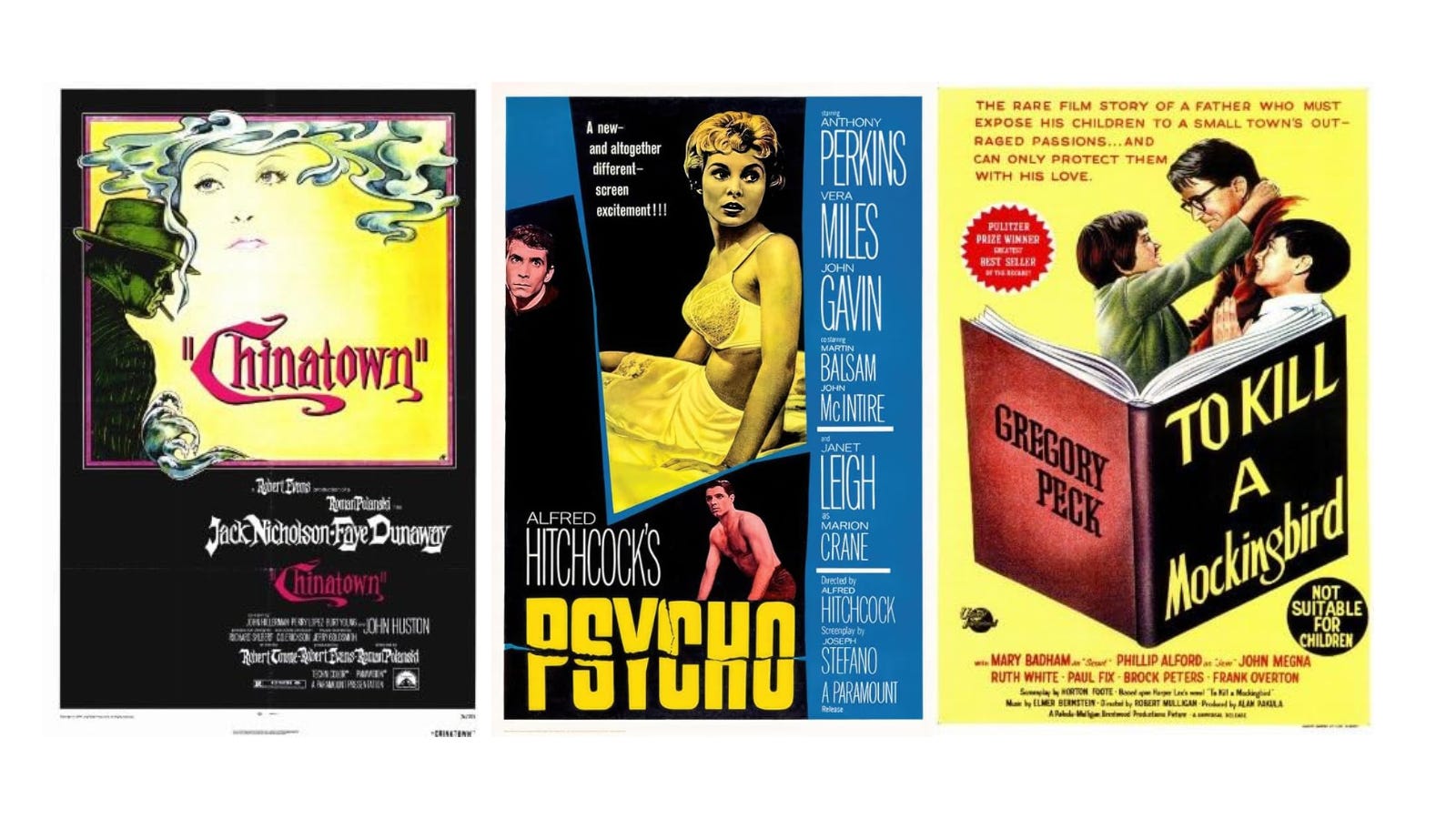
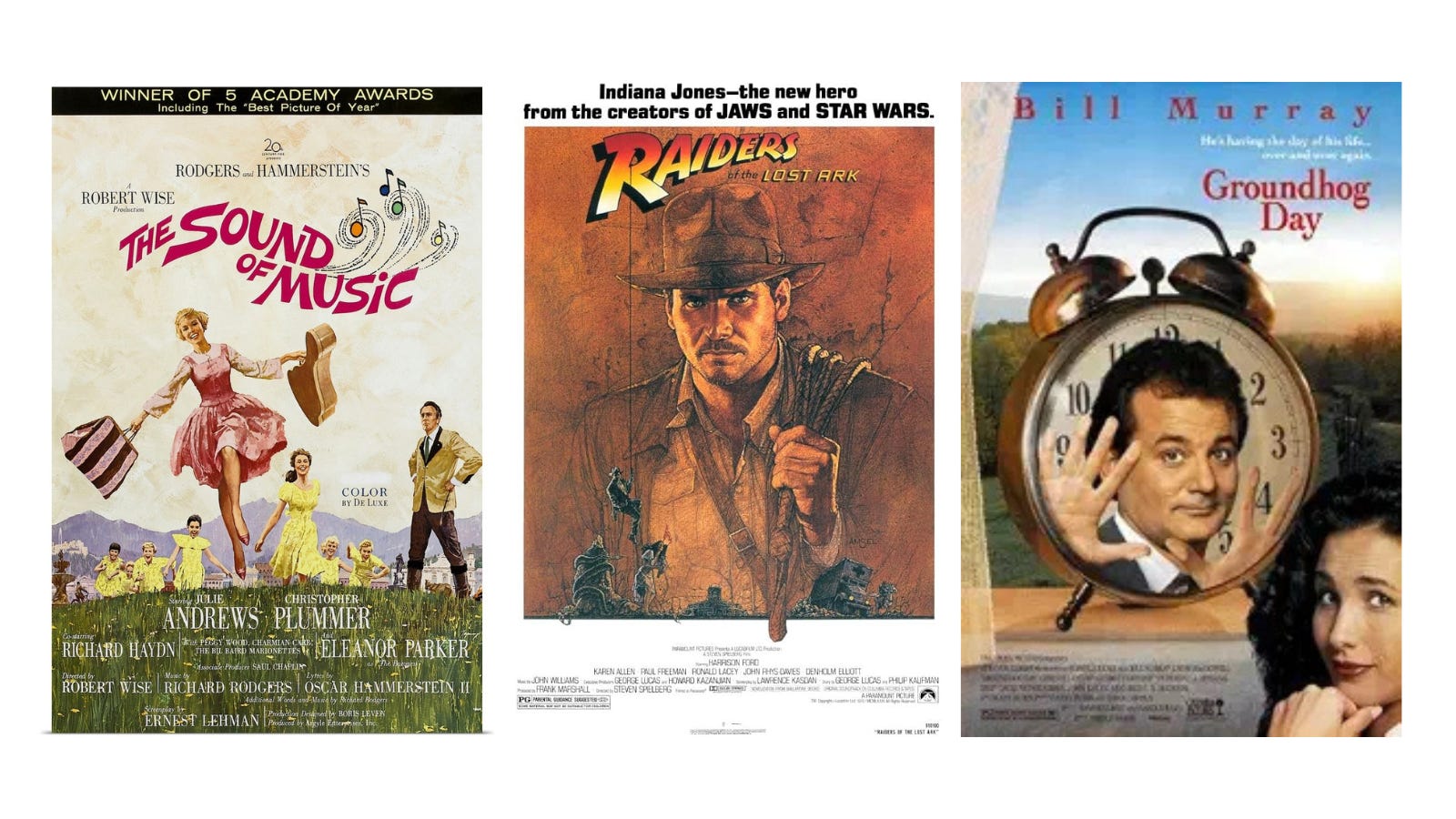
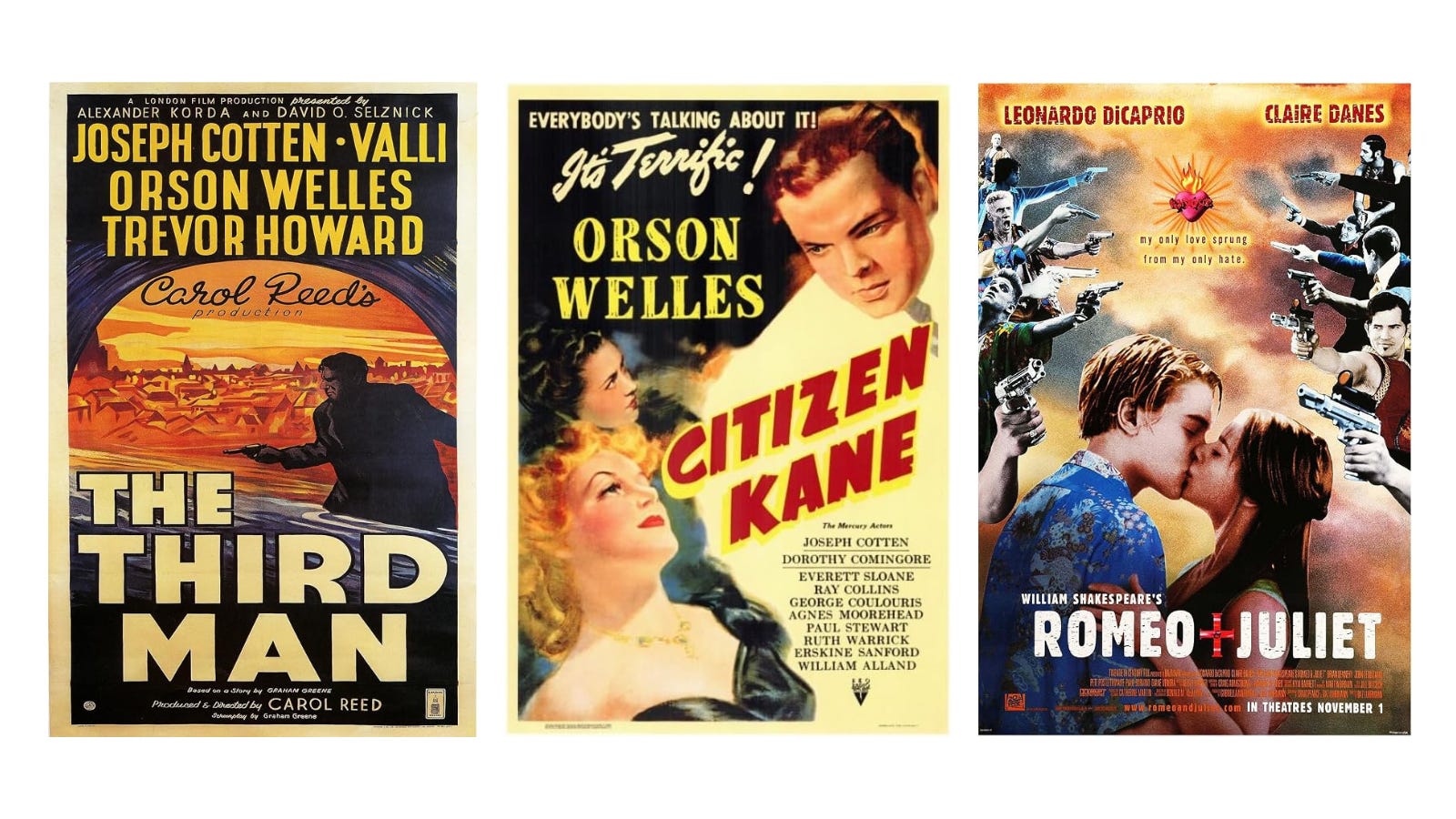
Stumped by any of the references above? See the poem's NOTES, or the movie posters below. Some descriptions above fit far too many films for me to give all possible answers, but I've provided a few multiples below.
Lines 1–2:
Lines 3–4a:
Lines 4b–5:
Lines 6–7b:
Lines 7c–8:
Lines 9–10:
Lines 11–12:
Line 13:
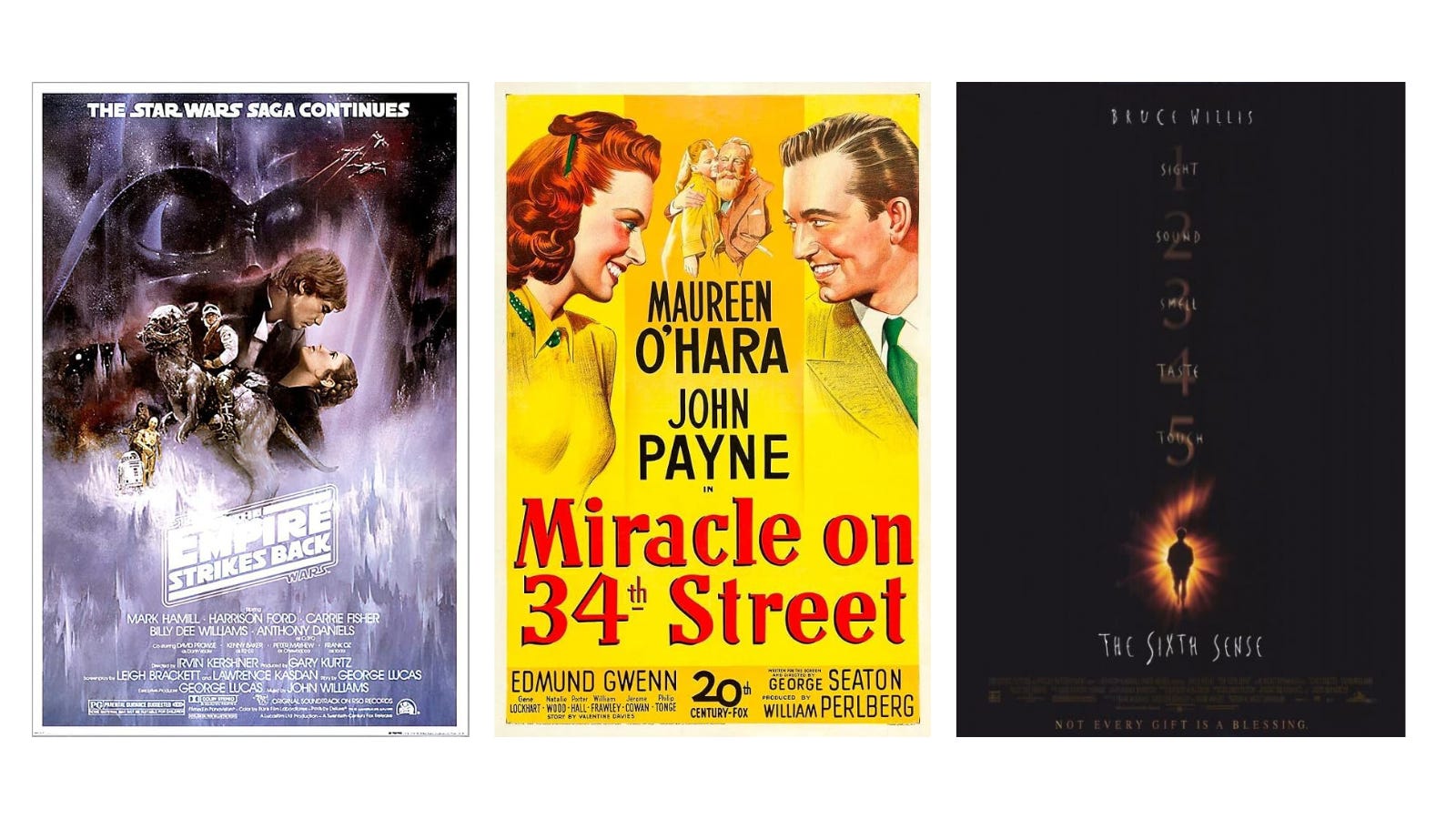
Lines 14–15:
Cheers,
Julie
My publications since June 15:
“Rondelet-ed Reaction” (a rondelet, of course) and “Cassandra at the Open Mic” (a triolet series) appeared in Light on June 15.
“The Catch” (a four-line ditty that I'd written for my Christmas cards about ten years ago) appeared in The Asses of Parnassus on June 24.
On June 30, The Ekphrastic Review published two epigrams on Michelangelo’s sculpture Night (translated from the Italian of Strozzi and Michelangelo, respectively, and answered with an epigram of my own).
Forthcoming:
Elsewhere: A Journal of Place has taken two sonnets—”Now Showing” and “Big Hit”—for its “End of the World” issue.
Blue Unicorn accepted two triolets from my “One-Sided Argument” triolet series.
The Brazen Head has accepted a three-sonnet series titled “SINE ULLA QUERELLA” (Latin for “without any complaint whatsoever”), inspired by a memorial plaque at the Basilica of Saint Anthony of Padua.
On September 3, The Ekphrastic Review will reprint my sonnet “Topiary Outside the ER.” It had previously appeared on the American Arts Quarterly website in 2015, just before the website was taken down forever. Hooray for second chances!
In November, “The Death of the Cicada” (my translation of an alexandrine sonnet from the French of Maurice-Louis Faure) will appear in Issue 25 of Stanford University’s Mantis: A Journal of Poetry, Criticism, and Translation.
Comments
Nothing yet. Say the first thing.
Sign in to join the conversation.