
I’ve been cosplaying more of a hater than I actually am for the past month.
I joined in when others moaned and groaned every time a new episode of Euphoria dropped. I sent eye roll emojis in between Nate Jacobs analysis. I acted above it all, as if I wasn’t seated every Sunday night waiting for whatever insane thing Sam Levinson had planned next.
But in reality, Sundays were days I looked forward to.
I liked seeing my favorite characters in shocking scenarios backed by cinematic western music. I liked the commentary on the current state of America. Hell, I even liked Sydney Sweeney’s acting.

One of the reasons people disliked this last season so much was because of the religious conversations, specifically the ones Rue kept having. Even Lexi, Rue’s best friend, is annoyed by Rue’s sudden turn to God, saying Christians are judgmental and rude.
And while I wouldn’t coin Sam Levinson, the creator of Euphoria, a genius in any way, I would argue that he has been setting up an even deeper religious message since the beginning of the series.
I would even go as far as to argue that he has been retelling the story of the Bible through a modern lens since the very first episode.
When I was in high school, my favorite class was English. Specifically because I loved writing essays. I loved reading a piece of literature, analyzing it with every brain cell I could muster, and creating such an out-there but well-supported take that my English teachers couldn’t help but bow down to me.1
My favorite lecture in English class was the Jesus Christ figure. I’m not sure why this particular archetype lodged itself so deeply in my brain, but it did. I remember watching The Matrix in class and having a full Socratic seminar over Neo as a Jesus Christ figure. I remember reading the Shadowhunters series around the same time and becoming so obsessed with the idea of Jace as a Jesus Christ figure that I wrote an essay about it just for fun.
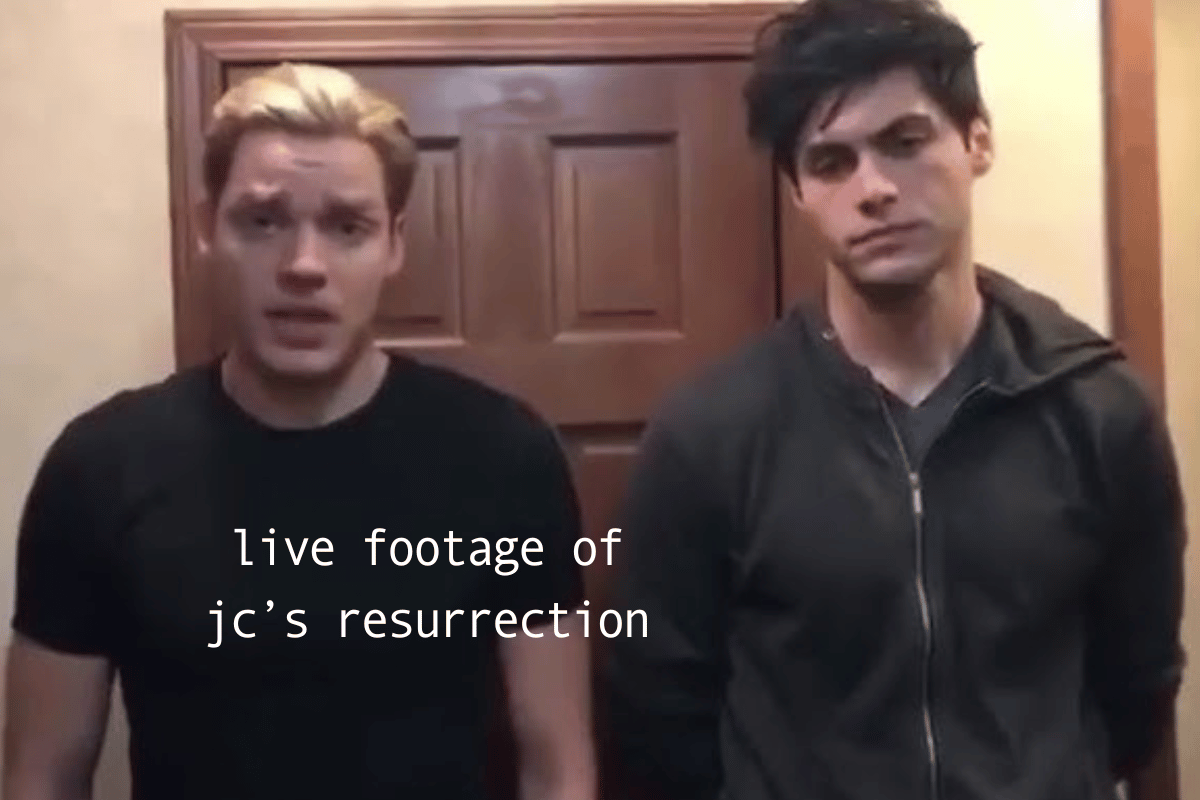
So I feel as though I’m very well versed in identifying these figures throughout media.
And I have no problem claiming that Rue from Euphoria is, without a doubt, a Jesus Christ figure.
There are a couple of checkboxes a character usually has to hit to be considered a descendant of JC. So let’s go through them and see if Rue can check them off.
A Jesus Christ figure usually has a sacrificial role. The character suffers or dies for others, especially to save, protect, redeem, or awaken them.
In the last season of Euphoria, Rue dies from an overdose after taking Percocet pills laced with fentanyl, given to her by her sex trafficking boss, Alamo.
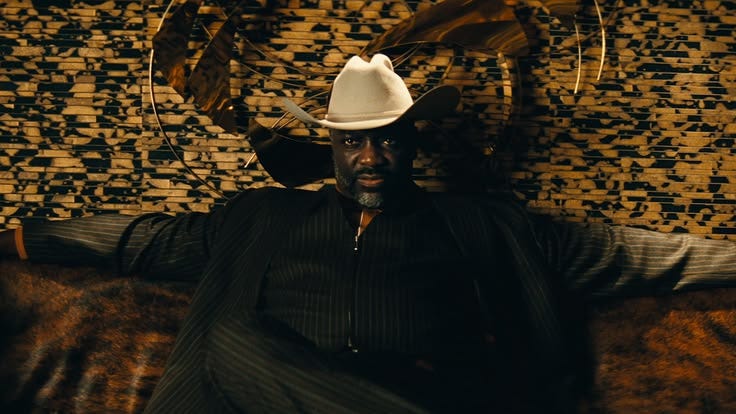
Alamo is the cause of a lot of evil within the Euphoria universe.
He owns a strip club that doubles as a sex trafficking ring. Throughout the season, we see subtle hints of him disposing of the women in his club when he no longer needs them. For example, he tells Angel to go to rehab, but it is very clear that she is either being murdered, sold, or something equally horrific.
After Mr. and Mrs. Jacobs2 go into million-dollar+ debt, Cassie asks Maddy for help. Maddy goes to Alamo, who handles the damage by murdering the people threatening Nate and Cassie.
(Spoiler: Not that it matters that much, because Nate has already been buried alive and murdered by a python/rattlesnake hybrid that only exists in the Euphoria universe!)
But Alamo doesn’t work for free, so now Cassie and Maddy owe him. They’re forced to work under him and make money through Cassie’s OnlyFans business. It is also implied that Alamo is also forcing Maddy to sleep with him.
All in all, he is a very very bad evil man. Like, biblical evil. He causes pain and violence throughout the entire season.
But when Rue dies, Ali, her AA mentor, decides it isn’t enough to keep running AA meetings. They feel useless when people like Rue are still dying every day. So he takes matters into his own hands. He shows up at the strip club with a shotgun, in his uniform, and kills Alamo.
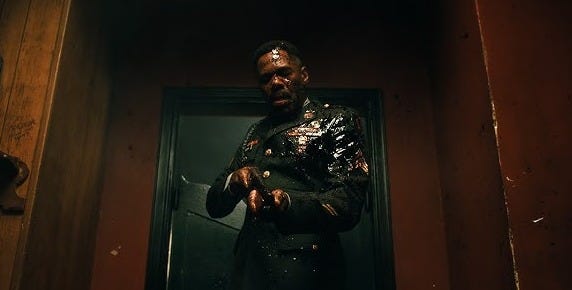
Rue’s death becomes the catalyst that ends all of the pain and suffering caused by Alamo and his team. Her death awakens someone else. It moves Ali from prayer to action. From meeting room to battlefield. From witness to avenger.
A Jesus Christ figure is often betrayed by someone close to them. A Judas-like figure sells them out, abandons them, or chooses self-interest over loyalty.
For Rue, this is Jules.
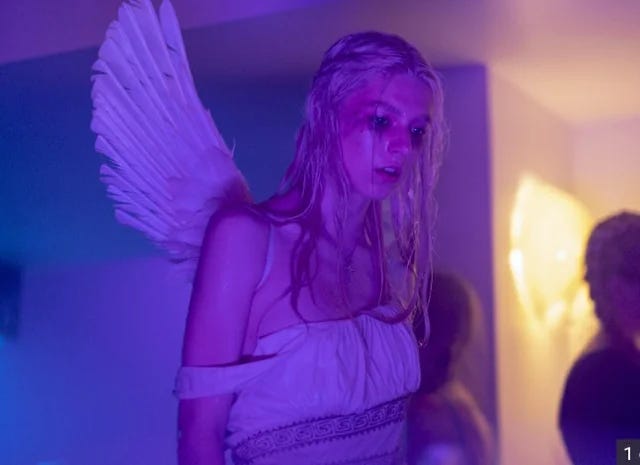
In season two, Rue has relapsed and is back on drugs, but no one will sell to her. So she goes to Laurie, our monotone drug dealer, and tells her a made-up plan in order to get a suitcase full of ten thousand dollars worth of drugs.
While Rue is enjoying using her own supply, Jules and Dominic Fike’s character, whose name I can never remember, go to Rue’s mom and tell her she’s using again. They find the suitcase full of drugs and flush everything down the toilet.
When Jules flushes Rue’s drugs, she is betraying her. Even if she thinks she is saving her. Even if the audience knows Rue needs help. Even if the betrayal is technically the right thing to do.
It is still a betrayal.
Jules is Judas in that moment. And I don’t think it’s a coincidence that Jules and Judas sound so similar.
I also find it interesting that Judas betrays Jesus with a kiss. In the biblical story, Judas kisses Jesus in order to identify him to the people who have come to arrest him. It is an act of affection turned into an act of betrayal. In Euphoria, that kiss is translated through Jules and Rue’s relationship. She is betraying her as her girlfriend, her lover, her intimate partner, the person Rue is supposed to be safest with. So the kiss exists in both stories, just in different forms. In the Bible, it is literal. In Euphoria, it is emotional.
In the last moments of the show, Ali returns to the farm that Rue visited in the first episode of season three after crossing the border as a drug mule. He meets the farm animals, including the new baby calf that was born three months ago, the same time Rue passed away3.
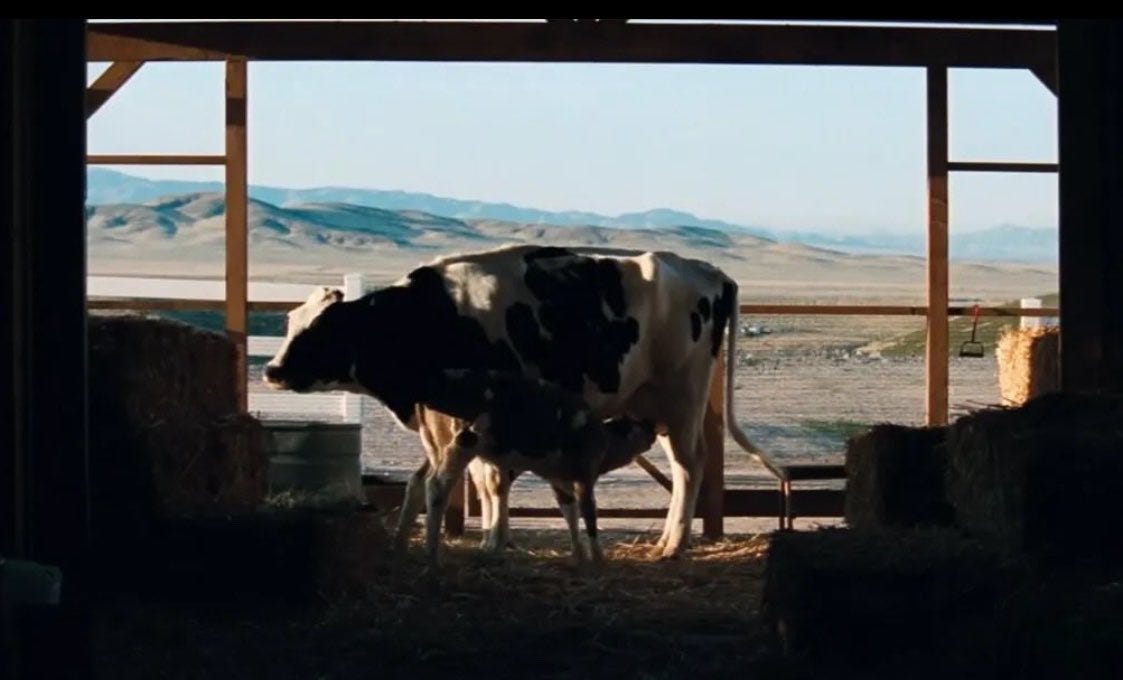
From this scene, it’s heavily implied that Rue has reincarnated as Dahlia’s baby. The camera hesitates on the animal for far too long. We get a dramatic shot of Ali and the calf making eye contact as if they know each other. The moment is too deliberate to be random.
But I also think the timing matters.
The calf was born three months ago. Rue died three months ago.
Three is a very important biblical number. It often represents divinity, holiness, completion, and resurrection. God is revealed as three persons: the Father, the Son, and the Holy Spirit. Jonah was in the belly of the whale for three days. But most importantly, Jesus rose from the dead on the third day.
After Jesus dies on the cross and is placed in the tomb, he is resurrected after three days. Ali meeting the calf three months after Rue’s death mirrors that imagery. It turns the scene from a strange animal moment into a resurrection scene. Rue dies, time passes in threes, and then Ali comes face-to-face with something familiar.
There’s also the symbol of the golden calf, which represents false idolatry which is really what this show is all about right? Drugs, fame, sex, love, attention. All of the different addictions we treat as holy. All of the false gods the characters kneel to.
But Rue is not resurrected as a golden cow. She is resurrected as a real calf. A living animal.
She is not fake and shiny. She is not an idol.
She is ressurected.
Rue’s entire character is centered around forgiveness. “I’m sorry” is in her vocabulary so often it might as well be her catchphrase.
Ali. Her mom. Gia. Jules. Herself.
So much of Rue’s arc is about the damage she causes when she is using, and the impossible process of trying to come back from that damage. She hurts people. She lies. She steals. She runs around town for a full hour’s episode. She destroys trust. And still, the show keeps returning to the question of whether someone can be loved after they have been at their worst.
That is a deeply Christian question4.
Can you forgive someone for their sins?
We’ve talked a bit about the number three, but number symbolism in the Bible goes a lot deeper than that.5
In the first scene of the first episode of Euphoria, Rue narrates that she was born three days after 9/11. From the very first moment we meet her, she is connected to the number three.
As I mentioned before, three represents holiness, resurrection, completion, and divine confirmation. Jesus rises on the third day. Rue is born three days after an event that reshaped America forever. Then, at the end of the series, Rue is resurrected as a calf born three months after her death.
Her birth and rebirth both point back to the number three, which makes the Jesus comparison feel even harder to ignore. Rue enters the world in the shadow of devastation three days later, and she returns after death three months later. Both moments echo the resurrection pattern.
Then there is the number seven.
Rue’s death scene is seven minutes long. While my mom keeps informing me that this is a medical fact, they didn’t have to include it. They didn’t have to be so scientific with it unless it mattered.
Seven often means completion, holiness, divine order, or perfection. It took God seven days to create the Earth. So Rue’s seven-minute death scene feels like the completion of her life. Her role is complete.
Jesus Christ figures are known to perform miracles. Jesus turns water to wine. He heals the sick. He raises the dead. Well, Rue doesn’t do anything close. However, her tears do look really sparkly when she does drugs. No, I’m serious though. There are moments throughout the show when Sam Levinson includes some surrealist moments. Most recently, we saw Cassie as what the people have coined “Titzilla”. However, most of these surreal moments occur with Rue. These are her miracles.
In Christianity, Christ is represented as three: the Father (God), the Son (Jesus), and the Holy Spirit.
In Euphoria, we see these three versions.
There is the character Rue that we see. She interacts with the people around her. She knows only her own thoughts and actions. Her best friends are Fezco and Jules. This is Jesus Rue.
The second version of Rue is the narrator. This version of Rue is omnipresent. She narrates about Nate’s life, Cassie’s life, Maddy’s life. She shows us moments she wasn’t there for. She tells us secrets she shouldn’t know. This is God Rue.
And, in our final moments, we see Rue as her version of the Holy Spirit—Dahlia’s baby cow.6
Since the beginning, Euphoria has come out on Sunday nights.
For a lot of American families, Sundays mean waking up early and going to church. Sunday is the day of worship, confession, guilt, performance, family, and God.
So I find it very interesting that this show comes out on the same day, but at night.
It’s like church for people who don’t go to church anymore.
Instead of sitting in pews, we sit on couches. Instead of stained glass, we get glitter makeup and neon lighting. Instead of sermons, we get Rue narrating the sins of everyone around her.
Euphoria is Sunday service after dark.

For a character to be a Jesus Christ figure, they usually have a symbolic baptism. And while there are a couple scenes throughout Euphoria where characters swim in pools or large bodies of water, I think Rue’s baptism scene doesn’t include water at all.
In the season one finale, there is a surreal scene where Rue dances in a sea of people to All for Us, a song by Labrinth and Zendaya. Throughout the scene, she is thrown around by the dancers. Up and down. Side to side. Held, carried, swallowed.
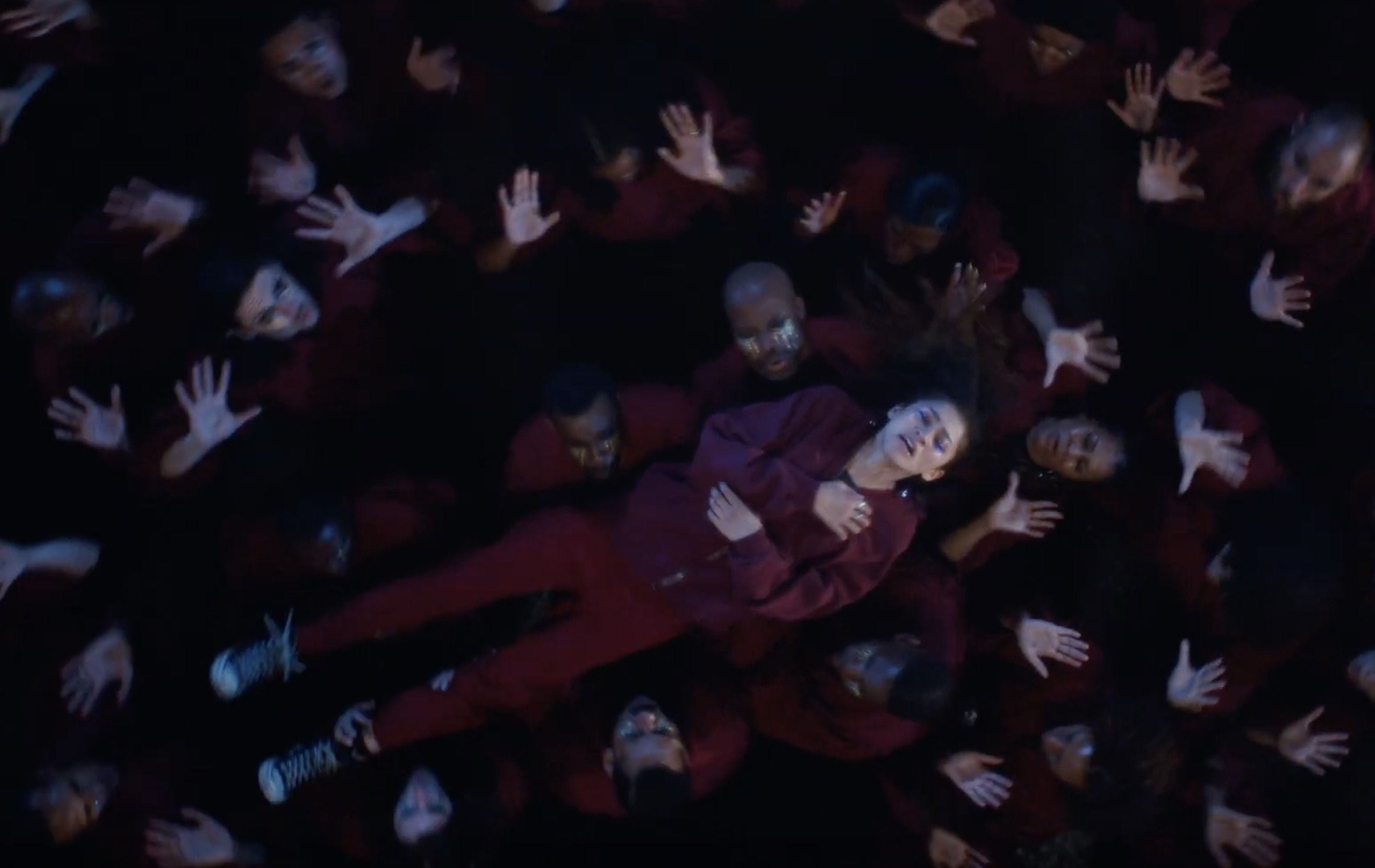
The dancers almost look like waves. The people become a sea. Rue is drowning in them.
I think this is her metaphorical baptism.
While a lot of people see religious figures as pure and holy, the stories themselves are actually dark and violent. Like Lexi says in the last episode, the Bible is full of sex and murder and other disturbing things.
And yet, God still forgives.
Jesus still dies for our sins.
I think Sam Levinson is showing this same idea in the modern world.
Euphoria is full of sex, addiction, violence, betrayal, lust, cruelty, debt, power, bodies, shame, and grief. And yet, within all of that, the show keeps asking spiritual questions.
Who can be saved?
Who deserves forgiveness?
What does evil look like now?
What does sacrifice look like now?
Can someone be holy if they were also an addict? A liar? A bad daughter? A bad friend? A person who hurt people?
While Rue is very clearly a Jesus Christ figure to me, I think the other characters play roles from the Bible as well.
Jules, as I said earlier, is Judas.
She loves Rue, but she betrays her. She betrays her in a way that is intimate and painful. Judas is not just some random villain in the story of Jesus. He is part of the mechanism that leads Jesus toward his fate.
Jules functions the same way. While Rue is in this mess because of her own choices and those alone, Jules’ decision to tell Rue’s mother about the pills causes her to be in debt to Laurie which is the catalyst to her demise. She is both lover and betrayer. Savior and destroyer.
When we first meet Nate, he is obsessed with masculinity.
After finding videos of his father cheating on his mother with underaged boys, we see how deeply this affects the way he views himself, men, women, and gender. He is constantly working out at the gym, talking down to women, and trying to control every image of himself before anyone else can.
When we first meet Maddy, Nate is just as obsessed with her femininity. He comments on how hairless she is. He loves the way she dresses in skirts and heels. He is drawn to how perfectly she performs the kind of womanhood he wants.
To me, this parallels Adam and Eve.
Adam is the first man. Eve is the first woman. They represent the beginning of gender, desire, shame, and knowledge. So it feels important that Nate and Maddy are both introduced through such intense ideas of masculinity and femininity. They are not just boyfriend and girlfriend. They are performing man and woman like it is a religion.
Maddy is also constantly framed through forbidden desire, which is a common trait of Eve archetypes. In season one, we see how important virginity is to Nate. There’s a whole scene where he makes Maddy promise she’s a virgin while they’re having sex. Her purity matters to him, but only because he wants to possess it.
Then there’s the party scene, where Maddy sleeps with someone in the pool to make Nate jealous. Nate beats him up and eventually makes him report it to the cops as rape.
Even Maddy’s backstory frames her sexuality through something forbidden and disturbing. During her character episode, we learn that she lost her virginity at fourteen to a man who had to be in his thirties.
It’s disgusting, but it’s also part of how the show frames her. Maddy is constantly placed near forbidden desire. Desired too early. Desired wrongly. Desired violently. Desired by men who want to own her, punish her, or prove something through her.
And then there’s Cassie.
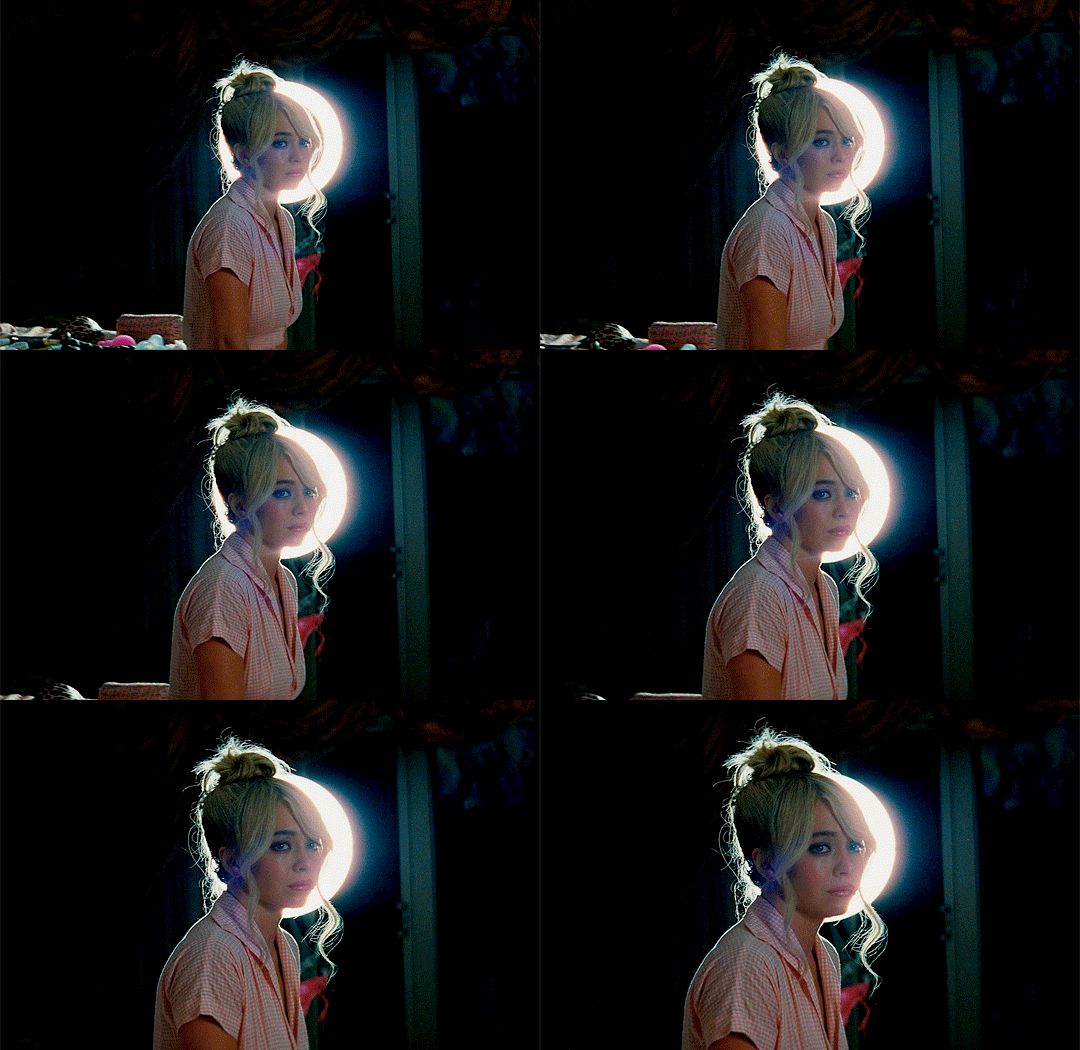
In the story of Adam and Eve, the fall happens when the forbidden fruit is eaten. It is the thing they are told not to touch, even though it promises knowledge, desire, and transformation.
That is what Cassie becomes for Nate.
Nate believes that if he can become the perfect man, he can escape becoming his father. If he can marry the perfect trophy wife, make a lot of money, live in a fancy house, and have a white picket fence life with a perfect family, then maybe he will become the man Cal never was.
And in season two, Cassie starts to represent that fantasy.
She is blonde. Emotional. Vulnerable. Sexualized. Domestic in this weird, disturbing way. Nate imagines her as the kind of woman who could give him the life he thinks he is supposed to want: a wife, a house, money, twin boys, proof that he is normal, masculine, successful, and clean.
But he can’t have her. Not really.
Because Cassie is Maddy’s best friend, Cassie becomes the fruit.
She is beautiful, desirable, and treated like something to be consumed. And that is very forbidden-fruit coded, because the fruit in Eden is not ugly or obviously evil. Cassie’s whole role is: I am the thing you should not touch, but you want to.
For Nate, touching Cassie means betraying Maddy. It means betraying the social order. It means breaking the garden of the friend group. The second Nate and Cassie cross that line, innocence is gone. Everyone knows too much.
That is the fall.
Maddy finds out. Cassie collapses into shame. Nate becomes weaker, more pathetic, barely any toes. The fantasy of man and woman, Nate and Maddy, Adam and Eve, is over.
…Especially when Nate dies by a snake. In Genesis, the snake is the one who tempts Eve to eat the fruit from the tree of knowledge. The snake is temptation, corruption, seduction, and the beginning of the fall.
In the universe of the Bible, we have the physical Bible itself, but we also have stories of the people writing, witnessing, and preserving the story. Stories of the ones that actually write the Bible.
In the universe of Euphoria, we have the actual show, but we also have Lexi writing a play about the characters inside the show.
Lexi does what the gospel writers do. She watches. She records. She edits. She turns people’s lives into art.
So, the religion was not random. It was not suddenly inserted into the story. It was there from the beginning.
I think that’s what people missed when they complained about Rue talking about God this season. I lowkey believe if things had gone differently, that would be more apparent. Maybe it was planned from the start. Maybe I’m overanalyzing again. Most likely the latter.
But still,
Rue was born three days after 9/11.
Rue was baptized by a sea of bodies.
Rue was betrayed by the person she loved.
Rue died for the sins of a world bigger than her.
Rue was resurrected three months later.
And Rue’s story ended on a Sunday.
So no, I don’t think Euphoria suddenly became religious.
I think it finally admitted what it had been doing all along.
<3 brooklyn
and then everyone clapped
i’m aware that every time I discuss a plot point it sounds like im getting it from chatgpt, but here we are.
taking a pause here to say i am not a particularly religious person. i grew up christian. would consider myself agnostic now. however, i find the topic of religions very interesting and love to discuss them. i am not an expert by any means.
This is my favorite part of the Jesus Christ lens.
Comments
Nothing yet. Say the first thing.
Sign in to join the conversation.