
Substack has given me several brilliant new friends. One of them is Celeste Hartley, whose work has some kind of instant magical soothing effect on me, and whose lovely mind inspired this essay on a call we had together. I’m delighted now to share our thoughts here and on Instagram throughout this week, where Celeste will post some accompanying videos and illustrations she made. There is some irony in our sharing it, which I think appropriately reflects where most of us are sitting on this subject. Maybe you’ll relate to our inner conflict. Read on.
⚘
If a tree falls in the woods, does anyone hear it? If you don’t share or accomplish something with your creativity, does it mean anything?
It doesn’t feel like enough to just love something anymore. You have to do something with the thing you love. To be a content creator, influencer, author, entrepreneur. As Celeste so aptly puts it: we have too many people wanting to be DJs, and nobody out on the floor dancing.
We all want a platform today, or feel that we should. If you like a thing, if you have a passion or practice, you feel compelled to grab the Instagram handle. You are then thrust into the cycle of “content creation,” in which you have to feed the audience and algorithm to stay relevant. At the risk of not being seen at all, you constantly need something to show. Part of the joy in creating is sharing it with people who connect with it. But now we feel compelled to share everything. To turn every small idea into a Story, Reel or side hustle.
Our best ideas come from all the half-baked ones that don’t see the light of day - the trial and errors, the messy process and pursuit of the thing for the thing itself. Yet all of that isn’t valued anymore. What is valued:
Continuity, consistency
Immediacy, payoff
Easy digestibility
Content already proven to perform well
Whatever happens to please the algorithm that day
This has always been the artist’s plight, to some extent. Very few people could afford the luxury of just painting or writing all day for the pure fun of it. Your art was your profession, so you had to cater to dealers and galleries and patrons. But social media has taken this to new extremes: now you have to please a moody algorithm and distracted online audience to get anywhere with your creative work. An amorphous, mysterious blob is looking over your shoulder with every line you paint or write. Now, everything you do and every idea you have is potential content.
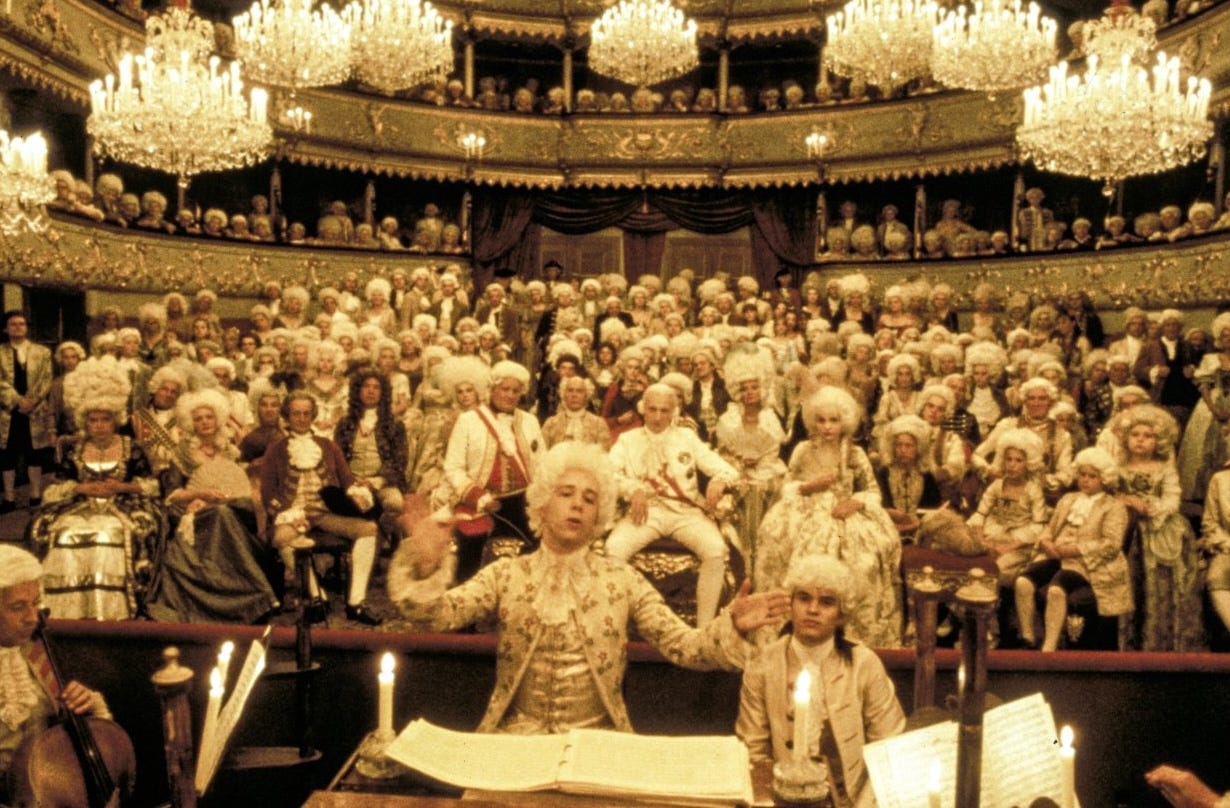
If we have an online presence or following of any kind and we’re not showing up every day for them, we are punished for it. The algorithm trains us to produce, produce, produce, to the point where our real ideas, the little glimmers of true inspiration, get abandoned, rushed or cheapened in our anxiety to make something concrete from them: new content, more followers, or just some translatable meaning.
Suddenly your creative work becomes more about your content calendar. You find yourself sharing your early ideas to keep your audience satiated. These ideas no longer have a chance to ferment and slosh around your mind for a bit, to take the form of many things, to just sit and wait for their right moment. Now you to defend or explain the unfinished idea to people you don’t even know. Even worse: You are now judging your own fragile thoughts and inspiration differently through the lens of what will perform well with your audience, effectively killing them on arrival.
It’s hard not to, when you’ve been raised in a world of sharing, liking, comment, engaging, going viral. Just look at the microcosm of Substack: Even as we encourage each other to get offline and embrace whimsy, we post pictures of ourselves doing it. We know this has affected our mental health for years now, but how does it affect our creative work? What happens when you can’t make anything without simultaneously imagining how it will be received?
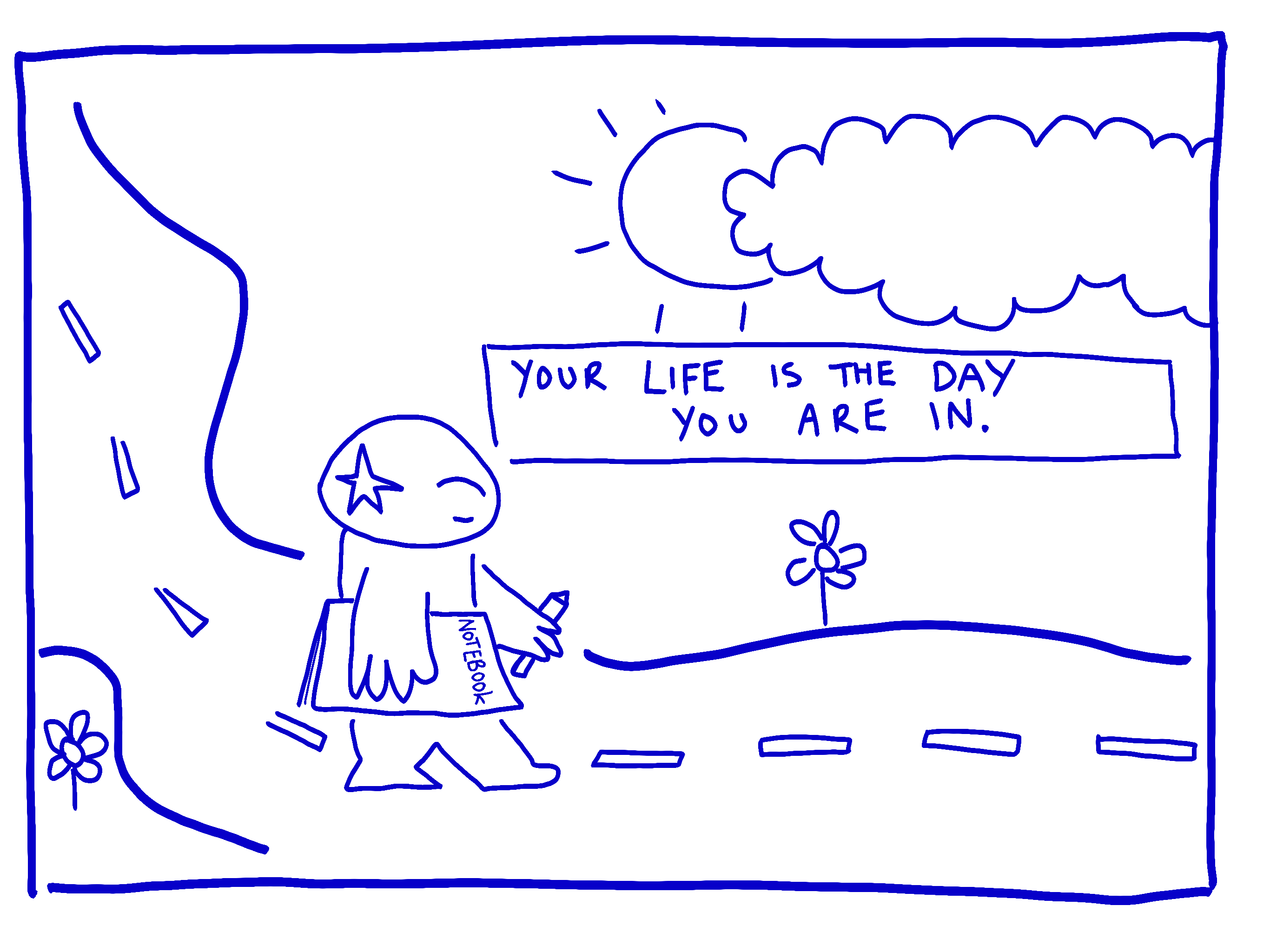
This is why mymind is can be a confusing product to people. Where are the sharing features? How do I post this to my profile? Why can’t I see what’s in my friend’s mind? A private-first tool for your inspiration and ideas has no immediate or obvious payoff for the common “creator” today. But we need this space. We need the unfinished ideas that make sense to nobody but ourselves, and freedom to keep these things to ourselves. To create without expectations, to accept and even celebrate that some things will never be finished. To see the beauty in the messy contradictions.
This is how we arrive at good ideas with actual meaning. It’s the random little snippets and passing thoughts and half-disappeared dreams that make no sense to share, but later end up in your novel. The weird doodle in your notebook that hits you differently a year later when you flip to it. It’s the combination of that meme you screenshotted, that photo you took of the rainbow on the floor, the cool packaging on that bottled drink you bought the other day, the poem with that one line that struck you, that song you can’t get out of your head. It’s trusting all those things to be what they are, to not force them into shape just yet, and let them find their place on their own time. To see it all as compost rather than content.
Unfinished in this sense means un-optimized. Un-shareable, un-easily-explainable, maybe ultimately unsellable. It’s not a call for abandoning your ideas. Please, see them through. As a writer, this is the only way I learn. By staying with something I’ve been working on even when it gets boring and I feel stuck or tempted to jump to something new. It’s very easy to never finish anything by telling yourself it’s not ready, it’s not good enough, it needs more research, etc.
This is really just permission to create without an agenda: no audience watching, no metrics or measure of success in mind. To trust creativity as a fluid process, in which a thing may never be finished or perfectly optimized for the general public. Or as the writer and recipe developer Colu Henry said in my recent interview with her: to do it from love, not for love.
That it exists is the point. That you love something and do it at all. That you see an idea and nod to it, kneel down over it and admire it, pick it up or let it be carried back out into the sea. That you trust it will arrive on the shore later if it should, polished and sparkling or half-broken and perfect.
⚘
Please do follow Celeste on Substack and Instagram to see the story and video she created on this subject, and to appreciate all the other thoughtful and inspiring things she makes. And if you related to this essay, here are a couple others I think you’ll appreciate from me and Celeste:
Pic or it didn’t happen
·
Jan 26
“We do not want merely to see beauty, though, God knows, even that is bounty enough. We want something else which can hardly be put into words — to be united with the beauty we see, to pass into it, to receive it into ourselves, to bathe in it, to become part of it.” -
The art of noticing
·
May 18
I read this novel recently called “On the Calculation of Volume” by Solvej Balle. It’s one of a series of seven books (four released so far) telling the Groundhog Day-like story of an antiquarian bookseller who finds herself living the same day over and over.
Comments
Nothing yet. Say the first thing.
Sign in to join the conversation.