
The city can start to feel frantic this time of year, so if you’re looking to escape the holiday stress, music can be a way out—though not the usual kind. You won’t find Nutcrackers or Messiahs here. They’re worthwhile, but we’re more interested in what else is happening. December leans heavy on chamber music and experimental work, sometimes both at once, and we’re absolutely here for it.
We’re talking flutists layering field recordings from river restoration sites with live electronics, harpists reclaiming the lost history of jazz and hip-hop, and quartets (and quintets) finding new beauty and perspective in Brahms and Beethoven. Here’s what’s worth your time.
What I’d prioritize if you’re only seeing one or two concerts this month.
The Town Hall, Midtown · Sun, Dec 7, 2pm
New York Philharmonic principal clarinetist Anthony McGill teams up with the Isidore String Quartet to form chamber music’s most elegantly designed five person ensemble. Isidore opens with Beethoven’s Quartet in B-flat Major Op. 18, No. 6, where the young composer was still finding his voice in the quartet form. Then comes James Lee III’s new Clarinet Quintet, wedged between Beethoven and Brahms to show how contemporary voices fit into the lineage.
The second half brings Brahms’s Clarinet Quintet in B minor, one of those late career pieces where the composer looked at retirement and decided to leave behind one of his most gorgeous late-career works. The Isidore Quartet won the 2022 Banff Competition and landed an Avery Fisher Career Grant, which makes this a collaboration between five musicians at the top of their game.
Program:
Beethoven — Quartet in B-flat Major, Op. 18, No. 6
James Lee III — Clarinet Quintet (world premiere)
Brahms — Quintet for Clarinet & Strings in B-minor, Op.115
Go if: you want to hear the clarinet quintet form done right.
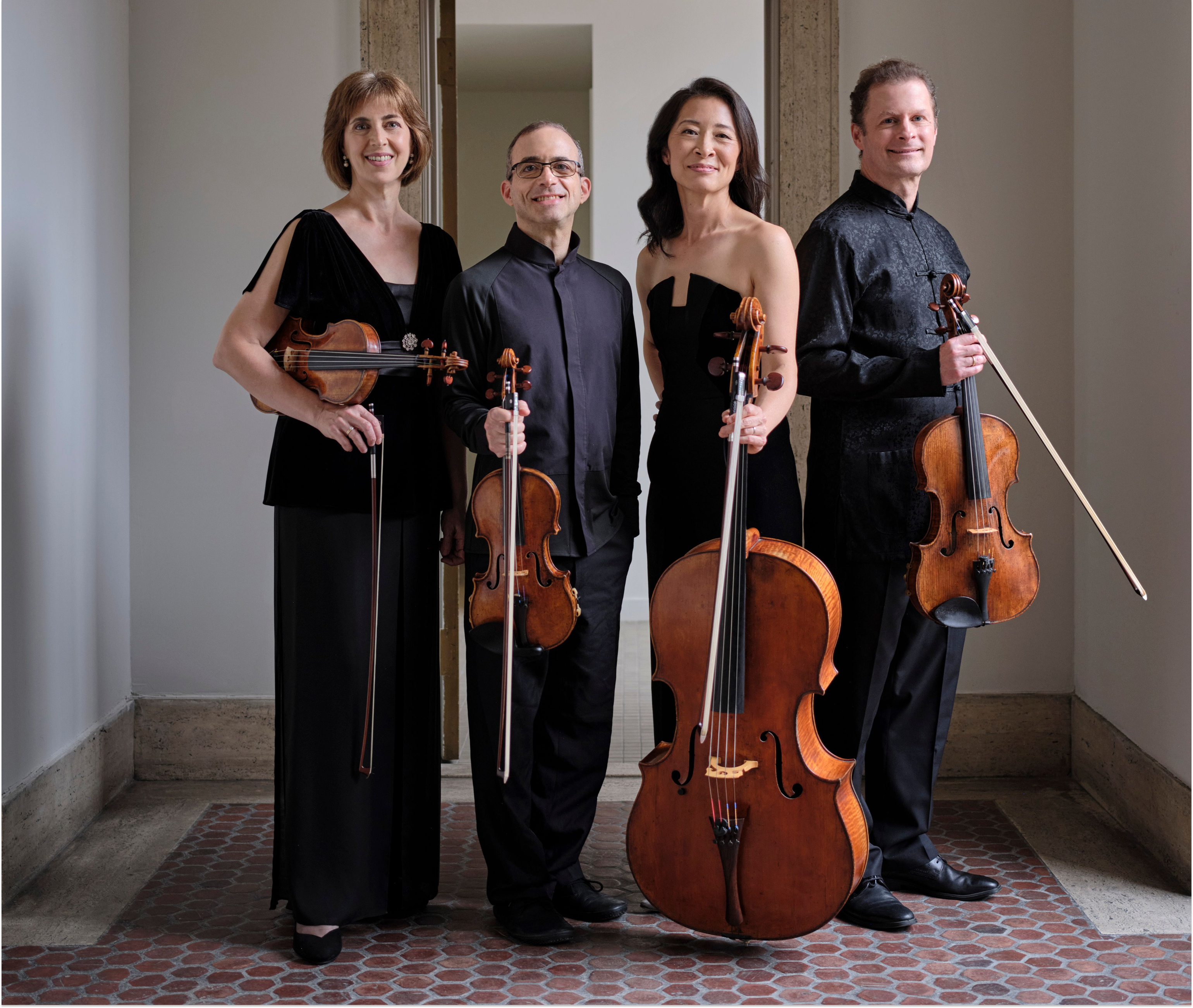
Kaufmann Concert Hall, 92NY, Upper East Side · Wed, Dec 10, 7:30pm
The Brentano String Quartet hasn’t played 92NY in years, so consider this their triumphant return. They are the kind of ensemble that digs deep, known for a rich, almost tactile sound that still manages to feel completely fresh, even with repertoire mainstays. They open with Haydn’s C Major Op. 54, No. 2, both witty and brilliant, before plunging into Bartók’s mysterious Fourth that pushes the form into darker, more challenging territory. Then Dvořák’s G Major Op. 106 swoops in to close, full of warmth and soaring melodies, like a collective sigh of relief. Fun fact: they recorded Beethoven’s notoriously difficult Op. 131 for the movie A Late Quartet, so trust that they know how to deliver the goods.
Program:
Haydn — String Quartet in C Major, Op. 54, No. 2, Hob. III:57
Bartók — String Quartet No. 4
Dvořák — String Quartet in G Major, B.192, Op. 106
Go if: you’re ready for a string quartet’s full dramatic arc.
The Blanc NYC, Midtown · Sat, Dec 13, 7:15pm
When I caught The Rhythm Method and Anaïs Maviel perform Listen to the Rain at the Long Play Festival in May, the string quartet and voices blended in ways that kept surprising me. Good surprises. So many colors came through that it felt like watching weather change, always shifting well before anything got dull. Maviel, a composer, vocalist, and n’goni player, wrote this piece in alignment with the I Ching’s eight forces. Tonight she’s performing the full hour in the Heavenly Order, the sacred sequence used in Taoist inner alchemy practice, which sounds heady until you’re actually there and it just feels like listening to something unfold naturally. Visual artist Sean Webley’s film accompanies. Q&A at 7:15pm, performance at 8pm, reception after.
Go if: hour long meditations that hold your attention sound worth trying.
Cross-genre work, unusual spaces, and concerts that upend expectations.
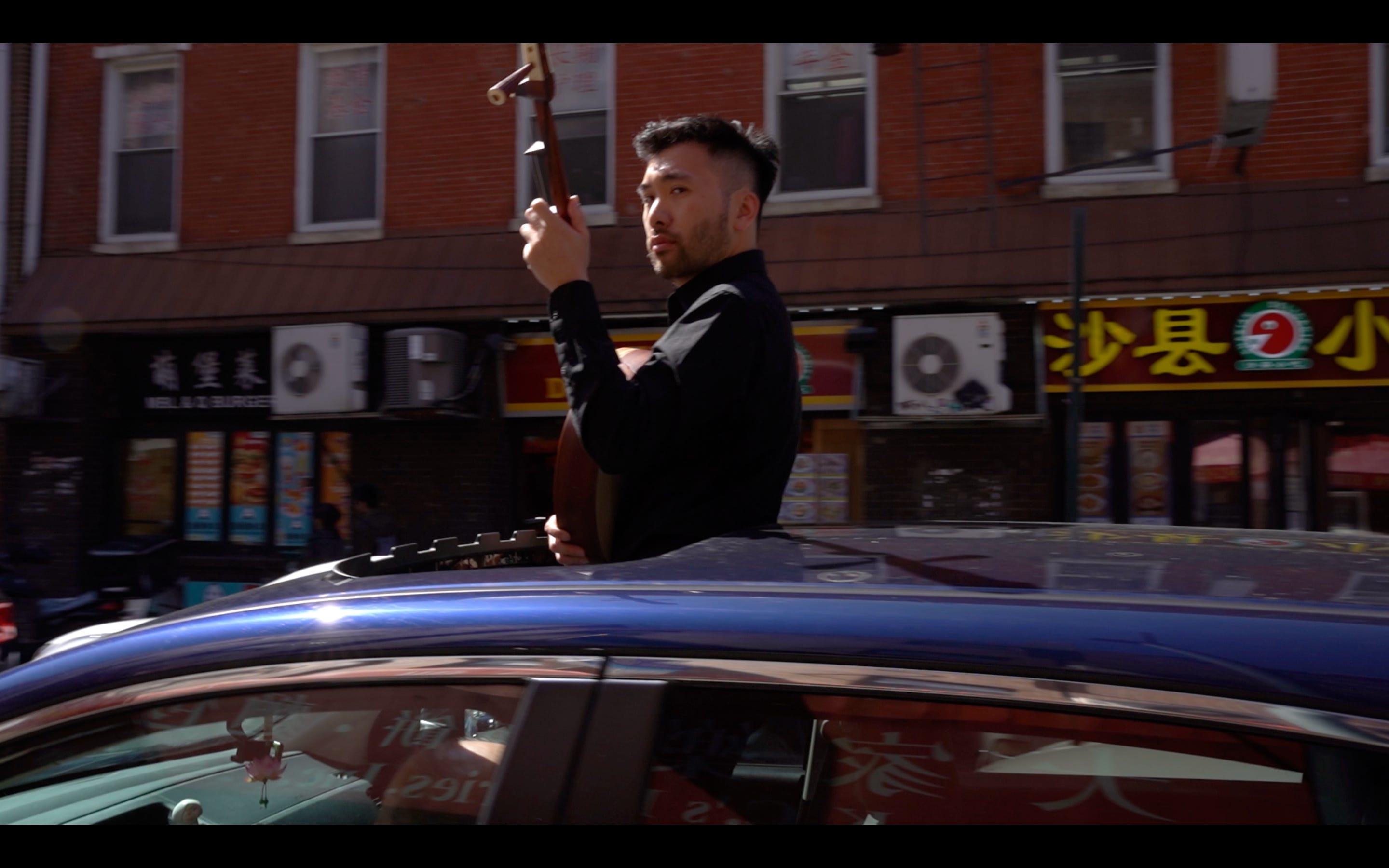
National Sawdust, Williamsburg · Fri, Dec 5, 7:30pm
Baldwin Giang spent a Fulbright year in Taiwan studying pipa performance, then came back to write the multimedia work PIPA BOY. The piece explores the complicated question of belonging for later diaspora generations—people who feel connected to multiple places but fully belong to none. Giang pairs the pipa with ensemble and video collaborations from three international filmmakers. This U.S. premiere carries special weight. Giang, a Samuel Barber Rome Prize winner (one of American arts’ most exclusive honors), says this piece feels particularly personal. The innovative BlackBox Ensemble performs PIPA BOY alongside works by Anthony Cheung and Misato Mochizuki.
Go if: you want music that sits with hard questions instead of answering them.
CultureHub NYC, NoHo · Fri, Dec 5–Sat, Dec 6, 7pm & 9pm
Four musicians. Eight hands. Hundreds of pencils. Paul Pinto’s OCTET runs just under an hour and starts with a close up on string instruments getting “operated” on by the players wielding pencils like they’re about to go into surgery. It’s absurd, yet weirdly mesmerizing. Zach Herchen’s video and sound design creates visual tension, bringing every tiny scrape and tap into focus.
Two different ensembles play this game of Operation across two nights: Bergamot Quartet takes the stage Friday and The Rhythm Method follows on Saturday to show how different players handle the same strange set of instructions.
Go if: absurd and mesmerizing is exactly what you need right now.
Zürcher Gallery, NoHo · Sun, Dec 7, 7pm
Experimental music in art galleries can feel like someone’s trying too hard, but yuniya edi kwon makes Zürcher Gallery feel like the right room for her compositions. This Guggenheim Fellow violinist and vocalist fuses Korean shamanic ritual with free improvisation, creating a sound that connects ceremony and composition through Korean folk timbres and American experimentalism. She ditches familiar tuning because standard systems don’t accommodate what she’s after. New York-based chamber ensemble PinkNoise premieres her commissioned work in the gallery’s close quarters where you’ll catch every detail.
Go if: you’re drawn to music that doesn’t play by the rules.
Aaron Davis Hall, City College of New York, Harlem · Thu, Dec 11, 7pm
Contemporary music and dance sharing a stage could end up feeling forced. CORPOREAL makes it work. Musicians Graeme Steele Johnson, Giancarlo Latta, Aaron Wolff, and Fifi Zhang perform solo and chamber works by living composers—Inti figgis-vizueta, Gabriella Smith, Zosha di Castri, Reena Esmail, Viet Cuong, and John Zorn—while dancers Marisa Clementi, ALEXA GRÆ, and Leah Wilks respond in real time. The centerpiece is composer Yaz Lancaster’s world premiere commission, created specifically for this collaboration. At Aaron Davis Hall in Harlem, the program proves experiments in contemporary classical music belong outside Manhattan’s usual venues. Free admission.
Go if: the pairing of new music and movement feels more exciting than either would be separately.
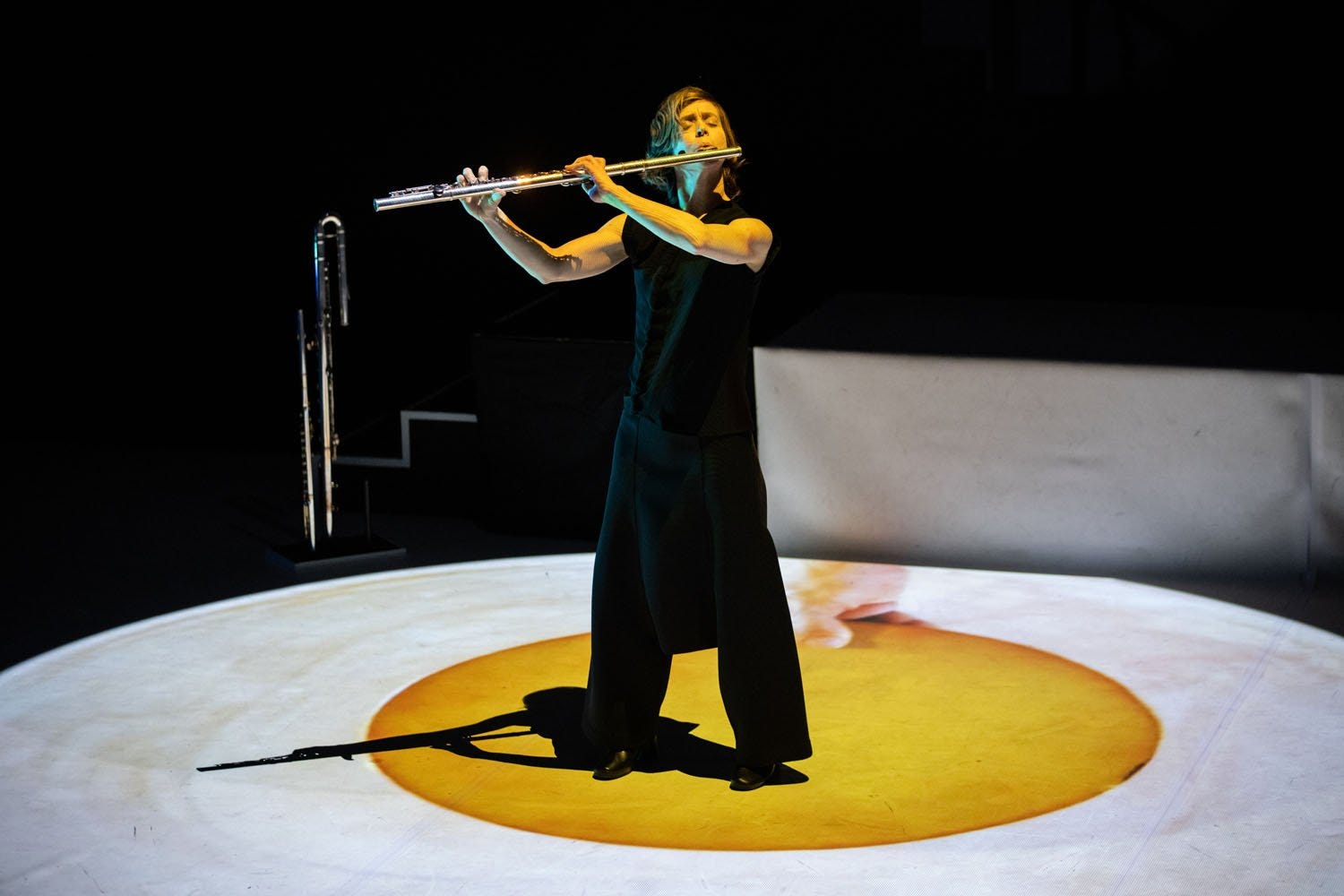
The Kitchen at Westbeth, West Village · Thu, Dec 11–Fri, Dec 12, 6pm & 8pm
Claire Chase’s continues her decades long expansion of the flute repertoire by dedicating her latest project to the massive restoration of the Elwha River in Washington State. Chase brings an arsenal of seven flutes—from tiny piccolo to massive contrabass—to perform alongside composer Annea Lockwood’s immersive seven-channel mix of the river’s sounds diffused throughout the performance space.
The Elwha was choked by dams for a century before finally being set free and roaring back to life, a powerful symbol of ecological resilience. Chase plays with the river’s current, sometimes fighting it and sometimes riding the flow. The lights go out and the room dissolves into an hour long, immersive noise bath.
Go if: you want to sit in the dark and let seven flutes and a river’s worth of sound wash over you.
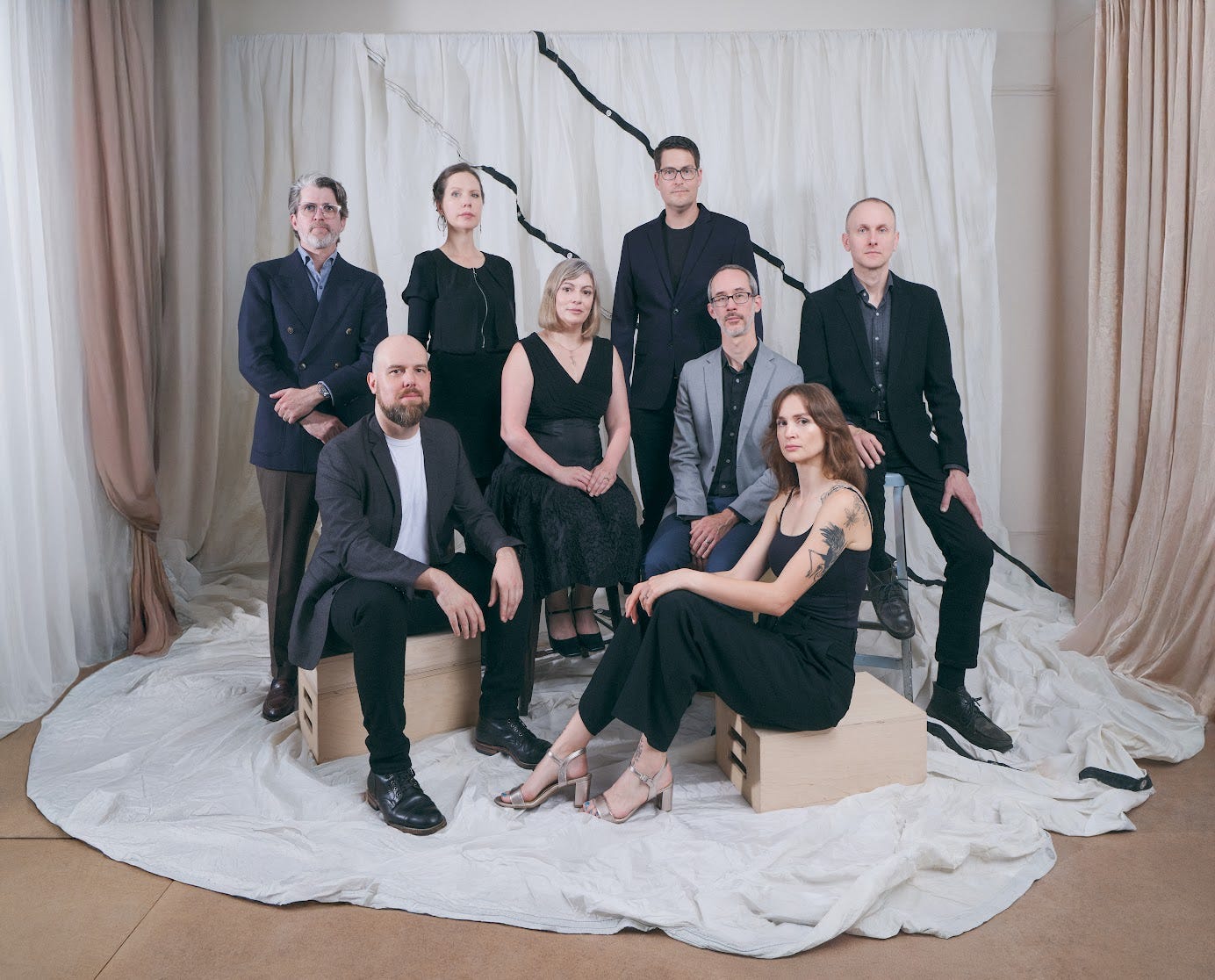
DiMenna Center, Benzaquen Hall, Hell’s Kitchen · Sat, Dec 13, 6pm & 8pm
Wet Ink’s third annual Mini Festival packs two concerts into one night (6pm and 8pm) where jazz improvisation crashes into contemporary classical composition. Artists in Residence Aurora Nealand on saxophone and voice and Ben LaMar Gay on cornet anchor programs that include Peter Ablinger alongside works by Wet Ink members Mariel Roberts and Alex Mincek. With Nealand’s New Orleans roots meeting Gay’s Chicago experimentalism, the music swings from structure to spontaneous invention and back. Between sets and after, hang with the artists in the lounge over refreshments. Pay what you can, free for students.
Go if: you want to hear what happens when New Orleans and Chicago influences shake up contemporary classical.
Smaller forces, tightly curated programs.
Advent Lutheran Church, Upper West Side · Mon, Dec 1, 7:30pm
Most people don’t know Beethoven originally dedicated the Kreutzer Sonata to George Bridgetower, an Afro European violinist who premiered it in 1803, then got the dedication scratched out after a falling out. Jennifer Koh and pianist Thomas Sauer aren’t letting that stay buried. They pair two Beethoven sonatas with Vijay Iyer’s Bridgetower Fantasy, written specifically to reclaim that erased history. The Kreutzer is one of Beethoven’s most demanding works for violin and piano, the kind that requires both players to bring some serious fire. It’s part of Music Mondays’ free concert series, so arrive early for a seat and watch two musicians set the record straight.
Program:
Beethoven — Violin Sonata, Op. 12, No. 1
Vijay Iyer — Bridgetower Fantasy
Beethoven — Violin Sonata, Op. 47, “Kreutzer”
Go if: Beethoven and historical justice for free is too good to skip.
Church of the Intercession, Washington Heights · Tue, Dec 2 & Thu, Dec 4, 6pm & 7:30pm
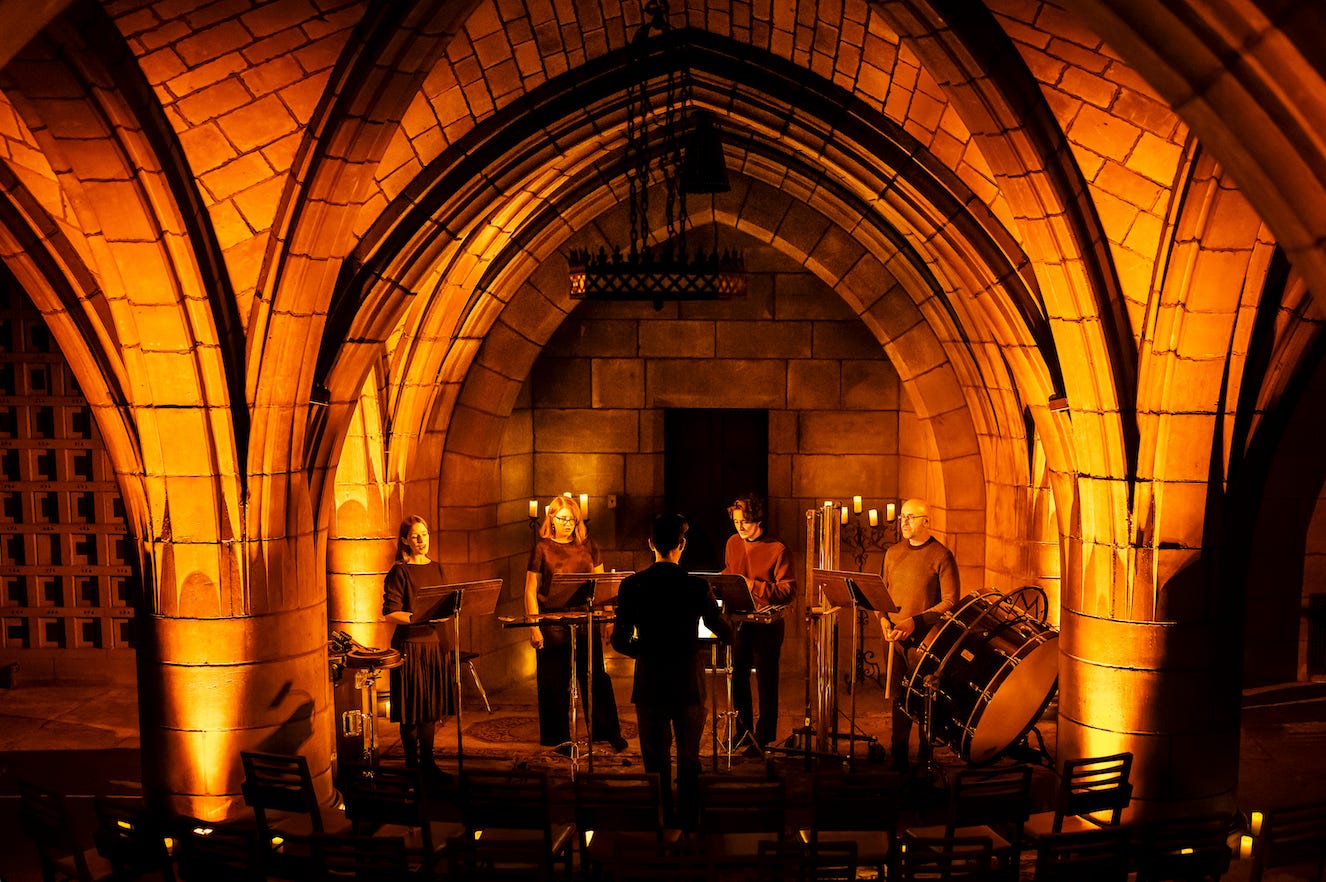
There’s something about performing a Pulitzer winning work inside a crypt about a girl freezing to death that makes you reconsider your definition of holiday music. Composer David Lang fused Hans Christian Andersen’s bleakest fairy tale with Bach’s St. Matthew Passion to create a piece about suffering that’s worth sitting with. Ekmeles, the vocal ensemble has been performing this in the Crypt for years and it keeps selling out.
The story is simple: a poor girl strikes matches to stay warm on New Year’s Eve and dies. Lang treats each match like a prayer and Ekmeles navigates his microtonal harmonies in a space that forces you to reconcile death. Two performances each night with pre show reception included. This isn’t Nutcracker or Messiah, but if you want holiday music that plays with the season’s darkness instead of papering over it, this is where to find it.
Go if: you’re ready for a new holiday tradition this season.
The DiMenna Center, Hell’s Kitchen · Wed, Dec 3, 7pm
Olivier Messiaen wrote Quartet for the End of Time in a German POW camp during winter 1940-41, scoring it for clarinet, violin, cello, and piano—the only instruments available. He premiered it with fellow prisoners before 400 inmates and guards. Drawing from the Book of Revelation’s vision of an angel proclaiming that time will end, Messiaen built eight movements that suspend rhythm, as if trying to step outside ordinary time. Birdsong represents freedom, slow Louanges stretch like prayers, and the Apocalypse arrives with force. St. Luke’s Chamber Ensemble performs what might be the 20th century’s most profound chamber work, written when everything else had been taken away.
Go if: you want chamber music that reckons with suffering and finds something beyond it.
Church of St. Mary the Virgin, Midtown · Thu, Dec 4, 7:30pm
The Tallis Scholars have spent 50 years perfecting Renaissance polyphony. Director Peter Phillips founded the ensemble in 1973 to create the purity and clarity that lets every musical line emerge distinct yet unified. They’ve performed over 2,500 concerts and won Gramophone’s Record of the Year in 1987, the first early music recording to receive it. That precision comes to this holiday program celebrating the Virgin Mary: Tallis’s Missa Puer natus, Byrd’s Votive Mass, and the world premiere of Matthew Martin’s Salve Regina, commissioned by Miller Theatre. Ten singers, St. Mary the Virgin’s Gothic Revival acoustics, and centuries of English sacred music.
Program:
Thomas Tallis — Missa Puer natus
William Byrd — Votive Mass of the Virgin
Matthew Martin — Salve Regina (2025) World Premiere commissioned by Miller Theatre
John Nesbett — Magnificat
Go if: renaissance vocal music performed at the highest level appeals to you.
Weill Recital Hall, Carnegie Hall, Midtown · Tue, Dec 9, 7:30pm
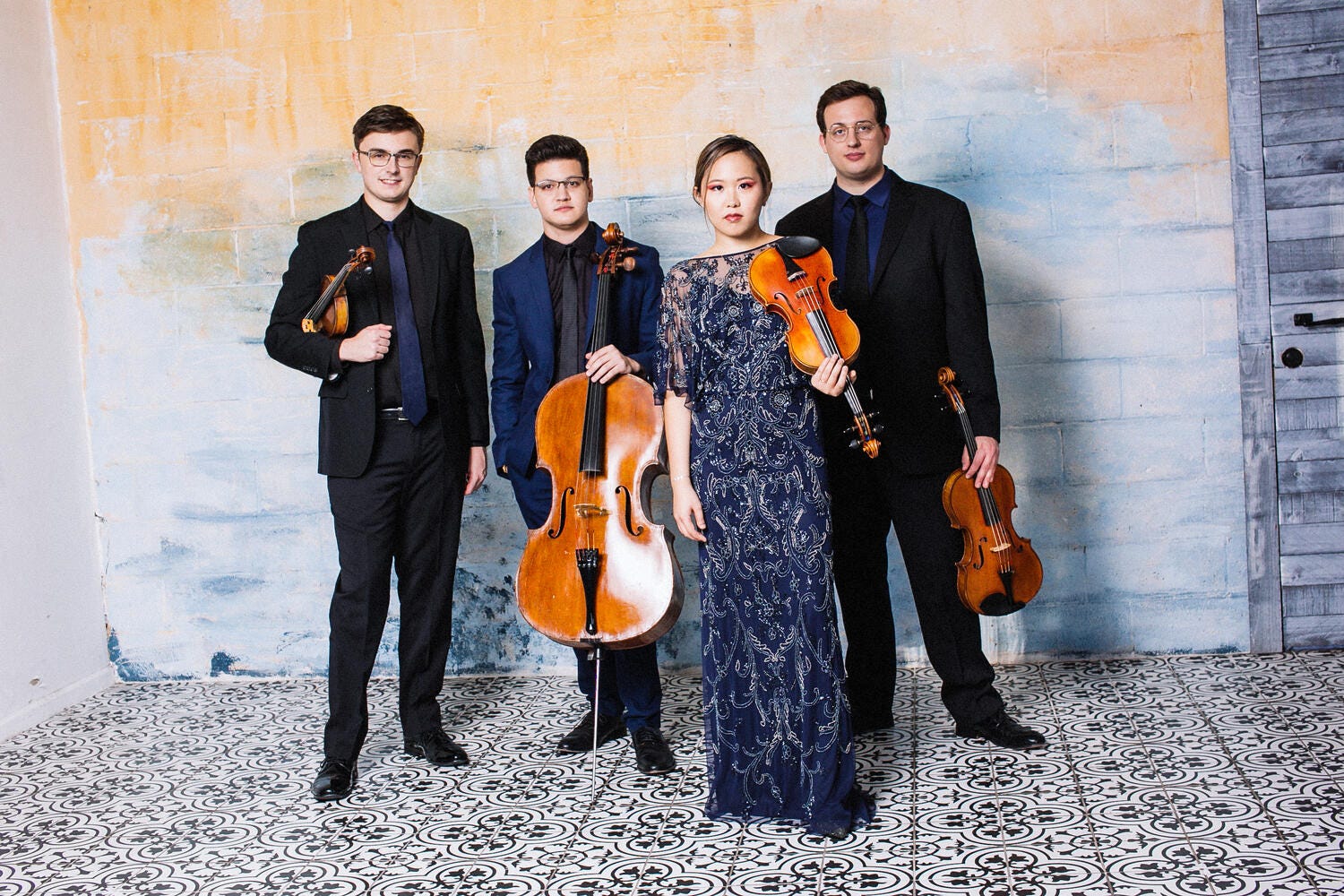
The Balourdet Quartet formed in 2018 at a New Mexico music festival after bonding over late night chamber music and meals by chef Antoine Balourdet, whose exceptional love of life inspired their name. Six years later, they’re making their Carnegie debut with a program that shows their range. Bartók’s Third Quartet opens, his most kinetic and edgy work in the form. Ravel’s String Quartet follows, his only foray into the genre and one that balances restraint with color. Brahms’s Third Quartet closes, written to escape the pressure of his first symphony and dismissed by the composer as a “useless trifle” despite revealing his lighter side. In Weill’s small setting, you’ll hear why this young quartet is building buzz.
Program:
Bartók — String Quartet No. 3
Ravel — String Quartet
Brahms — String Quartet No. 3
Go if: you’re curious what six years of late night quartet sessions produces.
Grace Rainey Rogers Auditorium, The Met, Upper East Side · Fri, Dec 12, 7pm
The Grammy-winning string quartet ETHEL takes Vivaldi’s Four Seasons and runs it through their own arrangements, then pairs it with new works by Ching chu Hu, Layale Chaker, Leilehua Lanzilotti, and Daniel Bernard Roumain. Vivaldi was writing Venice’s weather and landscape straight into his concertos, and these composers pick up the same idea from very different places and traditions. You hear the original, but you also hear how far the idea of a “season” can stretch now. After nearly three decades of treating classical music with rock band energy, ETHEL knows how to make a familiar score feel electric and new.
Go If: Vivaldi rearranged by a quartet with rock energy sounds better than another traditional take.
Alice Tully Hall, Lincoln Center · Fri, Dec 12–Tue, Dec 16
Imagine writing six of your best pieces and then they just sit there, unplayed for over a century. That is the wild origin story of Bach’s Brandenburg Concertos. Now they are cornerstones of the Baroque world, and the Chamber Music Society of Lincoln Center rolls them out every December to set the holiday mood just right. You get all six in one sitting, which is a big deal.
Bach basically used each one to show off a different instrument combo, proving how much musical texture he could squeeze out of any arrangement. The Third has strings bouncing off each other. The Fifth gives the harpsichord a virtuosic solo that basically invented the keyboard concerto. The Sixth goes deep and dark, scored only for lower strings. It’s impressive watching musicians bring these to life, hearing how Bach builds such rich sound worlds with just a few players.
Program:
Johann Sebastian Bach — Brandenburg Concerto No. 3 in G major, BWV 1048
Johann Sebastian Bach — Brandenburg Concerto No. 1 in F major, BWV 1046
Johann Sebastian Bach — Brandenburg Concerto No. 2 in F major, BWV 1047
Johann Sebastian Bach — Brandenburg Concerto No. 5 in D major, BWV 1050
Johann Sebastian Bach — Brandenburg Concerto No. 6 in B-flat major, BWV 1051
Johann Sebastian Bach — Brandenburg Concerto No. 4 in G major, BWV 1049
Go if: you’re ready to immerse yourself in Bach’s absolute genius for an evening.
National Sawdust, Williamsburg · Sat, Dec 13, 7:30pm
Brandee Younger plays harp like it was always meant to be in jazz clubs and R&B sessions, not just orchestras. She made history in 2022 as the first Black woman nominated for a Grammy for Best Instrumental Composition, reflecting 15 years of threading her harp through music with Common, Lauryn Hill, Pharoah Sanders, and Beyoncé with her track “Hortense” featured in Beyoncé’s Coachella documentary Homecoming. Her latest album, Brand New Life, just snagged an NAACP Image Award, proving she is forging new paths while honoring deep roots. At National Sawdust, you will not just hear the harp; you will experience an instrument set completely free, vibrant and electrifying.
Go if: you want to watch an instrument defy every single expectation.
Merkin Hall, Kaufman Music Center, Upper West Side · Mon, Dec 15, 7:30pm
Rob Kapilow’s What Makes It Great? is for nights when “let the music speak for itself” doesn’t cut it. He first shows you how the music works, then you hear the whole piece, then a short Q&A. This installment features clarinetist David Krakauer with the Ivalas Quartet in Golijov’s clarinet quintet, The Dreams and Prayers of Isaac the Blind.
Named after a 13th century Kabbalist, Golijov’s piece weaves klezmer, classical, liturgical, and popular music through three languages tied to Jewish history: Aramaic, Yiddish, and Hebrew. Krakauer virtuosity brought klezmer back into contemporary music, which makes him the right interpreter for a piece that treats tradition and experimentation as inseparable.
Go if: you like your music with roadmap before the journey.
Stern Auditorium, Carnegie Hall, Midtown · Tue, Dec 16, 8pm
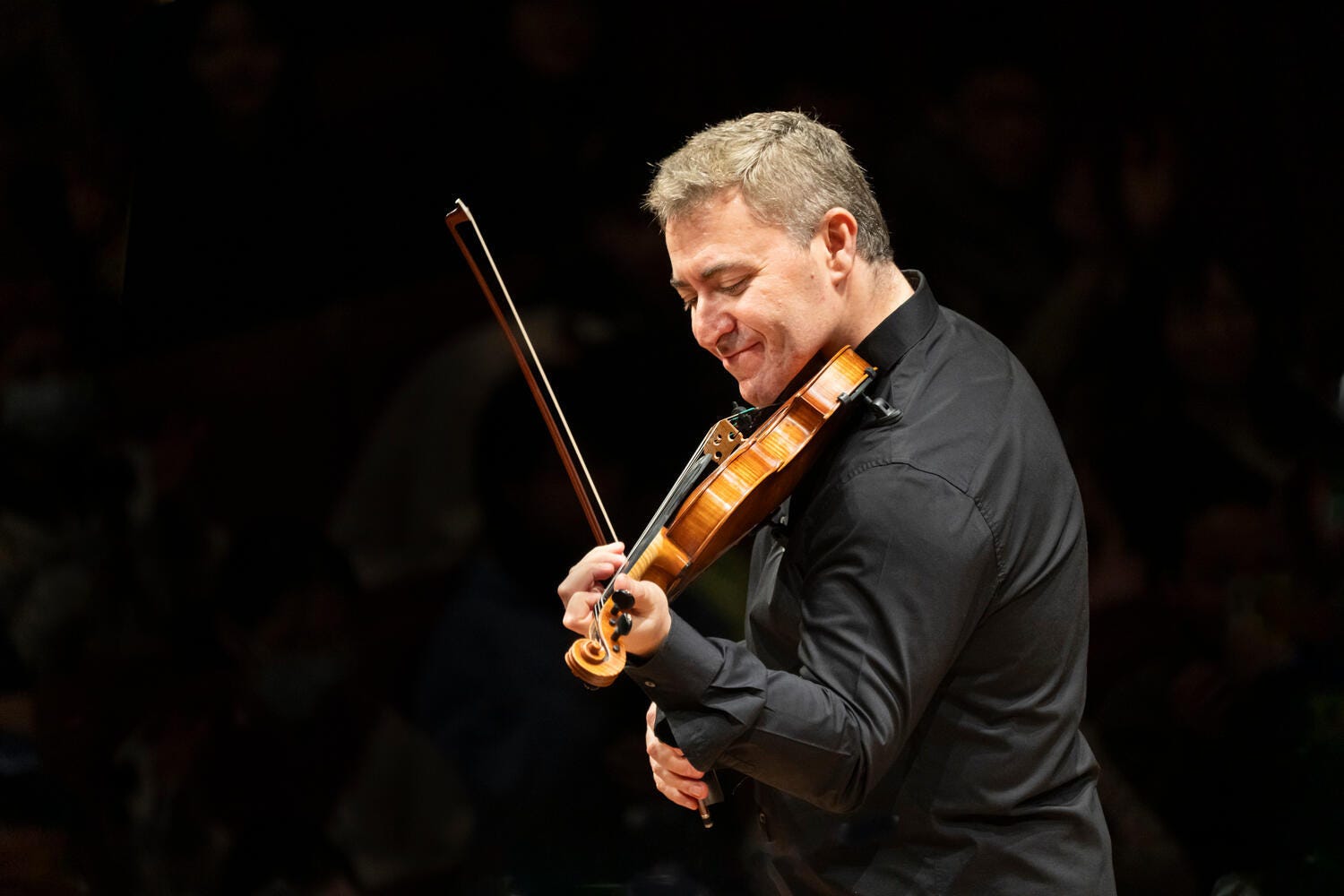
Maxim Vengerov, a titan of the violin, calls up his A-list crew for an all-Brahms showdown at Carnegie. This Annual Isaac Stern Memorial Concert is a big deal. They are diving into two Brahms quintets, back to back, both peak chamber music. The Piano Quintet features Vengerov himself on violin alongside Vilde Frang, James Ehnes, Daniel Müller-Schott, and the absolute force of nature that is pianist Yefim Bronfman. It’s a thicket of sound where five distinct voices intertwine and carry the weight of a full orchestra.
The Clarinet Quintet follows with Anthony McGill, the New York Philharmonic’s principal clarinetist, weaving his clarinet through four strings in Brahms’s late masterpiece, written as the composer contemplated retirement. Both works demand technical skill and the kind of musical conversation that only happens when players of this caliber trust each other. Six world class soloists, one stage, all Brahms.
Program:
Brahms — Piano Quintet in F minor, Op. 34
Brahms — Clarinet Quintet in B minor, Op. 115
Go if: you want to see how much fire a handful of absolute masters can bring to Brahms.
Board of Officers Room, Park Avenue Armory · Tue, Dec 16–Thu, Dec 18, 7:30pm
The Attacca Quartet has won two Grammys and arranged music from video games, which should tell you they’re not precious about what belongs in a concert hall. For three nights at the Armory’s Officers Room, they’re performing the North American premiere of David Lang’s Daisy alongside Bartók, Mendelssohn, and quartet arrangements of works written for other instruments. The Officers Room puts you close enough to hear the mechanics of how four players negotiate Bartók’s rhythmic complexity or Lang’s contemporary textures. Three nights, same program, pick whenever works for your schedule.
Go if: a salon style performance appeals to you.
Comments
Nothing yet. Say the first thing.
Sign in to join the conversation.