
Thank you for reading Observing Japan. Japan Daily Briefing is a feature for paid subscribers. My goal is to publish this briefing every weekday and once over the weekend. Today’s edition is available to all readers.
If you are looking for timely, forward-looking analysis of the stories in Japans’s politics and policymaking that move markets, I have launched a service through my business, Japan Foresight LLC. For 2026, I am preparing a new pricing tier for public institutions. For more information about Japan Foresight’s services or for information on how to sign up for a trial or schedule a briefing, please visit our website or reach out to me.
Prime Minister Takaichi Sanae’s decision to cut the consumption tax on foodstuffs to 1% has triggered open dissent from Liberal Democratic Party (LDP) lawmakers. The Bank of Japan (BOJ) held rates unchanged but Governor Ueda Kazuo signaled he might be open to hiking again sooner, while the Japanese government intervened in foreign exchange markets for the second straight day, this time in coordination with the US for the first time since 1998. The Takaichi government launched its new intelligence coordinating apparatus and is looking to another round of reforms.
Prime Minister Takaichi Sanae’s announcement of her intention to cut the consumption tax on foodstuffs to 1% has been met with widespread open dissent from within the Liberal Democratic Party (LDP), highlighting the degree to which the prime minister will have to spend significant political capital to realize a policy she has called her “most cherished wish.”
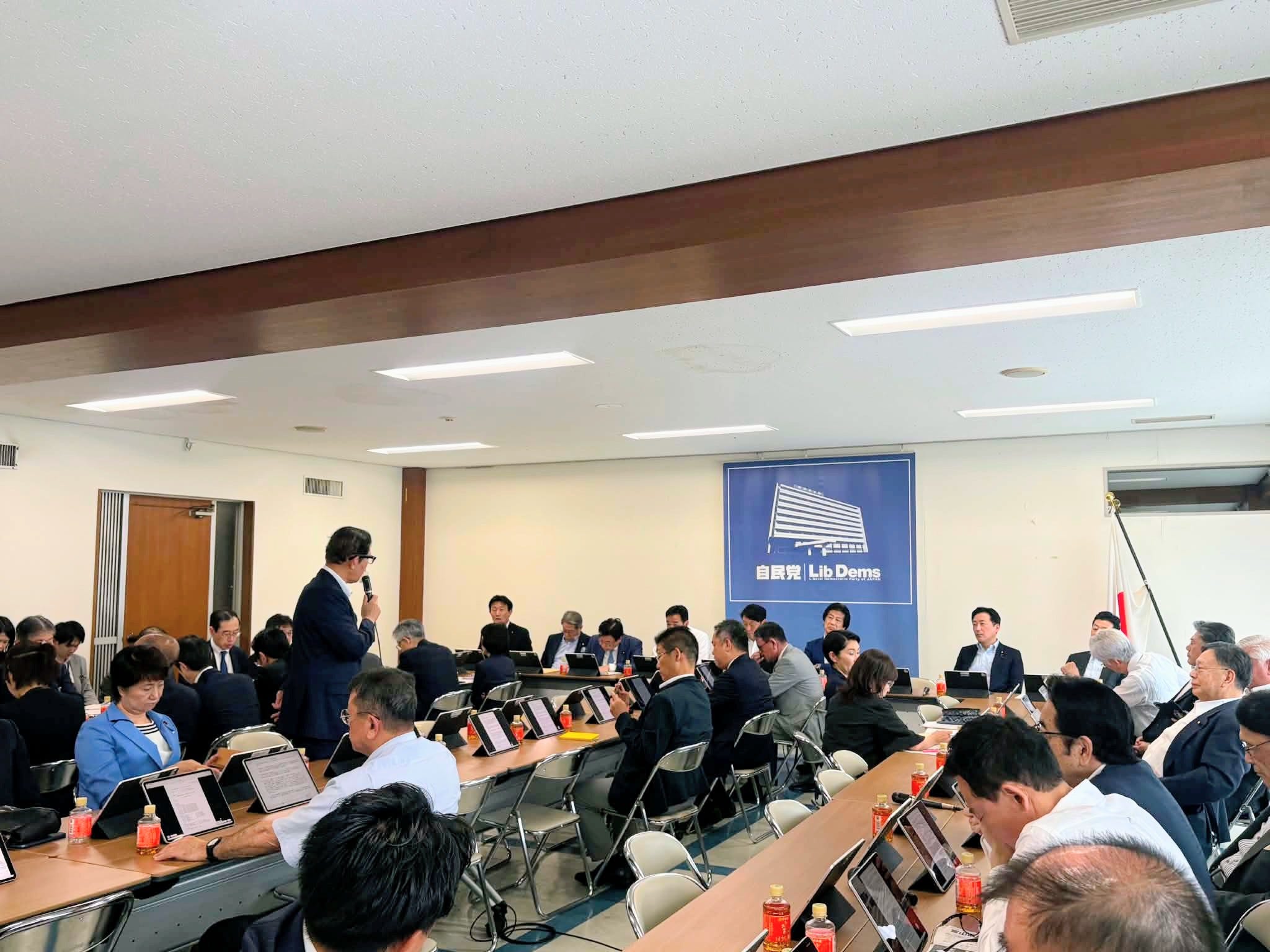
At a joint meeting of the LDP’s tax commission and social security committee on Friday, 31 July, there was meaningful support for the tax cut – its supporters cited the risks of backing away from a campaign promise and the benefits for working households – but there was also considerable dissent, with a balance of eighteen speakers in favor and ten opposed. Opposition is particularly strong within the LDP’s tax commission; at a meeting of the commission’s executive committee Friday morning a majority of the executives reportedly spoke out in opposition to the tax cut, with the opposition being spearheaded by Inada Tomomi, another former Abe protégé. The arguments of the executive committee members, outlined here, point to concerns about the lack of clear funding for the tax cut, concerns about the process of setting the policy, concerns about the impact on various interests, and concerns about the impact of the tax cut’s expiration in two years. Even Nishida Shōji, a fiscal dove ally of the prime minister’s, warned of the potential for “chaos” whether or not the tax rate reverts after two years.
Onodera Itsunori, head of the commission, plans to convene a meeting of the entire commission early next week as the government wants to line up the party’s support before the cabinet approves the policy next week. Finance Minister Katayama Satsuki cautioned dissenters that “a decision of the party president carries weight,” suggesting that for now the prime minister and her allies may try to bully dissenters into submission.
But even if Takaichi can cajole her party into accepting a fragile consensus in favor of the tax cut, the uproar in response to the tax cut has laid bare the extent to which the prime minister’s grip on the LDP, never strong to begin with, has weakened as public discontent with her leadership has grown. The LDP’s history of internal conflict over fiscal policy – and Takaichi’s determination to overturn long-standing principles and practices in her campaign against “excessive austerity” – makes the consumption tax cut a natural flashpoint for the emergence of opposition to Takaichi’s leadership. This open rupture, coming before a planned cabinet and leadership reshuffle, raises the stakes for the prime minister’s personnel choices as her decisions could harden divisions during the year leading up to next LDP leadership election.
While the LDP battles over the prime minister’s decision, Ishin no Kai has endorsed her proposal without dissension.
One day after the Ministry of Finance (MOF) intervened in foreign exchange markets – with an assist from a rate check by the US Treasury – for the first time since May, MOF intervened in markets again late in the trading day Friday in the United States. But even more importantly, the US Treasury also intervened to buy yen in the first bilateral foreign exchange intervention by Washington and Tokyo since 1998. (A Reuters photographer captured a photo of the intervention on Bessent’s to-do list.) Both MOF’s Mimura Atsushi and the US Treasury appeared to give advanced warning that additional intervention would be coming; Mimura also suggested that the timing around the Bank of Japan’s (BOJ) policy board meeting was deliberate.
On Friday, the BOJ announced following its meeting that it would keep short-term rates unchanged – as expected – but in his remarks following the meeting Governor Ueda Kazuo suggested that the bank is concerned about the risks of above-target inflation arising from US-Iran war, shortages of AI-related inputs, and the yen’s weakness. The bank therefore could move faster to raise interest rates if warranted by the data, with its September or October meetings as live possibilities. The uptick in Tokyo’s consumer price index in July, a leading indicator for nationwide inflation, plus noteworthy increases in wholesale prices could point to higher inflation in the near term.
The bilateral US-Japan intervention could change the outlook for Japan’s monetary policy. Bessent has warned that the Bank of Japan could be moving too slowly (and may have convinced the Takaichi government to greenlight previous rate hikes) and thinks that the yen is undervalued. Perhaps it is significant that Bessent posted on X Friday, before news of the joint intervention broke, that he is “[looking forward] to seeing my longtime friend, Bank of Japan Governor Kazuo Ueda, at the G20 Finance Ministers Meetings in the beautiful Blue Ridge Mountains city of Asheville, North Carolina, at the end of August.”

Treasury Secretary Scott Bessent@SecScottBessent
I look forward to seeing my longtime friend, Bank of Japan Governor Kazuo Ueda, at the G20 Finance Ministers Meetings in the beautiful Blue Ridge Mountains city of Asheville, North Carolina, at the end of August. Japan's economy continues to perform well under Prime Minister
1:44 PM · Jul 31, 2026 · 348K Views
341 Replies · 969 Reposts · 6.58K Likes
Of course, as long as Takaichi is committed to her “responsible fiscal expansion” program – with the potential for larger debt issuance – any coordinated effort to strengthen the yen could face continuing headwinds.
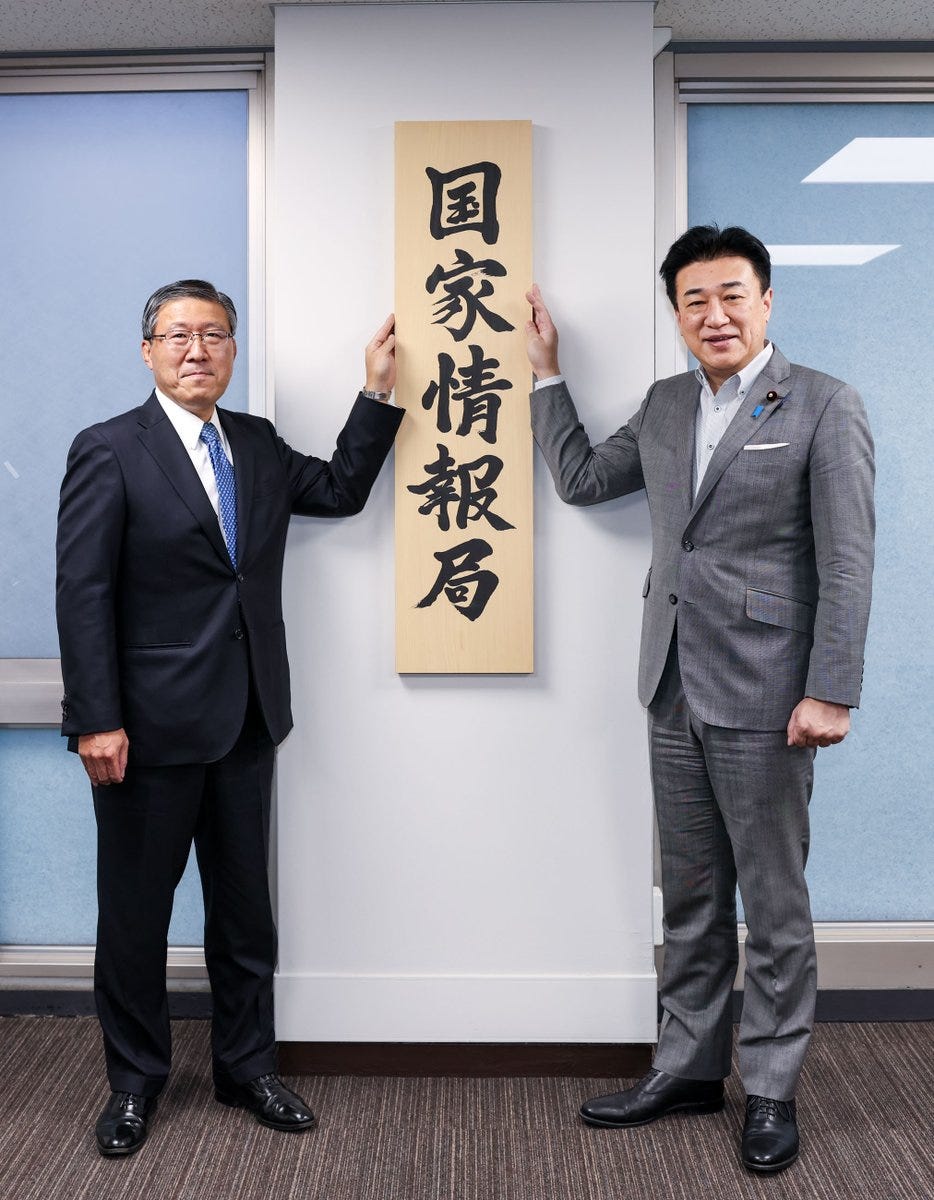
The Takaichi government’s National Intelligence Bureau (NIB), a new cabinet-level organization that will coordinate intelligence across the government, and National Intelligence Council (NIC), a principal-level coordinating body were officially launched on Friday, 31 July. (These names are the official English translations.) These organizations are comparable to the existing National Security Council and National Security Secretariat. The NIB launched with a staff of 730 headed by Hara Kazuya, who had been the cabinet intelligence officer. The new organizations’ remit will extend to combating industrial espionage as the Japanese government looks to prevent the leakage of dual-use Japanese technologies to hostile countries. This role may receive greater prominence after a major New York Times report revealed the presence of a Russian intelligence operation in Tokyo aimed at securing Japanese technology for use in military equipment.
The first tasks for both organizations will be to draft a national intelligence strategy, the equivalent to the National Security Strategy, and articulate the next wave of reforms to Japan’s intelligence community. The Takachi government is looking at a Foreign Agents Registration Act (FARA)-type law to counter foreign influence operations in Japan, as well as the establishment of an overseas intelligence-gathering agency, which would be a major milestone in Japan’s construction of national security state.
Nikkei reports that Prime Minister Takaichi has not had any calls with foreign leaders for nearly two months, including US President Donald Trump.
On Sunday, 2 August, Foreign Minister Motegi Toshimitsu will depart on a trip to Mexico, Panama, Ecuador, and possibly Trinidad and Tobago, focused on energy and critical minerals diplomacy.
Meanwhile, later in August Defense Minister Koizumi Shinjirō will travel to Australia and New Zealand to discuss Japan’s warship exports, as well as to India.
Although there had been some tabloid reporting earlier this year that Takaichi might deny Unami Hirotaka, director-general of MOF’s budget bureau promotion to MOF’s administrative vice ministership as she looks to tighten control over the ministry, Unami will in fact be elevated to MOF’s top administrative post.
The Japanese government is aiming to replace up to five aging nuclear reactors by the 2040s.
No posts
Comments
Nothing yet. Say the first thing.
Sign in to join the conversation.