
When Trump released the sweeping package dismantling ESG structures, accelerating permitting, reopening Alaska, restoring energy production, expanding domestic mining access, weakening climate-risk banking frameworks, and collapsing years of environmental review layers, most people instinctively interpreted the announcement through the narrow lens of politics. Cable news immediately fragmented the narrative into isolated arguments about oil drilling, coal plants, EV mandates, pipelines, and climate policy. Supporters celebrated deregulation while opponents framed the move as environmental extremism.
Yet something far larger sits underneath what was actually posted.
The reason the package feels so sprawling and interconnected is because it is not operating at the level most people are used to observing. Trump did not merely announce policy changes. He revealed the outline of a systems-level reconstruction strategy aimed at rebuilding the American industrial operating system from the physical layer upward for the AI century now emerging around us.
Images from Trumps Truth Social posts for reference.
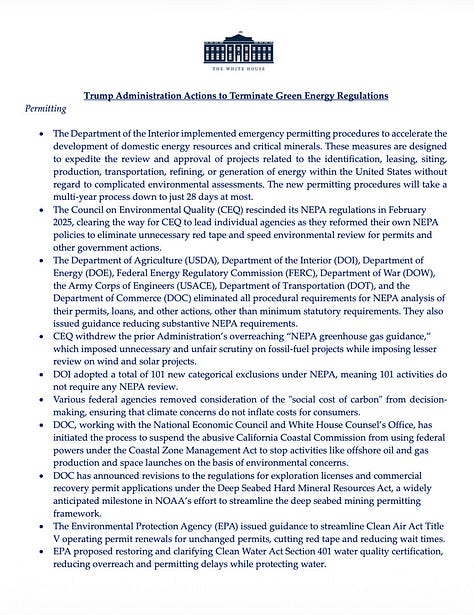
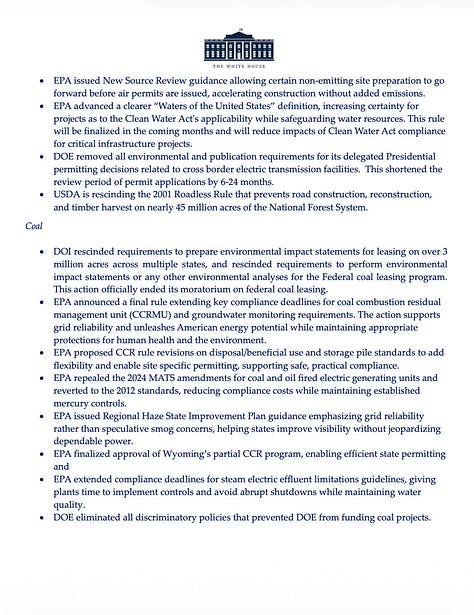
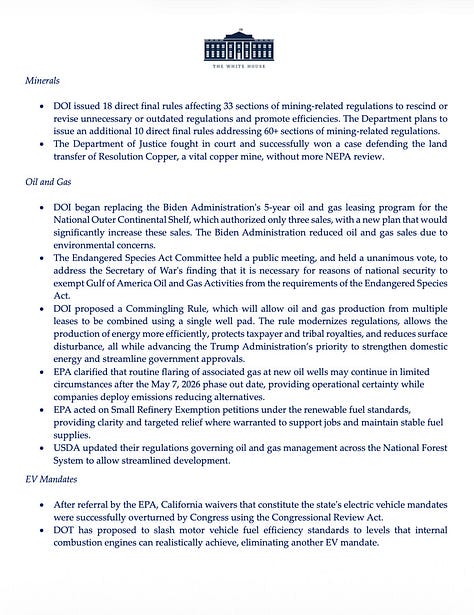

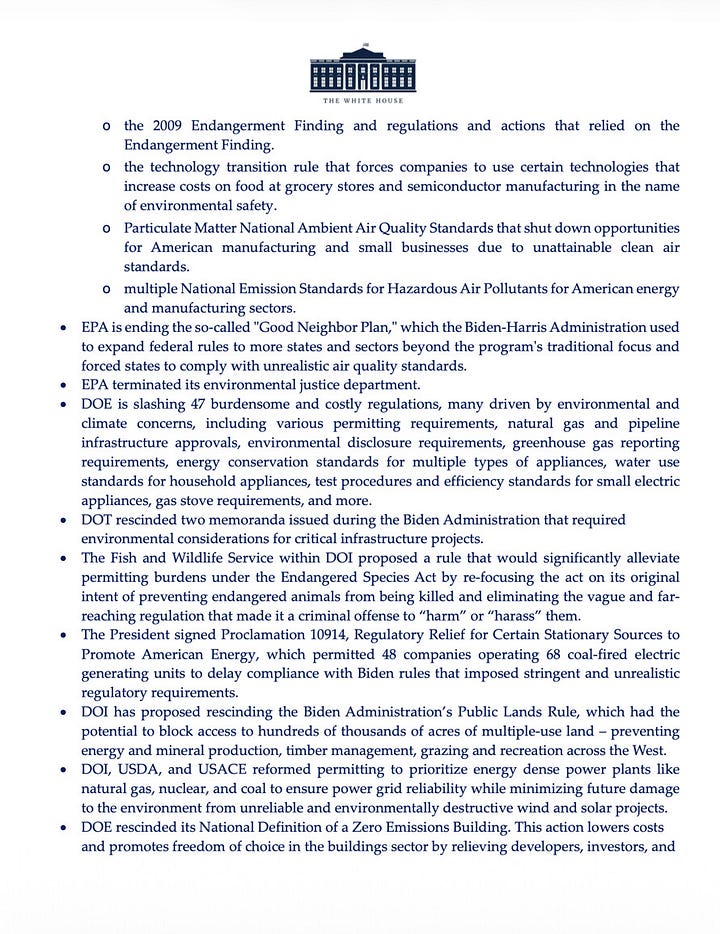
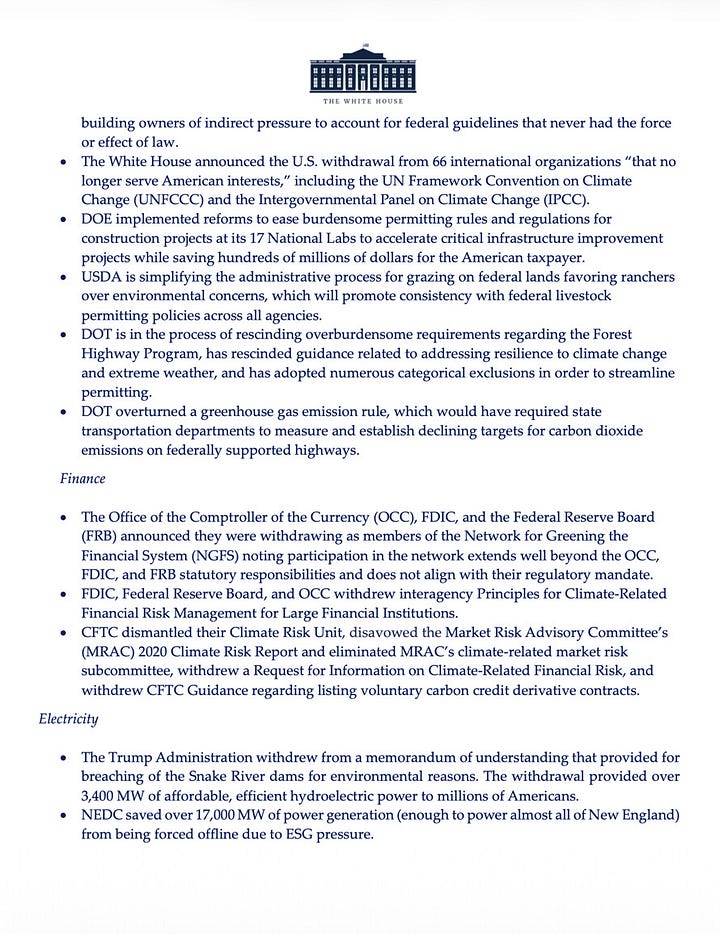

Most people still view modern civilization through fragmented categories because modern governance itself trains perception into fragmentation. Energy becomes separated from manufacturing. Finance becomes separated from infrastructure. AI becomes separated from mineral access. Logistics becomes separated from sovereignty. Climate policy becomes separated from industrial throughput. The mind absorbs headlines individually while remaining unable to see the architecture linking them together beneath the surface.
The deeper realization begins to emerge when you stop looking at these moves individually and start observing the sequence itself. What appears chaotic at first suddenly begins behaving like a coordinated machine. Each layer unlocks the next. Each phase restores capacity into another layer of the system. Slowly the underlying pattern comes into focus, and once it does, it becomes difficult to unsee what is actually unfolding.
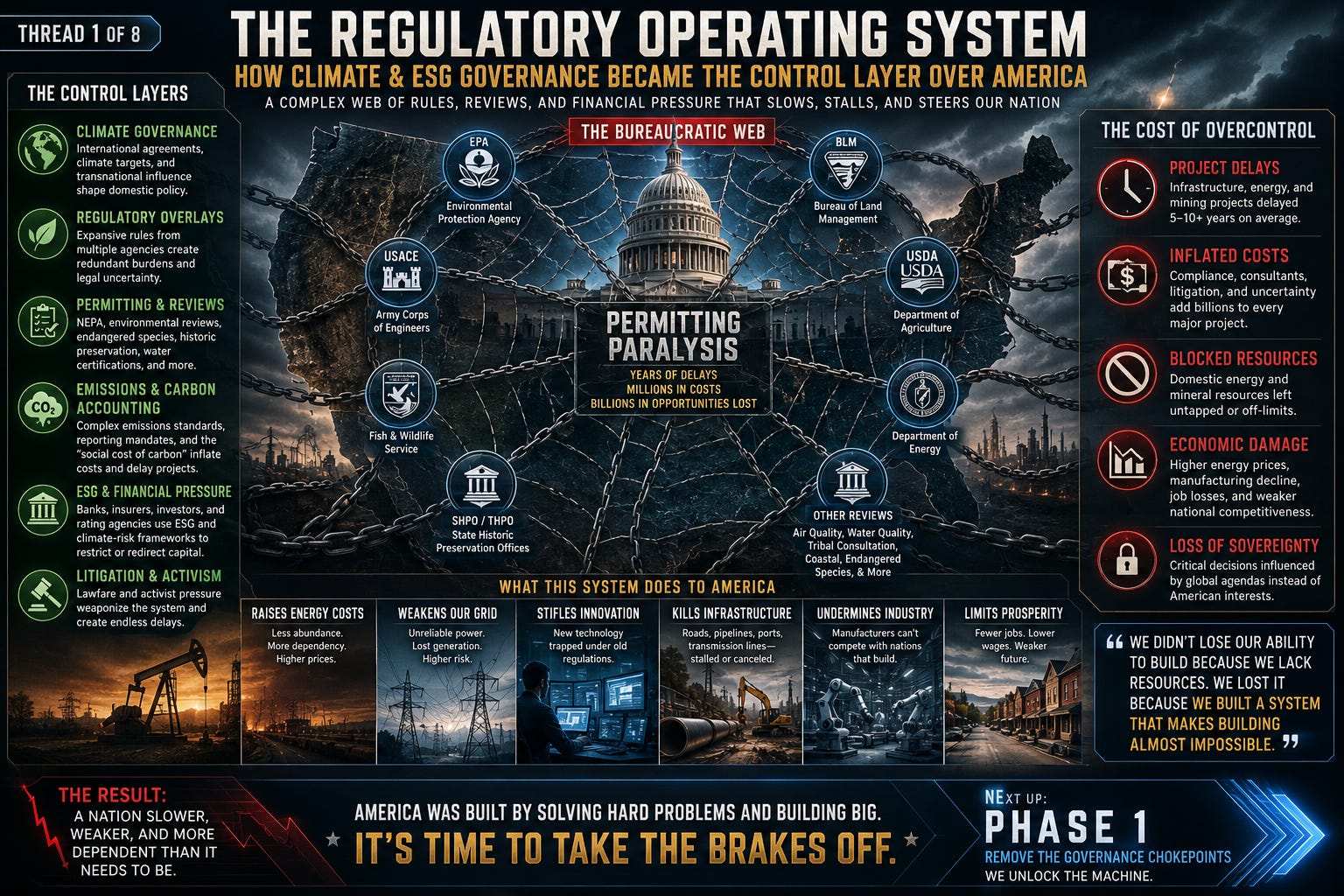
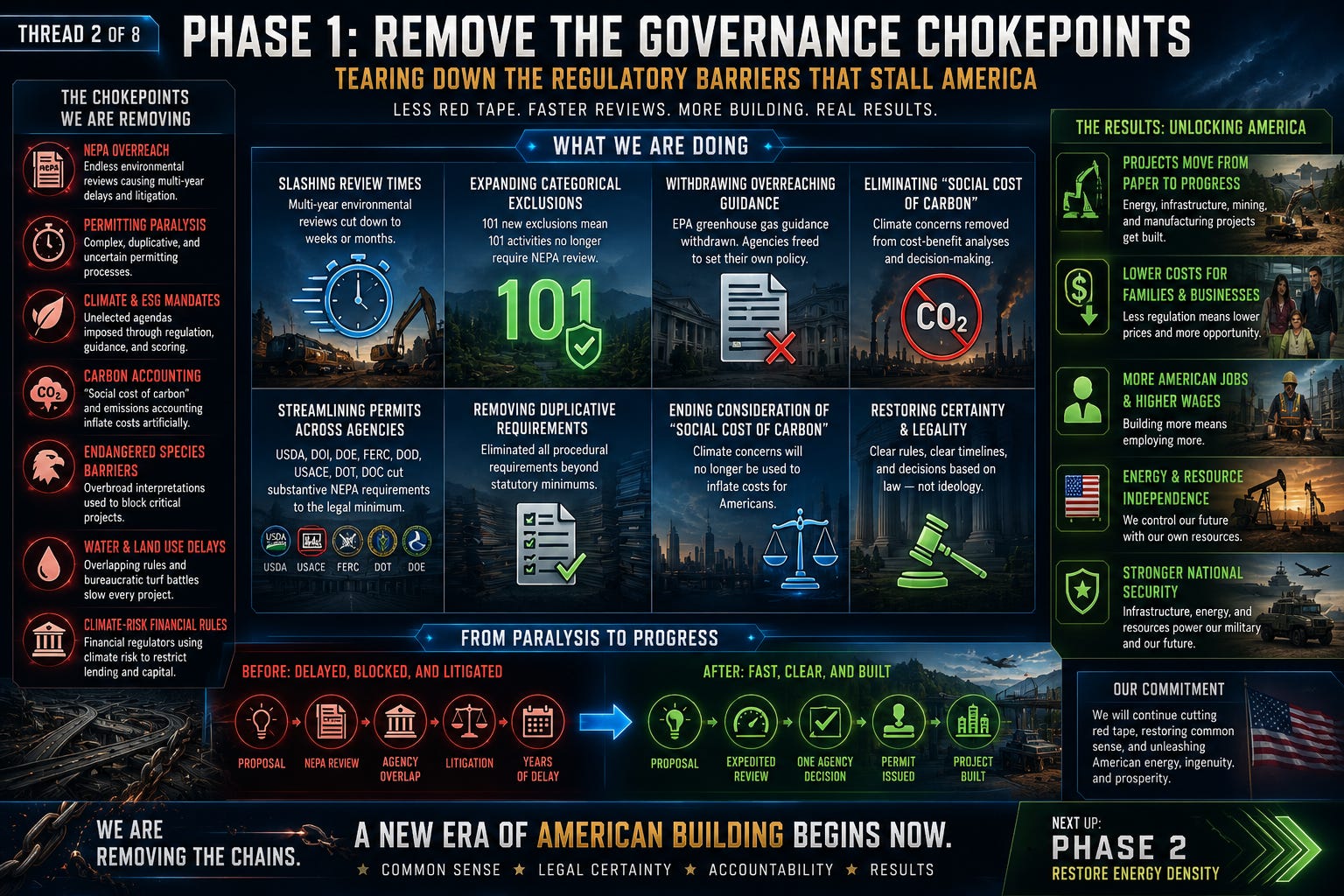
The first thing the package targets is not energy itself, but the invisible friction architecture that gradually formed around American industrial expansion over the past several decades. Environmental reviews multiplied. Carbon accounting systems deepened. ESG scoring frameworks expanded across finance. Climate-risk governance embedded itself into lending structures. Overlapping agency approvals grew into sprawling procedural labyrinths while litigation cycles stretched projects into endless delay.
At first, these systems appeared administrative and disconnected from one another. Over time, they fused into something much larger: an invisible governance layer capable of slowing nearly every strategic build project in the country before construction could even begin. Pipelines stalled. Transmission expansion slowed. Nuclear projects drowned in procedural review. Mines entered years of litigation. Refineries faced endless compliance pressure. Infrastructure timelines expanded while costs exploded upward simultaneously.
The issue underneath the issue was never simply regulation. The issue became velocity itself.
Civilizations rise and decline largely through their ability to build, scale, adapt, and move energy through physical systems faster than competing civilizations around them. Once permitting timelines stretch toward a decade, infrastructure expansion slows beneath the pace required to sustain industrial dominance. The machine gradually loses momentum while appearing functional from the surface.
This is why the package repeatedly targets permitting acceleration, NEPA restructuring, review compression, and environmental governance chokepoints. The administration appears to recognize that whoever controls permitting ultimately controls industrial civilization itself.
Once that realization settles in, the next phase begins making perfect sense.
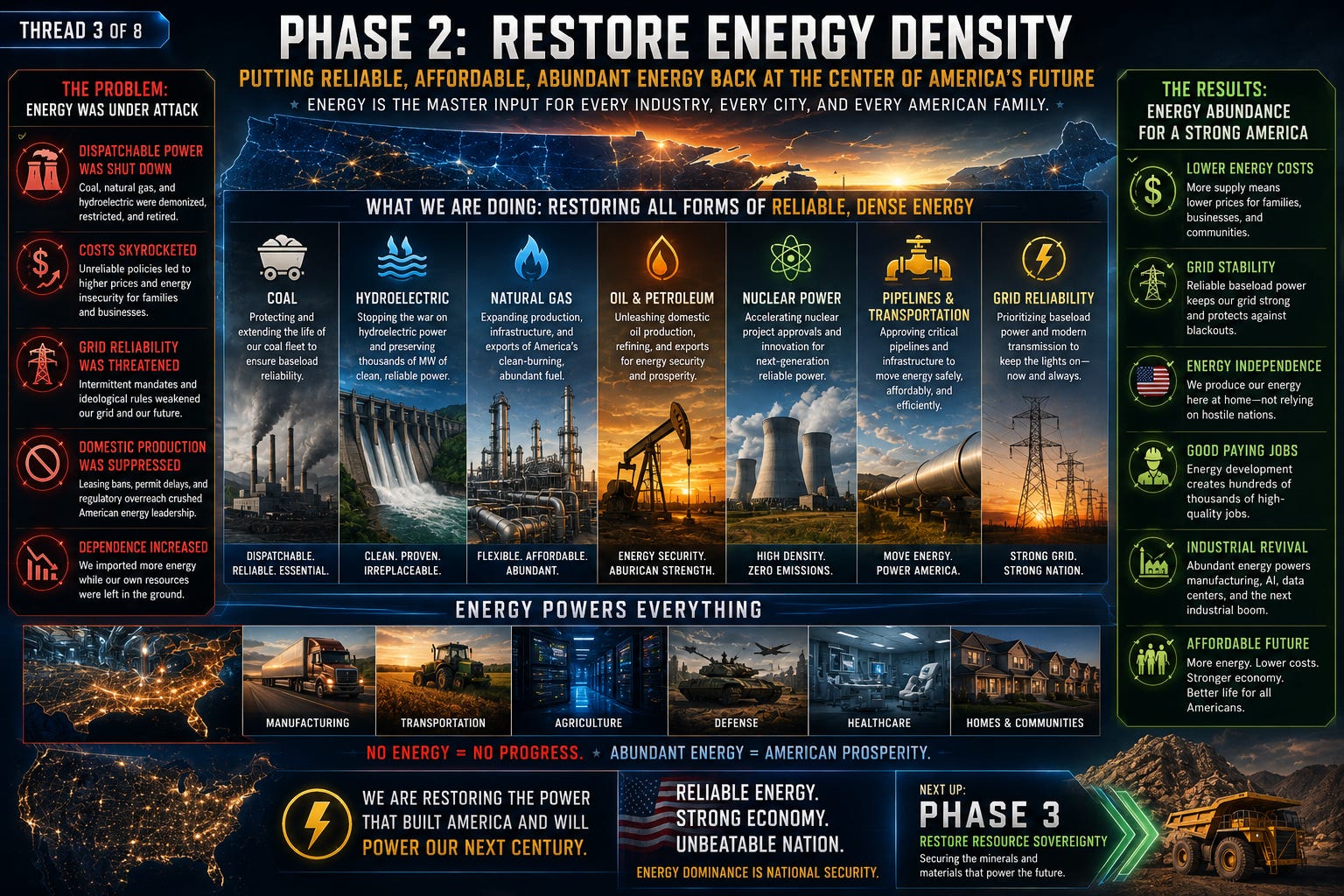
Energy becomes the centerpiece because energy is the master input underneath every modern system. Coal, hydro, natural gas, nuclear, refinery relief, pipelines, grid stabilization, and expanded domestic production are all expressions of the same deeper realization: modern civilization runs on dense reliable power. Every AI system, semiconductor fab, robotics network, logistics corridor, military platform, agricultural system, transportation network, hospital, and city ultimately rests upon stable energy throughput.
The significance of this grows exponentially once artificial intelligence enters the picture. Most people still imagine AI primarily as software floating in digital abstraction, yet AI is rapidly becoming one of the most physically demanding infrastructure systems humanity has ever built. Massive compute clusters require enormous electricity generation, transformer production, cooling infrastructure, transmission expansion, semiconductor manufacturing, fiber deployment, and uninterrupted baseload power at continental scale. The nations capable of sustaining that infrastructure will shape the next century. Nations incapable of powering it will gradually lose technological sovereignty altogether.
This is why the package repeatedly reconnects energy policy to national survival itself. The administration is not merely trying to lower gas prices. It is attempting to restore the foundational energy density required to sustain industrial civilization in the AI era.
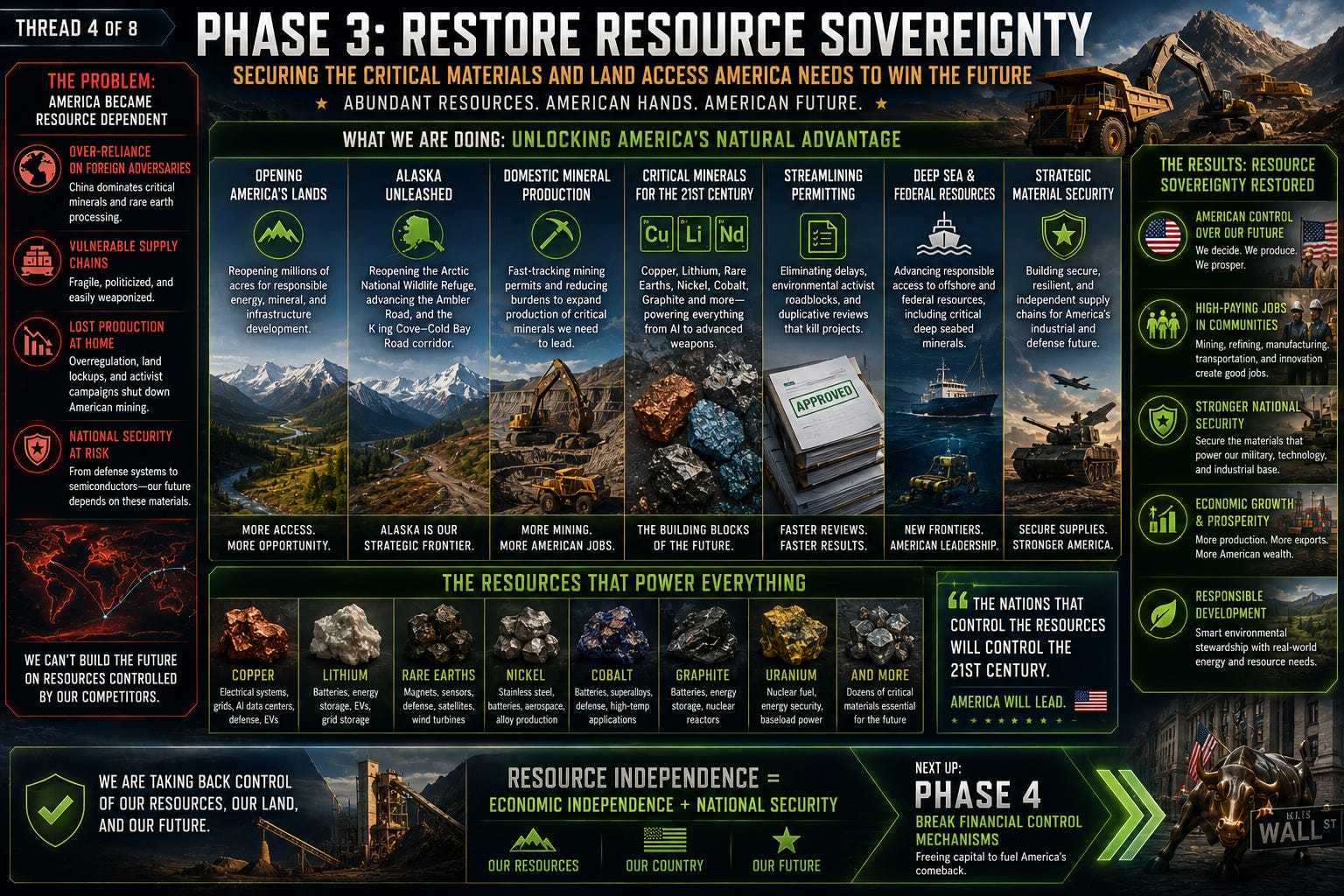
Then the mineral layer appears, and the entire structure deepens further. Copper, lithium, rare earths, nickel, uranium, graphite, strategic mining corridors, and Alaska all suddenly begin appearing together because they are no longer simply commodities traded through global markets. They are civilization inputs required to construct the infrastructure of the future. Every transformer, semiconductor fab, satellite system, battery platform, robotics network, weapons system, and AI data center depends upon enormous mineral throughput.
This explains why Alaska suddenly reemerges as strategically important. Alaska represents dormant sovereign abundance sitting largely untouched beneath decades of governance friction. Oil, gas, minerals, Arctic positioning, strategic shipping access, and resource depth converge into one continental-scale reserve of productive capacity. Reopening Alaska therefore signals something far larger than drilling itself. It reflects a philosophical transition toward sovereign abundance rooted in physical production.
The future increasingly belongs to nations capable of controlling the resources required to build the future itself.
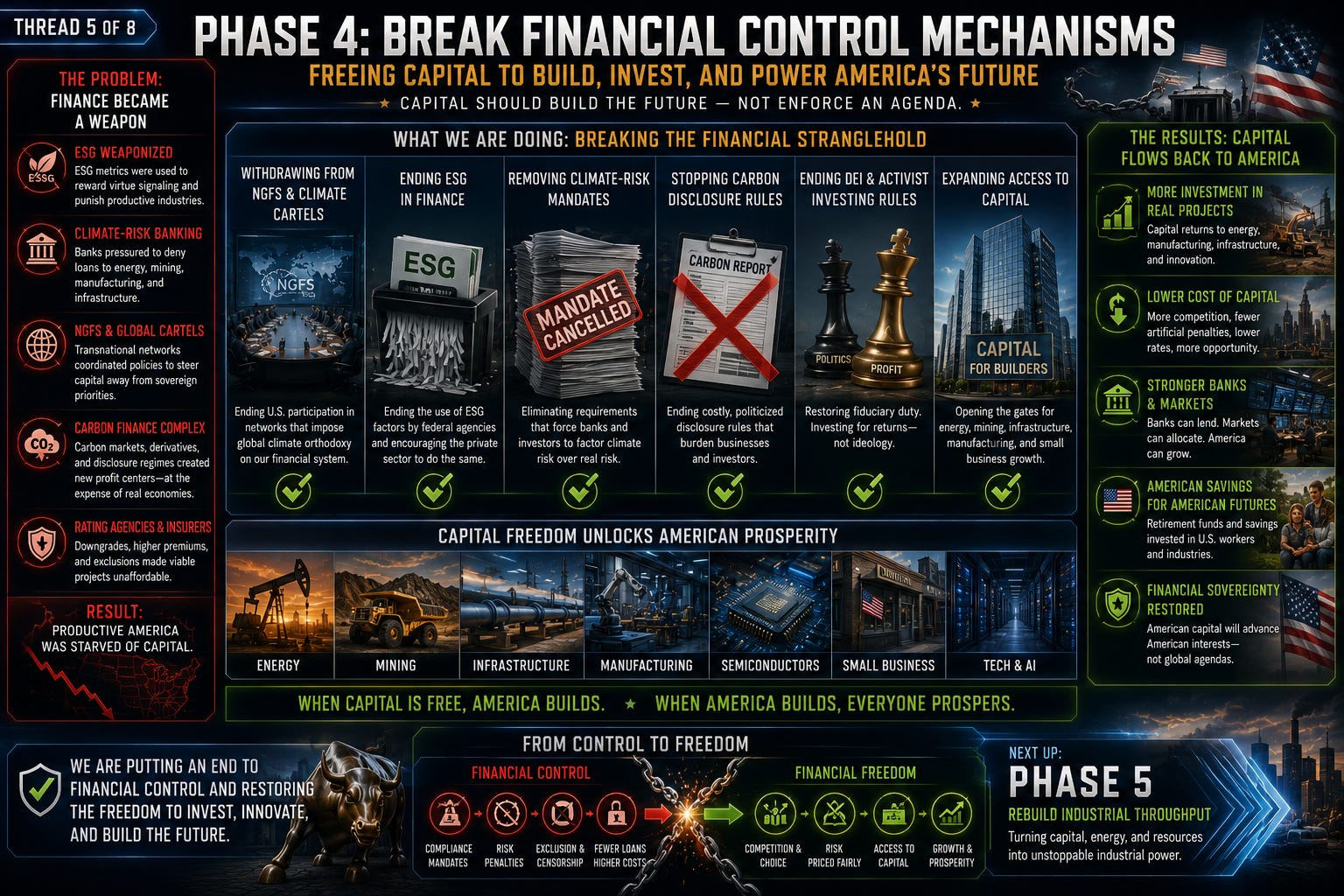
Another realization begins surfacing beneath the visible policy layer. Modern governance no longer required direct prohibition because finance itself evolved into the enforcement mechanism. Banks could deny lending. Insurers could increase costs. Asset managers could steer capital flows through ESG frameworks. Climate-risk scoring systems could penalize industrial projects without legislation ever being passed. Capital itself became behavioral governance.
Once finance transforms into an ideological steering mechanism, industrial civilization can be slowed without formally banning anything at all. Energy projects become economically hostile. Mining becomes financially unattractive. Infrastructure becomes burdened by investment risk pressure. Manufacturing expansion becomes structurally constrained by the capital layer itself.
This is why the package aggressively targets ESG structures, climate-risk banking systems, carbon disclosure frameworks, and transnational financial governance overlays. The administration appears to understand that industrial revival becomes impossible if capital itself remains hostile toward industrial expansion.
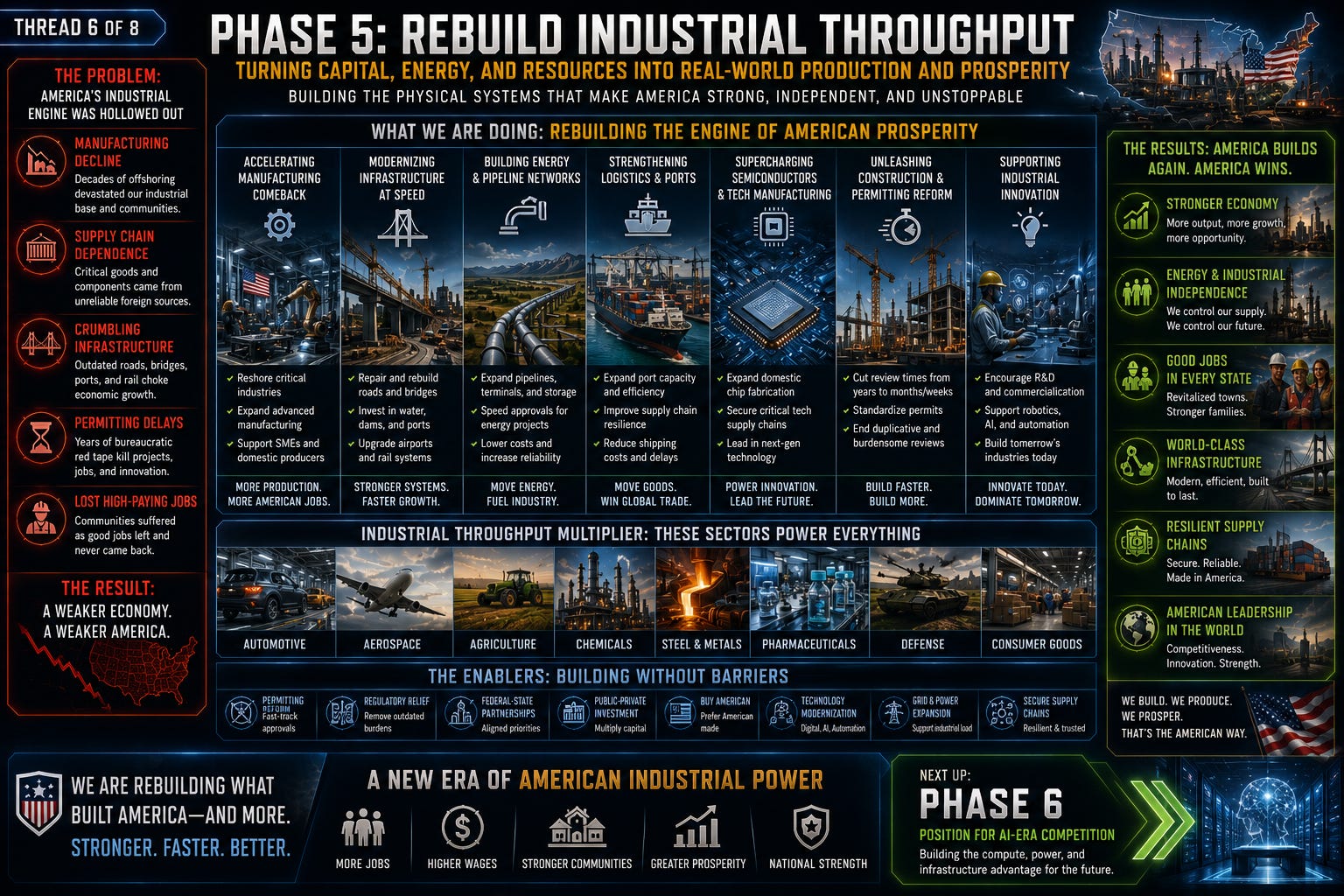
Once friction is reduced, energy restored, resources secured, and capital freed, industrial throughput naturally begins accelerating again. Manufacturing corridors expand. Ports modernize. Pipelines move forward. Semiconductor fabs emerge. Construction velocity increases. Logistics systems strengthen. Grid modernization accelerates. The physical production engine of the nation begins reactivating after decades of financialization hollowed out the underlying industrial base.
Energy feeds manufacturing. Manufacturing feeds infrastructure. Infrastructure feeds logistics. Logistics feeds compute. Compute feeds defense, automation, and economic dominance. Each layer compounds the next into an integrated industrial system.
This is where the architecture stops looking like policy and starts looking like a civilization-scale rebuild.
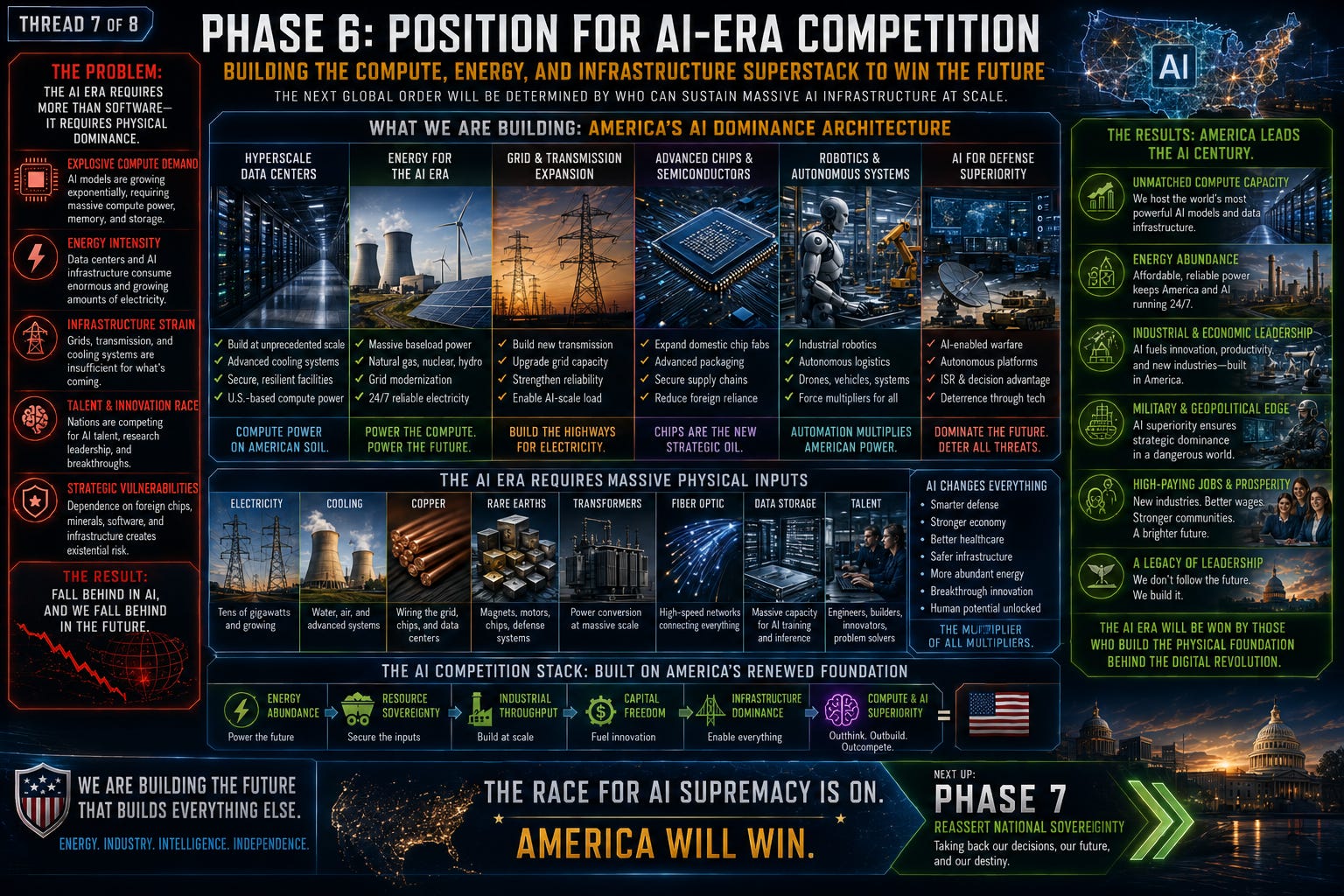
At this stage, the entire sequence suddenly snaps into focus. The AI revolution is fundamentally physical. Data centers, transformer production, fiber expansion, cooling systems, stable grids, semiconductor manufacturing, resource extraction, industrial automation, and energy generation all converge into one continental infrastructure race now emerging across the globe.
The nations capable of sustaining hyperscale compute infrastructure will dominate the next global order. This is why the package repeatedly reconnects energy, minerals, logistics, manufacturing, and capital into one integrated stack. The digital future rests entirely upon physical foundations. Whoever controls the physical substrate underneath AI controls the future trajectory of civilization itself.
The awakening arc hidden inside the sequence becomes difficult to ignore. Humanity spent years trapped inside informational abstraction while remaining disconnected from the physical systems civilization actually depends upon. AI itself cannot exist without mines, grids, transformers, ports, power plants, factories, fiber lines, semiconductor fabs, cooling systems, and industrial energy density operating together as one coherent machine beneath the surface.
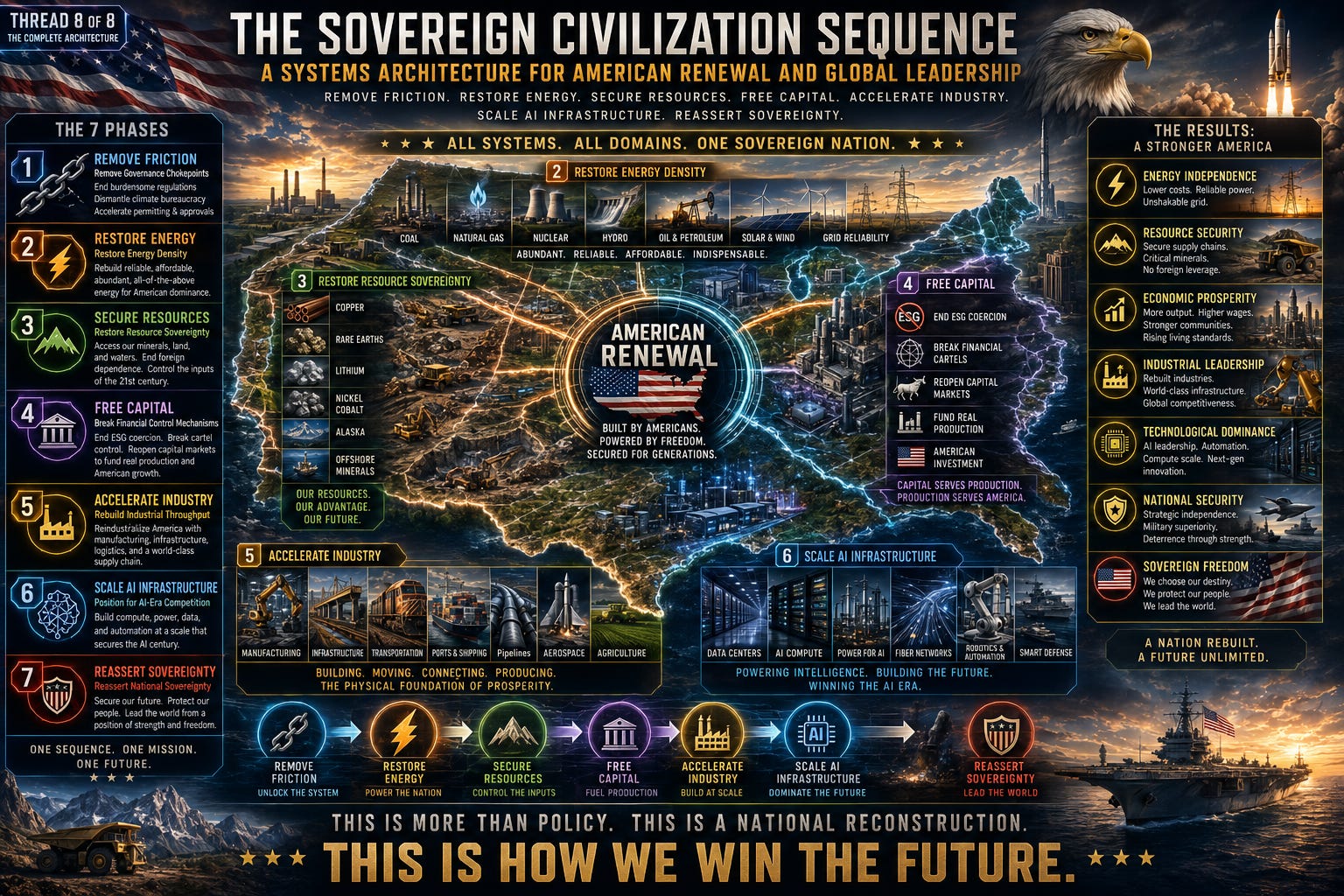
Viewed separately, Trump’s announcements appear fragmented and politically reactive. Viewed together, they reveal a coordinated attempt to restore velocity, energy, resources, capital, industry, AI infrastructure, and sovereignty into one integrated national architecture designed for the century now arriving around us.
Underneath the political language sits a conflict between two fundamentally different models of civilization. One model organizes society through managed scarcity, transnational governance overlays, behavioral steering through finance, and increasingly centralized compliance structures layered across infrastructure, energy, and production systems. The other organizes society through productive sovereignty, industrial throughput, abundant energy, resource independence, domestic manufacturing, infrastructure acceleration, and continental-scale resilience.
This is why the battle feels existential to both sides. The conflict underneath the headlines extends far beyond emissions or regulations. The conflict centers on which operating system will govern the AI century itself.
What Trump appears to have recognized is that sovereignty in the modern era no longer rests solely upon military force or financial dominance alone. Sovereignty increasingly rests upon who controls energy, minerals, manufacturing, logistics, compute infrastructure, capital flow, and industrial velocity simultaneously.
The civilizations capable of integrating those layers into one coherent stack will shape the future trajectory of the world.
Perhaps that is the deeper realization hidden beneath the headlines themselves. The future is not being built primarily through speeches, narratives, or ideological abstractions. The future is being built through whoever controls the underlying systems civilization cannot function without.
No posts
Comments
Nothing yet. Say the first thing.
Sign in to join the conversation.