
Have you noticed how clear our minds feel first thing in the morning, only for that clarity to fade as the day goes on? I researched this and turned my findings into a simple, practical how‑to guide for beginners who want to sustain that morning clarity hour by hour.
Presence often starts with a morning ritual, but keeping that calm, clear state through a full day takes a system: simple cues, body‑first resets, cognitive scripts, environment design, and scheduling rules. This guide collects concrete, easy tricks you can use from wakeup to wind‑down. Start small, pick a few tools, and build them into habits that make presence the default.
Finish with one intention - end your ritual by saying or writing a single aim or intention for the day.
Micro transition - before you begin work or errands, do a 60‑second ritual: three slow belly breaths, a quick shoulder and jaw scan, then name your first micro‑task.
Habit stacking - attach one tiny presence habit to an existing morning habit (after brushing teeth, take one mindful breath).
Prepare a later list - keep a small notebook or notes app to jot distracting thoughts so you can return to the present.
Visible cue - place a small object, image, scent, or wearable where you’ll see it; use it as a reminder that you need to come back to present if you are distracted.
Time blocks with rituals - schedule focused blocks (25/5 or 50/10) and treat them like meetings. Start each block with a 10–30 second ritual: stand, three breaths, set one micro‑goal. End each block by noting one small win.
Phone and digital rules - put your phone out of reach or in another room during focus blocks; use one browser window and hide unrelated tabs. Batch notifications into two or three checking windows.
Micro‑goals and single‑tasking - break work into one‑sentence tasks. Focus on one micro‑task per block to reduce switching costs.
Implementation intentions - memorize a simple if‑then script: “If I notice a distracting thought, then I will write it on my ‘later’ list and take three breaths.”
Use these 30–90 second tricks when fog, overwhelm, or distraction arrives. Combine two for stronger effect.
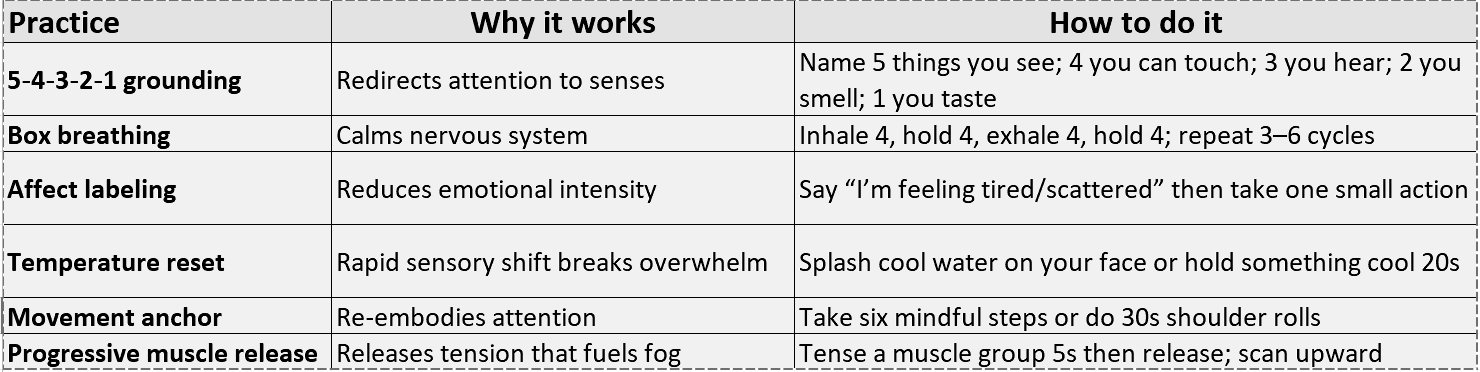
Quick 90‑second combo: 30s box breathing → 30s 5‑4‑3‑2‑1 → 30s shoulder/neck release.
Two‑minute capture - when a new task pops into mind, spend 2 minutes to jot it on your ‘later’ list, then return.
Temptation bundling - pair a less appealing task with a reward (listen to a favorite podcast only while doing a mundane chore).
Decision fatigue reduction - plan outfits, meals, and top tasks the night before to save willpower.
Tiny habit rule - start with 2 minutes of practice daily and build slowly; small wins compound.
Accountability - tell a friend about your presence goal or pair up for brief daily check‑ins.
Workspace design - keep a tidy, dedicated area for focused work; remove visual clutter and keep water nearby.
Portable focus kit - carry a small stone, or a short breathing script on a card, or maybe noise‑canceling earbuds for on‑the‑go resets.
Light and sound hygiene - use natural light in the morning, warm light in the evening; use white noise or a focus playlist for work.
Meeting micro‑ritual - start meetings with 30 seconds of breath or a one‑sentence intention to keep attention present.
Shared cues - use a visible object or chime in family or team spaces to invite a collective pause.
Mindful lunch - eat without screens and notice taste and texture.
Nature breaks - two 5–10 minute outdoor pauses restore attention faster than caffeine.
Energy check - mid‑afternoon ask: “Am I hungry, tired, or emotionally taxed?” Address the first unmet need.
Three notices practice - each evening list three moments you actually noticed today to train noticing and build memory of presence.
Unplug ritual - screens off, gentle stretch or body scan, warm drink, and one kind intention for tomorrow.
Fog keeps returning - try the temperature reset + movement anchor combo and check sleep, hydration, and blood sugar.
Strong emotions hijack you - use affect labeling and schedule time to process feelings later rather than forcing presence.
Persistent concentration problems - consult a clinician if attention issues are chronic or severe; behavioral tools help many people but are not a substitute for medical care.
Presence is a toolkit, not a single trick. Combine morning anchors, body‑first resets, cognitive scripts, smart scheduling, environmental design, and habit mechanics. Start with three anchors - a morning intention, one focus‑block rule, and one practical reset - and add tools from each category. Over weeks these small, repeatable choices will reduce fog, shorten distractions, and help you genuinely enjoy your day because you were actually there - mind and body.
Comments
Nothing yet. Say the first thing.
Sign in to join the conversation.