
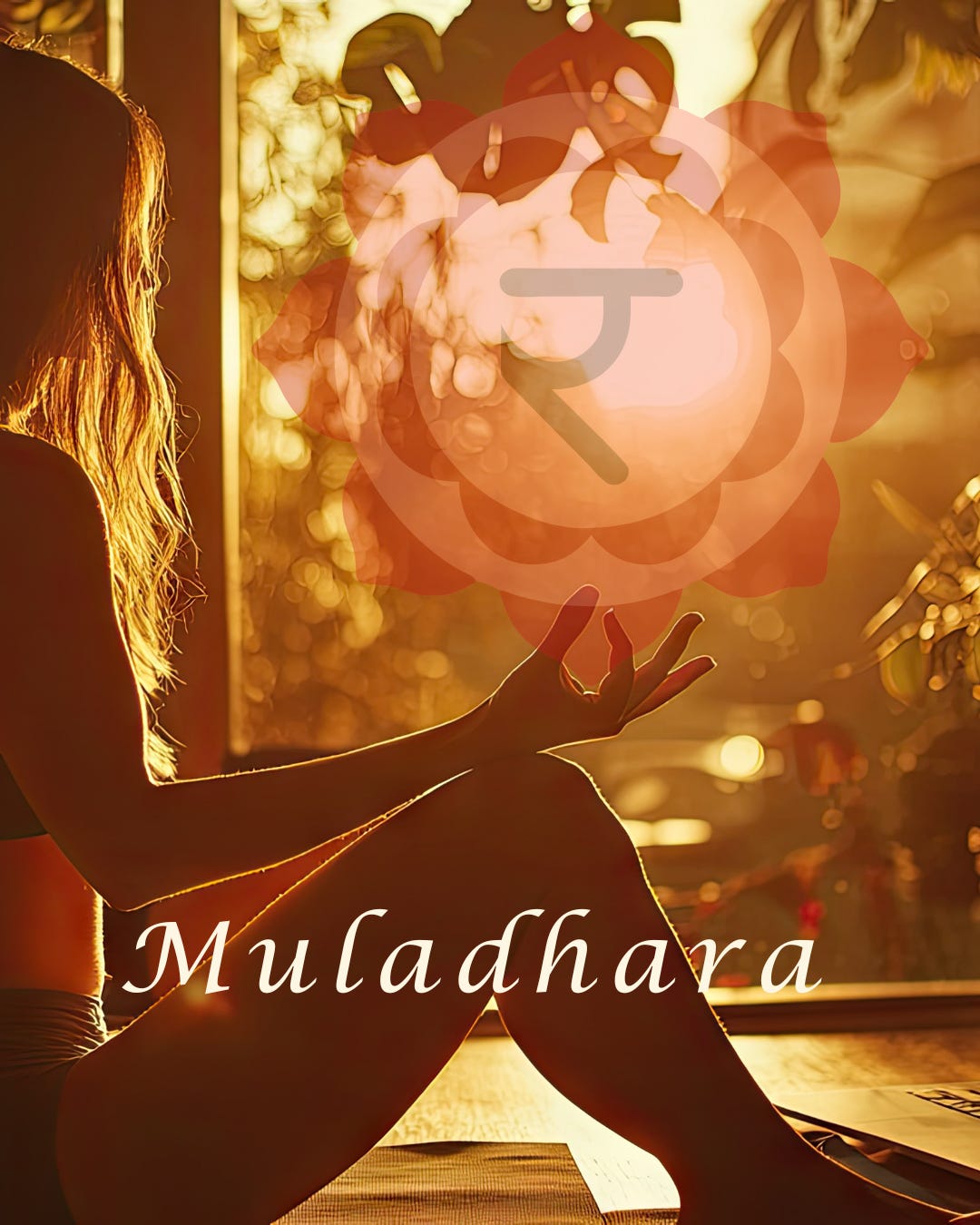
🌱 Mudra (मुद्रा) A Deeper Dive
Mudras are often the overlooked sibling of meditative mindfulness—always present, quietly offered, yet rarely explored with the depth they deserve. If you’ve ever been taught to touch your thumb to a fingertip and extend the remaining fingers during meditation, you’ve already practiced one. It may have felt like a simple ritual, but in the older traditions of Hinduism, Buddhism, and Jain practice, these gestures are anything but ornamental.
For thousands of years, mudrā—meaning “seal,” “gesture,” or “mark”—has described a deliberate shaping of the hands to direct awareness and influence the flow of prana, or chi. Each gesture carries its own energetic intention, linking the physical body with the subtle body in a way that is both symbolic and deeply practical.
Now that we’ve explored the landscape of mudras as a whole, we can begin to look at them one by one—starting where all energetic work begins: the root. The Muladhara chakra is the foundation of the entire system, the place where safety, grounding, and vitality take shape. The mudra associated with it offers a physical doorway into that stability.
Have you ever held your palms facing each other and felt a subtle pull between them, or had a day when your whole body felt awake and charged, as if you could do anything? Those sensations are examples of how we perceive energy moving through the body. The heart itself runs on electrical impulses — each beat begins with an electrical signal — and that electrical activity creates a measurable magnetic field. Across many traditions, this subtle current of life is described as chi: the animating energy that moves, gathers, and expresses itself through us.
Mudras give this movement a shape.
They’re not just hand positions; they help guide awareness and direct the flow of prana through the body’s energetic pathways. When you form a mudra, you’re creating a physical pathway that assists the transition of chi into the physical and back to the source. Breath shifts, attention settles, and the subtle currents of the body begin to organize themselves. In this way, mudras become a bridge between the physical body and the energetic body.
This is where the chakras come in.
Each chakra represents a different quality of energy — grounding, creativity, confidence, compassion, truth, intuition, spaciousness. Mudras interact with these centers by using a natural energy pathway, gesture, a direction. They don’t force anything; they invite alignment. They help the body remember how to move energy upward, inward, or outward depending on what is needed.
Now that we’ve explored how mudras shape energy and how chi moves through the body, we can begin our journey through the chakras themselves — starting at the foundation.
The Root Chakra, or Muladhara, is where everything begins, safety, stability, and the sense of belonging in your own body. And the mudra associated with this center offers a simple, powerful way to ground your energy and settle into yourself.
🌱Root Chakra (Muladhara)
Symbolic movement matters here because grounding is not an idea — it’s a sensation. When you form a Root‑centered mudra, you’re giving the body a shape that whispers downward. The gesture signals safety, stability, and belonging in a language older than words. The nervous system recognizes the pattern and begins to settle; breath deepens, awareness drops into the hips and legs, and the subtle current of chi gathers at the base. The movement becomes a reminder that you have a place to stand, both in your body and in your life.
🌱 Muladhara Mudra

🌱🔻 Root Chakra (Muladhara)
Foundation • Safety • Belonging
🌱 A Moment for the Root Chakra
The Root Chakra is the foundation of the entire energetic system. It’s associated with safety, stability, and the feeling of being supported by life. When this center is balanced, the body softens and the mind settles. Root‑focused mudras help you reconnect with your base — the part of you that knows how to stand, breathe, and belong.
Muladhara governs your sense of physical presence: the instinctive knowing that you are here, you are held, and you have a place to land. It’s the energy that steadies you, the quiet rhythm beneath everything else. This connection to the earth creates a felt sense of grounding — a deep, internal security in your being.
From this foundation, the work of the other chakras becomes possible. And the mudra associated with the root offers a simple, powerful way to return to that steadiness whenever you need it.
🌱Reflection: Can be used as a mantra, an affirmation or for journaling
The universe takes care of me
Sanskrit Name: : मूलाधार मुद्रा
Purpose:
Reduce stress and anxiety, promote feelings of security and vitality
How to Form the Mudra:
Step‑by‑step hand cues
comfortably with both hands resting on your thighs.
Touch the tips of your thumb, ring finger, and little finger together.
Keep index and middle fingers extended but relaxed.
Energetic feel:
A sense of settling, like your body is exhaling downward into the earth.
Rest the backs of your hands on your knees, palms facing upward.
Energetic Feel:
A feeling of warmth, confidence and safety in your being. A trust that the universe is working in your favor.
Reflection Prompt
This can be used in journaling,
What makes you feel secure and safe in your own skin?
Portable Practice (1–3 minutes)
Find a comfortable seat — a chair, a cushion, or anywhere your body can settle. Let your feet rest flat on the floor or cross your legs if that feels more natural. Bring your hands into the mudra, letting the gesture signal to your body that you’re arriving.
Close your eyes and look gently into the darkness behind them. Let your breath travel down toward the diaphragm, slow and steady, as if you’re breathing into the base of your spine.
There’s nothing to force here. Just sit, breathe, and allow your awareness to drop into your foundation. Stay with the practice until your mind softens, your thoughts quiet, and you feel yourself grounded again.
🌱 Example:
“Hold Padma Mudra at your heart for three slow breaths anytime you feel closed off or overwhelmed. Let the gesture remind you that opening can be gentle.”
🌱Thirty‑Minute Meditation
Here’s a 30‑minute version that expands naturally from your portable practice, keeps your warm Obimaya Meditative tone, and integrates Tibetan or crystal bowls in a way that feels intentional rather than ornamental. It’s structured, but not rigid — something a reader can follow without feeling like they’re “doing it wrong.”
🌱 Extended Root Chakra Practice (30 Minutes)
A grounded, spacious version of the portable practice, with sound as a vibrational anchor
Settle into a comfortable seat — a chair, a cushion, or anywhere your body can rest without effort. Let your feet be flat on the floor or cross your legs if that feels more natural. Bring your hands into the mudra, letting the gesture signal to your body that you’re arriving.
Close your eyes and soften your gaze into the darkness behind them. Begin breathing down toward the diaphragm, slow and steady, as if the breath is traveling all the way to the base of your spine. Let the exhale lengthen on its own.
1–5 Minutes: Arriving in the Body
Feel the weight of your body supported beneath you. Notice the contact points — feet, legs, hips, chair, floor. Let the breath settle into a natural rhythm. There’s nothing to force. Just arrive.
5–10 Minutes: Dropping Into the Root
Bring your attention to the base of the spine. Imagine the breath pooling there, warm and steady. With each inhale, feel the body expand slightly. With each exhale, feel the body soften. Let the mudra guide your awareness downward, toward stability and belonging.
Minutes 10–20: Adding Sound (Tibetan or Crystal Bowls — Live or Recorded)
If you have a Tibetan or crystal bowl, you can strike it gently and let the sound bloom. But most people use recordings, and they work beautifully. A simple YouTube track with a single bowl, a low drone, or slow, spacious tones is more than enough.
Choose a recording that feels steady rather than dramatic — something with long, resonant strikes and plenty of silence between them. Let the sound move through you:
The external vibration from the bowl or recording helps the nervous system settle.
The internal vibration from your breath and awareness anchors you into the root.
You can let the recording play continuously or imagine each tone as a wave passing through the base of the spine. If you’re using a physical bowl, strike it every few breaths and let the resonance fade naturally.
Allow the sound — real or recorded — to meet your breath. Feel the vibration inside and outside the body, gathering at the root and grounding you more deeply.
🌱 20–28: Minutes Resting in Stillness
Let the sound fade. Keep the mudra. Keep the breath low and steady.
This is the part where the mind slows, pauses, or opens.
You’re not trying to reach a state — you’re letting the body remember one.
Stay here until you feel the shift:
the softening, the settling, the sense of being held from below.
28–30: Minutes Returning
Release the mudra.
Take a few deeper breaths.
Open your eyes slowly, letting the light return in its own time.
Carry the groundedness with you as you move back into your day.
🌱 Optional Sound Support: Ambient Music, Binaural Beats, and Headsets
If you prefer a quieter practice or you’re meditating in a space with background noise, ambient music can be a helpful companion. Many people also enjoy using binaural beats or solfeggio tones, these tones have the best results with a headset. The headphones help block out external sounds, keep your neighbors from knocking on your door, and the layered frequencies can create a deeper sense of immersion.
You don’t need to understand the science behind these sounds yet — we’ll explore them soon enough — but if you’re comfortable using them, they can add a subtle depth to your meditation. Think of them as another way to shape the energetic space around you, just like the resonance of a bowl or the steadiness of your breath.
No posts
Comments
Nothing yet. Say the first thing.
Sign in to join the conversation.