
Hola! Welcome to A Year in Oaxaca, a twice-weekly newsletter about life in Mexico. Please click on the pequeño corazón (the little heart) if you like what you’ve read, and/or the revolving arrows (the restack button) to help this newsletter reach even more adventurous and curious people.
Paid subscribers can access the entire archive for A Year in Oaxaca—more than 260 guides, journal entries, photo essays, and news analyses—by clicking here. It’s paid subscriptions that allow me to take the time to write this newsletter. If you’re able, please consider upgrading your subscription. Your support is enormously appreciated!
Oaxaca has a few banner holidays. Semana Santa—Holy Week—is when the state takes its spring break and heads to the coasts during one of the hottest times of the year. Día de Muertos, in November, is Mexico’s famed Day of the Dead and is such a famed holiday I hardly need even explain it. But it’s in July when Oaxaca celebrates the Guelaguetza, two weeks of events and parties across every community in this state that celebrate’s Oaxaca’s incredibly rich cultural and Indigenous traditions. That’s the holiday we’ve come to love the most.
I love the Guelaguetza for a lot of reasons, but a big one, as ridiculous as this sounds, is the shopping. As I wrote about last week in another, separate photo essay, this time of year is one of great economic activity and Oaxacan artists are particularly motivated to make a sale. This works out well for international visitors, as by merit of the U.S. Dollar to Mexican Peso exchange rate (which actually isn’t so hot right now), the general cost of things here in Oaxaca, and the way that Mexican artists (under)value their work, Oaxaca is a spectacular and affordable place to buy art and artisan crafts.
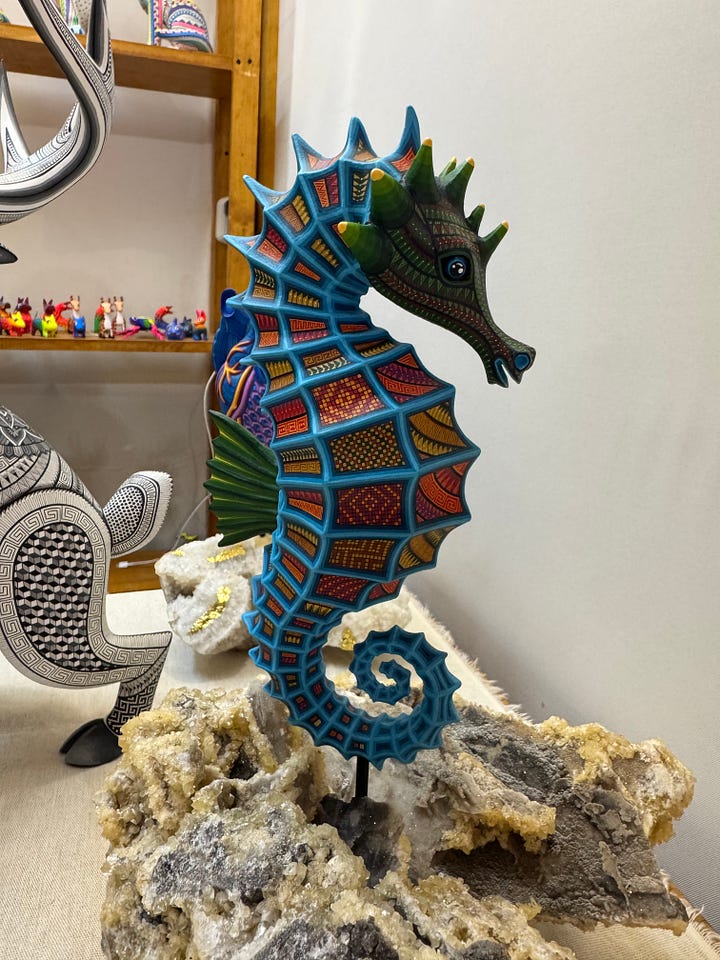
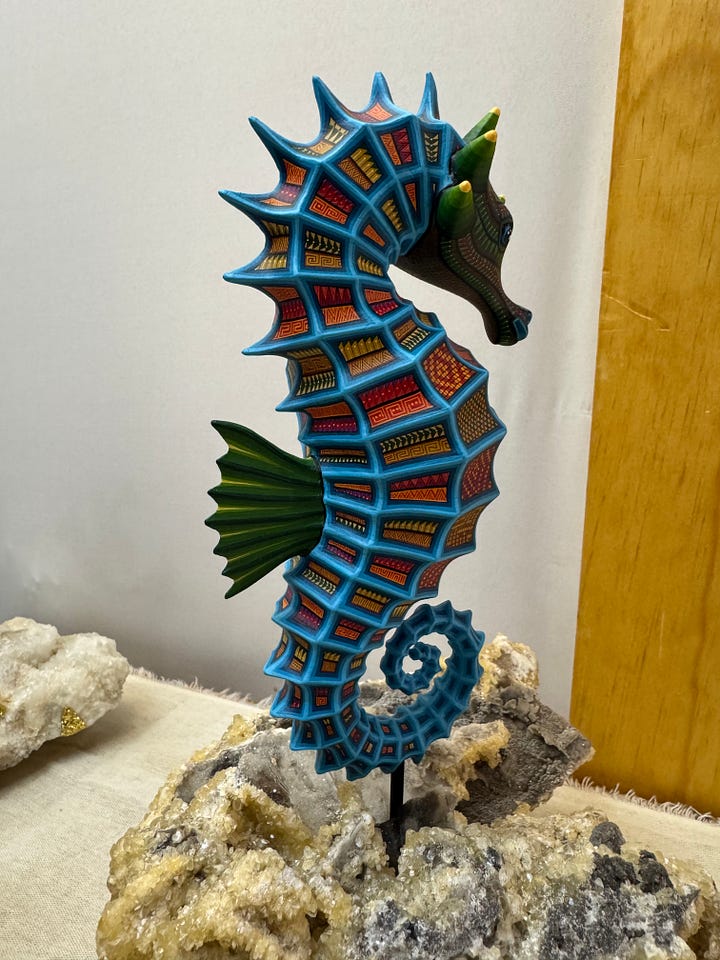
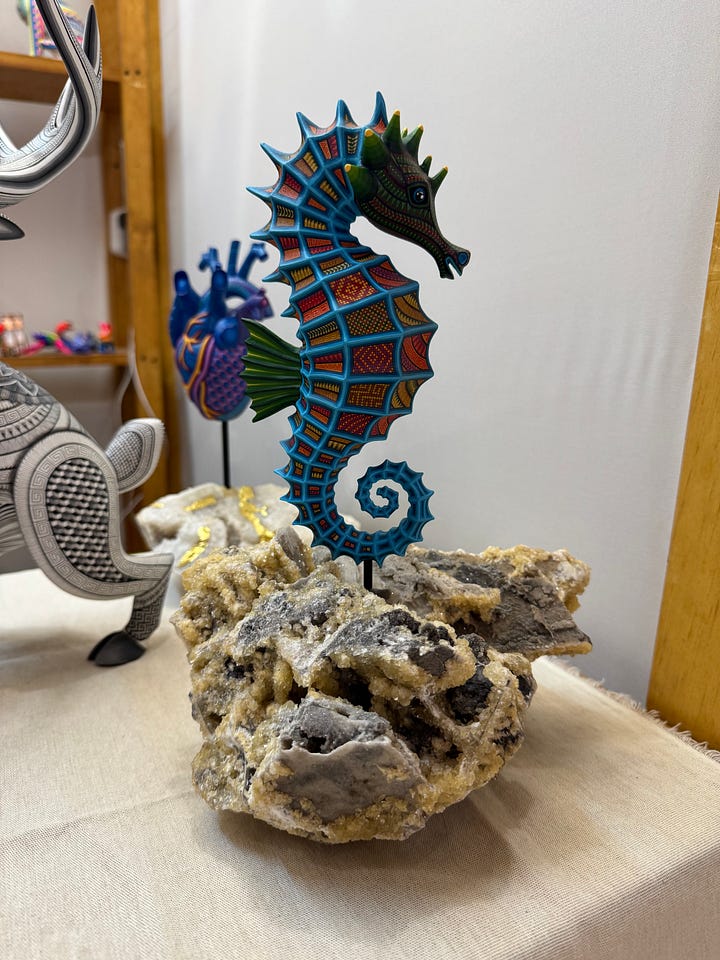

One of the Guelaguetza’s biggest events is the Feria de Mezcal at the city’s convention center, which shares space with the no less important Expo Feria Artesanal and Festival de la Cerveza. It was the Feria Artesanal—the Artisan’s Art Fair—that drew us in this year, and more than 208 artisans representing the 8 regions of Oaxaca had a stunning variety of arts and crafts for sale. This alebrije of a seahorse was especially spectacular, and came from a family of woodcarvers that also operate a quartz mine that (if I understood their Spanish correctly) was originally used to mine silver. They selected a chunk of quartz they felt best replicated the appearance of coral and used that as the base for this stunning creation.
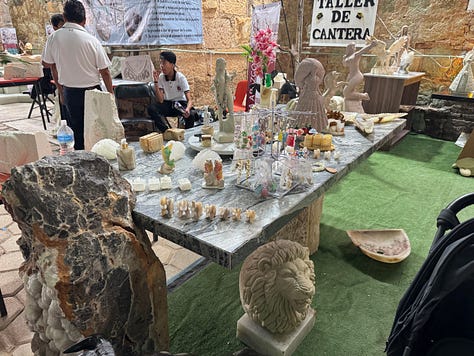

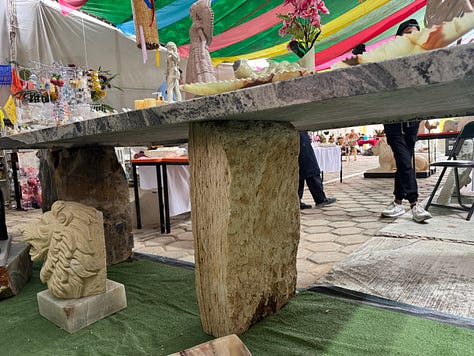

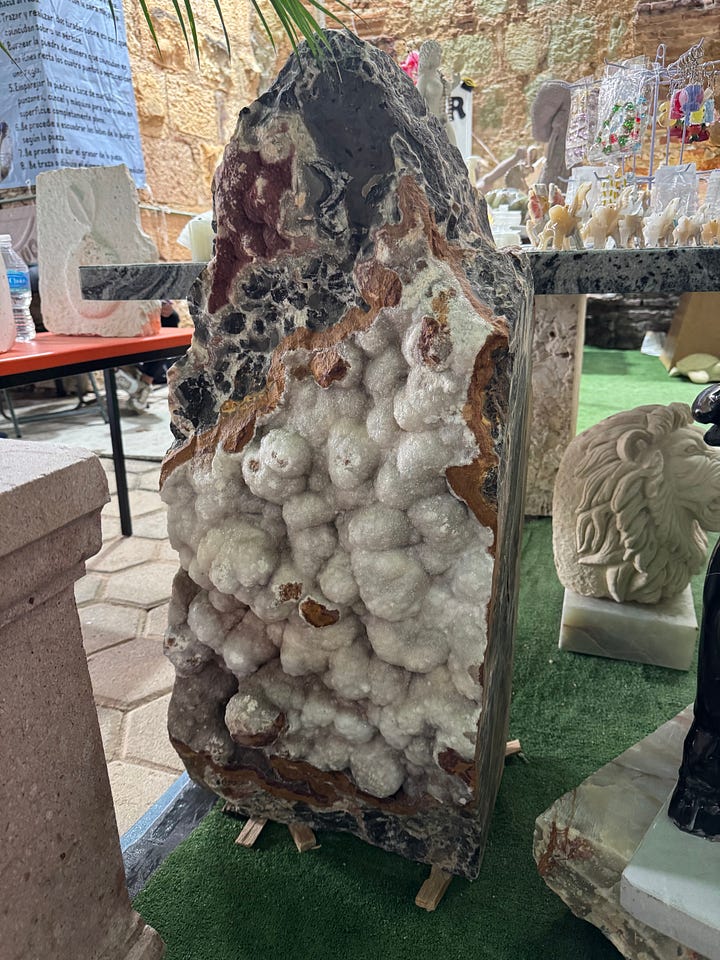
From July 25th until August 2nd, the town of Magdalena Apasco Etla is holding a Feria de Cantera, an artisans fair dedicated to Oaxaca’s most famous stone. Practically everything in colonial Oaxaca was (and is) made from cantera, including the city’s sidewalks, churches, municipal buildings, and colonial-era homes, and a significant quantity of that stone came (and still comes) from our valley, from a town that receives effectively zero tourism traffic and which we’ve increasingly come to appreciate.
The table here, seen in a booth at the aforementioned fair, is rather unusual both for its design in that it is not made from cantera. The top slab is made from two pieces of granite that the owners told me were imported in from Puebla, while the pillar-like legs are naturally hewn local stone, each with their own unique and stunning characteristics. What’s most remarkable is that, after a nominal feria discount, this table costs around $1200 USD, including delivery and installation. The table doesn’t fit our aesthetic and we have nowhere to put it, but still, that price! It boggles the mind.
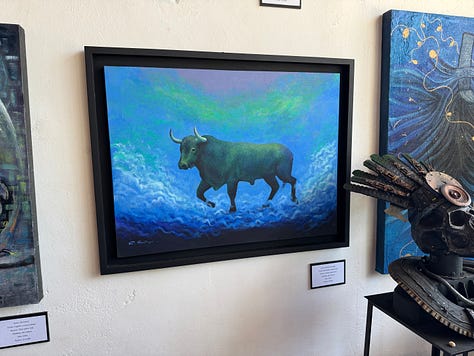

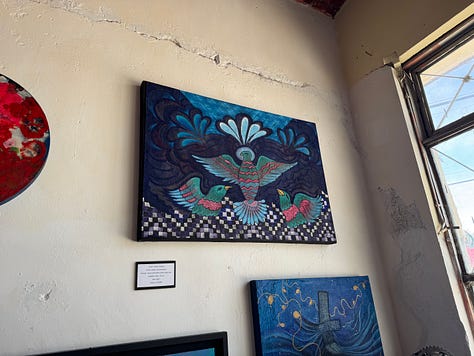
This past weekend we received a curious text message from Edgar. “There’s a little ‘science workshop’ in Miguel Hidalgo Park,” he wrote. “Seems interesting.”
We were puzzled. Miguel Hidalgo Park is the small and rather unremarkable public square in our neighborhood, Barrio San Jose. The only thing of note there is a modest and nicely maintained bandstand with surprisingly clean public restrooms that the town opens during public events. So when Edgar then us a video that had been produced by the organizers of the science fair showing a herpetology exhibit with a live boa constrictor, an exhibit of minerals and crystals, taxidermied insects and bats, and, most surprisingly, a semi-life-sized fiberglass dinosaur, we knew we had to check it out.
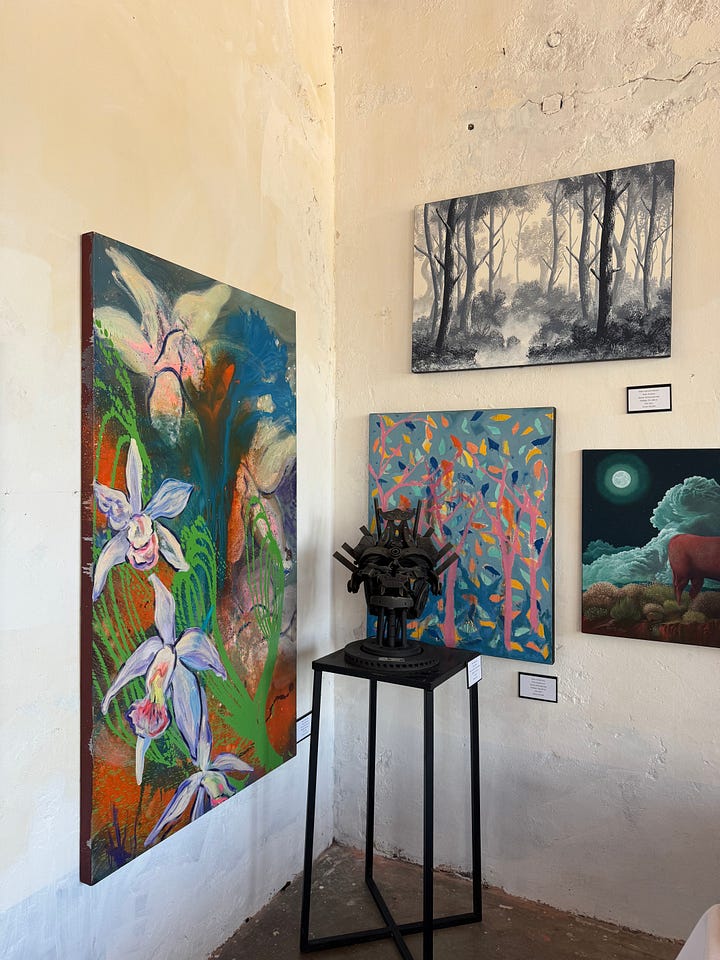
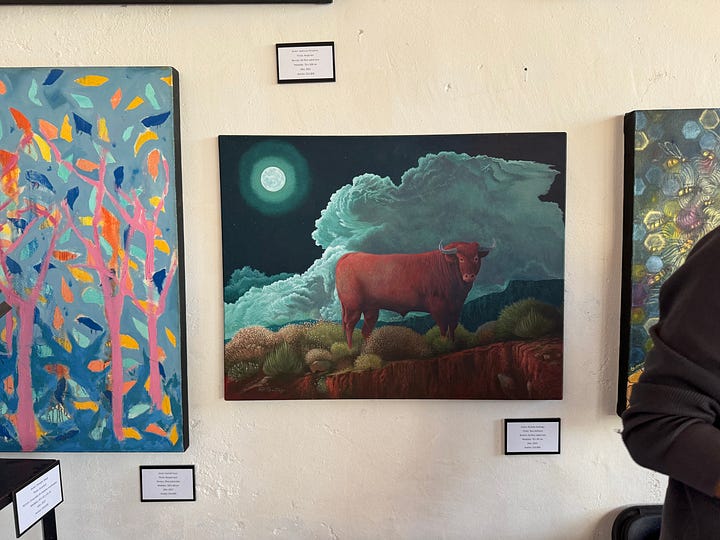
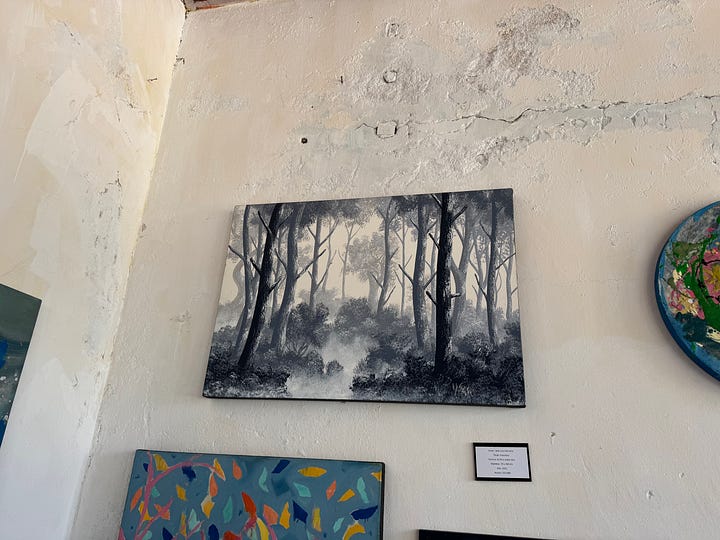
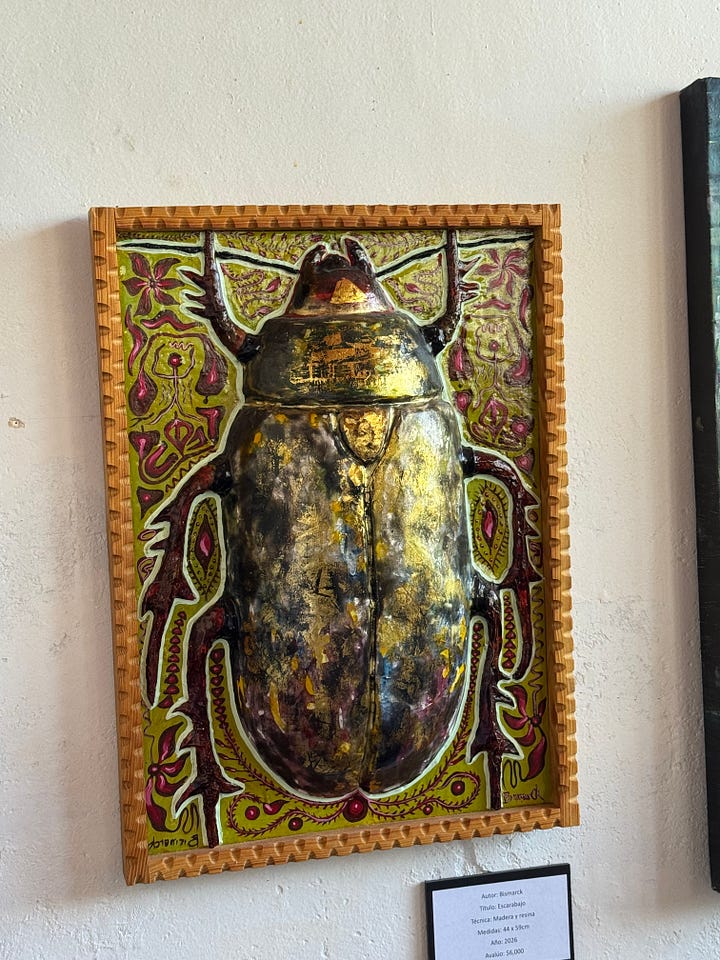
Not only was the science fair kind of incredible, there was also a fair amount of art for sale, including these paintings. While Oaxaca is most famed for its folk art, the state has many fine artists as well producing prints and lithographs, paintings, sculptures, and mixed-media pieces. Prices were good, most of the pieces pictured above selling for between $500-700 each. But more than anything, it was a good example of how art shows up here practically everywhere, even where you least expect it (such as at the two-day pop up science fair).
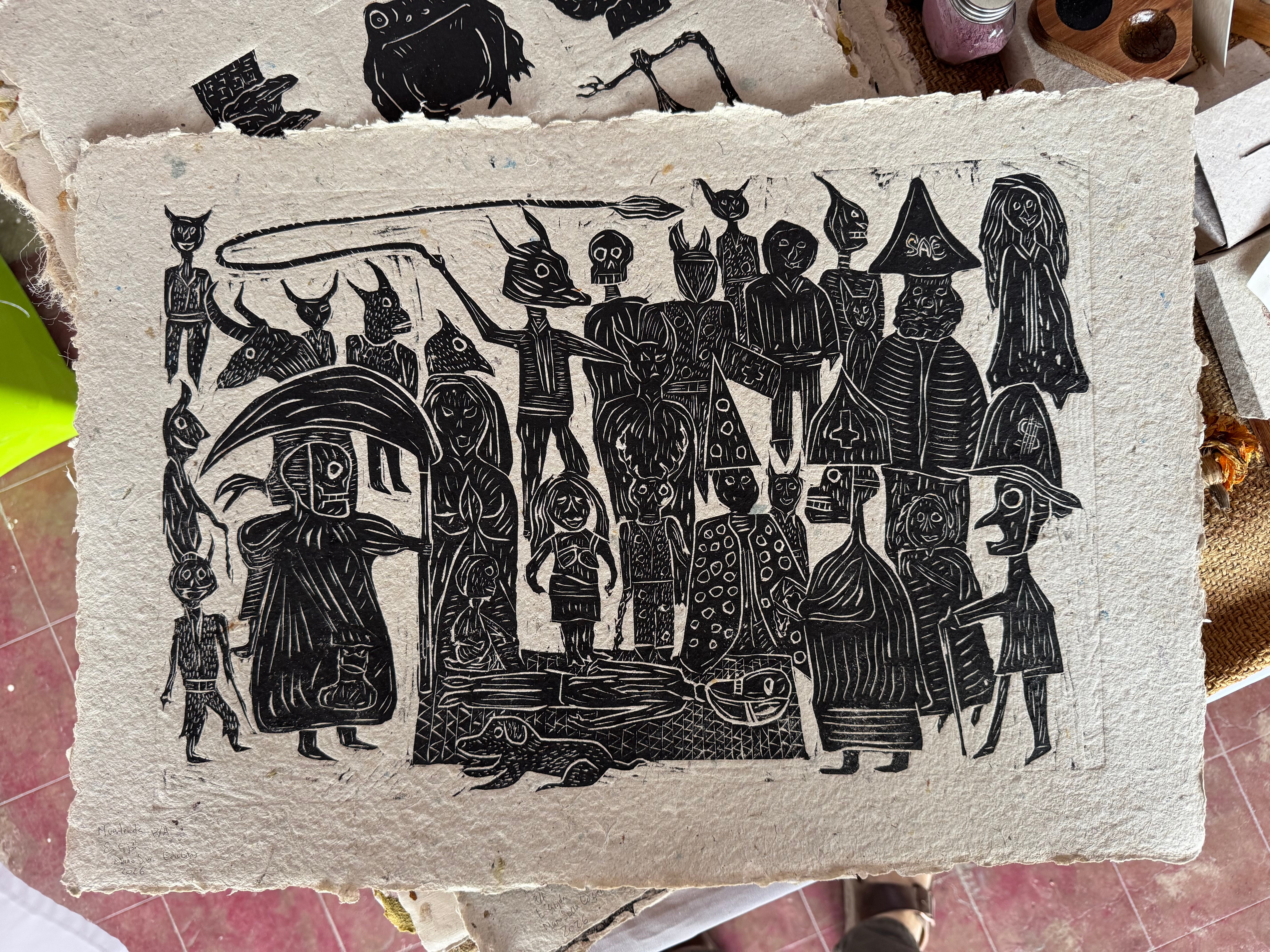
This print from a taller called Mano Sucía is one I intend to buy and hang in our own home. It shows the calenda (parade) that occurs during our town’s Día de Muertos celebration, which sees hundreds of people dress in elaborate costumes and march through town. Not only does the artist, Eduardo Gijón, design and produce the prints, he also hand makes the paper on which they are printed.
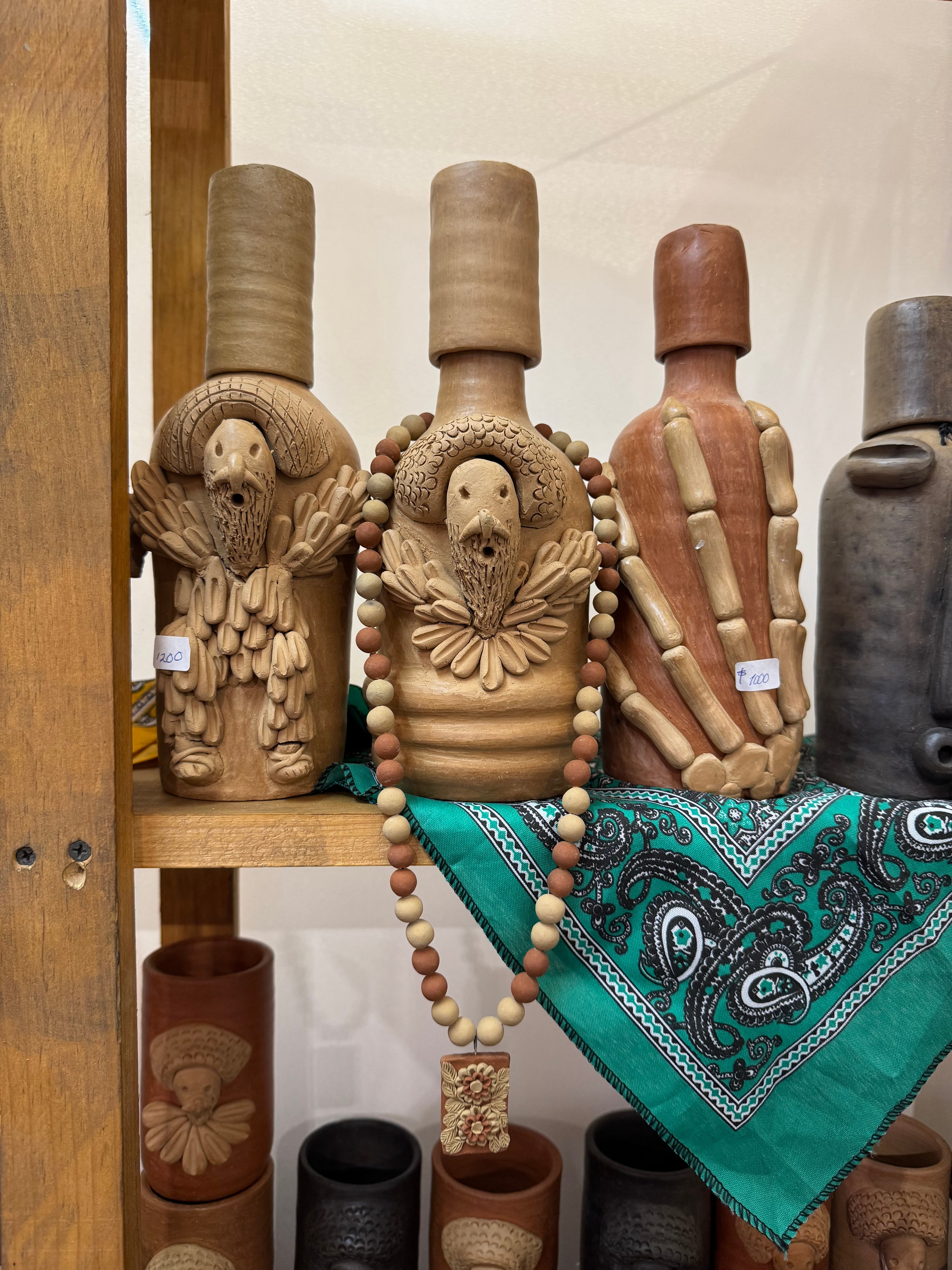
Oaxaca, the world capital of mezcal, offers not just a tremendous variety of spirits but also countless ways to store and serve mezcal. Clay cups are extremely traditional, and although I don’t see myself storing mezcal in clay bottles (simply because it would absorb the aroma and flavor of the barro) there’s no denying that these handmade bottles, priced at around $50 each, are lovely.
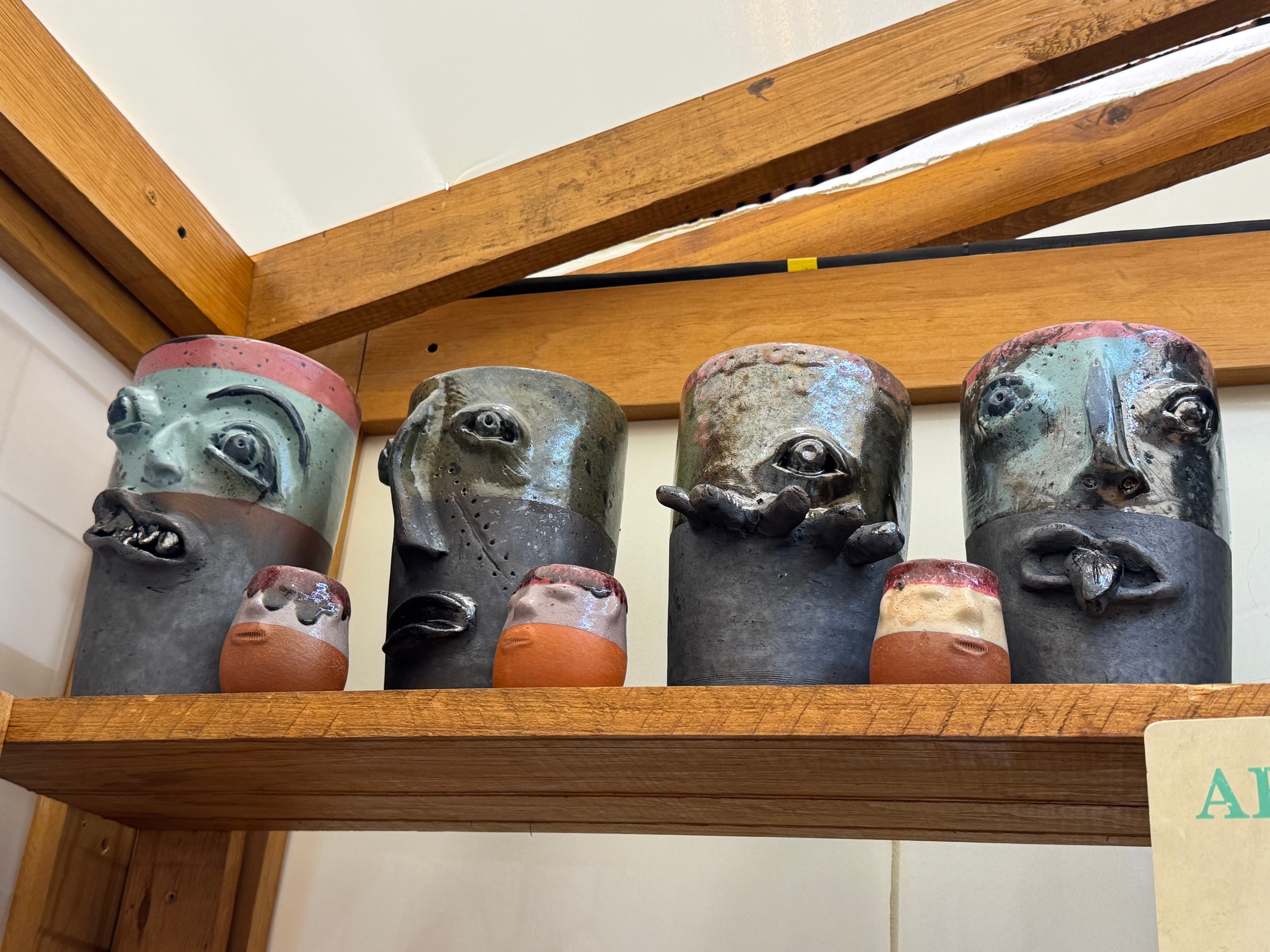
In Oaxaca, it’s very common to see all sorts of clay jugs, cups, plant pots, and other vessels with lovely, tranquil faces on them. But Oaxacan art often has an avant-garde edge to it, and there are an increasing number of artisans making objects with faces are becoming less and less lovely and more and more disfigured and bizarre.
Frankly, I like ‘em. I like the weird faces, with their broken teeth and offset eyes and distended, bent noses. I kinda wish I’d bought one or two of these ones in fact! But I did not, and so some other lucky person will be able to add these weirdos to their home. This artist, Javier Ruiz, operates a workshop on the coast of Oaxaca.
Comments
Nothing yet. Say the first thing.
Sign in to join the conversation.