
Hola! Welcome to A Year in Oaxaca, a twice-weekly newsletter about life in Mexico. Please click on the pequeño corazón (the little heart) if you like what you’ve read, and/or the revolving arrows (the restack button) to help this newsletter reach even more adventurous and curious people.
Paid subscribers can access the entire archive for A Year in Oaxaca—more than 260 guides, journal entries, photo essays, and news analyses—by clicking here. It’s paid subscriptions that allow me to take the time to write this newsletter. If you’re able, please consider upgrading your subscription. Your support is enormously appreciated!
Oaxaca is a state of celebrations in a country famed for loving a good time, and the Guelaguetza, a Oaxaca-specific cultural event that takes place over around 10 days, is one of this place’s preeminent festivals. Celebrations are held in perhaps literally every single community in Oaxaca, and the federal, state, and local governments put a lot of money into promotion and into cleaning and decorating public spaces. As you might imagine, it’s also a great time for local businesses to make some money, and communities capitalize on the surge in tourism.
We learned early on that two of our favorite places to go during the Guelaguetza are the towns of San Martín Tilcajete and San Antonio Arrazola, which are renowned for the artform known as the alebrije. Carved from a type of critically threatened wood called copal (the resin of which is used to make ceremonially important incense), alebrijes are hand carved wooden figurines made in fantastical shapes and designs, which are then intricately hand painted. The Pixar movie Coco was clearly influenced by the alebrije artform, and the statues themselves are one of Oaxaca’s most remarkable forms of folk art.
Both Tilcajete and Arrazola hold ferias (fairs) during the time of the Guelaguetza, and we’ve gone to the one in Tilcajete for four years in a row.
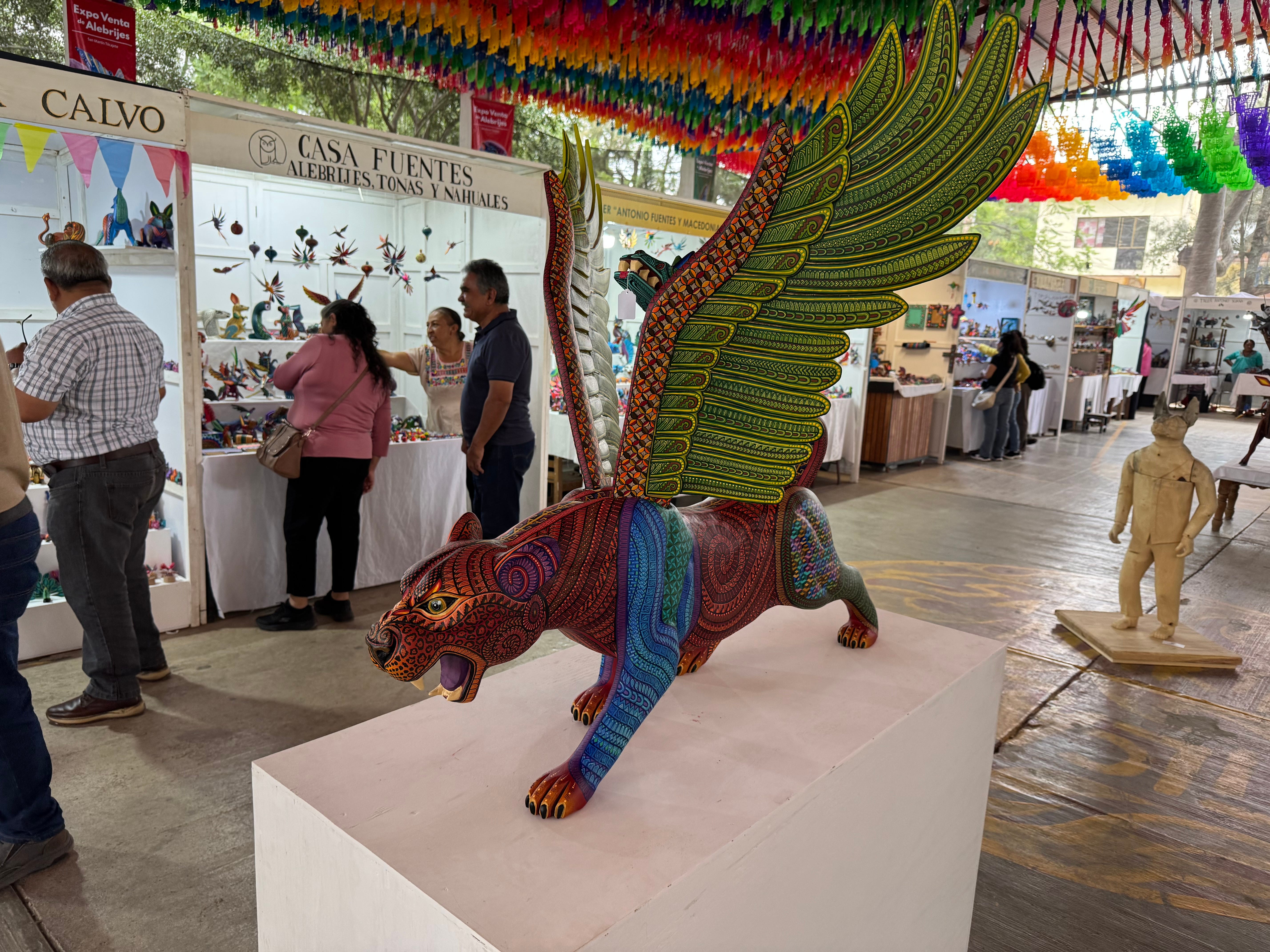
Alebrijes often incorporate characteristics from one or more animals or creatures to create something unique and fantastic. This one, pictured here, has the body of a large cat (I think a jaguar) with the wings of an eagle and a large, poised scorpion-like tail that terminates with a head that looks like that of the Aztec god Quetzalcōātl (you can sort of see it peeking out between the wings). Pieces of this size and intricacy are unusual because they can take literally years to complete, and they’re priced accordingly. This was positioned as one of the standout items at the fair, and if I had to guess I’d say it’s retailing for somewhere in the range of 20 to 30 thousand dollars (USD).
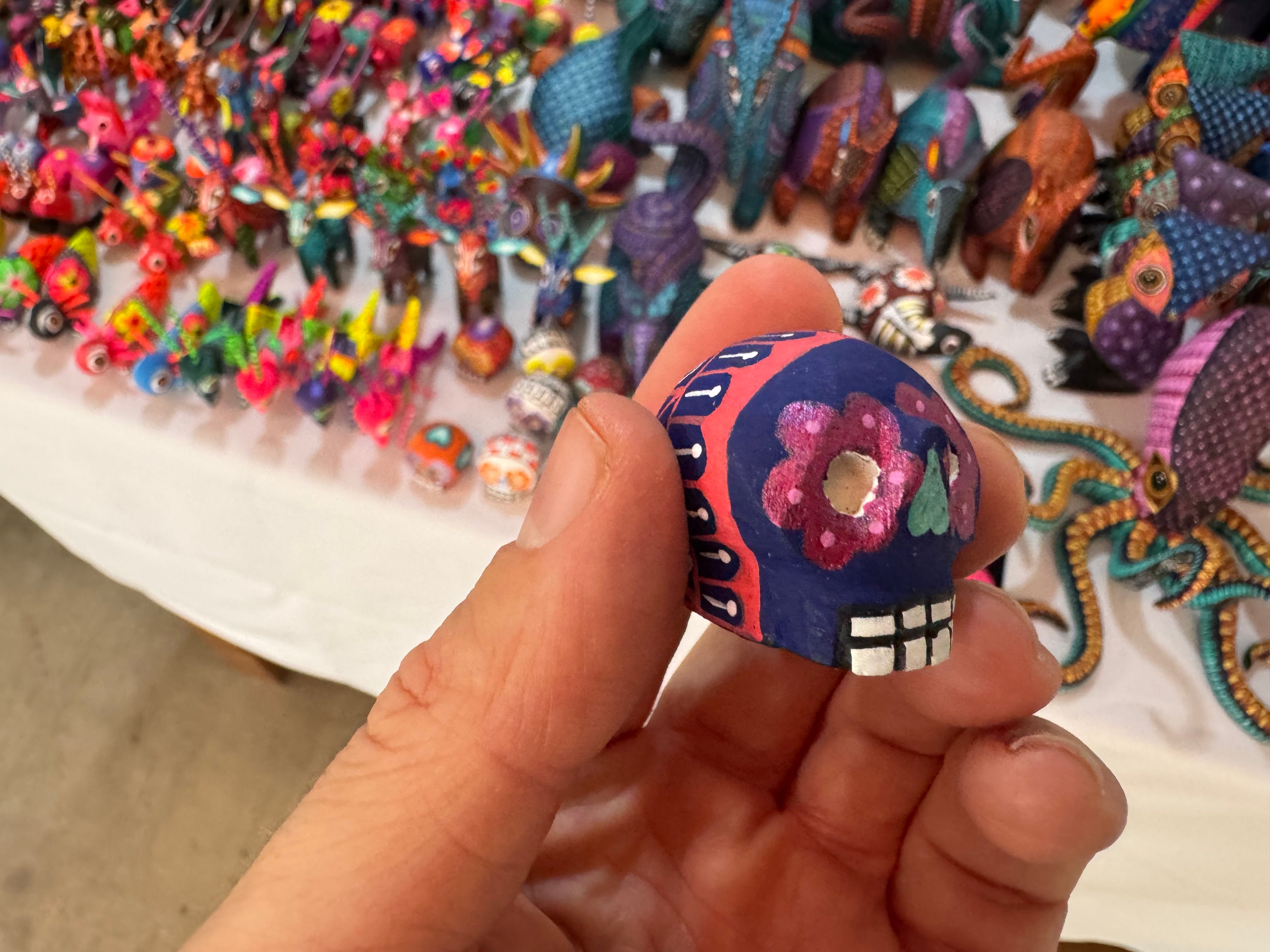
Alebrijes take on many sizes and forms, and prices jump dramatically as they grow more complex. The most I’ve ever paid for an alebrije is around $40, and while I love the ones we have, they’re not particularly remarkable. This skull, which I did buy, cost about five bucks, and you can see how simply carved and painted it is.
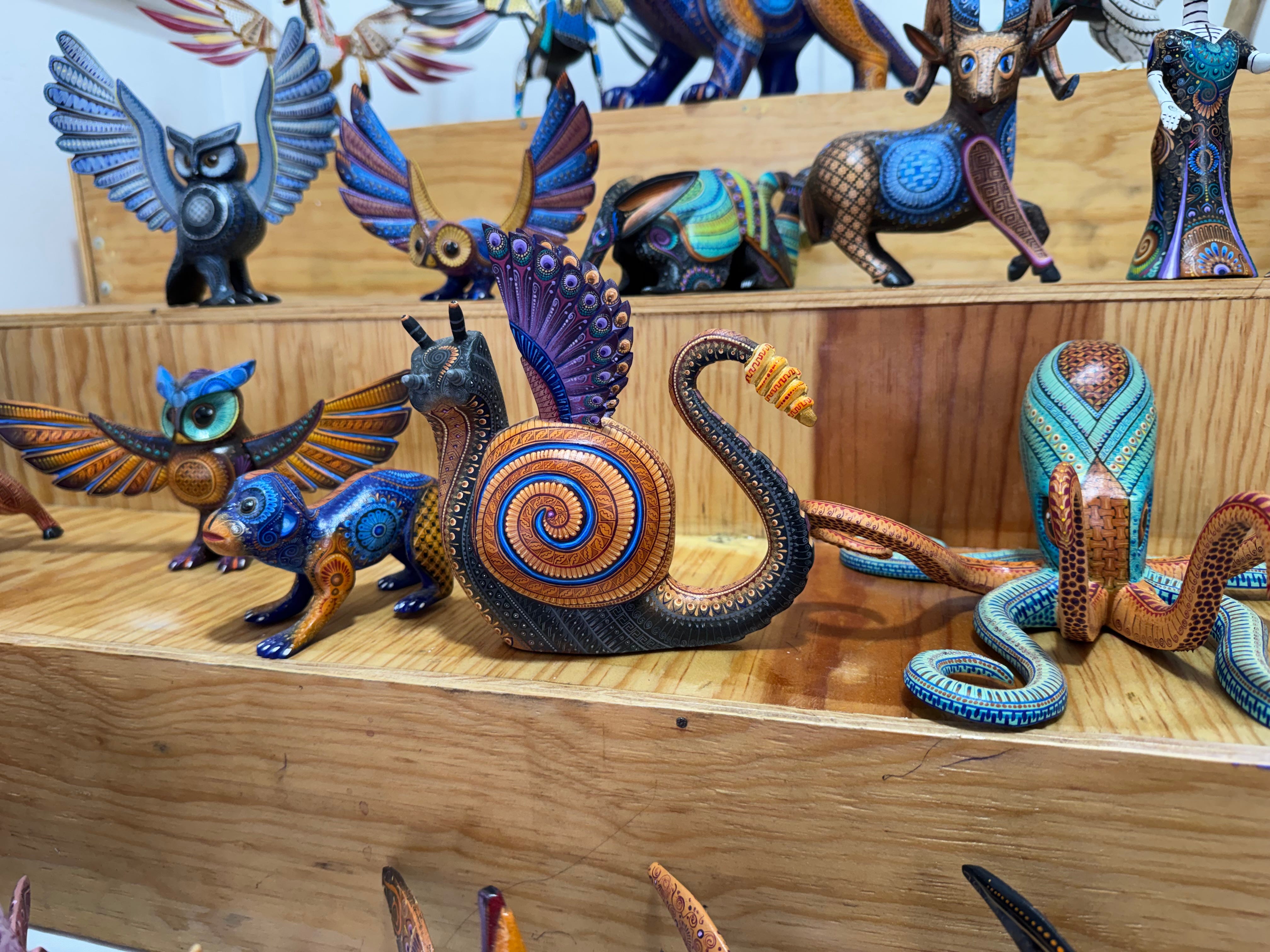
Certain animals are overrepresented, and this includes owls, snails, octopi, monkeys, deer, horses, dogs and cats, rabbits, and other animals that are cute or stately. I suspect it’s consumer interest in certain animals that drives the prevalence of one animal over another.
The snail shown here has wings and the tail of a rattlesnake, and combining elements from different animals is especially common in San Martín. Some artisans will tell you that you can look up your protector “spirit animals,” known as nahuales, on a Zodiac-like calendar they’ll likely have behind their counter. Just like with the Zodiac, there’s an animal for each month and also animals representing different sets of years. Buying an alebrije that incorporates elements of the nahuales representing your birth month and year is said to be especially auspicious.
This post has bonus content for paid subscribers.
Upgrade to get full access.
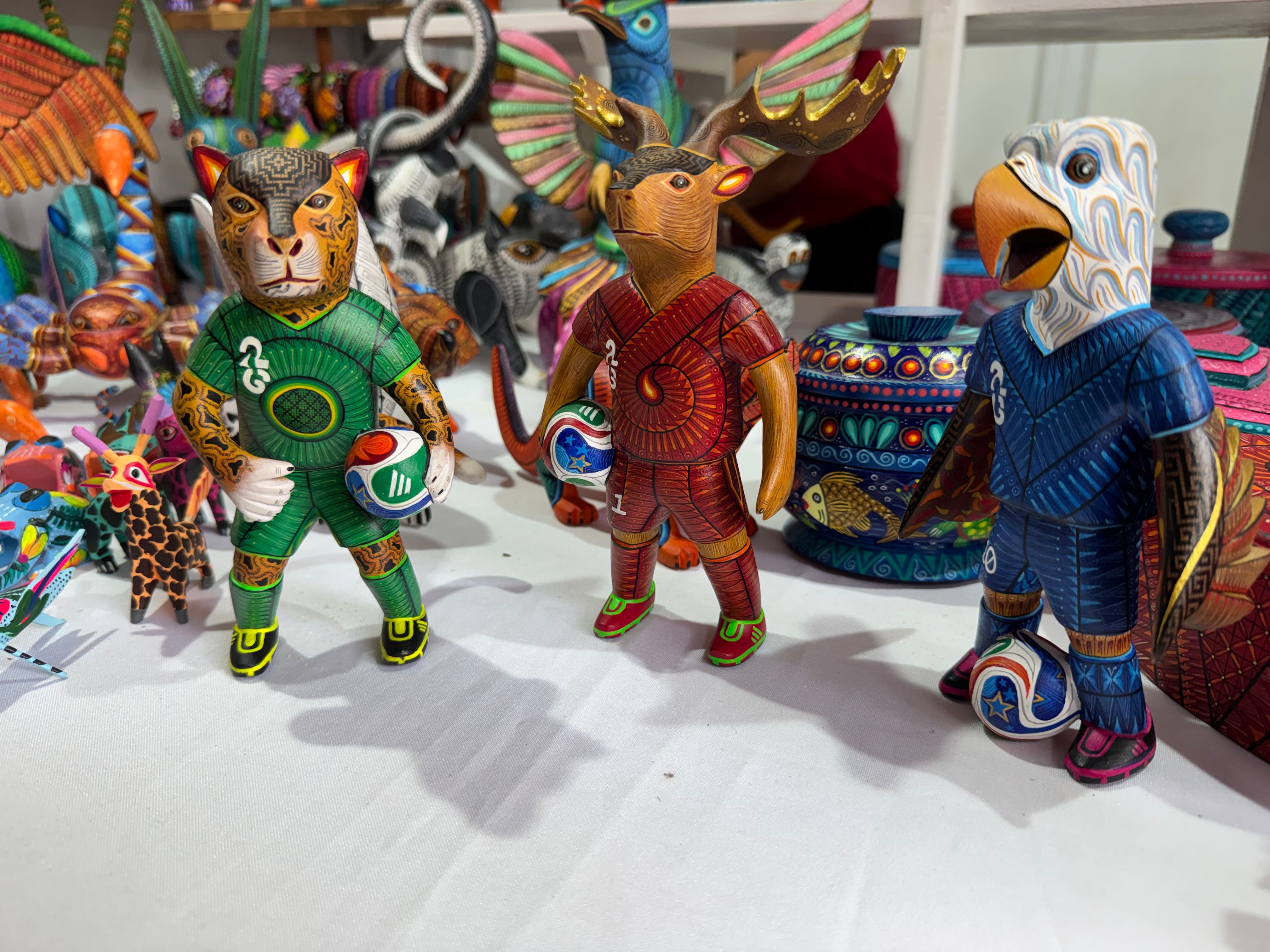
Most alebrijes are not anthropomorphic, and this set of small jugadores (each about four inches tall) was clearly inspired by this year’s World Cup. Even though I’m not a sports guy I liked these figures tremendously and was considering buying the leftmost one for Edgar until I learned they cost about eighty dollars each. You can see that the deer in the center and the eagle on the right also have a bit of gold leaf incorporated into their design, which always greatly increases cost.
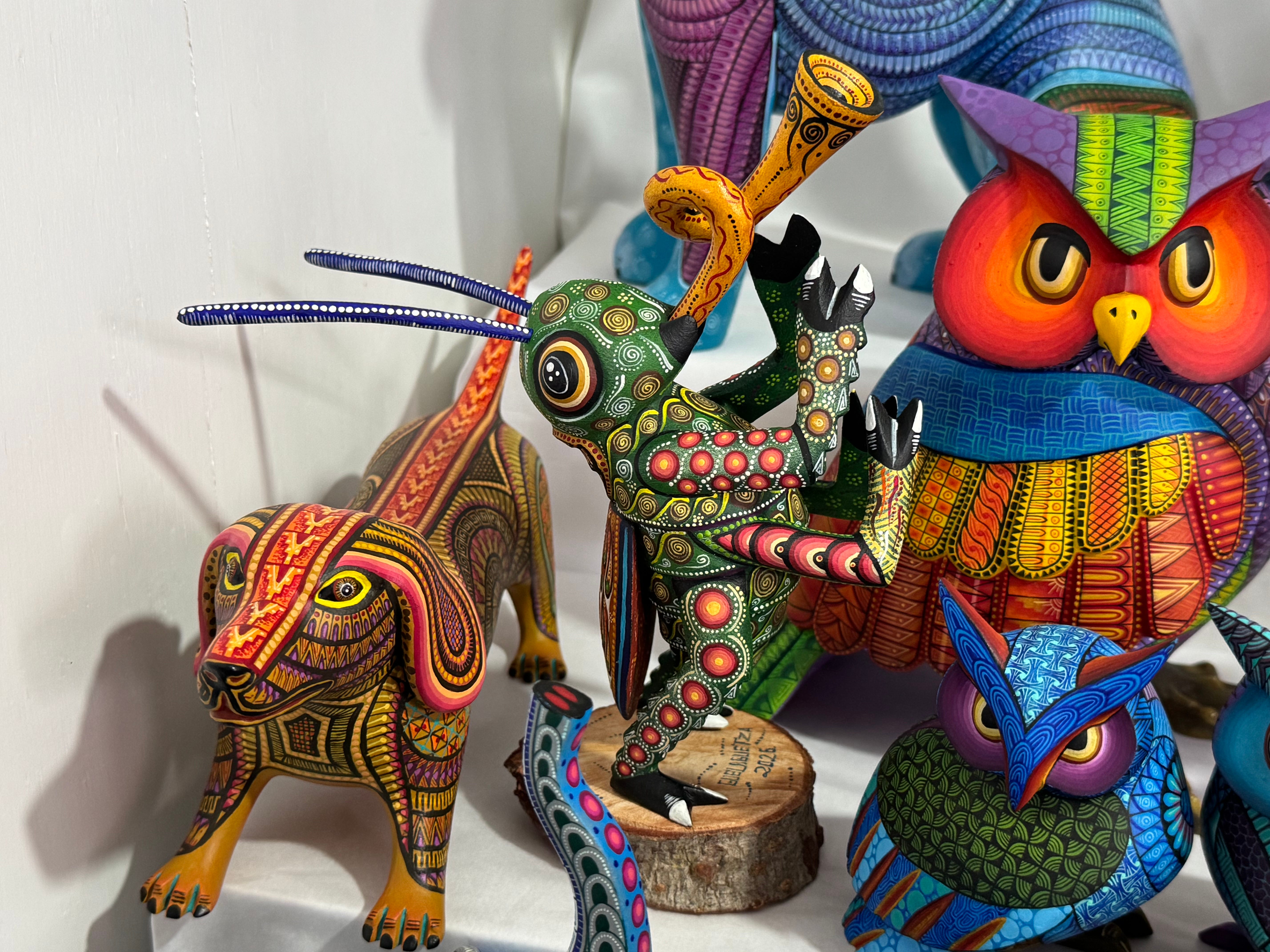
My own taste in art is rather idiosyncratic and I generally prefer the far rougher carvings from La Unión Tejalapam over the polished and intricate alebrijes. This grasshopper, though, with its beautifully rendered details and its wonderful horn, totally captured me, at least until I learned that it cost about $280 USD for a figurine that’s about four inches tall. If I had that sort of money for this sort of thing—which I do not—I would have spent it in a heartbeat, but this does help to show why we own virtually no alebrijes.
Comments
Nothing yet. Say the first thing.
Sign in to join the conversation.