
Hola! Welcome to A Year in Oaxaca, a newsletter about life in Mexico. Please click on the pequeño corazón (the little heart) if you like what you’ve read, and/or the revolving arrows (the restack button) to help this newsletter reach even more adventurous and curious people.
Paid subscribers can access the entire archive for A Year in Oaxaca—more than 260 guides, journal entries, photo essays, and news analyses—by clicking here. It’s paid subscriptions that allow me to take the time to write this newsletter. If you’re able, please consider upgrading your subscription. Your support is enormously appreciated!
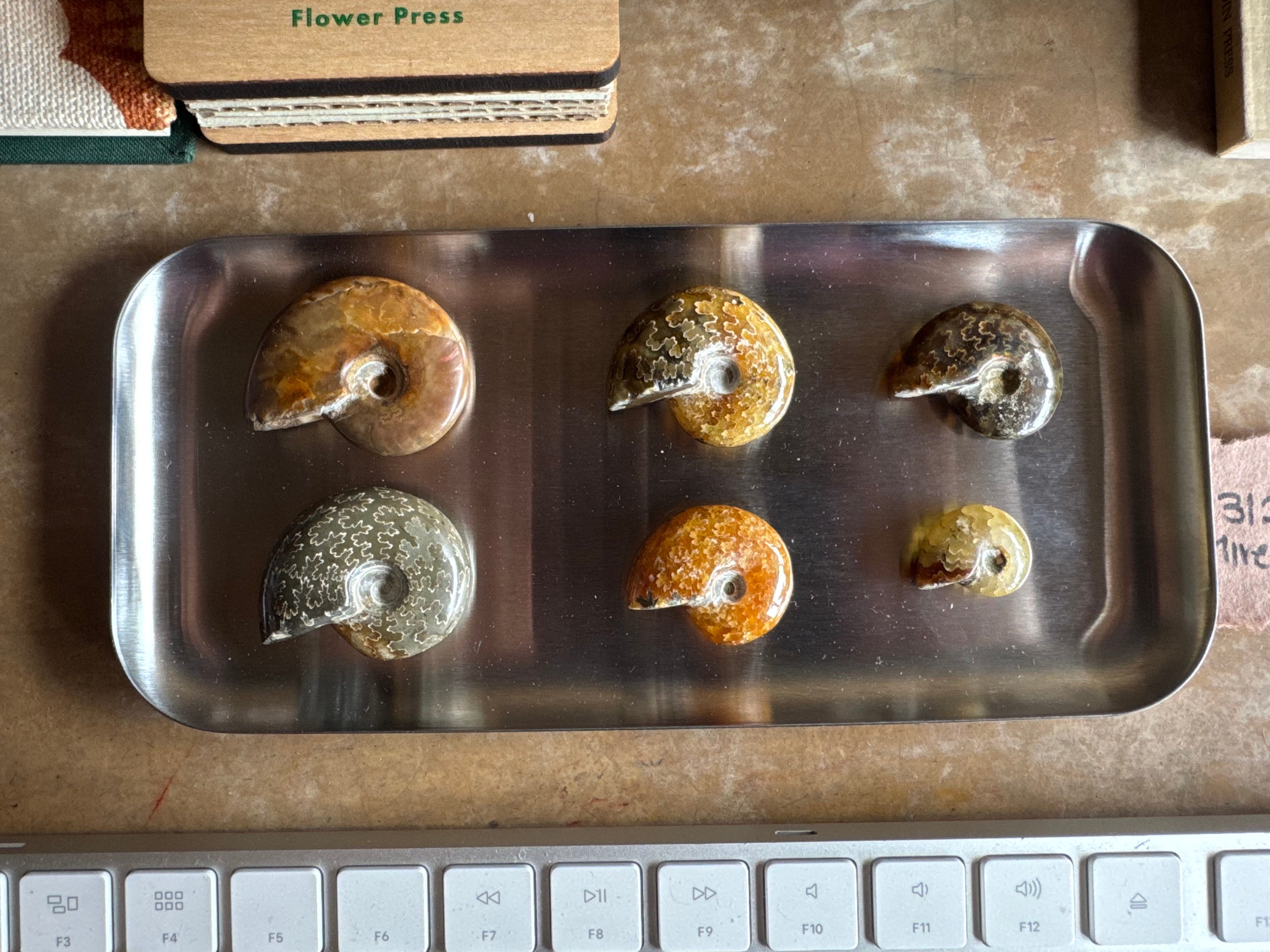
Moving to Oaxaca initiated an age of self-discovery. Just not the kind most people in Oaxaca experience.
I am not by my nature attracted to either drugs or intoxication, and so unlike most of the seekers who find themselves in Oaxaca, the state’s ample supply of hallucinogenic mushrooms and its plethora of dirtbag spiritual healers have been nothing but repellant. Our mezcal is incredible, a drink so complicated that you could spend decades educating yourself about it, but there are limits to how much I’m interested in drinking in one sitting. I’m not looking for god, or where I fit into the universe. I’m not on a “journey,” even though that sort of framing certainly works conceptually for a travel writer such as myself. I don’t need to take my shoes off and stand barefoot in the soil, as someone said to me just the other day, to feel “more connected to the universe.”
But I have, as time has passed, gotten awfully interested in rocks.
I spent a long time working as a therapist and have had several therapists myself, as all good psychologists and therapists should, and so self-evaluation has for many years been a big part of my life. Do that enough and you start to realize when you’re acting weird, or when you’ve picked up a new fascination. But my descent into full blown, slightly obsessive rockhound was definitely a bit of a surprise, and I think a big part of that strange transformation is thanks to our lives here in Mexico.
Oaxaca’s delights are both cultural and physical, and for a nature-starved New Yorker without a car, the unbridled wildness of this place was deeply appealing. We’d lived here for mere days before I began following beetles around and collecting strange looking cacti and succulents. When Andrea gave me an illustrated book, clearly intended for children, about cloud formations, it inspired me to spend a truly unproductive amount of time gazing up at the sky from my office. So it was perhaps unsurprising that eventually my attention would turn to the ground.
It began innocently enough in our driveway. The rectangular area of our property where we park our car is lined with gravel, and as anyone with a gravel driveway will tell you, those little shards of stone have a way of escaping. Give it enough time and you’ll find that either through compaction or erosion gravel tends to wander off, finding its way off of your property entirely and, sometimes, seemingly evaporating into thin air.
Eventually we lost enough of it that Edgar called a local company to replenish our dwindling supply, and one day a large and exceptionally beaten up truck trundled onto our property with a large load of loose gravel rattling around in the back. It was shoveled out of the truck bed where it settled in a huge, dusty pile, and Edgar then spent a few hours raking it evenly across where we park.
I didn’t particularly like the new stuff. It was characteristically different from whatever we had before, and its consistency and general shape made it prone to piling up and moving around. Every morning and evening the dogs break into a frenzy of activity, racing up and down the exterior stairs of our home and sprinting down into the driveway, where they race around the car as if following a predetermined track. Because we either ordered or were given a type of gravel that doesn’t naturally compact, right away the dogs carved a slaloming path through the stone, creating small drifts around their preferred lanes of travel. It was ugly and annoying, and raking the gravel back into place was a whole new chore for us to handle.
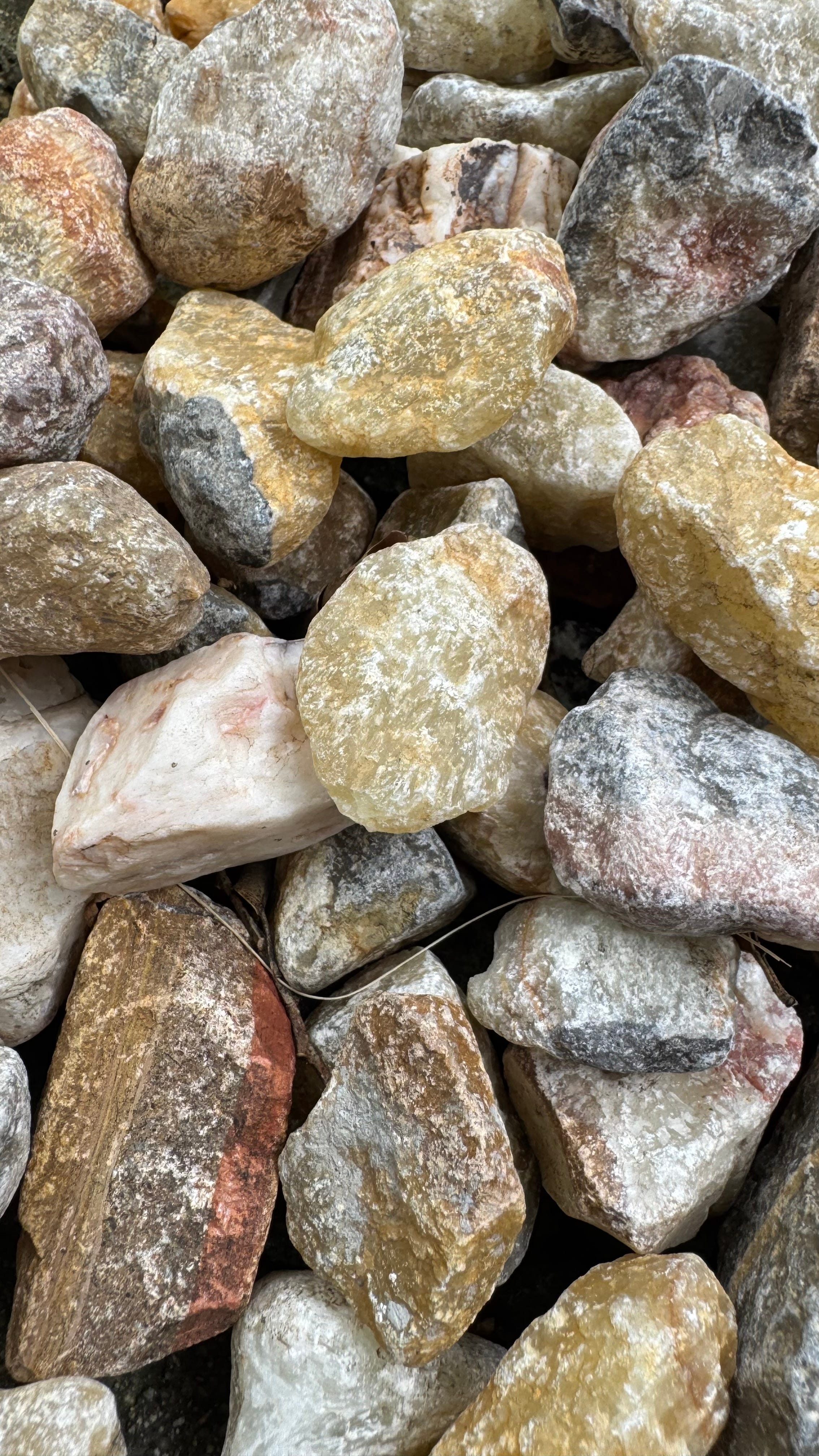
But my opinion of the gravel changed one day after a heavy rain. Gravel here is a byproduct of local mining, and while a couple of places nearby produced marble, which is used seemingly exclusively to make monuments for graveyards, the most common stone is cantera, a durable rock that during Oaxaca’s colonial era was used to make practically everything, from churches and administrative buildings to statues, patios, fountains, and sidewalks. It’s a nice enough stone but hardly a showstopper. But in amongst the cantera is a common but beautiful mineral called banded calcite.
The deluge of rain washed away all of the gravel dust and glossed over any surface scuffing. Suddenly our driveway was awash in vibrantly hued chunks of rock. As I walked across the wet stone I began filling my pockets with rocks banded with red and green crystal, small rounded stones with cavities filled with glittering quartz, and even the occasional fragment of what I later came to learn was stalactite.
Our son Leo, almost two years old, also likes rocks, although as of yet there doesn’t seem to be a metric by which he judges them. But perhaps his joy is not so dissimilar from my own. Middle age has seemingly always been portrayed as a time of great misery and self-doubt. When I think about movies like Office Space, which as a teenager I adored, even people in their 30s are shown as falling into the mire of those central years, a time of professional lethargy and physical decline. Both real life and colloquial examples abound. Affairs are had and sports cars are purchased. People leave their spouses and abandon their kids, or make impulsive decisions and marry the wrong person. People make lasting, often disastrous choices.
This is not what is happening for me. If anything, middle age for me has looked like a rejection of the forces in my life that seem intent on making me unhappy. I turned decisively away from the confines of corporate employment. I watch exponentially less tv than I used to, and no longer use social media at all. Spending my time looking at rocks has felt healthier. Certainly it’s more joyful than many of the other things I could be doing.
Hobbies have a way of consuming you, though, and that year for Christmas, I asked Andrea to buy me a small rubber-clad rock tumbler sold by National Geographic. Soon the rock tumbler was set up under the cover of our poolside palapa and I had filled a large wooden crate with plastic tubs of grit, which has to be fed a tablespoon or two at a time into the rock tumbler along with water to create a sort of polishing slurry. But the rock tumbler, an introductory model better suited for children, was tiny, capable of holding only about one pound of rocks at a time. The process to transform a rock from a rough sample to something smooth can take upwards of a month.
I was collecting rocks faster than I could process them, and interesting pieces of gravel began piling up on ledges all across the property. It didn’t take long for a piece or two to find its way into the kitchen, or next to the bathroom sink. Fragments of stone would appear alongside the coffee pot and nestled amongst the salt cellars on our kitchen island. When we did laundry Andrea and I would find them in my pants pockets, which inevitably led to them landing on either my bedside table or the dresser.
We regularly take Leo for walks on a dirt path that runs next to a small, weed-choked creek that runs through town, and less occasionally on a steep and rutted dirt road that ascends the tall hill our house is built on, and I’d fill the basket underneath his three-wheeled stroller with loose stones. Soon enough I had a metal hammer made by a famed rockhounding company called Estwing with a vicious looking pickaxe-like point on the end designed for prying rocks out of the earth, and then a set of chisels and a drop-forged five pound steel mallet designed for cracking open larger, immobile stones. Just leaving the house meant carrying around a whole kit of equipment
It continues to escalate. I began frequenting the streetside table of a local rock seller named Roberto, who sets up a little wooden stall in Oaxaca’s Centro neighborhood, and got the contact info for a hobbyist who was selling small fossils and non-precious minerals and crystals during the science fair that popped up in San Agustin. Now I’m getting texts from vendors with interesting things for sale, and some of the stone carvers in Magdalena Apasco Etla know of my interest. I’ve ordered rocks and minerals and common fossils from Etsy to be picked up in the United States, and I’ve begun learning the names of mines in Mexico that produce fantastic, almost alien-like geological samples that people would be happy to sell me.
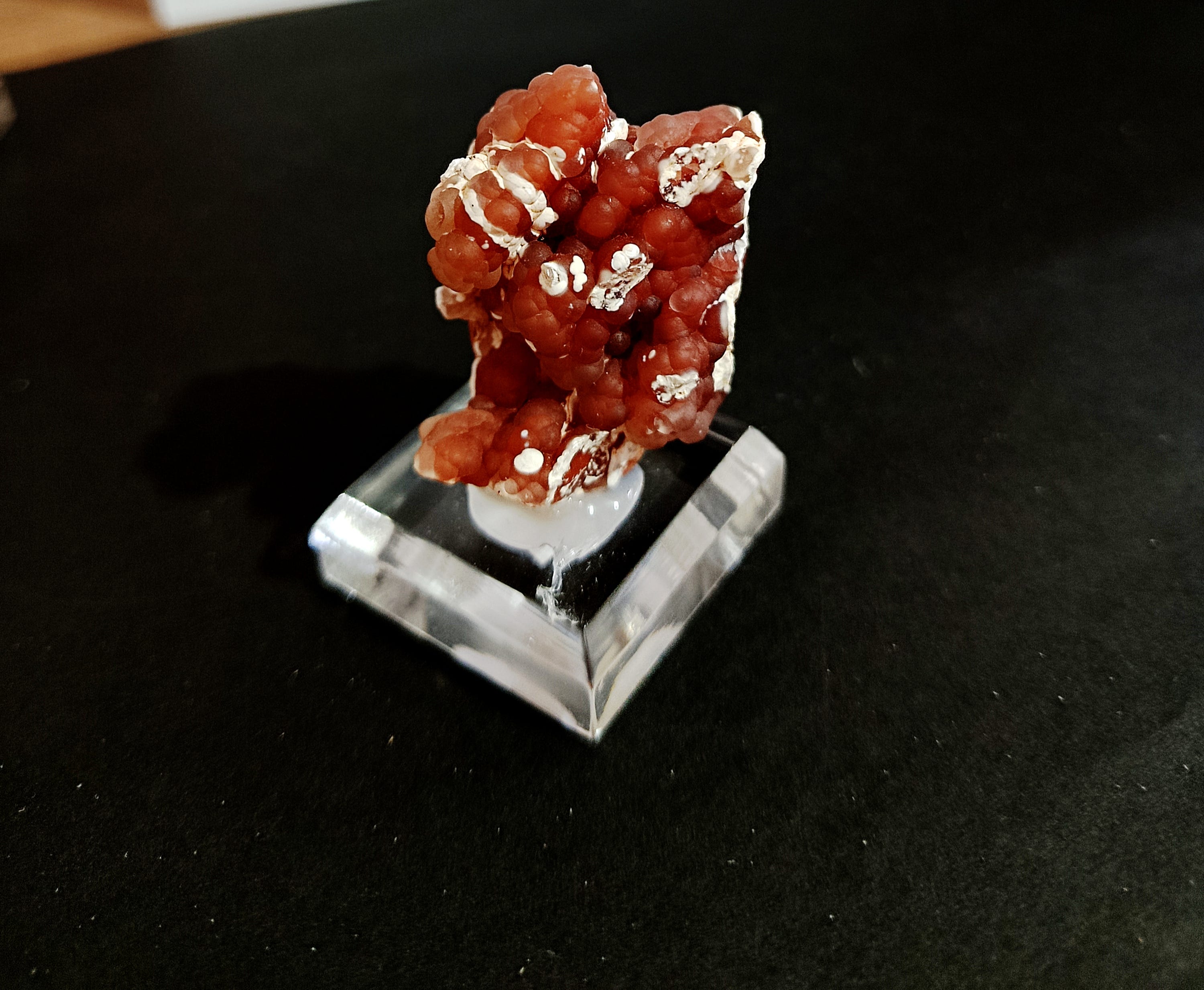
I don’t think a person’s hobbies define who they are, even if they do provide a window into the passions that drive someone. Frankly, I’m not sure what this one says about me, save for the fact that I feel more anchored to the physical world now than I have during any other time in my life. But the recurring theme of this part of my life is health, and this hobby seems healthy, which is a good way to feel when you’re almost 43 years old. Although the fact that I now leave a trail of dust and stones in my wake, much in the way our son does, probably also suggests that part of the draw is returning to something more childlike, and there’s nothing quite so worrying as a middle-aged man who acts like a child.
Comments
Nothing yet. Say the first thing.
Sign in to join the conversation.