

Most conversations about culture start with feelings.
“How do people feel on a Sunday night?”
“What’s the vibe?”
“Do people feel engaged, safe, motivated?”
Those questions aren’t wrong.
They’re just downstream.
Because feelings are signals, not the system.
And when we confuse signals for structure, we end up trying to fix culture by manipulating mood… perks, posters, pulse surveys… while the underlying conditions quietly decay.
If you strip culture back to its biological roots, the definition is refreshingly unromantic.
In biology, culture refers to the conditions used to maintain and grow living cells, tissues, or organisms.
Temperature.
Nutrients.
Boundaries.
Constraints.
Signals.
Threats.
Time.
Nothing in that definition asks how the cells feel.
Yet the outcome is entirely predictable:
Change the conditions, and behaviour changes.
Leave the conditions unattended, and decline is inevitable… even if the cells are “motivated”.
This is where workplace culture conversations quietly drift off course.
Over time, organisations develop perception drift.
Leaders believe one thing is happening.
Teams experience something else entirely.
Neither side is lying.
They’re just responding to different signals.
Strategy decks say “we empower people”.
Approval chains say “don’t move without permission”.
Values say “speak up”.
Consequences say “don’t be the one who raises it”.
People adapt quickly. Not emotionally… biologically.
They stop acting on purpose and start acting for survival because the environment taught them what behaviour is safe, not because they are disengaged.
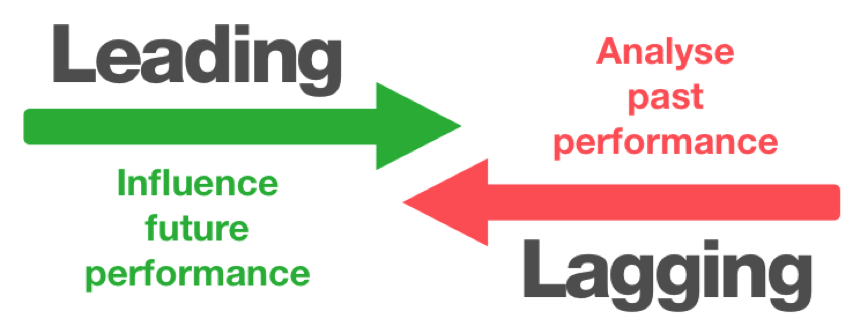
Employee engagement, morale, motivation… these are symptoms, not levers.
They tell you what has already happened inside the system.
By the time engagement scores dip:
decision authority has already centralised
trust has already eroded
energy has already been redirected into self-protection
Trying to “improve engagement” at that point is like opening a window after the greenhouse has collapsed.
Useful.
Too late.
If culture is an environment, then it should be:
observable
measurable
trackable over time
discussable at board level without becoming subjective
And crucially:
manageable before damage shows up in people data.
When culture is framed as feelings, it gets parked with HR.
When culture is framed as environmental design, it belongs with risk, governance, strategy, and sustainability.
Because you can measure:
clarity of future direction
diffusion of decision authority
friction in systems and handovers
learning velocity
psychological and operational safety
These are leading indicators of cultural health.
They tell you whether the environment is becoming more fertile… or more hostile… long before people burn out, disengage, or leave.
This is the part that’s often misunderstood.
Yes — emotional connection matters.
Yes — purpose matters.
Yes — people need to feel meaning in their work.
But emotion and culture aren’t in competition… they’re interdependent.
Emotion is how people connect to a future.
Culture is what determines whether that future feels reachable.
The story [the lore] excites people, gives them identity, and helps them see where they belong.
Without it, the environment feels sterile and people don’t invest.
But the environment is what makes the story real.
If decisions are opaque, authority is concentrated, or initiative is punished, then even the most compelling story becomes fiction… something people admire rather than live.
The lore gives meaning to the system.
The system gives credibility to the lore.
That’s why the two must move together.
When we build cultural stability for workplaces, we deliver with emotion… to excite, empower, and engage.
But, and this is important, we design with objectivity and systems thinking so the environment actually supports the behaviour the story invites.
Strong cultures aren’t enforced.
They’re cultivated.
They don’t rely on constant energy from leaders.
They conserve energy by making good behaviour easier than bad behaviour.
They don’t depend on everyone agreeing.
They depend on shared constraints that make independent action coherent.
And like any living system:
neglect shows up slowly
recovery takes intention
prevention is cheaper than cure
If we want organisations that thrive rather than survive, we need to stop asking people how culture feels and start examining what the environment is quietly teaching them every day.
Our White paper on Perception Drift can be downloaded here and if you want to talk about perception drift in your organisation or have examples of it in action… reach out or comment on this post.
Let’s get the conversation moving towards cultural stability rather than how we feel about work on a Sunday!
Comments
Nothing yet. Say the first thing.
Sign in to join the conversation.