
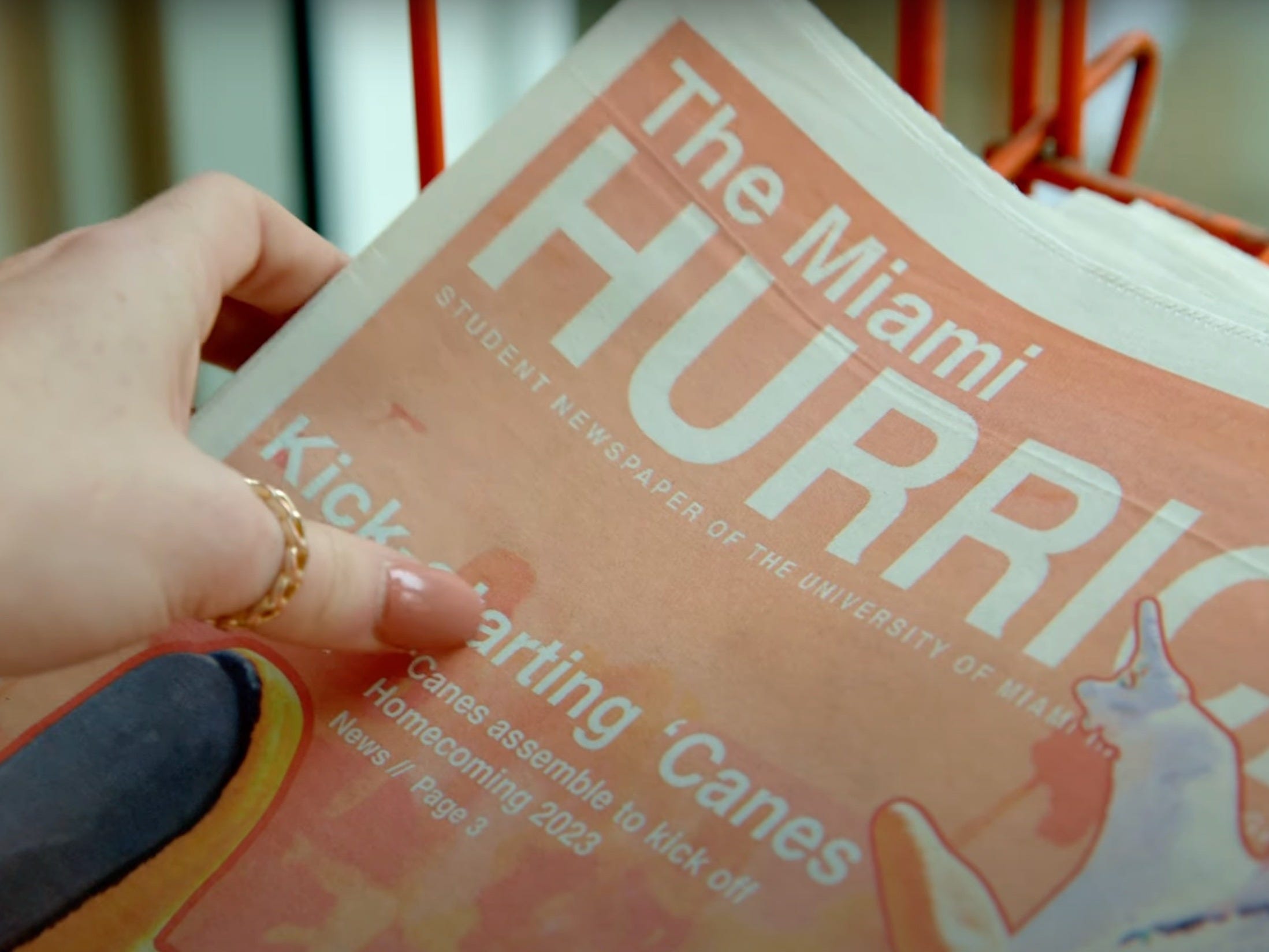
Katie Karlson knows the drill.
As the editor-in-chief of The Miami Hurricane at the University of Miami, she said a simple request for an interview often triggers a bureaucratic maze designed to protect the university’s image rather than inform its students.
When the university’s health system opened a new ambulatory center, she said it should have been a straightforward news story.
But when Karlson reached out to the university’s communication office about the story, the process stalled. No on-the-record interviews were set up. No quotes were provided.
So, Karlson did what any reporter on a deadline would do: she bypassed them.
“I just started emailing doctors myself,” she said. “And they answered happily, gave me a few other doctors to talk to.”
She published the story, featuring quotes from the medical staff. But the administration’s reaction wasn’t to praise the initiative; it was to question the authorization.
“We are particularly interested in why (an oncologist) is quoted giving revenue information on behalf of the health system which may or may not be accurate as that information was not provided by our chief financial officer,” read the university’s email to Karlson, which The Nutgraf reviewed.
Karlson said the university offered no help in connecting with anyone, let alone a CFO.
“I did what I had to do as a journalist, which is ask questions and go around the barriers,” she said.
This friction isn’t unique to Miami. At universities across the country, media relations offices often act as gatekeepers rather than facilitators.
For student journalists, getting an official statement or an on-the-record interview depends on navigating relationships with administrators who hold all the cards.
At UM, the stonewalling has become something student journalists expect.
Keira Faddis, the Hurricane’s opinion editor, described a system where persistence is the only thing that would prompt a response.
“We’re sending three, four, even five follow-up emails for the same issues over and over and over again,” Faddis said.
The process is formalized through a “media inquiry form,” which Faddis noted creates a lag time where students “just have to wait.” To ensure the form isn’t ignored, editors now send a separate email just to confirm they submitted the form in the first place.
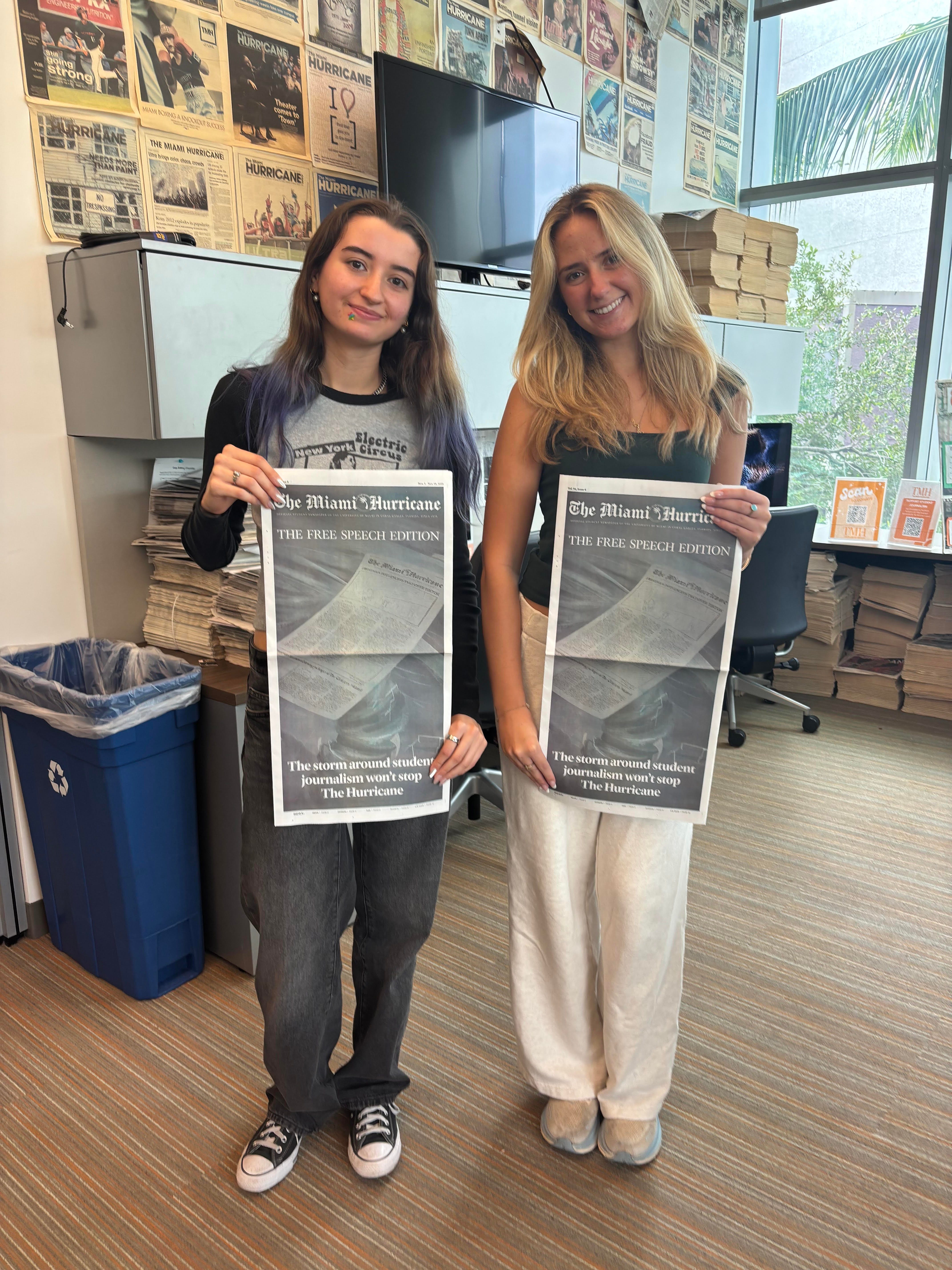
While both editors acknowledged the communications team is simply “doing their job” and wouldn’t call it “censorship,” they said the impact on student reporting is tangible.
The Hurricane has been forced to kill stories entirely because the university refused to provide the necessary context. Karlson pointed to a story about university finances, tuition and grant losses they hoped to publish.
Despite finding public tax reports, without help from the university, they said they don’t have enough to corroborate and ensure accuracy.
“There definitely are some hard-hitting stories that we just aren’t able to publish because we physically can’t get the information,” Karlson said. “It’s better not to write a story than to write a story that might be untrue.”
The university didn’t respond to The Nutgraf’s request for comment through the inquiry form.
Karlson said most of the time, she encouraged her reporters to email faculty members for interviews directly because most students already have existing relationships with professors.
“Although sometimes the professors or doctors or administrators, whoever, might forward the email to communications,” she said. “And that kind of starts the whole roadblock process over again.”
While students in Florida fight to be heard, 3,300 miles away at Seattle University, student journalists are navigating an administrative landscape that suggests structural changes can thaw icy relations.
Just six months ago, the situation at The Spectator, Seattle’s student paper, mirrored the frustration at Miami.
The former editor-in-chief wrote an editorial calling the university out for not supporting student journalism because the president refused an interview.
While Leila Bunker, the current editor-in-chief of The Spectator, acknowledged that those tensions remain, the climate is shifting due to a change in how the university supports the paper: a new advising model.
Previously, The Spectator relied on a faculty advisor who had to juggle teaching duties and personal obligations with advising the paper. Now, the university has hired a dedicated media advisor.
“They invited me to be in part of the interview process,” Bunker said. “It felt like a really big acknowledgement of like, ‘We respect you and what you do … and we want you to be part of this process.’”
It was less about stonewalling in Seattle, but more about student journalists feeling disrespected or ignored by the school leadership.
The relationships became strained following the paper’s active coverage of pro-Palestinian demonstrations, Bunker said.
She said the new advisor, who is a former journalist, acts as a bridge with the administration. She said the paper has been included in the press release list, and the administration staff have made themselves available for interviews.
“We haven’t encountered any hurdles to publishing or the threat of prior review,” she said. “We maintain complete editorial independence.”
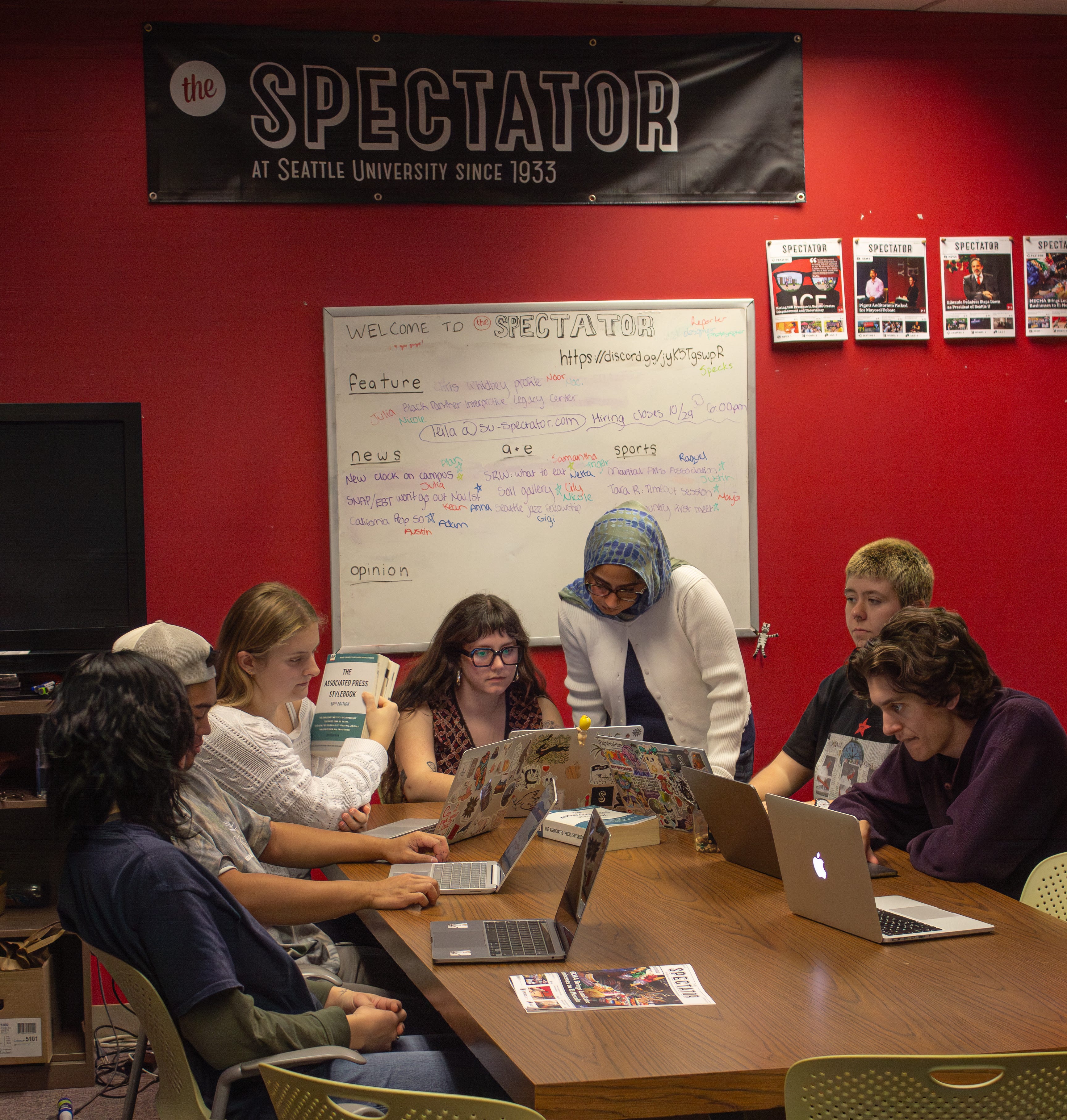
Despite that, the university’s official student media policy still states that the university has the “final authority in matters of policy, practice, and content because the university, as publisher, is legally responsible for the content and conduct of all its publications.”
There’s no active effort to rewrite this policy, Bunker said, because it hasn’t been enforced. But she said there’s a lingering concern that the university could hire a more repressive advisor in the future.
Barbara Allen, who writes the College Journalism newsletter, views administrative stonewalling as a fundamental failure of a university’s mission.
When administrators treat student journalists as “reputational risks” rather than learners, they abdicate their role as educators, she said.
“Can you imagine a university shutting down a chemistry lab because a student mislabeled some beakers?” Allen asked. Yet, universities often punish student reporters for doing what they’re supposed to be learning.
To navigate this, Allen suggested students develop a playbook to handle the friction. This means proactively explaining to the audience why access denials are harmful and empowering sources with the knowledge that they can speak to the press legally.
The goal isn’t to look like a victim, she said, but to normalize the tension that naturally exists between the press and the powerful.
Ultimately, whether public or private, Allen said universities wield massive control over students’ finances and futures.
“It’s incumbent upon us in a democracy to ensure that someone holds its power to account,” Allen said. “And there’s no better university watchdog than student media.”
❌ Related to this week’s kicker, The Long Beach Current’s editorial board wrote: “There is no reason why student reporters should struggle to get in contact with administration when we are both working towards the same thing: getting information to the student body.”
🚨 Three CU Boulder student reporters were banned from campus for two weeks following their coverage of a pro-Palestinian protest on campus, El Diario de la Gente reports.
🍪 Check out this case study that I wrote about how a bake sale and a plan launched The Stevenson Villager’s newsletter
📱 A high school student wrote: “The way Gen Z consumes news has changed. Journalism needs to change with it.”
Applications for the 2026 USA TODAY CO. Forward Summer Internship Program at multiple locations across the country are now open.
Applications for the second cohort of the Ida B. Wells Society Investigative Reporting Fellowship are now open.
Marketplace is looking for a digital intern.
The Los Angeles Times Studios is looking for a production intern.
The Paris Review in NYC is looking for a full-time editorial intern.
Apply to McClatchy’s 2026 Summer Internship Program across its 30 markets.
The Texas Observer is accepting applications for its 2026 election internship program until Dec. 31.
Comments
Nothing yet. Say the first thing.
Sign in to join the conversation.