
New Jersey has launched a competitive procurement process for new nuclear capacity under the Power New Jersey Act signed last month. The framework targets at least 1,100 MWe at pre-approved sites and carries an estimated $24 billion price tag.
Westinghouse’s AP1000 reactor sits coincidentally at about ~1,200 MWe.
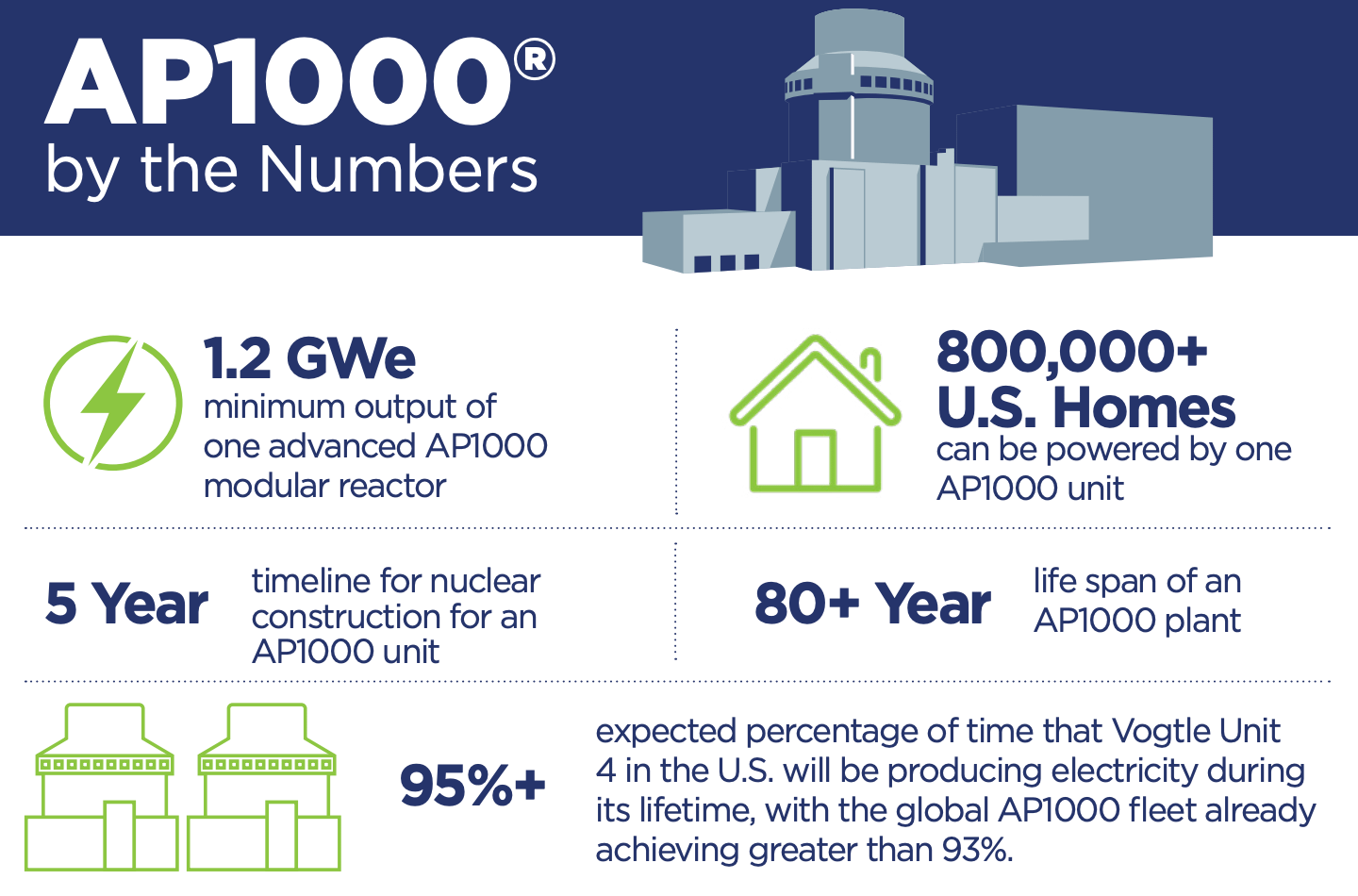
State officials are emphasizing shovel-ready locations and lessons learned from earlier projects to accelerate deployment. Federal financing tools that can cover up to 80% of costs are expected to play a central role, such as from the DOE’s Energy Dominance Financing Office.
Several utility pairs already sit in advanced planning stages across the country, with work progressing on long-lead items and financing models that range from federal build-own-operate structures to support for existing operators.
Don’t forget to subscribe for future nuclear industry updates!!!
While NJ state officials and the current procurement documents continue to describe the effort as targeting 1,100 MW, the underlying economics and signals from the federal side point to something larger.
Cameco (and MIT) has been clear that meaningful cost reductions are likely to appear on the third and fourth AP1000 units, and the DOE’s broader program has consistently favored paired reactor deployments that allow shared infrastructure, long-lead procurement, and supply chain efficiencies.
Given that the PSEG Early Site Permit already authorizes two units at the site, the publicly stated 1,100 MW floor may simply be the minimum the process is required to deliver while the actual project that clears the competitive negotiation ends up being a full two-reactor plant once the federal financing package and execution commitments are locked in.
Cameco and Brookfield bring the obvious advantage to the New Jersey process. Their controlling stake in Westinghouse, combined with direct involvement in the federal large-reactor program and Brookfield’s separate partnership with The Nuclear Company to scale deployments, positions them to handle the capital intensity and leverage federal backstops at scale.
The state is also making clear that they have a significant preference for large reactors instead of the yet-to-be-fully-demonstrated SMR designs:
“While the governor said small modular reactors could eventually be viable at sites like Oyster Creek, she emphasized wanting to see “a little proof of concept” from ongoing international and out-of-state builds first“
Cameco shares have posted gains of roughly 24% over the past year as the nuclear investment case gained traction.
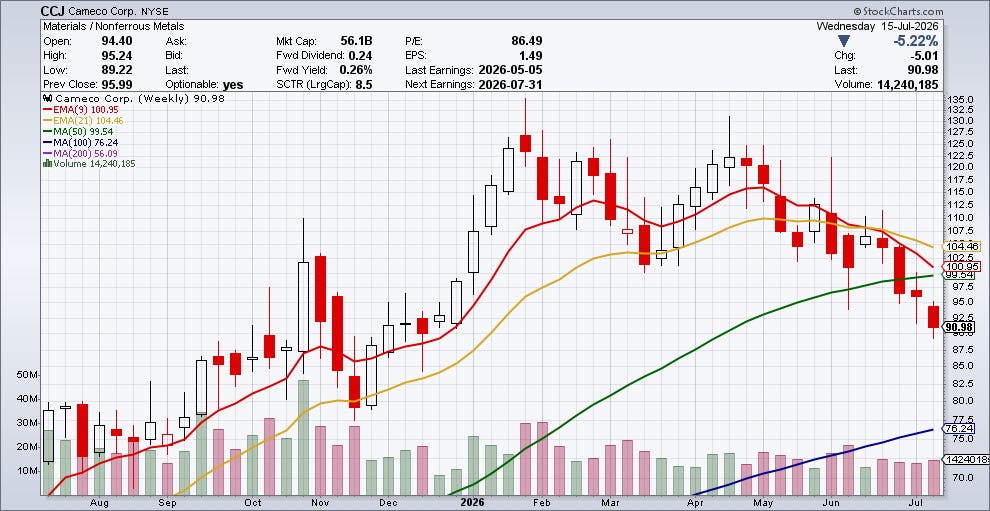
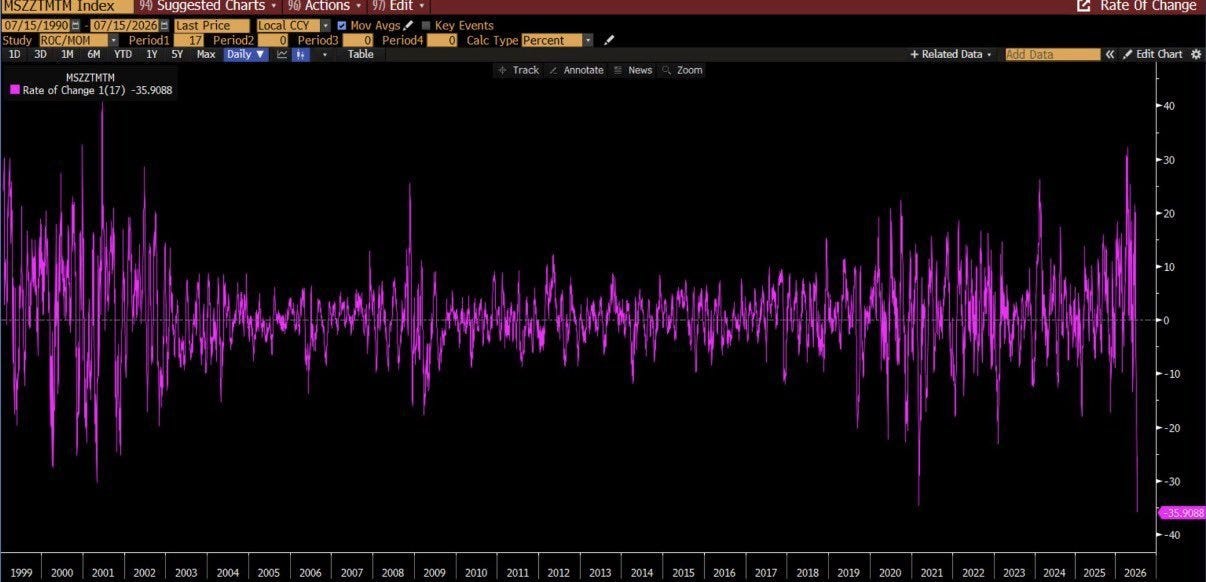
But, near-term trading has been more mixed, with some pullbacks coinciding with the momentum trade that nuclear has trended with over the past couple years.
Comments
Nothing yet. Say the first thing.
Sign in to join the conversation.