
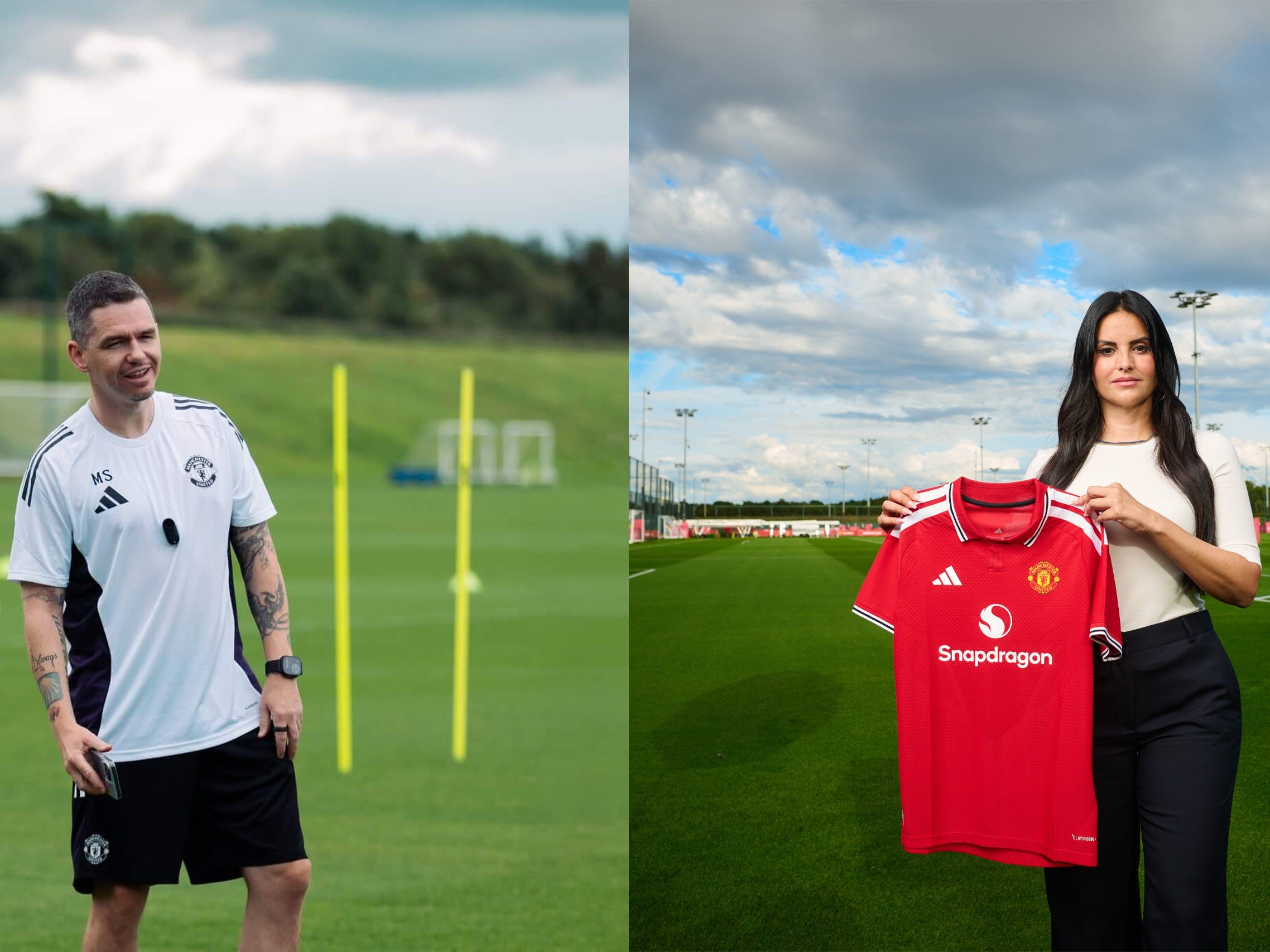
Marc Skinner left United by mutual consent on Monday. It came at leaast four months too late. By Wednesday lunchtime, Eva Olid had been announced as the team’s third manager since its reformation eight years ago. By the time the club had finished briefing the reasons for change, one word was already doing some heavy lifting. Sustainability.
That brought plenty of eye-rolling from burnt-out United fans who translated the corporate double-speak in milliseconds. Sustainability means spending less. It means selling good players, reducing overheads, and focusing on cheaper alternatives such as players from the academy.
Years of trying and failing to keep pace with Chelsea, Arsenal and City are now over. Is fourth, or perhaps even worse, the implied ceiling?
Fans’ reaction to Skinner’s exit tells you how weird his five years at the club really were. He’s never been popular. I mean, never. Matchgoers found the football stodgy. And even if Skinner’s strategy could produce good results, there certainly wasn’t a plan B.
Players didn’t all warm to him either. The abrasive style meant that Skinner was better at telling people what he wanted than bringing them with him. It worked for some but not for all. By the end, that personality had frayed his relationship with the squad and possibly with the higher-ups too. At least twice during those five years, he looked like he might walk. Or be pushed. It’s accepted lore now, and it’s why a chunk of the fanbase greeted Monday with relief.
By contrast, look at what he did with what he had. Under Skinner, United won the 2023-24 FA Cup, the club’s first major trophy. His teams reached four major finals in all. Last season’s run to the Champions League quarter-finals stood out. Skinner’s team finished second in WSL one year, third another.
He’s a manager of contradictions, though. Amid the FA Cup win and Champions League runs came a fifth place and last season’s fourth. There are fans who found him abrasive and found the style inexcusable for a United manager. They can also point to the trophy in the same breath.
And whatever the failings, most of his work came on the fourth-largest budget in the WSL, at a club unwilling to invest upfront for success down the line.
The timing is hard to reconcile, though. Even if his time at the club was at a natural end, May was the time to replace him, not four weeks before the new season begins after pre-season training has already begun.
On Skinner’s side, here’s a manager with palpable frustrations. He spent the back half of last season saying what needed to happen at United: he wanted investment. He said it in public more than once. He didn’t get it. He rarely did.
If there’s one story that sums up the state of MUWFC, it’s Ratcliffe’s entrance in 2024. As part of his partial takeover, he personally invested around £225 million into infrastructure at United, including £50 million into Carrington. The new building is magnificent.
But prior to Ratcliffe’s arrival, United women got a new building too: a dedicated £7 million high-performance training facility. After years of using portacabins without loos, something was finally theirs.
Then, within a few months, they were turfed out so the men could use the space while the main site was refurbished. They were decanted because somebody was considered more important, as usual.
This incident was not a one-off either. It’s been the pattern for the past eight years.
The club rebuilt a women’s team in 2018, having abolished the last one in 2005 to save about £1 million a season. Typical of the Glazers, knowing the price of everything and the value of absolutely nothing.
In the years since, the women’s game has begun a boom that changed everything. England won a European Championship. Crowds climbed: 60,000 at Arsenal and 90,000 at Barcelona. The WSL television deal multiplied. There are now multiple million-pound signings in the league, something that was unthinkable just a few seasons ago. It has almost become normal. Just not at United, of course.
The club watched all of it happen from the sidelines, doing as little as possible to join in. They haven’t invested in star names. In fact they let the ones they had leave for nothing. Marketing for matches held at Old Trafford has been lacklustre, as have the crowds. The club finished in the mix on the pitch and stood still off it. Season after season, while the clubs around them built and grew.

There’s a lazy line trotted out by pundits who know nothing about the women’s game and by no-name misogynists on social media: the women’s team loses money and is subsidised by the men, so why should it get a budget?
Money may be fungible, but that’s not how WSL financing works. MUWFC is funded through gate receipts, WSL broadcast rights, and a share of the club’s overall commercial rights. Contracts are structured to reflect it. Television money has grown substantially. The commercial market has grown. A rising tide lifts everyone in the women’s game. United have chosen to punch a hole in the hull.
So let’s reframe the narrative a touch. Winning the FA Cup, reaching a European quarter-final, and finishing consistently near the top while being outspent by everyone above and physically evicted from your building. In context, it’s more than a modest return. It might even be an overachievement, delivered in spite of the institution, not because of it.
When a club parts with a manager who has overachieved on scraps and does it while briefing about a cheaper future, the football was never really the problem.
You’ll remember the stories from a year ago. Project 150 is the goal of winning the Premier League to mark the club’s 150th anniversary. Then came Project One, less heralded but just as important: winning United Women’s first WSL title. CEO Omar Berrada set a target for 2028.
That’s gone now, isn’t it? The new direction is a focus on developing talent through United’s academy. Bring younger players through; stop chasing the top of the market, if the club ever did. Olid has been hired to do exactly that. The reporting is blunt. Olid has to prioritise homegrown talent over signings.
There is a real case for that, just not in isolation. Fans are understandably cynical, but the model is legitimate. Like Tier 1 Premier League academies, elite women’s football is churning out talented teenagers. United can do the same. They just can’t beat the market on that strategy alone.
There’s a history worth honouring too. Not long ago there was no first team at all, and local girls had to move elsewhere. Some of them even went to City because United offered no route to the first team. Building a pathway is positive. Nobody objects to trusting youth as a general principle.
But that is not all the word means here. Everyone knows it. If the issue was only about funding a commitment to development, it wouldn’t need wrapping in the language of financial restraint.
The club’s tell is that Olid will reportedly work under tighter limits than Skinner, not looser ones. Sustainability is not a plan for how to build from here. Ratcliffe and company want to spend as little as possible.
The history makes it worse. The club folded the team in 2005 to save money. Two decades later, having built the team back from nothing, the club is once again talking about academies and sustainability.
We’ve heard the doing-more-with-less narrative, and we don’t believe it.
That’s the past. The future is even more frightening. There’s already a clear-out at United this summer. Leah Galton, Hannah Blundell, Millie Turner, Lisa Naalsund and Melvine Malard have all left. In isolation, each makes sense. Together, they gut a squad that has been replaced by one senior signing, Andrea Medina from Atlético Madrid. Will more good ones leave and not be replaced?
While United scrimp, the top of the WSL is pulling away. Chelsea have strengthened again, signing Malard from United for a club-record £850,000. Arsenal broke the world record themselves last summer and have added Georgia Stanway and Ona Batlle this year, the latter another former United player. City won the league at a canter and have celebrated by acquiring Beth Mead from Arsenal.
Then there’s the London City Lionesses, who weren’t in the top flight until recently and have begun an aggressive hiring spree. This summer’s headline signing is Alexia Putellas, the former Ballon d’Or winner.
Owned by Michele Kang, the American billionaire who also owns Lyon, the club has begun assembling a squad to compete for trophies. Last summer London City spent a world-record £1.4 million on Grace Geyoro from Paris Saint-Germain. Then there’s four-time Champions League winner Mapi León, and the former England and United goalkeeper Mary Earps.
Earps retired from England duty in controversial circumstances that mirrored her departure from United. But the name still resonates: a player whom United wanted to keep but couldn’t or wouldn’t compete for financially.
While finances are dictating MUWFC’s every move, the owners still justify the strategy through base commercial logic. Value, growth, return on investment. It’s the vocabulary of people who understand assets. Point that lens at the women’s team, and United’s caution is far from prudent.
Investment versus return in women’s football is cheap now. It’s about to become a lot pricier. As audiences grow, television revenues climb alongside them. Crowds are growing too. WSL games drew 902,981 spectators across 132 matches last season, averaging 6,841 per match, a 2.7% year-on-year rise. Arsenal averaged over 33,000. Chelsea’s crowd are near 9,000. United around 6,000, which isn’t all that bad for a newish team.
But crowds will keep growing, especially as fans get priced out of Premier League football. Kang can see the curve, which is why she is investing so heavily. Chelsea can see it. Arsenal can see it. The numbers point up and to the right.
United as an institution should have deeper resources than almost any of them. They can see the same curve and have chosen this moment to pull back anyway. That’s not caution. The club is dressing up its ninth season as a new strategy but is really the tight-fisted myopia of old men who couldn’t give a shit about the women’s game.
The price of catching up grows with each passing day.
This brings us to the coach who has walked into the mess. Olid is a good coach on her merits. She spent time at Houston Dynamo’s academy before arriving in Scotland five years ago. Under her guidance, Hearts climbed from the bottom of the Scottish league to secure their first title in five years. She’s built a reputation on developing young players, improving the ones she has, and playing decent football as well. On paper, she’s an exciting appointment that draws obvious analogies with Sir Alex Ferguson’s path to United.
That’s also a trap. United’s management are already marketing the appointment as a continuation of the club’s heritage. She’s an overachieving coach from a provincial club who fits the United story, in the tradition of the United Way. It’s a clean thread from Busby to Fergie to a story about the team’s new priorities. Tidy marketing that misuses the club’s identity.

My problem is that the analogy is misleading. United are using the club’s heritage, its hard-won association with bringing young players through, as wrapping paper for penny-pinching. It’s an invocation of heritage to justify suffocating the team. The United Way was to believe in something and then pay for it too. Busby built the Babes. He also demanded they put money to work on the pitch, not in the bank. In the short term, it’s setting Olid up to fail.
The women’s team has spent years building an identity of its own, largely because the club never fully embraced it. That identity is real, and it’s theirs. It shouldn’t now be borrowed back and stuck on the front of a cost-cutting exercise. And it shouldn’t be the narrative that places a new young manager in the crosshairs for the inevitable challenges on the pitch.
We now need to reset the bar. That 2028 vision to win the WSL is all but gone. United are investing less than Arsenal, City, Chelsea and now London City. Spurs were close last season as well.
Olid cannot win the WSL on a penny-pinching budget. Success now means something smaller: a coherent playing style and academy players stepping up. Perhaps even flourishing. It means staying in touch with the European conversation rather than sliding out of it.
Success can also mean a happier dressing room than the one Skinner left. None of that needs a marquee signing. Some of the new strategy might even work.
But sustainability also has a floor as well as a ceiling. That floor is the fear. In a league that’s inflating this fast, standing still is going backwards. If investment is flowing elsewhere, fourth becomes fifth, becomes the wrong half of the table. Academy development takes years; rivals are spending now.
It is perhaps apt that the season opener on September 4th is against Kang’s London City Lionesses. Olid’s first 90 minutes in charge versus the team that has the polar opposite strategy. Ratcliffe versus the billionaire newcomer who looked at the women’s game and decided to buy into the future. United’s owner is the dinosaur who looked at the same opportunity and counted the cost. Earps, Geyoro, Putellas, León and the rest will be in the other dressing room. Nobody could have drawn a better fixture for the moment.
Sustainability might turn out to be the foundation of something new. It’s more likely to be surrender wrapped up in a bow. Lipstick on the proverbial pig. What’s certain is that United’s owners have decided how much their women’s team is worth to them. Not much of anything. It’s come at the worst possible moment. Perhaps this is the zenith, and we build from here. On the evidence of the past eight years, don’t bet your house on it.
Ratcliffe couldn’t care much for his.
What do you think? Make sense or nonsense. Let us know!
No posts
Comments
Nothing yet. Say the first thing.
Sign in to join the conversation.