
I remember it as a year of anticipation. In between trying to figure out how the hell geometry worked and the best way to blow-dry my bangs, I spent a lot of time waiting to be able to do what I called “important stuff.” Tour colleges. Drive a car. Host a Sweet 16. French kiss someone, literally anyone. Come to think of it, I was mostly concerned with being anything other than fifteen; an age that felt massively unimportant at the time.
I look at the blurry photos still on Facebook and the whole year tumbles back to me in a rush. It doesn’t feel possible that fifteen years have passed since I last saw most of the faces who wrote BFFL in my 2011 yearbook. Nor that I could have hated my young, size ten body so deeply that I thought skipping lunch was absolutely necessary. The pictures force me to remember all the complex emotions I had around simply existing in the world at what, retrospectively, was such a young age. I was so clueless about everything, especially how very much I still had left to learn.
Some stuff has changed since those days. I toured the schools and had the party. Even got the kiss, only to realize I sort of hate making out. The most prominent similarity is probably that I still use stories as an escape from the world.
The books I read at fifteen were often about characters just slightly older than myself. The Gossip Girl series and its spin-offs, as well as the work of Sarah Dessen. The Sisterhood of the Traveling Pants was another favorite. I was desperate to see young, awkward, anxious women who despite their flaws found a way to be happy. Most of these books had some of that, but it was rare to find a character with all my specific circumstances. It’s part of why I started writing my own novels as a teenager and why I still write today.
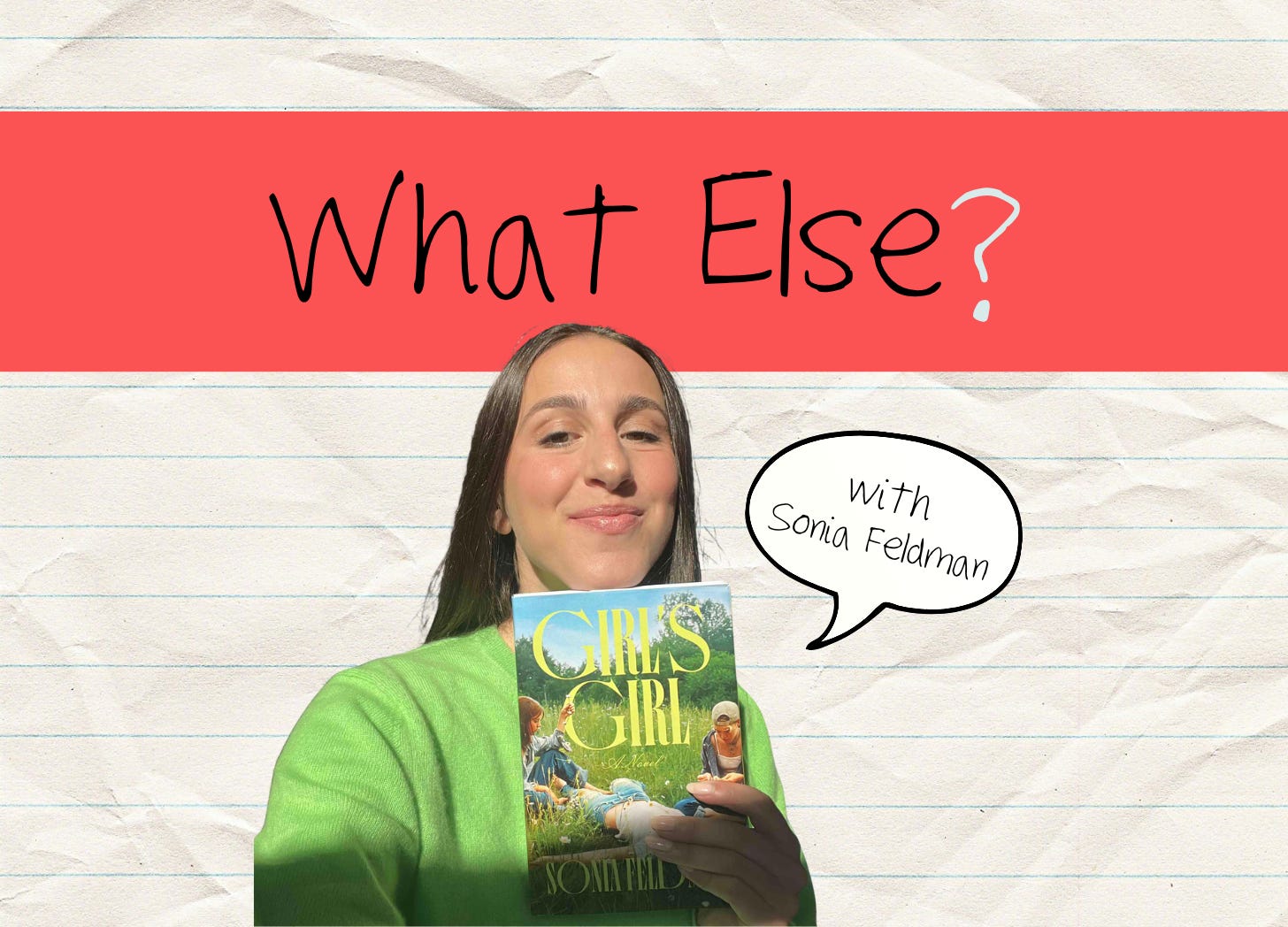
Sonia Feldman felt similarly. A desire to see girls falling for each other and exploring physical intimacy without terrifying repercussions inspired Girl’s Girl, her debut novel.
Mina, Margaret, and Eleanor are near inseparable fifteen-year-old best friends. They share everything from video game cheat codes to personal secrets. But when two of the girls kiss and deeper feelings start developing, they are forced to reckon with the true depth of their relationships to each other. Set during one life-changing Midwestern summer and told from an older Mina’s perspective, this sparkling story explores the complexities of adolescence when you’re just a girl falling for another girl. If you haven’t picked it up yet, rest assured that it’s a great, late summer read.
Sonia spoke with me about her fantastic book. We also dive into her love of video games, low-stakes crafting, and catching up with friends on the phone. Plus, her surprising love of Food Network programming is revealed.
What do you do outside of reading and writing?
I like to do things that are sort of reading and writing adjacent: going for long walks, drinking cups of tea, staring out the window. Talking with my friends on the phone, too, which I consider to be part of the lifecycle of writing.
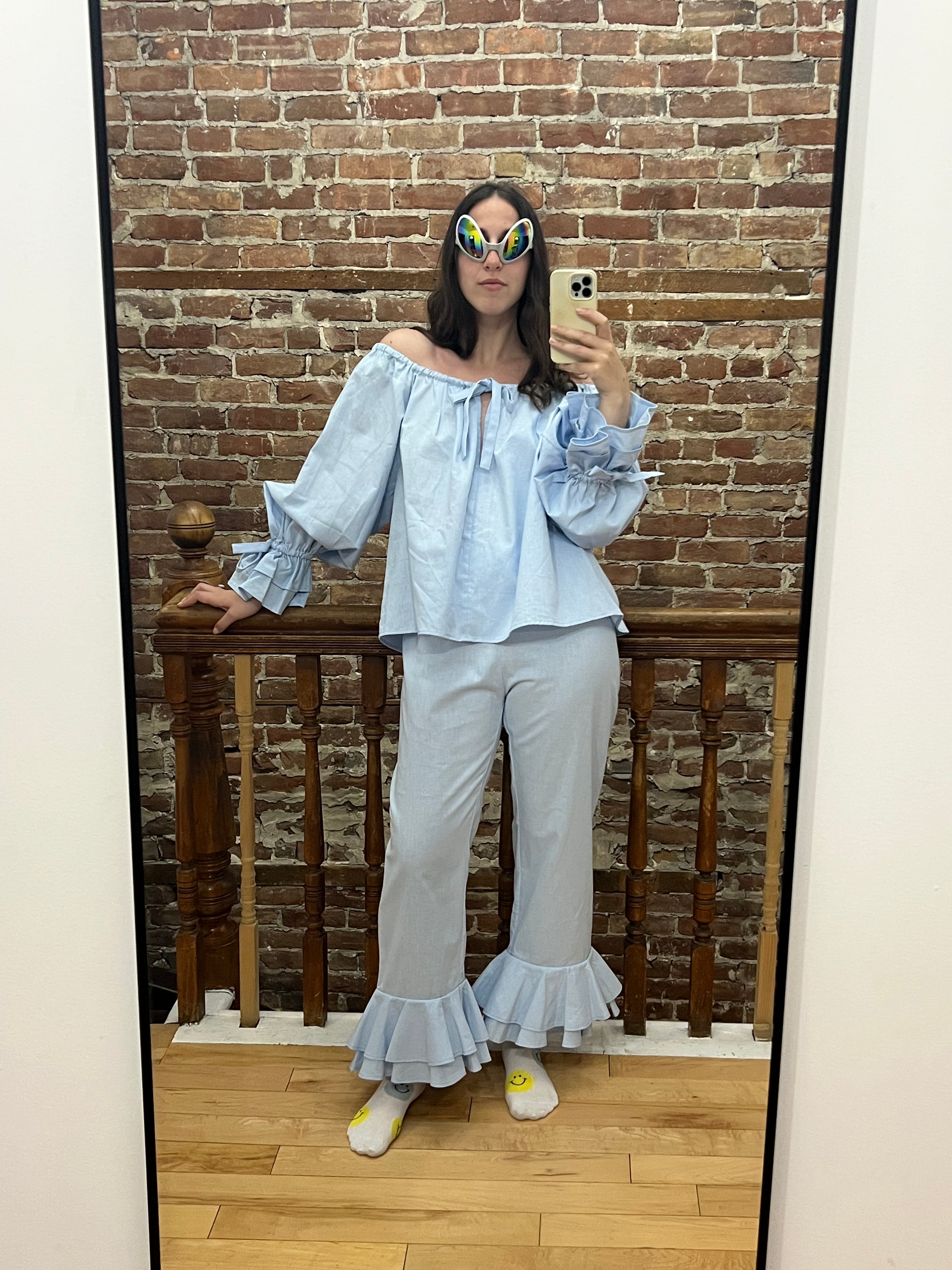
Outside of those activities, I love playing video games, which sort of made it into the book. I also grew up with an older brother, so I have a weird fondness for watching other people play video games. I find it incredibly relaxing. I also like watching culinary competition television shows. And I’m very into low stakes arts and crafts that I do in my journal, or writing people letters and doodling badly. Stuff that feels like art that isn’t for other people. It’s just for my own pleasure.
For me, writing is a very solitary activity. Why do you consider talking to your friends part of the process?
The actual writing gets done alone in my house in gremlin-mode, truly not wanting to be perceived or speak to anyone. But I wrote a book about fifteen-year-olds, so having conversations with my friends about being fifteen, about being a teenager, about the coming of age era, very much fed into the process. Like, asking people what fights they got into with their mom. It also helped me understand the voice I want to tell a story in, which is the voice I would use to tell a story to a friend. It took me some time to figure out, “What is my voice like in fiction?” and that was a really guiding force.
Enlighten me about the world of video games. How did you get into them?
Growing up, I played some of the classic “girl games.” My Scene and Dollz Mania. Those games where you dress up a beautiful, tiny pixie lady in an outfit. I loved them. That translated very easily into my childhood obsession of playing The Sims for an infinite number of hours. I loved going to my friend’s house and playing with their Sims and their expansion packs that I didn’t own. That continued into high school and college. I’ll still play The Sims if I feel like it. I also grew up playing Pokemon and then in college, during finals, I had a simulator on my computer and would play old Pokemon games as a stress release.
The games I grew up watching my brother play are also a huge part of my psyche. The Legend of Zelda and Mario. I didn’t play them, and yet they’re very important and familiar to me: their soundtracks, their aesthetics.
I’ve always been a little confused by people who watch other people play video games. Can you explain why you enjoy it?
An important clarification is I’m not really someone who wants to watch other people stream games. What I like is to be physically in the same space as the person playing the game so I get to participate in the puzzle solving and the strategy. I’m commenting. I’m calling things out about the patterns of attack or helping solve the puzzle in the dungeon or whatever.
Part of it is I love watching anime. I love animated visual art universes that you can disappear into. Video games are doing that for many, many hours. You get to solve problems with a beautiful soundtrack in this alternate space. I find that incredibly soothing.
What I’m almost always looking for—and this happens through writing and reading, but it also shows up in the other things that I do—is to be totally absorbed, to be unaware of regular reality. I want to be in a hard focus state, to have to come up for air as if I were submerged under water. I want to be that involved. I need many hours a day of it. I’m playing a game right now called Sea of Stars that’s a classic role-playing game where you’re doing little tasks to accumulate success. Everybody’s getting new outfits and new powers. The Sims can be like that, too. You’re just going up and up and up.
It’s so interesting for me to talk to women, queer, and non-binary folks about gaming. I’ve always had the perception that it’s a really toxic, male-dominated world.
There’s two sides to it. On one hand, there are games developed with women in mind. But on the other, I like playing Battle Street and other fighting games. I find them satisfying, the puzzle solving/chess match aspect.
I often caveat myself and say, “I’m not a real gamer” because I didn’t grow up playing Call of Duty. I’m not into Fortnight. I’m not playing the biggest, classic, “what we think of when we think of a video game” games. And yet, all these other games I do play are as iconic, well-developed, and present. The Sims as a franchise has existed for twenty-plus years. It’s a huge cultural institution. For queer people especially, it’s a space of investigation. You get to have a body that you can change. These games play really important roles in people’s lives and are complicated works of art in their own right, even though they’re sort of in the “girl” category.
You watch a lot of competition cooking shows. Which ones?
I started off as a Top Chef watcher. I entered through the lens of reality TV. I am not an amazing chef, but I love the Bravo-esque drama of these people being locked in a house together under professional distress.
Now, I watch Tournament of Champions, which is part of the Guy Fieri universe. He has an entire ecosystem of culinary competition shows. Tournament of Champions is the most competitive and is full of Top Chef alumni. It’s like watching a sport. There’s also a new one this year, America’s Culinary Cup. Padma Lakshmi left Top Chef and started her own culinary competition show with fancier people, Michelin-star types, so that’s been really fun. Honestly, I think the very best one is a Korean Netflix show called Culinary Class Wars. It’s really impeccable in terms of innovating the form, high quality structure and challenges.
I think the personality type that lends itself to being a chef is a really interesting one and well suited for being on reality TV. Watching these shows, you get to see people go on these very intense emotional, personal journeys in which they come into themselves and their art form. On Top Chef, everyone comes in and they’ve only ever cooked in other people’s kitchens, and here they are getting the chance to find their voice, style, and taste. It’s fascinating to me.
You also get attached to people. There’s a chef named Bryan Voltaggio who was a Top Chef runner-up three times. He was very accomplished, but always coming second. And then he just won the most recent season of Tournament of Champions. I’ve literally been watching him cook on TV for a decade, and I just saw him achieve his dream. That’s why I’m into it.
Have these shows sparked any cooking or foodie interests in you?
I really like baking, but that’s because dessert comes out at the end. But generally speaking, I’m not a chef.
I will say the process of watching people cook over such a long period of time has definitely helped me gain a lot of familiarity with knowing what flavors go together. Ambient culinary information seeps into me. It’s an important survival skill to be able to make a reasonable dinner. But I also think part of the reason I like watching it is that I’m not a chef. It’s people doing something other than what I’m doing.
Elaborate a bit about your crafting. What are you into?
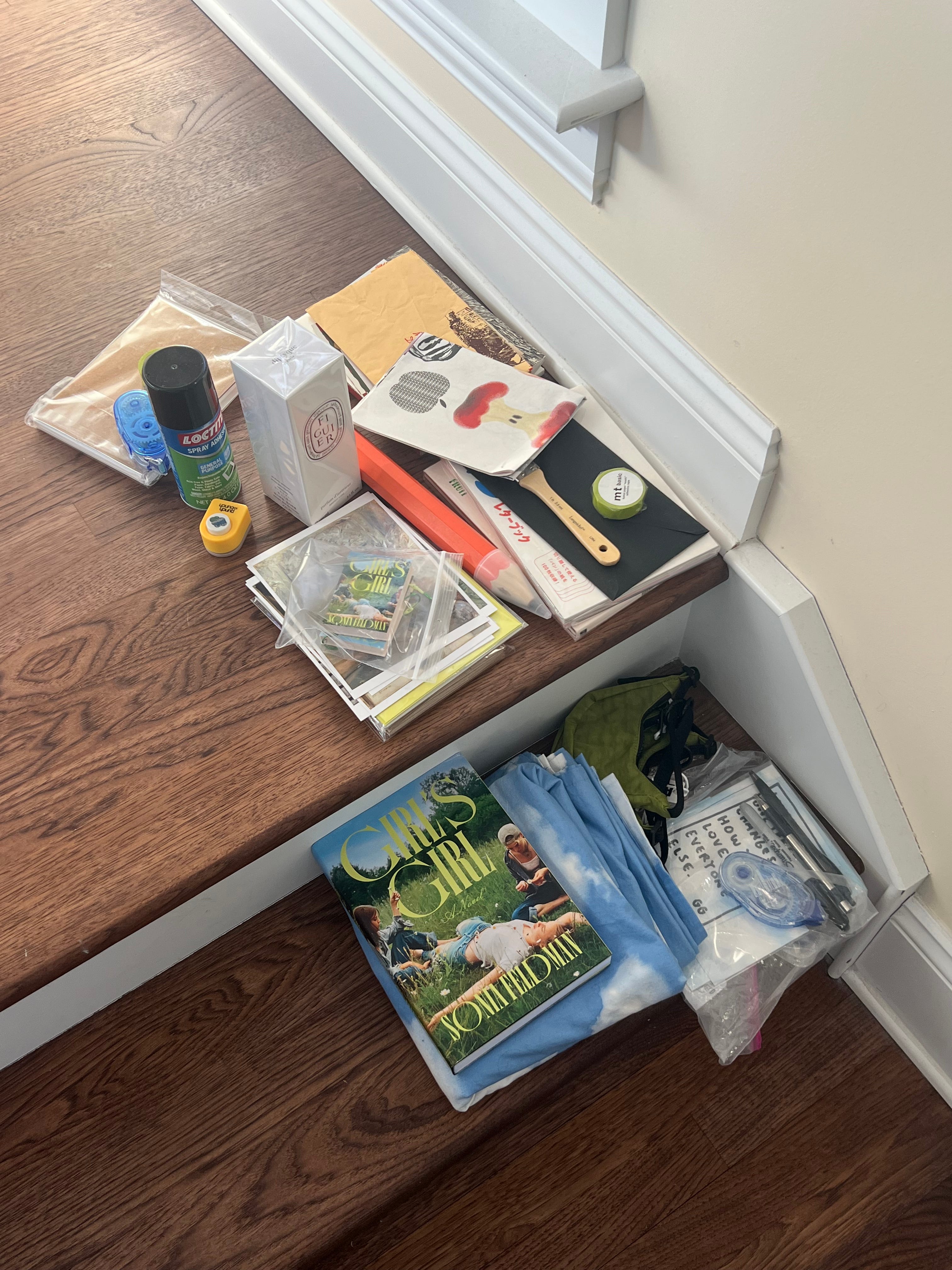
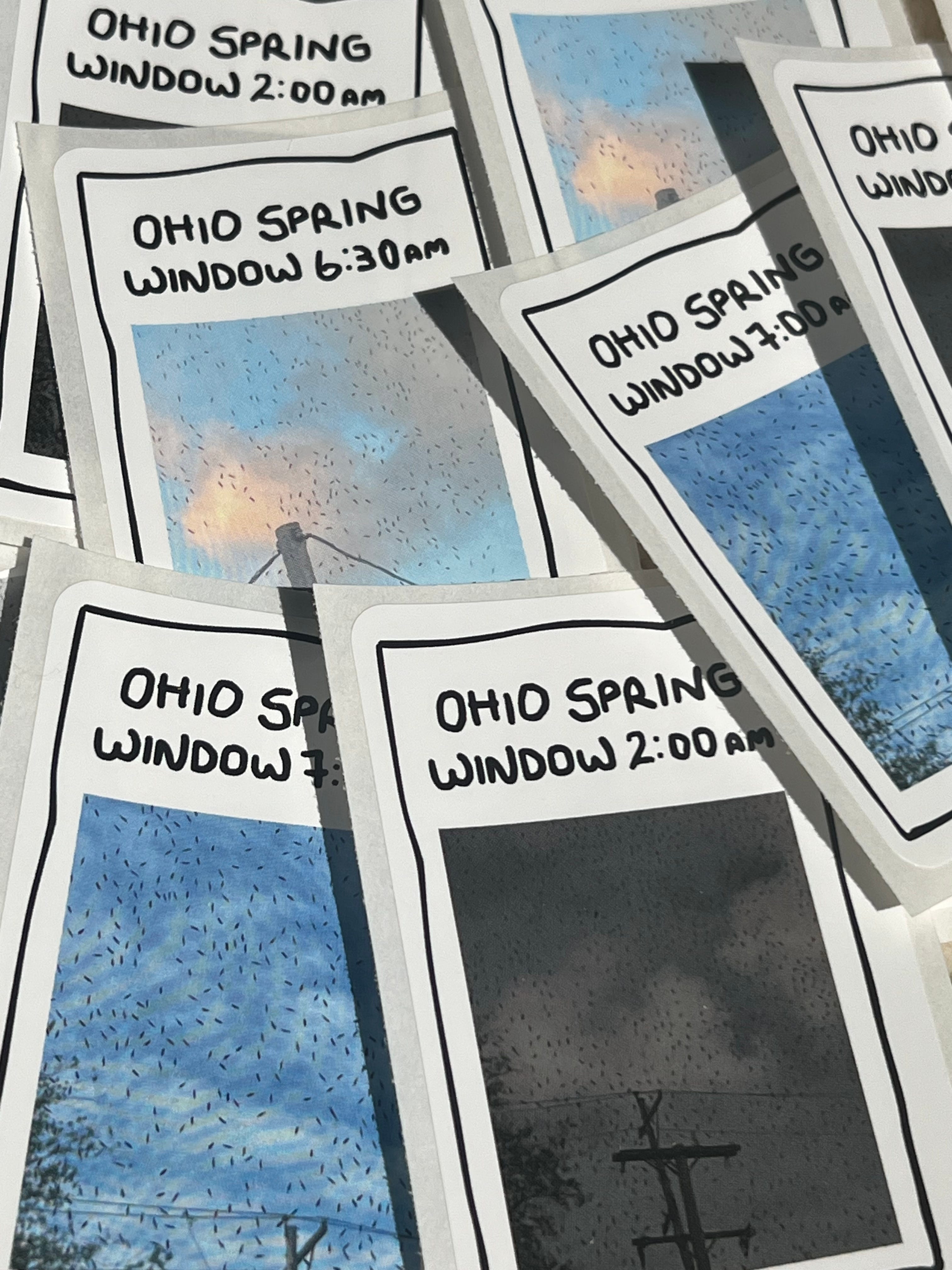
A lot of it centers around having a journal as a physical object. I really enjoy writing as a physical act and the satisfaction of being able to touch the pages. I like the journal more if it’s filled with scrapbooking materials. I put in tickets, stickers, receipts. I grew up as a scrapbooker. I would save everything from the year. I’m not as committed to the full documentation at this point, but I love going on a trip, being out in the world, and accumulating paper ephemera. Then I sit down, put on music, and elaborately tape everything in to different pages. I find it also changes the way I write in the journal. Sometimes I’ll have one beautiful page with a million things on it, but often I’m putting individual objects on different pages, and when I get to that page, the white space is shaped around whatever I’ve put in there. It will change whatever I write on that page in an interesting way.
I’m constantly assessing my own work for whether or not I like it and if I want to share it. My art is part of my professional life and my identity, so it’s important to make things that are definitely bad and only for the pleasure of making them.
That’s so healthy.
I can’t do it all the time. It often happens because I’m in such a bad mood that I’ll become obligated to arts and crafts.
Let’s chat about Girl’s Girl. It’s insane that it’s a debut because it’s so good.
Thank you.
I’ve always been fascinated by the challenging dynamics of a triad of friends. Why did you choose a group of three girls as your focal relationship?
I think a group of three is the smallest number of people who can truly have a group. Two people are just in a one-to-one relationship. In a trio, every leg of the triangle has its own dynamic, and then there’s the question of how that reflects into the three of them. The book is such a deep dive into their hearts and minds. I thought about how I would do that the most efficiently so I can get the most payoff for each person. Three was the smallest unit it was possible in.
Three is also inherently challenging because it’s not evenly divisible. There’s such narrative possibility that comes from the question of which two are closer in any given moment and how the third feels about that. That was something I could reiterate over and over again with different inflections for the different girls. Being a part of that social dynamic is also feeling like you’re the third when you’re not, or feeling like you’re the close ones when you’re not. In what ways are each member of the group perceiving themselves in relation to the others and how are the others perceiving the same circumstances from their perspective?
The book is set in the summer. I feel like there’s something about this season when you’re young that sort of gets lost when you’re older. Why did you choose this time setting?
This kind of summer is quintessential to this era of life that in some ways is irretrievable at any other age. When you’re a teenager, that season is a huge shift in routine and in perception of time. I wanted to explore that.
I also knew I wanted to write about fifteen-year-olds for an adult audience. They have important relationships with their mothers. They are living with the restrictions put on them by their families. They can’t drive. They don’t have infinite access to the world. There were all sorts of ways where I really wanted them to be fifteen. And there was one way where I didn’t really care about it, which is that they would have to attend school. I wanted to have access to the social and emotional reality of this era without being obligated to discuss them going to class.
The book is quite a tight circle in terms of what it is looking at. There are very few total named characters. There are no named men in the book. I liked that summer would allow them to be in a really insular world. And then there’s also that thing that happens when you’re that age where any given day feels like it could totally change your life. I think that’s extra true in the summer, the specific anxiety of how will we be transformed by this era of time before the school year starts? It was a pressure I wanted to put on them.
Writing about teenagers feels hard to me, probably because I don’t want to go back there in my head. Did you find it challenging?
I didn’t. For one, it’s told from the perspective of an adult remembering being a teenager, so the narrator isn’t literally fifteen. She’s an adult giving an account of the experience of being fifteen. It’s very close. It has access to the era; a language for describing the experiences that an actual fifteen year-old would not have been ready to describe in the terms that the adult narrator is describing them, even though the adult narrator withholds the information so you find it out as the story goes on versus totally letting you know what happens ahead of time.
I also think at the time I was fifteen, I felt narratives told in the voice of fifteen-year-olds hugely undersold the intelligence and expansive inner life and consciousness of people that age. A fifteen-year-old is a full human being, perceiving their life with their full mental capacity. It was about how I got into her head, immersing myself in her concerns. But it wasn’t about how to be fifteen. If I’m thinking about the things that she is thinking about, then I will tell the story in the way that she will tell it.
There’s also a thread of first love, or at least first crush. That feeling has so much power over people as they become young adults. Why do you think that is? Why did you want to play with it in the book?
I, as an adult writing the book, wanted to ask questions through the story that I was afraid to ask during the era of life that the book is exploring. What happens to the intense, physical and emotional intimacy of friendship between girls when sapphic, erotic desire is not just sort of present or an under current with yearning and eye contact, but it’s actually consummated? Not only do they get together, but they move forward from there. It doesn’t remain hidden. It doesn’t end their relationship. How will this not only become real between the two girls, but become real between the three girls? How will it change their dynamic as a group? How will this intimacy change the other friendships that are present?
I wanted someone to go through those experiences and questions in that formative moment. What would it be like if you were fifteen and had no idea what was going on? You don’t know how to be in any kind of romantic relationship, let alone one for which there are so few social scripts to guide you on what is normal. I felt like those stories didn’t exist and I wanted to provide some of them for future people, to have them live through those difficult questions.
So many readers have favorite lines from the novel. Do you have any that you particularly love?
People have told me one of the more common favorites is, “I was the least chill person on earth” paragraph, which came from a place of intense emotion and yet also has this humor that felt very true to the book as well as being fifteen. I’m glad that’s connected with people.
There’s also a line sort of two-thirds of the way through that goes, “What are the steps of loving? They exist uniquely between every two people who attempt to climb them.” That felt completely true to me when I wrote it, and true to what we were just talking about. What are the social scripts that exist or don’t exist? Even if you have helpful social scaffolding, ultimately the only way to come together with another person is to be figured out by those two people. It’s not replicable or transferable. It’s unique to that relationship. That’s part of what’s so beautiful and scary about loving somebody for the first time, needing to climb those steps.
The very last line of the book, which I wrote almost at the very end of the editorial process with my publisher, is another one. It was really at the end of making the book and it felt like a summation of what I had been thinking in the writing. That line means a lot to me.
Why do you think it’s important to write books featuring queer characters across all ages and stages of life?
I wrote the book that I needed. I think most queer authors feel that way. They want to give themselves something they didn’t get to have.
This has to do with who I am and what I want out of writing, but I read a lot of books with queer teenage girls where if they got to kiss, or even if they never got to, at the end of the book, one of them dies. Literally. Or moves away and is never seen again. Or the friendship is broken. It’s this sort of sad, after effect. I found that incredibly frustrating as a reader. I really needed to see girls kiss, to see girls get together, and not have their literal or figurative lives end. I needed that moment to actually be a beginning.
Part of what frustrated me about those books in addition to making me sad is that I felt like they didn’t answer the questions I needed answered. If you kiss, what happens the next day? What do you text each other? What do you say on the phone? How does it change what it’s like to be in your friend group? If you have a best friend who you have a very physically, emotionally intimate relationship with, and then it turns out that you’re somebody who is capable of erotic desire with women, does that disrupt the way the two of you have always been friends? How do you reorganize what is allowed? If one of your friends is now your girlfriend, can you still tell the other friend how hot she is?
They’re maybe small questions, but I as a reader was always frustrated that the imagination ended before we got to see people’s lives go on. I live through reading books, so we need to see lots of different versions of being alive.
Sonia Feldman lives in Cleveland, Ohio. She won the PEN America PEN/Dau Short Story Prize for Emerging Writers, and her poetry and fiction have appeared in The Missouri Review, The Southern Review, and Waxwing. She also runs Sonia’s Poem of the Week, a popular email newsletter. Girl’s Girl is her first novel.
Comments
Nothing yet. Say the first thing.
Sign in to join the conversation.