
Welcome to the monthly No Wasted Ink Newsletter. My name is Wendy Van Camp and I’m Poet Laureate Emerita from the City of Anaheim, California. This newsletter is not affiliated with the city. All views stated here are my own.
This past month has been busy in the best kind of way. Most of my time has gone into shaping my next poetry collection, and I can feel the project starting to take on a life of its own. The theme is women’s empowerment, which is a subject close to my heart. I’m writing poems about women facing their own mountains. Sometimes in the form of personal obstacles, other times as quiet but determined steps toward a goal they’ve held for years. All of them remind me why I started writing poetry in the first place. Writing literary themed poetry is a stretch from my speculative roots, but it is proving to be a grand experiment. The few places I’ve read samples to seem to love the new work. Which is humbling and encouraging.
I’m mixing up the forms in this book. There will be a selection of narrative poems for the readers who like to sink into a story, but I’m also leaning into my current obsession: the nonet. There’s something satisfying about the way the lines count down from nine syllables to one, like the tightening of a archer’s bow before an arrow is released. I’ve also been experimenting with a new form called the haiku sonnet. The collection will be published by Indigoskye Press once it’s ready.
Not everything this month happened at my desk. I finally took my new art comber bag out for its first real test run. It’s a clever piece of gear that combines a folding chair with a rolling cart. I can pack my little wooden pochade box, tripod, bag of paints, watercolor notebooks, and all the small bits and pieces painters seem to collect. Everything fits neatly, and more importantly, I can get my gear to my painting spot in one trip. No more juggling awkward armloads of supplies while hoping nothing topples into the dirt.
I chose one of our local parks, a place with wide lawns, a small lake, and the kind of open sky that makes you want to breathe deeper. I set up in a shady patch where the light bounced off the leaves in soft greens and golds. There’s something grounding about painting outdoors, especially with watercolors. The air moves across the paper and the colors mingle in unexpected ways. I feel like I’m part of the scene instead of just observing it.
The only drawback was an overly persistent signature taker who wandered into my little slice of peace. She wanted me to sign something. What, exactly, I still don’t know, but she wouldn’t take no for an answer. I would have walked away, but my chair and paints had me rooted to the spot. For what seemed like forever, I was stuck listening to her pitch while my paints dried faster than I wanted, creating cauliflower spots. Eventually she gave up, leaving me alone again with my brushes and the quiet sound of wind in the trees. I was very frustrated and perhaps a bit angry too. When my husband rejoined me with our dog, he reported the same woman had bothered him too.
In the end, it was still a good day. I went home with a new watercolor and the sense that I’d managed to refill my creative well. I was glad to gain practice with my new painting setup, even if I was not happy with the painting. Between the writing and the painting, this month has felt full in all the right ways.
yours in poetry,
Wendy
Many writers and poets dread editing. They feel excited while writing their first draft, but when it is time to edit, they feel stuck and overwhelmed. I understand this feeling. I began writing at NaNoWriMo back in the day. Most of the time I was drafting with abandon to finish my draft. But when it was time to revise the manuscript, I did not know where to go. Editing was a chore. What I did not realize, editing is where good writing becomes great. Editing was my chance to refine my ideas and polish the words so readers felt the power of my work.
Self-editing matters whether you plan to submit to a magazine, self-publish, or share your writing online. It saves time and money, builds confidence, and prepares your work for feedback or publication. In this essay, I will guide you through practical steps to edit your work like a professional.
Take a Break Before Editing
One of the best ways to edit well is to take a break after you finish writing. When you write a draft, you become close to it. Your mind knows what you meant to say, so it often skips mistakes. Taking a break gives you distance. You return to your work with fresh eyes and a clear mind, and you notice things you did not see before.
For short pieces like poems or micro-fiction, a day or two away can be enough. For longer stories, I sometimes wait a week or more before editing. When I come back, I read with curiosity. I see where a line could be stronger or where a section feels confusing. Time will give me enough of a disconnect from the scene to see it.
I remember finishing a poem that I thought was ready to submit. I let it rest for a week. When I returned, I noticed a stanza that felt out of place and removed it. The poem became tighter and more powerful. Taking a break helped me improve my work without feeling rushed.
Big Picture First
Once you return to your draft, start with the big picture. Do not worry about grammar or small word choices. Ask yourself: Does this piece have a clear beginning, middle, and end? For stories, does each scene move the plot forward? For poems, does each line build toward the overall meaning and emotion?
In fiction, check if your characters’ actions make sense. Are their goals clear? Does the pacing feel too fast, too slow, or just right? In poetry, think about structure. Are your line breaks adding meaning? Does the poem’s form match its feeling?
One technique I use is outlining after drafting. I write a brief note about what happens or what is expressed in each scene, from memory. Then, I go through the manuscript in Scrivener and paste these notes into the inspector. (The note part of the file, which is separate from the manuscript.) If I didn’t write a scene note from memory, I list the scene in the manuscript as “forgotten”. These are scenes that are less memorable to me, the writer, and therefore may be to the reader as well. If I see scenes that repeat adding nothing new, I combine or cut them.
Reading aloud also helps with big-picture edits. As you hear your words, you notice if something feels out of place, confusing, or flat. If you can, share your draft with a trusted reader who understands your goals. They may see issues you missed.
Line Edits
After you feel good about the structure and content, it is time for line edits. Here, you focus on sentences or poetic lines. Read for awkward phrasing, repeated words, vague language, or clichés. Your goal is clarity and precision.
Look for places where verbs can replace weaker ones. Instead of saying, “She went quickly,” you could say, “She rushed” or “She darted.” Choose precise nouns that create a clear image. Replace “bird” with “sparrow” or “hawk” if you want readers to see the exact bird you imagine.
Check for clichés like “cold as ice” or “light as a feather.” These phrases feel tired to readers. Create your own fresh comparisons to keep your writing alive.
Make sure your voice and tone stay consistent. If you start in a formal voice and then become casual without purpose, it can confuse readers. Adjust to keep your voice strong.
Reading aloud helps at this stage too. Your ear catches clunky or confusing lines better than your eye does. Here is a simple example from a speculative poem draft:
Before: “Stars fell down onto the ground like they always do in my dreams.”
After: “Stars spill onto the ground, glowing like forgotten embers.”
The second version is shorter, clearer, and more vivid.
Proofreading
The final stage is proofreading. This is where you look for grammar mistakes, spelling errors, or punctuation issues, minor problems can distract readers and make your work look unprofessional.
Read your piece line by line. Reading backwards, from the last line up to the first, can help you focus on each sentence without getting caught in the story's flow. Another helpful technique is changing the font or text size before proofreading. This makes your brain see the words in a new way and catch hidden mistakes.
Using text-to-speech tools is useful too. Hearing your words read aloud by a computer voice can reveal missing words, repeated phrases, or awkward sentences.
Even as a poet, I care about grammar and spelling. While breaking rules on purpose can create style or rhythm, unplanned mistakes weaken your writing’s impact. If you plan to self-publish or submit to a professional market, consider hiring a proofreader for your final draft. They bring fresh eyes to polish your work to its highest level.
Self-editing is an essential skill for every writer and poet. It is where you transform your raw ideas into finished pieces ready to share with the world. Good writing does not come only from inspiration. It comes from careful revision and editing.
Editing may feel hard at first, but with practice, it becomes an empowering part of your process. You will gain confidence knowing you can shape your words into something ready for readers to enjoy. Keep practicing, keep refining, and soon you will edit your own work like a pro.
Text within this block will maintain its original spacing when published
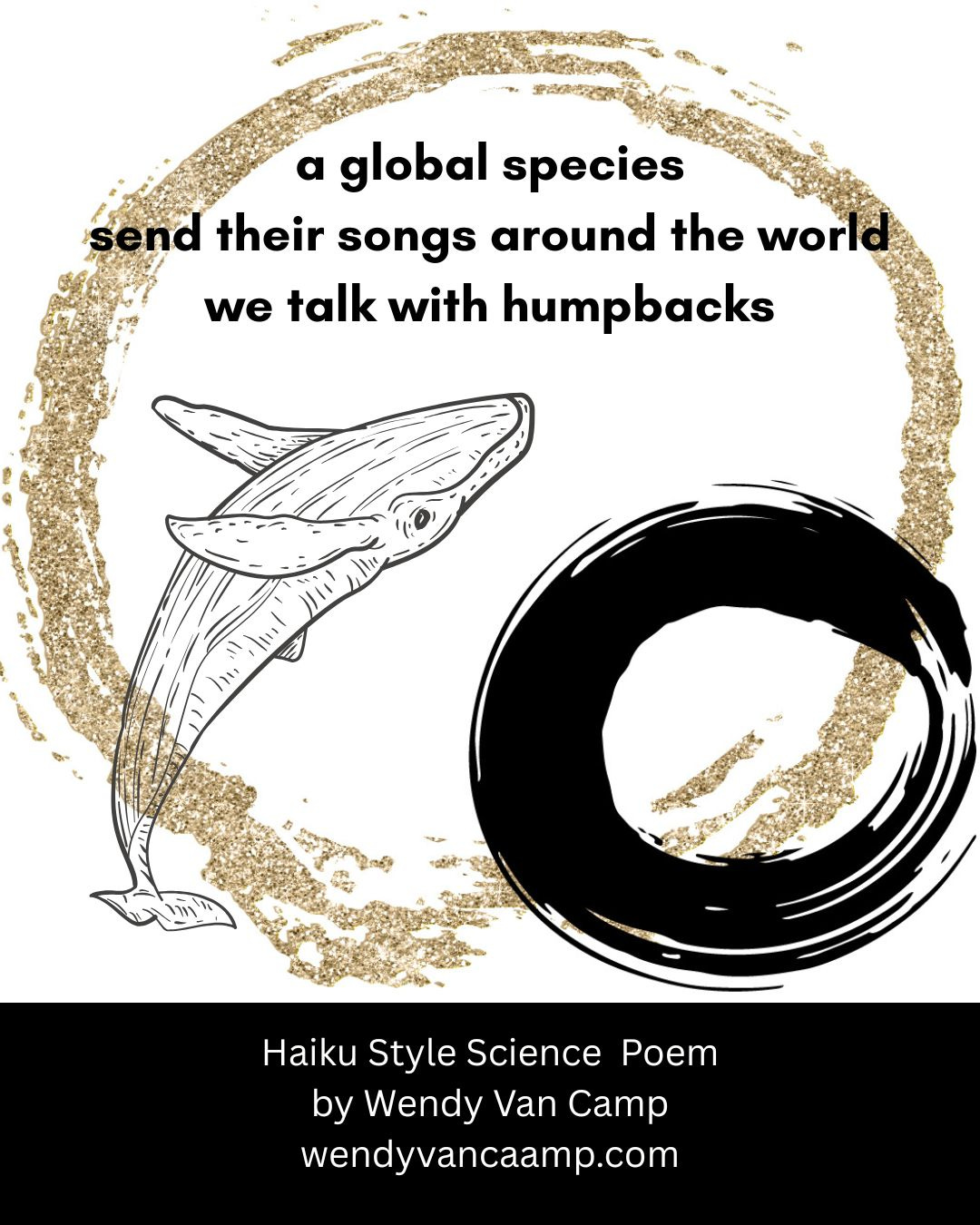
a global species
send their songs around the world
we talk with humpbacks
This is a poem from “Eccentric Orbits 5” from a series of Scifaiku science poems about the study of whales and their language. By using ChatGTP, scientists are creating a “whale chatbot” in order to learn how to communicate with humpback whales. They have had success when a female whale nicknamed “Twain” circled their boat for twenty minutes answering their acoustic call. The whale eventually gave up in frustration, but this was a serious sign the scientists are on the right track. Poem is by Wendy Van Camp
“Poetry in Print: Shaping Your Own Chapbook”
SFWA Planetside Magazine
an essay by Wendy Van Camp guides poets through title, tone, order, and intention. Learn how to create yours at https://www.sfwa.org/2025/07/22/poetry-in-print-shaping-your-own-chapbook/
Part of the SPECULATIVE POETICS series on SFWA's Planetside Magazine!
Ionisphere #47
Bulletin/Journal of the National Fantasy Fan Federation Fan/Pro Coordinating Bureau
Edited by Jean-Paul L. Gariner
My essay "So You Want to Be on a Panel? Let’s Talk About How to Get There" has published in Ionisphere's August 2025 Issue, #47. I give some of the advice I do to my coaching clients about how to onboard a science fiction convention, but this tips can work for literary events too.
Ionisphere can be downloaded for free: https://tnfff.org/12116-2/
ConTinual: Panel Room #200
Beating Writer's Block
It's the 200th episode of The Panel Room!
Join Alyssa Askani, Jamie Garner, Gini Koch, James Pittman, Fraser Sherman, Wendy Van Camp, and host James P. Nettles III to talk about writer's block, causes, and ways to beat the block!
Authoress Cafe Podcast
Episode #9 The Laureate
http://www.authoresscafe.com/?m=1
Take a seat and enjoy a casual conversation, here on Authoress Cafe. This is where you go to your favorite table, at your favorite shop, and enjoy a cup of tea with your hosts, Eugene and Stef. As they talk about forgotten restaurants, new tea flavors, and books for their guest to try for themselves. Poet Laureate Emerita Wendy Van Camp chats about favorite teas, what is speculative poetry, writing routines, and her work as a poetry editor.
If you are interested in Tea Spectral, the sponsor of Authoress Cafe Podcast, please visit: https://www.teaspectral.com/
Use code: 4WENDY to get 15% off anything in the store. Plein Air Tea (which we talk about in the podcast) is also launching online.
with Poet Laureate Emerita Wendy Van Camp
Are you a writer who struggles with accountability? Do you write short stories or poetry and would love monthly critiques via a professional? Perhaps you need guidance in creating your writing career.
Join Poet Laureate Emerita Wendy Van Camp via her coaching service at Indigoskye Press. I offer single hour coaching via Google Meet or a discounted block of 3 sessions you would use once a month for a longer term project.
Ideas of how to use a writing coach:
Help to organize a poetry chapbook or short story collection
Help with indie publishing your novel
How to onboard as a speaker at conventions and conferences
Professional critiques of your short stories or novel chapters each month
Please visit my shop via the link at the top of my portfolio website or go there directly: https://indigoskye.com
Portfolio - http://wendyvancamp.com
Amazon - https://www.amazon.com/author/wendyvancamp
Medium - https://medium.com/@wvancamp
Indigoskye Press - https://indigoskye.com
X (Twitter) - https://x.com/wvancamp
Instagram - https://instagram.com/nowastedink
Mastodon - https://me.dm/@wvancamp
Bluesky - https://bsky.app/profile/indigoskye.bsky.social
The Planets: a scifaiku poetry collection - https://www.amazon.com/dp/B07Z8HMPF2
The Curate’s Brother: A Jane Austen Variation of Persuasion - http://www.amazon.com/dp/B00OU1V45A
ANTHOLOGIES
Eccentric Orbits: An Anthology of Science Fiction Poetry
Volumes 1 - 5
Editor
Available for purchase: https://dimensionfold.com
Anaheim Poetry Review 2023
Volumes 1 - 2
Editor
Free to Read: https://anaheimpoetry.com
Eye To The Telescope: Quests #46 - Fall 2022
Guest Editor
Free to Read: https://eyetothetelescope.com/archives/046issue.html
Thank you for subscribing to the No Wasted Ink Free Monthly Newsletter and voiceover Ramblecast. This monthly newsletter will always remain in full and free to all subscribers. The voiceover is also available as a Spotify podcast. To subscribe via your favorite podcast player, please visit:
Comments
Nothing yet. Say the first thing.
Sign in to join the conversation.