
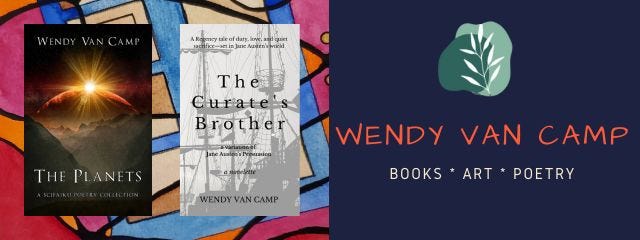
Welcome to the monthly No Wasted Ink Newsletter. My name is Wendy Van Camp and I’m Poet Laureate Emerita from the City of Anaheim, California. This newsletter is not affiliated with the city. All views stated here are my own.
This September was full of small steps: literally and figuratively. I’ve been going to physical therapy sessions to strengthen my legs and improve my balance. Walking with a cane is part of who I am, but I want to move with more confidence and less strain. The goal is to stay strong enough to keep traveling to writing conferences and art events. Plus, I miss spending quiet afternoons urban sketching city corners or painting a watercolor scene at the park. Each session feels like a step closer to getting back out there.
This month also brought the first official release from my small publishing imprint, Indigoskye Press. My PDF digital edition, Every Word Matters, is now available on my website. It’s based on the popular presentation I’ve shared at conferences, science fiction conventions, and museums. Turning that talk into a downloadable journal felt like the right next step. I’m already planning more editions for poets and writers, with the hope that Indigoskye Press can grow into a creative hub for the literary community.
Of course, September wasn’t all smooth sailing. I was involved in organizing a local poetry festival that ended up being canceled after months of preparation. It was disappointing, especially since it would have featured three poets laureate from our county and our California State Poet Laureate, Lee Herrick. I’m grateful to the bookstore that supported us along the way. The owner went the distance to try and keep our event afloat.
Meanwhile, my duties with SFWA kept me on my toes. The organization is moving to a new communication platform and preparing to launch Quasar, an affordable online conference that includes access to programs like my committee’s poetry book club and open mic series. Our poetry committee has been offered a panel at Quasar and I will be the moderator.
Another highlight of the month was attending EagleCon at Cal State Los Angeles with my poetry troupe, The Starlit Scribes. We presented a one-hour reading and spoke about SFWA, SFPA, and HWA to a lively audience of about eighty-five writing students. The energy in the room was amazing. The students asked thoughtful, engaging questions during the Q&A, and many stopped by afterward to chat and buy books from us. I couldn’t have been prouder of our group. Everyone showed such professionalism, and the quality of the poetry this year was truly impressive. Each time we perform together, I can see how much our poets have grown and refined their craft.
To top it all off, I was accepted into ArtNight Pasadena to exhibit my Fantasy Poser artwork. Preparing for that show means organizing prints, updating certifications, and setting up my display. It’s a lot, but it’s the kind of busy I enjoy. September might have been exhausting, but it reminded me how much I love being part of creative communities, whether I’m writing, painting, or just taking one careful step forward at a time.
yours in poetry,
Wendy
As a poet, I’m best known for writing scifaiku, short poems written in the haiku style but focused on science and science fiction themes. They blend the wonder of outer space with the precision of poetic form, often inspired by astronomy, science, and imagination. Many of my poems explore the planets, stars, and distant worlds, which became the foundation for my debut poetry collection The Planets. Over the years, my scifaiku have been published in journals around the world.
I first started sharing my poetry on my blog, pairing each poem with a simple illustration to bring the image to life. Later, after the scifaiku had appeared in journals, I began posting them on Instagram. I found that short, vivid poems fit into the rhythm of social media.
These little poems became a window into my larger body of work. Each one serves as a small sample, a glimpse of my voice and style todraws readers toward my books. Over time, I’ve learned that micro poems and microfiction can be powerful tools for connecting with readers online.
In today’s fast-paced world, social media has changed how we read and share stories and poems. People scroll, often stopping only if an element catches their eye right away. Microfiction and short poems have become popular on platforms like X, Instagram, and Bluesky because they engage the viewer. These bite-sized pieces are quick to read, easy to share, and can pack a surprising emotional punch. But writing an unforgettable concept in just a few words or lines is difficult.
Microfiction is a type of very short story. It is under 300 words, but sometimes it can be as brief as 50 or 100 words. It tells a complete story in a tiny space. Social media poetry is similar. These poems are often short, fewer than 16 lines. The aim is to catch the reader’s attention and create an emotional response fast.
One of the biggest challenges of these forms is brevity. You must make every word count. Social media platforms often have limits on how many characters you can use. X, for example, restricts posts to 280 characters. This may seem small, but numerous writers have learned to use these boundaries to hone their creativity.
Constraints like these could strengthen your writing. When you have less space, you avoid unnecessary details and focus on the heart of your narrative or poem. For example, a speculative microfiction tale might describe an alien’s single thought or a world-changing invention in only a few sentences. That tiny glimpse could leave readers imagining much more.
On social media, you only have a few seconds to capture a reader’s attention. Your opening line is your invitation. It decides whether someone keeps reading or scrolls past. You want to make them curious enough to stop for a moment and take in your words. A strong hook gives them a reason to explore your universe, if it’s only for a few lines.
One way to draw people in is to start with movement or emotion. Begin in the middle of something happening, even if it’s a small action or a single feeling. Readers relate faster when they sense energy right away.
Vivid imagery helps you stand out in a crowded feed. When you write, focus on words that assist your audience to see, hear, or perceive what you mean. Strong sensory details make your work more memorable and easier to empathize with. Even one striking image could pull readers into your world before they realize it.
Another way to engage your audience is by asking a question. A well-placed inquiry makes readers pause and imagine how they might answer. It creates a sense of conversation, drawing them closer. This technique works effectively for both microfiction and poetry, especially when you want to spark curiosity.
Since space is limited on social media, keep your content short and focused. Every word should earn its place and point toward one main idea or emotion. Trim away filler phrases that slow the rhythm. Clarity will help the words you write feel natural and powerful at the same time.
Finally, end the piece with something that leaves a lasting impression. A twist, a change in mood, or an image that lingers can give your writing extra strength. The ending should make readers pause and think about what they just read. When done well, it encourages them to seek more of your writing, turning casual bookworms into true followers.
Microfiction or poetry for social media is about saying a lot with very little. Each word must work hard to carry both significance and passion. Choosing the right phrasing makes all the difference between a flat post and one that lingers in the audience’s memory.
Metaphor and symbolism may help you express complex ideas without any need to explain them outright. They invite readers to look beneath the surface and find their own connections. A well-placed verbal symbol might hold layers of meaning that keep unfolding as the reader thinks about it. This depth gives concise poems and stories their lasting power.
To show instead of tell is another key skill for brief forms. Instead of naming an emotion or idea, describe it through action. Let the audience sense what is happening and draw their own conclusions. This approach brings them closer to the work because they participate in its meaning as opposed to simply receiving it.
In poetry, silence could be as powerful as words. The spaces between lines, the pauses created by breaks, and the rhythm of the poem all shape how it feels. Allow room for quiet moments that let the reader breathe and reflect. What you choose not to say often echoes louder than what you write.
Editing is where the real craft of micro writing shines. Go through each piece and remove words that don’t serve your purpose. When every line has weight and intention, your poem or story will leave a stronger emotional impression.
How you share your microfiction or poetry online affects how readers experience it. On social media, your posts need to be easy to read, especially on small screens. Clear line breaks and a simple layout might make your work be open and welcoming instead of crowded. Think of the format as part of the poem itself. How the language looks on the page could shape how it sounds in the reader’s mind.
Structure and spacing help set rhythm and focus. Placing words where they breathe lets readers follow the flow and emotion of your piece. Visual presentation is able to enhance meaning just as much as the words you choose. Visual touches, like emojis or subtle design elements, help express mood when used with care. A single image may add emotion, but too many can distract from the words. The goal is to support your prose, not to cover it up. Choose additions that match the tone and message of your work so everything is intentional.
Each platform highlights written works in different ways. Instagram favors poems paired with imagery, while short bursts of text shine on X or Bluesky. Meanwhile, LinkedIn and Facebook allow longer or mixed-media storytelling. Whatever the channel, keep your words concise and focused, so it reads effectively in the fast pace of a scrolling feed.
Hashtags can help connect your work to a wider community. Choose a few that describe your style, genre, or topic, and use them consistently. People who search those tags are often looking for what you create. A handful of well-chosen hashtags will be professional and aid new readers in finding you.
Microfiction and short poems are perfect forms for today’s social media world. They offer a quick, powerful way to share narratives and emotions that travel far online. To write these pieces requires understanding the form, hooking the audience fast, and then packing meaning into few words for presentation. Whether you want to write a speculative poem or a tiny story, these tips will help you create pieces that stand out.
Great narratives and poems do not need to be lengthy to be unforgettable. In fact, sometimes the shortest works may have the biggest impact. So take your ideas, experiment and share your voice with the world, one short post at a time.
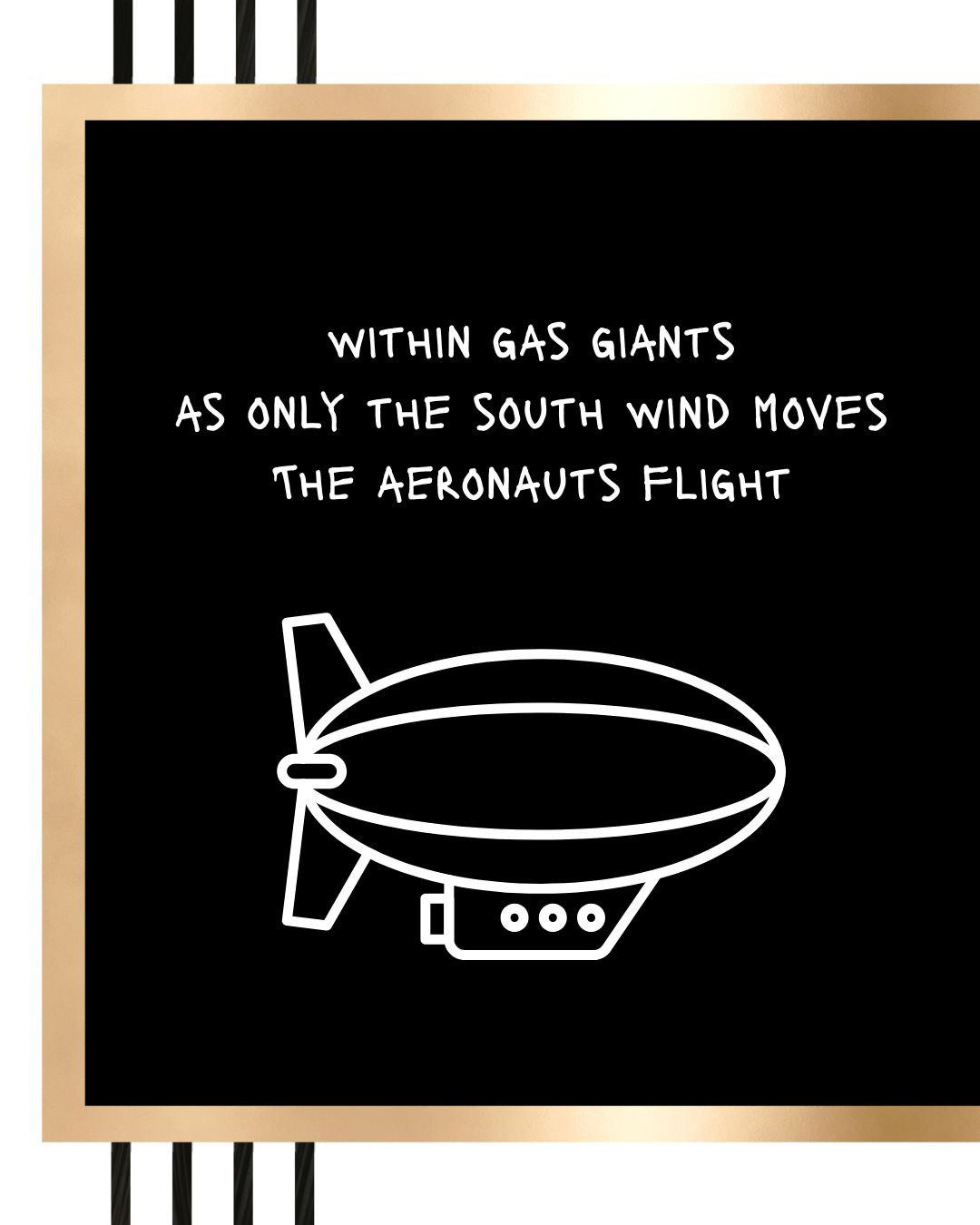
Text within this block will maintain its original spacing when published
within gas giants
as only the south wind moves
the aeronauts flight
On occasion I participate in Renku poems with other haiku poets. Each round, we submit three haiku to our Sabaki for selection in the poem. This scifaiku was originally a reject from a Renku project. Once it was released back to me, I submitted it to Scifaikuest, a speculative poetry magazine which specializes in micro-poetry. It was published there in February of 2024 in their print issue only. Now that it has been over a year, I feel I can share it with you here.
This one is about the winds reported in the atmosphere in gas giant planets and how we as a people might travel there one day in dirigible form.
Indie Author Magazine
October 2025 Issue
”10 Proven Ways Indie Authors Can Hit Daily Word Counts While Writing at Conferences”
an essay by Wendy Van Camp
Conferences and conventions brim with inspiration but packed schedules can leave your writing on hold. These ten proven strategies will help indie authors and self-publishers squeeze in daily word counts—between panels, meals, and networking.
NEW RELEASE by Indigoskye Press!!!
Digital Edition only found at https://indigoskye.com
EVERY WORD MATTERS: Poetry Concepts To Enrich Your Prose
a digital edition PDF
an paper by Wendy Van Camp
https://indigoskye.com/index.php/product/every-word-matters/
Unlock Your Creativity with “Every Word Matters: Using Poetry Concepts To Enrich Your Prose” a pdf booklet based on my popular speaker presentation developed during my term as a poet laureate.
Looking for inspiration to enrich your novel’s prose and enliven your writing?
This downloadable PDF ebook gives you [20 pages] packed with poetic techniques you can transfer to your writing toolkit and enhance your writing style.
ArtNight Pasadena!
Friday, October 10, from 6–10pm
Day One: front yard
175 N Euclid Ave, Pasadena, CA 91101
For more info, visit http://artnightpasadena.org
My exhibit features unicorns tossing their manes, fairies dancing across the backs of twitching cats, and dreamscapes where imagination runs free. Each piece begins with 3D figures I create in Poser, layered into digital backgrounds I paint by hand. The result is a playful blend of structure and color, crafted without AI and offered as limited-edition prints. These works delight children and anyone still young at heart.
Ohio: The Body Poetic
my poem *“A Writer’s Life”* (a nonet) will be read
📅 Mark the date: October 10, 2025 at 10am EST
📍 America’s River Roots Festival, Downtown Cincinnati
This year’s festival is a celebration of poetry and community, with more than 70 poets from 36 zip codes taking part. Over four days and across seven stages, poetry will be woven into the music and events, readings, posters, and performances, bringing words to life beside the river. I’m honored my poem will be included in these events.
with Poet Laureate Emerita Wendy Van Camp
Are you a writer who struggles with accountability? Do you write short stories or poetry and would love monthly critiques via a professional? Perhaps you need guidance in creating your writing career.
Join Poet Laureate Emerita Wendy Van Camp via her coaching service at Indigoskye Press. I offer single hour coaching via Google Meet or a discounted block of 3 sessions you would use once a month for a longer term project.
Ideas of how to use a writing coach:
Help to organize a poetry chapbook or short story collection
Help with indie publishing your novel
How to onboard as a speaker at conventions and conferences
Professional critiques of your short stories or novel chapters each month
Please visit my shop via the link at the top of my portfolio website or go there directly: https://indigoskye.com
Portfolio - http://wendyvancamp.com
Amazon - https://www.amazon.com/author/wendyvancamp
Medium - https://medium.com/@wvancamp
Indigoskye Press - https://indigoskye.com
X (Twitter) - https://x.com/wvancamp
Instagram - https://instagram.com/nowastedink
Mastodon - https://me.dm/@wvancamp
Bluesky - https://bsky.app/profile/indigoskye.bsky.social
The Planets: a scifaiku poetry collection - https://www.amazon.com/dp/B07Z8HMPF2
The Curate’s Brother: A Jane Austen Variation of Persuasion - http://www.amazon.com/dp/B00OU1V45A
The Planets Companion: an astropoetry chapbook
https://www.amazon.com/dp/B0FNKMXNJD
Eccentric Orbits: An Anthology of Science Fiction Poetry 2021-2024
Volumes 1 - 5
Editor
Available for purchase: https://dimensionfold.com
Anaheim Poetry Review 2022-2023
Volumes 1 - 2
Inaugural Editor
Free to Read: https://anaheimpoetry.com
Eye To The Telescope: Quests #46 - Fall 2022
Guest Editor
Free to Read: https://eyetothetelescope.com/archives/046issue.html
Thank you for subscribing to the No Wasted Ink Free Monthly Newsletter and voiceover Ramblecast. This monthly newsletter will always remain in full and free to all subscribers. The voiceover is also available as a Spotify podcast. To subscribe via your favorite podcast player, please visit:
Comments
Nothing yet. Say the first thing.
Sign in to join the conversation.