
A few years ago, I learned about a woman tried for witchcraft in London during World War Two. Here, clearly, was a novel: a woman accused of being a witch during the era of Churchill and the Blitz.
At a séance, Helen Duncan communicated with the spirit of a drowned sailor, who revealed that his ship, the HMS Barham, had sunk in the Mediterranean. The ship had in fact been torpedoed, but the government was keeping the disaster classified. Helen was revealing a wartime secret. Was she a spy? Or was she speaking with ghosts?
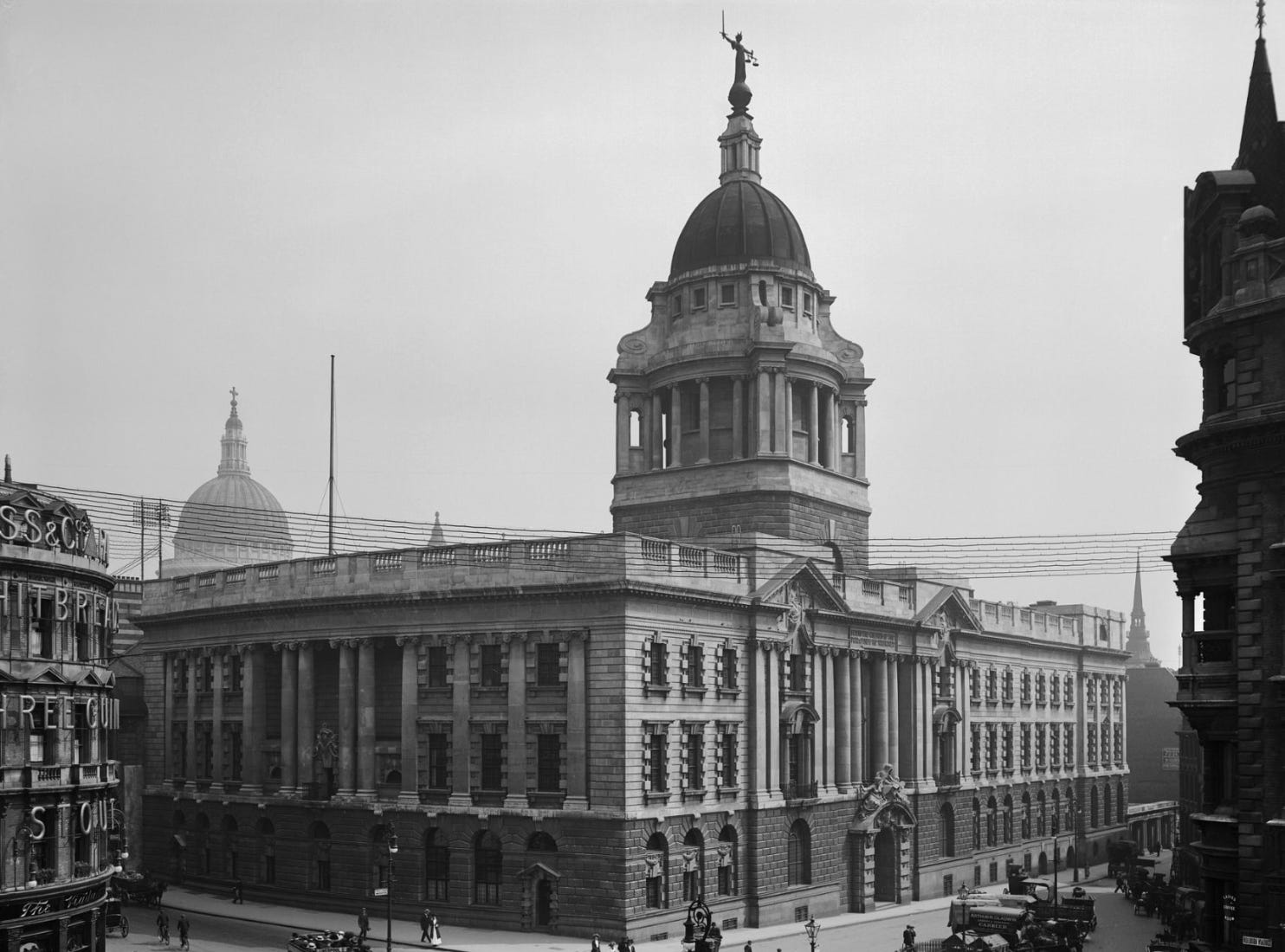
In 1944, Helen was arrested in Portsmouth under the Witchcraft Act of 1735 and put on trial at the Old Bailey. I could see the mood and texture of this story, grainy and noirish. I liked the idea of someone using witchcraft as a cover for spying, and the premise of a woman defending herself against a suspicious government. I could see the humor, too, in someone steadfastly describing herself as a witch to enraged officials who suspect her of being a spy.
I started researching, reading the court transcript from Helen’s trial at the Old Bailey and her biography. I learned that Helen had shared her premonitions as a child in a small town in Scotland, alarming her neighbors and classmates. Her biographer Malcolm Gaskill describes Helen “clairvoyantly seeing a soldier (long dead) and a man lost in a snowdrift (alive).” She predicted that one girl “would marry a chauffeur,” and that her teacher would die “during a lesson about the Battle of Hastings.”1
Over forty witnesses testified at Helen’s trial that she’d summoned their beloved ghosts. MI5 had been monitoring Helen’s premonitions, and considered her a security risk. The government might have arrested her so she couldn’t reveal any more covert intelligence, like plans for the D-Day landings.
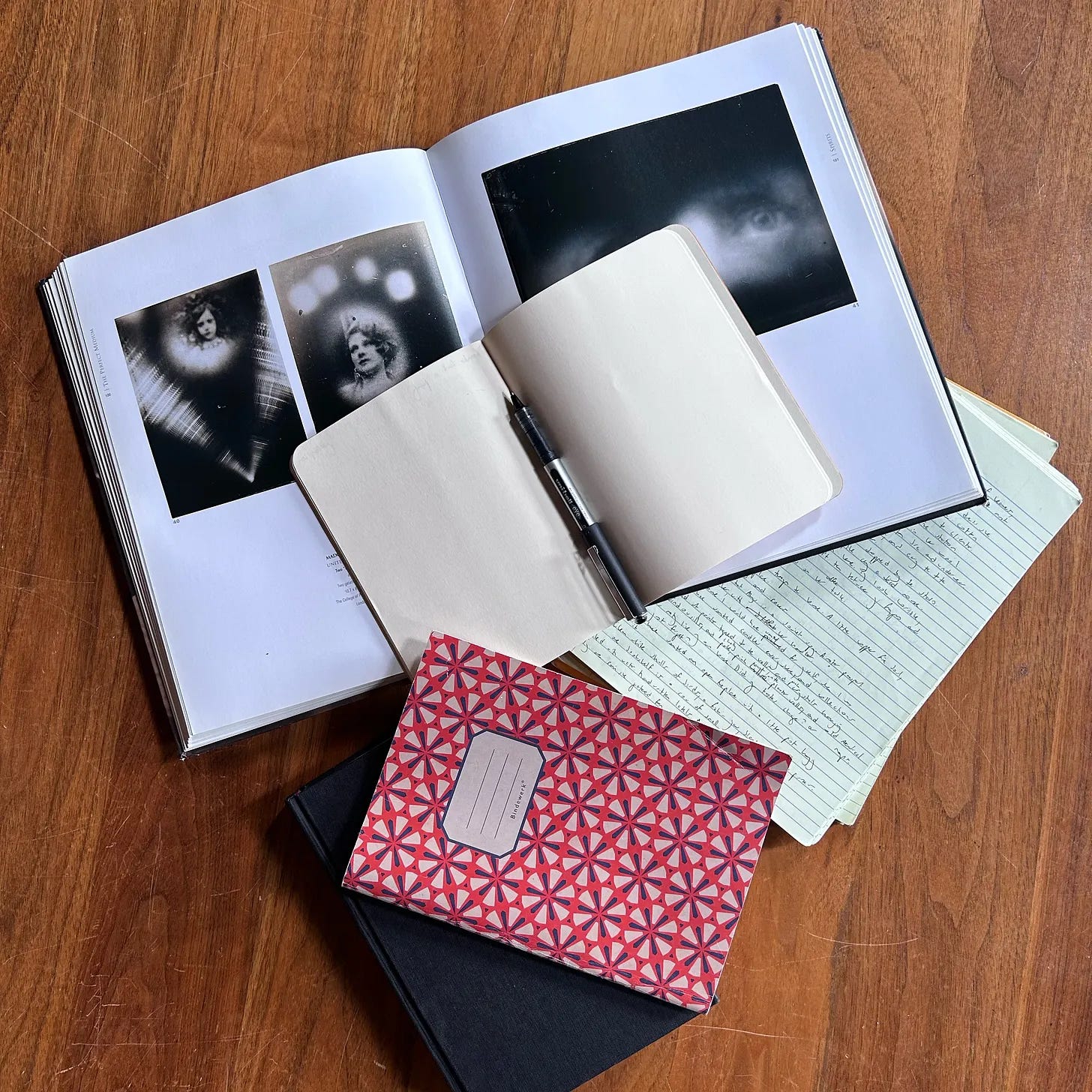
To round out the subject, I read the Malleus Maleficarum, the witchfinder’s guide, and an encyclopedia on witchcraft, which taught me that dirt or dust from someone’s footprint can be used for a spell. I studied a book of Spiritualist photography, with its ghosts and apparitions.
All of this research was, obviously, fantastic. Reading about hedge witches and sea witches, the Corryvreckan whirlpool and grimoires. Pieces of the novel began to appear: an interview room, a gingerbread cake, a training academy in Svalbard.
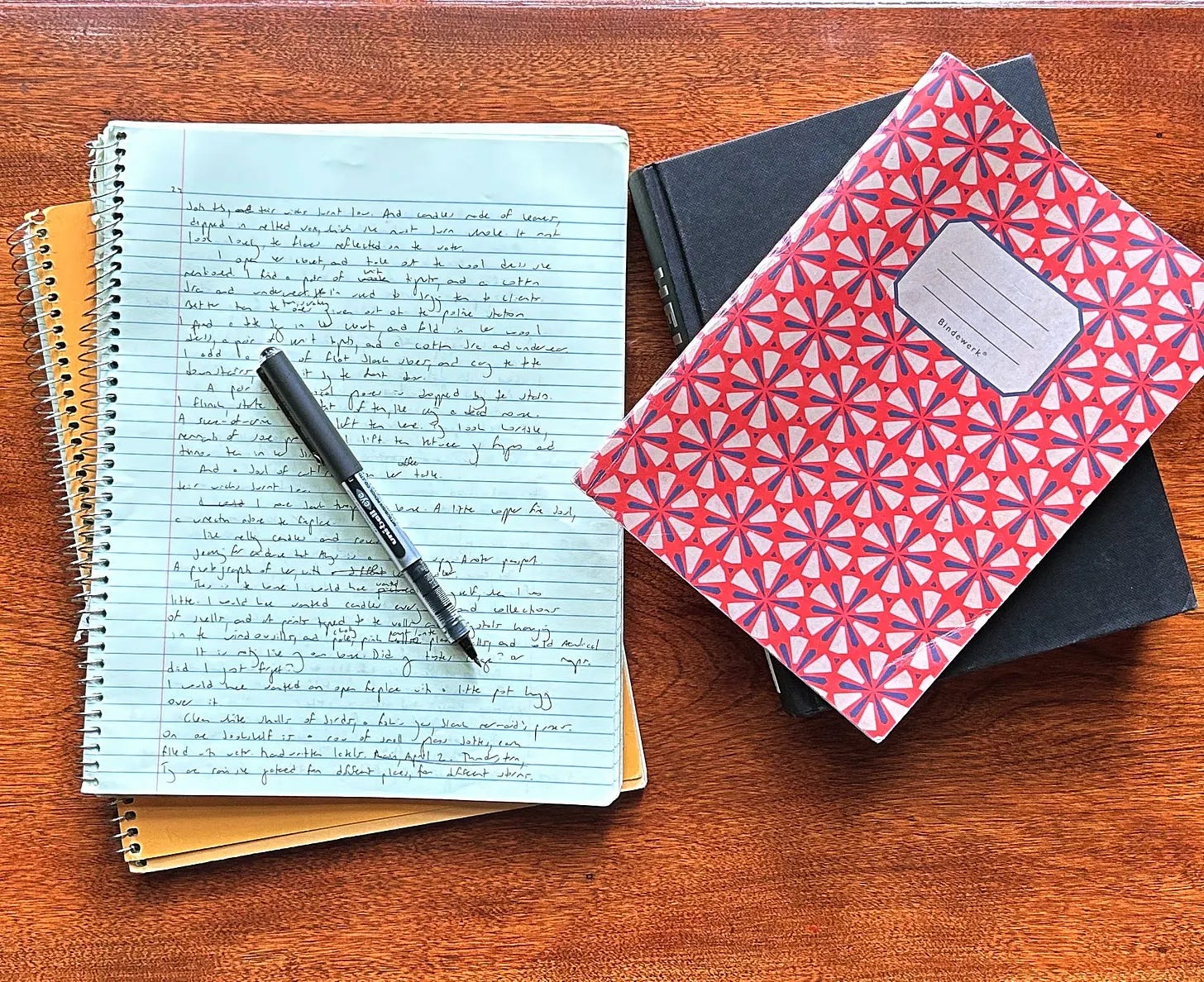
But the writing wasn’t taking off. One nice part of writing a draft on paper is that I can see, from my handwriting, when the writing is going well. These pages were all regular and methodical: not slow with emotion or giddy with momentum. I had run into a problem with the setting: I’d moved the era, since I like writing contemporary fiction, but the true story’s appeal is its time period, the idea of a witch trial happening around the Battle of Britain and the French Resistance. And I couldn’t decide if my character was a witch or not. Either could work for the story, but not knowing was letting all the air out.
During the early stages of working on a novel, I sometimes ask: how would I feel if I left my draft on a bus? If the answer is basically fine, I know I need to start over.
Having a novel collapse on top of you is dispiriting. All of that wasted time, the pages and pages of scenes that will go nowhere. I could have spent those hours napping, or hanging out with other people, or working on the one billion chores I ignore while writing a novel, and ended up in exactly the same place.
I shoved my notebooks and drafts into a closet, and tried to start over. Except all of my research, on the personalities and methods of the witchfinders, on a suspicious government, on women backed into a corner, shaped the novel I ended up writing. I wrote about a witch hunt, though not in the way I’d planned.
Helen was convicted under the Witchcraft Act and served nine months in Holloway Prison. She’d been raided, examined, and imprisoned, but once she was free, Helen went straight back to her work, and carried on holding séances.
I’d still love to read a novel based on the trial of Helen Duncan, so please let me know if you write one. Coming up next time: an unlikely art thief.
Recommendations
Hellish Nell by Malcolm Gaskill; India Rakusen’s radio show Witch on the BBC; The Witch by Marie NDiaye; The Premonitions Bureau by Sam Knight.
Novels I Did Have Time to Write
My novel A Good Man on a Dark Night will be out this January!
Quotes from the fantastic Hellish Nell by Malcolm Gaskill.
No posts
Comments
Nothing yet. Say the first thing.
Sign in to join the conversation.