
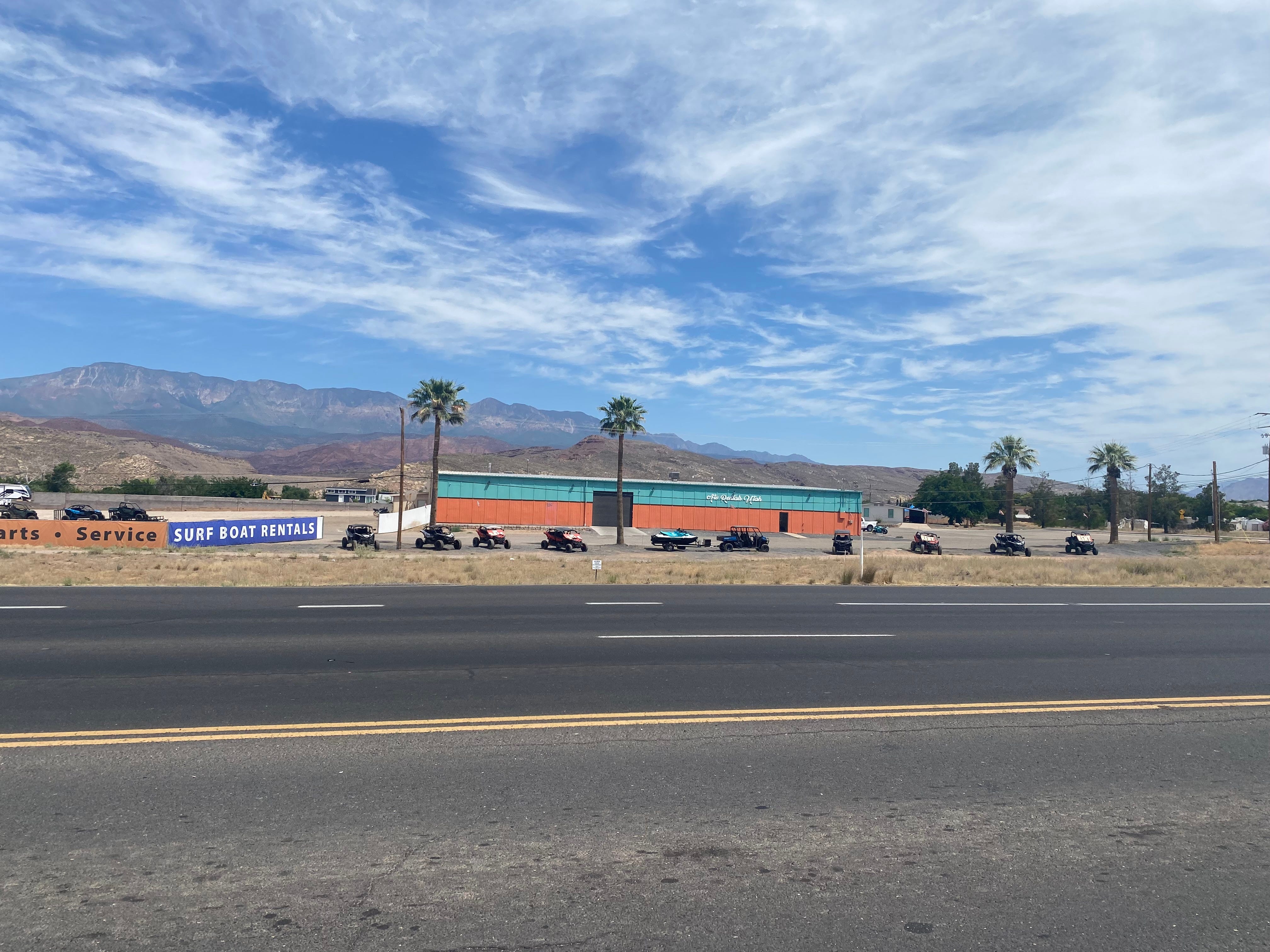
Last Friday I flew into Las Vegas, NV where it was 110 degrees Fahrenheit, which is a temperature not suited for humans in my opinion. Why did I go? Because when you are in my line of business, sometimes travel is necessary. I have to visit job sites to gauge progress, and then I typically need to visit with the homeowners, the architects and the masons. That was the plan for this trip - fly into Las Vegas, rent a car and drive to my client’s home-in-progress in Virgin, Utah, and then fly out the next day. Some people tried to talk me out of this trip because of an extreme heatwave taking place in the Southwestern US, but I didn’t listen. This meeting was important to me, as part of the joy of this work is seeing EcoBlox launch.
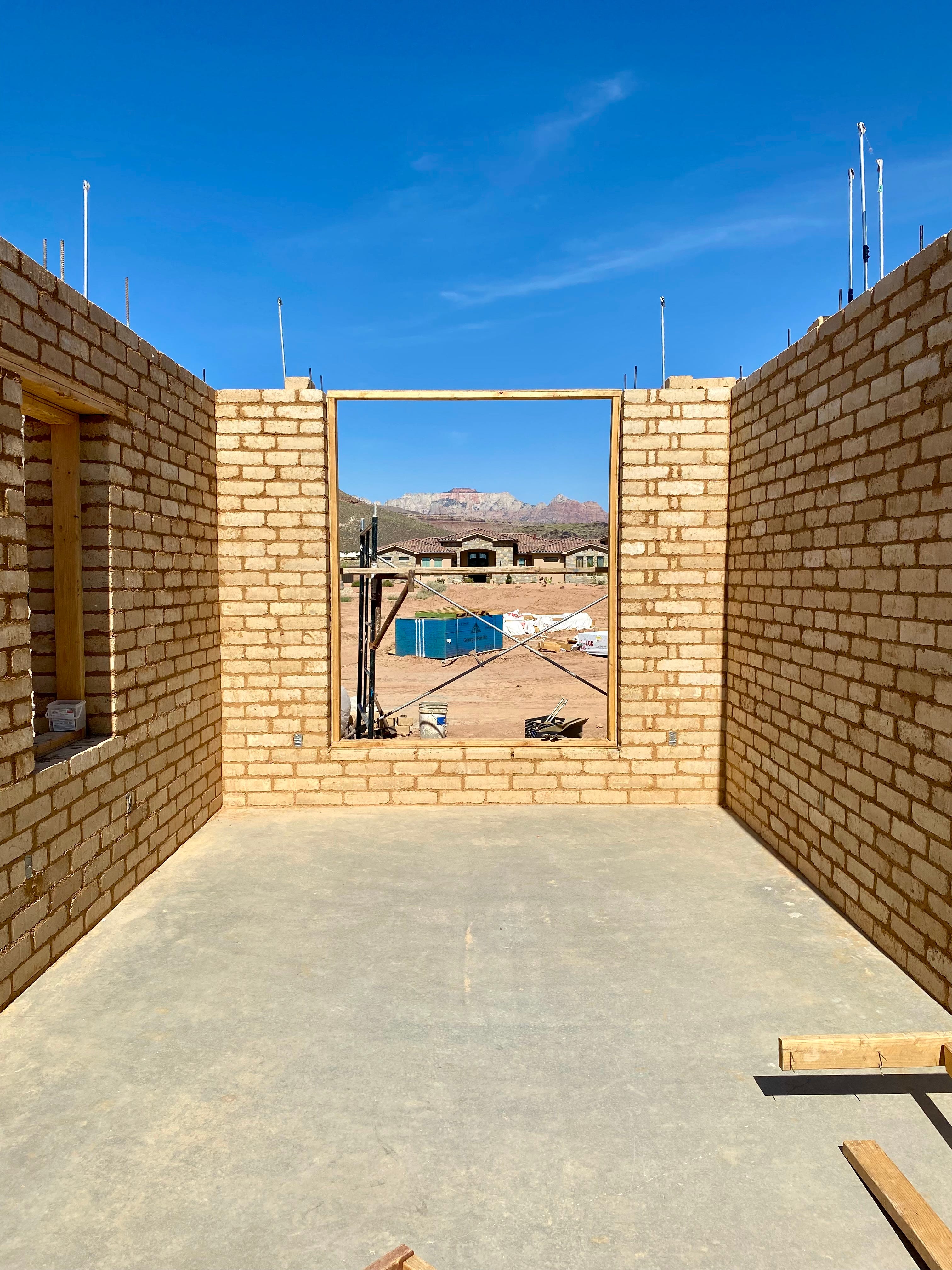
This heatwave was no joke though. Have we as business leaders ever had to forgo business travel because it was too hot on the ground at our potential destination? When I booked my flight a couple of weeks ago there was no way of knowing it would be 110-degrees in Las Vegas when I was scheduled to land, and not only was this meeting too important to reschedule (no, Zoom was not an option), I was not interested in paying change fees to alter my flight dates. I’m frugal. Going forward, however, I might not be so frugal when it comes to risking my health, which I did by going to Las Vegas and Utah. How so?
Can I be vulnerable with you for a second? You see, I have always suffered from low blood pressure. In certain scenarios I pass out. The lights go out and I sway towards the floor. Through a bit of research before taking off for Las Vegas (not the best timing, I know) I learned that extreme levels of heat - anything over 100-degrees - could make someone like me even more prone to passing out. Did I pass out while driving to Utah? No, thanks to A/C, but I also could have encouraged a cold as a result of going from cold-to-hot so often. A/C is not a sustainable solution for our heating world.
What happened during our meeting in Virgin, however, was kind of frightening and a microcosm of what has been happening in areas of the United States over the last 5 years - wind, fire and power outages. During the meeting we learned a wildfire had been sparked fairly close to us, which then caused the evacuation of a nearby neighborhood, which involved a rather vulnerable community of senior citizens. Then, a few minutes later the power went out at the home we were meeting in, which we assumed was connected to the fire, but we were never given any details. Did the power company shut the power off because of the increased wildfire risk? How many communities lost power? We simply do not know. Most of what I learned about the situation we were in I gleaned from a newscast later on in the day.
I want to be clear though, our meetings went on without a hitch. We accomplished what we had set out to do, but we had to do it in an environment that we were not used to. This added a layer of stress to everyone involved, but rather than derail, we came together as a group to evaluate our safety, situation and possible solutions should we also need to evacuate. That moment of coming together in the face of danger gives me hope for the human race going forward. We can be resilient, and I am not sure we have a choice about it.
According to analysis by the Washington Post, more than 1.5 billion people on earth have experienced at least one day where the heat index reached 103 degrees Fahrenheit. And according to Climatologist Maximiliano Herrera, “102 countries/territories have broken heat records so far in June. Next days dozens more will join with record heat waves widespread allover the world. There has never been anything remotely comparable to what it's happening this month.”
What did the heatwave I experienced last Friday and Saturday look like on a heat map? The National Weather Service’s HeatRisk map below uses a color index to show what the risk is in all areas of the United States. The color index ranges from Green (zero), with “little to no risk of expected heat” to Magenta (4), with “extreme risk”, as you can see from the screenshot below.
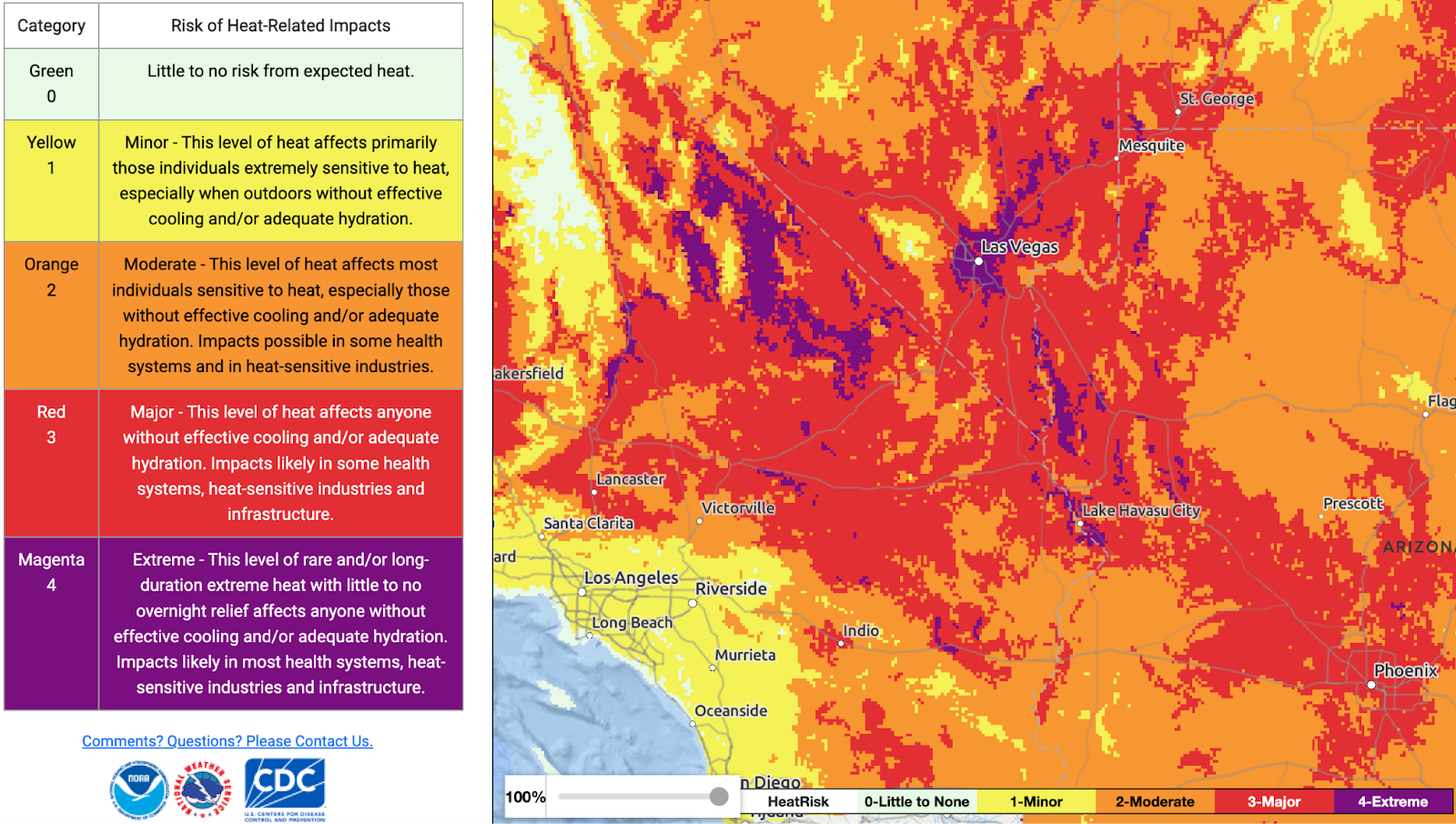
Going forward, I will refer to this map when necessary, and I hope you do too. My trip to the Southwest during last week’s heat wave could be an indicator of things to come. There’s a good possibility that business travel has been changed for good - we passed the tipping point over the last 30 days.
What effect has climate change had on your business operations? Please comment below. Join me next week as I describe a trip I took to Grafton, Utah to visit adobe buildings that were 160 years old, as well as an adobe homestead built in the 1950’s that in spite of the wicked heat wave, was a comfortable 70-something degrees inside with no A/C. The power of adobe is real and I will expose that in full in next week's Substack.
Sincerely,
Lisa
Comments
Nothing yet. Say the first thing.
Sign in to join the conversation.