
I started today with a one-to-one chat with Doc Malik.
This became a double-sided rant that had me laughing out loud several times. When Doc Malik is on fire, he’s on fire!
I’m due back on his podcast ‘Doc Malik’ shortly, and I’m greatly looking forward to the chat. I get a feeling this one will be dynamite as we are both fed up with many aspects of ‘the situation’, and I think the chains of self-censorship and politeness are gone. Expect fireworks!
Scroll down to read his comments after reading MoMo.
I’ve also appeared on two more podcasts over the last few days, and these will be released soon.
Meanwhile, it’s summer book reading time.
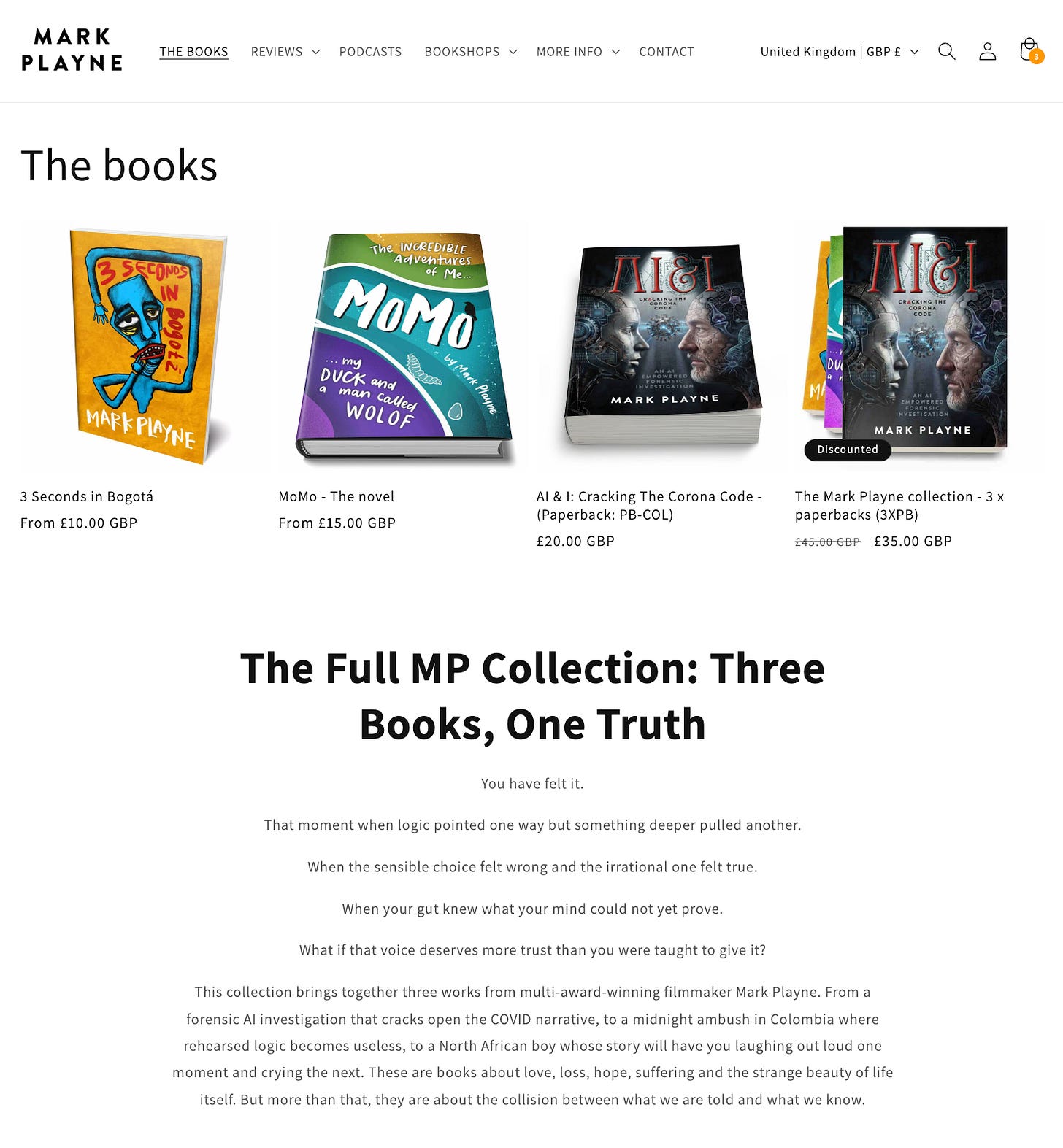
Yes, AI & I has the conversation-starting cover, and subject matter one reader reviewed as as “maybe the most important book I’ve read“, but I’d like to remind you all of MoMo...
I received these lovely words a few weeks back from a NOTB subscriber...
Dear Mark
My daughter and grandsons are loving momo. They are just almost half way and say they cannot wait for reading time.
S....
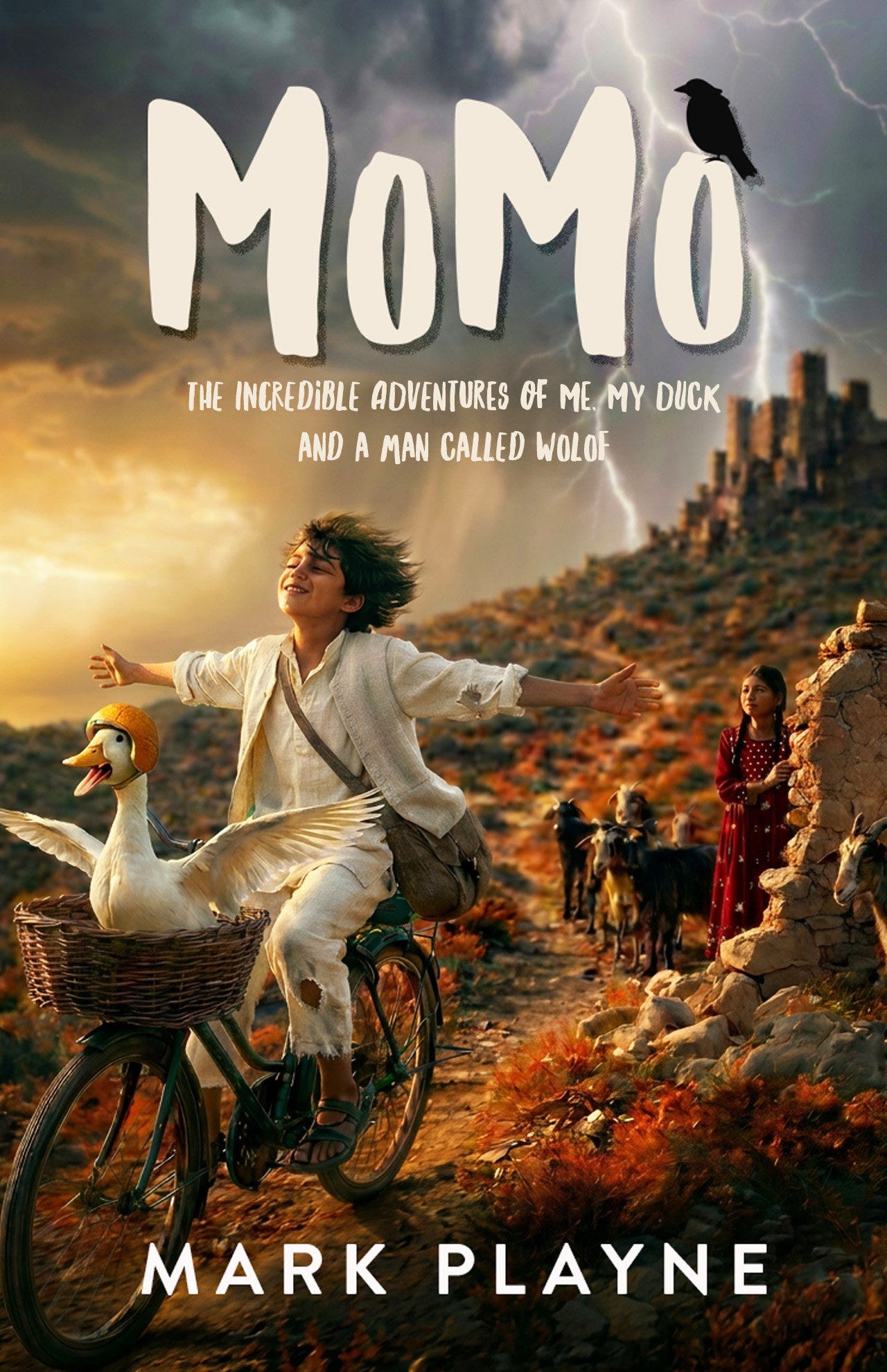
“What kind of magic do you want to master—good, or bad?”
In the ancient kasbahs of North Africa, young MoMo and his beloved duck discover a world where mysterious fires dance in small palms, where eggs become art in bustling markets, and where grandmother’s wisdom carries the weight of ages.
When ancient powers awaken within him, MoMo faces choices that will echo through his destiny. This magic realist tale from the heart of North Africa reveals the wonder, danger, and magic hidden in everyday moments—from desert nights filled with starlight and stories to the profound question of who we choose to become.
For readers who love The Little Prince, The Alchemist, and Watership Down.
At 9, you’ll love the adventure and talking duck.
At 19, you’ll understand the choices and dilemmas.
At 99, you’ll recognise the wisdom and remember the beauty of life itself. Some stories aren’t just read—they’re lived, revisited, and discovered anew with each turning of the page.
“It transcends genres and age groups, captivating readers of all ages with its universal message of hope and possibility.”
“I gave the book to my pre-teen grandchildren...they love the story. Young or old, this story deserves a place in your library.”
“Superficially, it is a children’s book, but look deeper, and it is so much more... Deffo not just a ‘kids book’ unless I am a kid.”
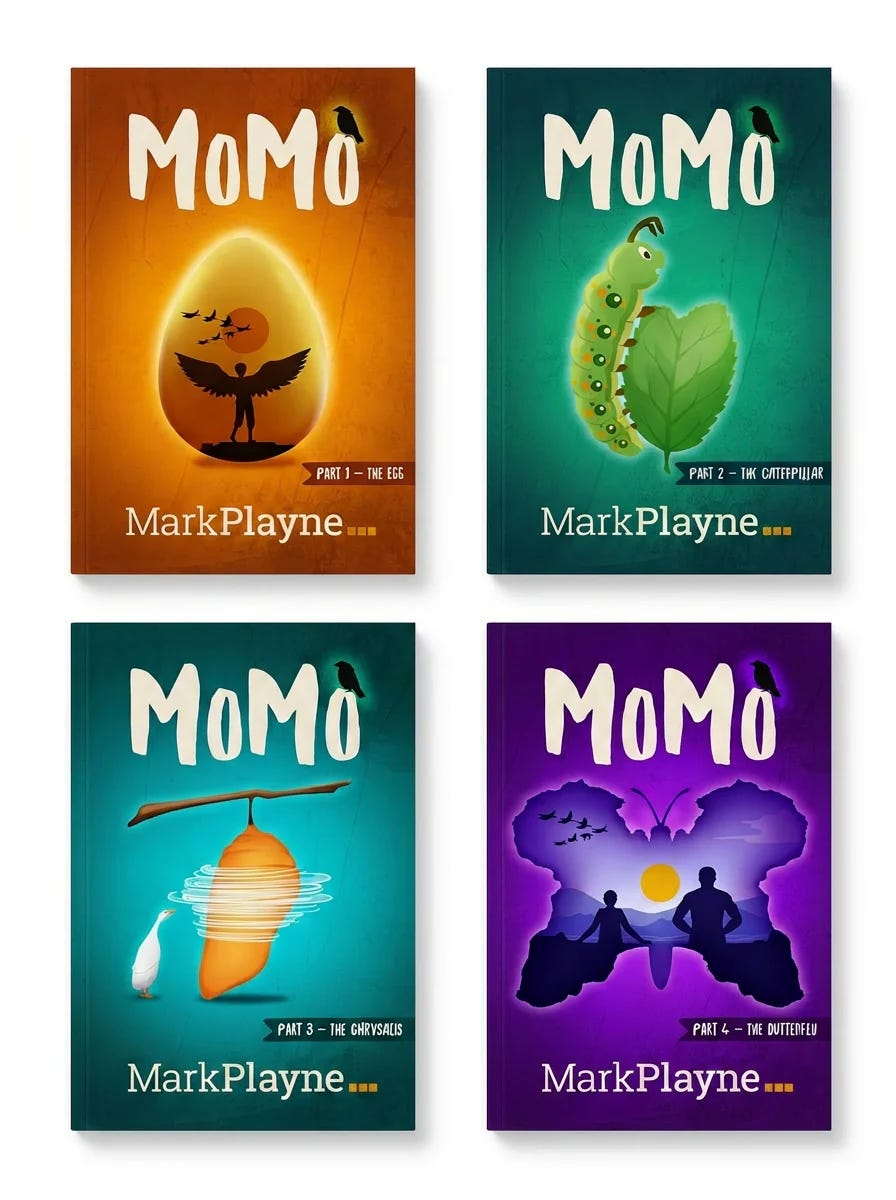
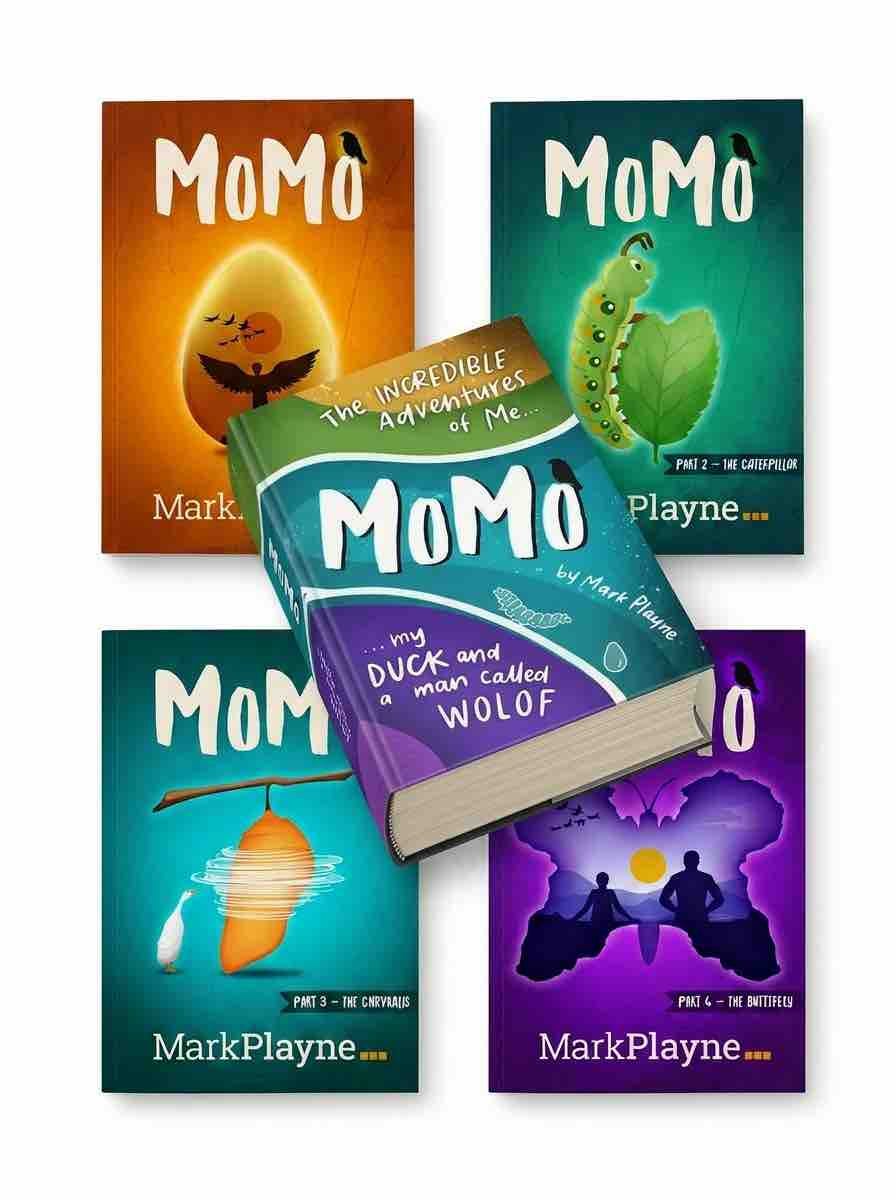
MoMo’s transformation unfolds across four magical parts—The Egg, The Caterpillar, The Chrysalis, and The Butterfly—mirroring the metamorphosis at the heart of his adventure. For younger readers, these four individual books offer the perfect pace to grow alongside MoMo, discovering each stage of his journey as it naturally unfolds. For adults and older readers, the complete novel brings all four parts together in one spellbinding volume, revealing how the threads of magic, choice, and wisdom weave into a unified tale. Whether you read it in chapters or all at once, MoMo’s world awaits.
For grandparents choosing a book that will genuinely stretch a child’s mind, not just entertain for an hour, MoMo offers real substance beneath its warmth. Set in a Moroccan kasbah, it follows a boy determined to learn “a thousand things,” and the subjects he touches are concrete enough for parents and teachers alike to point to:
Maths and money: MoMo’s egg-selling scheme, his growing “nest egg,” and his grasp of pricing and timing at market give young readers a live, story-driven introduction to basic commerce and arithmetic.
Geography: migrating swifts, swallows and geese, MoMo’s fascination with maps, and his eventual journey north towards Spain root the story in real place and distance, giving children a tangible sense of the wider world beyond the village.
Morality and ethics: honesty, family duty, fairness, poverty and the value of hard-won wisdom from elders run through every book, giving children real dilemmas to weigh rather than tidy moral lessons.
PSHE relevance: an acting head teacher in Bristol came close to adding the series to the school’s Year 9 curriculum, citing its strong fit with PSHE.
One Goodreads reviewer ( a professor of literature in Austria) wrote that “MoMo is not a special book, it is simply extraordinary”.
A former primary school teacher called it “a perfect source of discussion for all from Year Six onwards”.
One grandparent reviewer said, “My grandkids loved this series as the first three books rolled out”.
Magic realism is a literary genre where the fantastical sits inside an otherwise ordinary, realistic world, treated by the characters as unremarkable rather than as spectacle.
A duck that seems to talk back, a raven that witnesses everything, a coin that might be more than a coin: nothing is explained away, and nothing needs to be.
The technique is associated with writers like Gabriel García Márquez and Isabel Allende, and it’s the same lineage that gives The Little Prince and The Alchemist their particular texture: literary weight carried by a story simple enough for a child to follow.
That’s the tradition MoMo sits in. The prose is short, plain and rhythmic, built for reading aloud in a sitting or two, yet the magic realist touches (a boy who may or may not be dreaming, a raven who seems to know more than he should) give it the layered quality reviewers keep circling back to: an easy read on the surface, with something more substantial underneath for the adult doing the reading.
MoMo has built an unusually loyal adult following, readers who picked it up for a grandchild and stayed for themselves.
The story’s economics, geography, morality and ethics give it genuine depth: a coming-of-age tale as much for the adult reader as the child being read to.
“A remembrance to every adult reader of the child we once were.”
Katheyer
“Reminds me of The Alchemist, Jonathan Livingston Seagull or The Little Prince.”
F. Tadford
“Suitable for all adults who have kept their childish spirit.”
Vil Yulam
“Will feed the young mind and reassure the sad, the confused and the aged.”
Nicholas Greenfield
“Definitely not just a ‘kids book’, unless I am a kid!”
Janna Rogers
“The first book in several years that I felt an immediate connection to.”
C Robinson
Read all the reviews here>>
Splitting MoMo into four short parts rather than one long novel is a deliberate structural choice, and it matters most for exactly the child a grandparent worries about: the reluctant one.
A single 400-page novel is a wall. A child who struggles with reading, or simply doesn’t yet see themselves as “a reader,” looks at that wall and often doesn’t start. Four short books solve this differently. Each one is genuinely finishable in a sitting or two, so the child gets to experience something they may never have had: the feeling of finishing a book. Not a chapter, a whole book, cover to cover, done.
That completion is the entire mechanism. Finishing Book 1 gives a child proof, not a promise, that they can do this. That proof is what gets them to pick up Book 2 by choice rather than obligation. By Book 4, a child who may have started the series believing they “weren’t a reader” has finished four books. The four-part structure is quietly manufacturing four separate moments of success rather than one long, riskier bet on a single finish line.
The titles reinforce this on purpose too. The Egg, The Caterpillar, The Chrysalis, The Butterfly track a literal transformation, and a child moving through the four books is, structurally, mirroring MoMo’s own journey. They’re not just reading about change. They’re being walked through their own small version of it, one finished book at a time.
For grandparents specifically, this makes the series a genuinely useful tool, not just a nice story: it’s built to convert a child who resists reading into one who has evidence, in their own hands, that they can finish books.
This is how Doctor Malik introduced our last chat on his podcast; he just wrote:
“...When I first connected with Mark Playne, I thought we’d mainly be talking about his independent news and activist platform, Not On The Beeb, which emerged during the COVID era. For anyone outside the UK, “Beeb” is a common nickname for the BBC, Britain’s state broadcaster. Mark was out on the streets filming protests, interviewing people, documenting the magnetism phenomenon, and covering many of the stories the mainstream media ignored. I assumed that was where this conversation would primarily go.
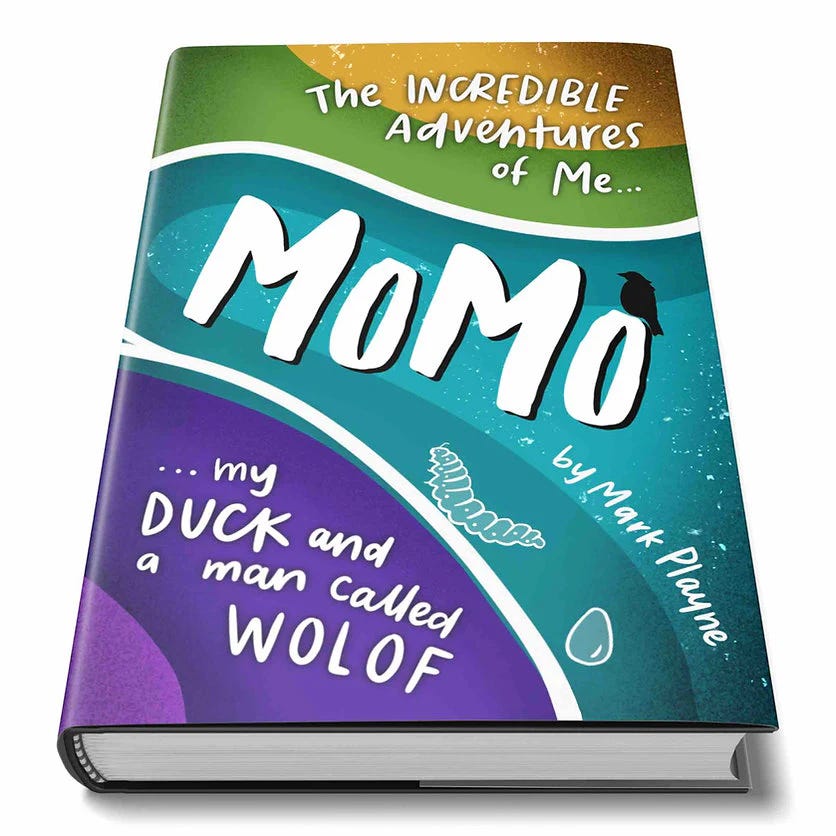
But several weeks ago, Mark sent me two books. One was Momo, The Incredible Adventures of Me, My Duck, and a Man Called Wolof. The other was AI and I, which I haven’t read yet.
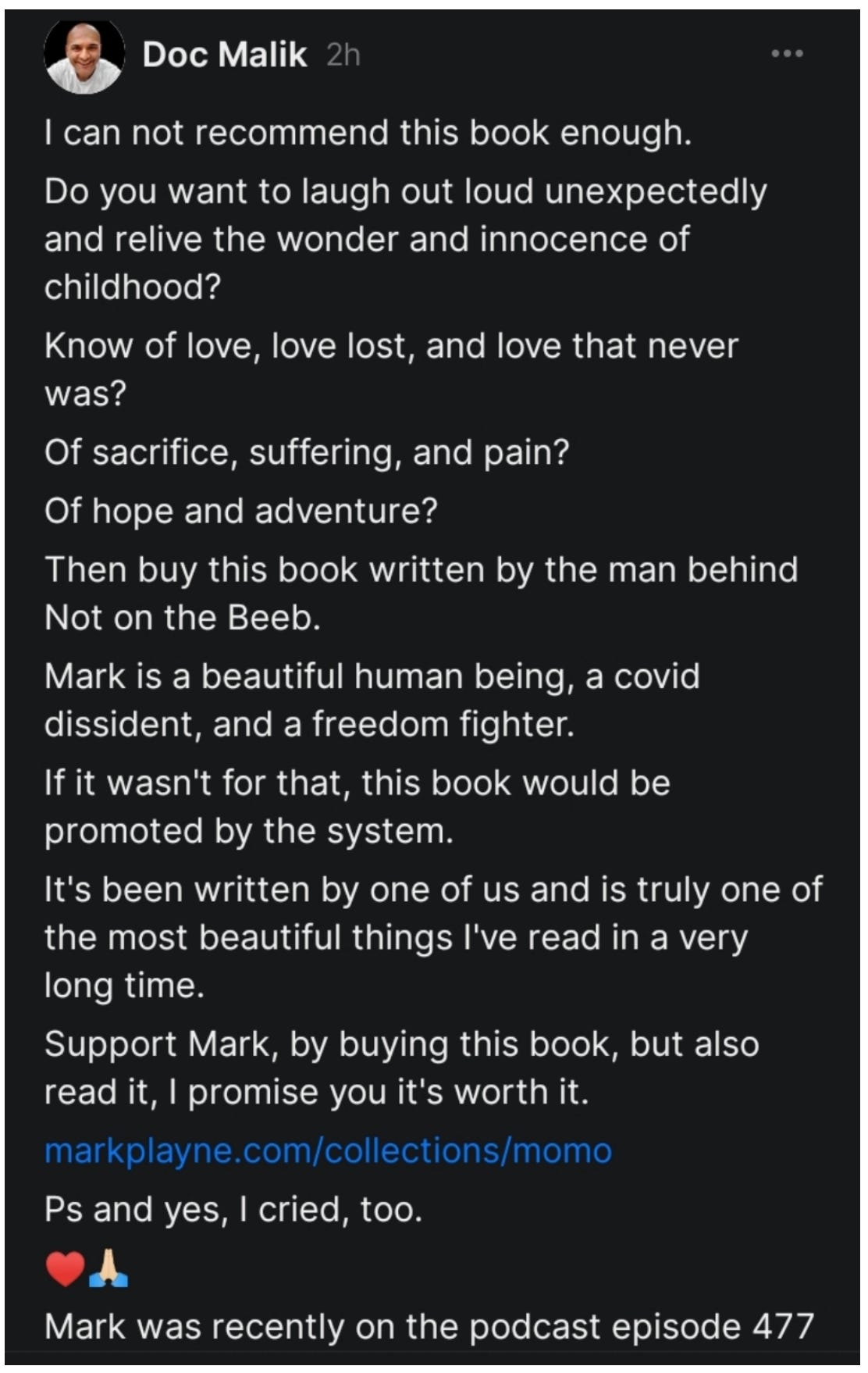
I’ve literally just finished reading Momo, and I have to say, it’s one of the most beautiful books I’ve ever read. It had me laughing out loud, crying with tears streaming down my face, and at moments it genuinely touched my soul. It’s clear to me that Mark is a truly gifted storyteller, someone who deeply understands childhood, imagination, and the emotional depth of being human. He writes about love, love lost, and love that perhaps was never meant to be. He writes about suffering, hope, joy, pain, and the strange beauty of life itself.
One of the things we explored in this conversation was how the book is helping me connect more deeply with my own children. And I genuinely think Mark intentionally wrote it in a way that encourages exactly that. This wasn’t just a conversation about literature, it became a conversation about humanity itself.
We talked about how storytelling shapes children, how reading together passes wisdom between generations, and how love, loss, and shared human experiences bind us all together.
Of course, we also ventured into darker territory. We discussed war, propaganda, censorship, manipulation of public opinion, and how Mark came to create Not On The Beeb. We touched on migration, cultural identity, Islamophobia, terrorism narratives, and the wider psychological shaping of society.
Towards the end, we explored AI, modern warfare, and what it means to remain human in an increasingly technological and manipulated world.
This was a truly beautiful conversation with a beautiful man, and I genuinely cannot wait to have Mark back in the studio.
I hope you enjoy it, folks.
Enjoy, folks.
Much love....”
Watch this Episode here
Below is another set of his words about MoMo...
Comments
Nothing yet. Say the first thing.
Sign in to join the conversation.