
And let’s admit something else: most of the information out there isn’t based on real experience - it’s generated with AI tools.
Don’t get me wrong - I love how tools like ChatGPT and Claude make my life easier, but not when I’m looking for personal experience.

That’s exactly why, from the very beginning of my Substack journey, I decided to share what worked for me - and what didn’t.
Simply because I couldn’t find articles I truly trusted. I think you know exactly what I mean.
So, if you’re expecting to read “10 ways to grow your Substack in 30 days,” I’m definitely not your person.
I’m Ana, and in just 11 months, I grew my Substack to 4 500 engaged subscribers.
I didn’t do it with ads or paid sponsorships. I did it with one skill that many writers underestimate: storytelling.
Over the past month alone, my newsletter gained nearly 800 new subscribers without changing anything about my overall strategy.
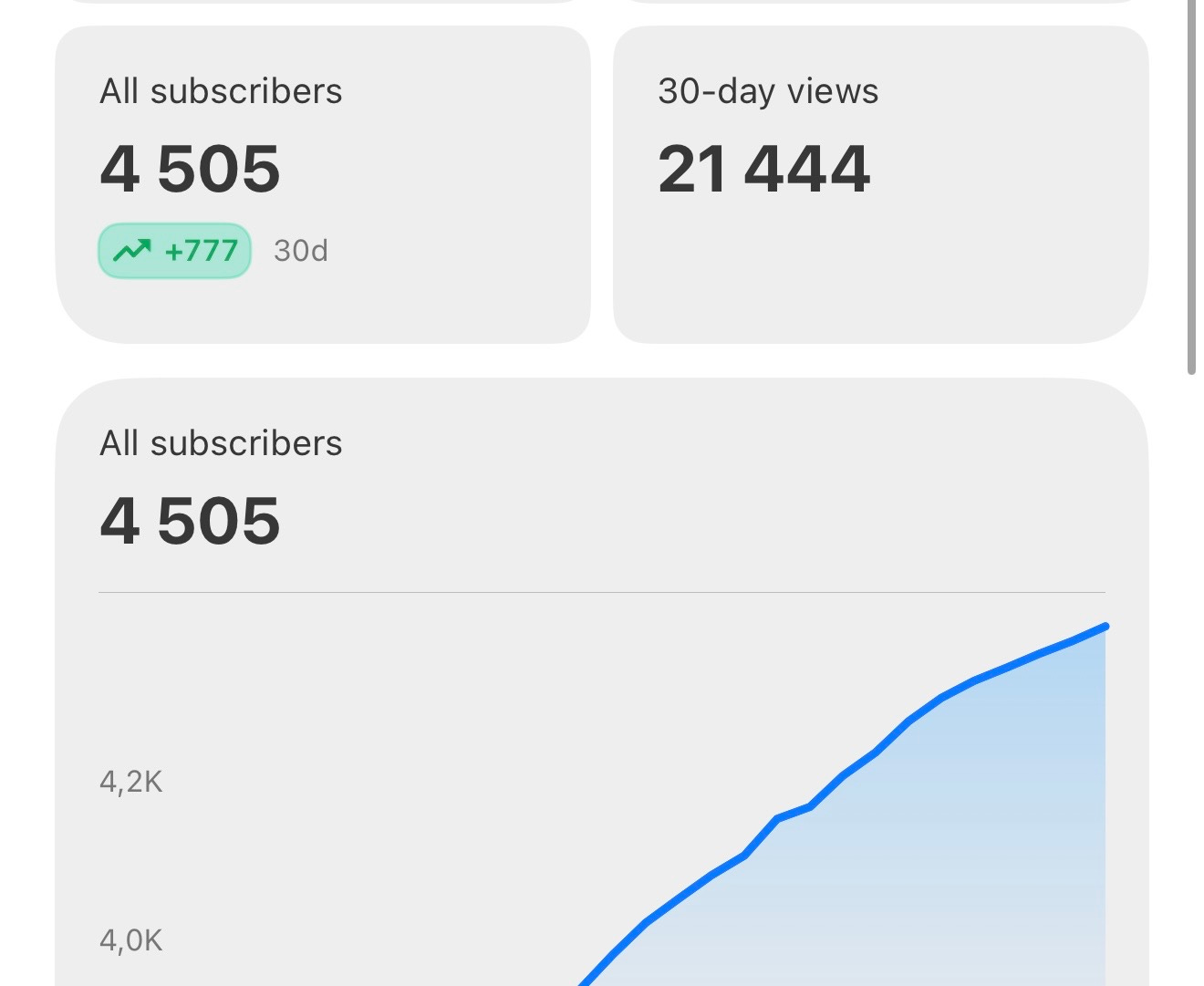
The only thing I did differently was rely more on my ability to tell my own story instead of filling my content with dry facts or essay topics we’ve all seen more than ten times already.
Before we begin, I want to say that this approach isn’t only for non-fiction writers. It also works for fiction writers and poets.
Every one of us has a story.
For those of you who want to unlock this post, remember that the upgrade feature works best from a browser. As premium subscribers, you also get access to the Substack Visibility Project, which runs every month - and more than 100 participants have already seen results.
Comments
Nothing yet. Say the first thing.
Sign in to join the conversation.