
Hi friends,
Pour a coffee as today I wanna talk about the first chapter of your novel.
You might be starting a new story or is someone who’s going back and revising your opening chapter. Maybe deleted, rewritten, started again.
I’m in the exact same boat, so I did what I always do.. I went into a research rabbit hole.
So in this essay, I break down what I have found helpful as I’m querying my debut novel. Let’s get into it.
If you haven’t seen me before, HELLO! I’m so excited to e-meet you. I’m Elin, passionate about everything storytelling. With a degree in journalism and BA film, here we unpack the story behind our favourite films and books and deep dive into how we can write our own.
Is that your vibe? Let’s be friends x
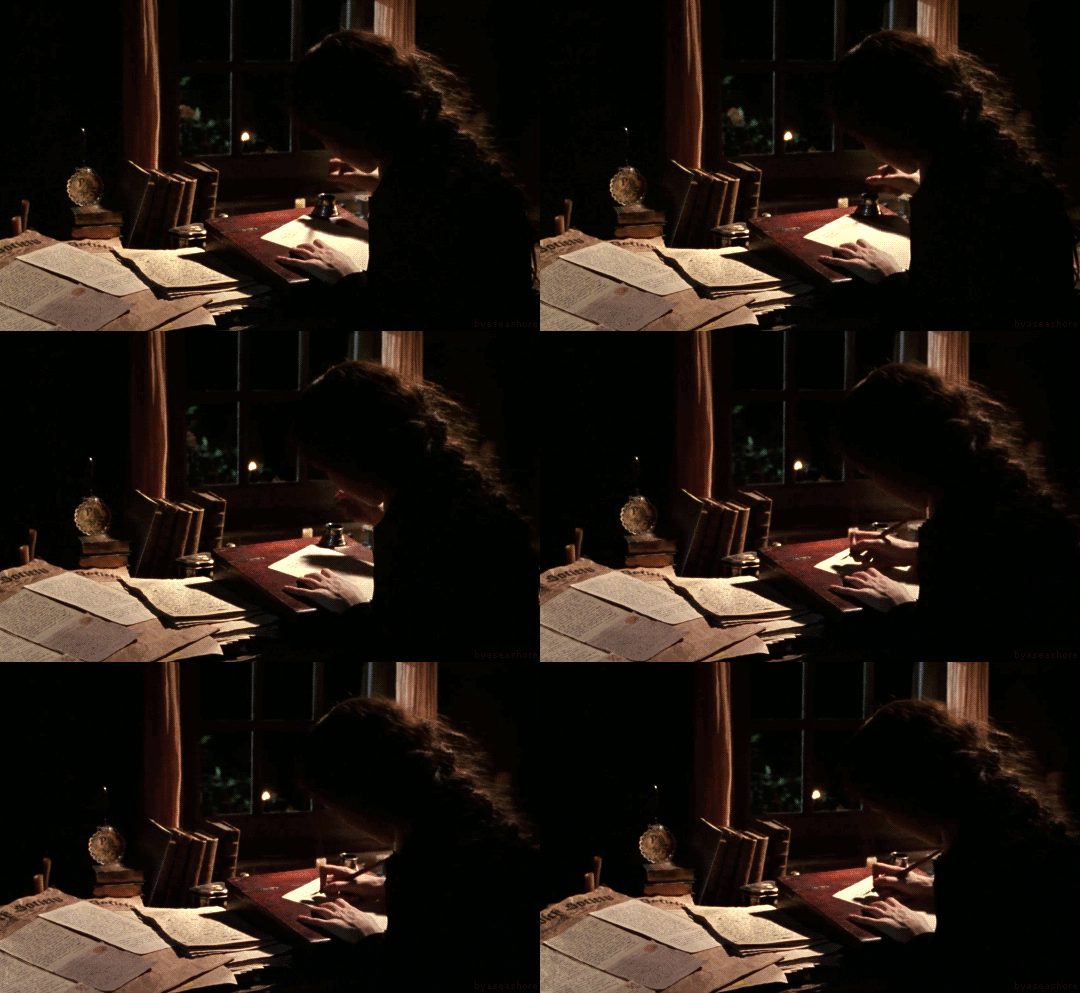
Before we talk about how to write it, let’s talk about what a first chapter is meant to accomplish. I do want to say that these are guidelines, and not hard rules, at the end of the day - it’s your story.
I found it helpful to think of it like, your first chapter is like the reader introduction. It’s not meant to be a summary, an overview, or a history/backstory recap. Its job is to make the reader want to read chapter two. Everything else is in service of that.
And to do that, your first chapter needs to accomplish four things:
1. Introduce the reader to someone. Readers follow characters, not plots. We need someone to be with through the story. Your protagonist should appear early, ideally within the first page, and the reader should get a clear sense of who they are and how they interact with the world around them.
2. Create a question the reader wants to answer. Every great first chapter plants something the reader needs to know. It dosen’t have to be a mystery. What do they want, and will they get it? What is the thing we sense is coming?
3. Set the tone and promise of the book. Your first chapter is a contract with the reader. It tells them what kind of book they’re in for. If you’re writing a dark psychological thriller, your first chapter should feel tense and atmospheric. If you’re writing a witty contemporary novel, the voice should be warm and funny from the first page. Readers, especially genre readers, are looking for these signals.
4. Give readers a reason to care. We don’t care about characters simply because they exist. We care because the story has shown us something in them to root for, a desire, a vulnerability, a specific way of seeing the world. We don’t need to like them, we just need to be interested in them.
Most first chapter advice is delivered as a list of don’ts. The problem with those rules is that they don’t explain why… and without understanding why, you can’t make good decisions about your own work. So let’s break a few of them down.
“It was a grey morning in late October when Sarah arrived at the house.”
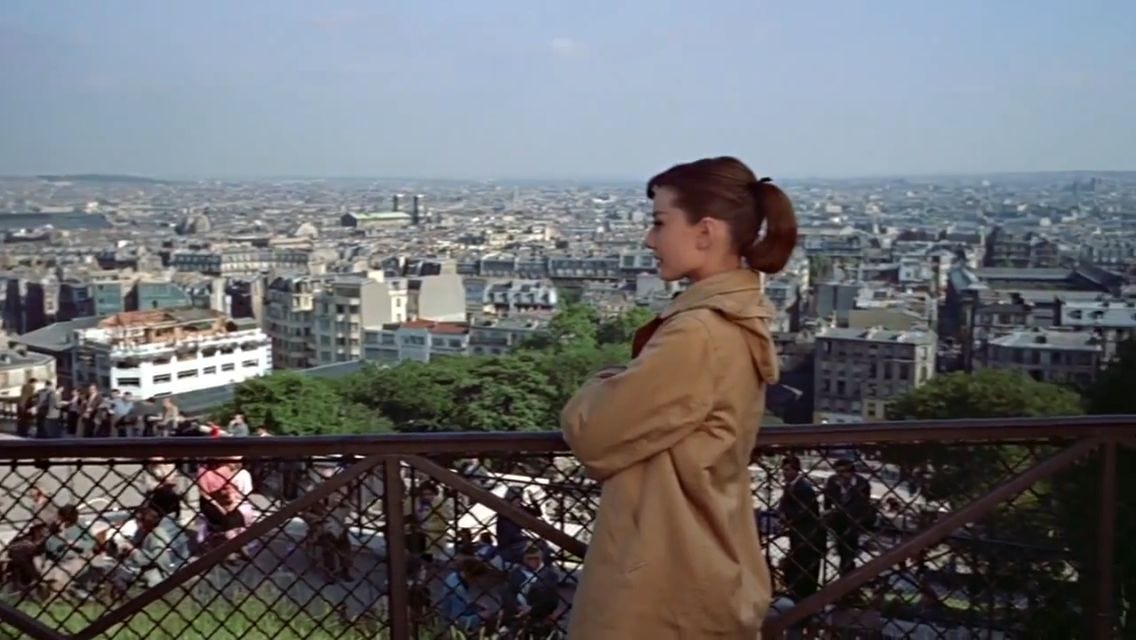
The problem isn’t weather, exactly. A weather opening puts description before character, it tells the reader what the setting looks like before giving them anyone to care about. The reader has no reason to be in the scene yet, because there is no one in it. The fix isn’t to not describe weather, but it’s to make it relevant to the introduction you want to make.
The dream opening is tricky for a specific structural reason as it removes all stakes. If the reader suspects they might be in a dream sequence, nothing in those pages carries any weight. They invested in something that didn’t count.
This one is less about stakes and more about cliché. It has become such a well-worn path that opening with a protagonist’s alarm going off, or eyes opening.
The deeper issue is that waking up is, almost always, a passive act. Your character is just... in a bed. Starting your story with passivity could be a missed opportunity, your first scene is your chance to show us who your protagonist is through something they actively do.
“Sarah had always been different. Growing up in a small town in Ohio, she had never quite fit in...”
Backstory is information about the past. But readers are not yet invested enough in your character to care about their past.
The technical term for this is the “info dump,” and it’s the reason so many first chapters read like preamble rather than story. And the fix is just simply to start the story. Weave in background only when the reader already cares enough to want it.
It would feel strange to write an essay about first chapters and not talk about opening lines. So let’s.
Some of the best opening lines in my opinion, tend to do one of five things:
Establish voice so distinctly you want to hear more of it.
“Call me Ishmael.” — Moby Dick
The voice is so specific and commanding that you immediately want to know who is talking.
Drop you into the middle of something already in motion.
“Someone must have slandered Josef K., for one morning, without having done anything truly wrong, he was arrested.” — The Trial
We are already inside a problem.
Create a question through an unexpected detail.
“It was a bright cold day in April, and the clocks were striking thirteen.” — 1984 Thirteen. That one word tells you the world is wrong, and you need to know how and why.
Subvert expectation so cleanly it makes you laugh or think twice.
“It is a truth universally acknowledged, that a single man in possession of a good fortune, must be in want of a wife.” — Pride and Prejudice
The irony is in the structure. Austen is mocking the premise even as she states it, and that gap between what is said and what is meant signals the intelligence of everything to follow.
Your opening line doesn’t have to be extraordinary, but I do think it has to be intentional. Ask yourself: what does this line promise? What question does it plant? Does it sound like the voice of this book?
When I’m looking at a first chapter, I find it helps to check for four things. I think of them as the 4 Cs.
┌─────────────────────────────────────────────────────────┐
│                     THE 4 Cs                            │
├──────────────────┬──────────────────────────────────────┤
│  CHARACTER       │  Who are we with? Do I understand    │
│                  │  how they see the world?             │
├──────────────────┼──────────────────────────────────────┤
│  CONFLICT        │  What is the source of tension?      │
│                  │  What is at stake, even slightly?    │
├──────────────────┼──────────────────────────────────────┤
│  CONTEXT         │  Do I know roughly where and when    │
│                  │  I am? Does the world feel real?     │
├──────────────────┼──────────────────────────────────────┤
│  CURIOSITY       │  What question am I carrying into    │
│                  │  chapter two?                        │
└──────────────────┴──────────────────────────────────────┘
The last thing you write in your first chapter is as important as the first. Every chapter should end with what writers sometimes call a “hook”, a reason to keep reading.
That reason can be:
A question, something unresolved that the reader needs answered
A revelation, something that recontextualises what came before
A turn, the situation has changed and we need to know what happens next
An emotional beat, something that leaves the reader feeling something they want to resolve
If the reader has everything they need by the end of chapter one, there is no reason to open chapter two.

Questions I’ve found helpful:
Character
Is my protagonist on the page within the first 2–3 pages?
Do we understand how they see the world?
Are they doing something (that matters)?
Conflict and tension
Is there a clear source of tension, however small, by the end of page one?
Do we know what the protagonist wants or fears?
Is something at stake?
Voice and tone
Does this chapter sound like the book it belongs to?
Is the voice consistent?
Does my opening line do something intentional?
Promise
What question does the reader get into chapter two?
Have I told through my writing what kind of book this is?
Does anything in this chapter delay the story properly starting?
Common traps
Does this chapter begin before the story begins?
Am I over-explaining, justifying, or contextualising instead of just writing?
Have I included backstory the reader doesn’t yet have a reason to care about?
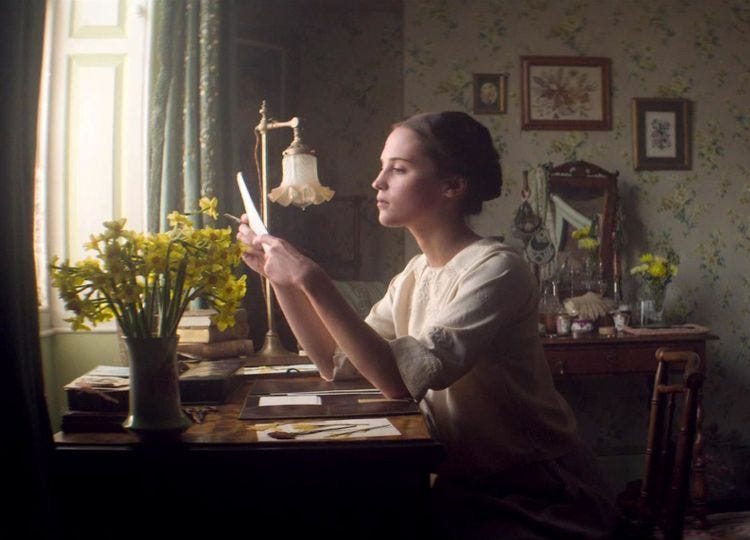
One of the best things that has helped me is to write your first chapter last. That dosen’t mean that you need to write it literally last, but to go back to it as a last thing. See it like a tying it up with a bow at the end.
Most published first chapters were not the first version. So it’s always okay to go back to it.
How do you find writing first chapters? I’d love to hear
All my love, Elin
Join 5K+ writers, readers, and storytellers as we nerd out over our favourite books, films, and shows, break down the storytelling behind them, and help each other become better writers while pursuing our own creative projects.
Want to start writing?
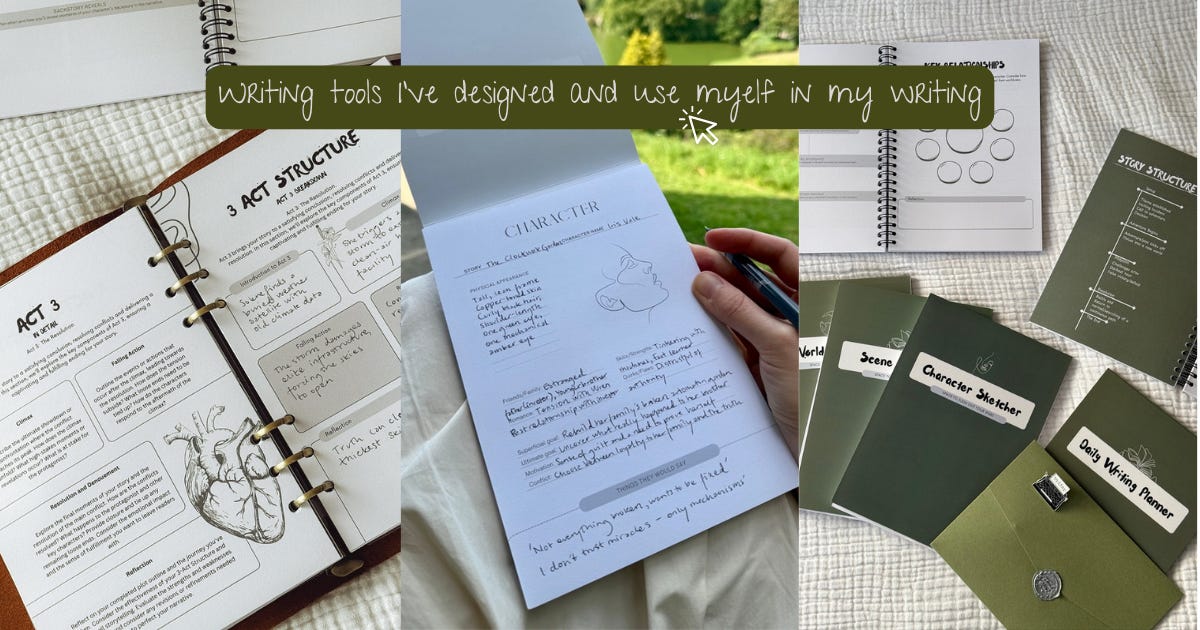
I’ve created free digital workbooks, writing tools, and resources based on what has helped me write my novels and what I learned through my journalism degree.
Let’s connect:
💌 Reply to this email, I’d love to hear your thoughts
📱 Come say hi on Instagram
If you enjoyed this essay, feel free to like, comment, or share it so more writers can find this little corner of the internet.
Thanks for reading; I’m so glad you’re here. x
No posts
Comments
Nothing yet. Say the first thing.
Sign in to join the conversation.