
After reading the whole longlist for the 2025 Booker Prize, I told myself I wasn’t going to follow any book prizes as closely this year. But when the Women’s Prize for Fiction 2026 shortlist came out and I realised I had already read about half of them, I decided I might as well go ahead and read them all.
So here’s my ranking of the six shortlisted titles and my thoughts on them:
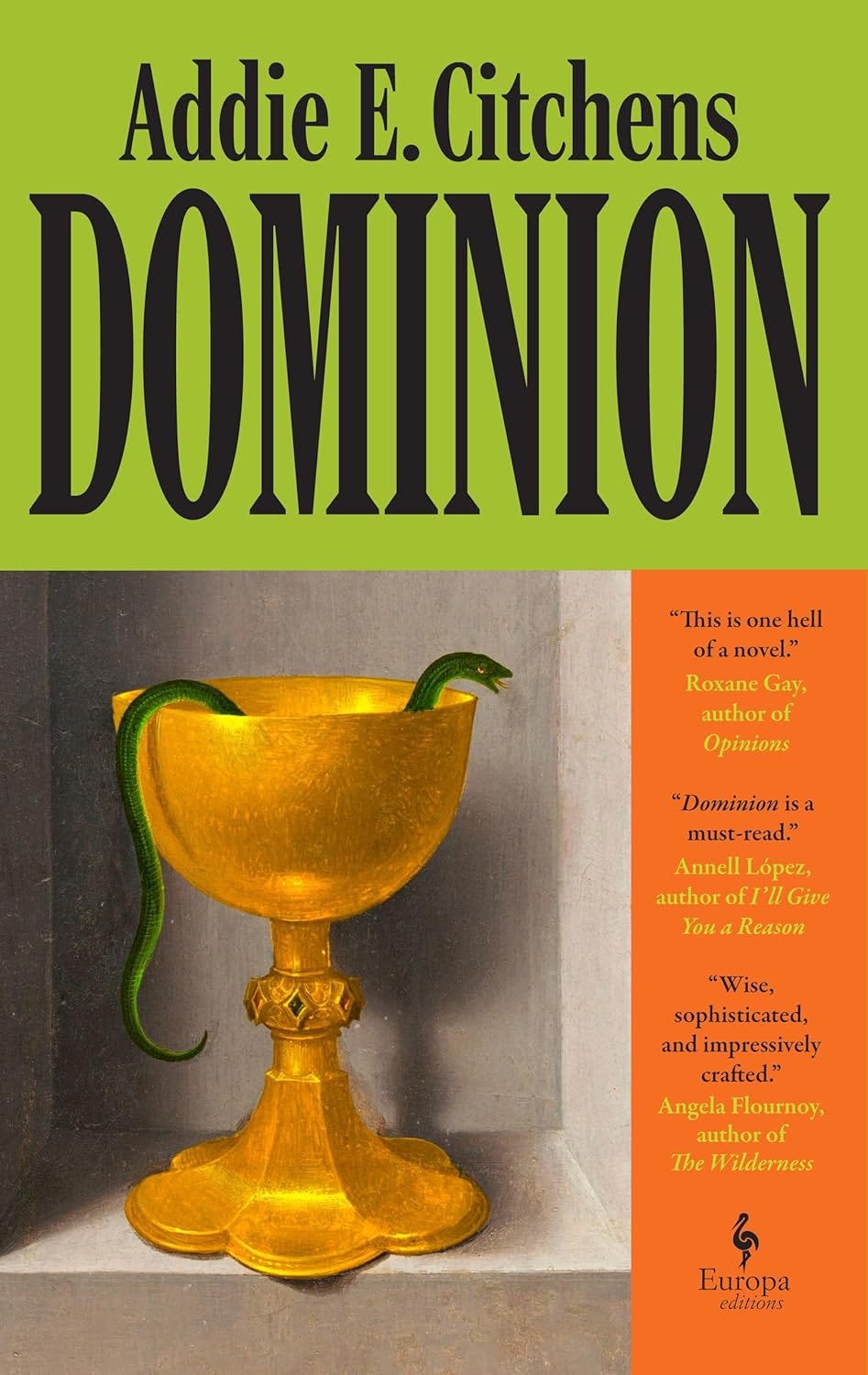
In a small Mississippi town, the sins of the Reverend’s youngest and favourite son rocks the close-knit community he’s grown up in.
I really wanted to enjoy this more, especially as it started off really strong (and it has a stunning cover), but unfortunately the longer it went on, the more it started to lose my interest.
Though I liked the writing style, my biggest gripe is that the characters felt very one-dimensional, each driven by one motivation that didn’t allow for much character development throughout the story. The pacing was also uneven: the inciting incident of the novel introduces a completely new character, occurs out of the blue with no prior context, and only lasts a few pages, which made it feel very jarring.
I liked the themes of patriarchal control, and how the brunt work performed by women is used to prop up men and allow them to continue their bad behaviour, but in the end, it just fell flat and wasn’t as powerful as I wanted it to be. I actually think it would’ve benefitted from being longer, so the author could develop the characters and expand on the novel’s themes.
My rating: 2.75 / 5
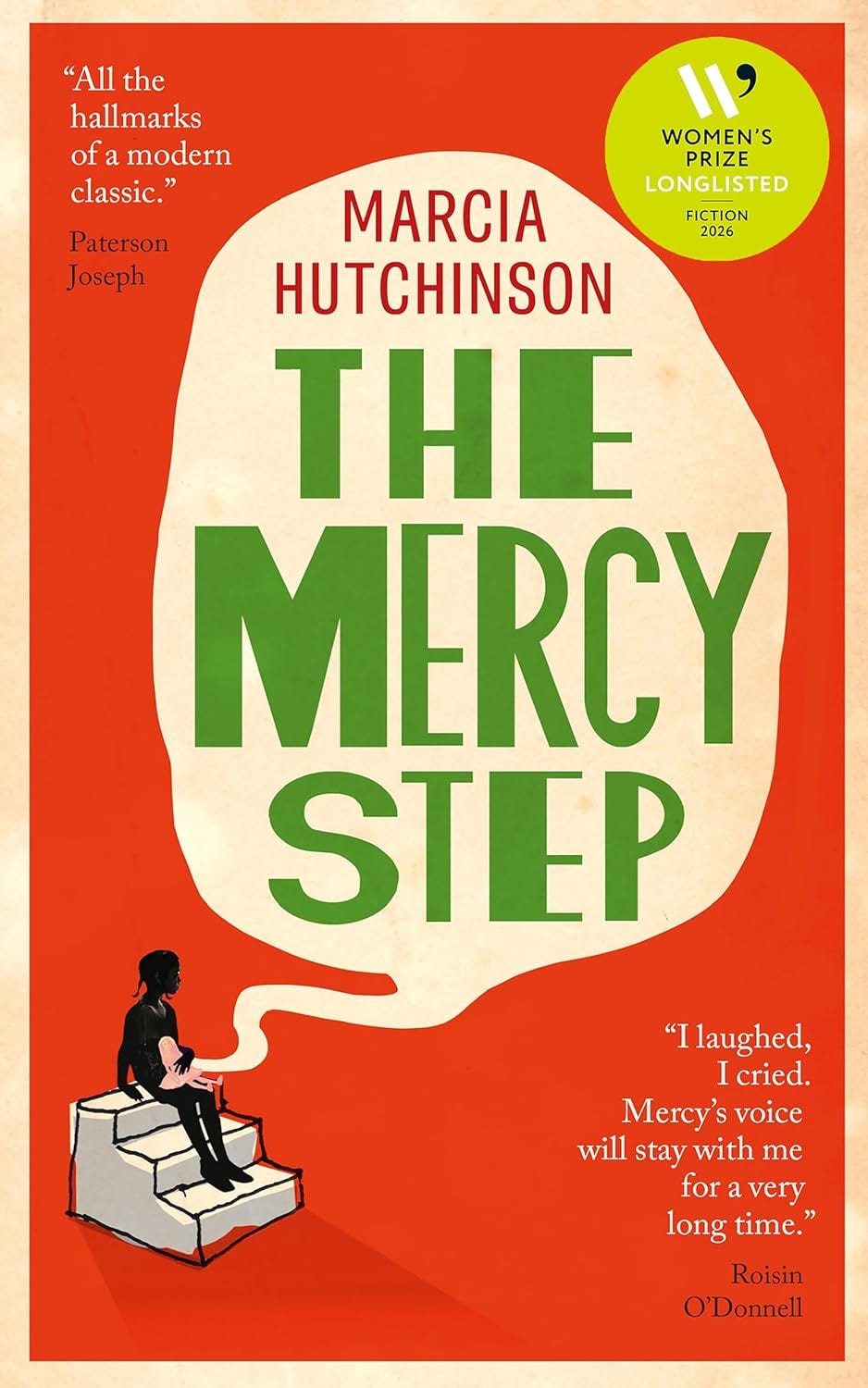
A young girl born to Jamaican immigrants in 1960s Bradford, England navigates a tumultuous childhood.
This book was a grower in that the more I read it, the more I liked it. However, it still didn’t blow me away. Your enjoyment of this book rests quite heavily on how much you buy into the child narrator, and it just didn’t fully work for me.
Obviously I don’t read books with child narrators as I am an adult with no reason to read children’s books (like parents/booksellers/librarians often do), but consistently writing from a child’s perspective without interjecting with your own adult wisdom seems like a hard feat, so I applaud the author for maintaining it. Although there were a few points where Mercy, the protagonist, was quite precocious, and it was hard to fully suspend my disbelief that an eight year old would be coaching their mother to leave a domestic abuse situation.
In some ways, I related to Mercy as a middle child who found solace in books and loved going to the library as a kid (à la Matilda). However, there are a lot of coming of age books / bildungsromans in that same vein, so I’m not sure this is doing anything particularly new. But I liked the big takeaway from this book: reckoning with the realisation that your parents are flawed people too, and how that can often feel like the worst betrayal.
My rating: 3 / 5
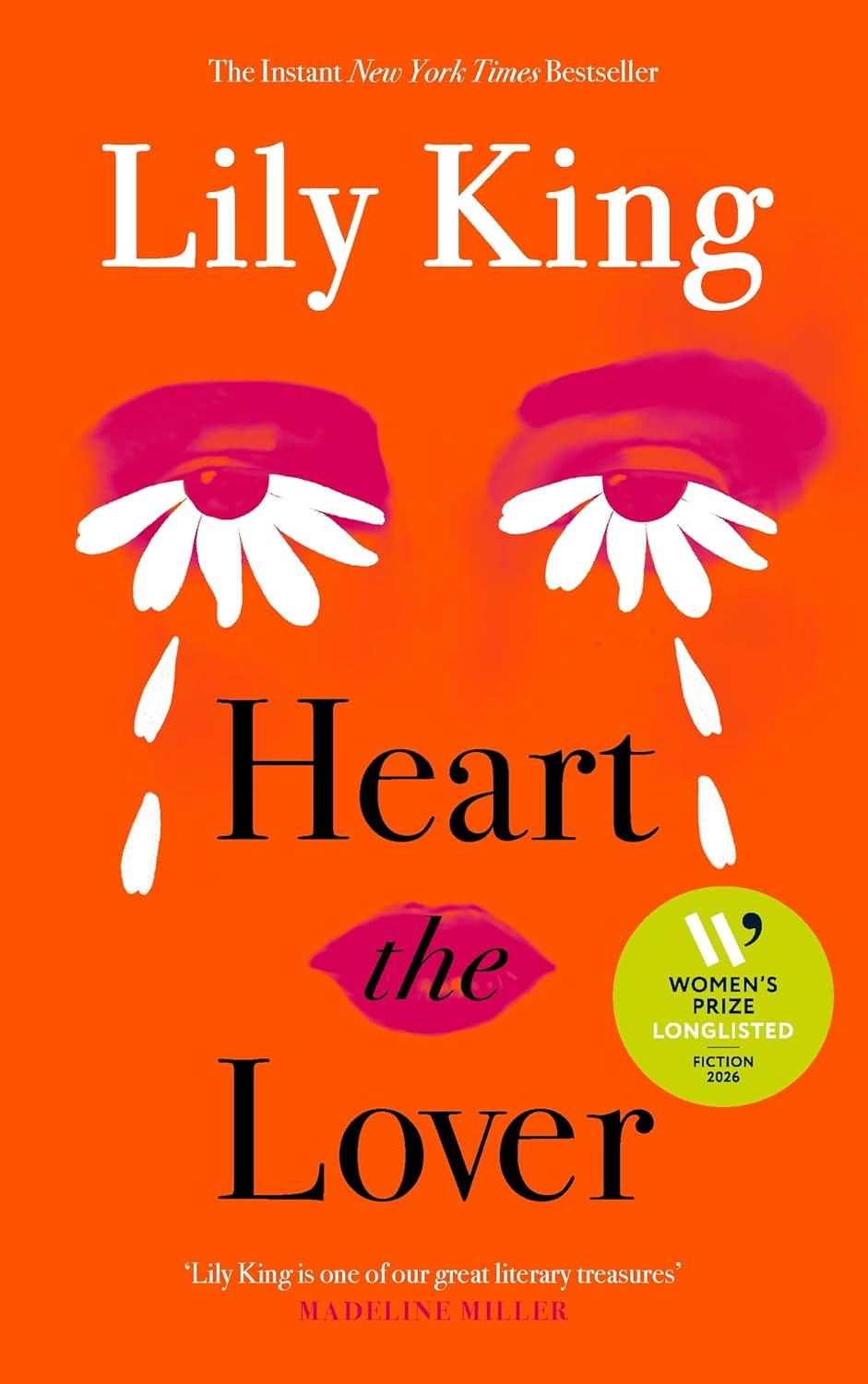
In the fall of 1988, an unnamed university senior struggling to find her footing gets swept up in the magnetic, intellectual world of two ‘golden boy’ English majors and best friends: Sam and Yash.
I was lucky enough to receive an advanced copy of Heart The Lover back in July last year, three months before publication. Since I read it, it’s been very interesting to watch how hyped it’s become and the way people talk about it online. I didn’t know anything about this book before starting it, and I still believe that’s the best way to go into it. The marketing of this book was (I believe) deliberately vague, but many reviews actually spoil a big part of it. Not knowing about any connections and going in blind was the most enjoyable part of my personal reading experience with this book.
At its core, the novel tells a simple love story, tracing the relationship between 3 young people during their college days into their adulthood. The characters are reckoning with the end of their youth and all the complexities that brings: regret, mortality, and the decisions we make in the past which shape our futures. I found some parts a little saccharine, clearly striving to elicit an emotional response and create a sense of poignancy.
It strives a bit too hard to make the reader cry, a trait I don’t like in books because 1) I don’t like to be manipulated and 2) I rarely cry at books anyway so those attempts are wasted on me. It’s easy to predict where the story goes, but Lily King is an undeniably great writer and I enjoyed reading her work once again.
My rating: 3 / 5
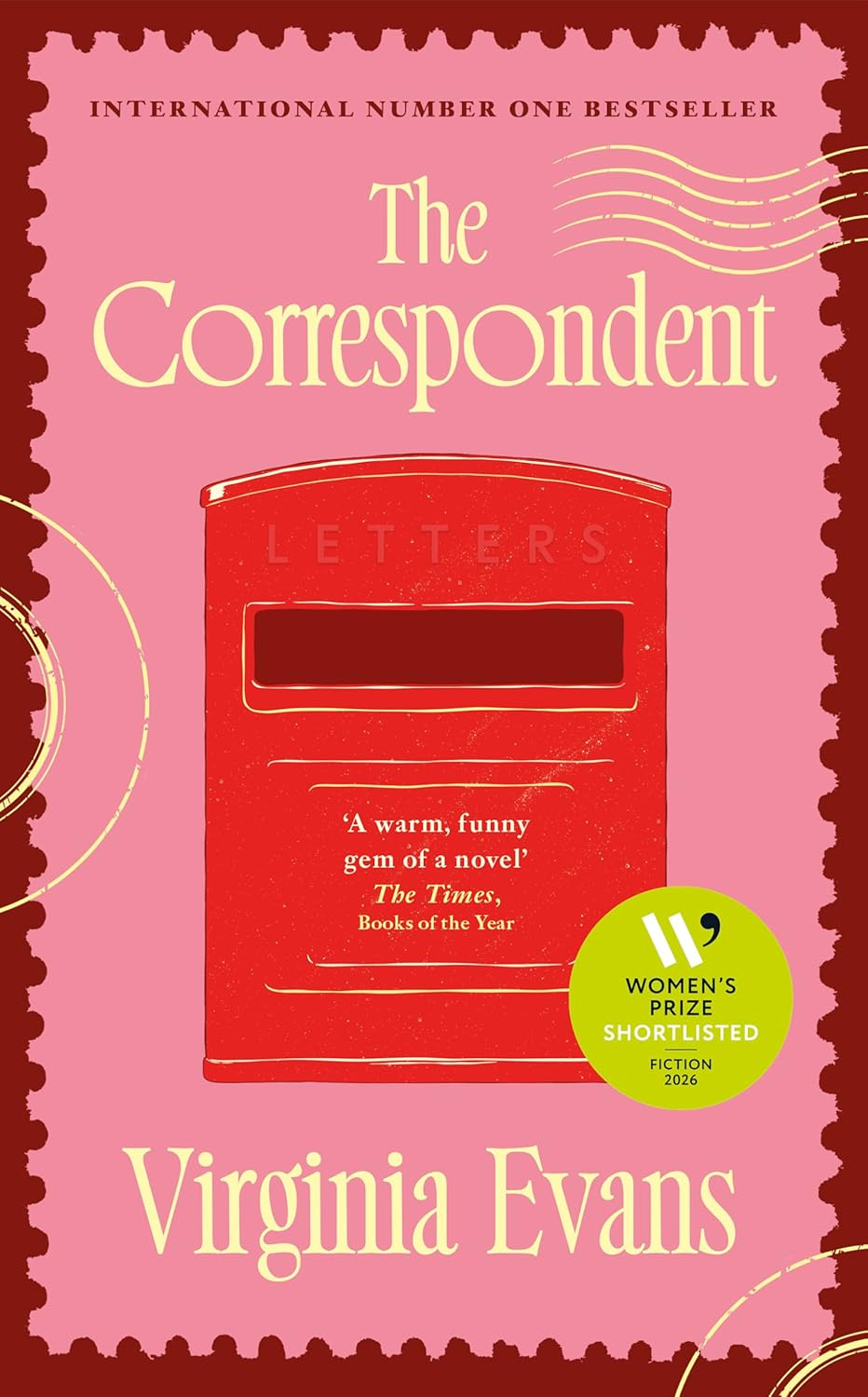
A novel told through letters written and received by the protagonist Sybil Van Antwerp, a women in her early seventies who has always made sense of her world through writing.
In general I’m not the biggest fan of epistolary novels, and when I first heard about this book and saw the cover, I thought it might be too twee for my taste. Thankfully, that is avoided by the voice of the narrator, Sybil. She’s cantankerous, dry-witted, and a bit rude, but I really enjoyed reading from her perspective. In fact, I much preferred it over a mawkish, wholesome character, which is what I expected going into this.
Through the letters that Sybil writes and receives, the novel digs into themes of ageing, fragility, love and loss, family, sorrow, regret, acceptance, and the importance of communication (to name a few). In a way, it almost feels like a family saga told through letters, delving into Sybil’s past, the people she’s loved and lost along the way, and how she ended up here. You get a picture of who Sybil is from her own letters, but also from the perspective of her family, friends, and acquaintances, which helps to flesh out her character in a book that had the potential to make its protagonist one-note.
I didn’t like the element of including replies from certain authors that Sybil writes to, especially when they are no longer with us, like Joan Didion. I thought it was quite an odd choice from the author to put her own words in the mouth of real life authors. I also thought the ending was wrapped up a touch too neatly, with everything falling perfectly into place. It’s definitely not a perfect book by any means, but I did go into it expecting to dislike it and think it’s overhyped, so I was pleasantly surprised.
My rating: 3.75 / 5
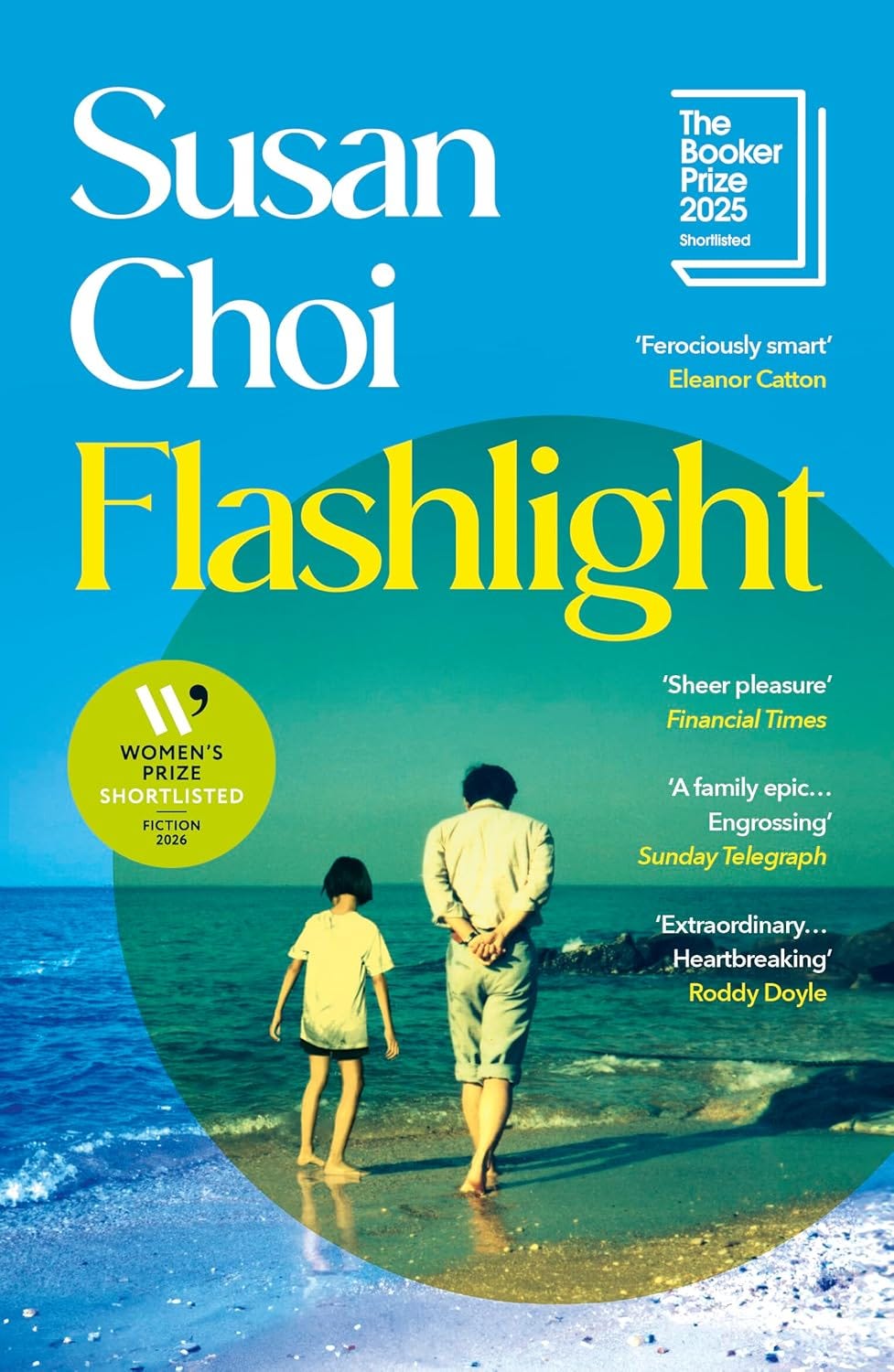
A father and daughter’s walk on a Japanese beach ends with the father’s disappearance and the daughter’s rescue, with the story then unfolding across four generations to explore identity, family secrets, and national conflict.
This was my favourite from the Booker Prize 2025 longlist (which I read in its entirety here). Whenever I think of this book, I’m just reminded of how much I enjoy a good, solid literary fiction. Choi’s immersive storytelling makes this such an enjoyable novel even amidst a cast of messy, largely unlikeable characters. There’s a precision and intelligence to the prose that kept me engaged throughout, even though the plot itself is quite slow.
The novel offers a rich account of the history of Koreans in Japan, and how they struggled to form their own identity after the second World War and the Korean War. At its core, the novel is about the secrets and traumas that lie beneath families, and how these can seep through generations.
The novel slowly builds up the suspense throughout, but the final section does feel quite abrupt in its pacing, making the ending feel rushed and oddly disproportionate to the rest of the book. But that really is one of my few criticisms. Overall, it’s hard not to admire what Choi has achieved with Flashlight. The scope of the novel is quite ambitious: a generational family tragedy mixed with geopolitical commentary, but Choi pulls it off like it’s easy.
My rating: 4 / 5
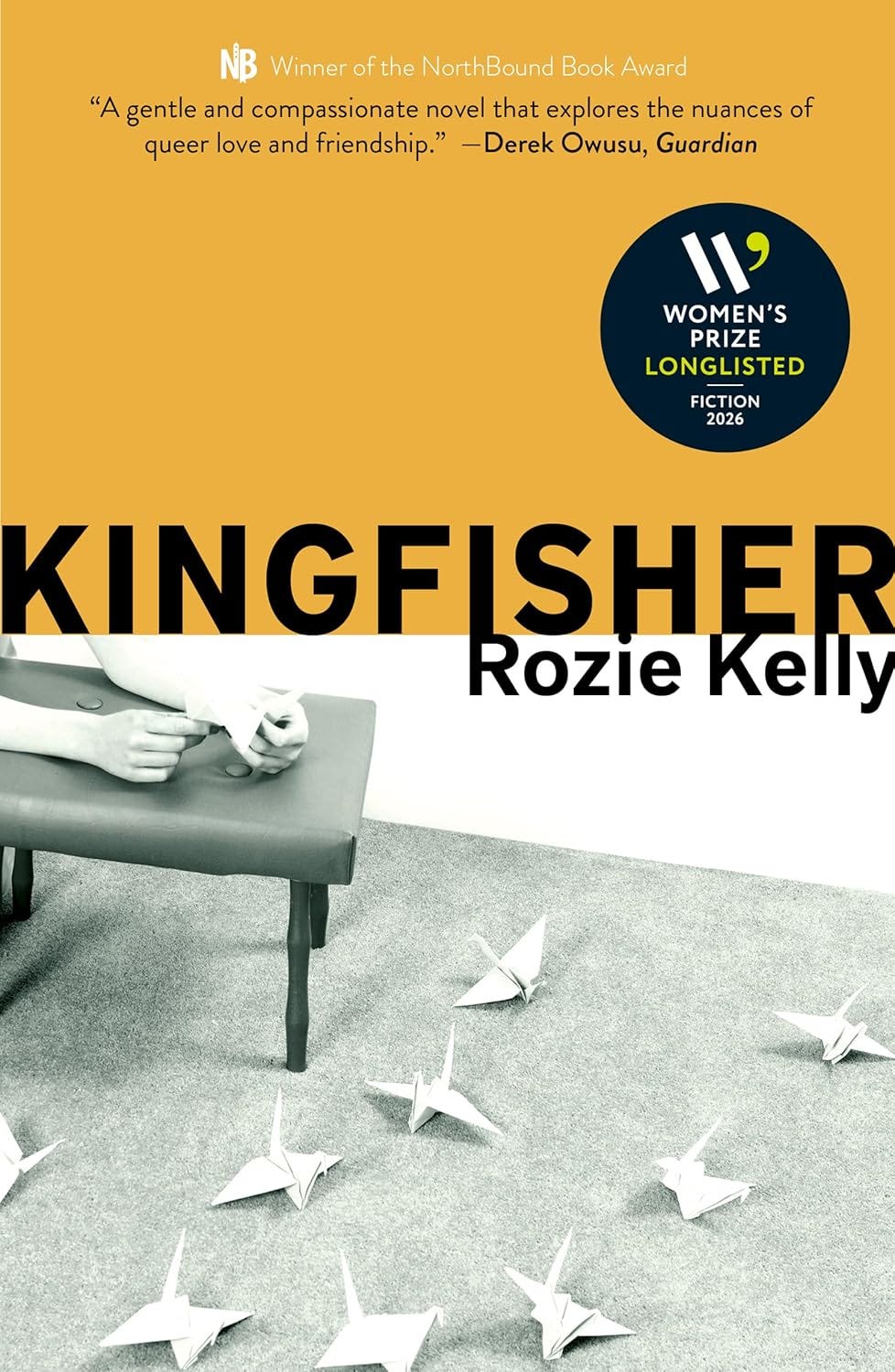
A creative writing academic who lives as a gay man suddenly becomes infatuated with one of his colleagues—an older female poet—which throws his life into chaos.
Kingfisher is a perceptive, funny, and tender novel, and at no point while reading it did I know what direction it was going in. I had some preconceptions of where it might end up based on the synopsis and general literary fiction patterns, but I was pleasantly surprised when those expectations were subverted.
The balance of humour and emotion is expertly demonstrated in this novel. It is melancholic both thematically and tonally, but never veers too far into the saccharine. The cast of characters is small, but each is so well crafted, and their relationships are painfully realistic, serving as vehicles to examine what we owe the people in our lives, and the tension between expectation and what we are willing to give.
It has beautiful, soothing writing that sucked me in from the first page; I read it over a weekend because I couldn’t put it down. It also has a perfect first line and last line, which is a feat within itself.
My rating: 4.5 / 5
Overall, I was impressed with this year’s shortlist! Although not all the books were to my usual taste, I enjoyed each of them in some capacity. None were complete duds or entirely without redeeming qualities.
While following this prize this year, one thing I have noticed is that it seems to be more commercially-orientated, often favouring books that will appeal to broad audiences. This is also a pattern that’s been observed amongst other literary prizes. From a sales perspective, this is understandable: awards like the Booker Prize and the Pulitzer Prize significantly boost sales of a book, so publishers have strong incentives to promote books they believe are ‘prize-worthy’. To make it worth their while, it’s better if these books include accessible narratives and themes that will resonate with the broadest audience possible.
This raises questions about whether literary prizes are still rewarding the most groundbreaking work, or whether they are becoming more closely aligned with commercial trends. The fact that Wild Dark Shore was longlisted for the prize, a novel which ultimately leans too much into commercial tastes to its own detriment, is arguably evidence of this. I’m not saying that literary prizes need to be overly pretentious or gatekept, but I do believe we should award books that are innovative, thematically interesting, and well-written, rather than ones with mass commercial appeal.
But back to the Women’s Prize!
What I want to win: Kingfisher or Flashlight
What I predict will win: The Correspondent or Heart The Lover
The winner of the 2026 Women's Prize for Fiction (and the Non-Fiction prize) will be announced on 11 June 2026, so I’m looking forward to seeing if one of my favourites win, or if my predictions are right.
Have you read any of the longlisted or shortlisted books this year? If you have, please let me know your thoughts on them! Would love to hear if we agree/disagree on any, and also what you want/predict to win this year.
No posts
Comments
Nothing yet. Say the first thing.
Sign in to join the conversation.