
The Color Purple was what got me. Let’s ignore for a moment that I later talked myself around on that one – yes, okay, I get it, Shug’s song for Celie, something about the insistence on the real glamour behind the pasteboard. Maybe that one works. But at first glance, well! Mainly, I just couldn’t believe another musical had come to my local cinema in disguise.
There was Mean Girls; there was Willy Wonka. There were probably more I’m forgetting right now. Execs, clearly, heard in these musical remakes a collective jingle of coins. So why weren’t they advertising them as what they were?
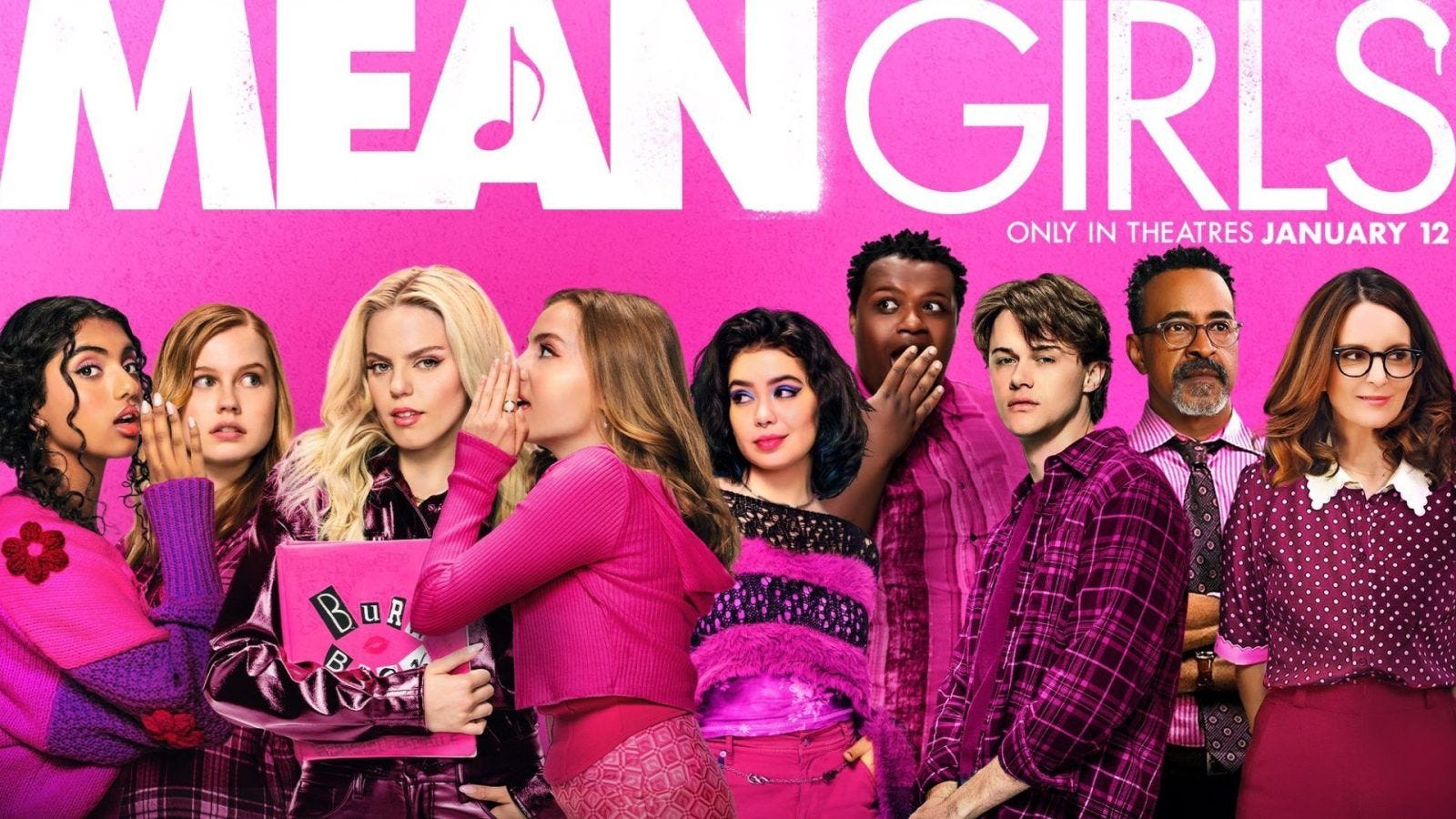
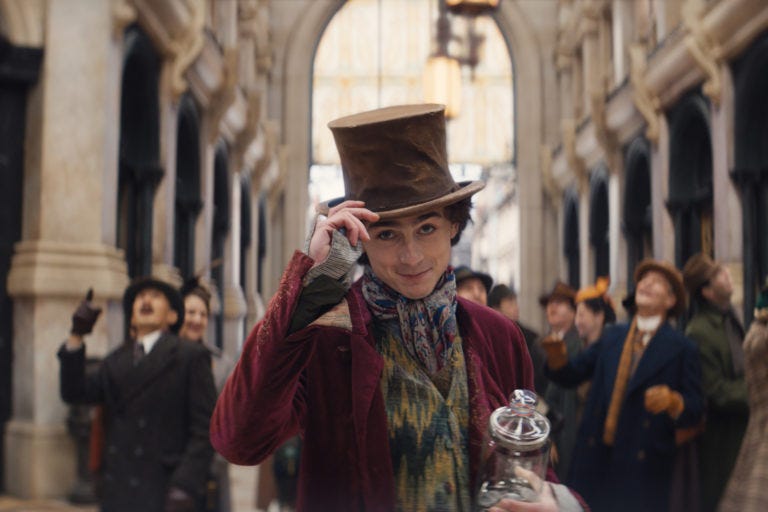
The poster for Mean Girls (2024) hinted, using a little quaver for the counter in the ‘A’ of ‘Mean.’ (Renee Rap singing, and not even a treble clef!) Willy Wonka (2023) had original songs from Neil Hannon of The Divine Comedy, which made sense given the Gene Wilder version was arguably all about the songs, with Sammy Davis Jr’s ‘The Candy Man’ spending three weeks as the highest of high, the very top song of the 1971 Billboard Top 100. Yet Wonka’s advertising was almost wholly built around the casting of Timothee Chalamet as the eponymous whimsical chocolatier, doing his best not to look like the guy who brings absinthe to your house party as he gallivanted around not-Leadenhall with his big gobstopper-jar of dreams. Hugh Grant wore Oompa Loompa face paint. That’s the ticket.
What’s curious about this trend is that musicals themselves aren’t unpopular. During the 2024 London Theatre Week, it was obvious new ones were having a moment, from undergraduate-Edinburgh-show-cum-West-End-sensation The Six to camp wartime caper Operation Mincemeat. Last summer’s hero National Theatre production, London Tide, gave Dickens’ Our Mutual Friend not only a big, punchy, spare-no-change set, but also original music by PJ Harvey.
This makes the advertising for these recent cinema releases even more puzzling. People want to see musicals, and studios are duly making them – they’re just being oddly coy about it.
My suspicion is that these new musical films all follow the same, old playbook. Specifically, Disney’s.
“Every decade since the 1930s, Disney has released landmark films featuring musical numbers that remain household favourites today,” writes Dr Malcolm Cook, of Southampton’s film studies department. “[T]he Disney ‘renaissance’ in the 1990s was underpinned by musical stories and huge Broadway talent.”
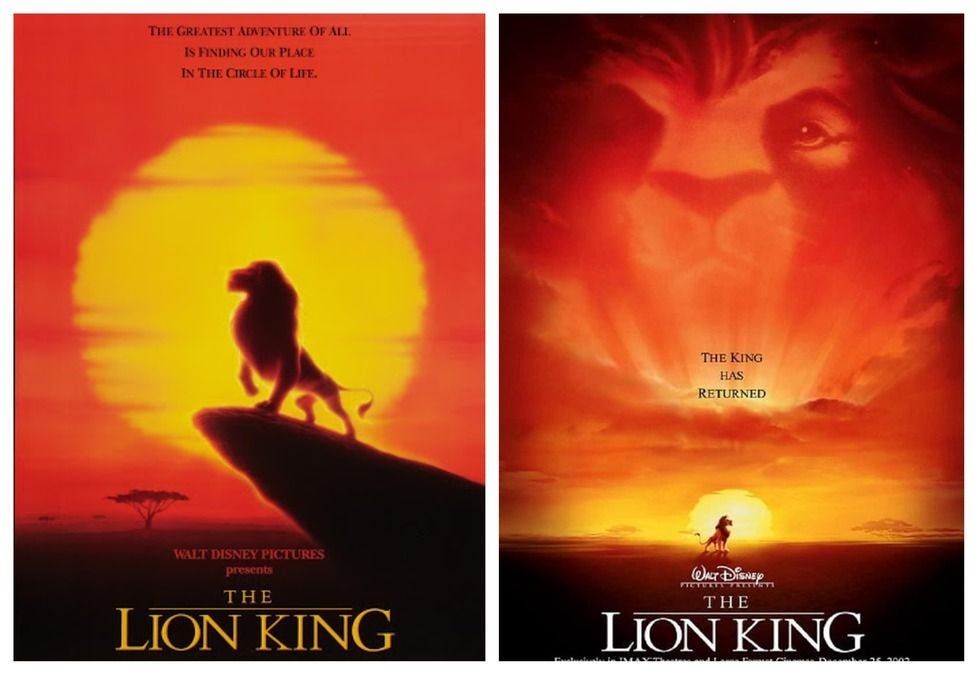
Yet these 1990s Disney films, the blockbusters of my childhood, were advertised not as musicals but as fabulous, mythic, epoch-defining stories. From a poster for The Lion King: ‘The greatest adventure of all is finding our place in the circle of life.’ Pocahontas: ‘An American legend comes to life.’ Hercules: ‘The Man. The Myth. The Movie.’ Disney also liked to style its films as events. Both Pocahontas and The Lion King billed themselves as ‘the movie event of the year.’ (Luckily, they were released in different ones.)
By advertising these films as films, Disney’s marketing department created an opportunity for an additional media moment around the songs. In 1995, for instance, Walt Disney Records took out full-page magazine ads to ‘salute’ The Lion King soundtrack on its nine Grammy nominations. Songs from Hercules were burned onto promotional CDs and slipped into boxes of Nestlé Shreddies.
Post-pandemic, the prevailing cultural ethos is one of measured risk. With musical remakes, studios aren’t just tapping into nostalgia for the original productions, but for a media form audiences remember well from their childhoods. In the week I wrote this, two of the top ten musicals in Spotify’s streaming charts were 1990s Disney soundtracks: Aladdin and The Lion King. Now all major releases require extensive water-testing, execs may also hope to get, just as Disney did, two nips at the advertising apple: drawing audiences in on the strength of the brand IP, then selling the soundtrack as its own entity if audiences bite. Whether it works depends on if they’re any good.
 Split Green & Pink Vinyl | Vinyl 12" Album | Free shipping over £20 | HMV Store")
Wicked is, of course. A certified hit. Naturally, some are greeting this like the moment the theatre kid takes off her glasses and everyone finally, and suddenly, realises she’s hot. This rather forgets the fact Wicked is one of the most commercially successful Broadway shows of all time, combined now with Disney-kid discipline and a marketing budget which turned even the window of my local greasy spoon into a promotional billboard. (‘Green-wich’ – get it?) Wicked had one of the best opening weekends of the year, and has already grossed more than Mamma Mia.
In 2025, then, I imagine we’ll start to see more musicals advertised as musicals, spelling the end of this weird advertising subgenre. Perhaps the thing needed to stop musicals being sold as films is a musical turned into one.
No posts
Comments
Nothing yet. Say the first thing.
Sign in to join the conversation.