
There aren’t many mobile phones in the film Conclave, but near the beginning, we see a cardinal texting. He only appears for a moment, sitting on an old stone bench with a red phone case that matches his sash – it’s funny, incongruous. What do cardinals text about? Is he discussing who he’ll vote for, or just sending a last-minute message to friends before being shut off from the outside world? gtg – being sequestered now lol.
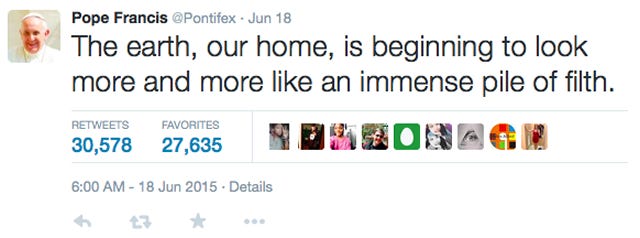
Forgive me that joke, for it’s not fair. Cardinals are people, and almost all people use phones. Pope Francis went viral plenty of times: who can forget the tweet about our home planet becoming a pile of filth, or his one about the middle finger?
Nor does @Pontifex have a monopoly on viral religious content. Only this week, Instagram served me a Reel of three friars wielding lightsabers. May the Fourth be with you indeed. (And with your spirit.)
To be honest, even the Star Wars brothers were a relatively staid interlude in an endless feed of colourful, camp conclave content. Maybe it’s just my algorithm, but one morning, I swear I saw a dozen CGI Cardinal hats before breakfast.
In the New York Times, Esther Zuckerman suggested that the loaves-and-fishes style proliferation of Conclave memes was influenced by reality TV: “It’s as if they are on Big Brother, except they are all ostensibly pious.”
Coming so soon after the film, it’s no surprise that creators are now treating the real-life conclave as the same drama made flesh. In a nod to the Hunger Games series, American comedian Rob Anderson has started calling it “the Pope Games.” Another creator has generated a dramatic mock film trailer, introducing each papabile as if he were a superhero. Cardinal Pizzaballa, Latin Patriarch of Jerusalem, has what appear to be lasers streaming off his cloak.
There is a serious point here. Because what we are really seeing, in all of this, is spectacle. And spectacle is as old a part of the Catholic faith as incense, handshakes, and checking whether a new church has copies of the Tablet or the Herald at the back.
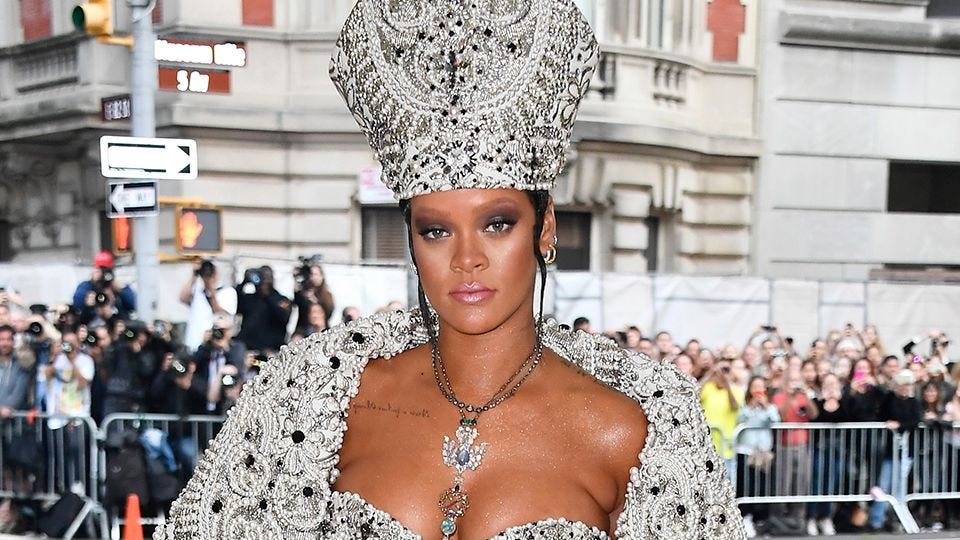
In 2019, after Rihanna wore a silver bejewelled Pope hat to the Met Ball Gala, I interviewed the late, much-missed writer Dawn Foster about the rise of pop Catholicism and its associated baroque aesthetic. “Excess and art,” she told me, “bring us closer to the divine.” That’s why the Church invests so much in decoration “in public buildings, and in the dress of those people delivering sacraments to the people.”
Pedants will note that my headline claim calling this ‘the first social media conclave’ is not strictly accurate. When Bergoglio was elected Pope, people on Twitter followed along with the hashtag #papalconclave2013. Back then, Twitter had an estimated 200 million users.
That sounds like a lot until you learn that today, TikTok has over 1.5 billion. What’s more, the form of social media has changed. While Twitter hosted videos and photos, it was, at heart, a place where people told stories through words. Today, visual platforms are more popular – and so it follows that they’re bringing the conclave’s visual splendour to life in unprecedented ways.
It’s not just that TikTok’s technicolour videos are eye-catching – as visually arresting as a gilt chapel interior, or the vermilion flash of a Cardinal’s cloak. In 2025, generative AI has made it possible for almost anyone to transmute text into video, using only the little device in their pocket. Why merely write a joke about an action movie with prelate protagonists when a computer can make you the trailer?
Until now, “media literacy” has been used to describe the skill of critical interpretation. But the word “literacy” refers to both reading and writing. To be media literate today might equally mean knowing how to create.
When the voting in Rome concludes, I will check how many posts have been shared with the hashtag #conclave. In St Peter’s Square, a thousand mobile phones will be raised to the sky to take a photograph of the new Pope. The cardinals will be given back their own devices.
By next week, the names of the runners and riders will mostly be forgotten to the public. But – uncomfortable as it may be for us more text-literate beings – the democratised production of spectacle, which made them one-time stars in a CGI action film, will be with us a long time yet.
No posts
Comments
Nothing yet. Say the first thing.
Sign in to join the conversation.