
I’ve been back in India for a few days now and I don’t quite know how I feel. That’s sort of why I’m writing this.
I’m writing from my brother’s place in Mumbai. My niece is here. She’s 7. From the day I left for Sri Lanka, she had been counting days to my return. And I got strict orders to not leave Mumbai without spending at least 10 days with her when I came back from Sri Lanka. Non-negotiable. Delivered with the authority only a seven-year-old can summon.
Most of my hours since landing have gone to her. Being pulled from one game to the next, teaching her for exams, going to the park, and listening to countless stories. My days are full, the kind of full I’d give anything for.
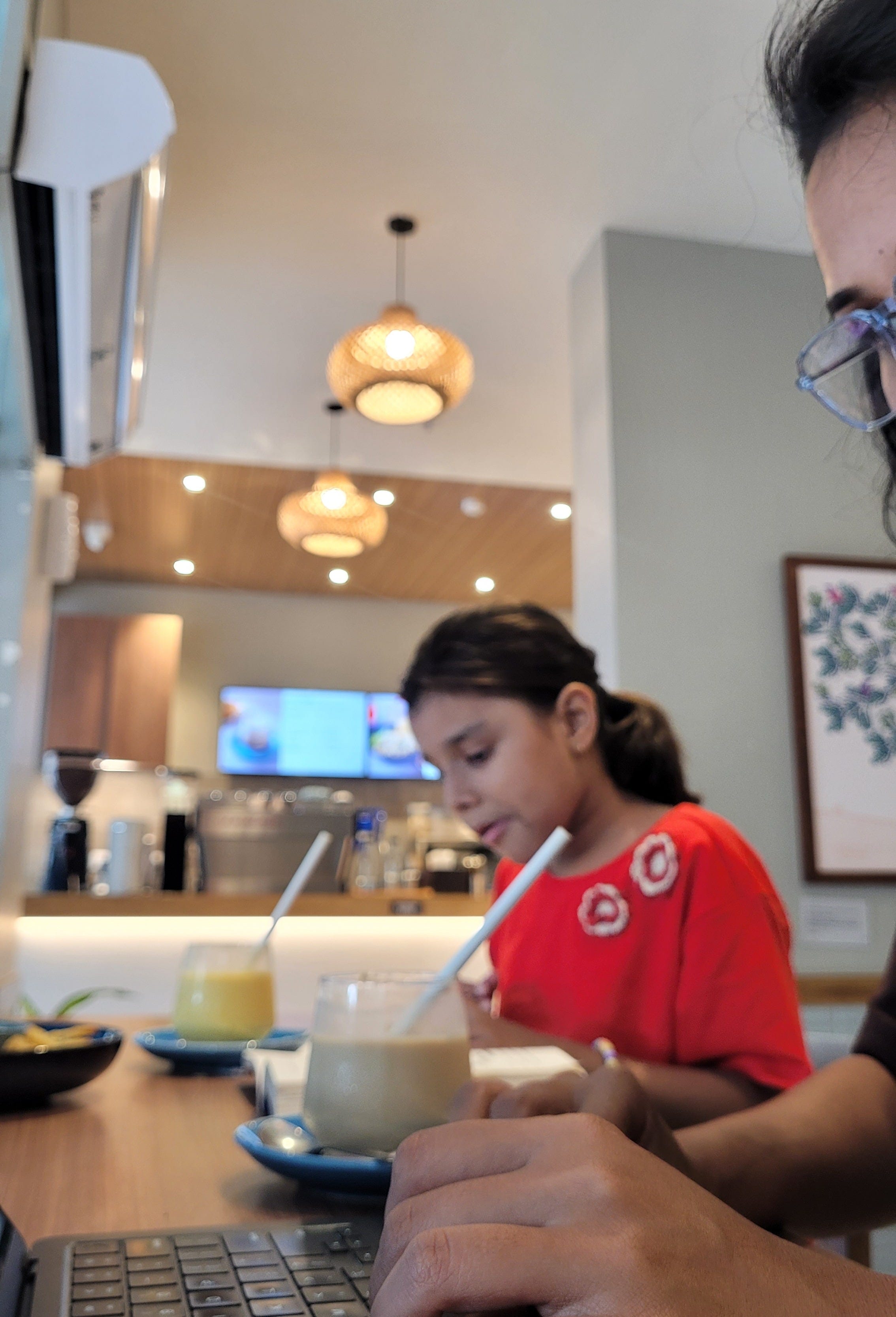
And I’m completely disoriented.
Three days ago I was in Sri Lanka, where my days were built entirely around my rhythm. I woke when I woke. Worked when I wanted to. Stared at the trees from my window for hours if I didn’t feel like doing anything. Solitude was available the moment I wanted it, and so was company. For 4 weeks, my life fit me.
Now I’m in a life shaped around others’ rhythm.
I haven’t worked properly since I got back. I haven’t had a single quiet hour. I haven’t even had the space to sit with what those 4 weeks were and to miss Sri Lanka yet.
I love these people. I'm glad to be here. And I feel like a guest in my own days.
We prepare a lot for leaving. The courage it takes to go, the fear before a first trip, the high of being somewhere new. We celebrate it and share everything about it. But we don’t talk about the return.
The dull and dislocated days after a beautiful thing ends, when you’re not exactly sad, just scrambled. You’re trying to be present in one life while another one is still echoing in your body, unprocessed.
I’ve done this many times now.
Five years of leaving, arriving, and leaving again. You’d think I’d have a system by now - how to process feelings from one adventure before moving on to the next. I don’t. I’ve gotten good at the leaving. The coming back still gets me every time, in a way I never manage to prepare for.
So why do I keep doing it?
I’ve been thinking about it the last few days, between games with my niece.
The disorientation is real, but it’s temporary. It lasts a few days but what it buys me is not temporary at all.
If I refused to disorient myself, if I built a life so settled that coming home never rattled me, I wouldn’t have gone to Sri Lanka. I wouldn’t have said yes to a month with three people I barely knew, which turned out to be one of the best months of my life. I wouldn’t be sitting on this sofa right now, disassembled, negotiating an hour with a seven-year-old so I could write this to you.
The disorientation is the price of showing up to my own life. Of being the kind of person who says yes to the mad ideas, who is present for the people and the places and the moments that only exist if you’re willing to keep moving toward them.
There’s another kind of life available to me. A settled one, where nothing ever disorients me because nothing ever changes. And it looks like peace from the outside. I’m sure there’s a lot of peace in it.
But I’ve come to believe stability has a cost too. A life where you never feel confused on return because you never went anywhere, never risked anything. You just don't get to feel that cost. Because you can’t miss what you never experienced.
I’d rather feel disoriented for a week than miss the thing entirely.
I don’t have a neat ending. I’m still floating in the middle: half here in Mumbai dancing with my niece, half in a house in Sri Lanka laughing out loud at some silly joke with 3 friends.
In 10 days, just when Mumbai starts to feel settled, I’ll move again. So the disorientation is here to stay for a while. But when it finally lifts, what will be left is a month I’ll carry for the rest of my life, and a little girl who’ll remember that her aunt shows up.
That’s the trade. And I’d choose it everytime.
Do you feel this too when you move?
You can also reply to this email.
Until next week,
Love,
K
Comments
Nothing yet. Say the first thing.
Sign in to join the conversation.