
From: Everywhere, All At Once
To:
Dear Friend,
I love nuance. The appreciation of nuance is one of the best skills I have from living around the world.
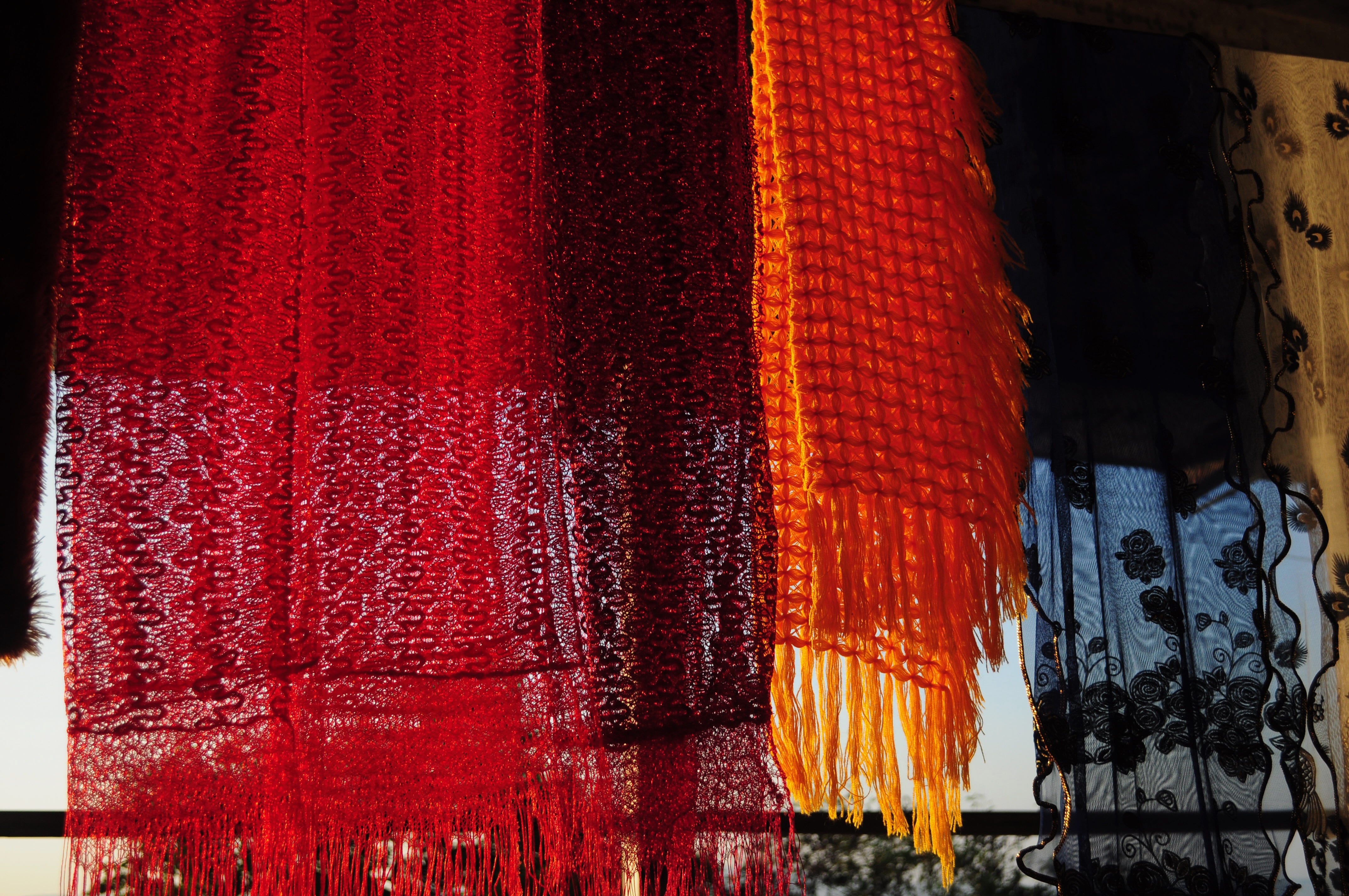
Nuance is a hand-woven textile and words sitting between the lines.
Nuance is appreciating the ABCs are completely different in other languages.
Nuance is holding two truths at once. Knowing that they are both opposing and equally true.
I love nuance. I love that the aid sector has taught me to speak in nuanced frames. It has taught me to hold in my mind, not just myself, but other people, other experiences, other realities.
Whenever I write about winter, I think, for some people it is summer right now, and others don’t have four seasons; they have a rainy season and a dry season or something else entirely. And I can know them all as equally true.
Whenever I think about my experience, I know someone else will have the opposite experience. And I love that; I love knowing both exist. Because experience teaches us different shades of life, and nuance shows us that the layers of our lives are important; the beautiful contradictions of who we are and all we can be.
Sometimes I am angry at nuance because I wade too far into it. When that happens, I have lost my voice, my experience, my perspective - chest deep - suffocated by my understanding of all the other truths that exist as well.
This is the nuance of nuance. Because to appreciate nuance means you need to also love its opposite: certainty.
You need to recognise that good leadership, and good self-leadership, require both certainty and nuance. But certainty doesn’t hold the same respect for nuance that nuance holds for certainty. Which is why I think nuance reigns over all.
Because nuance is standing deep in the earth of one place, knowing completely different places exist at the same time. It is holding all these contrasts: light and shadow, joy and crisis, abuse and justice. All at once.
I am writing this because I read recently that this platform favours writers who write with certainty. Most tech favours certainty, and AI surrounds us with certainty.
Organisations prefer certainty when they hire for leadership roles. Voters prefer certainty when they choose a prime minister. Content consumers trust certainty. Recruitment systems look for certainty in CVs rather than complexity.
But we need nuance; we desperately need nuance.
How else are we going to feel our way through the thorny, complex terrains of real life?
Who is going to lead us into the tangled web of what took us to the climate crisis and start untangling it?
Who is going to hold organisations through complex twists and turns and still have staff loyalty?
The people who are comfortable with nuance.
Those who have done the emotional work of holding complicated emotions. Those who do not fall for quick fixes to complex problems. Those who are ok with difference, who have the emotional and somatic ability to stay with spaces of uncertainty, to follow the dangling thread of nuance.
Without appreciating nuance, we cannot deal in nuance, and if we don’t deal in nuance, we are walking with our eyes shut, very confidently along a straight road which at some point will be the edge of a cliff.
If our human capacity to hold nuance continues to be withered away, what are we left with?
A world of only primary colour? A world of hard objects without woven places to land. Chatbots that talk to us confidently. But no wild trails. No whispering tentative ideas. No complex wonder.
Till next time, my multi-faceted friends,
Catriona
Prompt
When was the last time you noticed nuance?
Join me this summer, as I write weekly postcards from across time and place, with prompts to take into your day or onto your page.
If you enjoyed this piece
You can support this newsletter by buying me a coffee, subscribing or joining the paid community.
Comments
Nothing yet. Say the first thing.
Sign in to join the conversation.