
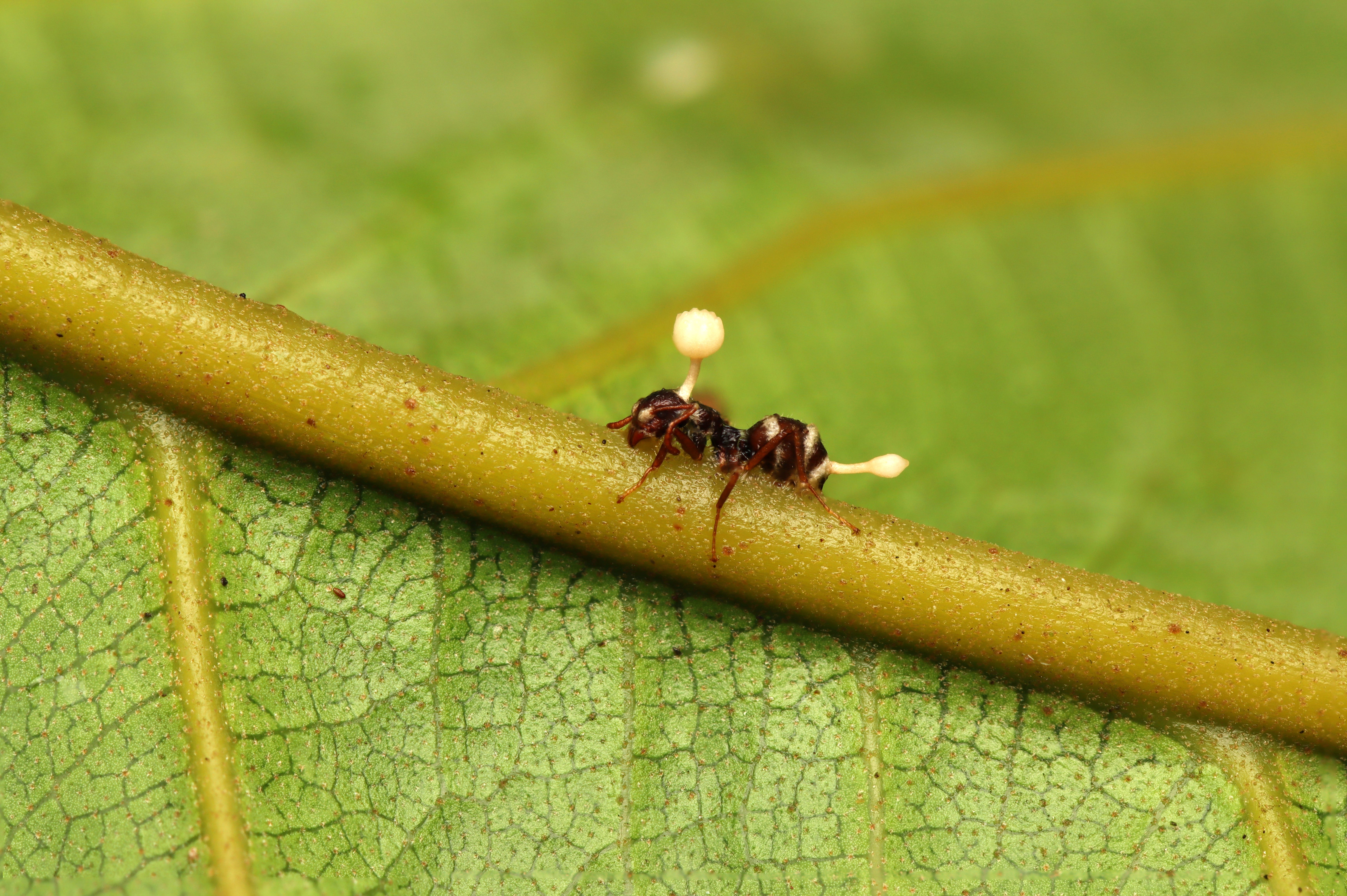
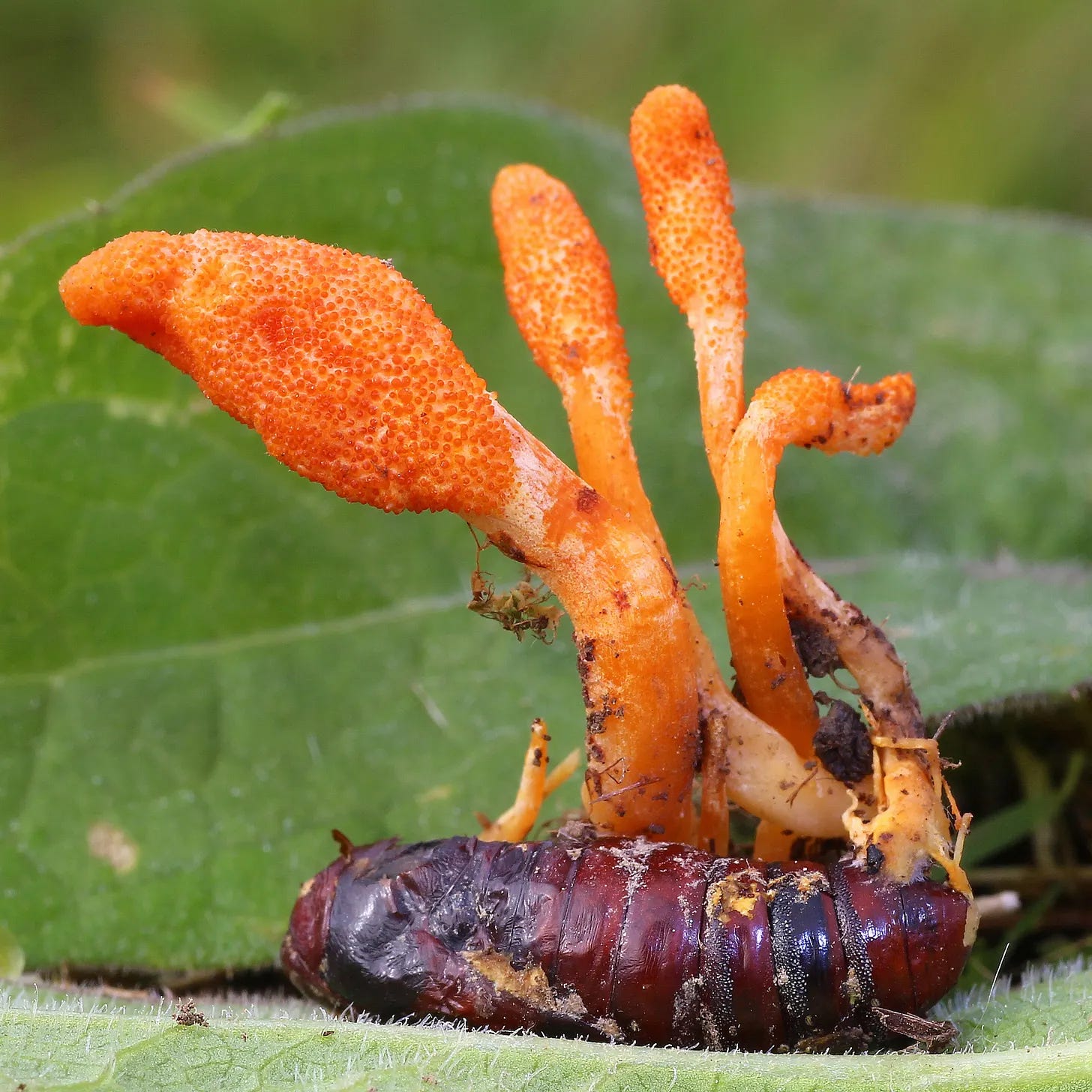
“Zombie fungus” entered the mainstream vocabulary a few years ago, largely thanks to Ophiocordyceps unilateralis—the real-world fungus that infects ants, manipulates their nervous system to make them climb to an exposed spot, and then kills them before erupting from the corpse to release spores. It’s also the inspiration for the HBO series The Last of Us, though experts are quick to note it cannot infect humans; our body temperature alone rules that out. Ants are just one target, though. The genus Cordyceps in the broad sense includes more than 400 described species that collectively parasitize beetles, moths, wasps, bees, cicadas, spiders, and more, with each species typically specializing on a single host. The single most economically significant example doesn't infect ants at all: Ophiocordyceps sinensis, the Himalayan “caterpillar fungus,” spends months growing inside ghost moth caterpillars buried in high-altitude Tibetan Plateau soil before sprouting its own dark fruiting stalk from the caterpillar's head. It’s so prized in traditional medicine that it can sell for more per gram than silver.
What's gotten far less attention across this entire family of insect-infecting fungi is that they have their own predators.
Researchers from Universiti Malaysia Sabah’s Institute for Tropical Biology and Conservation have now described one of them: Pleurocordyceps cornusynnemata, found on a single dead ant collected during field surveys in the Danum Valley, a remote, biodiverse stretch of rainforest in Sabah, on the Malaysian side of Borneo. The species is what mycologists call a hyperparasite: a parasite of a parasite. Rather than infecting the ant directly, it infiltrates the Ophiocordyceps tissue that’s already colonizing the ant’s body and feeds on that fungal tissue instead. As Institute deputy director Jaya Seelan Sathiya Seelan explained to AFP, the new species “infiltrates and feeds directly on the thriving Ophiocordyceps tissue inside the host.”
The name comes from its synnemata—a technical term for the upright, stalk-like fruiting structures some fungi produce to release spores. In this species, they form a distinctive horn shape unlike anything previously documented in its genus, Pleurocordyceps.
This is not the first hyperparasitic fungus ever found. Fungal hyperparasitism, including species that specifically prey on Ophiocordyceps, has been documented before. What is genuinely new is more specific: this is the first known species in the genus Pleurocordyceps to show this particular horn-shaped fruiting structure, and a newly formalized addition to the small, strange guild of fungi that make their living off other fungi’s parasitism.
Beyond the novelty, the researchers point to practical relevance: fungi with these kinds of specialized, targeted parasitic relationships are of interest both as potential sources for new antimicrobial compounds and as candidate biocontrol agents against agricultural pests, since they’ve already evolved precise mechanisms for attacking specific hosts. The caveat here is standard for taxonomic discoveries based on limited field material—this description is currently based on specimens from a small number of collection events, and further fieldwork will be needed to understand how widespread the species is, its full host range, and its ecological role. Still, it’s a vivid illustration of how much unmapped biology exists in tropical fungal communities, hiding in relationships scientists thought they already understood.
No posts
Comments
Nothing yet. Say the first thing.
Sign in to join the conversation.