
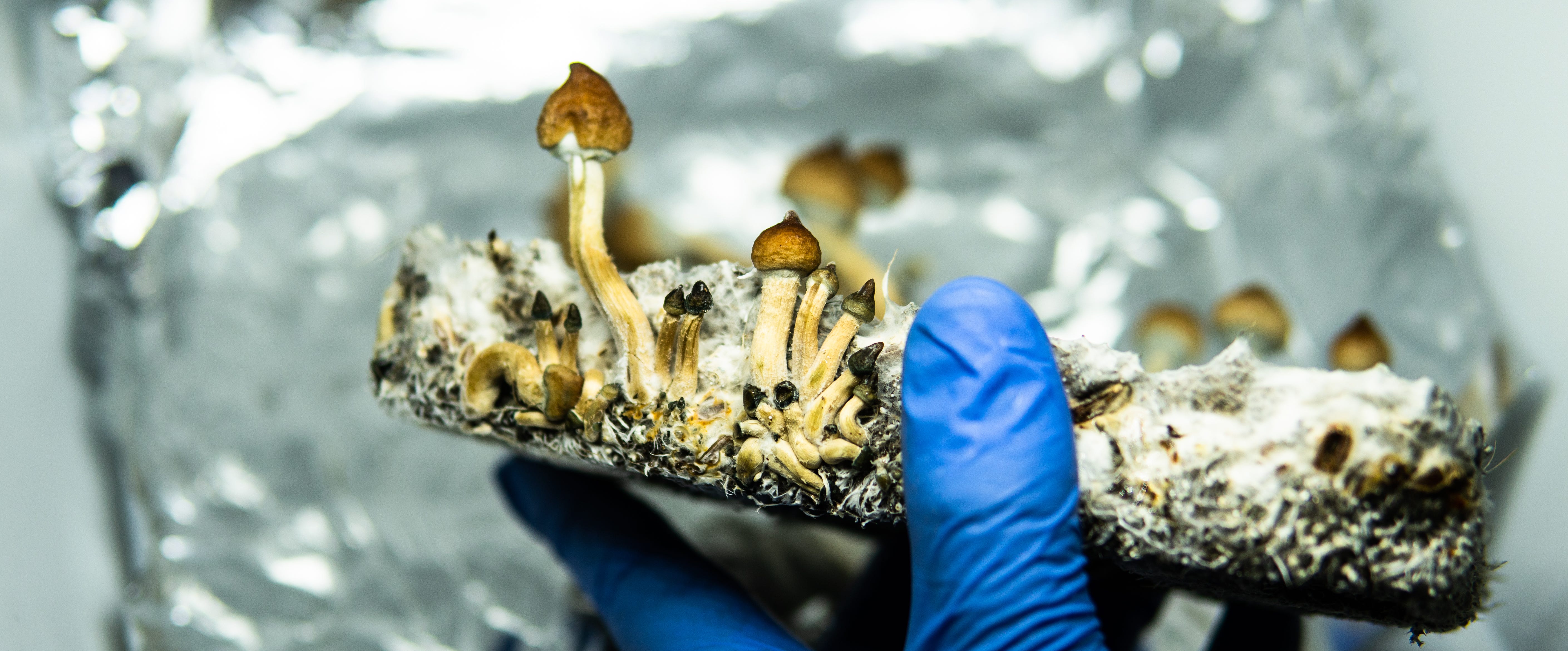
You’ve probably noticed that not all mushrooms from the same species grow the same. Some strains of Pleurotus ostreatus (oyster mushrooms) colonize aggressively and pin reliably in almost any condition. Others are finicky, slow, or produce modest flushes. Some Ganoderma (reishi) isolates build dense, lacquer-red shelves while others stay pale and weedy. The difference is genetics.
Mushroom genetics is one of the most under-appreciated subjects in the cultivation world. Most growers learn what a strain is, pick a few they like, and stop there. But understanding why strains behave the way they do, and how to work with that biology rather than against it, can transform how you source, select, isolate, and eventually breed fungi. And, it’s one of the stranger and more beautiful corners of biology I’ve ever learned about!
This guide is for growers who want to go deeper. I’ll cover the fundamentals of fungal genetics, move through practical agar work, and end at the frontier of amateur and commercial breeding.
The first thing to understand is that fungi are not plants. They’re not even close relatives. Fungi share more genetic ancestry with animals than with plants, and their reproductive biology is unlike anything else in the living world.
In most organisms you’re familiar with like animals and plants, cells are either haploid (one copy of each chromosome, like a sperm or egg) or diploid (two copies, like most of your body’s cells). Diploid cells arise when two haploid cells fuse and their nuclei merge. Fungi do something weirder.
When two compatible fungal hyphae meet and fuse (a process called plasmogamy), their cytoplasm merges but their nuclei typically do not immediately fuse. Instead, both nuclei travel together through the growing mycelium, dividing in synchrony, each cell carrying one nucleus from each parent. This state of two genetically distinct nuclei sharing the same cell is called the dikaryon.
The dikaryotic phase can persist for the entire vegetative life of the mushroom. When the organism finally produces a fruiting body, that’s when nuclear fusion (karyogamy) occurs, and only in the cells destined to become spores. The resulting diploid nucleus almost immediately undergoes meiosis to produce four haploid spores, which are released and start the cycle again.
This means that the mycelium you’re growing in your bags, on your agar plates, or in wood chips and logs is almost always dikaryotic. It carries two genomes simultaneously, both influencing how it grows, colonizes, and fruits. When growers talk about a “strain,” they’re really talking about a particular dikaryotic pairing with a characteristic phenotype.
You might look at an agar plate and wonder why two sectors of mycelium from the same culture are behaving so differently. The answer is obvious once you understand the dikaryon: they weren’t really the same culture anymore. Two nuclei, one cell, and any mutation in either lineage creates divergence.
Plants and animals have two sexes. Fungi have mating types, and many species have thousands of them.
In Coprinopsis cinerea (the model organism of fungal genetics), there are estimated to be over 20,000 different mating types, controlled by two complex genetic loci called MAT-A and MAT-B. Two strains can mate only if they differ at both loci. This system is called tetrapolar mating, and dramatically increases the probability that any two random individuals will be compatible. With 20,000 mating types, almost every individual encountered is a potential partner. Evolution pushed fungi toward maximum genetic mixing, which means more diversity, faster adaptation, and a much bigger gene pool to draw from. It's the opposite of inbreeding.
Pleurotus ostreatus, Lentinula edodes (shiitake), and most of the culinary species growers work with are tetrapolar. Agaricus bisporus (the button mushroom) is an exception, using a bipolar system.
This means that when you scatter spores from a single mushroom onto an agar plate, virtually every germinating spore will be haploid and monokaryotic. These monokaryons can grow vigorously, but they won’t fruit. Only when two compatible monokaryons fuse and form a dikaryon does fruiting become possible. If you’ve done spore work and couldn’t get a culture to fruit, this is almost certainly why. It trips up a lot of people early on.
In common grower jargon, a “strain” is a named variety of a species: Steely Blue Oyster NSPO4, Rudolph Reishi NSGL1, Lion’s Brain NSHE1. But genetically, what does that mean? Most cultivated strains originate from one of three sources.
Wild isolation. Someone found a particularly vigorous or beautiful mushroom in the forest, took a tissue sample, and grew it out. The resulting culture is a clone of the original organism—a specific dikaryotic individual preserved indefinitely on agar. Wild isolates often have exceptional flavor, resilience, or unusual phenotypic traits, but can also be less adapted to cultivation than commercial strains.
Selective breeding. Producers cross two parent strains, grow out the resulting progeny, and select individuals with desirable traits: fast colonization, dense pins, high yield, substrate tolerance. This is exactly what seed breeders do with plants, but with the added complexity of the dikaryotic lifecycle.
Spontaneous mutation. Cultures accumulate genetic changes over time, especially if they’re propagated repeatedly. Sometimes these changes produce a novel phenotype that someone notices and selects for. Many named strains are actually fixed mutations from an older parent strain.
Because cultivated strains are vegetative clones, they can be maintained indefinitely in theory. In practice, every time mycelium grows, there’s a small probability of mutation. Over many generations of propagation, cultures drift. You may start with one phenotype and end up with something subtly different!
This is why agar isolation work matters so much. When a culture starts producing visual sectors (regions of the plate with different growth morphology) you’re watching genetic divergence in real time. Part of the culture has mutated or undergone some rearrangement. The grower’s job is to identify the sector with the most desirable traits and isolate it forward before the whole plate becomes a mess.
North Spore’s approach to culture maintenance is explicitly genetics-aware: our team works with authenticated cultures and performs regular quality checks to ensure the genetic characteristics of a strain stay consistent across catalog generations.
Maintaining a library of living genotypes is more like running a seed bank than a warehouse. The cultures are alive, drifting, and demanding attention. It’s a lot of work—shout out to Rachael (our lab manager) and our whole lab team!
For most growers, the closest they’ll get to hands-on genetics is working with agar. But agar work is genetics; it's just done with your eyes instead of a machine.
When you take a tissue clone from a fruiting body by cutting out a small piece of interior flesh and placing it on agar, you’re preserving a specific dikaryotic genotype. The tissue already contains the two parental nuclei traveling together. In ideal conditions, that culture will express the same phenotype as the mushroom it came from.
Tissue cloning is the standard method for preserving exceptional wild finds and domesticating new strains. The limitation of tissue cloning is that you’re sampling a single genotype. All the genetic diversity present in a population—or in a single mushroom’s spore print—is invisible to you.
Working from spores is the entry point to actual breeding. When you plate out a spore print, each germinating spore is a unique haploid individual that is genetically distinct from every other spore on the plate, carrying one random combination of alleles drawn from its two parent nuclei. Sort of like dealing a fresh hand of cards from a shuffled deck.
Germinated spore colonies are monokaryotic. They typically grow more slowly with a noticeably different texture than dikaryotic cultures—often with a thin, flat, fan-like appearance on agar. You can’t tell much about a monokaryon’s fruiting potential until you pair it with a compatible partner and grow out the resulting dikaryon.
A skilled breeder will germinate spores from one or more parent strains, test pair monokaryons against each other or against known strains, observe which pairings show the “clamp connections” indicating a successful dikaryotic union, then grow out multiple dikaryons, fruit them, and evaluate the offspring. It’s slow and requires patience that I think most growers underestimate before they try it.
Clamp connections are small bridges that form at the septa between cells as the dikaryotic mycelium grows. They are the visible signature of a true dikaryon. They’re the thing to look for under a microscope when confirming whether a pairing worked.
Experienced agar workers develop an intuition for reading culture health that is, at its core, a form of phenotypic genetic screening. Fast, even radial growth; strong aerial mycelium; consistent texture and color across the plate are all signs of a vigorous, genetically healthy culture. Irregular growth patterns, sectoring, unusual pigmentation, or unexpected density changes can indicate contamination, but also mutation, heteroplasmy (unequal representation of the two nuclear types), or senescence.
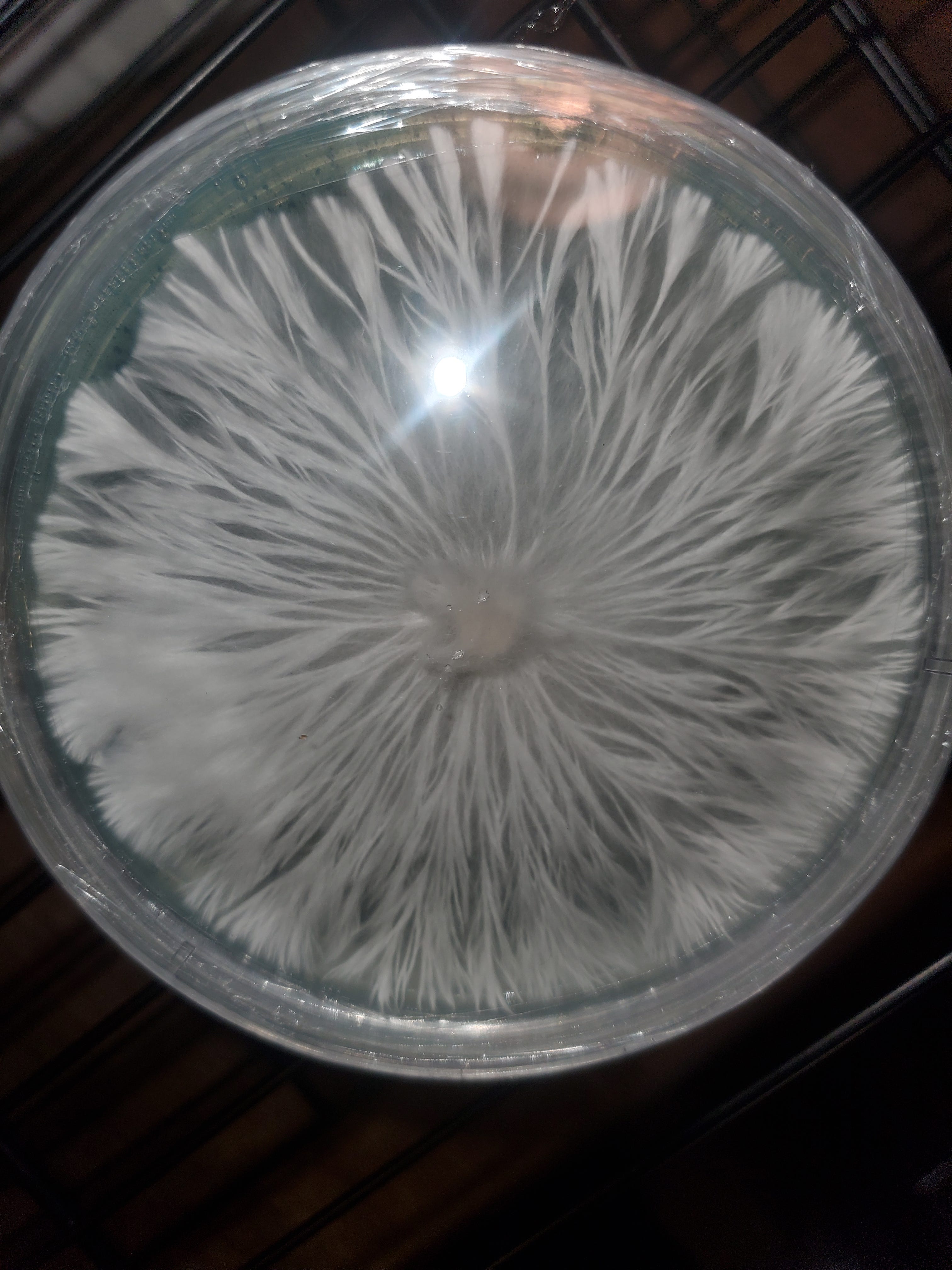
Our lab team regularly performs visual plate-screening of production strains before expansion, effectively applying selection pressure to ensure we’re always propagating from the most phenotypically consistent portion of the culture.
Most commercial mushroom breeding happens at large agricultural research institutes or industrial producers. But the barriers to entry for informal breeding (ie. germinating spores, pairing monokaryons, selecting dikaryons) are surprisingly low.
Not all the variation you observe in mushrooms is genetic. Environmental factors like temperature, humidity, CO₂ levels, substrate composition, and light account for enormous phenotypic variation within a single strain. A mushroom that fruits perfectly in a monotub at 75°F (24°C) may produce sparse, elongated pins at 65°F (18°C).
Heritable traits tend to be those that are stable across varied growing conditions. If a strain consistently produces dense pins regardless of humidity variation, or colonizes every substrate you give it while a sibling strain struggles, those differences are more likely to have a genetic basis.
Key traits with strong genetic components in cultivated mushrooms:
Colonization speed: largely determined by enzyme production and mycelial growth rate genes
Fruiting temperature range: critical for commercial growers; some strains fruit in a narrow 4-5°F (2-3°C) window, others across an 18°F (10°C) range or more
Primordia density: how many pins initiate per unit area; some strains produce hundreds of tiny pins, others a few large ones
Morphology: cap shape, color, margin characteristics, stipe length and thickness
Substrate tolerance: ability to colonize and fruit on lower-quality or unconventional substrates
Biological efficiency: the ratio of fresh mushroom weight to dry substrate weight; highly variable and complex, involving dozens of genes
Our culture bank is a community resource and a living library built for wherever mycology goes next. That means culinary strains selected for flavor and yield, yes, but also isolates relevant to myco-remediation (like polyurethane-degrading Pestalotiopsis microspora), materials science, and medicinal research. Native North American strains sit alongside foreign isolates and strains selected for specific use cases. The goal is utility, diversity, and accessibility, and that anyone working seriously with fungi, whatever their field, can find something worth working with.
Strain naming in this industry is a mess. Many commonly traded “strains” are undocumented lineages whose origins nobody can actually trace, which makes genetic consistency nearly impossible to guarantee. It’s important to know what you have, and know where it came from. Because if you can't trace a strain back to its source, all the talk about genetics is that—just talk.
You don’t need a lab to apply selection pressure to your cultures.
Multi-strain fruiting trials. Grow the same substrate formula in identical conditions with five or more strains of a given species. Record colonization time, days to first pin, number of pins, yield per flush, and number of flushes. After two or three cycles, you have phenotypic data that can guide which strains are worth cloning and preserving.
Picking tissue from exceptional specimens. When a particular fruiting body stands out (ie. unusual size, morphology, density), take a tissue clone before harvesting. That clone preserves the exact genotype responsible for the trait you observed. Grow it forward, fruit it again, and see if the trait is reproducible. If it is, you’ve isolated something worth keeping. That’s how most interesting strains enter circulation: someone got lucky, paid attention, and made a cut.
Observational agar selection. When expanding a culture from agar, rather than slicing the leading edge indiscriminately, identify the sector or region with the most desirable growth characteristics and cut exclusively from that region. Over multiple generations, this applies mild directional selection.
None of this is molecular genetics, but it’s the same selection logic that underlies all domestication, applied at the level of your agar plates.
We’re in an early period for mushroom genomics. Most major crop plants have had their genomes sequenced, annotated, and studied for decades. Many cultivated mushroom species were sequenced only in the last ten to fifteen years, and we still don't fully understand what most of their genes actually do. We’re basically at the stage with mushrooms that plant breeders were at in the early twentieth century: lots of phenotypic observation, not much molecular underpinning. Which means it’s a genuinely exciting time to be paying attention!
Our friends over at The Odin now offer a whole fungal genome sequencing service. For $199, they sequence the entire genome at 30x coverage—meaning every base pair gets read around 30 times for accuracy, the same standard used in clinical research. You send a sample, they send back your complete genetic sequence in industry-standard formats you can reanalyze as the science evolves. If your strain has a published reference genome (and most cultivated species do), you're eligible. Results in two to three weeks. You can choose to have your data retained on secure servers or permanently deleted within 30 days of delivery. (Use code NORTHSPORE for 10% off!)
Genome sequencing of cultivated fungi has produced some surprises. The genome of Lentinula edodes (shiitake) is larger than many other cultivated mushrooms with roughly 46 million base pairs, and contains a remarkable diversity of carbohydrate-active enzymes, or CAZymes. These are the molecular machinery that breaks down lignocellulosic biomass. Variation in CAZyme gene copy number between strains helps explain substrate preferences that growers have been observing empirically for decades.
Pleurotus ostreatus has been studied enough that researchers have begun mapping QTLs (quantitative trait loci). These are genomic regions statistically associated with traits like yield and fruiting temperature. This is the groundwork for marker-assisted selection: rather than growing out dozens of pairings to find the best dikaryon, a breeder could theoretically screen candidate offspring genetically and predict which ones are worth pursuing before ever fruiting them.
We’re not there yet for most species, but the tools are improving fast, and the cost of sequencing a fungal genome has dropped to the point where a well-funded artisan producer could theoretically sequence their working culture collection, and some already are.
One frontier generating real interest is fungal epigenetics. These are modifications to gene expression that aren’t encoded in the DNA sequence itself but can be stably inherited. Some of the “strain drift” that growers observe over multiple generations of propagation may not be mutation at all, but epigenetic change: alterations in which genes are switched on or off.
This would explain something growers have noticed for years: cultures that have been in continuous vegetative propagation for long periods sometimes seem to “forget” how to fruit, or shift in phenotype in ways that don’t map cleanly to the random mutation model. If the change is epigenetic, it might be reversible, which opens interesting possibilities for culture rejuvenation. I don’t think this is settled science yet, but it’s the kind of idea that makes you look at an underperforming culture differently!
Gene editing tools like CRISPR-Cas9 are being applied to fungi, mostly in research settings and in biotech (fungal production of pharmaceuticals and industrial enzymes). For cultivated edible and medicinal species, the regulatory landscape makes commercialization complicated, and public acceptance is uncertain.
But the science is moving. Researchers have used CRISPR to study gene function in Agaricus bisporus, knocking out specific genes to understand their role in mushroom development. The same tools could theoretically be used to engineer strains with specific traits: accelerated colonization, altered secondary metabolite profiles, resistance to particular pathogens.
Spore production is another obvious candidate. Golden oyster mushrooms (Pleurotus citrinopileatus) are prized for their flavor and striking appearance, but there is concern over potential signs of invasiveness in North America. A sporeless strain would address the worry of them spreading through native forests. North Spore and others are quietly exploring exactly this, and it's the kind of clean, single-trait edit that CRISPR was arguably made for.
The more proximate impact for most growers and producers is likely to be molecular markers rather than direct editing, like cheap genetic tests that can authenticate a strain’s identity, confirm it hasn’t drifted, or screen offspring from a breeding cross for desirable alleles. That future doesn’t feel so far.
Most of what happens in a mushroom grow is invisible. It's happening inside the substrate, in the chemistry of how mycelium breaks down wood and straw, in whatever biological trigger tells a fungus that it's time to stop spreading and start fruiting. Knowing the genetics behind that changes what you notice.
Every strain you grow is a living genotype with a history. A specific combination of alleles drawn from wild populations, shaped by intentional or accidental selection, stabilized through dikaryotic propagation. When you clone a tissue sample, you’re preserving a genetic individual. When you run a fruiting trial, you’re applying selection pressure. When you look for sectors on an agar plate, you’re watching evolution happen in real time!
I'm hoping more growers start thinking about their mushrooms this way: not just as something you fruit and harvest and eat, but as living genotypes worth understanding, selecting, and improving. If you're coming from a biotech background and haven't looked seriously at fungi yet, I'd argue there's no more interesting organism to work with right now.
Larraya et al., “Mapping of Genomic Regions Controlling Production and Quality in Industrial Cultures of Pleurotus ostreatus,” Applied and Environmental Microbiology, 2003. https://aem.asm.org/content/69/6/3617
Jang et al., “Quantitative Trait Loci Analysis for Molecular Markers Linked to Agricultural Traits of Pleurotus ostreatus,” PLOS One, 2024. https://journals.plos.org/plosone/article?id=10.1371/journal.pone.0308832
Sakamoto et al., “Genome Sequence of the Edible Cultivated Mushroom Lentinula edodes (Shiitake) Reveals Insights into Lignocellulose Degradation,” PLOS One, 2016. https://journals.plos.org/plosone/article?id=10.1371/journal.pone.0160336
No posts
Comments
Nothing yet. Say the first thing.
Sign in to join the conversation.