
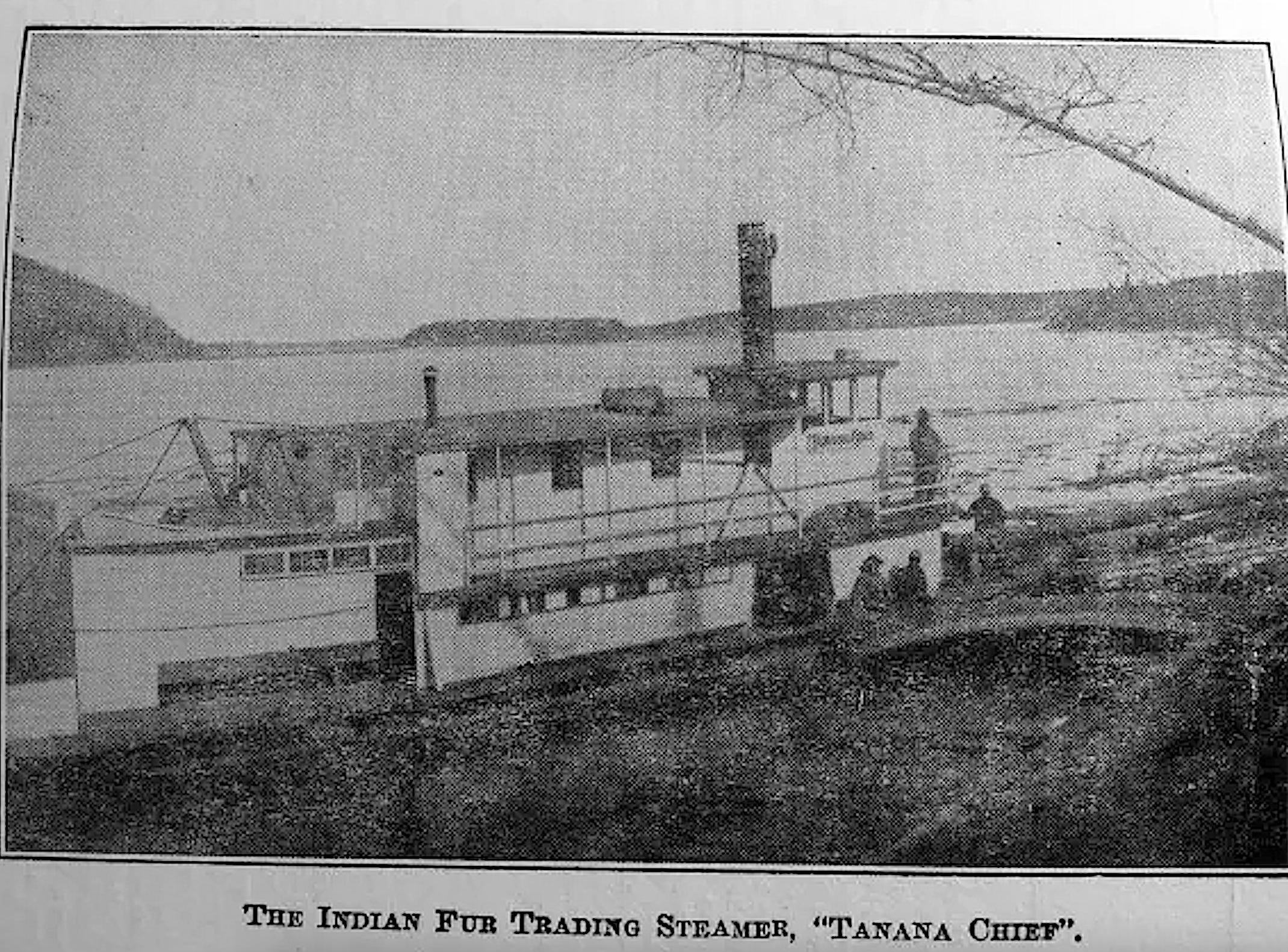
The next issue of Alaskan History Magazine will be available July 1. This issue features the story of the ‘Tanana Chief,’ a sternwheeler which plied the waters of Interior Alaska, told by the great-granddaughter of one of its builders, J.E. Orme, who journeyed north with the ship in 1898 in search of Alaskan gold. Mary Lynn Roush shares her great-grandfather’s letters to his sister, which includes the rescue of one of Alaska’s earliest explorers, Second Lieut. J.C. Castner of Edwin F. Glenn’s 1898–1899 military expedition, who had been presumed lost for months.
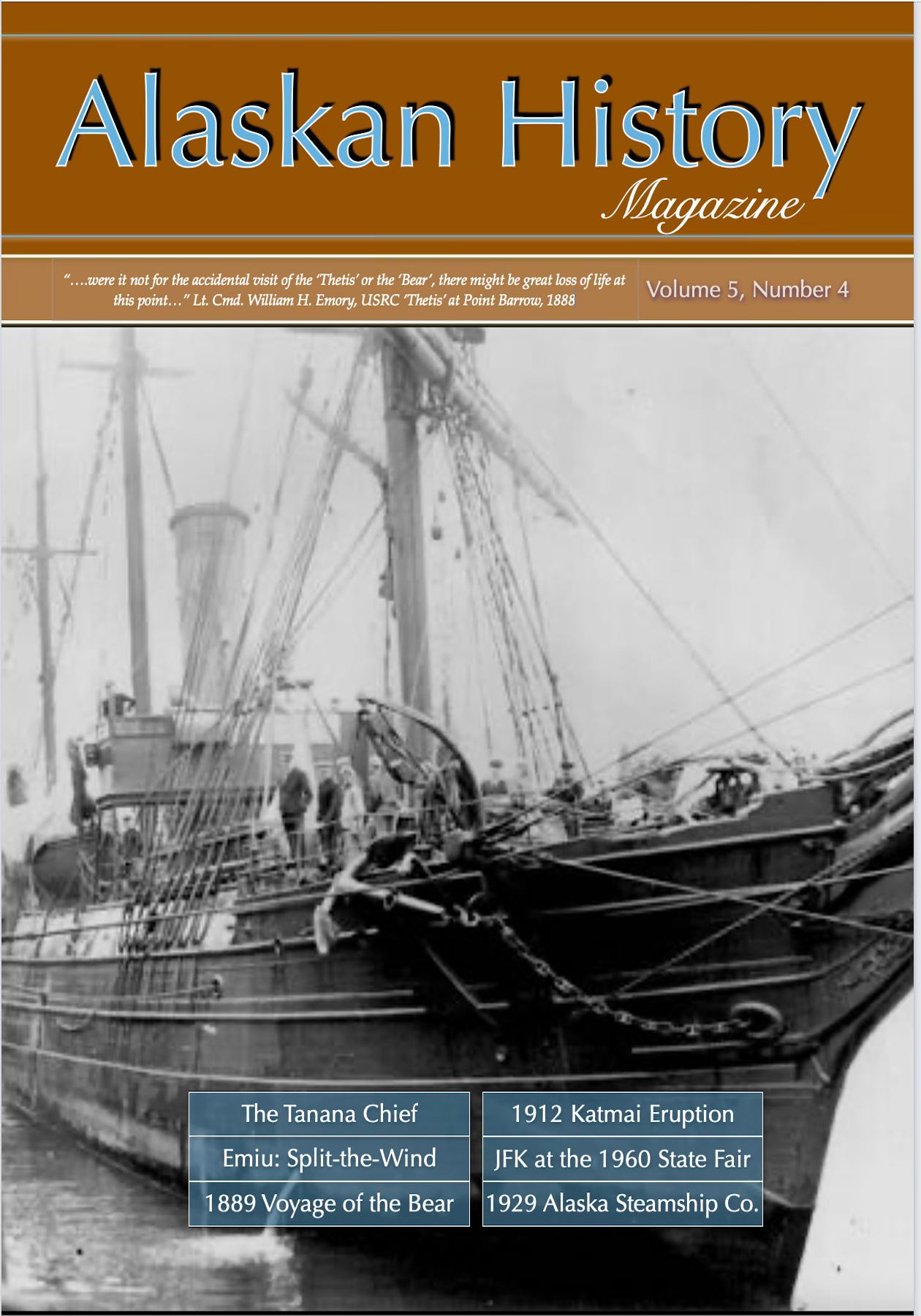
Also included is the 1889 voyage of the U.S. Revenue Cutter ‘Bear,’ as seen through the eyes of the ship’s surgeon, Dr. James Taylor White, from the book by Alaska historian Gary C. Stein, a part president of the Alaska Historical Society. The book, “I Wish You Could Come Too,” The Alaska Diaries of Dr. James Taylor White, was published in 2021 by Northern Light Media.
The story of the Eskimo lad, Emiu, known as ‘Split-the-Wind’ for his fondness for fast dog teams, is included in this issue. A respected Eskimo guide for Vilhjalmer Stefansson’s Arctic expeditions, the Seattle Times named him “the greatest musher the country ever produced.”
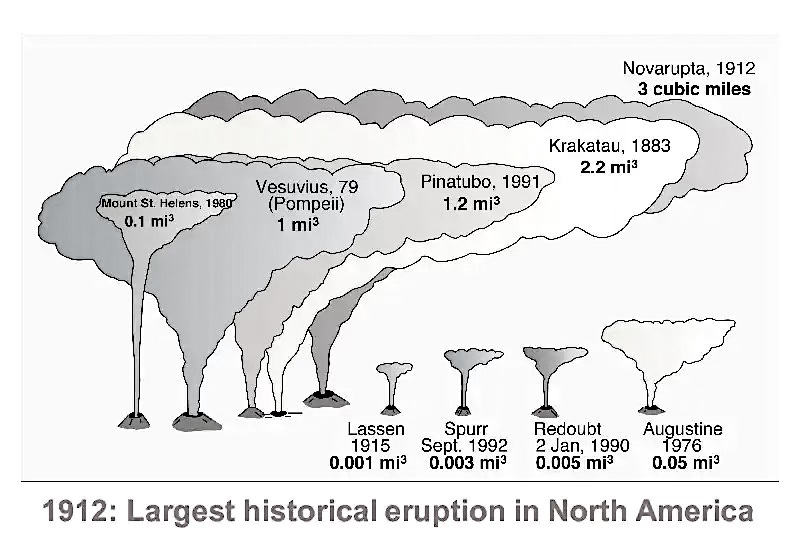
The great 1912 eruption of Novarupta in the Mount Katmai region, the largest volcanic eruption of the 20th century, includes the official report of Capt. K.W. Perry of the Revenue Cutter ‘Manning,’ which was in port at Kodiak at the time of the eruption, and sheltered over 400 people, providing fresh water from her evaporators (which were an innovation at the time).
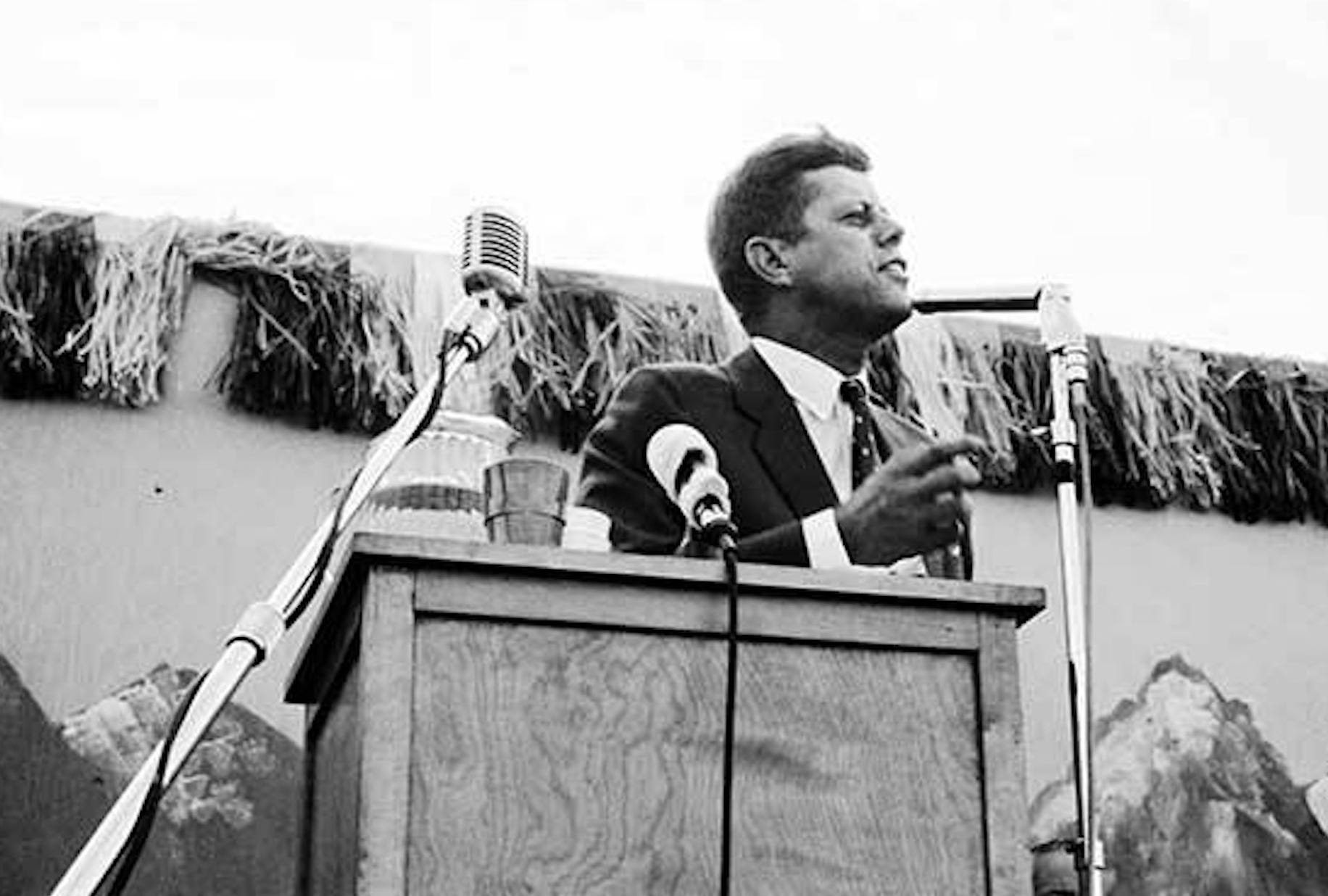
Plus the visit of then-Senator John F. Kennedy to the 1960 Alaska State Fair, with the full text of the speech he gave there (“I am the first candidate for the Presidency to actively campaign in the State of Alaska. “), and several pages from a 1929 32-page tourist brochure from the Alaska Steamship Company on their ships and the scenic attractions of the Last Frontier.
Of special note: This issue marks the last subscription issue; future issues of Alaskan History Magazine will be available singlely or in annual sets, and all the back issues will remain in print.
This also marks the last 6” x 9” black-and-white issue, as the magazine will return to a full-color, 8.5” x 11” format with the next issue, Volume 5, Number 5. Over time, the ten issues printed in B/W will be republished in the full color, 8.5” x 11” format, providing a complete series for libraries, museums, historians, and anyone interested in the history of Alaska.
To support this work a new Patreon community, Friends of Alaskan History Magazine, will be created, and details about that effort, the back issues, the book anthologies, and other information can be found on the magazine’s website, AlaskanHistoryMagazine.com
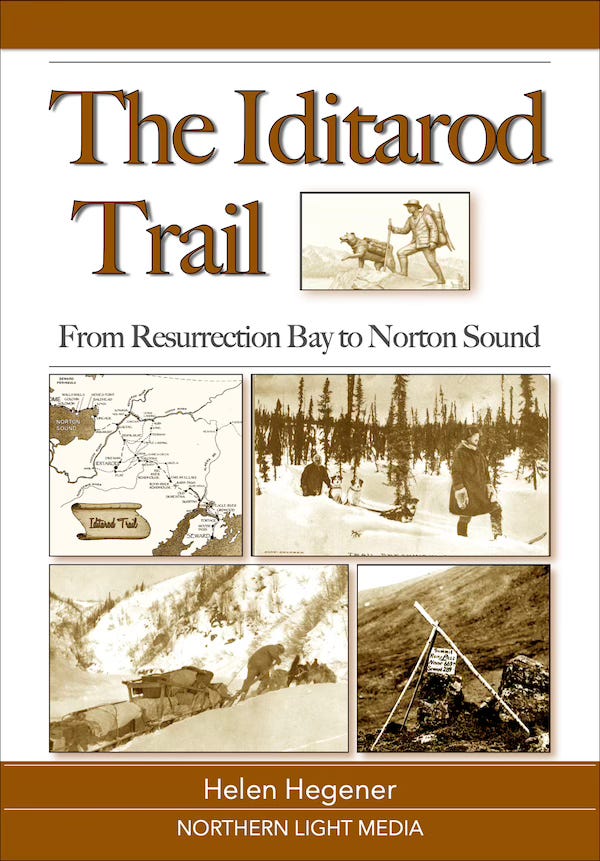
A complete history of the Iditarod Trail, from long before its founding as a route to the Innoko-Iditarod gold fields, to its official designation as a dog team mail trail from Seward to Nome, to decades of becoming overgrown and unusable, to its resurrection as a race route and the northernmost Congressionally designated National Historic Trail.
The Iditarod Trail: From Resurrection Bay to Norton Sound, by Helen Hegener, published in March, 2026 by Northern Light Media. ISBN 9798252387352. 6” x 9” b/w format, 408 pages, over 200 photographs, indexed, bibliography, annotated references, extensive online resources. $29.95 plus $5.00 shipping. Also available from bookstores.
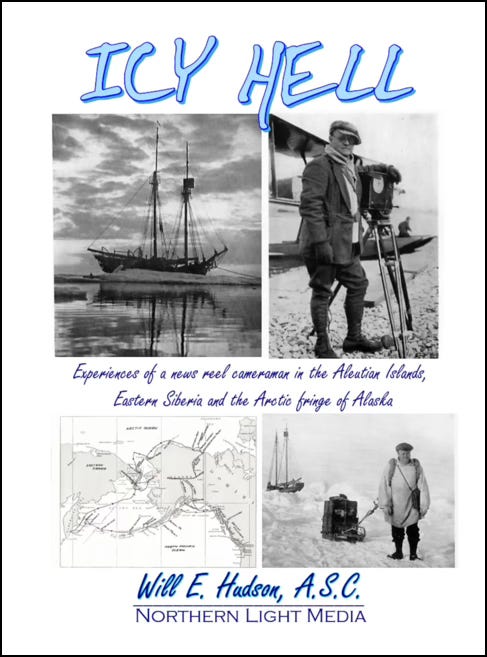
The book describes the travels of a private hunting and exploring party on a 1913 trip in the schooner Polar Bear, through the Bering Strait into the Beaufort Sea, then east to Demarcation Point, and then overland by dogsled to Ft. Yukon when the Polar Bear became trapped in the sea ice.
Will Hudson’s rare and hard-to-find 1937 book ‘Icy Hell,’ detailing the harrowing overland journey he and three others made across the great Brooks Range to the village of Fort Yukon when their schooner ‘Polar Bear’ became trapped in the polar ice pack in 1913. 312 pages, more than 30 full-page photographs by Will Hudson, 6” x 9” b/w format, Published in May, 2026 by Northern Light Media. $24.95 plus $5.00 shipping. Also available from bookstores.
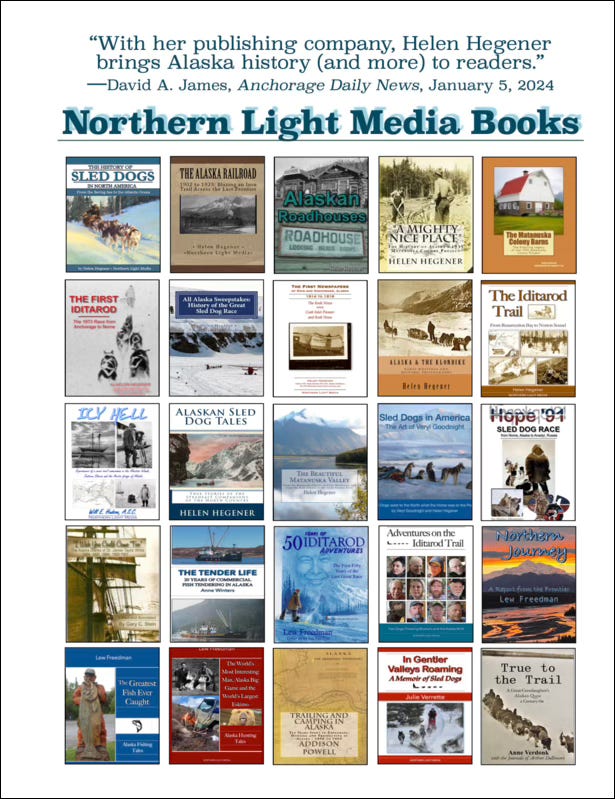
A new feature on the Northern Light Media website is a 64-page full-color catalog in a flipbook format of all of the books available, with a two-page spread describing each title. You can check it out below, and there are new links to it at the Northern Light Media website.
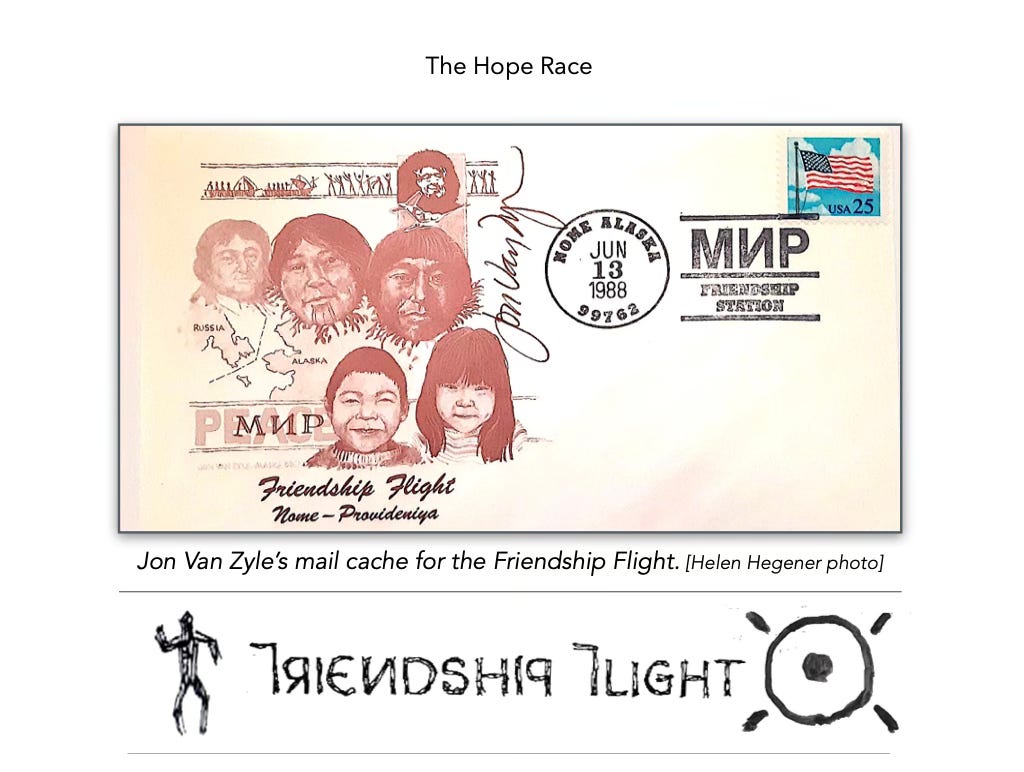
An excerpt from The Hope ‘91 Sled Dog Race From Nome, Alaska to Anadyr, Chukotka, Russia. Written by Alaskan author Helen Hegener and the Hope ’91 Race media coordinator Sandra Medearis, with illustrations by Alaskan artist and Hope ’91 race judge and co-organizer Jon Van Zyle and photographs by the race photographer Frank Flavin. 228 pages, 6” x 9” format, full color on premium paper, indexed, with dozens of color and b/w photos. Published in 2023 by Northern Light Media.
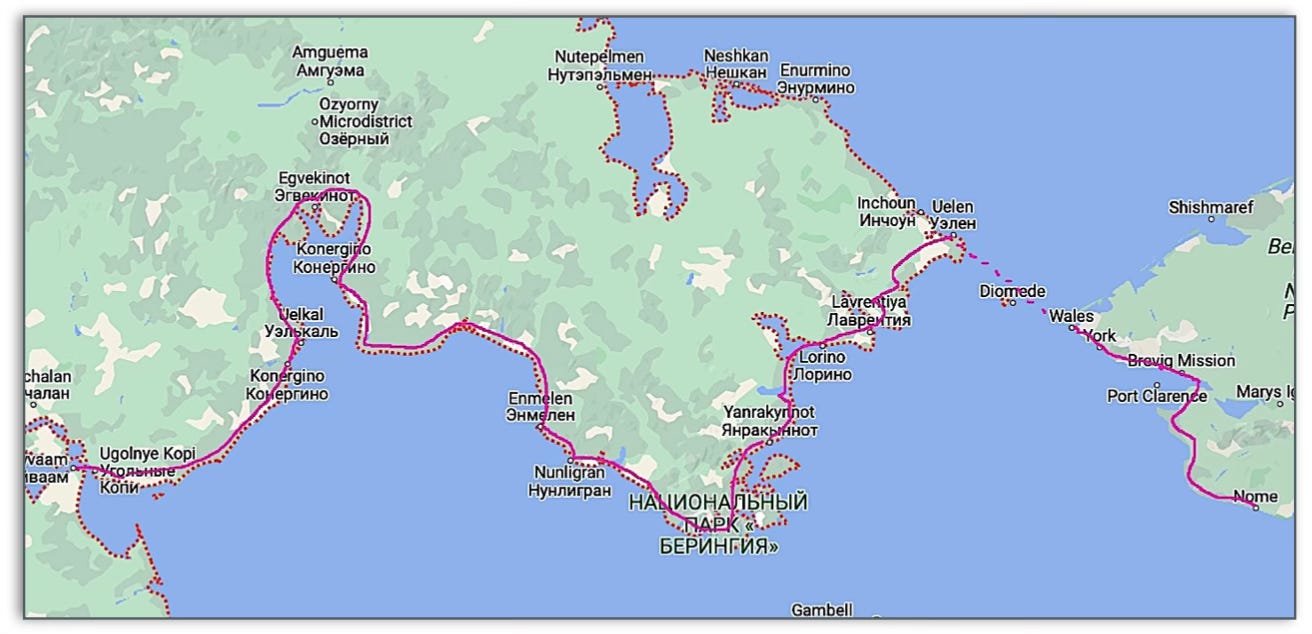
The race route had the mushers leaving Nome by dog team and traveling to Teller and Wales, Alaska. From Wales they loaded their teams into big orange Russian helicopters for a flight across the Bering Strait to Uelen, and then continued by dogsled through many small villages, through the larger seaport settlement of Provideniya, and finally to Anadyr, the easternmost town in Russia. The total distance was between 1,000 to 1,200 miles.
Chapter One, The Friendship Flight, lays the background for the sled dog race and tells the story of a little-known, but quite important, chapter in Alaskan—and American—history:
In May, 1948 mounting Cold War tensions dictated the end of an agreement between the United States and the Soviet government to allow for free exchange between Alaska and Soviet Natives across the Bering Strait. Dubbed the “Ice Curtain,” the border was suddenly sealed between the U.S. and the U.S.S.R., and all contact was banned. Friends and family members were separated, and most would never see each other again.
Nearly 40 years later, in 1986, Soviet General Secretary Mikhail Gorbachev and his advisers adopted glasnost and perestroika as political campaign slogans. Meaning literally “openness” and “reconstruction,” the two terms referred to the restructuring of the Soviet political and economic systems, opening the door for increased communication beyond Russia’s borders.
A series of incidents and endeavors led to the eventual breaching of the “Ice Curtain,” and courage and persistence bridged the gap across the Bering Strait and reunited Native families and friends for the first time in four decades via the 1988 Friendship Flight.
Eighty people were booked aboard an Alaska Airlines jet sporting the face of an Eskimo elder on its tail, with City of Provideniya painted under the pilot’s window in the Cyrillic script of the Russian language. The 45-minute, 230-mile flight from Nome, Alaska to the Soviet port city of Provideniya, in Russia’s Chukotka region, had been organized by a large contingent of Alaska’s business leaders, government officials, journalists, academics, artists, entrepreneurs, and Native elders.
The one-day trip was designed to reignite relationships and reunite Eskimo families on opposite sides of the long- closed border, and to open the door for future connections between the two nations. Provideniya officials planned to entertain their visitors with tours, a banquet and a trip to an outlying native village.
In 2013 a report from the Alaska Historical Commission highlighted the 25-year anniversary of the Friendship Flight, to celebrate the historic occasion. Statements from many of the participants shared memories and reflected on the significance of the event.
Gunnar Knapp was a young economics professor at the UAA Institute of Social and Economic Research. He was on the flight because he was one of the few Alaskans at that time who spoke some Russian, had spent some time in Russia, and knew something about the Russian Far East, and he had been advising the Governor’s office about the opportunities for trade and travel between Alaska and Russia. He wrote: “It was amazing, soon after taking off from Nome, to see the mountainous coast of Chukotka to the west, to circle the ice-choked bay, and to see the big concrete buildings of the town along the shore below us. It was amazing, as we landed, to see the hammer and sickle flag of the USSR, Soviet border guards, and crowds of Russians waiting to greet us. It was amazing to find ourselves in a place so close to Alaska but so Russian—with Russians in fur hats and speaking Russian, Aeroflot jets, Communist party banners and slogans, a statue of Lenin—and borscht. Provideniya was as Russian as Nome is American.”
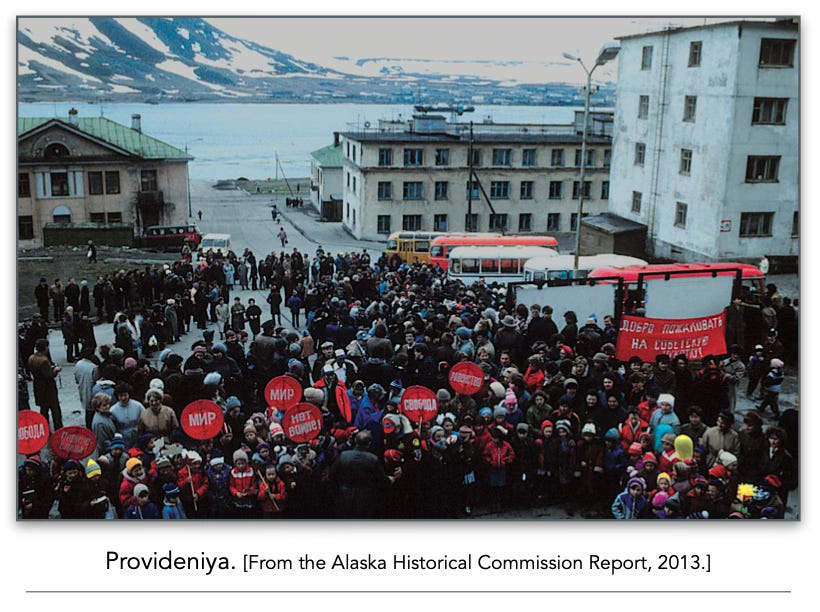
Former Nome mayor Leo Rasmussen was representing U.S. Rep. Don Young on the flight. He would later write:
“For me, then President of the Iditarod Trail Race, the intent was to offer the opportunity for a musher from Russia to participate in the Iditarod; eventually two mushers were to come over and would actually participate. Both completed the Iditarod and Nikolai Ettyme would again participate in the Iditarod and the Yukon Quest. Nicolai Ettyme who was of Chukchi blood, continued that relationship between Chukotka and Alaska. His youngest child was born in Alaska.”
Leo continued: “In the thirteen hours we were there, I shot twelve and half rolls of film. After I had processed them, I looked at the pictures and my mind’s eye memories did not match the photography. Six weeks later, we had a joint meeting with all of those from Nome that had gone on the Friendship Flight, it was only then I realized I’d taken some of the finest photography of my life. What I saw was the representation of what we’d witnessed -- the communication that began with the flight. In the thirteen hours, various groups opened up; first the 1st to 4th graders, then the teenage school groups, trying out their very rudimentary English. It was no less fantastic for them, than it was for us. Piece by piece, young adults in their 20’s and 30’s began to open up. As we were boarding the Plane to depart Provideniya, I remember the old folks who came over to the airport. They were not sure if we were the enemy but I remember their arms beginning to reach out over the crowd, wanting to let us to know that they cared about a relationship of friendship that may have begun with the Friendship Flight and reunion. It was one of the highlights of a lifetime...”
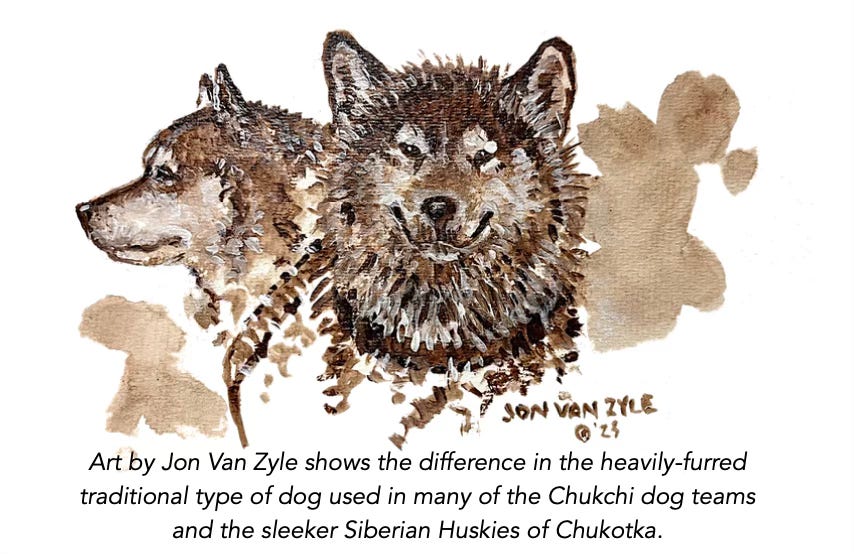
Alaskan artist Jon Van Zyle, a two-time Iditarod finisher and the Official Iditarod Artist since 1979, was invited to be the official artist for the Friendship Flight, and his personal interest in the trip was to aid in researching his beloved Siberian Huskies.
“Because of my life-long interest in the Siberian husky, I wanted to know more about them in Siberia. They had been imported in early 1900’s into Nome from that area. I shot-gunned letters to every museum and university in Russia asking to meet somebody in Provideniya for the friendship flight. Lyudmila Bogoslovskaya from the University did meet me and she was an expert on the Chukchi Native and the Siberian Husky.”
Jon also wrote of the human aspect of the event: “The actual flight to me was one of the most heart-wrenching things I’ve ever done. The idea of families from the Nome area having a dad or uncle out kayaking or hunting one day and suddenly they became Russian and not knowing what happened to those people. The whole thing was about reuniting the families, not only those lost, but the guys from the islands that had relatives over there they’d never met. When we landed, to see those families reunited with relatives, some lost and some just relatives they’d never met, was incredible.”
Jon continues: “Another thing we did was a few of us had cooked up an idea to have a dog race between Siberia and us. We hadn’t been dealing with the Russians for God knows how many years. The Olympic committee was considering re-doing sled dog demonstrations to be included in the Olympics, which had been done in 1932, but not since. They ended up having the demos, and we knew the Russians would want to participate. A couple of us challenged the Russians at the meeting to a dog race and they accepted and a few weeks later we had Russians sitting in our living rooms talking about a race called the ‘Hope Race.’ It took a couple of years to organize and the first race was held in 1991...”
David Ramseur was the press secretary for then- governor Steve Cowper, and in 2017 he authored a book detailing the story of the historic Friendship Flight titled Melting the Ice Curtain: The Extraordinary Story of Citizen Diplomacy on the Russia-Alaska Frontier (University of Alaska Press, 2017). From the Preface: “...Opportunities abound for the fruitful cooperation between Alaska and the Russian Far East. From science to citizen diplomacy, the Ice Curtain era showed that local collaboration can improve overall relations between our countries. The area of most productive cooperation is managing a changing Arctic. Russia dominates the Far North, with nearly half of the Arctic within its borders as Russians comprise 40 percent of arctic residents. In the United States, Alaska is the only reason America is an arctic nation. That’s a fact that only recently appears to have registered with federal decision makers as climate change dramatically alters the Arctic, especially passage through the Bering Strait shared by Alaska and Russia.”
The love of sled dogs on both sides of the Strait would prove to be a compelling reason for cooperation and collaboration between the two countries. ~
The Hope ‘91 Sled Dog Race From Nome, Alaska to Anadyr, Chukotka, Russia. Written by Alaskan author Helen Hegener and the Hope ’91 Race media coordinator Sandra Medearis, with illustrations by Alaskan artist and Hope ’91 race judge and co-organizer Jon Van Zyle and photographs by the race photographer Frank Flavin. 228 pages, 6” x 9” format, full color on premium paper, indexed, with dozens of color and b/w photos. Published in 2023 by Northern Light Media.
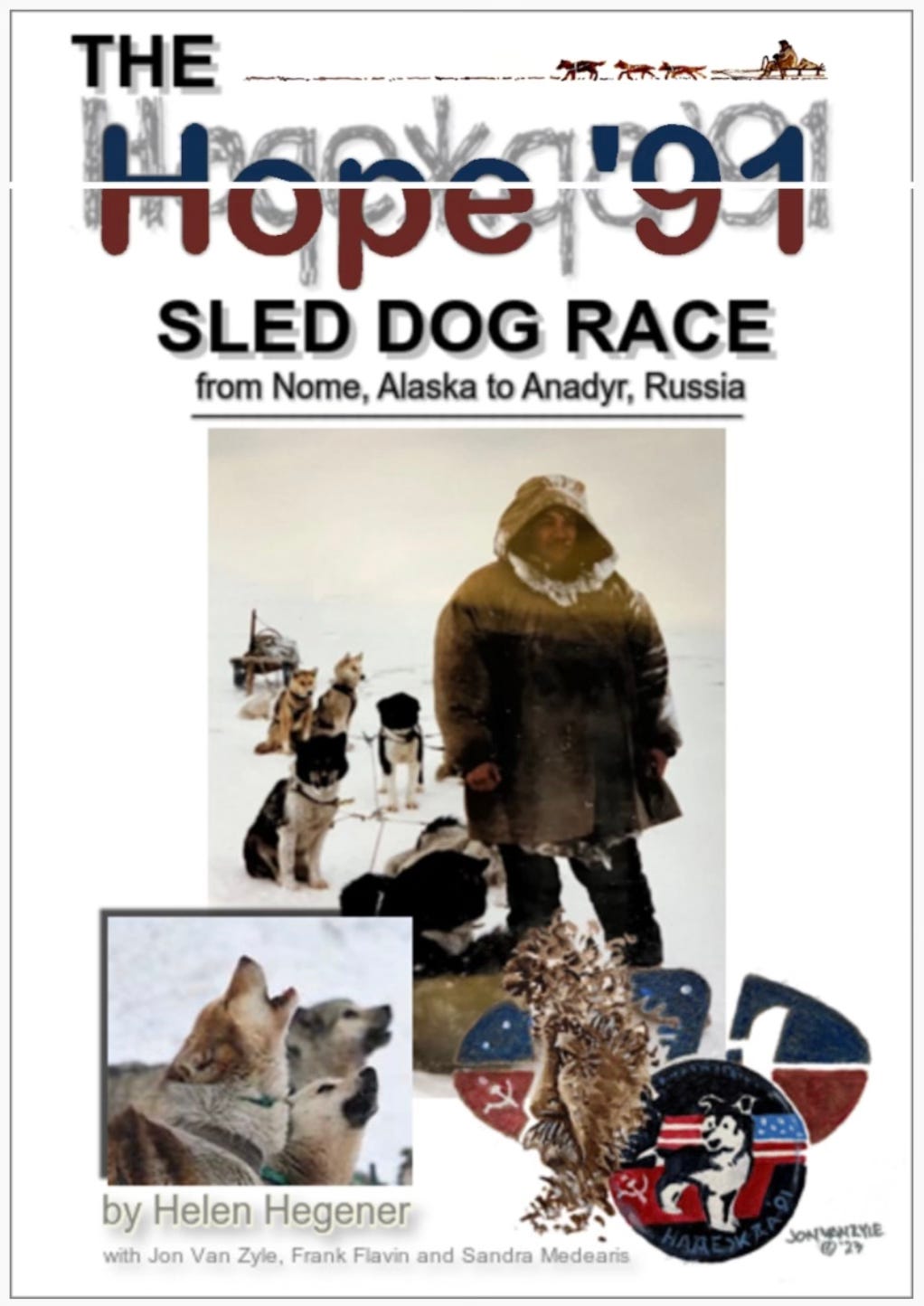
The book was selected as a Reviewers’ Favorite by Anchorage Daily News reviewer David James, in December, 2024: “In 1991, a year when the Cold War was winding down and hope and optimism prevailed, an exhibition sled dog race took mushers from Nome north to Wales along the Alaska coast, then, after an airplane flight across the Bering Sea, south along Russia’s parallel side from Uelen to Anadyr. Helen Hegener, in typical fashion, fills “The Hope ‘91 Sled Dog Race” with personal reminiscences of participants and extensive illustrations, bringing her story to life. In our present era of increasing darkness, it’s a reminder that, shorn of the ambitions of power- hungry political leaders, people living normal lives are kind and good and, if left to their own devices, will reach out to each other in friendship.”

Comments
Nothing yet. Say the first thing.
Sign in to join the conversation.