

Hi everyone!
They say absence makes the heart grow fonder — if that’s the case then welcome back to the newsletter you love the most in the world.
With the legislature out, we’ve got newfound breathing room! So we’re cooking up some subscriber treats and we’ve lit the burner under a few under-reported, long-simmering topics we think J. Q. public should know about.
We’re open to suggestions here, but at this point the roster of potential stories looks something like this: the circular forces fuelling perpetual chaos in our inner cities; why this government will probably never build a proper addiction treatment system; the troubling legal backstory that led to the Cowichan Tribes BC Supreme Court decision; whose hands are actually gripping the wheel of the DRIPA bus; opening Pandora’s lid on Aboriginal title land use agreements; tracking the “significant legal liabilities” (as per the Premier) flowing from Gitxaala/DRIPA court cases; political jockeying behind the pipeline opposition; foreseen consequences of proposed legislation to “guide” conduct of municipal officials, and maybe an upbeat story if we can think of anything.
Meanwhile, we’re also in the midst of a corporate fundraising drive to supplement the generous support of our loyal subscribers. Because there’s no getting around it, running an independent news organization costs money. But we believe it’s worth it and integral to a healthy democracy. The best journalism informs the electorate and holds government to account.
Not to brag, but Northern Beat has punched above its weight on these fronts. We have been at the media forefront, calling out government policies on public drug use, street disorder, repeat offending, protest politics, safe supply diversion, decriminalization, over-reliance on foreign students; co-governance, land use conflicts, land-use veto, property title insecurity, among others.
With your help, we can keep the stories rolling!
Become a paid subscriber if you’re able, and you aren’t already. Or send this note to someone (or a business) you know who believes in the importance of a free-thinking, independent press in BC and Canada.
For now, check out our latest batch of Northern Beat pods and stories. Thanks, as always, for reading, and welcome to summer!
- Rob Shaw & Fran Yanor
Those with power in Canada have taken to treating well-grounded skepticism as illegal sacrilege. Asking questions is what reporters and politicians should have done before the country jumped wholesale into a tub of nuanced shame and self-flagellation. But better late than never, writes Geoff Russ on questioning the orthodoxy that has soured British Columbians’ goodwill on reconciliation.
After years of vehemently opposing, then grudgingly accepting the building of Site C, the BC NDP have decided dams are good!
Just ten months after the enormous Site C dam came fully online in B.C.’s northeast, Rob Shaw writes that Energy Minister Adrian Dix says the province is exploring not one, but two, additional hydroelectric dams to keep up with rising demand for electricity.
Montrose Properties in Richmond is ground zero of the private property title uncertainty unleashed by the landmark Cowichan Tribes Aboriginal title ruling. As the largest private commercial landowner in the affected area, Montrose petitioned the BC Supreme Court to re-open the trial so it can argue for landowners shut out of the 11-year-long court case. The company has lobbied the premier and prime minister, and asked both governments to argue more strenuously in the eventual appeal. Montrose litigator Joan Young spoke with Fran Yanor on the padcast about what’s at stake.
There’s a new leader of the BC Conservative Party — is she the agent of change the party needs, or an extremist who will splinter it all apart? Fran Yanor takes a look at Kerry-Lynne Findlay, after a narrow victory in the Conservative leadership race.
Read More
BC’s forest sector continues to reel from a variety of factors, with job losses, curtailments and shutdowns. Premier David Eby has largely blamed U.S. tariffs and President Donald Trump. But a new federal task force says government policies, not tariffs, are a major source of the problems. Rob Shaw has more.
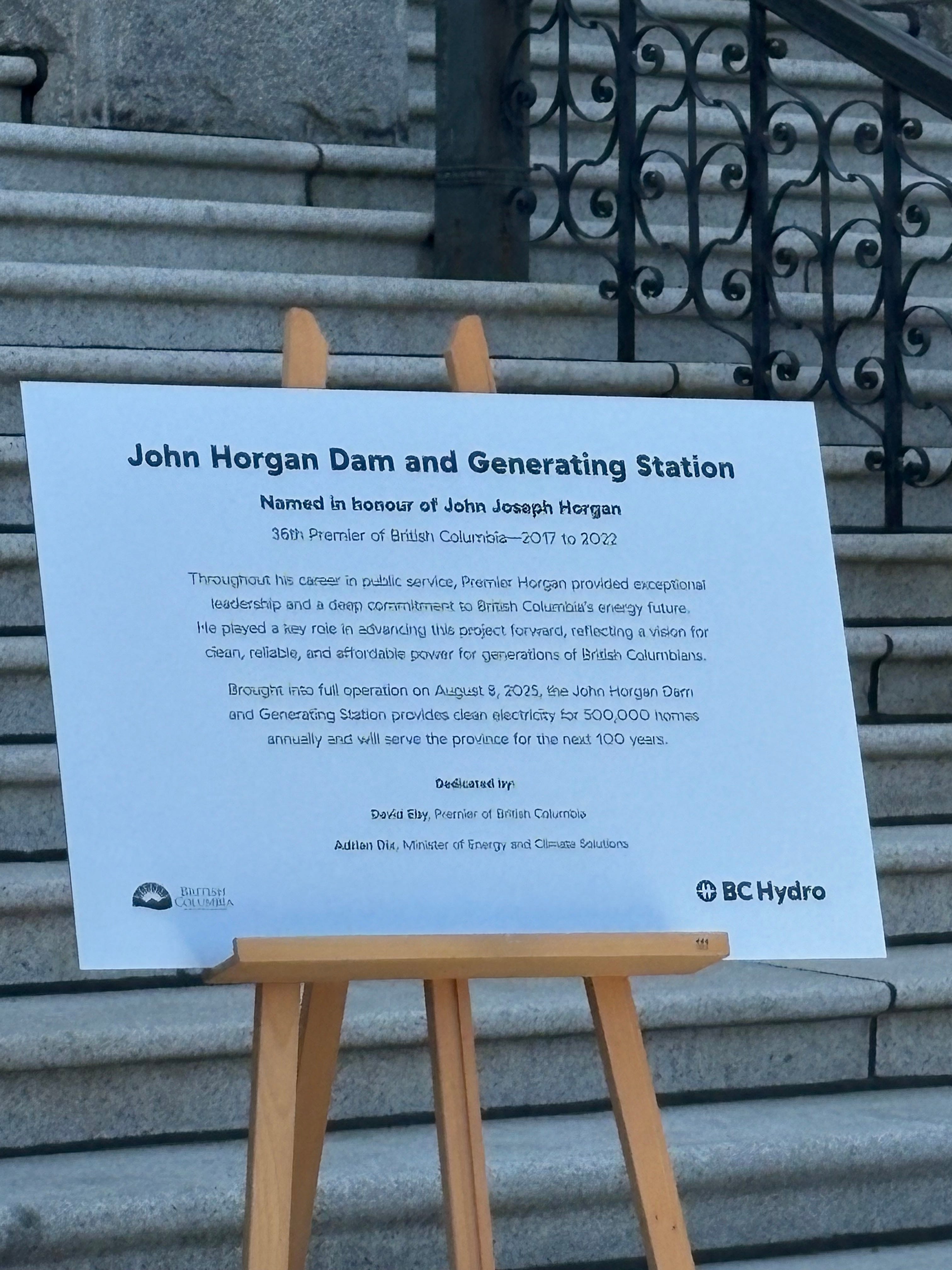
He had a great sense of humour, but former premier John Horgan would probably not be thrilled with his name being placed upon a dam he mostly opposed. Tom Fletcher details why.
They are two of the most experienced and wisest voices in B.C. politics, veteran journalists Keith Baldrey and Vaughn Palmer sit down to talk about the current political landscape, Indigenous reconciliation policies and they dish on what they think about the many premiers they covered over their 40-plus years covering the legislature.
Read More
Early in the legislative session, Premier David Eby dropped a veritable bombshell: there were some 20 legal cases that had been amended to reference the Gitxaala BC Court of Appeal decision that were causing “significant legal liabilities” for the province, necessitating the amendment of DRIPA. Appropriately concerned, journalists and the Opposition spent the rest of session asking, cajoling, demanding to know the details of these cases. Instead, the premier and his Attorney General gave a carousel of reasons why they really couldn’t say anything about them after all.
Then, on the second last day of the legislative session, under questioning from Opposition leader Trevor Halford, Premier David Eby revealed two of the court cases that he said were contributing to legal precariousness for government. Rob Shaw wrote it up.
DRIPA has evolved into an existential question over the rights and security of private property and the viability of resource development, unleashing a “tidal wave of litigation,” a constitutional law debate, allegations of undemocratic co-governance, and a crisis of legitimacy for B.C. Premier David Eby and his government. And that’s why Geoff Russ says, DRIPA is doomed.
Northern BC mayors and councillors have endorsed a call for the province to protect private property rights and increase transparency around Indigenous rights and title negotiations.
At a time when food prices are up across Canada, a little-known regulatory structure is working against the very farmers who could help stabilize supply and prices in British Columbia, writes Dalhousie University professor and food researcher, Dr. Sylvain Charlebois.
News that the Supreme Court of Canada has agreed to hear the B.C. government’s appeal of the BC Court of Appeal’s Gitxaała ruling appeared to elate the province’s attorney general and premier. But the reaction seems as strange as their rush to file the appeal. As more than one Aboriginal law litigator has cautioned, agreeing to hear an appeal doesn’t mean the Supreme Court disagrees with an earlier ruling.
Because, what if the Supreme Court affirms the Gitxaala decision?
It seems a much safer bet for the Eby government to repeal at the least the parts of DRIPA that make the law legally actionable, rather than spin the wheel and hope the Supreme Court of Canada pretends it can’t read and decides not to rule the Interpretation Act means what it says: “Every Act and regulation must be construed as being consistent with the Declaration [DRIPA].”
But that’s another story.
Feedback: Fran@northernbeat.ca
More BC news and politics: Northernbeat.ca
Comments
Nothing yet. Say the first thing.
Sign in to join the conversation.