
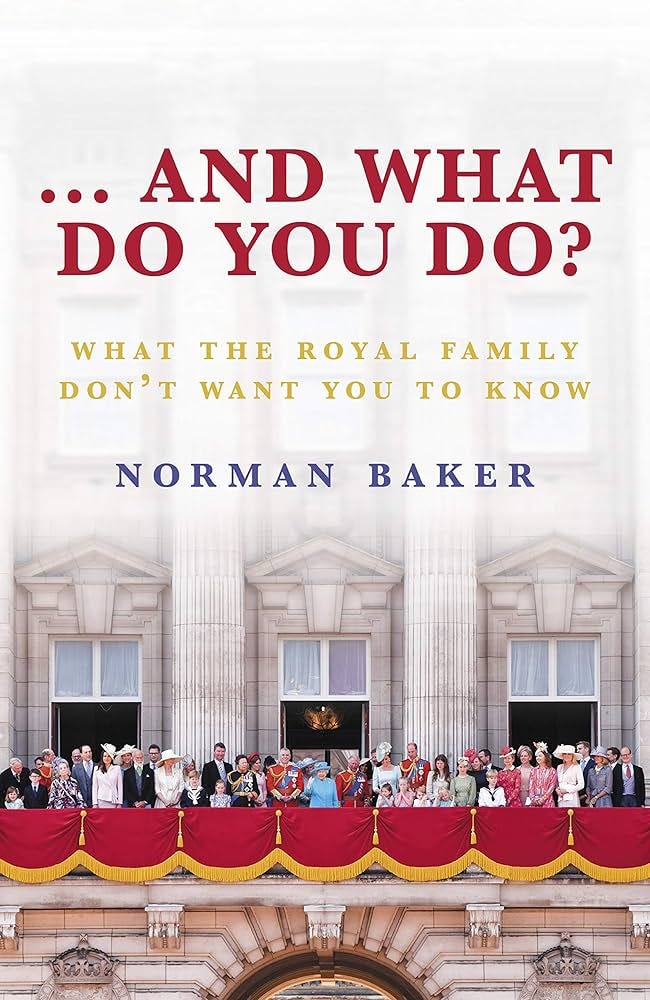
An extract from my book And What Do You Do?, published by Biteback Publishing, 2020
The royal family is inextricably linked with a number of ancient customs, practices and artefacts, the sort that overseas visitors regard as quaint.
These ancient appendices in some instances go as far back as, well, the twentieth century. Or even 2014, the year the ‘historic’ diamond jubilee coach entered service on ceremonial occasions to provide an impression of centuries-old continuity, a bit like a mock-Tudor house.
A harmless deception, you might think. Others are less so. Take, for example, the question of royal wills. The Palace would have you believe that it is an ancient tradition that royal wills, unlike those of anybody else in the country, can be sealed and therefore not available for public scrutiny.
Wills in this country have always been open for inspection, centuries before anyone had ever heard of the modern concept of freedom of information. It is, after all, an essential legal safeguard to prevent theft and malpractice. This concept of openness equally applied to royal wills, until 1911 that is, when the dubious principle was established that if the contents of a will would be embarrassing to the royal family, then it could be sealed. The official reason was to uphold the dignity of the Crown, but surely dignity is upheld by the avoidance of undignified behaviour, rather than by the ability to cover it up.
The catalyst on this occasion was the death in late 1910 of Prince Francis, brother-in-law of George V. Francis was almost a pantomime villain, with his waxed moustaches and his well-earned reputation for gambling and womanising. In his will, he scandalously left prized family jewels to a mistress, one Ellen Constance, the Countess of Kilmorey, with whom he was rumoured to have had an illegitimate child.
Faced with this, the royal family did what they always did, and still do: they decided to hush it up. So Francis’s sister, Queen Mary, persuaded a judge to ban public access to the will. In the meantime, Ellen was paid the princely sum of £10,000, equivalent to around £700,000 today, to return them. They were subsequently seen shortly afterwards round the neck of Mary as her husband was crowned George V. They have also been worn more recently by Princess Diana and by the Queen herself. How do we know all this? Not thanks to the royal family of course, for whom inconvenient facts are matters to be kept secret from the public at large, but thanks to the BBC, whose diligent journalism unearthed a copy of the will in the Belfast records office. So an ‘ancient’ precedent was set and is carried through to this day and used whenever there is something to hide. Royal wills are now locked up in a metal safe behind an iron cage on the first floor of Somerset House.
And so it was in 2002 that a highly questionable arrangement sealed the will of Princess Margaret. Even the sealing of the will was kept secret, and only became known some five years later as a result of a somewhat bizarre legal action initiated by a man called Robert Brown.
Mr Brown maintained that he was the illegitimate son of Princess Margaret, though why and how he has reached this conclusion is unclear. At first he looked into whether he was related to Edward VIII and then considered whether Prince Philip might be his father, before settling on the Princess Margaret connection.
He was born in Kenya in 1955 on 5 January, but it took four weeks for the birth to be registered, which he regards as significant, as, he believes, is the fact that a Privy Council meeting was held on the same day. It seems that his mother, Cynthia, had been working as a model for Hardy Amies, a favourite designer of the Princess, but that appears to be as strong as the connection gets. It is also the case that later in that year, 1955, Princess Margaret called off her wedding to Group Captain Peter Townsend. If you have a particularly febrile imagination, you might play this fact into Robert Brown’s story.
At the time, it was assumed that the hurdle had been the fact that the former Battle of Britain fighter pilot was divorced, still a stigma in 1950s Britain. In fact the Prime Minister, Anthony Eden, himself divorced, had raised no objections to the marriage and even arranged it that she could keep her HRH title. It subsequently turned out, from a letter discovered in the National Archives at Kew quite recently, that she was simply ‘uncertain’ as to whether or not she wanted to marry him.
Be all that as it may, Robert Brown has spent years and a great deal of money trying to force the courts to open the will of Princess Margaret, which he believes may throw light on the circumstances of his birth and perhaps even make provision for him in some way. He went to the High Court in 2006, and again the year after, to press his case. He was unsuccessful, with Sir Mark Potter, president of the family division, calling it ‘an imaginary and baseless claim’. But Mr Brown resolved to plough on, and then turned to the Freedom of Information Act to help.
This channel proved no more useful for him, with his application being refused, until in 2013 he won permission to seek a judicial review into the refusal.
In ruling in his favour, Mr Justice Phillips said that the case gave rise to ‘important points of principle and practice’ with regard to open justice and the public interest.
Indeed it did. For while Mr Brown’s central belief is hard to take seriously, his persistence has performed a public service in revealing the secrecy surrounding royal wills. It turns out that the wills of Princess Margaret and the Queen Mother, who had died just seven weeks after Margaret, were sealed in 2002 at a secret hearing presided over by the High Court judge Elizabeth Butler-Sloss. The only other people present were legal representatives of the Queen, and the then Attorney-General, Lord Goldsmith.
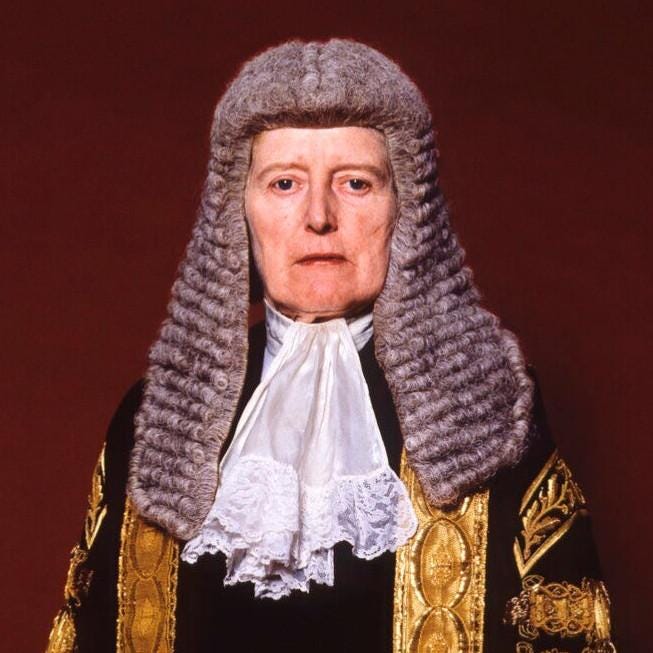
A parliamentary answer I received in 2010 from the Solicitor-General confirmed the attendance of the Attorney-General at this hearing, and also confirmed that ‘the only member of the Royal Family whom the Attorney-General … is on occasion called upon to advise is the Queen’.
We must assume therefore that both the sealing of the wills and the secrecy of the hearing were supported, perhaps even driven by, the Queen herself. Lord Goldsmith, nominally at the hearing to represent the public interest, was the Attorney-General who was to change his legal advice on the legality of the Iraq War to come down in favour of what Tony Blair wanted to do, and who was seen to interfere with a police corruption investigation into the arms company BAE. The judge granted a ‘practice direction’ which sealed both Princess Margaret’s will and that of the Queen Mother, and established the principle in law, as opposed to haphazard custom over the previous ninety years, that royal wills should remain sealed.
This hearing was so secret that it was itself kept from Parliament and from the public, and when Sir Mark Potter came to look into the matter as part of his consideration of Robert Brown’s claim, he was concerned to discover the written record of this hearing was confidential and one which he, as head of the family division, had not even known had existed. He said at the time that he had never heard of a practice direction that is not in the public domain. Well he wouldn’t have, would he? And nor would the rest of us.
It seems clear that the episode in 1911 has established the principle that where the royal family wants something to do with a will hushed up, the legal system will bend to accommodate them. Mr Brown was right to tell The Guardian that what had happened threw up an issue of constitutional significance: ‘It is constitutionally wholly inappropriate for the Palace and private lawyers with the assistance of the attorney general to enter into utterly secret formal arrangements, to reflect Her Majesty’s wishes, with senior judges.’
For the public at large if not for Mr Brown, the question of his birth is secondary to the serious questions raised by the way this matter has been officially handled. Why, and under what legal provision, was there a hearing in private to discuss the sealing of these wills? Why was seemingly no formal record of this hearing made public? Most of all, what does it say about our democratic and legal safeguards if a judge can subvert the law relating to the openness of wills by issuing a ‘practice direction’ to help the royal family, and then keep it secret that this has occurred? Once again, the classic BBC comedy series Yes Minister becomes less comedy and more documentary, as Sir Humphrey, quoting Sir Francis Bacon, tells his minister, Jim Hacker: ‘He that would keep a secret must keep it secret that he hath a secret to keep.’
In May 2002, I asked the Prime Minister Tony Blair to publish the Queen Mother’s will. He replied that
in line with a long standing convention for dealing with wills of senior members of the Royal Family, an Order has been made by the High Court for the sealing up of the will of the late Queen Mother, which means that it cannot be inspected or published. Therefore I do not intend to take any steps to ensure publication of the will.
What was in the wills of Princess Margaret and the Queen Mother is ultimately less important than the points of principle: why should a member of the royal family, unlike anyone else in the country, be able to keep their will secret anyway; and what justification can there be for bending the law to the royal will in this way?
Mr Brown’s lawyer at the time, Geoffrey Robertson QC, bluntly stated that the decisions to seal the royal wills ‘were made without jurisdiction, according to a practice direction that does not exist as far as the law is concerned’. The constitutional historian Professor Michael Nash told the Daily Mail: ‘It seems they are making it up as they go along. They are using privileges and prerogatives that should have died out in the Middle Ages.’
It is common knowledge that court cases are pursued by the state in the name of the monarch of the day, hence Regina v whomever it is. That means of course total Crown Immunity for the monarch, who can hardly prosecute him or herself. Perhaps this legal immunity has gone to the head of successive monarchs. By seeking to subvert the law to benefit themselves in this case, it looks very much like R v The Public Interest.
Besides the points of principle, we might also wonder: why go to such lengths to seal these two wills? It may be of course simply that the royal family is pathologically wedded to secrecy, and certainly their general attitude to the Freedom of Information Act suggests that may be a plausible explanation. Or were there other reasons, perhaps financial ones? After all, if it became publicly known how much was bequeathed, the public might begin to question afresh the level of taxpayers’ support the royal family benefits from, or indeed begin asking how it was possible to accumulate such wealth in their lifetimes without seemingly having any external means to do so.
Princess Margaret was revealed to have left an estate of some £7.6 million, and that was after she had apparently previously disposed of some £12 million of assets to her family, including her house on the Caribbean island of Mustique, to minimise death duties. Where did Princess Margaret get £20 million from? Even the generous largesse provided by taxpayers through the civil list cannot explain that.
Some small sum will have been saved by the abrupt way in which her staff were disposed of immediately following her death. Ten long-serving staff were told they no longer had a job and to vacate their royal lodgings without delay. The Princess’s personal chef, Kevin Martin, employed for twelve years, was reduced to applying to the local council for help for somewhere to live. It mattered not what dutiful and loyal service they had given. They were now surplus to requirements, like the Princess’s personal possessions that needed to be cleared out of Kensington Palace.
But if Margaret’s £20 million raises eyebrows, the Queen Mother’s reputed legacy raises serious questions. She is rumoured to have left an estate worth a cool £70 million, with whatever was left to the Queen being passed on free of inheritance tax – just one of many tax dodges uniquely available to the royals – representing a multimillion-pound loss to the taxpayer. Amongst the tax-free gifts to her daughter were a priceless Fabergé egg collection, her string of racehorses and a valuable collection of paintings.
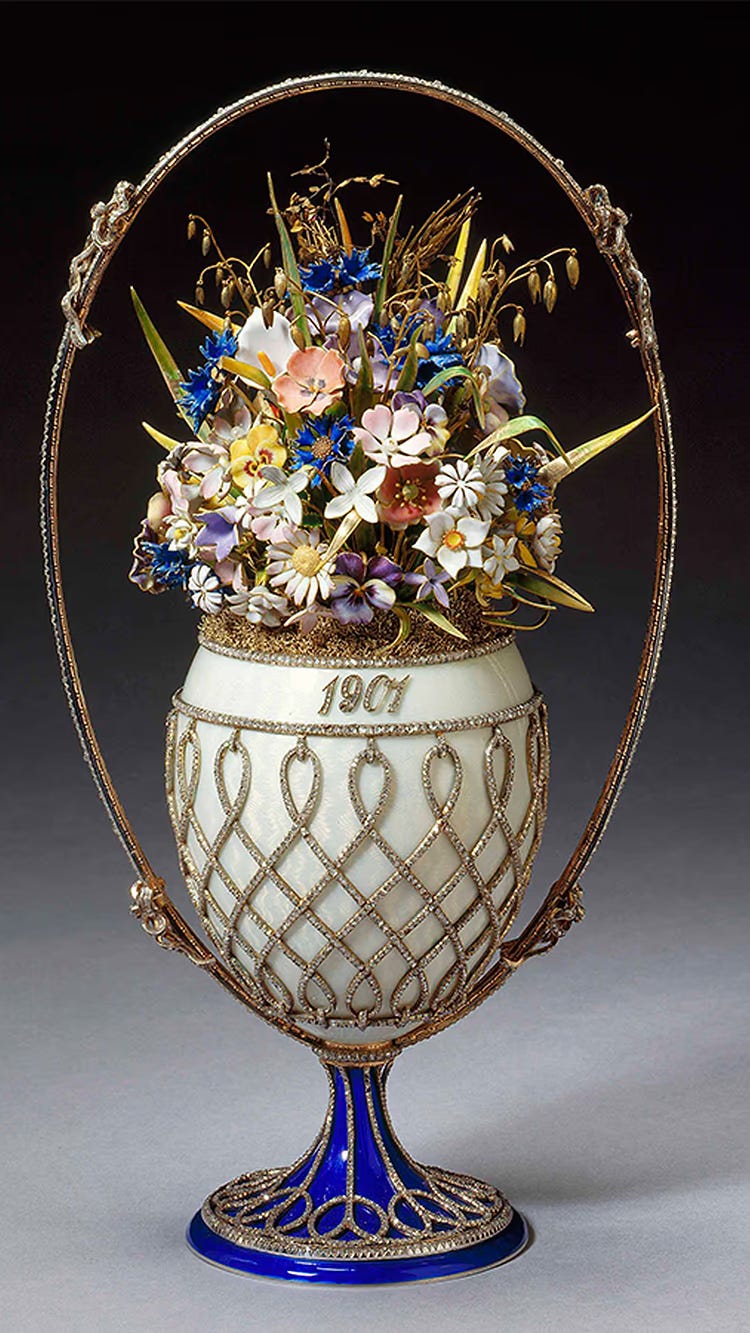
Where did this £70 million come from? Doubtless there was some inherited wealth but surely nothing of that order? She is unlikely to have won it at the races. Indeed, she is rumoured to have left a multi-million-pound bookmakers’ debt. Nor did she hold back from spending freely during her life. She ran a huge personal staff of sixty, with butlers, footmen, pages, equerries, ladies-in-waiting, housekeepers, gardeners and chauffeurs all falling over each other. At her frequent extravagant luncheons and dinner parties, there was a liveried footman posted behind each chair. Nor was any expense spared when it came to the food and drink, with bottles of champagne costing £300 apiece disappearing as fast as water in the Sahara. And running five properties as she did would hardly have helped keep the bills down.
Though her staff were meanly paid, they were so plentiful in number that the wages bill still came to around £1.5 million a year, well in excess of the already generous no-strings-attached, no-questions-asked £643,000 a year the taxpayer was handing to her by the mid-1990s. Even in the last year of her life as a centenarian, she managed to spend £4 million more than her state benefit.
It seems clear she had to be regularly bailed out by the Queen as the overspending mounted, and indeed she also left debts of £7 million when she died, including significant gambling debts and a massive overdraft at Coutts of several million. Doubtless the bank took the view that this was risk-free for them.
Her staff were to face the same abrupt fate that those of Princess Margaret had just a month earlier. Billy Tallon, who had worked for the royals for over half a century, rising to become the leading servant in the Queen Mother’s retinue and allegedly her personal favourite, learnt of her death from a tabloid newspaper. Buckingham Palace the next day confirmed to the press that when a member of the family died, their staff died with them, as far as the rest of the family was concerned. Would the now unwanted staff get a pension? ‘That would depend on their job and on their contract,’ said the Palace. But surely those dispensed with overnight would get a pay-off? ‘Um, not necessarily,’ replied the Palace. It is to be hoped that the Palace spokesman sent out to parry these journalists’ questions prudently checked his or her own arrangements afterwards.
The Queen Mother throughout her life exhibited an extravagance when it came to her own enjoyment, especially if the taxpayer was footing the bill, and a meanness when it came to parting with any of her own money. She protested bitterly to the Treasury that the tips given to Royal Marine bandsmen and to other staff on the royal yacht Britannia on the occasion of her visit to Tunisia in 1961 should be met from public funds, and not from her enormous civil list grant. The tips came to 2/6d (12.5p) per day for the bandsmen, 3s (15p) for stewards, and 5s (25p) for some other staff. In total, this came to just over £78 for the entire trip, which was hardly going to break the royal bank.
Her meanness was not unique in the royal family. Queen Victoria decreed that newspaper should be cut into squares to be used as toilet paper by her staff, who also had to tolerate permanent sugar rationing. Queen Victoria’s daughter Louise left £239,261 when she died in 1939, equivalent to around £16 million today. It transpired she had been chased for, and failed to pay a bill of 15 shillings, or 75p, to a local tobacconist.
Edward VIII, the Queen Mother’s brother-in-law, was known as the millionaire miser. Like the Queen Mother, he was happy to splash out outrageously on his priorities while being tight as a drum with his staff, and always keen to extract money from the state. Nor did it matter which one. The costs of his controversial trip to Germany in 1937 were met entirely by the Nazi regime. In 1940, as Britain was fighting for its very survival, he complained to Churchill about his absence from the civil list. This despite the fact that he was easily a millionaire, having accumulated a great deal of taxpayers’ money ever since he had stepped on to the first rung of the civil list ladder with £100,000 a year as Prince of Wales back in 1911.
The British government paid for the rent of his Paris house, and in 1945, despite the fact that information he had allowed to be passed to the Germans had played a major part in allowing the Nazi conquest of the country, the French government granted him tax-free status for life. His top priority, of course, was Wallis Simpson. In the years 1934 and 1935 alone, he presented her with £7 million of jewels, and thereafter an annual allowance of £370,000 (both figures at today’s prices). Meanwhile, he sacked royal retainers as a cost-saving measure.
The distasteful dichotomy between the approach taken by royals to expenditure on themselves compared with that on their staff has continued to the present day. In 2010, the Queen decided to cancel the biennial Christmas party for staff, and the Palace presented this as a response to ‘the difficult economic circumstances facing the country’. Yet as the party is always paid for by the Queen herself, the only result of this magnificent sacrifice was to personally save her £50,000.
The enormous amount left by the Queen Mother cannot however be explained by her meanness to those who served her. Perhaps part of the answer to the mystery can be found in the windfall from which she herself benefited in 1942 when she was left a large hoard of jewels by a McEwan’s brewing heiress, a collection known as the Greville inheritance. Were these given to her personally or as the Queen consort to George VI? In other words, do they really belong to the state? If jewels were the reason for the 1911 cover-up, perhaps jewels played a part too in the 2002 sequel. What is certain is that the sealing of royal wills does not allow the proper checks to be made to ensure that what properly belongs to the state has not slipped across into private property.
It could be of course that there is nothing untoward in these wills, but in which case why seal them? I took up the issue again as an MP back in 2009, without any success, it has to be confessed. I told the papers:
It is a matter of equity and transparency that people are able to see wills and it is quite wrong that the royal family is treated differently. They pass on gigantic sums of money without paying death duties. If we had the wills made public there might be fresh questions about whether they need quite so much money from the Civil List.
One royal will that was made public was that of Princess Diana, whose death in 1997 stunned the world. But maybe it was decided her will could be made public as in a way she was by then regarded by the royal family as no longer one of them. What happened in her case was truly shocking. She made clear her intentions in a ‘letter of wishes’ attached to the will that a quarter of her tangible possessions be given to her godchildren. Yet her executors – her mother, her elder sister and the Bishop of London – simply swept this aside and applied to the courts to overturn the letter of wishes.
In a secret hearing – yes, another one of those – a variation proposed by the executors was agreed. This had the effect of disinheriting the godchildren who instead received mere sentimental trinkets, like a gift Diana had once received from Argos. Naturally, none of this became public at the time, for the will that was published was the amended one, not the original. The truth only came out with the trial for theft of Diana’s butler, Paul Burrell. Incidentally, he scooped £50,000 from the will as a result of the variations made by the executors, a bequest that had been totally absent from the original will.
It seems Paul Burrell had powerful friends. On 24 April 2001, the ex-butler was charged with stealing 342 items belonging to Diana, Charles and Prince William. The trial, which was conveniently delayed to avoid clashing with the Queen’s golden jubilee celebrations, finally began on 14 October the following year. It collapsed two weeks later when the Queen, who had had a three-hour private meeting with Mr Burrell some time before, came forward at the last minute with information that undermined the prosecution case, just hours before Mr Burrell was about to take the witness stand. He was then cleared of all charges. The taxpayers’ bill for the aborted trial was around £3 million. ‘What she has done for me, to intervene like this, is absolutely unprecedented,’ he told the Daily Mail. Indeed it was.
The police raid on Paul Burrell’s house that preceded the court action had also uncovered an inlaid mahogany box containing a signet ring from James Hewitt and around twenty secret confessional videos made by Princess Diana, recorded by a former BBC cameraman. As well as Diana discussing her divorce and life thereafter, the videos allegedly contained a series of character assassinations of each member of the royal family by the Princess. They were also said to include a recording of a former aide to Prince Charles, one George Smith, in which he alleged both that he had been raped by another royal employee, and that he had witnessed that same employee giving oral sex to a senior member of the royal family.
One of the police who raided Mr Burrell’s house was Detective Chief Inspector Maxine de Brunner. She has said that at a meeting with Charles’s lawyer, Fiona Shackleton, on 17 May 2001, she was asked to make the video ‘go away’. ‘It was one of the lowest points in my professional career,’ she told The Observer in December 2003. The videos did indeed go away at the time. This of course would have been an enormous relief to the royal family. It seems likely that this disappearance took place before the Queen helpfully intervened to ensure the criminal case against Paul Burrell ran into the sand. Meanwhile, the senior courtier who was very close to Prince Charles was given a £50,000 pay-off, also to go away, though only after he had signed a confidentiality agreement. Material from the tapes was finally given an airing by Channel 4 in the autumn of 2017.
With the shocking treatment of her will, it seems Diana was to be trashed by the royal family in death as she was in life. But as with Robert Brown, the real concerns transcend the individual circumstances. What kind of executors take it upon themselves to totally ignore the wishes of a deceased? And what kind of court agrees to such a request, and further agrees that it should all be done in secret, with the connivance of the Palace?
The sad and worrying conclusion from all these episodes is that the royal family regard themselves as above the law and free to write their own rules, and that the courts and government will, it seems, help them do so.
The remedies are clear: the law must apply to everyone equally, including members of the royal family, and all royal wills should be openly published, just as they are for any other person in this country, from the Prime Minister down.
No posts
Comments
Nothing yet. Say the first thing.
Sign in to join the conversation.