
An extract from Royal Mint: National Debt (Published November 2025)
The royal family regularly cites the issues of royal dignity and privacy to control and limit the amount of information released about them. They are happy to release material themselves which is favourable to their public image but much less willing to answer questions where the answers might cast them in a bad light.
While members of the royal family should be perfectly entitled to privacy for personal matters, just like any other individual or family, it is much more questionable whether that secrecy should exist when public duties and public money are involved.
Access to public information, subject to certain exemptions, has been gaining currency across Europe, particularly since 1990. Sweden was the first country to introduce a Right to Know, and that was back in 1766.
In the UK, progress has been slow. At the beginning of the Second World War, an individual named John Gunther asked the Ministry of Information for a copy of the leaflet the RAF was then dropping over Germany. He was told he could not have it on the grounds that it might provide useful information to the enemy.
We finally saw the right to know enshrined in UK legislation through the Freedom of Information Act 2000, which was deemed to apply to all public bodies. These were listed in a schedule to the Act, and the number of bodies subject to the Act has grown since then, for instance through the inclusion of Network Rail.
The Buckingham Palace website states: ‘The Royal Household is not a public authority within the meaning of the FOI Acts, and is therefore exempt from their provisions.’
This is a rather misleading statement. The royal household as an entity may indeed be exempt but that does not mean the information about the royals could not be obtained through freedom of information requests. Indeed, back in 2000, when the Freedom of Information Bill was being finalised, the relevant minister, Rosie Winterton, assured me that ‘records relating to the royal family will be treated in the same way as all other records’.
That was most visibly demonstrated by the successful campaign by The Guardian, using the Freedom of Information Act, to force the release of twenty-seven ‘black-spider memos’ written by Charles to government ministers, in which he advocated policy positions, and which many saw as him crossing the line from political neutrality into political advocacy. The popular name for these memos was coined to reflect Charles’s scrawled handwriting.
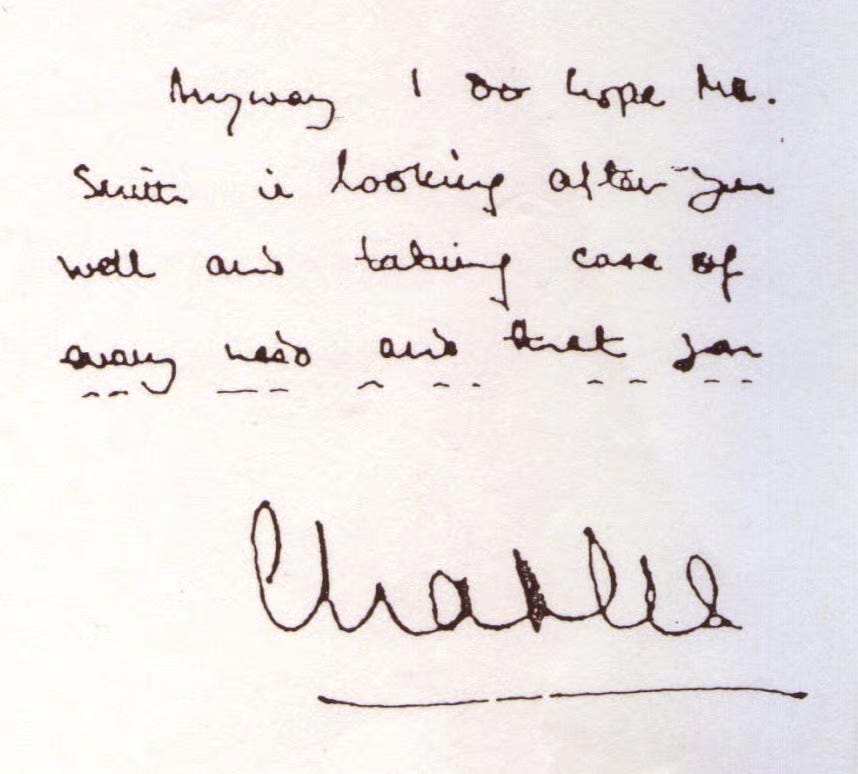
In some cases, such as where he pushed particular farming policies to the government, he had an undeclared personal interest, as the recipient of public funds through the EU Common Agricultural Policy.
Charles promised that as king he would be studiously neutral. Certainly he has so far resisted making controversial public statements, but his political views can still be detected. We know, for example, that he was very keen to attend COP28, the latest international climate change gathering, but was prevented from doing so by the then Prime Minister. It was also reported that he was personally eager to visit France and Germany, to repair the damage Brexit has done, as he sees it. Moreover, he insisted, rumoured to be against advice, on inviting Volodymyr Zelenskyy to Sandringham for a one-to-one meeting.
Many, including me, share his views on these matters, but that is not the point. He will need to be careful. As The Times acidly put it in an editorial when he was still heir to the throne, ‘a head of state with an opinion is called a president, not a prince’.
In any case, it seems certain that he is seeking to exercise influence without it being apparent to the population at large. Of course the monarch has, as Walter Bagehot famously put it, ‘the right to be consulted, the right to encourage, the right to warn’. That summary was produced by Bagehot in the reign of Victoria and has been broadly accepted on all sides ever since. It actually gives the British monarch more freedom to express views than is available to most other European monarchs.
Following the publication of the ‘black-spider memos’, Charles’s response was not to accept that he had crossed a line but to argue for change to the Freedom of Information Act to prevent the public uncovering such behaviour in the future.
Successful lobbying by the Palace led the government to change the rules and give blanket exemption under the Act to the monarch and immediate heir, with no public interest test able to be applied. There is now a total prohibition on the release of any such further letters for a period of twenty years after their creation or five years after Charles’s death, whichever is the later. The criteria for release of information as it relates to other members of the royal family was also tightened.
We have now reached the stage where virtually every single request to any public body requesting information connected to the royals is rejected, often under Section 37 of the 2000 Act. The relevant section is very broad, encompassing information relating to communications with members of the royal family or royal household.
The Palace never liked the accountability that the 2000 Act shone on them and has been lobbying to reverse this ever since, particularly after the black-spider memos episode. Their perseverance has paid off.
It has been a slow but inexorable backward journey from the assurances given to me in 2000 that information relating to the royals would be treated like any other information held to the position today, where the royal family is to all practical purposes wholly exempt from the provisions of the Act.
The government, as well as acceding to this pressure from the Palace, connives at its own Act. Figures they gave me about twenty years ago for various expenditure lines, such as the cost of royal gifts and the cost of the Lords Lieutenant who represent the monarch, are now apparently unavailable.
The royal family seeks to limit severely the release of information relating to them in other ways too, helped by the fact that the royal household is not covered by the Public Records Act and so papers held at the Royal Archives, based in Windsor Castle, are not legally public records, notwithstanding that the monarchy has a central and important constitutional role within the country.
Some material, particularly records of the Keeper of the Privy Purse, has actually been transferred from the National Archives to the Royal Archives, thereby effectively reclassifying them as non-public records.
In other cases, material which the National Archives itself has deemed not worthy of retention has been offered to the Royal Archives. One batch concerned royal correspondence in 1993 with the Treasury Solicitor. On the face of it, this looks important, as 1993 was the year when public outrage forced the Queen and Prince Charles to start paying tax, albeit voluntarily. Now the files have gone to Windsor, they may never see the light of day again.
Other files transferred included Ministry of Defence ones detailing flying training for the royal family (1967–84), transferred in 2010, and a Customs and Excise one containing a letter from Prince Adolphus Frederick in 1846, transferred in 2004.
Notwithstanding the enormous footprint of Windsor Castle, the room set aside for researchers who wish to access the files held there is a small one, allowing for no more than four researchers on any one day. Moreover, there is no index, so asking for particular files is akin to throwing a dart at a dartboard while blindfolded.
There is also a self-constructed rule that papers relating to a particular reign can only be released after the death of the monarch in question. That means when Elizabeth II was on the throne, even in 2022, nothing that postdated 1952 was available.
You might think that, with the Queen living to the ripe old age of ninety-six, the staff at the Royal Archives would have been planning for some years for the release of documents soon after her death, but it seems little preparatory work was done. Perhaps that is also a convention.
The helpful archives manager, Bill Stocking, told me that ‘it is likely to be at least five years from September 2022 before significant groups of material are catalogued and ready for researchers to look at, although we hope that some older material may be available earlier’.
Over the years, respected historians have called for the Royal Archives to be reclassified as public records and to come under the umbrella of the National Archives. As Karina Urbach of the Institute of Historical Research put it: ‘The royal archives contain matters of state. The role of the monarch is not a purely personal matter. We no longer have the divine right of kings.’
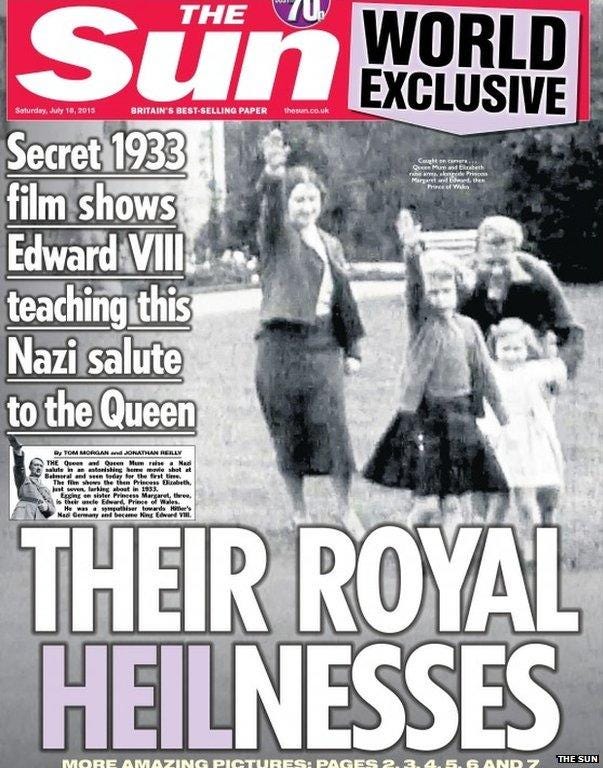
There was a particular groundswell after The Sun in 2015 published a front-page story entitled ‘Their Royal Heilnesses’. With an image taken from a seventeen-second home movie filmed in 1933, the article showed Nazi-leaning Edward VIII (as he would become) teaching the future Queen Elizabeth II how to give a Nazi salute. While no blame can be attached to the seven-year-old Elizabeth, who was simply obeying orders, the same cannot be said for the future Queen Mother, who as an adult was fully responsible for her salute. That would not have gone down well in the East End in the war if people had seen it. The picture can still be found online.
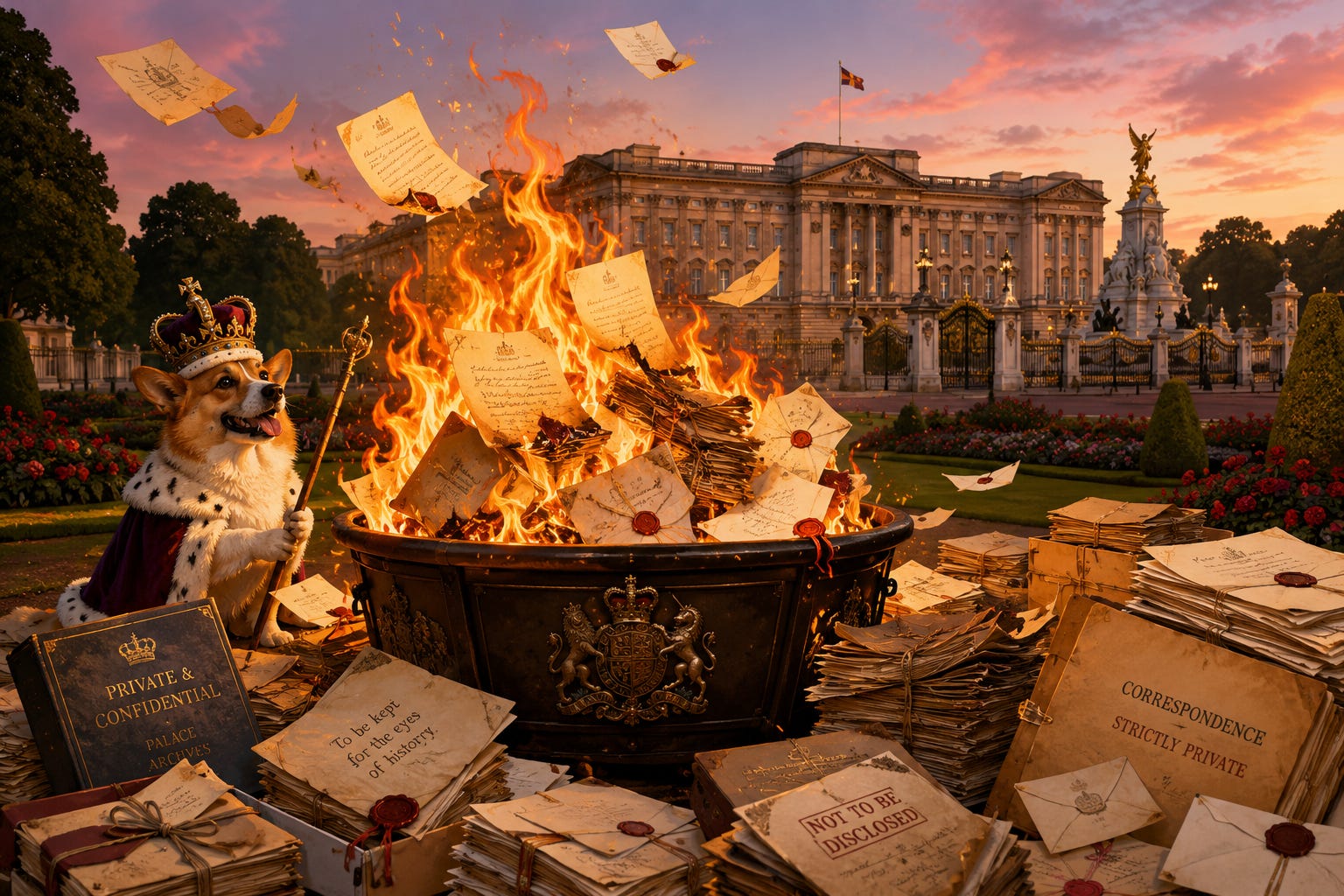
It may be, of course, that embarrassing documents will continue to be sealed by the Palace, or indeed destroyed. The royal family has had a habit dating back centuries of destroying incriminating papers. We know, for example, that they went to great lengths to secure and then burn written material relating to the Nazi sympathiser Edward VIII. We also know that the late Queen’s sister, Princess Margaret, burnt hundreds of letters sent to the Queen Mother, including many from Princess Diana.
The criteria used to determine which royal files can be viewed at the National Archives in Kew also appear to be stricter than those applied to other government documents. This is determined in each case by the relevant government department rather than the National Archives themselves, and after the relevant department has obtained the views of the Palace, with their scant enthusiasm for freedom of information.
However, it is also the case that some files that had been released have subsequently been re-closed, suggesting a tightening rather than a loosening of approach. These include Cabinet papers relating to the Regency Act 1953 and prime ministerial records concerning the investiture of the Prince of Wales in 1969.
While as a society we are moving towards the release of public records within twenty years, the policy regarding royal files seems to be moving in the opposite direction. A good many royal records are closed for much longer periods. When I visited Kew in 2019, I found there were 3,629 closed files on the royal family. Here are some of the titles:
• PM’s Office: Correspondence – Family name of Royal Family members (1951–64)
• Relations between the media and members of the Royal Family – possible legal measures (3 January 1984–18 January 1984)
• Future career of the Prince of Wales (31 May 1979–21 December 1981)
• Prince of Wales article: ‘Help for Self-Help’ for publication in The Economist (11 March 1983–18 March 1983)
• Visit of Duke of Edinburgh to countries in Far East and Pacific (1959)
• Discussions on Civil List (11 January 1965–13 November 1969)
• British nationality for German descendants of British royal family (1957)
On the face of it, there would seem to be no good reason why these files, all of them now over forty years old, and the vast majority of the rest of the 3,629 cannot be released, with names redacted where necessary. Yet many, it has been decided, will stay closed for 100 years.
The campaign group Declassified UK discovered in 2022 that over 200 files on overseas trips made by the then Prince Charles have been kept hidden from public view. One file, about the visit of Charles and Diana to Australia in 1983, will be kept locked up until 2070, it has been decided. It is a fair bet that when the file is finally opened in 2070, if it is, the response will be to wonder why on earth the contents had to be kept secret for eighty-seven years.
A 1986 briefing paper for Charles on ‘Defence Sales and Conversational topics’, to guide him while discussing arms deals, is sealed until 2049.
The historian and royal author Andrew Lownie has recently been told that Foreign Office records relating to Prince Andrew are sealed for sixty-five years. It is difficult to escape the conclusion that the only reason for this can be to avoid embarrassment to the royal family, yet that is hardly a good justification for withholding documents. Indeed, back in 2000, the relevant minister, Rosie Winterton, stated in a parliamentary answer to me that ‘potential embarrassment is not a factor in determining closure or release’. There is an old English phrase that comes to mind: fine words butter no parsnips.
A further anomaly in our constitutional arrangements that works to the benefit of the royal family relates to the publication of wills. Publication has for centuries been required as a bulwark against fraud, but uniquely the royal family is exempt from this requirement.
Unlike other longstanding practices that have failed to evolve over time, this exemption is actually a relatively recent creation, dating from 1911. The catalyst was the death of Prince Francis, brother of George V’s wife Queen Mary, in 1910. Prince Francis’s will had scandalously left prized family jewels to his mistress, the Countess of Kilmorey, with whom he was rumoured to have had a child. Queen Mary persuaded a judge to ban public access to the will and the countess was paid £10,000 – around £1,500,000 today – to return the jewels. A precedent was set and today, royal wills are locked up in a metal safe within an iron cage in Somerset House.
The official reason given for the blanket sealing of royal wills is to uphold royal dignity. It might be argued that the best way to achieve this is not to engage in undignified behaviour.
A cynic might argue that a further benefit to the royal family from keeping the terms of wills secret is that it enables the royal family to avoid the awkward questions that might follow if the extent of royal wealth was revealed by publication.
In 2022, The Guardian went to court to challenge a judge’s decision to hold a private hearing from which the media were excluded when it was decided to keep Prince Philip’s will secret for ninety years. The hearing was in fact not even publicly listed. The Palace’s representatives, Farrer and Co., and the Attorney General, the latter allegedly representing the public interest, were consulted in advance and able to make the case for a closed hearing. No media outlet – nor anyone else for that matter – was able to make representations, unaware even that a hearing was taking place.
The three appeal court judges upheld the original judge’s decision, arguing that a public hearing would have compromised the dignity of the Queen and dismissing the argument that this process undermined the fundamental principle of open justice. So not only are the royals uniquely able to keep their wills secret, but the public cannot even hear the arguments in court in favour of departing from the standard practice of publishing wills.
Depressingly, this episode is far from the only occasion on which secret hearings have been held in respect of royal wills. There have in fact been at least thirty-three instances since 1911 when special hearings closed to the public have consented to royal wills being kept away from the public. On no occasion was such an application refused.
In tandem with the decision to keep wills unpublished, the royal family has frequently declined to give a figure for the value of the estate of the deceased royal, as it did in the case of the late Queen, Prince Philip and the Queen Mother. They were, by contrast, happy to identify that the estate left by Princess Margaret totalled £7.7 million at her death in 2002. The logical conclusion to be drawn from these bespoke decisions is that they choose to keep the estate value secret when it is likely to raise eyebrows and raise questions about the huge wealth of the family.
We might look to the media to ferret out the facts, despite all the hurdles put in the way as described above. Sadly, most of the media most of the time shows no such inclination, happy instead to rely on puff pieces handed out by the Palace. This is especially true when it comes to money, with only The Guardian usually prepared to pursue matters. There was considerably more outrage in the papers about Keir Starmer accepting a £240 pair of glasses from Lord Alli than there was about the astonishing 53 per cent increase in the money paid to Charles this year via the Sovereign Grant.
The BBC in particular seems to see its duty as the nation’s principal broadcaster to show what it regards as appropriate deference to the royal family. They should recognise that eschewing any proper investigative journalism when it comes to the royals is not just inappropriate but a dereliction of duty.
The volume of complaints that were submitted to the BBC about what the former minister Chris Mullin described as ‘North Korean-style coverage’ of the funeral of Prince Philip showed graphically that the population at large is tired of uncritical sycophantic deference. The 109,741 who took the trouble to register their objections was a record for any television programme on any UK channel. The number would have been even higher if the BBC had not pulled the online complaints form.
BBC2 lost two-thirds of its normal audience as people simply switched off. And children turning on the CBBC channel found their favourite programmes had been replaced by a banner encouraging them to watch the news. Some hope!
In a further demonstration of just how compliant the media has become, it emerged that British television channels agreed to let the Palace censor coverage of Charles’s coronation. The royals imposed what John Ryley, the former head of Sky News, called ‘extraordinary restrictions’, including the right to retrospectively ban footage after it had been broadcast. Similar editorial control was exercised for the coverage of the late Queen’s funeral.
It is clear why the Palace would want to exercise this control, but why do the broadcasters let them? Our media are supposed to comprise independent journalists, not public relations servants for the Palace.
I asked the BBC via a freedom of information request for details of any protocols or agreements between the corporation and the Palace, with particular reference to the events referred to above. Their reply said that the information I was requesting was held for the ‘purpose of journalism’ and therefore exempt from the FoI Act.
On the rare occasion when the BBC does actually put a toe in the water, it generates a threatening reply from the Palace. In 2021, in response to an episode of The Princes and the Press, which made claims that William was worried about his brother’s mental health, the Palace threatened not only to complain to Ofcom, the broadcast regulator, but to withdraw cooperation with the BBC for major events.
Other broadcasters are little better. In 2018, ITV broadcast a lengthy programme entitled The Real Camilla, which failed to mention that she had been a mistress of Charles when he was married to Diana. Perhaps The Sanitised Camilla might have been more accurate.
Sky’s John Ryley also revealed that Charles had demanded in advance a full list of questions that would be put to him before he agreed to sit down for an interview with the channel in 2017.
If cajoling and bullying doesn’t work, and it usually does, there’s always recourse to the courts. A great deal of attention has been given to Prince Harry’s legal actions against the Mail group and against the Home Office, but he is far from alone. In 2020, William and Kate threatened to sue Tatler over what they called a ‘swathe of inaccuracies’ in a piece entitled ‘Catherine The Great’ and demanded it be removed from the internet. In particular, they objected to the suggestion that Kate was ‘exhausted’. There was also a dispute about, of all things, hems on dresses, which Camilla Long, writing for the Sunday Times, described as ‘even by royal standards … pathetic and trivial’.
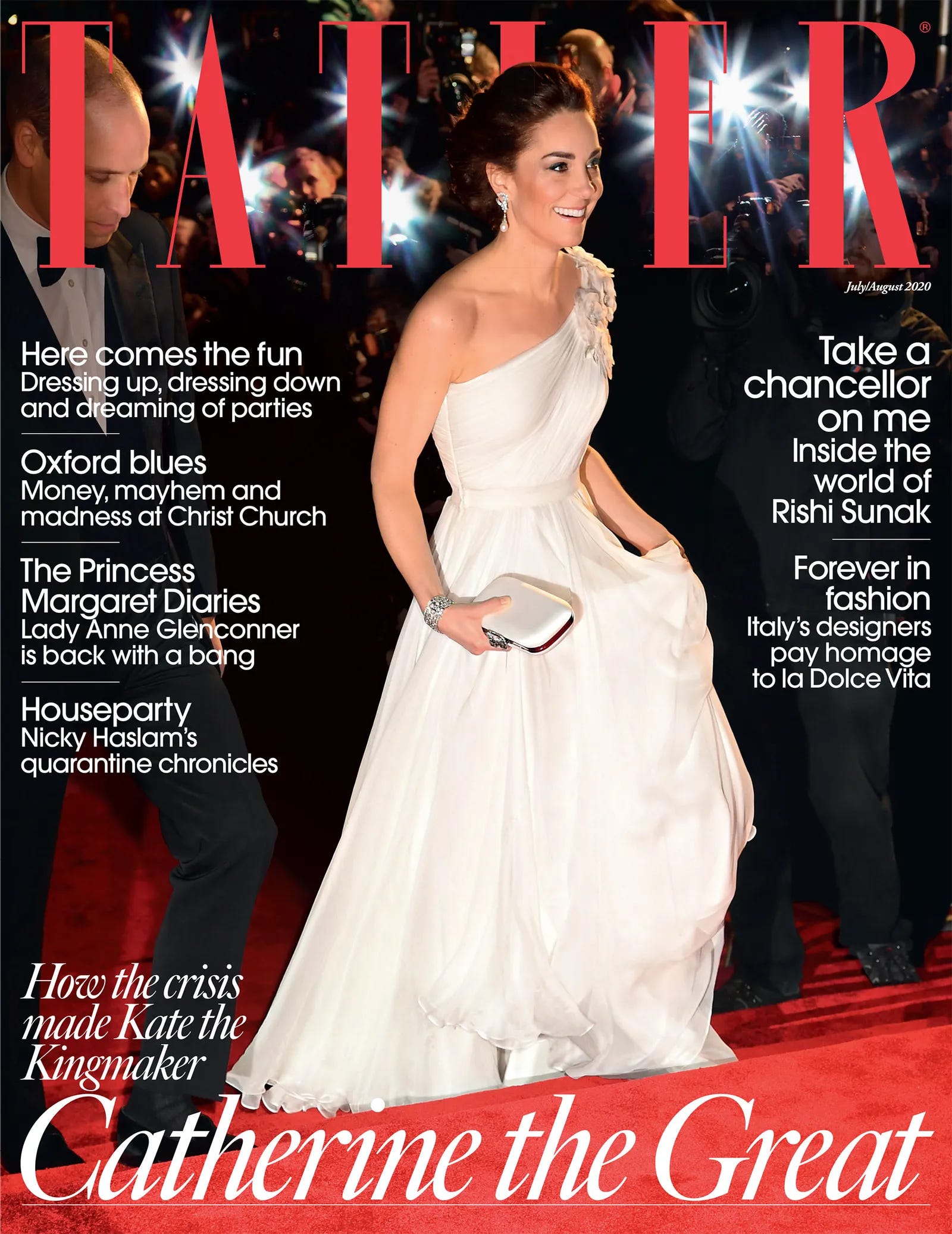
Tatler spiritedly replied that they saw ‘no merit’ in the complaint. According to the social media website Reddit, the author of the piece, Anna Pasternak, suggested later in a podcast that a deal had been done whereby a series of puff pieces in the magazine would be enough to ward off any legal action.
As I write this, in May 2025, the magazine’s website is certainly full of uncritical puff pieces, the most recent of which bore the headline ‘Kate Middleton makes a romantic gesture to Prince William as she rewears her wedding day earrings while hosting a very poignant Buckingham Palace garden party’.
William and Kate also used their heavy lawyers, Mishcon de Reya, to write to the legal departments of newspapers, drawing attention to articles which had appeared and which they felt intruded on their privacy.
It would be instructive to have a comprehensive list of all the legal actions and threats of legal action issued by the Palace and by individual members of the royal family over, say, the past ten years. But sadly it won’t happen. The special royal exemptions in the Freedom of Information Act would see to that.
Get ‘Royal Mint: National Debt’ Here (Published November 2025)
No posts
Comments
Nothing yet. Say the first thing.
Sign in to join the conversation.