
There’s a bluff on our family’s land in South Dakota that I’ve known my whole life.
For most of that life, it was just a place to work. A place to mend fence. A place to put the cows. A place, on occasion, to put up hay. A place that stood between what needed to get done and what I would rather be doing instead.
For decades, I crossed it the way you cross anything you think you’ll always have. I walked it without looking.
In recent years, that’s changed completely.
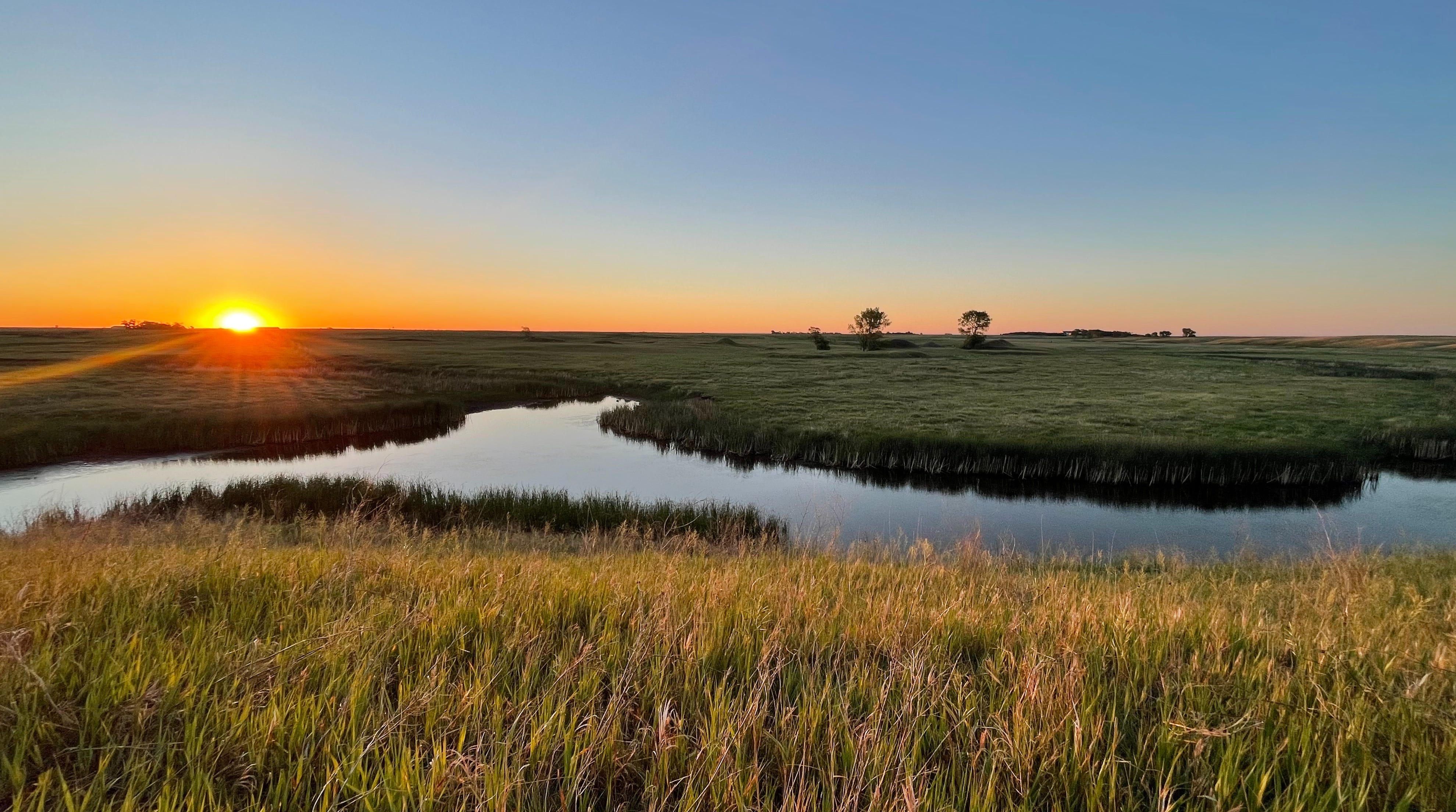
There’s a stream that runs for miles through parts of our land. The stream is called Preacher’s Run. Named for a Preacher who, without a clue or resolution, disappeared on the banks of the river in the 1880s. Probably only a few miles upstream from where I stand. I only know this because of a letter an old WPA worker wrote—from a story he heard from an old-timer—about how Preacher’s Run was named.
I find it ironic that the Preacher’s name has been lost, that there’s not a headstone to honor him, but that his namesake lives on in the waters just below my feet.
Thank you, Preacher. (And, for the record, I’m going to find your name.)
This bluff, high over a small stream named after a preacher with no name, has become precious to me. Sacred, even.
Not because it’s changed in any meaningful way.
Because I have.
It’s as if this prairie, and the creek below it, have always had something to say. Something to teach. But for fifty years, I never bothered to listen. Never slowed down enough to be present. It was always there—right there— but I never just stopped and asked the only thing it ever wanted me to ask:
What do you have to teach me?
So, I started asking it that very question. In fact, that’s what led me to the discovery of how Preacher’s Run got its name.
Five years ago, I camped on that bluff for the first time, with my son. The site selection was not random. I was called there. To that place. Exactly. To The Bluff on Preacher’s Run.
If you’ve ever felt called to do something, to test something, to experience something or to try something, you’ll understand. If you’ve never been called, I feel sorry for you.
Most of us get a call. But most of us don’t listen. After all, it’s easier to keep walking. To keep thinking of it as work. To refuse to ask what it has to teach us.
Since this initial call, I’ve been back to The Bluff on every trip. Most often with my dad, but even more often alone—in a small RV I bought on a lark. A 40-year-old RV (The Dreamliner) I share with friends so we can experience lands in ways we never have before.
While camping on that bluff, I’ve been thrust around in summer storms—to the point of legitimate fear. I’ve been lulled to sleep by coyotes calling in the distance. And I’ve been lost in wonder watching a dancing flame lose its battle to keep burning, deep into the night, as everything quiets.
But the best part of the prairie is watching it come back to life.
Meadowlarks first. Then orange light. Then the whole land finds its rhythm, the way it has for ten thousand years. I go there for the sunset, but I stay for the sunrise. To watch it all begin again. To see this place the way it was, so many lifetimes ago.
Each time I return, the bluff shows me a little more of what it wants me to see.
And, well, I’m learning to listen.
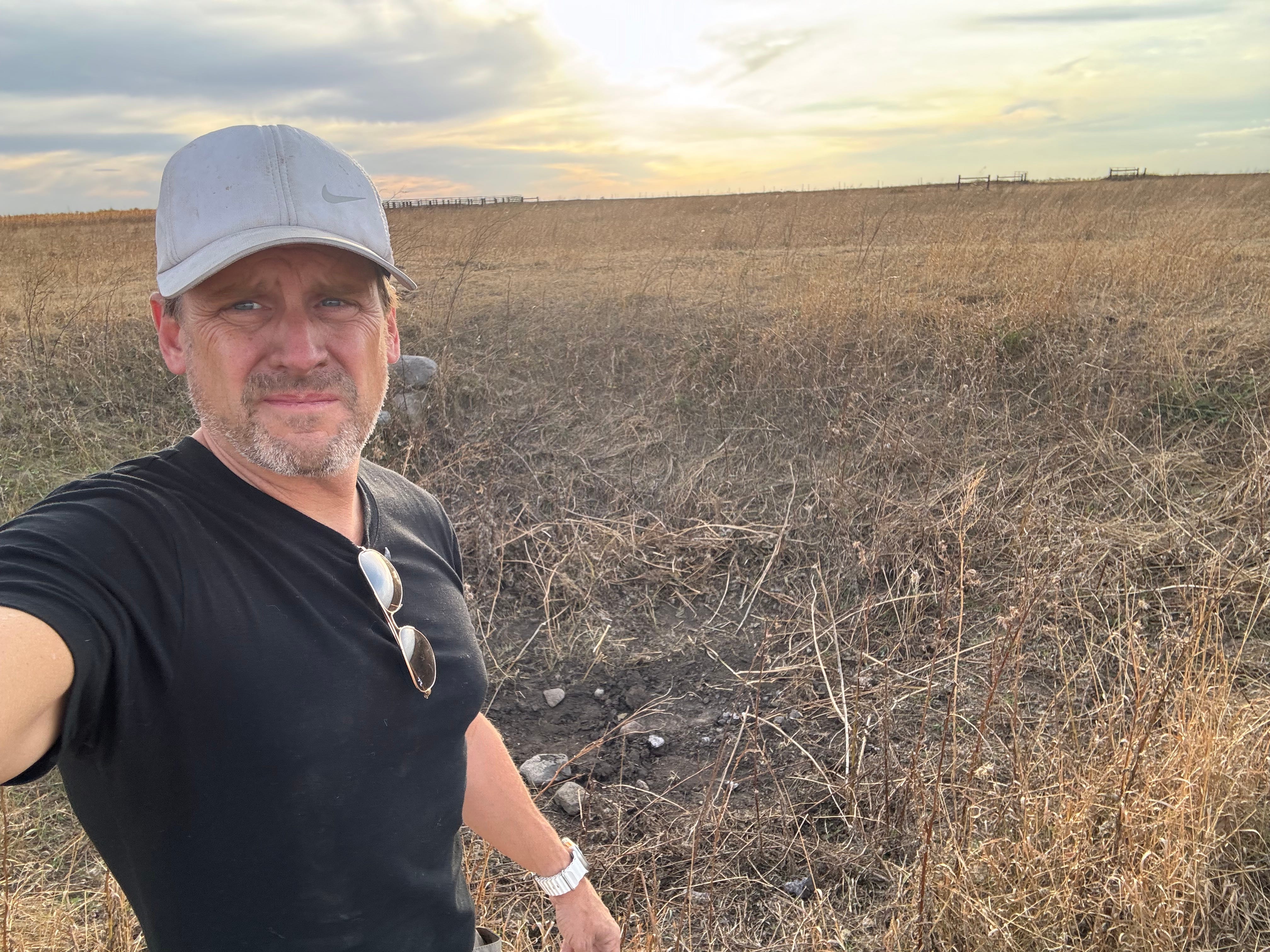
While sitting on the bluff this week, I was called to wander. Down the banks to the south, then to the east. To a place I knew. A place I’d been many times before. A place that holds more wonder than almost anything else on The Stroschein Ranch.
It’s a twenty-foot-wide hole, hand-dug, eight feet down into the hard native prairie.
You can see it in this photo, but there’s nothing like the feeling you get standing here.
This is no ordinary hole.
This is the first home the homesteader dug when he claimed this quarter in the late 1880s under the Homestead Act. This was his home. His bet. His first winter, and maybe his last, spent below the frost line of a land he’d only just met.
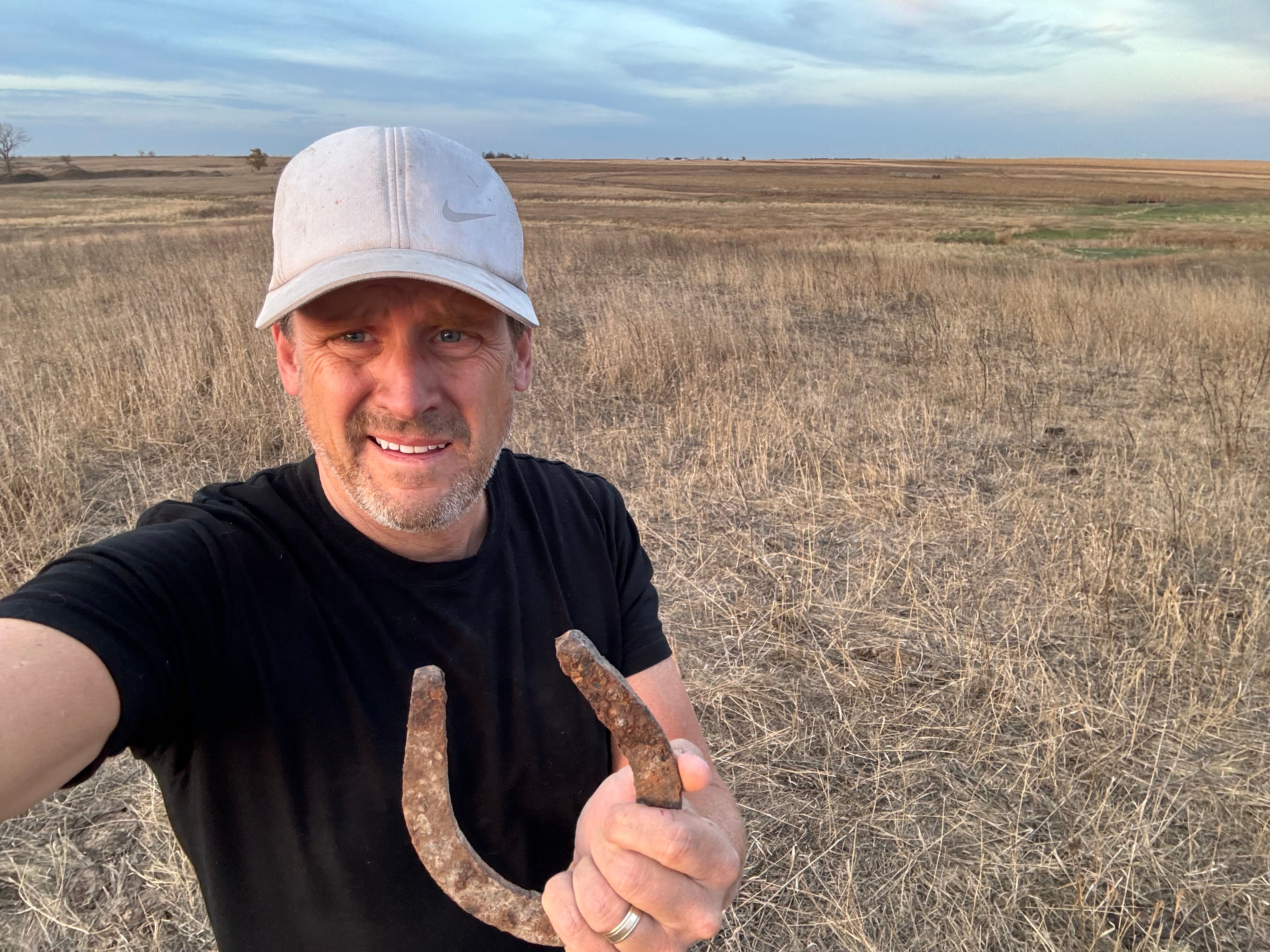
I stood inside his home, or maybe their home, this week. There, in the bottom, I picked a horseshoe that was buried under years of prairie grass thatch.
This settler? I don’t know his name…Yet.
For now, he’s a mystery. Someone (or a young family) who left everything they had an ocean behind—and spent everything they’d ever saved—for the chance to dig a hole in the ground and bet on themselves.
For the chance to write a better story.
This is not merely his hole.
This is his Trade.
The Trade of the life he had inherited, for one he mustered the courage to chase.
From his earthen “doorway,” there is still a worn path that runs down the hill to the banks of Preacher’s Run. Conditions have to be just right to see it, but it’s there. All of it.
A hundred and forty years old and still visible. I’ve walked it. There’s no doubt what it was. And if you let it, you can put yourself back where he was—or where they were.
It was his path to the water. To life. To existence.
Preacher’s Run has hundreds of stories like this. Most of them lost to time and buried by a tractor. But now on our native prairie.
To this day, Preacher’s Run can be fast in spring and slow by early summer. Some years it dries to nothing.
But small as it is, it has shaped these prairie lines beautifully and aggressively, and carved views unimaginable in their simplicity. A life-source named after a preacher who disappeared near this water in the 1880s. No grave. No marker. So the settlers gave him the only monument they had.
The water. Every map printed since has carried his name.
Stand on that bluff, and you can see the whole truth of this place at once.
The Yanktonai (the powerful Sioux Tribe) hunted these hills for hundreds of years. The settler dug into one. The Preacher vanished along the water. And every one of them survived the same way.
They found their path down to the running water and lived from what it offered.
What did the Native Prairie have to teach me?
There is a time to reinvent who we are capable of being. To take who we are, what we have, and to place a bet on something that will last. And that one day it will be too late to try.
We all live closer to a water source we’re afraid to walk up to. But in that current, the one that flows atop your busy life, there is a quieter one. There’s a calmer path. One that knows what you actually want—and is asking you to stop and see it.
Maybe even calling for you to see it.
It will be the quiet path you haven’t walked down in years. Near the fences you’ve been busy mending. In the courage you’ve forgotten was in you. In the life you still have waiting just before you.
But make no mistake, the path is still there.
And I can still see it.
If you want to stand on this bluff with me, high above Preacher’s Run, to feel what I feel, see what I see, and hear what I hear…and then make the walk to the homesteaders' bet … join me.
September 16 through 20, I’m bringing a small group to the Stroschein Ranch for the Normal 40 Ranch Retreat. And if you’re still reading this, pay attention to what’s waking up in you. That’s already the prairie at work.
Last year’s Retreaters never saw Preacher’s Run. Not because it wasn’t worthy. Because the prairie weather didn’t allow for it.
This year, I intend for us to go. That we stand on the bluff together and see it the way the Yanktonai saw it. The way the settler saw it. The way I see it.
Because all of it is native prairie, to this day.
It was never just a place to make fence.
It’s a place to return to.
The place I call home.
You should see it.
Never alone,
Lon —
Want to join me at the retreat? Let’s ramble:
https://calendly.com/normal40
No posts
Comments
Nothing yet. Say the first thing.
Sign in to join the conversation.