
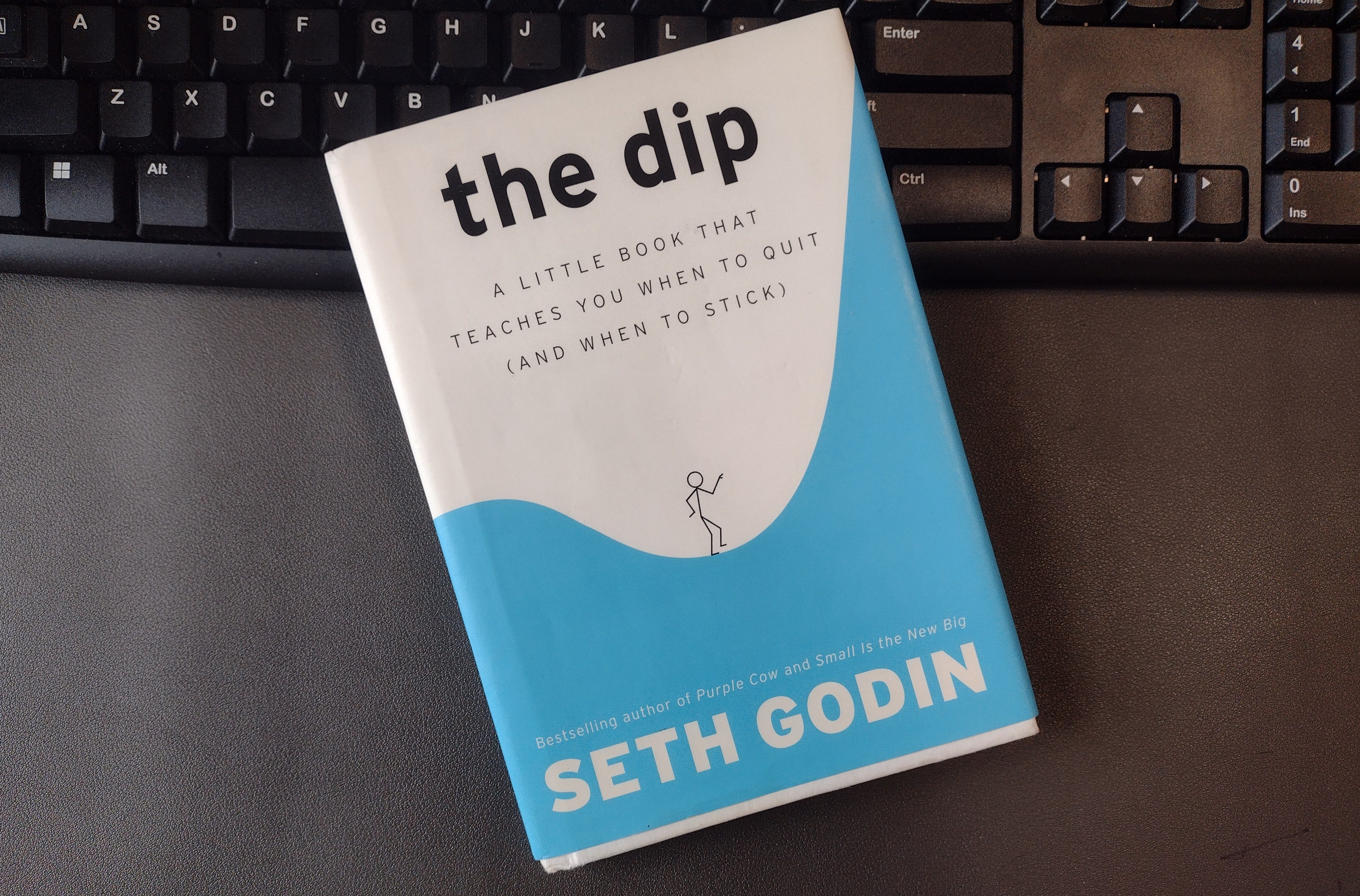
This will be the first in an ongoing series of book reviews/summaries. The focus will be on “unexpected” books that will help you with your digital fundraising. Each review will focus on highlighting the key aspects of the book, as well as specific nonprofit examples to make sure it is relevant and actionable for you.
Have a book you think we should review? Reply or comment below, and I will add it to the queue.
Seth Godin's The Dip is one of those books that sticks with you. I read it for the first time in 2010 when I was trying to figure out the next steps in my career (and it led to the launch of Nonprofit R+D, so I guess you can say it worked for me).
I have re-read it multiple times, and each time, it has helped me to clarify my thoughts and evaluate what is worth pursuing and what I should quit doing.
The Dip is all about knowing when to push through and when to call it quits. It's that challenging middle phase—the "dip"—where things get hard, momentum slows, and success feels out of reach.
Godin argues that pushing through the dip is what separates the best from everyone else, but not every effort is worth sticking with.
Sometimes, quitting strategically is the smartest move—freeing up time and resources to focus on what truly matters. It's not about doing more; it's about doing the right things better.
Let's talk about how these insights can help your nonprofit build a strong digital foundation and navigate the ups and downs of fundraising success.
Every nonprofit hits a "dip" in digital fundraising—that frustrating middle phase when the initial excitement wears off. Donors stop clicking, campaigns lose steam, and results feel stagnant.
But here's the thing: the dip isn't a sign of failure. It's normal.
And nonprofits that push through the dip often come out stronger on the other side—with loyal supporters, better systems, and a clearer sense of what works.
The key is knowing when to persevere and when to pivot.
Not every strategy is worth sticking with—Godin calls these dead ends "cul-de-sacs" or cliffs leading to failure.
For nonprofits, this means taking a hard look at what's not working and reallocating resources to strategies that show real promise.
Here's what that might look like:
Spending hours and hours on social media without meaningful results? Stop wasting money there and focus on email campaigns instead (much higher ROI).
Investing in a crowdfunding campaign that barely moves the needle? Shift gears and focus on optimizing your donation page or creating a compelling email series to engage existing donors.
Quitting isn't failure—it's smart decision-making that frees up time and energy for better opportunities.
Trying to do everything in digital fundraising is a fast track to burnout. Instead, focus on excelling at a few things your nonprofit can do better than anyone else:
Craft heartfelt donor thank-you videos that leave supporters smiling.
Write email appeals that tell your story like no one else can.
Build an amazing peer-to-peer program that mobilizes your community.
When you specialize, you stand out—and standing out is how you build deeper connections with donors in a crowded digital space.
One of Godin's best lessons? Anticipate challenges before they happen.
For nonprofits, this means planning for the inevitable dips in digital fundraising:
What will you do if donations slow mid-campaign?
How will you keep donors engaged after they give?
Do you have enough staff or volunteers to handle the workload?
For example, If you're launching a new campaign, plan ahead for mid-campaign boosts—like matching gift challenges or a personalized email series—to reignite momentum when things slow down.
Preparation is what separates nonprofits that push through from those that stall out during the dip.
Here's some encouragement: The dip weeds out those who quit too soon. Nonprofits that stick with it stand out as resilient and trustworthy—qualities donors love and respect.
So when digital fundraising feels hard (and it will), remember: pushing through builds something valuable over time—a strong foundation for lasting success.
Here's how applying lessons from The Dip can help your nonprofit lay the groundwork for sustainable digital fundraising:
1️⃣ Start Small and Test Often
Don't try to do everything at once! Focus on one or two high-impact areas—like email or your donation page—and test different strategies to see what resonates with your audience. Once you've refined what works, you can build from there without spreading yourself too thin.
2️⃣ Focus on Donor Relationships
Use simple tools—like personalized thank-you emails or donor spotlights—to show appreciation and build trust. Loyal donors are more likely to stick with you through ups and downs.
3️⃣ Set Realistic Goals
Break big goals into smaller milestones so your team can celebrate progress along the way—this keeps morale high during tough times.
4️⃣ Invest in Easy-to-Use Tools
A good donation platform or CRM system streamlines your efforts so you can spend more time connecting with donors instead of fighting tech headaches.
5️⃣ Celebrate Small Wins
Every new donor or small engagement boost is worth celebrating! Recognizing progress keeps your team motivated as you push through the dip.
By focusing on what matters most—your digital foundation—you'll be ready to navigate challenges, avoid burnout, and create a lasting impact in your community.
Ready to stop chasing trends and start building a digital strategy that works?
Book a free call, and let’s create a foundation for lasting success..
How to Improve Donor Retention: 3 Surprising Strategies from Top-performing Nonprofits
What if keeping your donors was easier than you thought? These three proven strategies from top-performing nonprofits might surprise you.
Participate in NonProfit PRO’s Research Study
The more nonprofits that participate, the better the data will be, and we will all benefit. And you have a chance to win a $250 donation.
Thanks,
Rich Dietz
Founder, Nonprofit R+D
PS – Struggling to make sense of your digital strategy? Let’s chat! Schedule a free call, and I’ll help you focus on what really drives results for your nonprofit.
*This newsletter may contain affiliate links. If you click on these links and make a purchase, I may earn a small commission at no additional cost to you. I only recommend products or services I believe will add value to my readers.
Comments
Nothing yet. Say the first thing.
Sign in to join the conversation.