
Happy Anniversary to websites! Today is the 35th anniversary of the first website ever being posted all the way back in 1991 by Tim Berners-Lee. It’s a big day in the history of the web and also sobering to think that the web has only really been a reality for 35 years. And look at us now.
In stories this week, you’ll read about a new poll about how Americans really feel about whether kids should learn a foreign language in school. Spoiler alert, I’m not as supportive of it as you might think, for a very specific reason. You’ll also read about the latest work of the brave scientists working to preserve climate data in an administration working to make it disappear. Finally, a new dumbphone that may surprise you with just how “smart” it actually is. Bonus stories feature the people who ruined the Internet, anti-pervert glasses and how the tradwife trend might be an illusion.
Enjoy the stories and stay curious!
Rohit
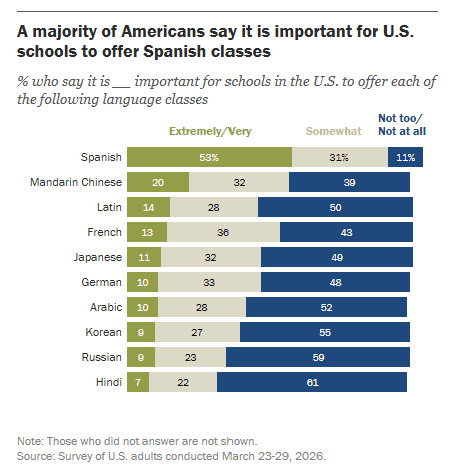
I speak Spanish averagely well. Yet I would rank the four years I spent “learning” the language as one of the bigger wastes of time in my education. The moment I really learned the language was when I started spending time with Spanish speakers, traveling and conversing in Spanish out loud. Modern language learning courses and apps focus on this type of experiential learning above anything else, based on the insight that the absolute best way to truly learn a language is to speak it out loud. In school I remember learning verb conjugations and taking fill-in-the-blank quizzes about the exceptions to the rule.
This week Pew Research released a study about how American’s generally rank the importance of children learning a foreign language in school. Those who agreed it was important were concluded to have a more global perspective. I’m not sure how I would have responded if I had participated. I believe learning a foreign language is important and eye opening for anyone (especially children). But if I had to vote for teaching it to them the way I learned it, I’m not sure I would support that. There are millions of children who complete four years of language learning and can barely converse in that language.
Focusing language learning on grammar is like teaching someone to cook by having them spend hours only chopping vegetables. If you learned a foreign language (in school or afterwards), what do you think? Hit reply and let me know if you agree or if I’m missing something.
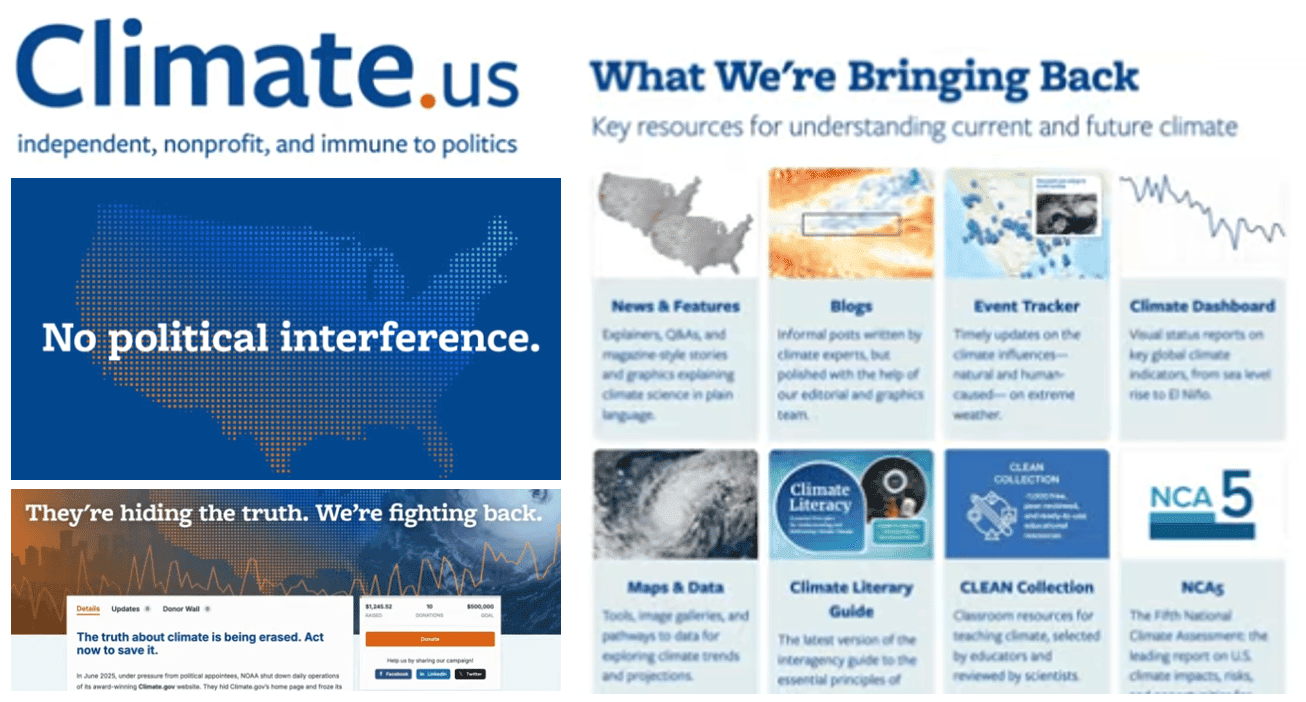
After the Trump administration shut down the official government source of weather data at Climate.gov last year, a group of scientists promised to save years of data and make it available again. This week Climate.us launched to fulfill that promise. The site presents much of the data that was previously available publicly before being taken down. Their mission is to present independent climate data that is “immune to politics.” The fact that this even needs to exist is in itself a scientific tragedy, but the relaunch is a great story of hope.
Among the specific resources they include are climate literacy guides, event trackers, maps and data that shows the shift over time. No matter what silencing forces come to try and hide or obscure data, we will need more scientific bravery like this to keep bringing this kind of information back. There’s no way we can anticipate and prepare for the future if we don’t have any way to measure and share what’s happening among scientists and the rest of us too.
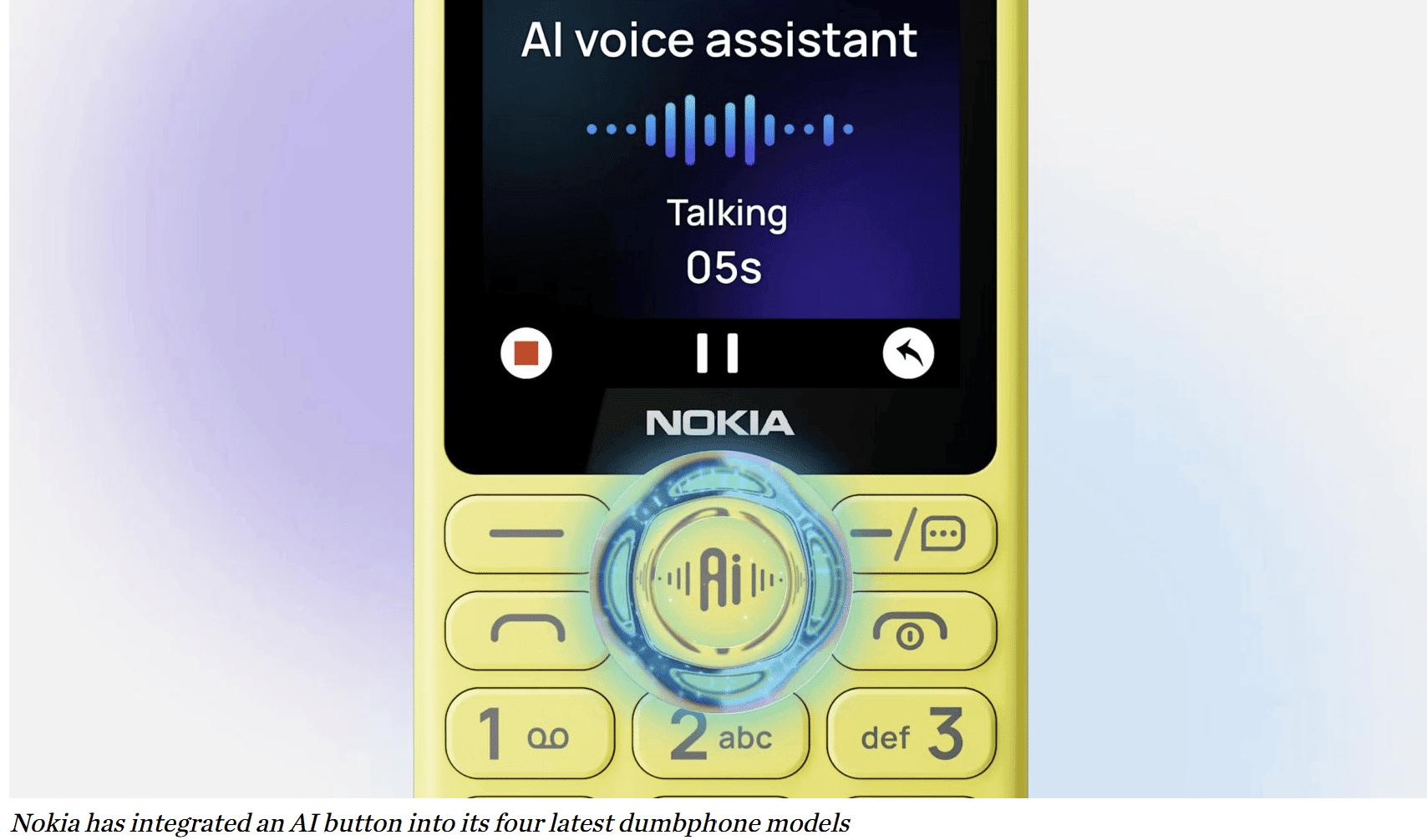
As the popularity of so-called dumbphones has surged, the use case was pretty simple. It was a phone for anyone who wanted to avoid social media and excessive scrolling or for the extremely tech-averse and elderly who wanted to avoid too much complexity. Nokia’s latest dumbphones are changing that calculation with a notable inclusion: a big “AI” button right in the center of the phone. What seems like a contradiction might actually be a sign of what we can all expect in phones of the future.
The question it raises is a fundamental one: how much of what your phone currently shows you visually do you really need to look at? Maps? If AI can track your location and instruct you on making each upcoming turn, you probably don’t need that. Email? Probably the same thing if you could get used to dictation. It definitely requires a learning curve and not everyone would want that. The idea of Zero UI, where an interface becomes unnecessary because of how intuitive something works, has been growing over the past decade. This phone is one of the most pronounced signs that we may be getting closer.
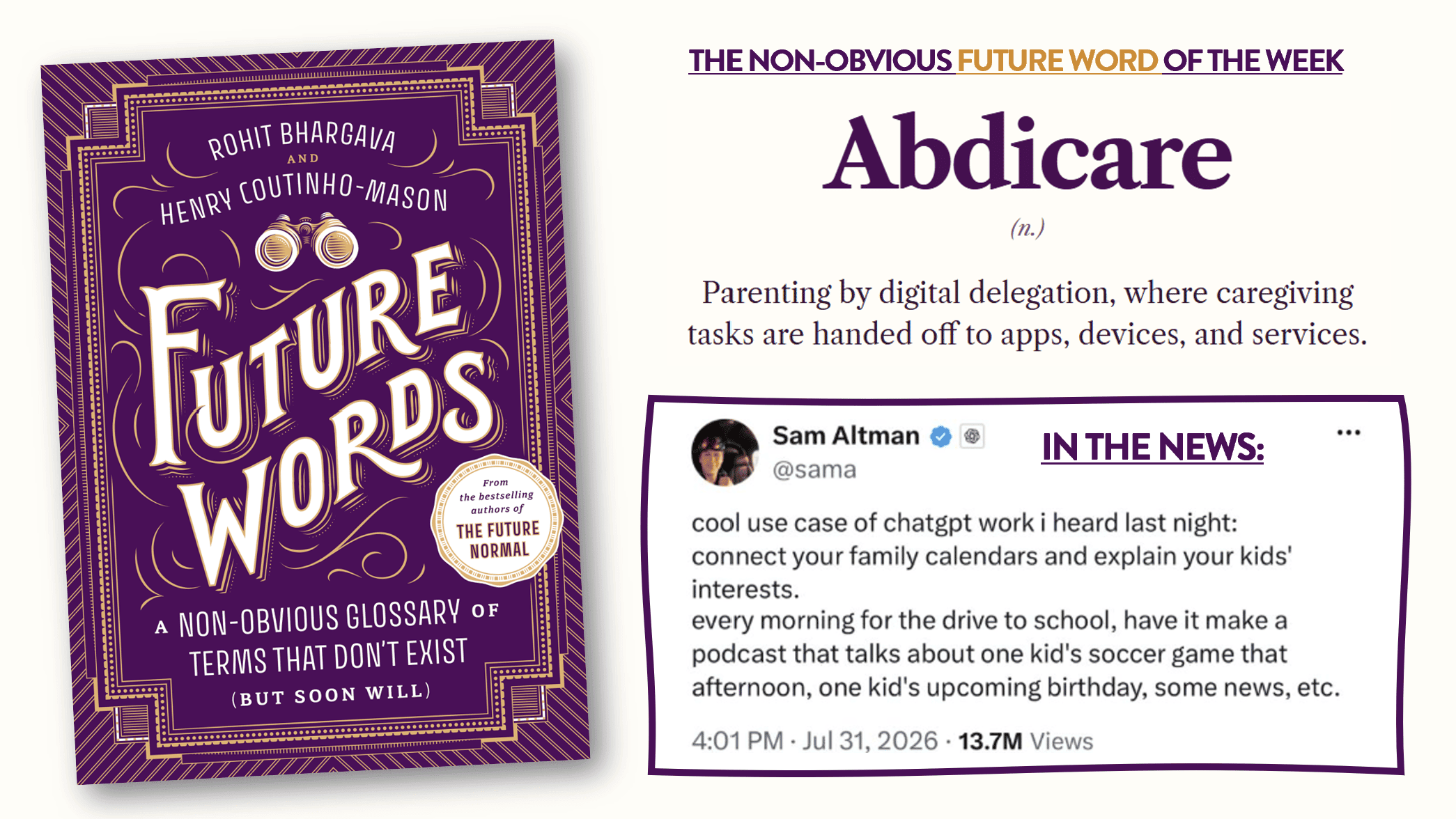
What’s the right amount of usage for AI when it comes to parenting? Open AI founder Sam Altman’s answer may be different from most of us, and his tweet earlier this week suggesting AI could create a podcast out of your kid’s calendared activities to listen to with them in the car went viral amassing over 14 million views for the wrong reasons with most comments suggesting maybe he might talk to his kids instead. This is a struggle we will see play out often and one that we focus on with our future word Abdicare. For some parents, this sort of abdicare is totally justifiable and maybe even a fun way to bond with their kids over a novel use of tech. For others, it’s the perfect example of giving up a moment that should be sacred between parent and child and utilizing technology where it doesn’t belong.
No matter which side you lean towards, it is the conversation that I find really fascinating here. Where is that line between too much abdicare? As parents, should we do it at all? Future words can unlock these kinds of debates.
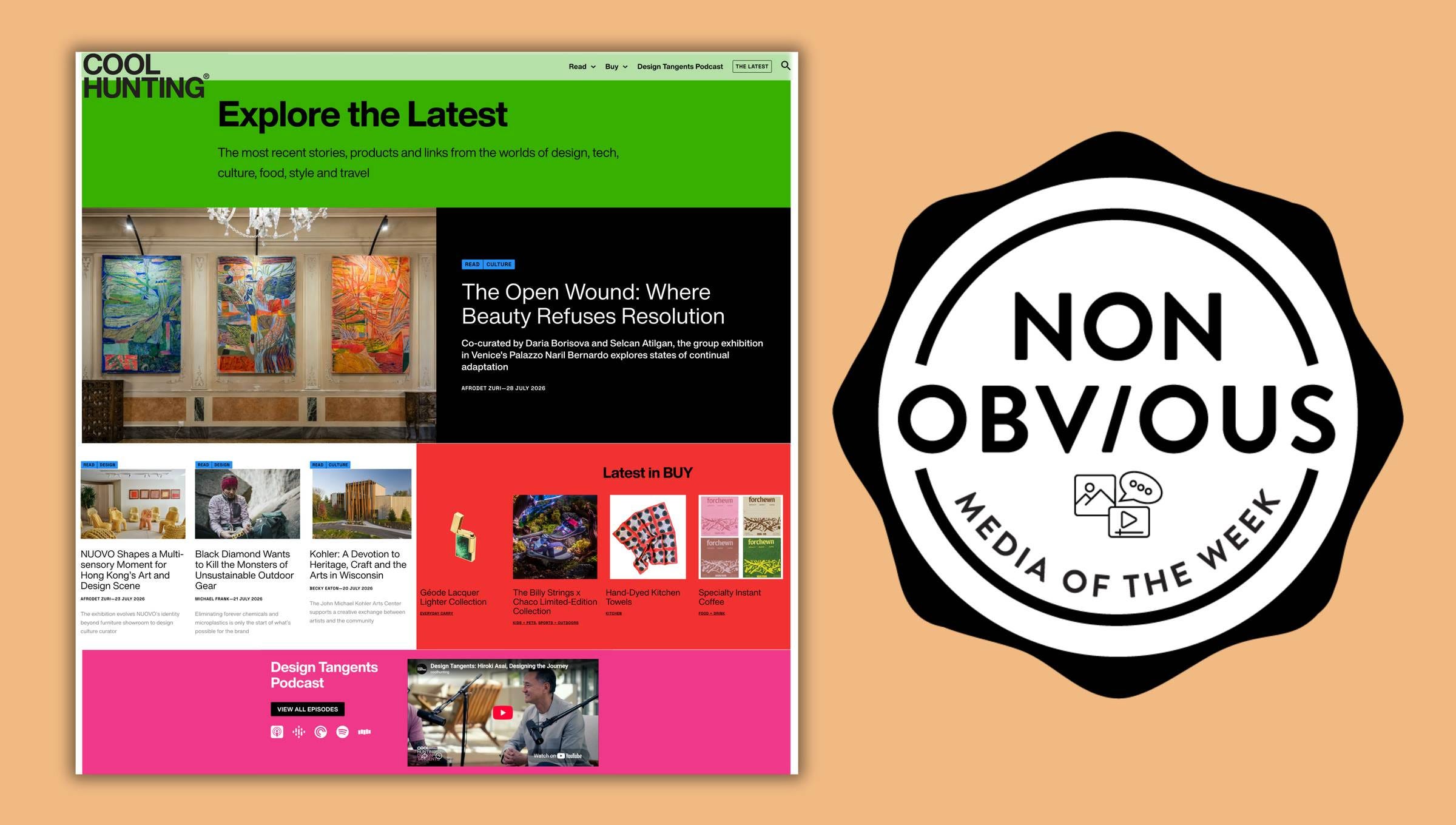
COOL HUNTING® is an award-winning media platform and creative studio powered by curiosity and optimism. We inspire thought leaders and change makers who are designing the future through our editorial, insights, product collaborations and in-person experiences.
Luxury handbags, new designer labels and an “Orbit Window Hammock for Cats” that retails for $120 are just a few of the highlights from this week on Cool Hunting. The older and farther away from “cool” I get, this is one of those sites that offers a window into the products, designers and stories that cool people care about. While the site is full of product reviews and links to buy stuff you probably don’t need, the culture section is consistently interesting and worth bookmarking to add to your weekly reading list.
Every week I always curate more stories than I’m able to explore in detail. Instead of skipping those stories, I started to share them in this section so you can skim the headlines and click on any that spark your interest:
Comments
Nothing yet. Say the first thing.
Sign in to join the conversation.