
A hen is not a bird, Bulgaria is not abroad. Russian proverb.
A text message from Ola: “Someone needs to drive an ambulance to Ukraine on Thursday. You available?”
The very next day I am driving. We are part of an international network of goodwill that delivers supplies to Ukraine, where the Russian army deliberately targets civilians, humanitarian convoys, and historic artefacts. The stories I bring back are so savage and so absurd that my Italian or French friends disbelieve.
What logic, in twenty-first-century Europe, tells the attackers to kill, destroy, burn churches and monasteries, and then to boast about it on social media?
I will try to answer. For that, we need to go deep into history.
This is the first part of a series. Earlier: The Small Men. More from wartime Ukraine to come. Subscribe to follow along.
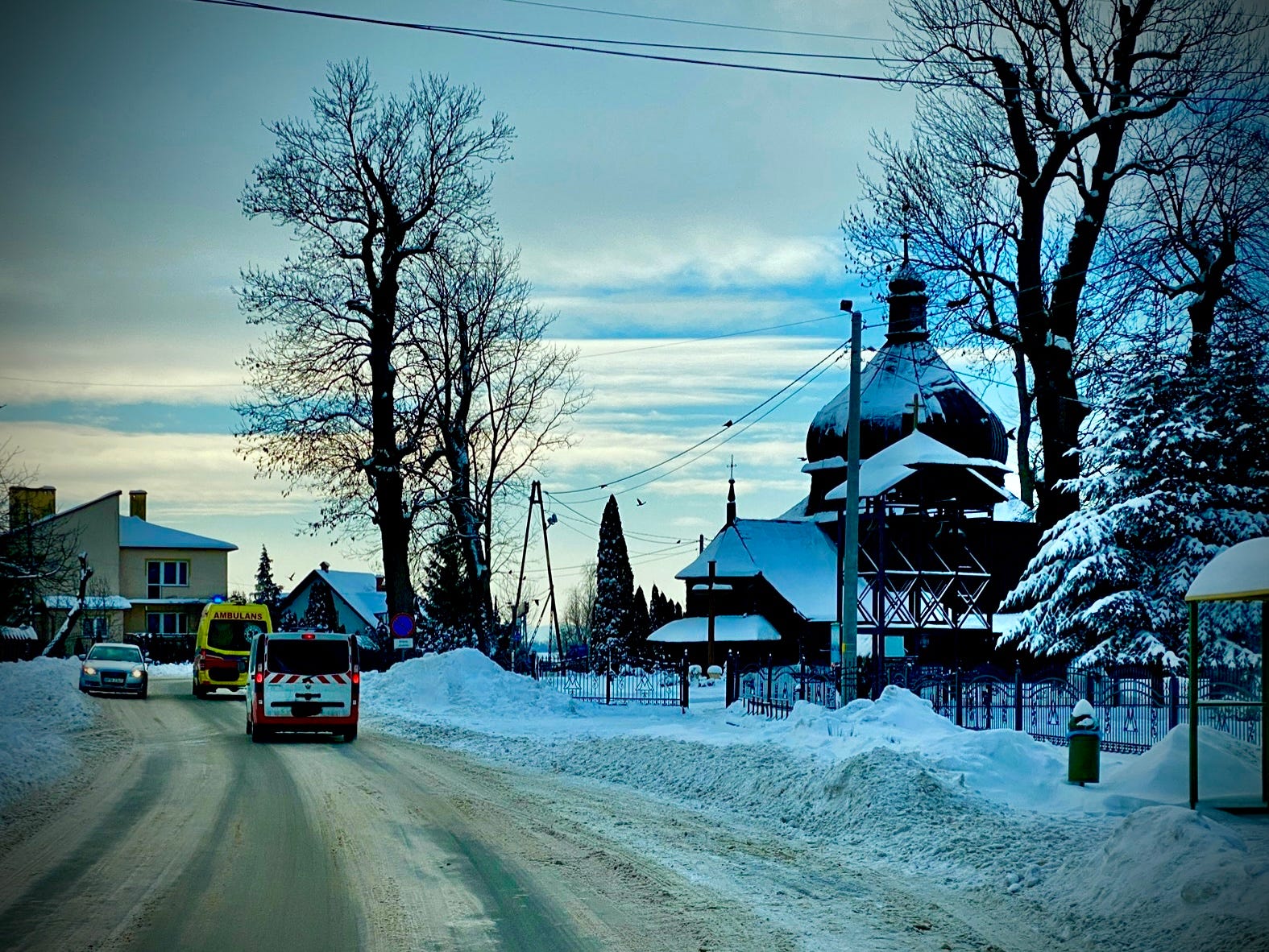
It is a cold February morning. Approaching the Ukrainian border, we pass an Orthodox church. The historical Rus’, known to the Byzantine Greeks as Rossia and in English as Russia, is right here. No, that is not a mistake.
Andy Warhol’s family village is just a bit south of our route. The man who defined twentieth-century American art was a Rusyn from the Carpathians. He grew up speaking Rusyn at home with his parents. The locals find this obvious: “Warhol” means “troublemaker” here.
Where did Russia come from?
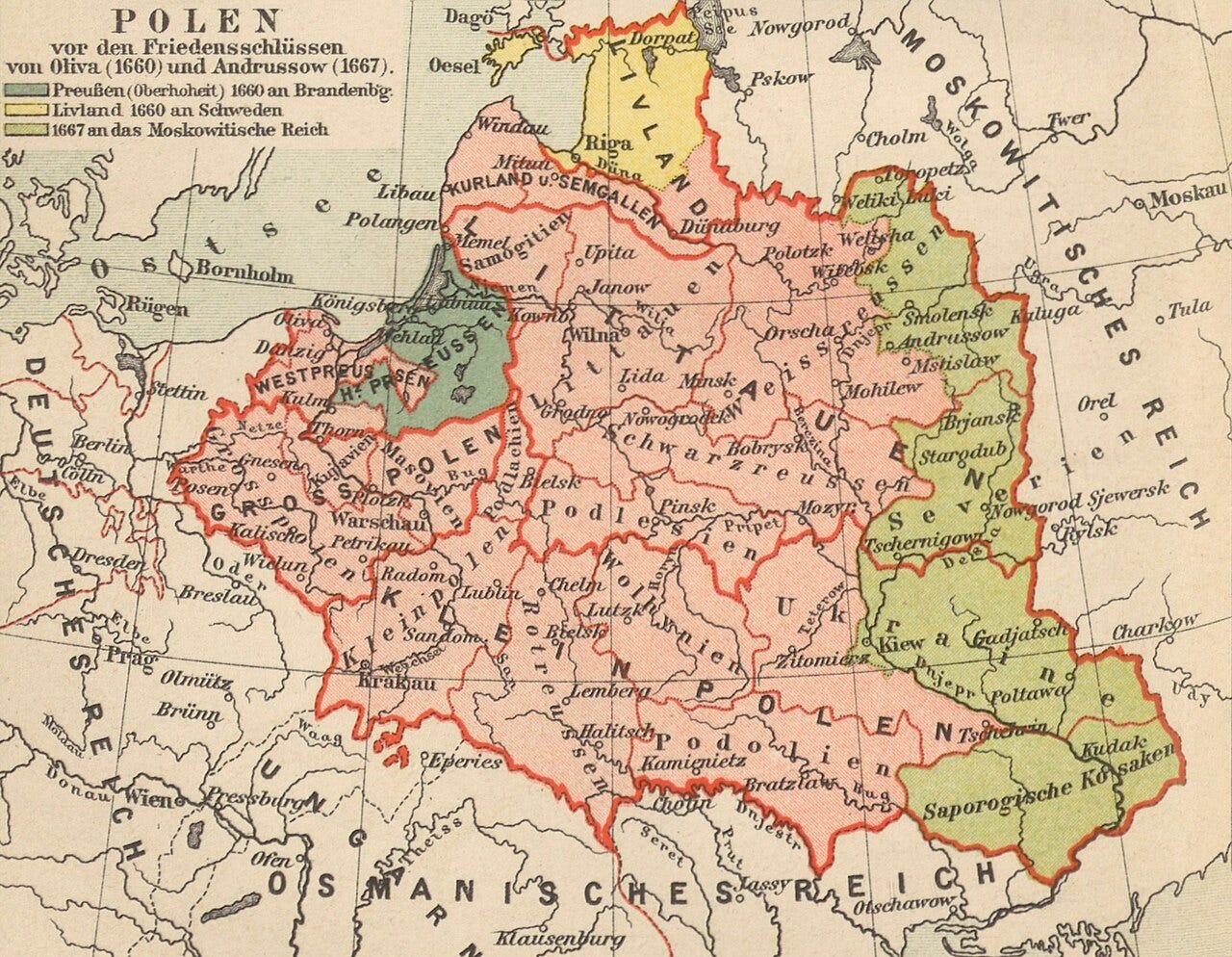
This area, today shared between Poland and Ukraine, is historical Red Rus’ (Ruś Czerwona). North of here lies Black Rus’ (Ruś Czarna), and slightly to the east, White Rus’ (Białoruś, Belarus). That is correct: the historical Rus’ had at least three “colors”.
None of those colors referred to Moscow. Only centuries later, a small wooden log fort would be established on the river Moskva, in a distant northern country of Suzdalia. That’s roughly two months on horseback to the north-east, if you knew how to cross the swamps of Prypiat’.
What did these colors mean? One widely cited explanation points to old nomadic traditions in which colors stood for cardinal directions” black for north, red for south. Why is there Black Sea and the Red Sea? Levantine herders of the eastern Mediterranean roamed between the “black” northern waters and the “red” southern sea. In a similar way, the Polish tribes who called the lands of their eastern neighbors “Ruś”, divided them into Black (north) and Red (south).
A man from these lands was a “Rusin”, “Rusyn” or simply a “Rus”. An old Silesian song speaks about three mysterious travelers from the east: Wędrowali Rusy, trzy szwarni karlusy (there came roaming three handsome Rus’ men). The meaning of the later verses of the song is itself a mystery, a topic for another article.
(A note on spelling: the soft final “s”, conveyed in Polish diacriticals as Ruś; in English is rendered as Rus’ with an apostrophe. Pronounciation is somewhat similar to “sh” in English “rush”)
Where the Warhols came from, the Rusyn identity is something obvious and contemporary: thousands of Slovak highlanders still speak the Rusyn language. Until 1945, Slovakia’s easternmost part was called Podkarpatská Rus. Local names, such as Rusinowa Polana (Rusyn Meadow) in the Polish Tatras, confirm the wide-spread historical presence of Rusyn herders. Belarusians and Ukrainians also called themselves Rusyny until roughly nineteenth century.
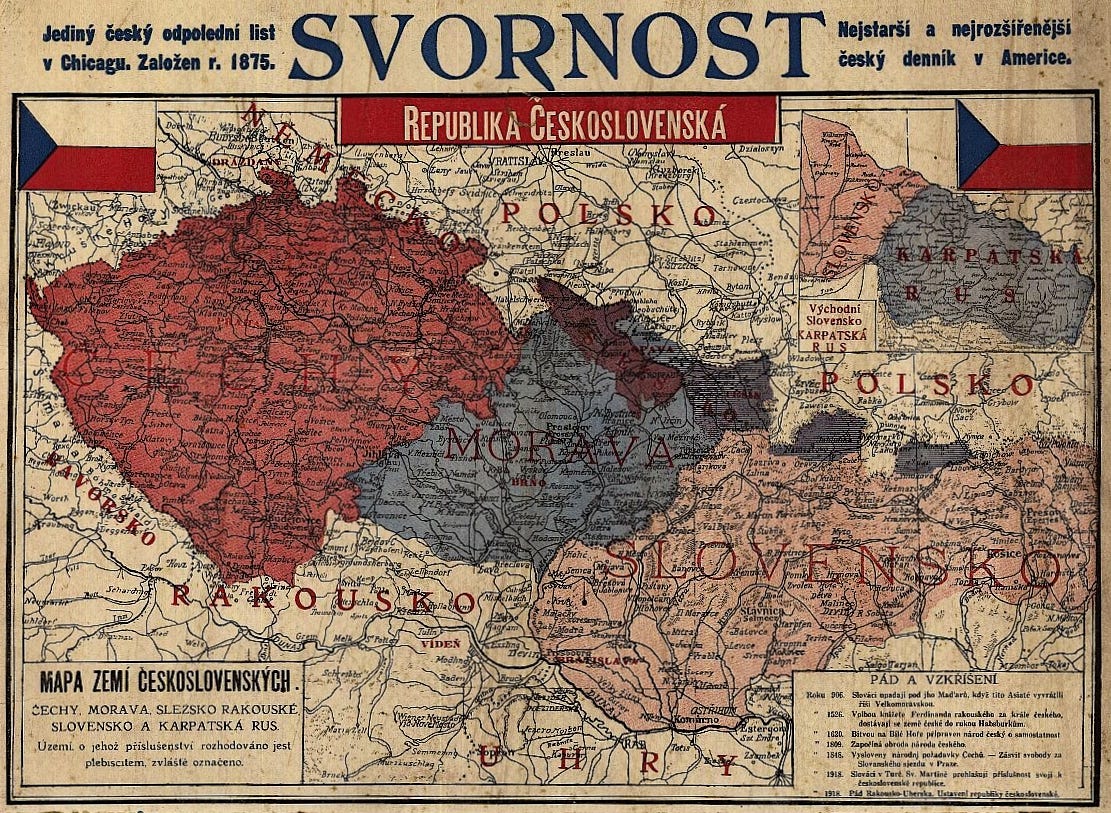
From this perspective, Belarus marks not the western but the north-eastern flank of historical Rus’. The lands east further east were originally not considered Rus’ at all. More on that shortly.
How is Rus’ different from Russia?
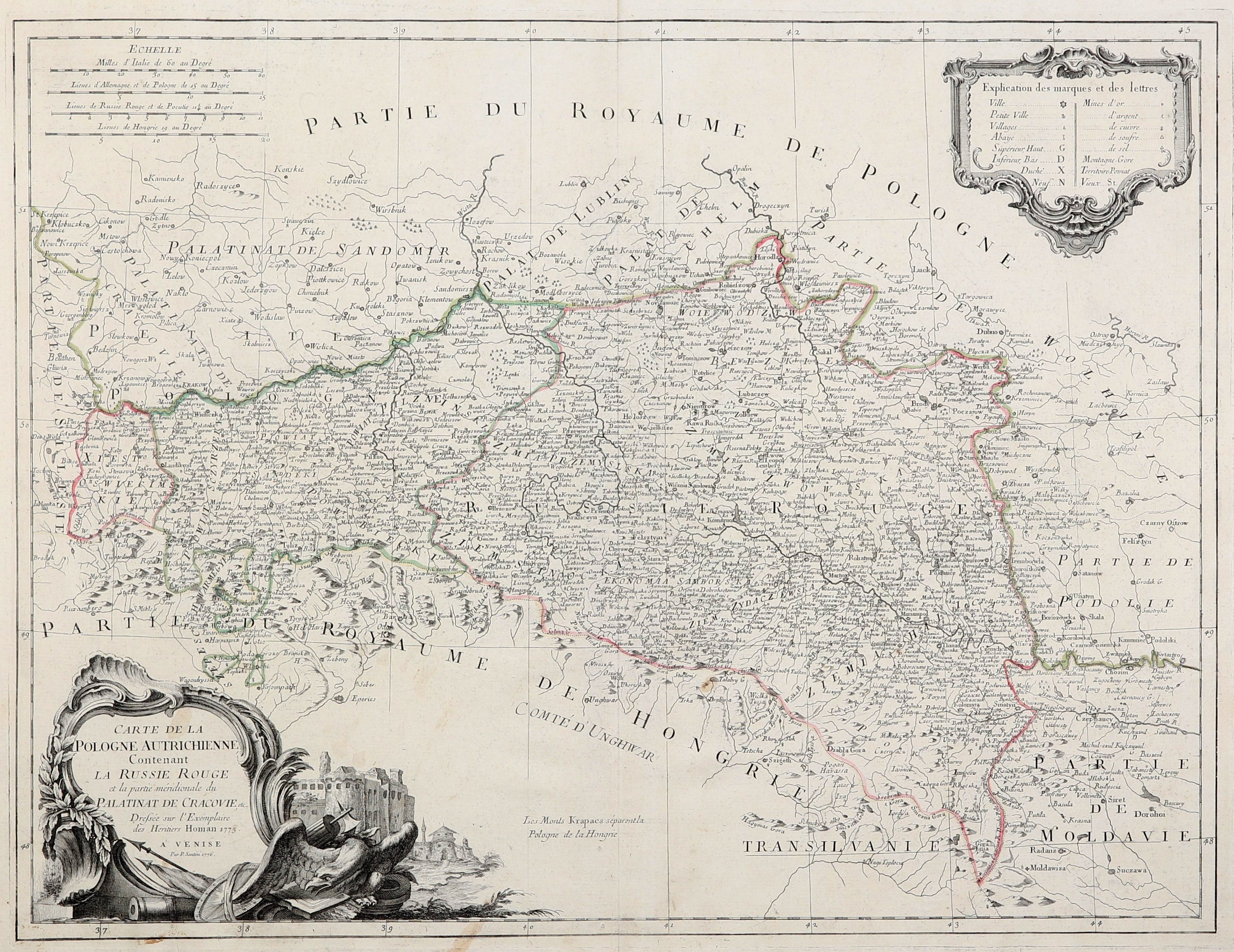
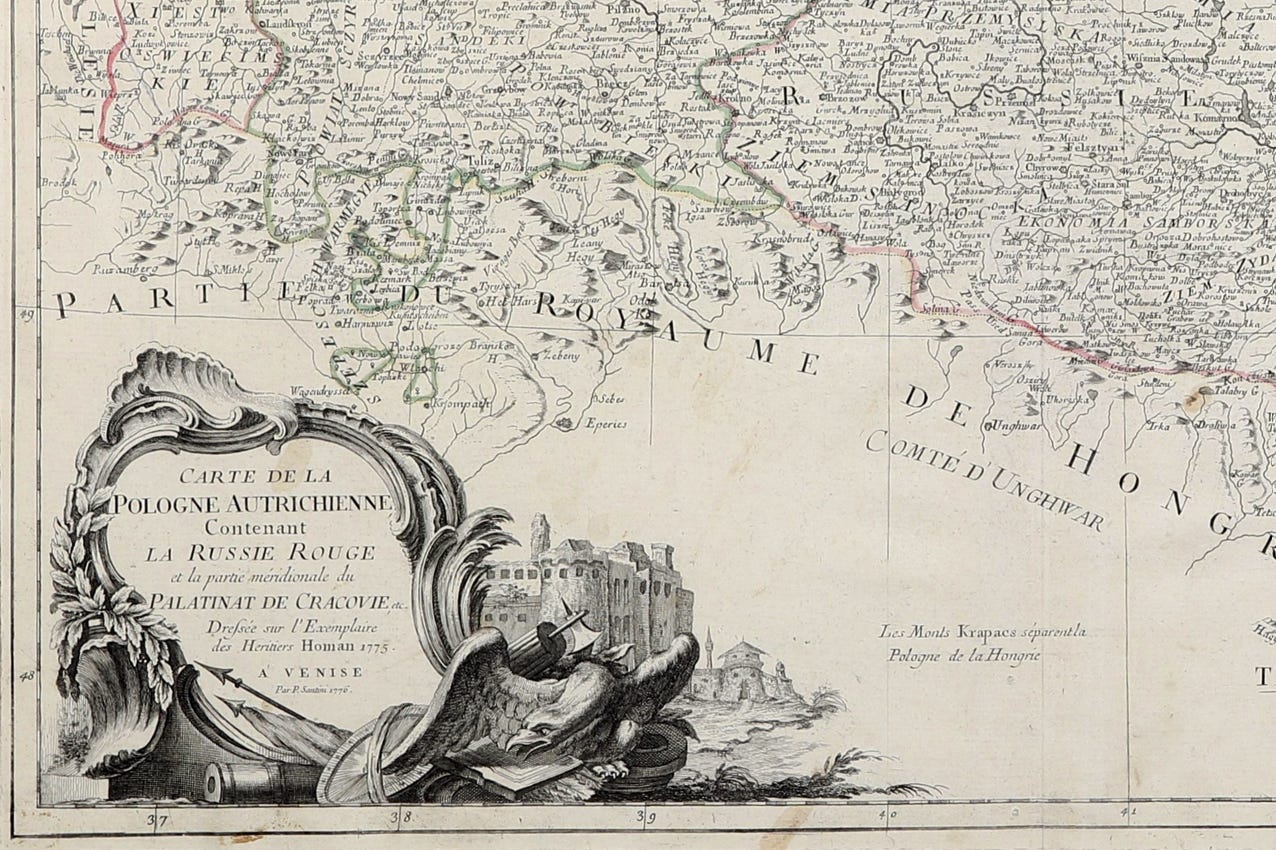
As seen in the maps, the French cartographer of 1775 saw no difference and called the land we drive through “Red Russia”. Notably, the region was under control of Poland and then Austria, but never Moscow. A century later, the German cartographer of 1890 also saw no difference: the map shows Black Russia and White Russia in the very center of Poland, centuries before Moscow invaded the land.
We reach the border at Medyka, near Przemyśl. One of the best examples of state-organized disorganization, both on the Polish and Ukrainian side. The booths have not been renovated for decades, the asphalt has enormous holes. Cars wait for hours, trucks for days.
Finally, we are at the ramp. Custom control takes forever. Export documents are missing details, additional paperwork is needed, the same questions are asked multiple times.
The Ukrainian officer at the very last booth, having scanned the same documents her five colleagues have already checked, looks up and says in broken Polish: czakaj desat hodin (now wait ten hours). Exhausted and frozen, I am ready to believe her. My co-driver, more experienced, asks her gently to confirm. “Did you mean ten minutes?” Yes, she did mean ten minutes.
Ten minutes later we are through. I check the time. It is six in the evening. We are finally heading to the heart of the Rus’ of the chronicles.
Now let us look at the territories further east, to where the center of Rus’ actually was. Where exactly?
This question puzzled me for a long time. In the past, I could not understand how the historical Rus’ people lived right here in Red Rus’, and also in Moscow, two months’ horse ride away. It simply did not make sense. The history lessons at school did not help either. In the 1980s, we were still taught the Soviet version: that Moscow was the “mother of Rus’” from time immemorial; that the Rurik dynasty consolidated the Rus’ nation in the tenth century by uniting the northernmost Rus’ lands with the southern ones near Kyiv. This did not make sense to me either. The two places were really too far apart. Something was wrong.
I found the answer much later, in a 2022 book by Charles J. Halperin, the American medievalist.
Halperin’s The Rise and Demise of the Myth of the Rus’ Land (Arc Humanities Press, 2022) shows that in the Middle Ages, the Rus’ Land (russkaia zemlia) was never a national or ethnic term. It was a political and dynastic myth.
Geographically, the original Rus’ was small and southern: the triangle bounded by Kiev, Chernihiv, and Pereiaslav, all three in today’s Ukraine. The medieval Tale of Bygone Years defines it precisely that way.
The continuous “Russian Land” stretching from Kiev to Moscow is nineteenth-century fiction. Twelfth-century chroniclers record princes from the north, from Novgorod or Vladimir-Suzdal’ (roughly near today’s Moscow), as “traveling to the Rus”, meaning south, to Kiev.
The northern territories, including Moscow, were not Rus’. The evidence is direct and overwhelming. Some of those documents survived in both thirteenth and fifteenth-century copies. The later copy, if written in Moscow, has the old local name erased and replaced by “Rus”. Halperin reads this as documentary evidence of Muscovite forgery.
In the earliest Life of Aleksandr Nevskii includes the line “the sun has set in the Suzdalian Land.” But in a later copy, the text changed to “Rus’ Land”.
From 1264 to 1471, Novgorod’s treaties with the grand princes of Vladimir based in Tver’ or Moscow, systematically describe their territory as “the Suzdalian Land”. Only in the Muscovite version of the latest treaty (1471) the “Suzdalian Land” become “Rus’ Land”, at the very moment Muscovy is annexing Novgorod (in one of the bloodiest and darkest victories of Moscow’s history).
In 1471, when Muscovy annexed Novgorod, the treaty was secretly rewritten. ‘Suzdalian Land’ became ‘Rus’ Land’.
According to Halperin, the date 1293 is also remarkable. That’s the first recorded moment when the Laurentian Chronicle, talking of Suzdal suddenly uses the name Rus’. Halperin sees this as deliberate political manoeuvre: this unexpected naming comes out of nowhere, in a way inconsistent with all previous mentions that placed Rus’ far south. It cannot be explained by any factual event such as, for instance, migration of southern people to these terrains.
The forgery has a date: 1293.
Halperin is emphatic that this was elite usage, a deliberate ideological project by Moscow’s princes and book-men. There is no evidence that ordinary people in the northern territories ever thought of themselves as “Rus’”. There is an absence of a single passage in any folkloric or oral source from Muscovite culture that uses the term. That projection is the work of nineteenth-century Imperial Russian historiography.
Ordinary people did come to call themselves Rusyn, but later (from roughly the 16th century) and elsewhere: in Belarus, Ukraine, and the Carpathians, never in Moscow.
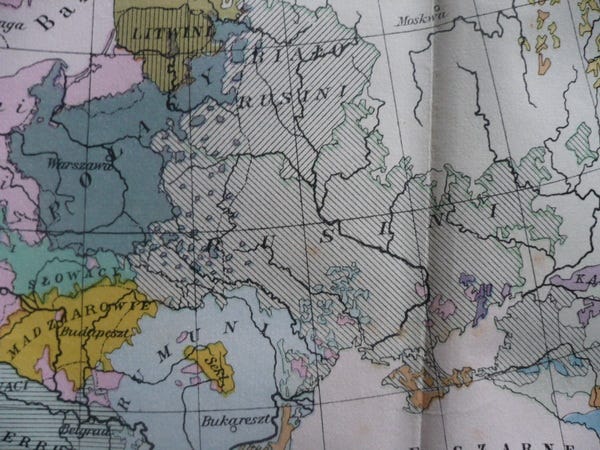
For most of the period in which Moscow was inventing its claim to be Rus’, the actual political heart of the Rus’ world was elsewhere. After Kyiv fell to the Mongols, the “Grand Duchy of Lithuania, Rus’, and Samogitia” came to these terrains, much later united with Poland. Its dominant religion was Orthodox Christianity. Its chancery language was ruski, written in Cyrillic, the ancestor of modern Belarusian and Ukrainian (in English literature known as Ruthenian). Its laws, its courts, and its diplomatic correspondence were conducted in this language until 1696. Importantly, this old ruski was not the ancestor of the Muscovite dialect, which already in the middle ages developed separately. Later, Russian imperial linguistics tried to claim Ukrainian and Belarusian as offshoots of Russian; this is genealogically quite wrong. Russian is not the parent of Ukrainian and Belarusian.
Moscow, with its claim to be Rus’, remained culturally and politically outside of it, for most of history.
Behind the border, before continuing to Lviv and Kyiv, we stop to refuel. It takes one minute, during which my hands freeze. I cannot imagine how people survive these temperatures longer.
Yet they do. Today, thousands of inhabitants of Kyiv freeze at minus twenty outside, and minus fifteen inside their flats. Heating and electricity have been out for weeks; the power grid has been systematically destroyed by the enemy. The young ones will shrug, survive, and simply hate the Russians more. The old ones will die, unable to either flush the frozen toilet or walk down on the staircase covered in ice.
If Kyiv is the foundational place of Rus’, and the bombs are Russian - what is going on here?
The Moscow scribe who forged the books did so on purpose. The fabricated myth of Moscow as the Mother of Rus’ served to justify the planned invasion on the Slavic lands.
Adopting the names of foreign, subjugated territories was historically not unusual. The best example is Prussia, which came into being by the genocidal killing of the Old Prussian tribe in the late Middle Ages; then adopting their name. Something similar happened later in the Americas, where after independence the new state of Mexico adopted the name and the eagle emblem of the Aztec civilization that their Spanish ancestors had destroyed.
By the same logic, in 1721, after Moscow had terrorized and subjugated much of the Slavic east, Peter I rebranded the country as the Russian Empire (Rossiyskaya Imperiya). The neologism was built on the Byzantine Greek word Rossia, meaning quite simply Rus’.
In this way, Moscow became Russia, stealing the identity of its slaves.
The colonial intentions were never hidden.
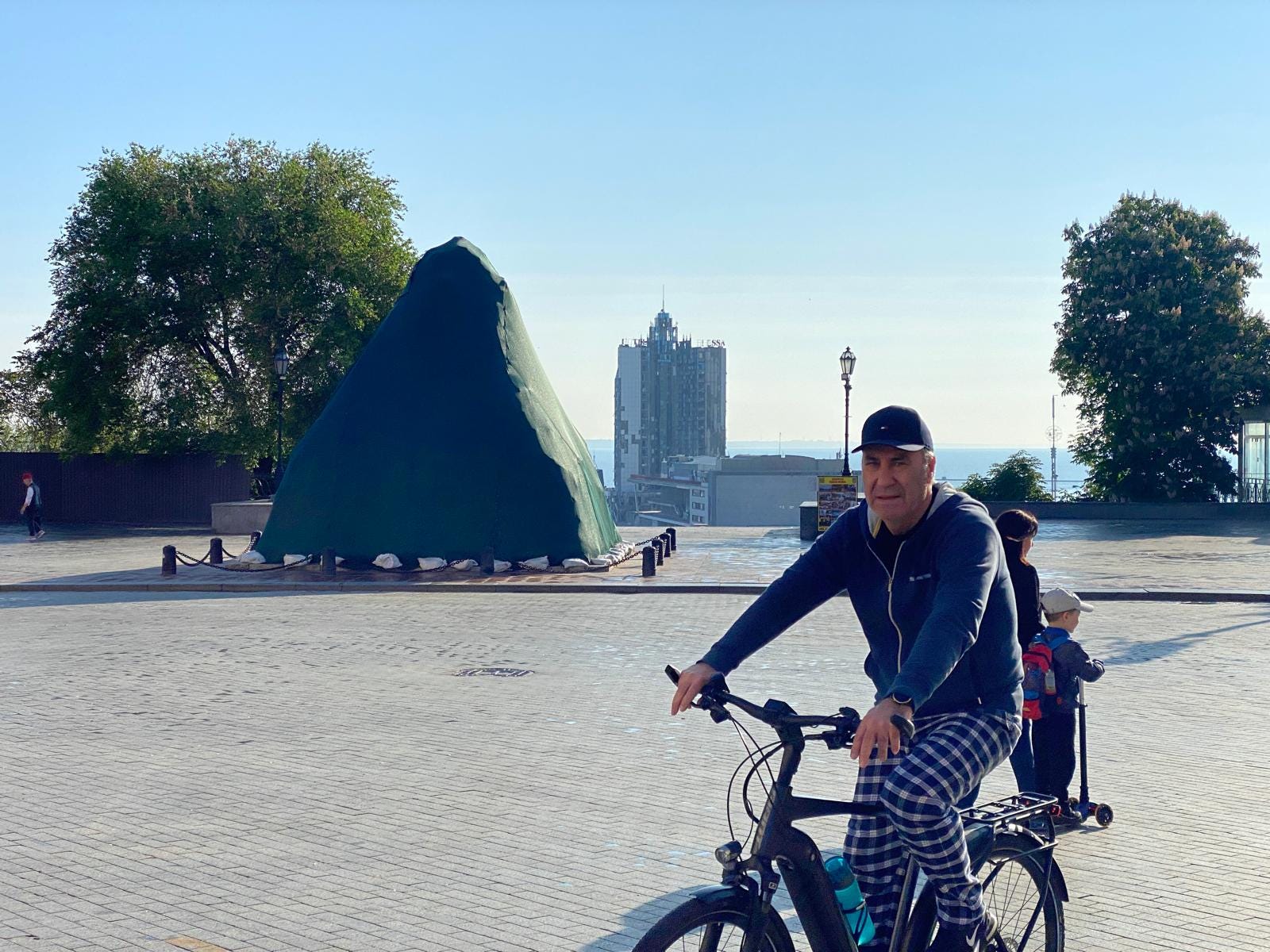
In Odessa, Ukraine (where I am writing this story), walking to the Potemkin Steps, we pass a large object covered in canvas: the monument to the Duke of Richelieu, wrapped against Russian shelling. Armand-Emmanuel du Plessis de Richelieu, Odessa’s most celebrated 18-century governor, worked for tsarist Office of Colonization of New Russia (Novorossiya). The rest of Ukraine was relabelled Malorossiya (Little Russia), and Poland rebranded as Privislyanskiy Krai, “the land near the Vistula”. To erase a nation, first erase its name.
In the evening our convoy arrives in Lviv. We park the cars, handing over the keys to the Ukrainian volunteers and soldiers, who take the relay instantly. Then we walk to the center to enjoy the time off.
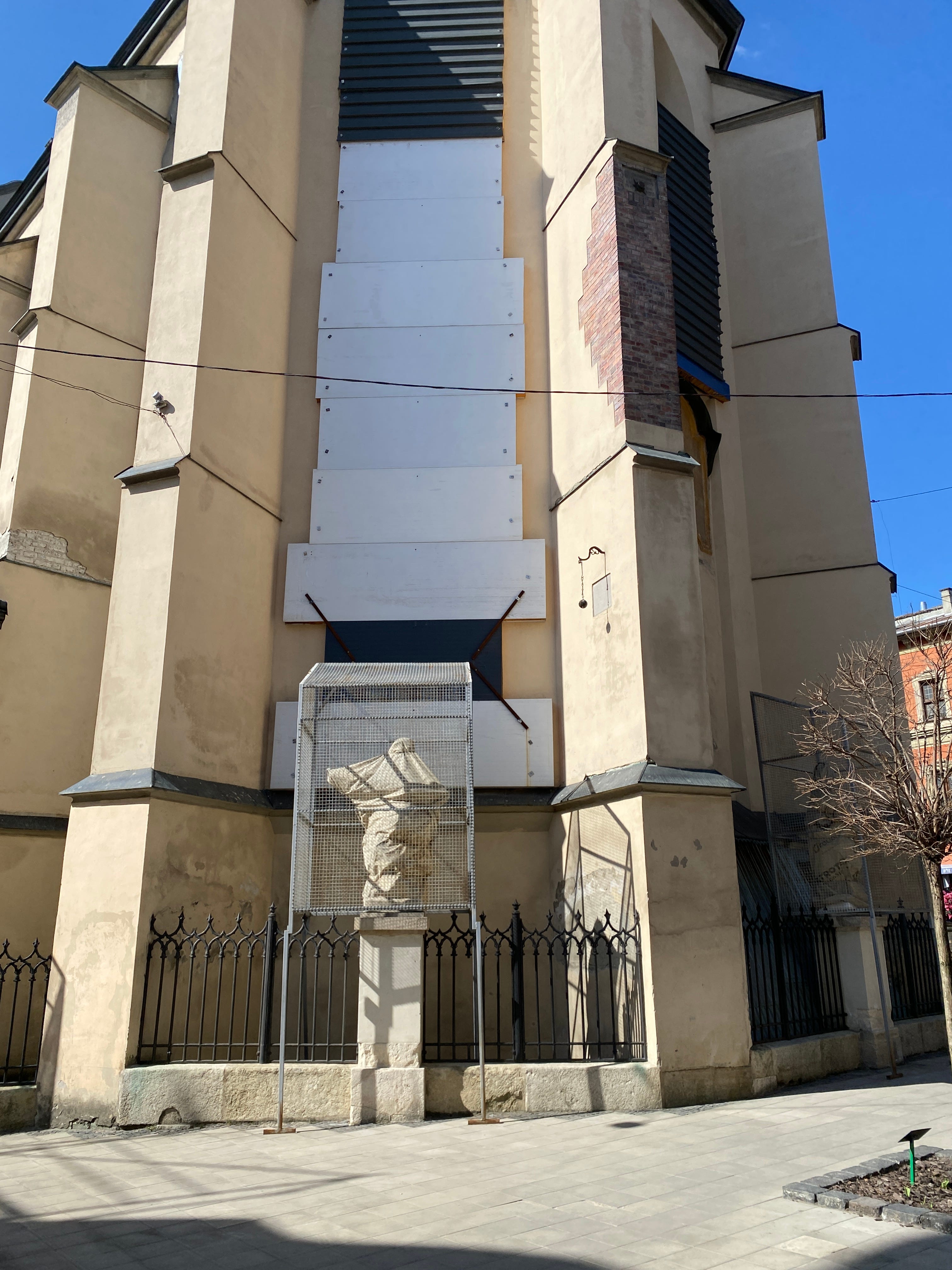
Those of us who are here for the first time are surprised by how the drone defense is built. The nets and scaffoldings cover primarily the historical artifacts, the churches and the statues. These things are being targeted by the enemy with particular care.
If any of us was in disbelief, we got our proof the very next day.
The next morning, an enormous detonation is heard across the historic center. Soon, the roof of a building inside the historic Bernardine monastery complex is on fire.
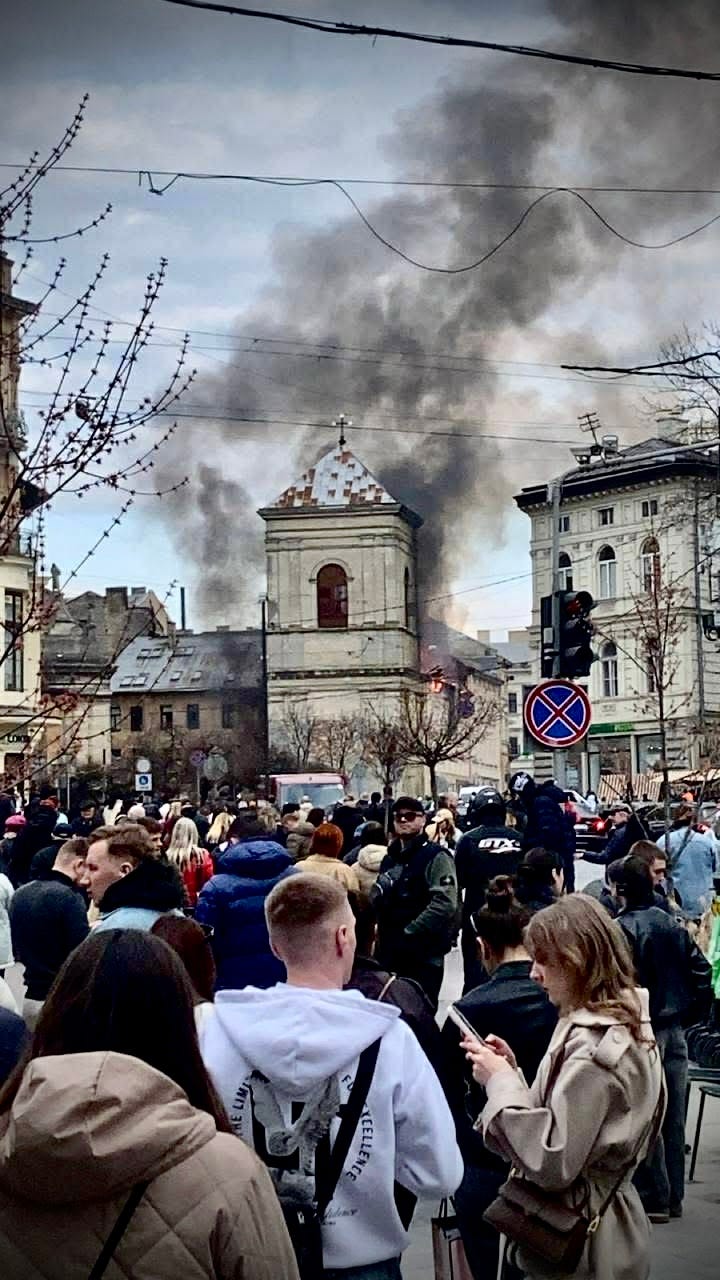
The targeting and destruction of historical artifacts is not a mistake.
Today, Moscow has a problem. It claims to be Russia, but all the original Russian lands and peoples remain outside its borders. The descendants of the ancient Rus’ are in today’s Ukraine, Belarus, and parts of Lithuania, Poland, and Slovakia. The one country missing from that list is, ironically, Russia.
This is what makes Moscow’s case different from Prussia and Mexico. Prussians could get away with the name stealing, because the Old Prussians were gone. Mexico’s case, instead, was somehow justified, as the native blood blended with the Spanish. But today’s Russia is not only disconnected culturally and ethnically from the historical Rus’. It is much worse: the erasure did not work. The old Rusyns remain alive, speaking their languages and remembering their own history.
The very existence of Ukraine defies the core myth of the Russian nation as the bearer of the ancient tradition of Rus’. That myth, that seven-hundred-year-old claim that Moscow is Russia, is now shaken.
The bombing of the Bernardine monastery is not an incident. It is logical.
Moscow, claiming the legacy of Rus’, is schisofrenically determined to erase the historical traces of the real Rus’: the monuments, monasteries, churches, books, manuscripts - until only its version of the history remains.
On 20 June 2025, at the St. Petersburg International Economic Forum, Putin said:
“I have said many times that I consider the Russian and Ukrainian peoples to be one people. In this sense, all of Ukraine is ours. We have an old rule. Wherever a Russian soldier sets foot is ours.”
Those who think Putin is mad are making a serious mistake. The man simply inherited the project that began in 1293: probably the longest forgery in modern history. Putin’s words reflect views commonly shared in the Russian society, from the ruling elite down to the opposition and the dissidents.
Fyodor Dostoevsky (1821-1881), the monumental Russian novelist, declared in A Writer’s Diary:
“Constantinople must be ours, conquered by us Russians, from the Turks, and remain ours forever. She must belong to us alone.”
Aleksandr Solzhenitsyn (1918-2008), Nobel laureate and dissident hero, wrote in 1990 that an independent Ukraine would be a “cruel partition” coming “from the darkening of minds brought on by the communist years.”
Alexei Navalny, presented by the Western media as a democrat killed by Putin, called Georgians “rodents” (2008) the people from the Caucasus “cockroaches” (2007), and the Ukrainian control of Crimea “insulting to any normal resident of the Russian Federation.”
Mikhail Gorbachev, beloved by the Western press, opposed Ukrainian independence in 1991, endorsed the annexation of Crimea in 2014, and was silent on the full invasion in 2022.
The Russian proverb at the top of this piece says it succintly: Kuritsa ne ptica, Bolgarya ne zagranitsa (a hen is not a bird, Bulgaria is not abroad).
A counter-imperialist tradition does exist in Russian intellectual life, though it is much thinner. Tolstoy condemned the Caucasus wars. Sakharov defended Ukrainian sovereignty. Anna Politkovskaya was murdered for reporting on Chechnya. Boris Nemtsov was shot dead in sight of the Kremlin. The tradition is marginal, but real.
Also, Russia is not forced to follow the fake “Mother of Rus’” story. There have been writers who proposed an alternative identity.
In his book The Legacy of Genghis Khan (1925), a Russian aristocrat Prince Nikolai Trubetzkoy argued that the Russian state is the heir not of Kyiv but of the Mongol-Tatar empire of Genghis Khan. On pages 162-182, he said:
The notion that the present Russian state is the continuation of Kievan Rus’ is incorrect. The only thing shared by Kievan Rus’ and the Russia is the name. The Mongolian Empire was fused into the Muscovite state, replacing the Mongolian khan with the Orthodox Russian tsar. This ideology placed the tsar, the embodiment of the national will, at the head of the state. From the perspective of Russian ideology, the best political order achievable on earth results when the tsar posesses unlimited power (the quote has been contracted)
The book is worth studying. One thing is striking. The author writes the above not with contempt, but with admiration.
Professor Stefan Hedlund who researched Russia for 40 years, in the book “Russia reverts to Muscovy” warned: if the international community continues to say ‘Russia’, that signals an implicit acceptance of the Russian demand for Ukraine.
In 2024, Kyiv’s Metropolitan Epifaniy said: Muscovy stole our name. This gave them the opportunity to appropriate our history and to rewrite it, inventing the myth of the ‘one great nation’.
In November 2022, Ukraine’s UN ambassador, Serhiy Kyslytsia, endorsed a petition to rename Russia by its historical name: Moscovia. He explained simply:
“By calling Russia Russia, we legitimize its lies and confirm that we agree with its version of history.”
If you read this far, you understand why.
That much to answer the original question atop this story.
In my next stories I will tell you more about my experience in Ukraine. Meanwhile, read my earlier Ukraine stories.
Comments
Nothing yet. Say the first thing.
Sign in to join the conversation.