
“Blue Zone? Maybe it was, before National Geographic came. Now the damage has been done; there is no going back.”
Getting off the ferry, I’m looking for Leonardo. He said he’d come punctually, “Ikaria time.” I grab a coffee, and indeed, half an hour later, he arrives and we hug. We had met in Italy a year ago and become instant friends. He told me we must meet in Ikaria, the Greek island where people dance. So, a year later, I came, knowing one thing: that we’d dance all night. I did not know about the blue zone curse.
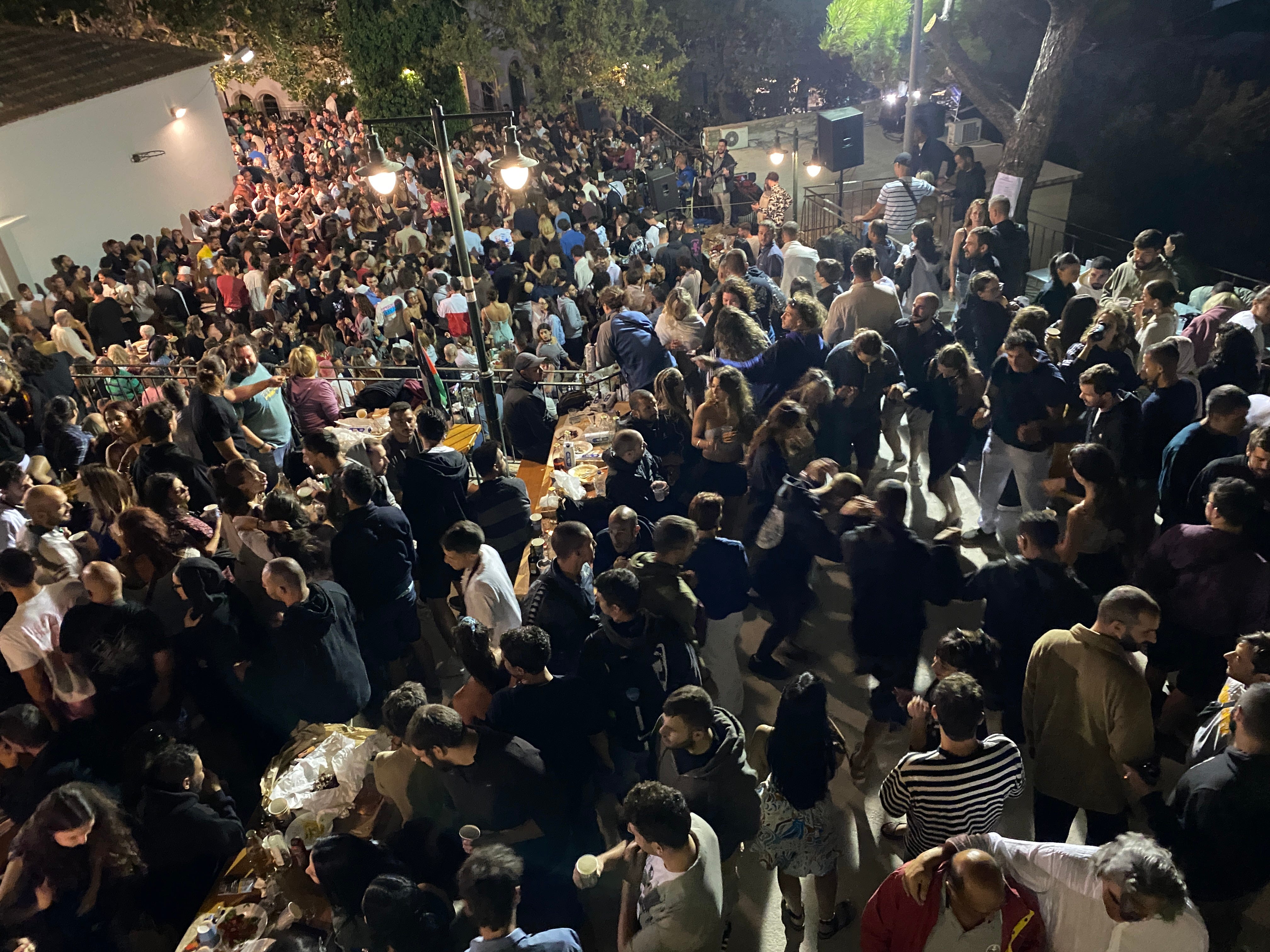
On my second evening, we head for the panigiri (traditional village party) in Vrakades, high in the mountains. We ride a scooter through the night, on a winding mountain road. We are not alone. Many other noisy scooters and cars follow our route. At some point the traffic slows, then stops completely. On tiny Ikaria, I am shocked to experience a traffic jam.
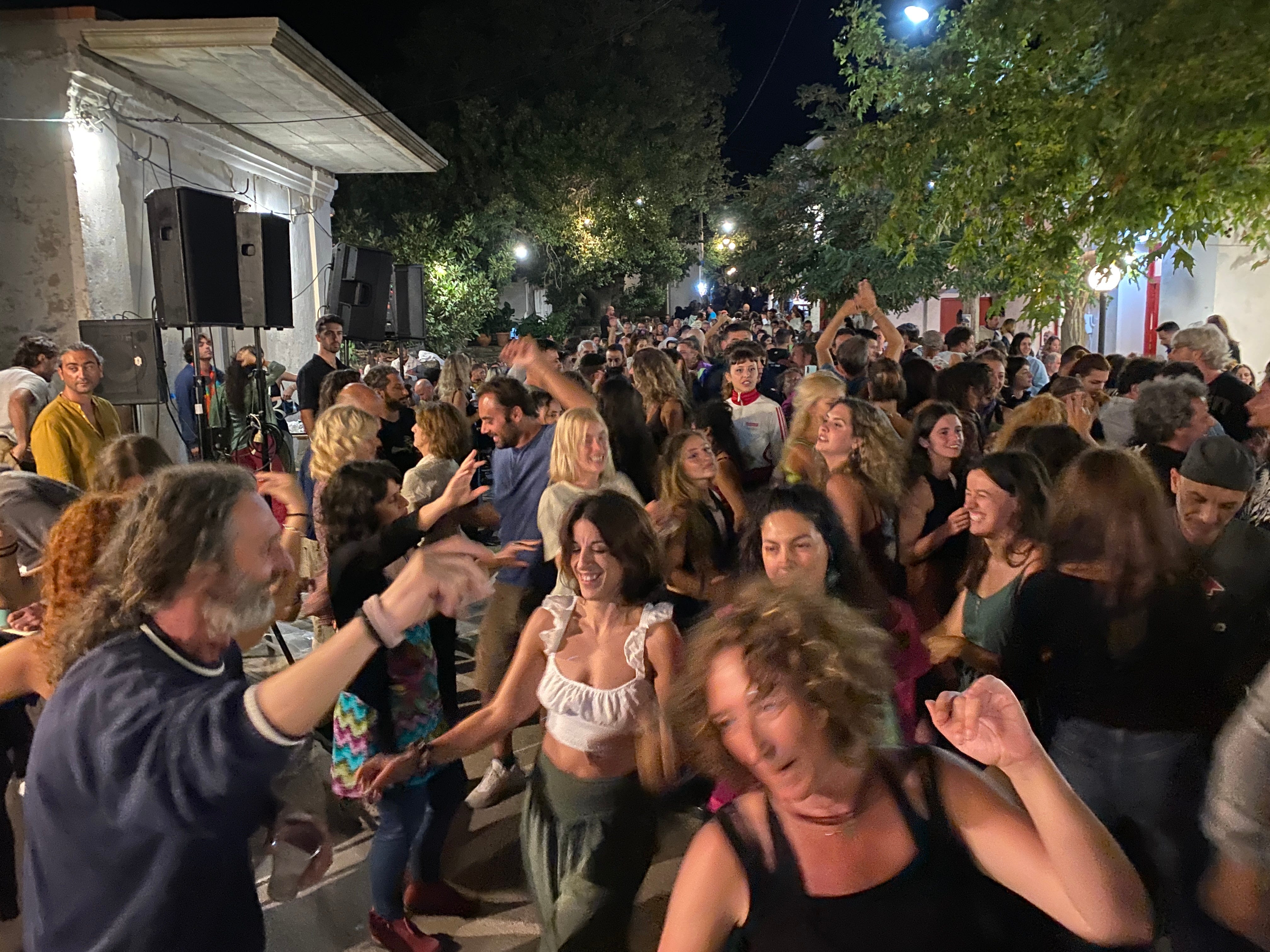
The panigiri is enormous. The tiny village of Vrakades is hosting an event for 3,000 people. We can’t even find a space to park the scooter. Squeezed by the crowd, we follow a wave of people toward the dance floor. Admittedly, the life band is amazing. I join the chain and soon learn the steps. “What are we dancing?” I ask the man next to me. “Ikariotico!” he answers, astonished by the question. He has spotted the newcomer. Well, it’s my first evening. Soon I learn to recognize Ikariotico: special, emotional, haunting.
I speak to people and soon realize that everyone is either from Athens, or from abroad. Over the course of the evening, I don’t meet a single person from Ikaria.
*
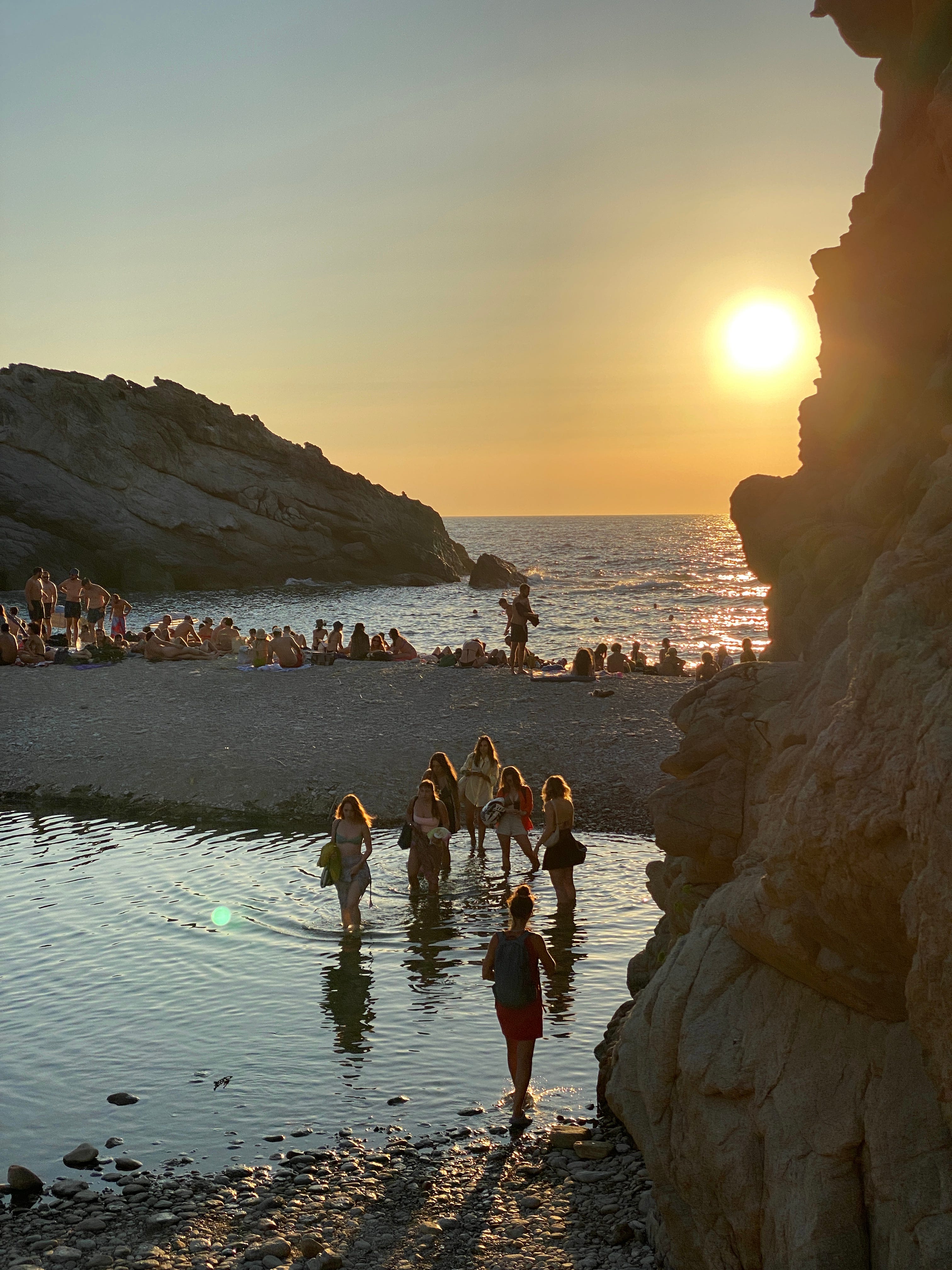
I install myself at the wild camping in the valley of Nas, full of hippies and quite charming. The ruined Temple of Artemis is there. My daily routine starts by climbing three hundred steps up to my favorite coffee spot, Cafe Artemis. There, on my second morning I meet a Swiss woman reading a book. She’s excited.
“The radium therapy: that’s why they live so long!”
The lady keeps pointing her finger at the book, which holds the blue zone secret. I take the booklet, which turns out to be a sales brochure. The essential elements in Ikaria’s therapeutic radioenergic hot mineral springs are radio-energized saline radium and radonium.
What follows is a promotional code for the radium treatment session.
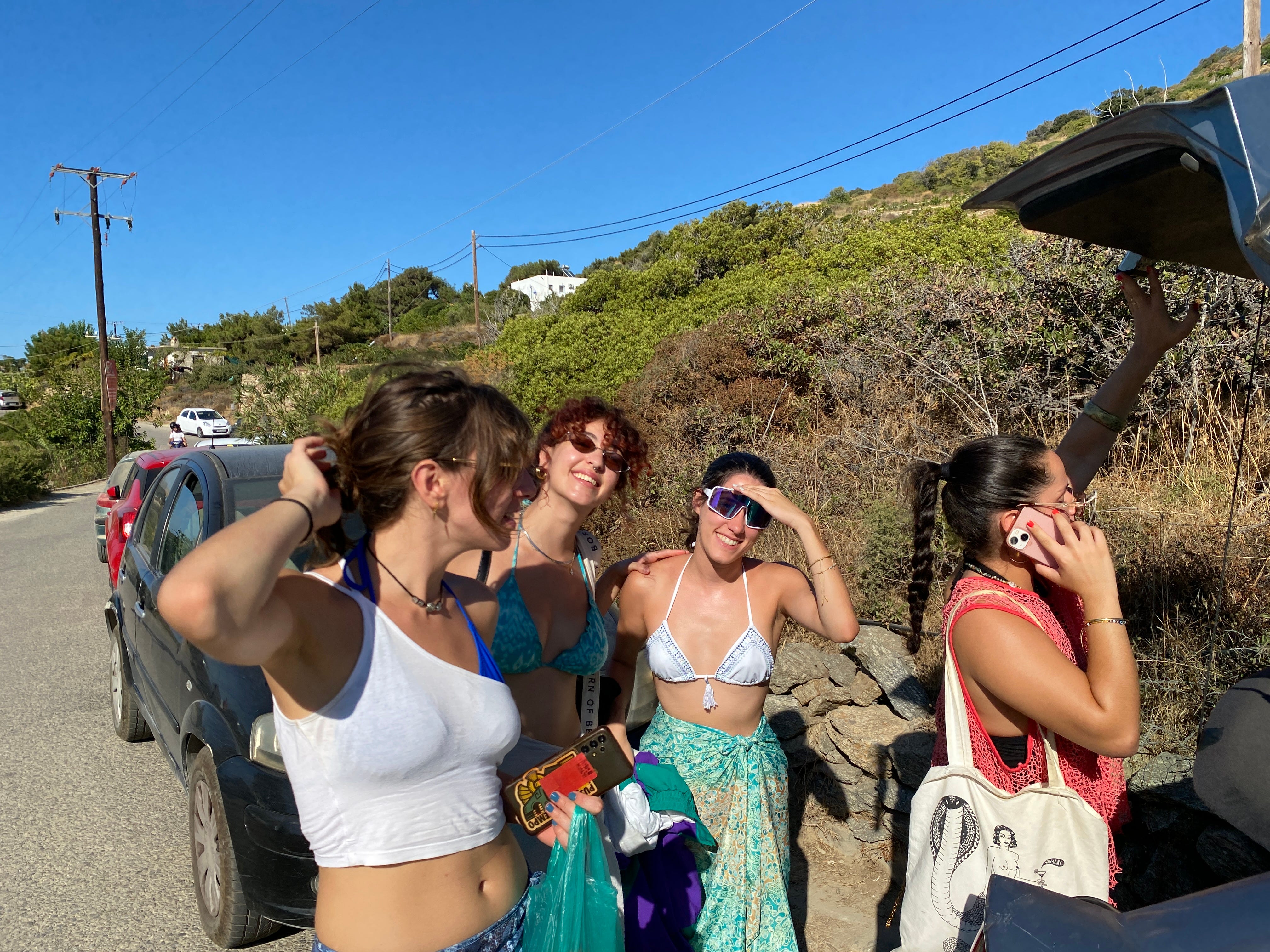
I walk to the next table, where I recognize my campsite neighbors, young alternative backpackers. I catch a fragment of conversation.
Have you ever managed to make a friend call you through manifestation? I mean, I think of someone, I manifest that he should call me, and in no time he calls. Here in Ikaria, such things happen a lot.
The interlocutor nods: Energy vortex. There is strong connection here.
*
Panygiri parties happen often, two or three times per week. They start at 10 pm, but no one comes before midnight.
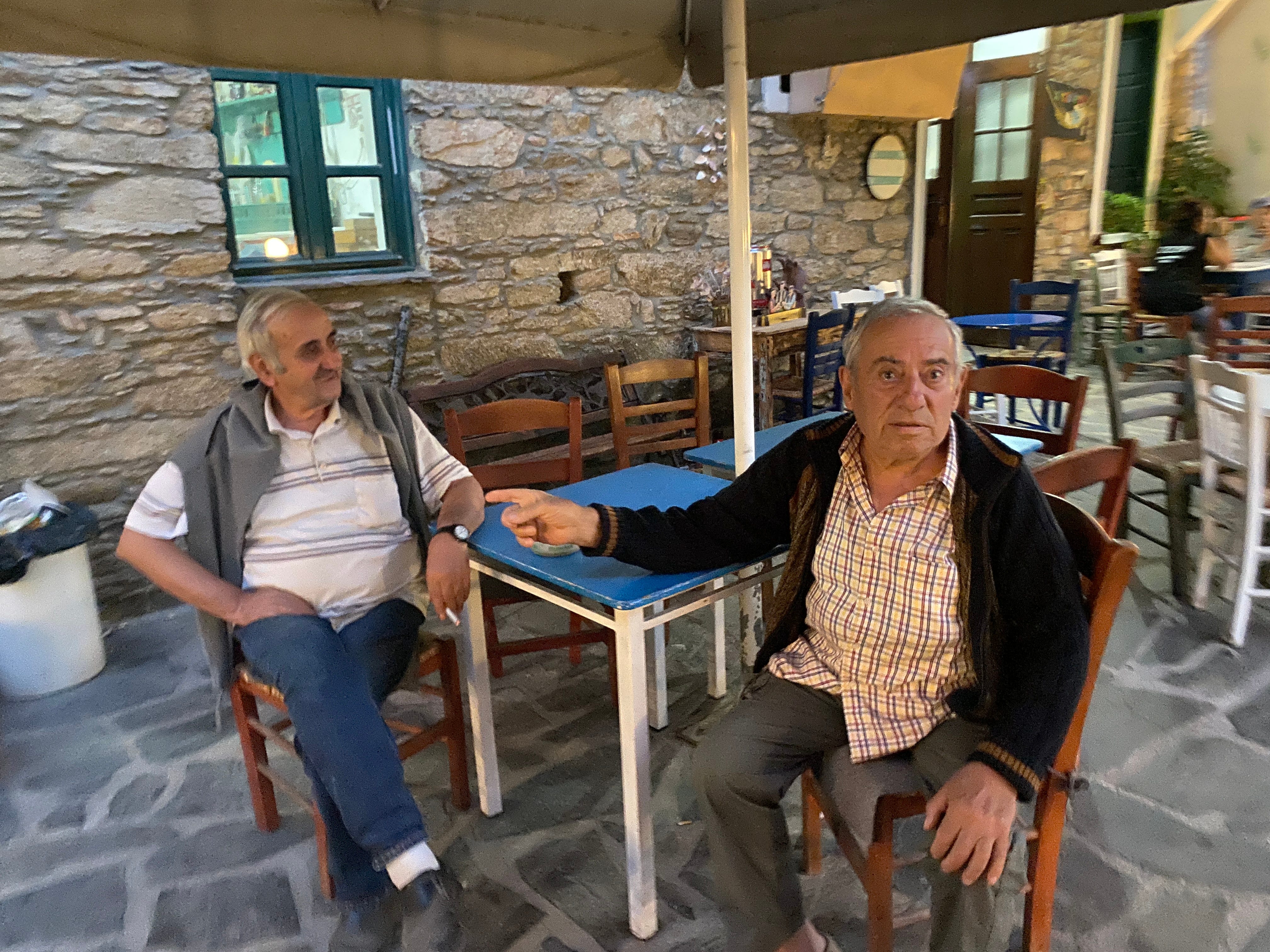
Slowly, I start identifying the locals. They are the odd ones out, sticking out of the elegant crowd. They occupy back tables, relaxed, in their everyday clothes, staying a bit away, dancing rarely but enjoying themselves.
Ilya, whose name is that of Prophet Eliyah, could actually be the prophet, with his beard and forestry outfit, his signature. Luca and his wife, two old gypsies trading baskets and wickerwork. Evangelia, with whom I traded scarfs, but that’s a separate story. Stavros, who gave me a lift.
Hitchhiking in Ikaria is common. People generally still trust and help each other, even in the night. Stavros stop his car when I’m hitchhiking back from the party at 3 am. Talking to him is so interesting that, instead of going to sleep, we end up in a bar. He explains a lot to me. “The Blue Zone? Maybe it was, before National Geographic wrote about us. Now the damage has been done. There is no going back. I wonder what the aging statistics are now. Mind you, on the island there is still only one hospital, and one ambulance.”
“And regarding that original story... some people here say the research method wasn’t top. Where was the data coming from? They may have misread the dates on the church cemetery gravestones. Not very reliable.”
I later checked the origin of the Blue Zone concept.
In 2008, National Geographic published Dan Buettner’s book Blue Zones: Lessons for Living Longer from the People Who’ve Lived the Longest. If that wasn’t enough, in 2012 the New York Times published a viral article, “The Island Where People Forget to Die.” That article was the death sentence to Ikaria. The sudden stream of tourists, all hoping to find the Holy Grail of longevity, was enormous. The island changed rapidly. Rents went up nearly four times in a year. For the locals, the pace of change was too dramatic.
That hospital Stavros mentioned, designed for the tiny population, today serves 30,000 people in the summer.
*
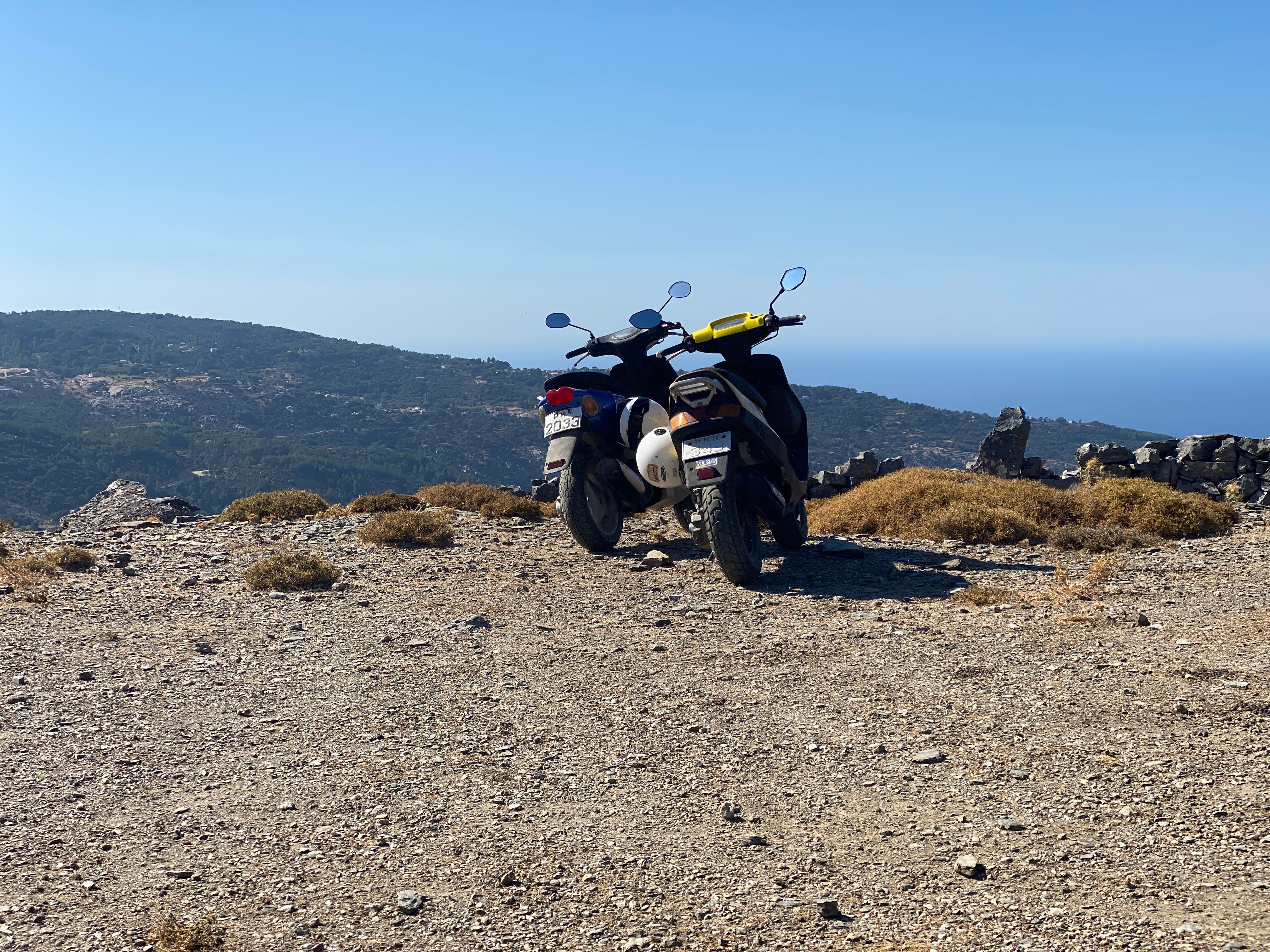
No panigiri this evening. Leonardo and I decide to explore, as far from the crowd as possible. We ride our scooters far up into the mountain. After one hour we end up very high, where it is windy and considerably colder. The road finishes, so we park the scooters and continue on foot. We climb to a lonely medieval watchtower, to catch a view of the neighboring island of Patmos. That is where the aging St John wrote the Apocalypse (Book of Revelation).
In the ruined castle, we unexpectedly find a German family.
“Puoi andare al fine del mondo, e trovi un tedesco con una birra,” says Leonardo philosophically. [Go to the end of the world, and be sure to find there a German with a beer]
*
But Ikaria is special. In the morning, when tourists sleep after the parties, the slow life can still be experienced the Ikarian way.
One day I need to go to the post office in Christos. Knowing it closes at 2:00 pm, I rush and arrive in the village only twenty minutes earlier. I nervously ask the locals sipping coffee on the square for the way, in all languages I know: “Post? Posta? Poste? Post office?”
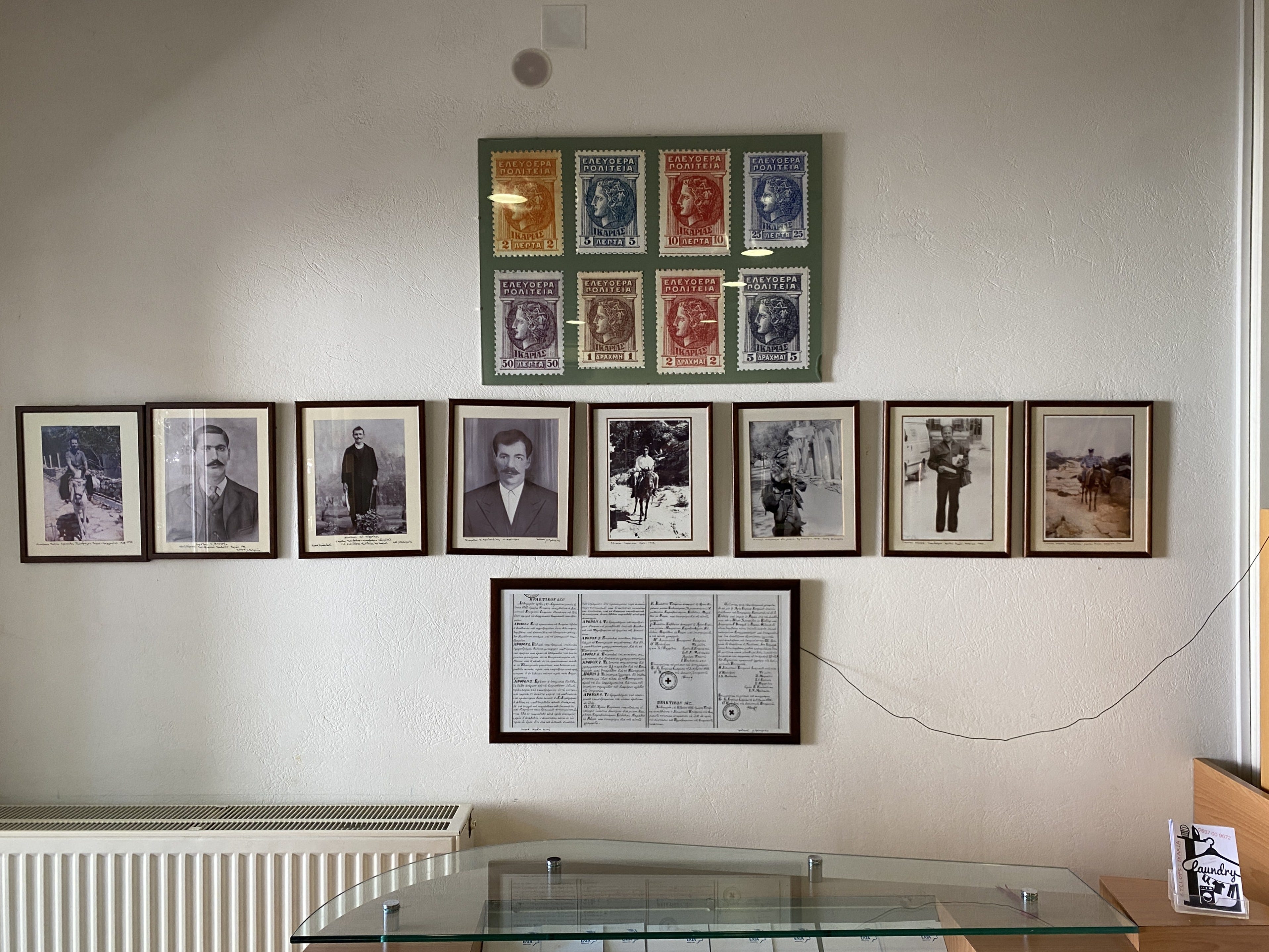
“No speak English,” comes the relaxed answer. I give up, walk on, and quickly find my destination. It is called... Post. I step inside. There are three workers, and two clients before me. One is sending a parcel and the other came to enquire about something. I wait... and wait...
I look on the wall. The pictures show postmen on donkeys. Makes sense.
2:00 pm passes. The parcel is still not sent. Meanwhile new clients arrive. We are now six.
My time comes at 2:20. Without hurry, an envelope is found and my letter sent.
*
In fact, the Blue Zone myth has its positive sides. Villages have learned to live with hordes of blue-zone tourists, and even to benefit from them.
A panigiri is, in fact, a fundraising event, important for the village. They prepare meticulously: each community organizes one such event per year. Then, if everything goes well, they can repair the road or build a school gymnasium.
“When I first came, the roads were only for donkeys. That was 1961. Villages could be reached by sea only,” Theo tells me. He is originally from Germany but now practically Greek. He explains that the roads would not be here if not for the money from the panigiri.
The money from the panigiri, and... the communists.
Ikaria is unusual for yet another reason. During the post-war period of dictatorship, it became the exile island for communists, unwanted by the central government. The communists, forced to live on the poor island, took things into their own hands and improved a lot. They remain positively in people’s memory, and in the voting results: the island remains a communist party stronghold.
*
Irmak, my campsite neighbor, is an artist from Turkey. Turkey, he says, is a depressive society, due to polarization and the economic problems that everyone has. “In Europe, after 10 years here, I am an arts teacher and I lead a good life.” Irmak and I often talk, at the campsite or at the parties.
Ikariotiko is danced in a long chain that spirals toward the center. But no one likes to be at the end. When you’re in the center, know that you’ll soon be pushed outside. Young Athenians dive under your arms, using their elbows to position themselves at the very center. They join the chain right after the leader, disrespectfully forcing everyone out. Immediately, you find yourself out on the periphery. The dance has no shape; you are constantly pushed and squeezed.
Around 2 am I am tired of this and slowly head home. I notice Irmak has just arrived. “You are making a mistake, Pablo,” he says. “Stay. At the beginning of the panigiri there is ego. Then when everyone gets tired, the ego gets dissolved. We all become one. It’s the end of the party when things happen.”
He was right.
*
One day, searching for the real Ikaria, I turn my scooter south. Behind Christos, I enter the forest. Climbing high, I meet fewer people. A forgotten lake. A tiny monastery with very few visitors. I drive far, heading to the village of Langada, in the past famous for being one of the hidden villages: when the Ottoman tax collectors came, they did not know anyone was living there.
I really want to see Langada, expecting a charming, quiet, a bit lost mountain village.
But Langada welcomes me with loud music. On the central square, I find a daytime dance class for foreigners. I don’t stop. I move on, south. I continue, on and on, and finally the landscape changes. Now I am very far from the panigiri zone. Homes are few, small, and modest. No bars. Skeletons of machines, like something out of The Time Machine by H.G. Wells.
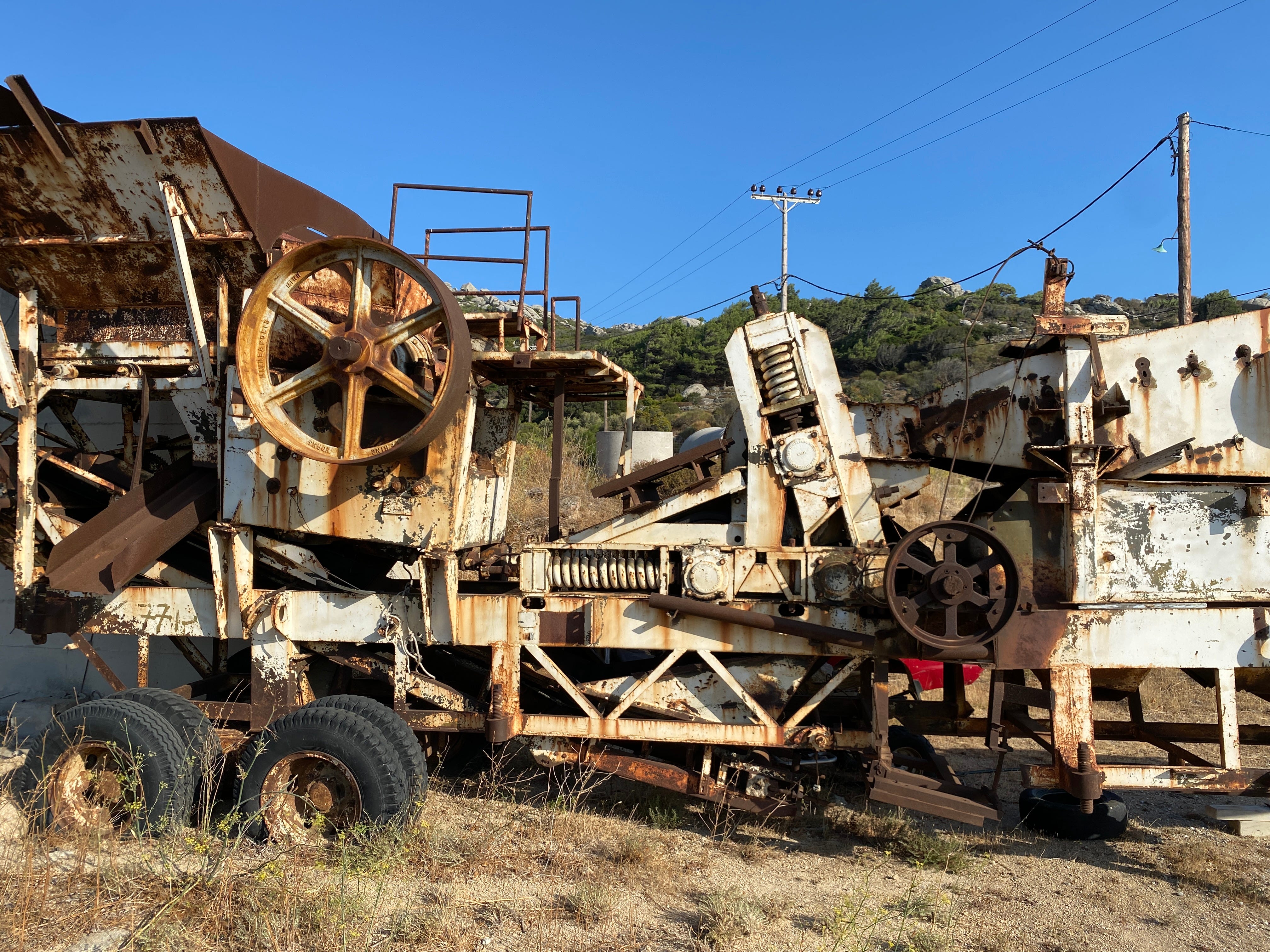
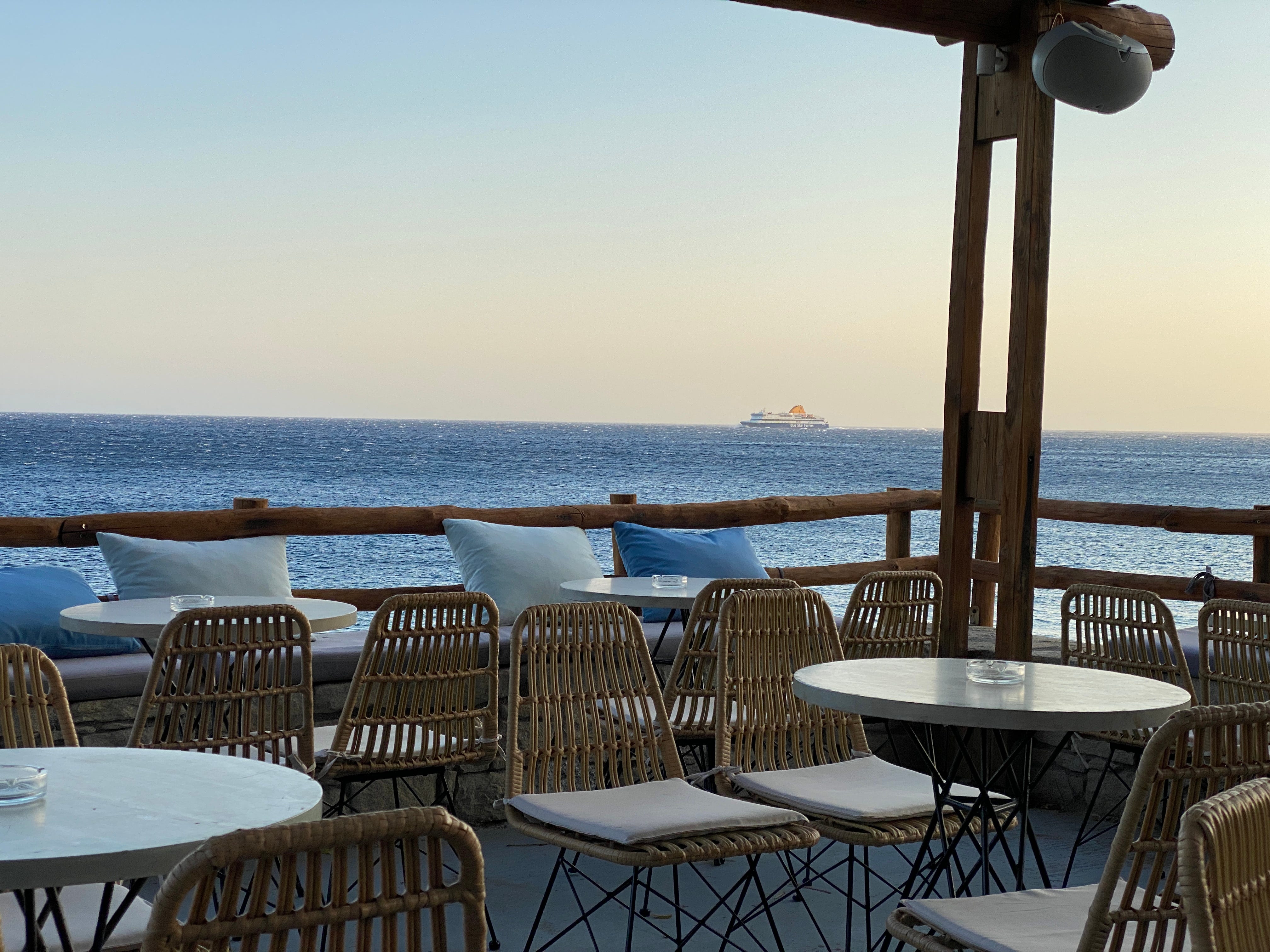
I finally stop in the village of Karkinagri. It’s so empty I feel like I’m in Iceland. I spot a restaurant. I am the only guest. Three young staffers invite me in kindly, recommending octopus. While I wait, I observe the sea. “This boat causes a huge wake,” says Theodoros, the waiter, pointing at an enormous ferry passing in the distance. “Wait ten minutes and you’ll see a spectacular wave breaking near us.”
After twenty minutes, the octopus arrives cold; obviously frozen and microwaved. The wake does not come either. “I don’t know, maybe they changed the schedule,” explains Theodoros. The explanation does not make sense. One thing is certain: I have discovered the true Ikaria.
*
In early September, the island becomes livable. Athenians, Germans, and French leave in large numbers. The valley of Nas, where it was difficult to find a spot for a tent, now invites you to camp under the trees. Leonardo has left for Italy. I will soon follow. But I want to experience one more thing.
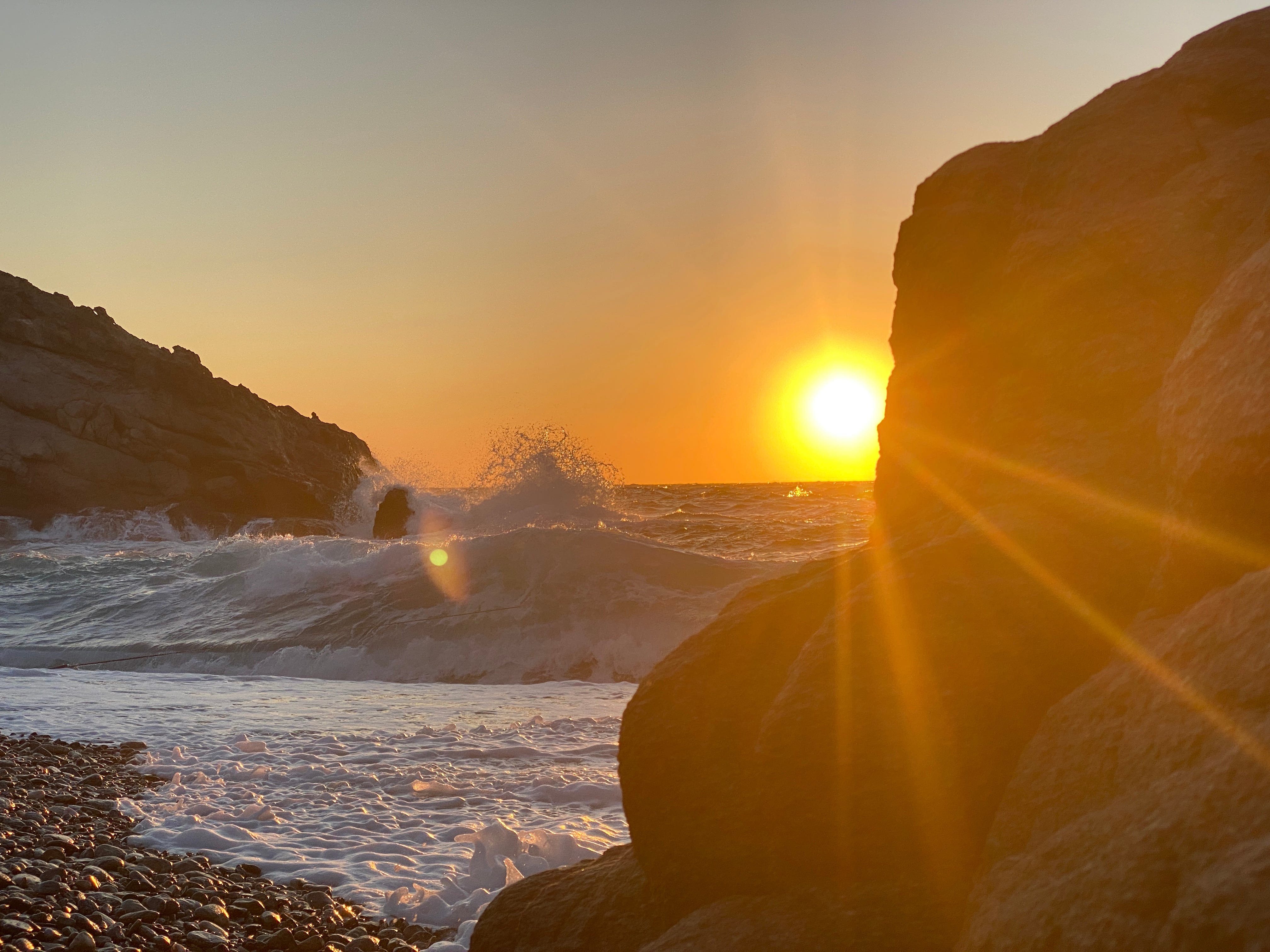
On my last afternoon, a small group of people gather near a small mountain church overlooking the sea. This panigiri, held in daylight, is different: it is an annual family celebration for the memory of their deceased son, who died in an accident. His father built the church for his memory. First comes the mourning. Then the feast begins. For the first time I see the ikariotico danced by Ikarians. I am mesmerized. It’s not what I’ve seen so far. It is a quiet dance, even melancholic. No one is pushing, no one is fighting for the center.
Like Irmak said, the egos are gone.
Below us is the ocean, where another father lost his son.
Ikaria’s name is not incidental: named after Ikarus, who dropped from the sky and died in the waves. The mythical escape of Daedalus and Ikarus from Crete took its tragic ending right here.
Rather than a myth, the panigiri embodies reality.
*
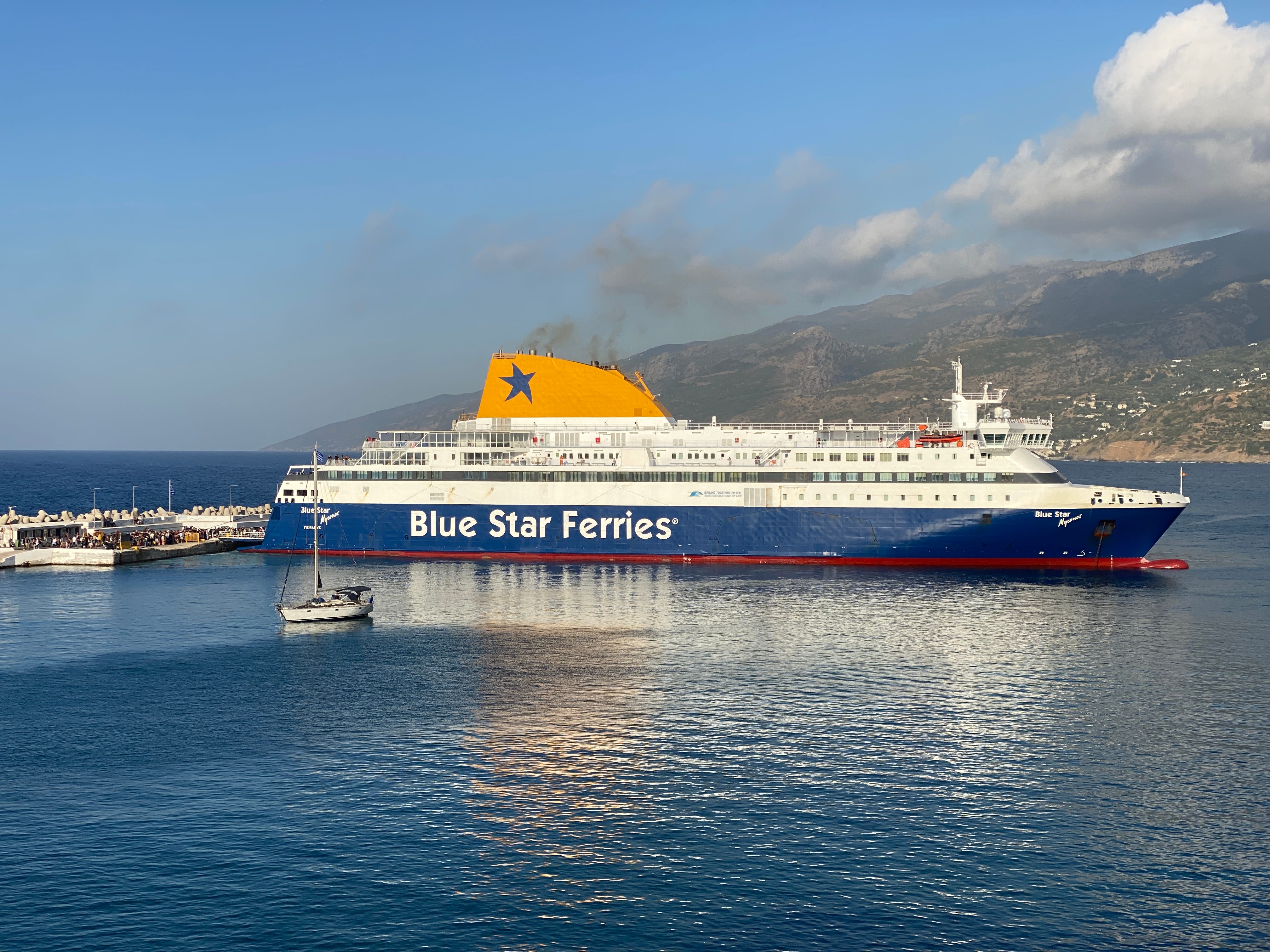
The next day, with full gear on my back, I am hitchhiking back from Armenistis to Evdilos, where the ferry awaits me. A car stops. It is Petros, the carpenter. I ask about his work. Petros smiles and says quietly: “Winter is best. In the summer, too much work. Too many people have summer homes here. They come in spring and always want something. In winter, they all go to Athens. Winter is the best season in Ikaria.”
Pause.
“In fact, winter is the only season in Ikaria.”
We stop talking and let that sentence breathe.
After coming home, I checked the scientific literature for the blue zones. It was not difficult. I found that Saul Justin Newman, the 2024 Ig Nobel Laureate, researched the blue zones and specifically Ikaria, criticizing the original scientific method and the conclusions.
His broader finding was that blue zones correlated not with health but with poor record-keeping. Regarding Ikaria, Newman found that least 72% of Greek centenarians were dead, missing, or essentially pension-fraud cases. His findings are in line with Eurostat data (1990). The Greek region containing Ikaria ranked 109th out of 128 European regions for life expectancy.
If you liked it - share.
PS2. Read more Greek stories here.
Comments
Nothing yet. Say the first thing.
Sign in to join the conversation.