
The most important decisions we make are about how we allocate our attention.
I recently read The World After Capital by Albert Wenger, which explores how major technological innovations have catalyzed humanity’s transition from one historical Age to the next. Humans began as foragers, driven by the need for survival. Over time, we learned to domesticate plants and animals, developed tools, and built irrigation systems. Thus, we entered the Agrarian Age. Food production increased exponentially compared to hunter-gatherer societies, where food had been the key scarcity. In the Agrarian Age, land became the new scarcity. Farmers were constrained not by the difficulty of producing food, but by the amount of land they controlled.
In the mid-to-late 18th century, the Industrial Age began. This transition was fueled by technologies that shifted scarcity from land to physical capital. Advances in mechanical energy and manufacturing unlocked mass production and dramatically increased output per area of land. Economic potential now scales with the number of factories, machines, and human labor.
We are now moving toward what Wenger calls the Knowledge Age. Driven by digital technologies—computing hardware, the internet, mobile phones, information sharing platforms—scarcity is shifting once again. Wenger argues that once material needs are largely met and information becomes abundant, the challenge becomes how humans should spend their attention. The idea of “spend” here acknowledges that attention is finite. In the Knowledge Age, attention is the new scarcity.
A core argument of the book is that the technologies enabling a new Age also generate its defining scarcity. Agricultural innovations created food surpluses, which led to higher population growth. This increased the demand for food, and in turn made fertile land the core scarcity of the Agrarian Age.
Likewise, attention scarcity is being created by the technologies driving us from the Industrial Age into the Knowledge Age. Screens capture human attention in a way no surface in history ever has.
“Where previous entertainment technologies like cinema or television were intended to capture their audience’s attention for a period, the smartphone demands your entire life.”
~ The dawn of the post-literate society
We use screens for everything–work, play, navigation, entertainment, finding food, listening to music–and the list keeps growing. I don’t believe the issue of skyrocketing daily screen times is a belabored point by any means, so here are some numbers worth calling out:
Gen Z spends over 9 waking hours per day on screens.
It takes ~24 minutes to refocus after checking a notification.
The average American checks their phone 144 times per day.
With more than 4 billion smartphone users worldwide, there’s a massive business to be built protecting human attention from screens.
The current leader in anti-screen-time software is Opal, an app that blocks screen time by allowing users to set specific usage windows. To unblock something, you must open Opal and wait a predetermined amount of time. I first used Opal in college and found that this small amount of friction was very effective.
Opal has had a big year: they reached $10M ARR, launched a new “brain games” feature, and even partnered with a school.
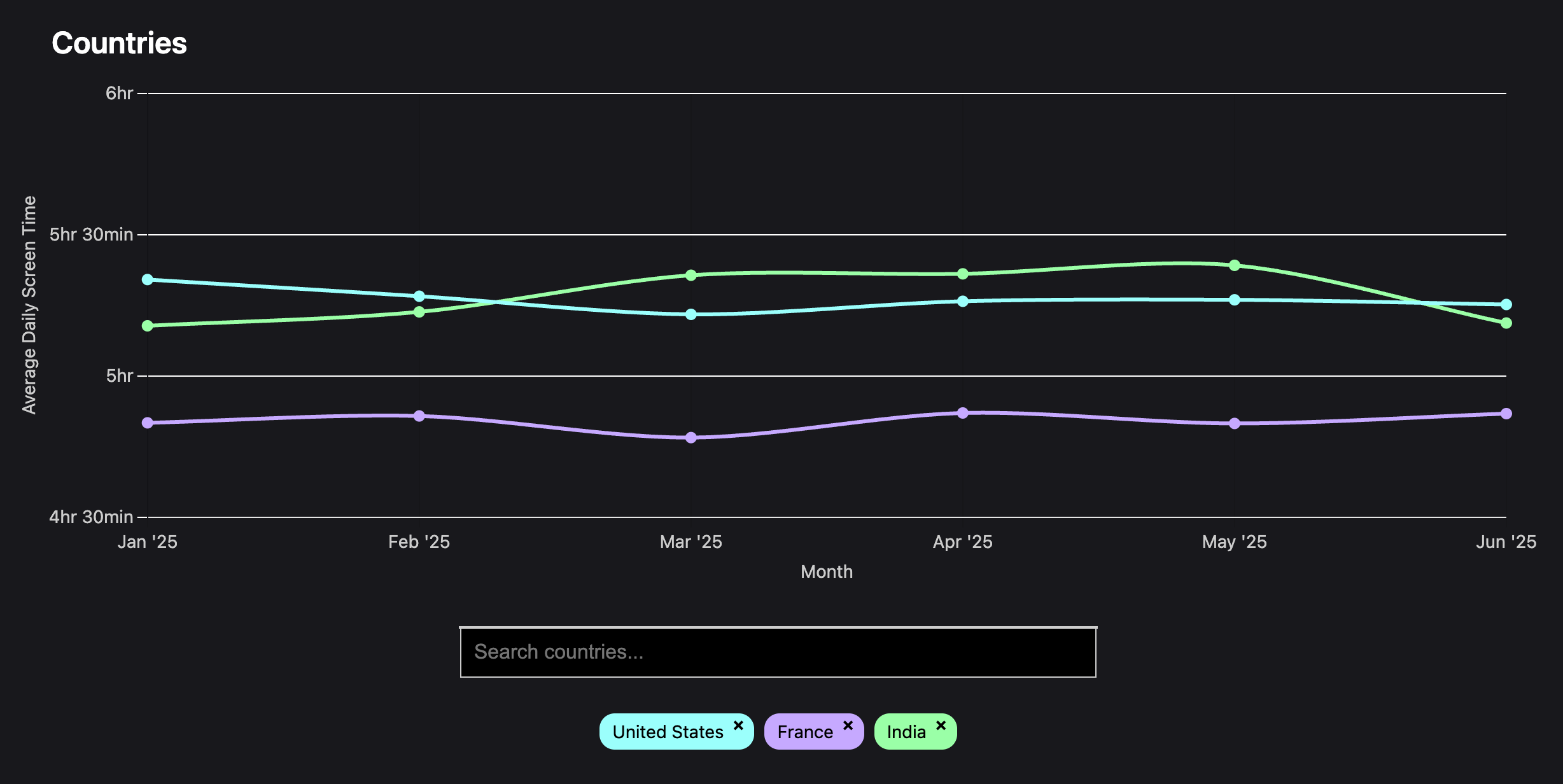
Other screen-time blocking apps include:
ClearSpace, which lets users “earn” phone minutes by doing physical activity like pushups and squats.
Forest, which grows virtual trees that die from purposeless screen time.
Blocc, an Android home-screen replacement that centralizes apps and messages.
I still use Opal today, but the idea that a screen-time solution lives on the very thing I’m trying to avoid using doesn’t make much sense. Plus, apps can only restrict phone usage to particular times.
Physical solutions confine screen time to particular times and places:
BRICK is an NFC-enabled device that blocks distracting apps. The only way to unblock is by physically tapping your phone to the BRICK.
Yondr uses magnetic lock pouches to create phone-free spaces for schools and workplaces.
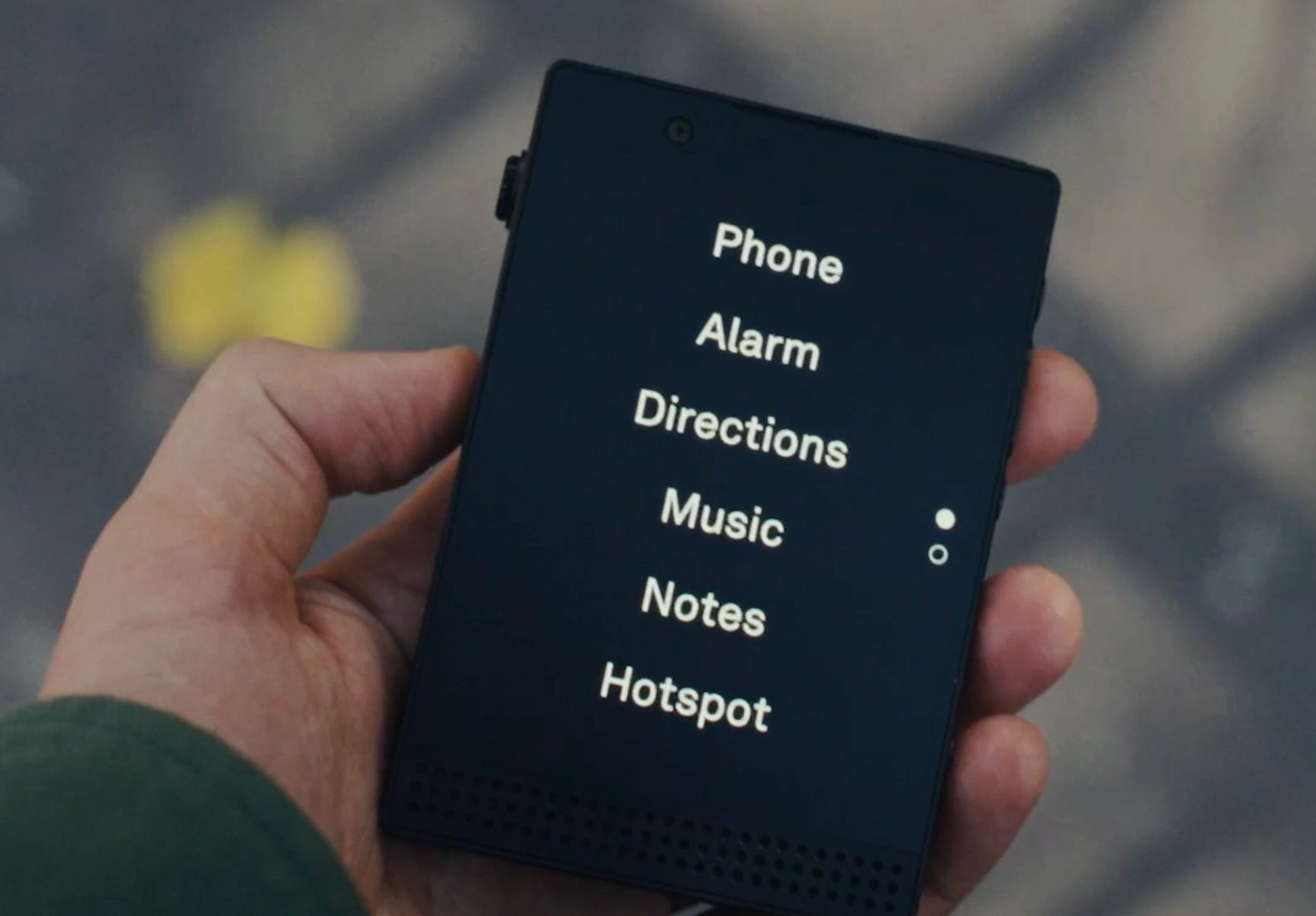
Light Phone makes minimalist “dumb phones” with only essential features, like calling, texting, setting alarms, navigating, and listening to music. The third-generation device (Light Phone III) came out earlier this year.
The phone addiction problem is often framed as a problem unique to a younger demographic, but adults are susceptible as well. Still, parents raising the anxious generation need tools that help their kids build a healthier relationship with technology. Some use apps like Ohana and Gabb to manually limit screen access. Others choose modern-day landlines like Tin Can.
There’s also a fast-growing category of screen-free interactive toys, such as Tonies and Curio, which create more dynamic, imaginative play.
The most out-of-the-box solution I’ve seen came from a creator who went viral for 3D printing a 6lb weight and attaching it to his phone.
One of Wenger’s motivations for writing The World After Capital (as far as I can tell) is to call out that in every transition from one Age to the next (Forager → Agrarian → Industrial → Knowledge), things get worse before they get better. The first farmers worked harder and died younger than foragers. The first factories brought child labor and terrible working conditions. These inflection points are consistently marked by “wars, plagues, and revolutions.”
Wenger published the book in 2021, a year before OpenAI released ChatGPT 3.5. His arguments hold up well in the context of AI, which accelerates information abundance and deepens attention scarcity. AI has pushed us from information being abundant to infinite.
AI brings us closer to the Knowledge Age—where information is abundant, and attention is scarce—and we are seeing early signs of things getting worse before getting better:
Reading rates are in free fall.
Mental health is a crisis.
Misinformation and clickbait run rampant.
A “collapse in literacy” is particularly troubling. In the age of infinite information, as people choose where to spend their attention, critical reasoning becomes non-negotiable—otherwise we risk mistaking fiction for fact and fact for fiction.
“Laid out on the page, their arguments would seem absurd. On the screen, they are persuasive to many people.”
Comments
Nothing yet. Say the first thing.
Sign in to join the conversation.