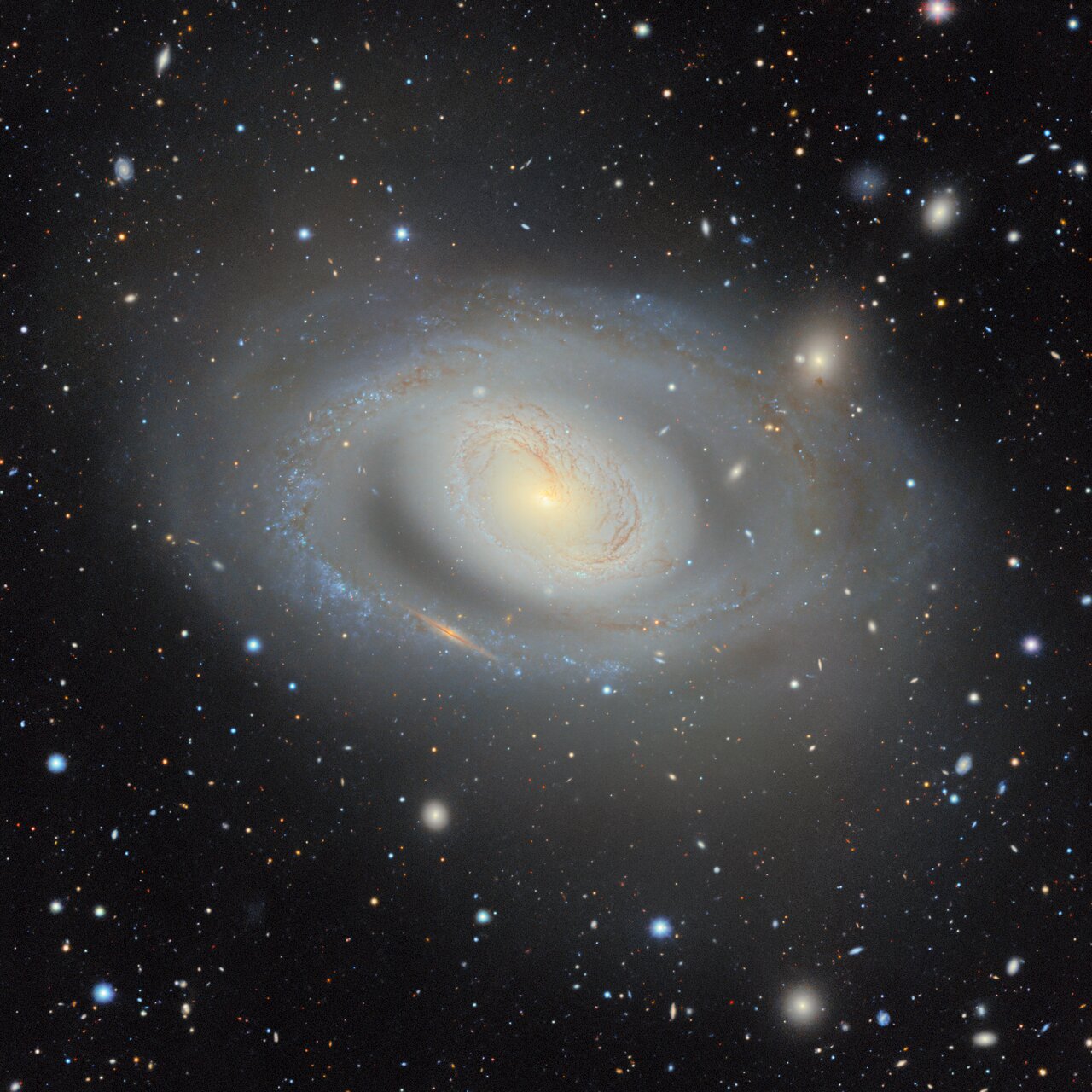
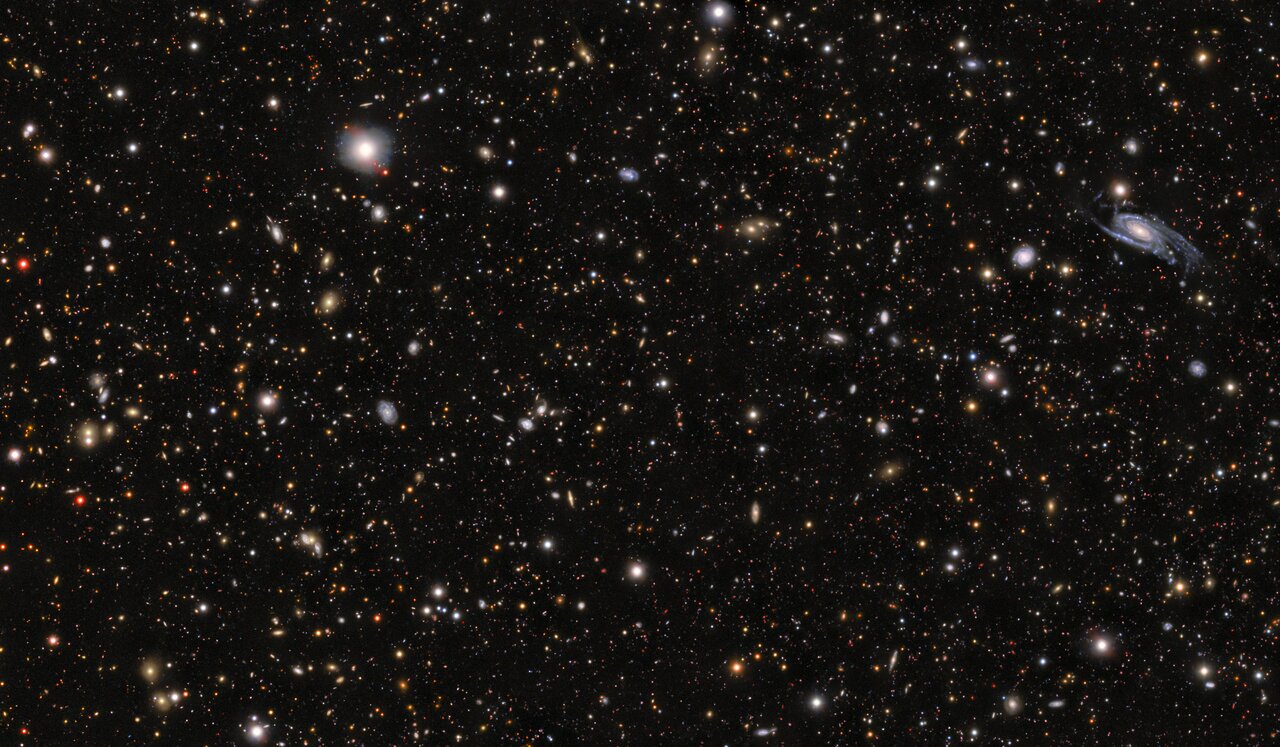
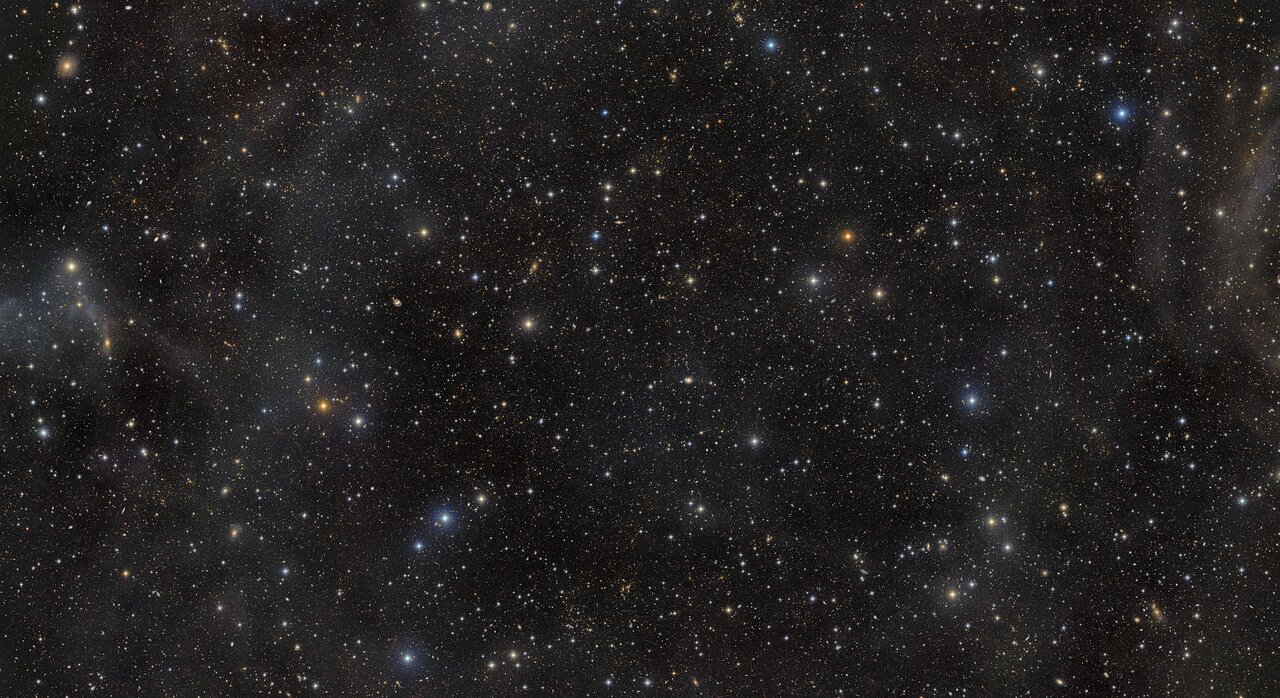
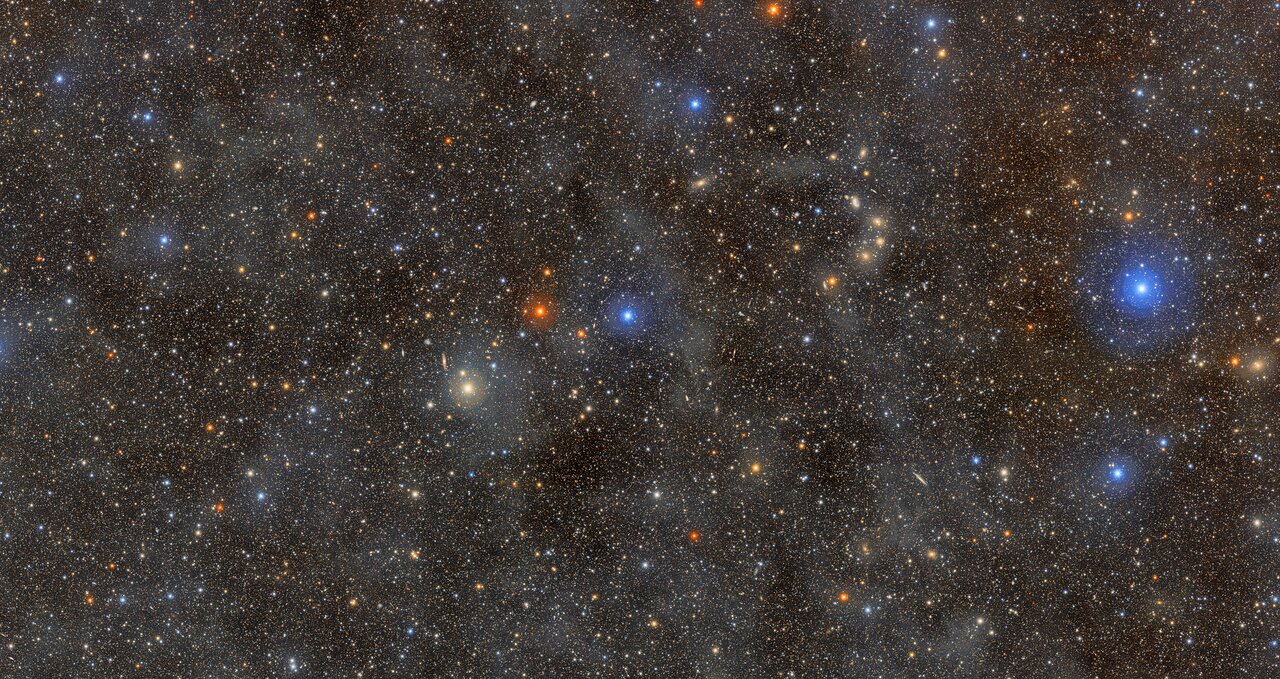
The newest DESI Legacy Imaging Surveys map, 13 years in the making, covers three-quarters of the sky and catalogs nearly four billion objects. This treasure trove is available to all and contains stars, galaxies, supernovae, gravitational lenses, and much more. Two NSF NOIRLab facilities contributed data to the map: the U.S. National Science Foundation (NSF) Mayall telescope and the NSF Blanco…
A rare cosmic explosion has given astronomers an unprecedented view of a massive star in its final moments, revealing a previously missing link between ordinary supernovae and the most energetic explosions in the Universe. Several NSF NOIRLab facilities and instruments helped to unravel the nature of this event, including the U.S. Department of Energy-fabricated Dark Energy Camera, the U.S.…
A new image from NSF–DOE Vera C. Rubin Observatory offers a spectacularly deep view into a famous region of sky known as the COSMOS field. Located in the constellation Sextans, COSMOS is one of the most observed patches of the Universe — and Rubin’s new image adds a powerful new view of this well-known cosmic landmark.
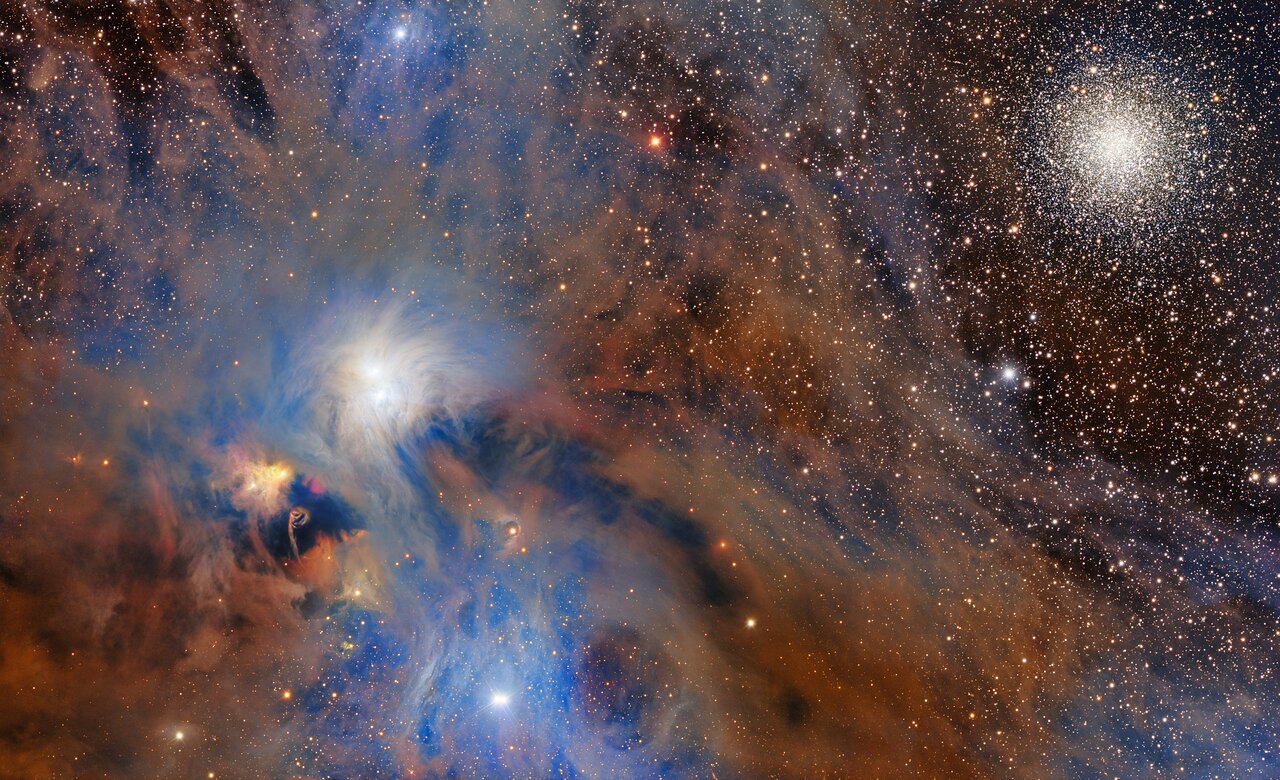
The 570-megapixel Department of Energy-fabricated Dark Energy Camera (DECam) captures a vibrant scene, filled with swirls and stars reminiscent of Van Gogh’s The Starry Night. This new cosmic masterpiece features glowing nebula NGC 6729 on the left and globular star cluster NGC 6723 on the right. DECam is mounted on the U.S. National Science Foundation Víctor M. Blanco 4-meter Telescope at Cerro…
The wait is over: NSF–DOE Rubin Observatory, funded by the U.S. National Science Foundation and the U.S. Department of Energy’s Office of Science, is now capturing the cosmos in unprecedented detail, transforming the way we study the dynamic Universe.
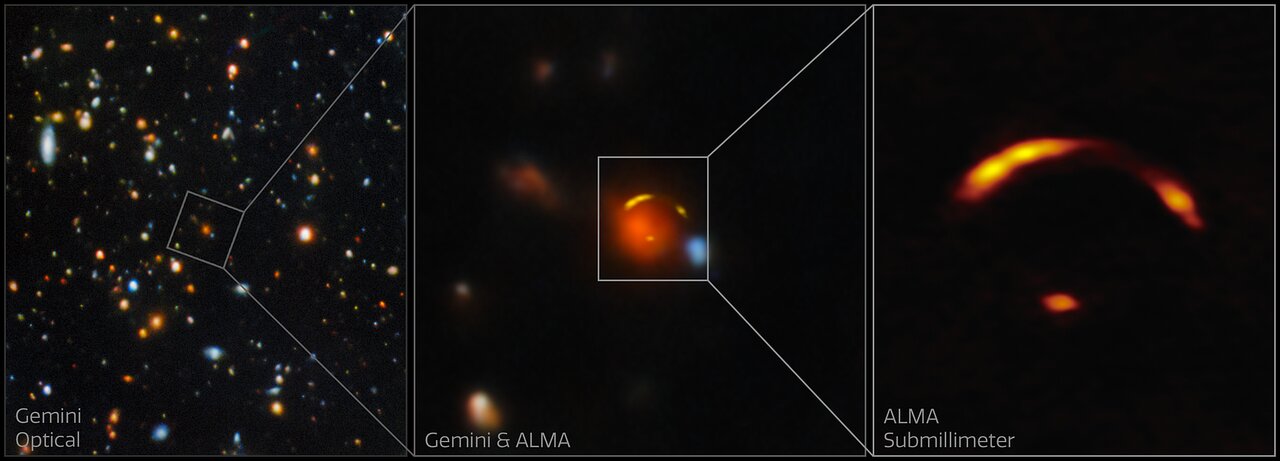
A team of astronomers has identified a remarkably bright, gravitationally-lensed, star-forming galaxy as the likely source of the high-energy neutrino event IC 210922A, detected by the IceCube Neutrino Observatory in 2021. The galaxy, nicknamed “Shadow Blaster,” is located about 11 billion light-years away, providing the most concrete observational evidence yet that populations of distant…
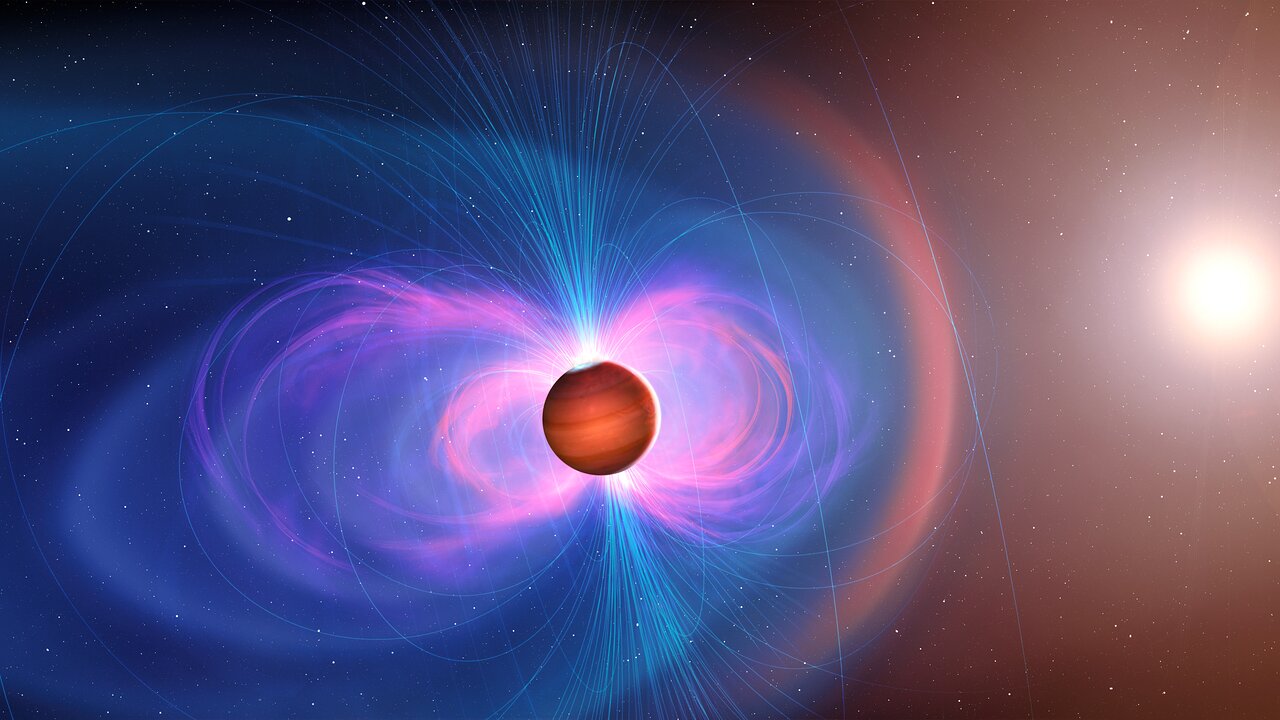
Using the Gemini North telescope in Hawai‘i and the European Southern Observatory’s Very Large Telescope, a team of astronomers measured wind speeds on seven very hot, Jupiter-like exoplanets. The observations revealed that the winds on these planets are most likely governed by magnetic fields, providing the first robust measurement of magnetic activity on planets outside the Solar System.
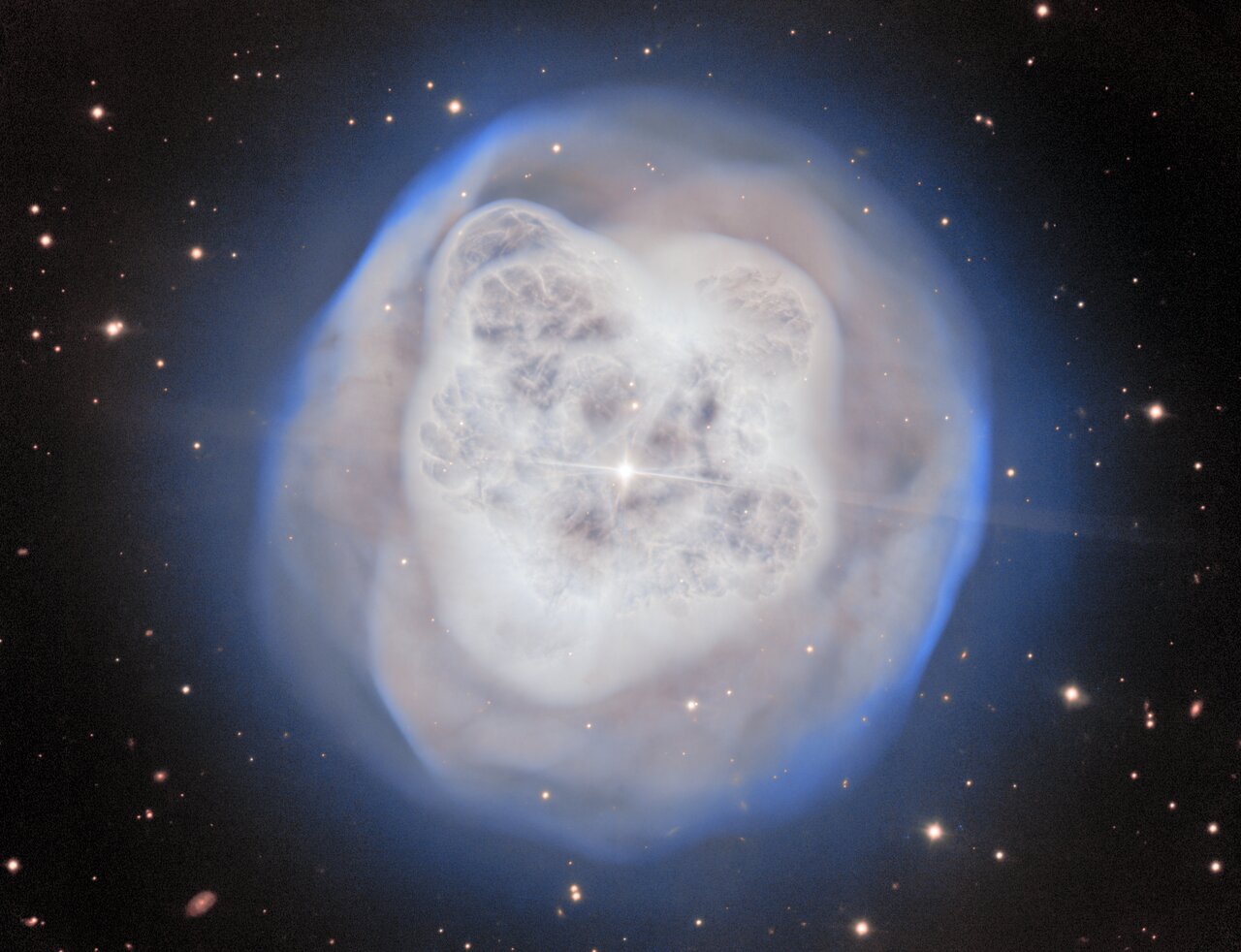
The 8.1-meter Gemini North telescope, located on the summit of Maunakea in Hawai‘i, has captured NGC 1514, nicknamed the Crystal Ball Nebula, in awe-inspiring detail. This nebula, with its mesmerizing glow of gas, harbors hints of a past stellar death, and its asymmetrical shell is now being shaped by the pair of binary stars that lie at its center.
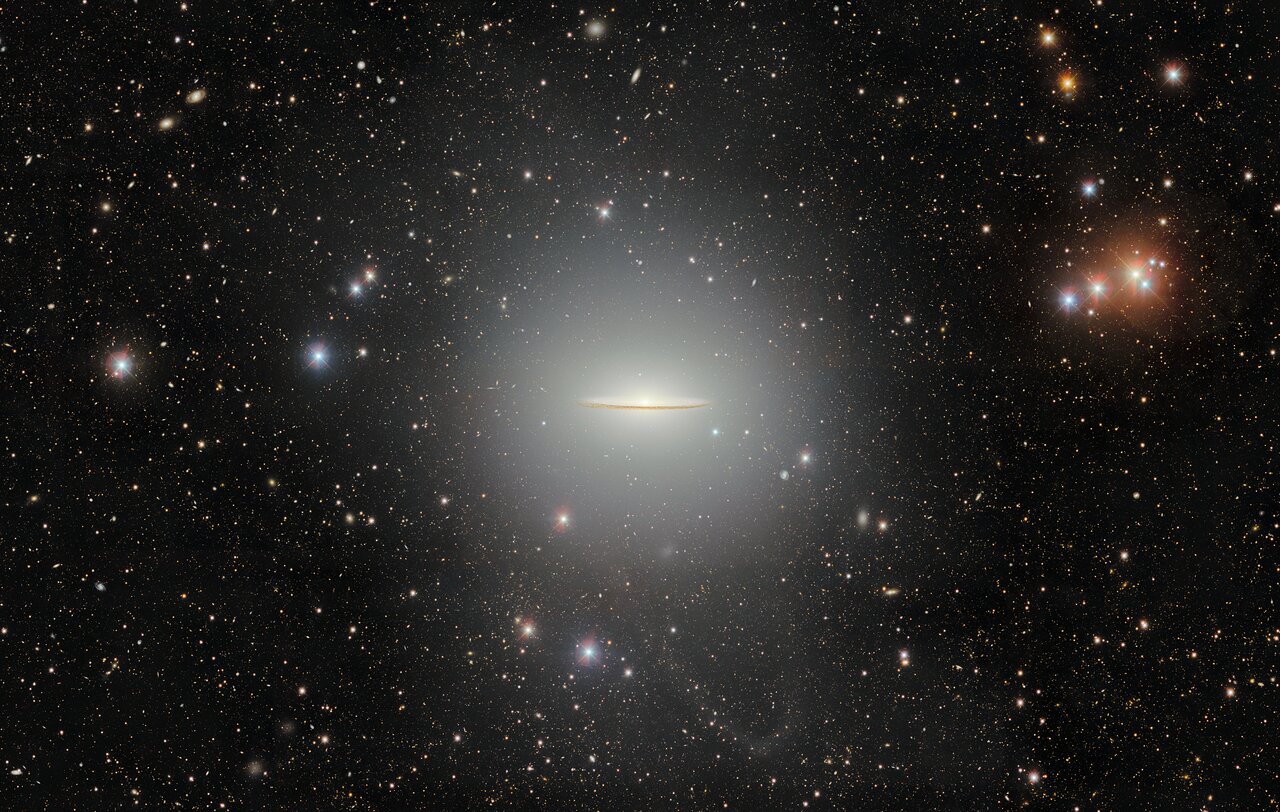
Messier 104, nicknamed the Sombrero Galaxy, is a popular target for amateur observing and astronomical research. Its recognizable extended halo, as well as a faint stellar stream, are captured in exquisite detail in this image from the Department of Energy-fabricated Dark Energy Camera, mounted on the U.S. National Science Foundation Víctor M. Blanco 4-meter Telescope at Cerro Tololo…
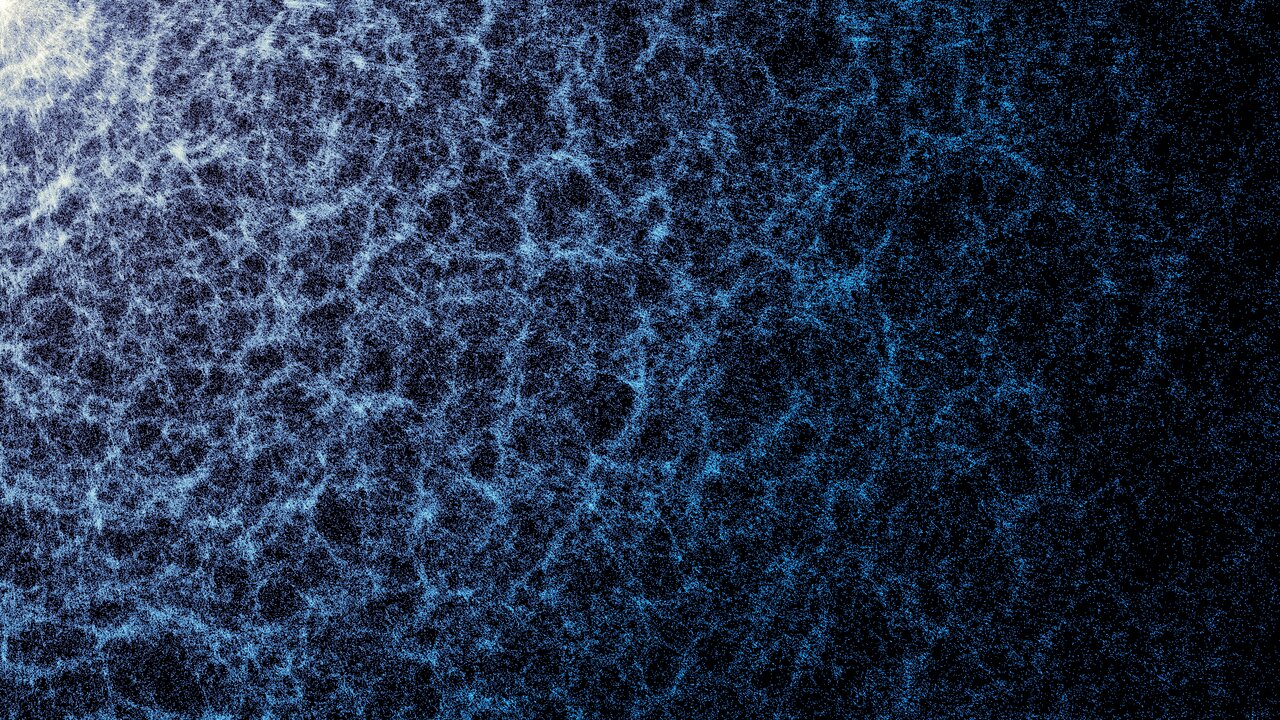
DESI has mapped more than 47 million galaxies and quasars, creating the largest high-resolution 3D map of our Universe to date. Because of the instrument’s excellent performance and hints that dark energy might evolve, DESI will continue observations into 2028 and further expand the map. DESI was constructed with funding from the U.S. Department of Energy Office of Science and is mounted on the…